How to Tell Dyed Magnesite from Natural Turquoise
Turquoise has been treasured for more than 5,000 years and remains one of the most admired gemstones across cultures. From ancient Egypt and Persia to traditional Asian jewelry, turquoise has captivated generations with its distinctive blue-green hues and natural patterns.
At JEWEA, we explore the connection between this ancient gemstone and Eastern artistic traditions. Our turquoise jewelry combines the organic beauty of natural minerals with handcrafted beadwork, creating designs that carry a sense of history, craftsmanship, and cultural depth.
For anyone who appreciates turquoise jewelry, understanding different gemstone materials is an essential part of the buying journey. Because natural turquoise has such a recognizable color and appearance, some other minerals are often chosen as alternatives due to their similar look.
Among these materials, dyed magnesite is one of the most common turquoise imitations found in the jewelry market.
Learning the differences between dyed magnesite turquoise and natural turquoise can help you make more informed choices when selecting a piece of gemstone jewelry.
What Is Magnesite and Why Is It Used as a Turquoise Alternative?
Magnesite is a natural carbonate mineral composed mainly of magnesium carbonate (MgCO₃). It occurs in many regions around the world, including Inner Mongolia, China, where significant deposits have been discovered.
In its natural form, magnesite typically appears in soft, neutral tones such as:
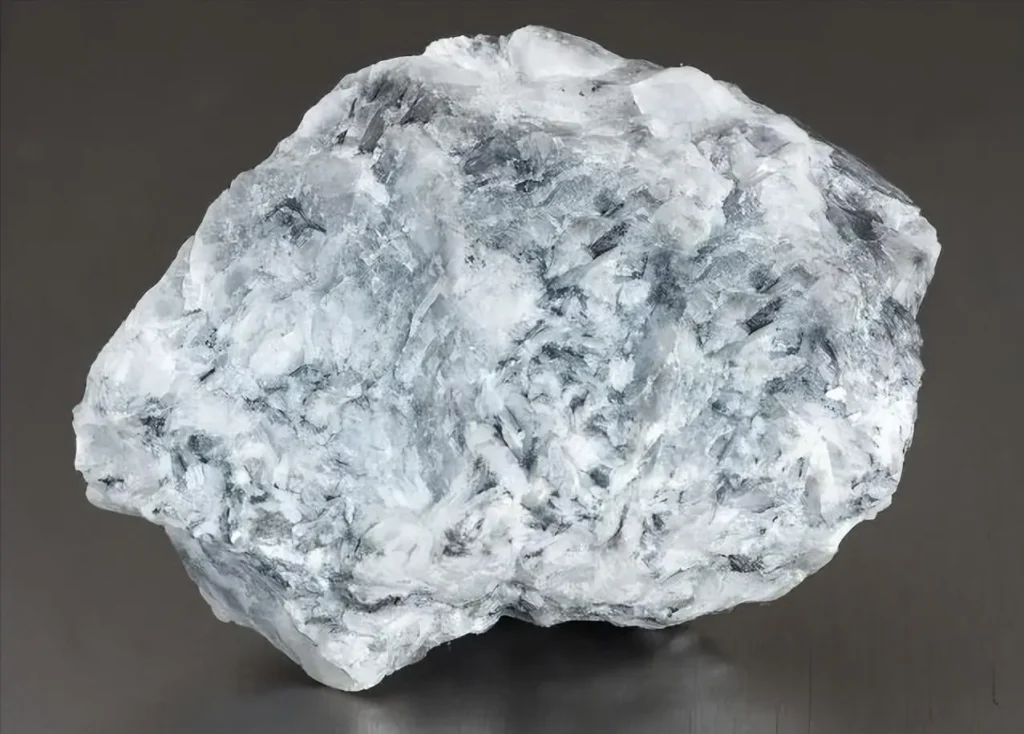
- White
- Ivory
- Light gray
- Pale yellow
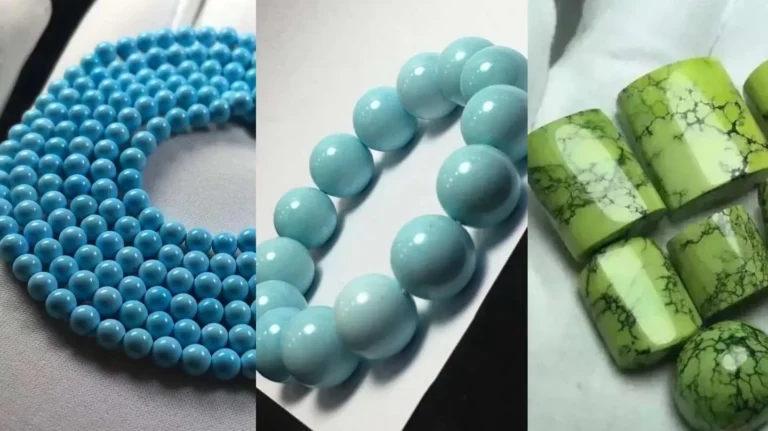
Because of its porous structure, magnesite can absorb dyes easily. After treatment, it can take on a blue-green color that closely resembles the appearance of turquoise.
Dyed magnesite is commonly used to create:
- Beaded necklaces
- Bracelets
- Earrings
- Carved gemstone ornaments
After dyeing, magnesite can develop colors and surface patterns that look similar to certain types of natural turquoise. This visual similarity is why it can sometimes be difficult for inexperienced buyers to distinguish between the two materials.
What Is “White Turquoise”? Is It Actually Turquoise?
In the jewelry market, you may come across the name “White Turquoise.”
However, it is important to understand that “White Turquoise” is generally not a recognized mineral species. Instead, it is often used as a commercial trade name for materials that resemble turquoise.
Many materials sold under the name “White Turquoise” may actually be:
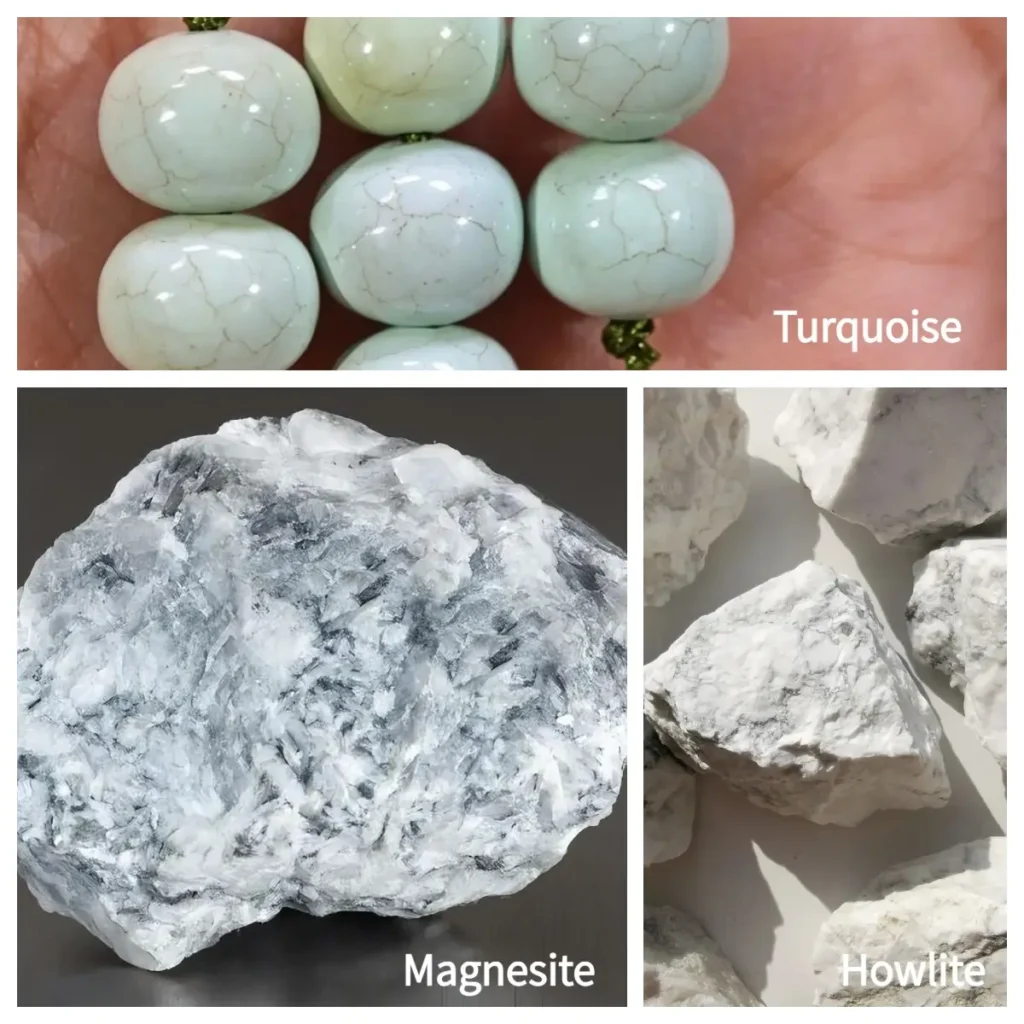
- Magnesite
- Howlite
- Other similar minerals that have been treated or processed
Although these materials can share a similar appearance, they have completely different chemical compositions from natural turquoise.
Natural turquoise is a hydrated copper aluminum phosphate mineral, while magnesite is a magnesium carbonate mineral.
Both materials can be crafted into jewelry, but they form through different geological processes and have their own unique mineral structures and natural characteristics.
Understanding these differences can help you better appreciate the materials behind turquoise jewelry and make more informed choices when selecting gemstone pieces.
Why Does Dyed Magnesite Look Like Turquoise?
One of the main reasons natural turquoise remains highly valued is its distinctive color and unique surface patterns.
Many turquoise enthusiasts appreciate features such as:
- Rich blue tones with a polished, high-quality surface
- Natural blue-green color variations
- Organic patterns formed during mineral growth
- Matrix patterns created by surrounding minerals
To recreate these visual characteristics, manufacturers often treat magnesite with dyes to produce turquoise-like colors. Some treated materials may also feature added dark patterns to imitate the natural matrix commonly found in turquoise.
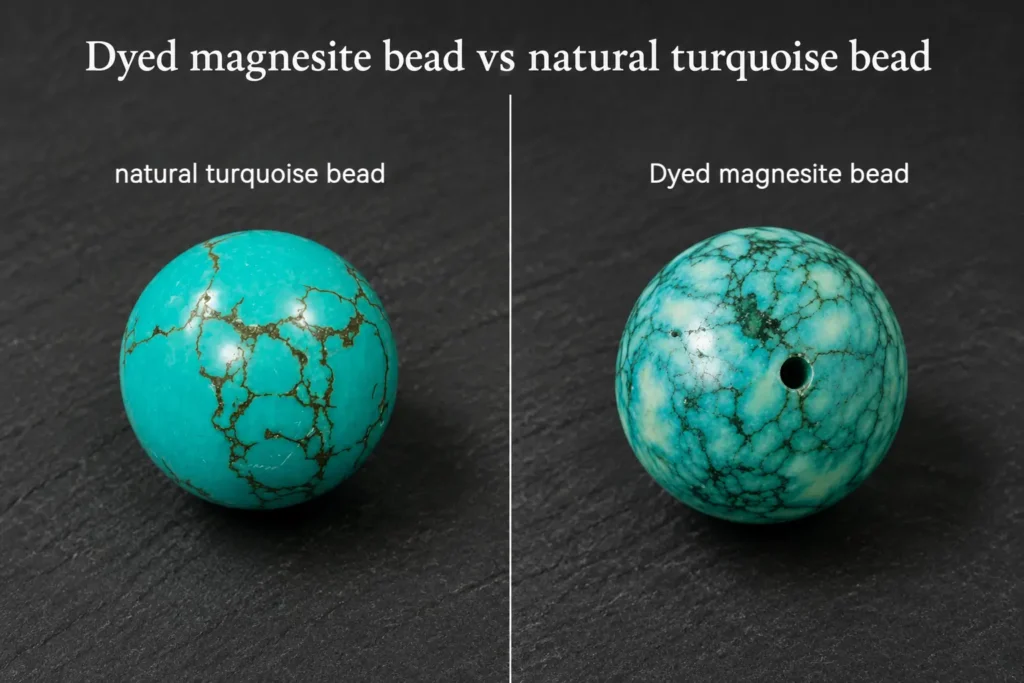
During this process, dyes can penetrate the porous structure of magnesite, while dark-colored fillers or other materials may be used to create vein-like patterns that resemble turquoise matrix.
After treatment, dyed magnesite may display:
- Bright blue or blue-green colors
- Dark patterns similar to turquoise matrix
- A smooth, polished gemstone surface
Because these treatments can create a very similar appearance, dyed magnesite has become one of the more commonly encountered turquoise alternatives in the jewelry market.
How to Distinguish Dyed Magnesite from Natural Turquoise: Key Signs to Look For
Before getting started, it is important to understand that visual inspection alone cannot confirm the identity of a gemstone with complete certainty.
A professional gemological evaluation remains the most reliable way to identify a material.
However, when you are exploring turquoise jewelry, you can look for several visual clues that may help you better understand the differences between dyed magnesite and natural turquoise.
1. Observe the Color and Patterns
Natural turquoise often displays subtle variations in color and texture because it forms through natural geological processes.
You may notice:
- Different shades of blue and green throughout the stone
- Irregular patterns created naturally within the mineral
- Unique variations from one piece to another
Dyed magnesite, on the other hand, may sometimes show different characteristics, such as:
- A color that appears overly uniform or intense
- Dye concentrated around cracks, pores, or surface textures
- A strong surface color that does not extend as deeply into the material
These visual details are not definitive tests, but they can provide helpful references when evaluating turquoise jewelry before purchase.
2. Examine the Matrix and Surface Patterns
The natural patterns found in turquoise, often called matrix, form during the gemstone’s geological formation.
In treated materials, similar-looking patterns may come from different processes, including:
- Artificial fillers
- Dye treatments
- Surface modifications
When viewed under magnification, natural turquoise matrix usually shows a more organic and continuous structure. In contrast, artificially created patterns may appear more regular, sit closer to the surface, or lack the natural variations found in untreated gemstones.
3. Consider the Price and Market Factors
The value of natural turquoise depends on several factors, including:
- Color
- Surface quality and polish
- Size and availability
- Matrix patterns
- Origin
High-quality natural turquoise usually commands a higher value because of its rarity and distinctive characteristics.
If a piece of jewelry features:
- An extremely bright and perfectly even blue color
- Nearly flawless, uniform patterns
- A price far below typical market levels
it is worth taking a closer look at the material source and any possible treatments before making a purchase.
How Do Gem Labs Distinguish Turquoise from Magnesite?
For valuable jewelry pieces or collectible gemstones, professional testing remains the most reliable way to confirm a material’s identity.
Gemological laboratories typically examine gemstones through several scientific methods, including:
Density Testing
Density measurements can help differentiate between turquoise and magnesite.
Natural Turquoise:
Approximately 2.60–2.90 g/cm³
Magnesite:
Typically around 3.00–3.12 g/cm³
Because the two minerals have different compositions and structures, their densities can provide useful identification clues.
Refractive Index Testing
Gemologists also measure a gemstone’s refractive index, which describes how light travels through the material.
Natural Turquoise:
Approximately 1.61–1.65
Magnesite:
Around 1.60
This optical property provides another reference point when distinguishing between the two minerals.
Spectroscopic Analysis
Modern gemological laboratories can also use advanced instruments, such as:
- Fourier-transform infrared spectroscopy (FTIR)
- Raman spectroscopy
These techniques analyze the internal structure and chemical characteristics of minerals.
Because turquoise belongs to the phosphate mineral group while magnesite belongs to the carbonate mineral group, they produce different spectral patterns that allow gemologists to identify them accurately.
JEWEA’s Perspective
Every natural mineral carries its own story of formation.
The beauty of turquoise comes not only from its captivating blue-green colors, but also from the unique structures created through millions of years of geological processes.
For jewelry lovers, learning the differences between natural gemstones and commonly used alternatives does not take away from the joy of discovery. Instead, it allows us to better appreciate the materials, craftsmanship, and cultural stories behind each piece of jewelry.
From natural minerals to handcrafted designs, JEWEA celebrates the traces of nature, art, and time that come together in every piece we create.