Kunzite: Tiffany’s Darling, Taylor’s Choice, and the Gem That Shuns the Sun
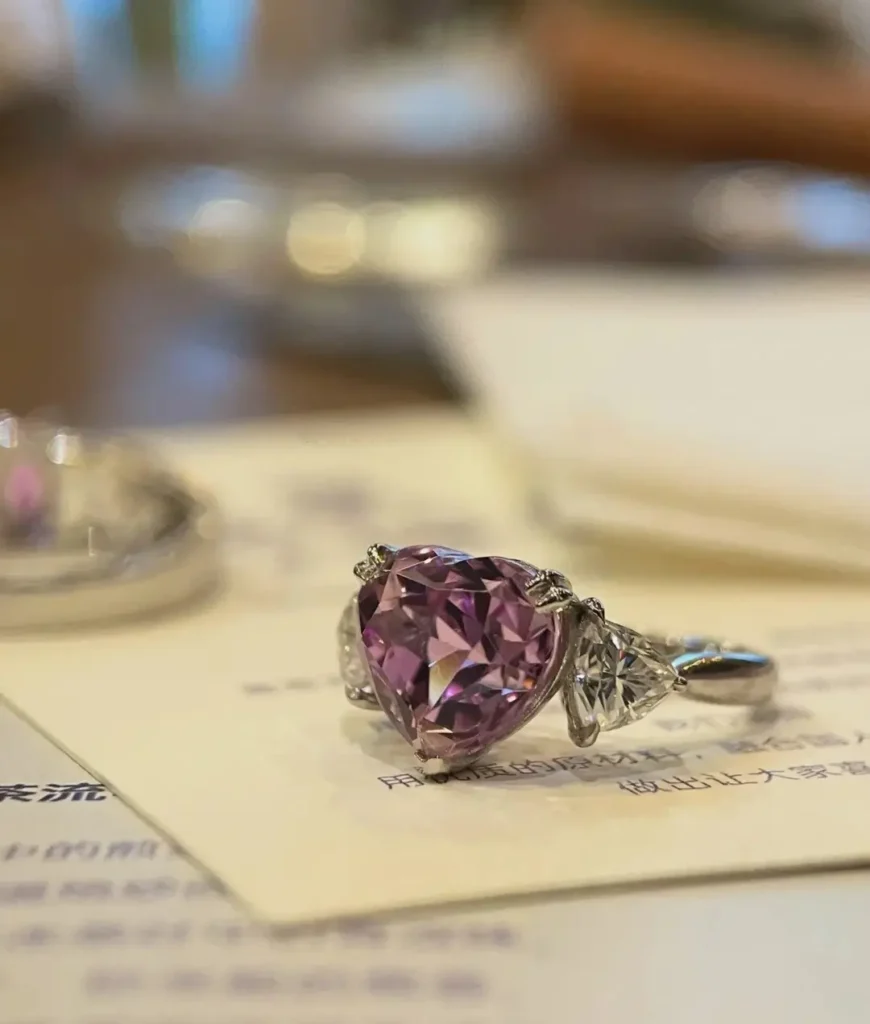
The discovery of kunzite added a stunning contender to the lavender gem family. It stands out from classic amethyst with a delicate, romantic cherry-blossom pink hue, a higher refractive index, with stronger brilliance and more dynamic light performance. This rising star quickly won over high society, earning a spot among Hollywood legend Elizabeth Taylor’s prized jewelry collection.
Let’s dive into the story of this captivating pastel powerhouse.
The Discovery and Naming of Kunzite
Compared to “royal elite” gems like rubies and sapphires—which rulers used on crowns, scepters, and symbols of power before the 19th century—kunzite is a true newcomer to the jewelry world.
For a long time, before anyone recognized its gemstone value, ordinary spodumene served primarily as an industrial mineral for lithium extraction. That changed completely at the turn of the 20th century.
In 1902, a beautiful lilac-pink spodumene was discovered in the Pala region of California. George Frederick Kunz, the chief gemologist at Tiffany & Co., soon conducted a deep study of the crystal and introduced it to the jewelry market.
Dr. Kunz fell in love with its clear, mesmerizing beauty at first sight. During his research on this pink-purple stone, he documented two extraordinary characteristics:
- Phosphorescence: After exposure to strong sunlight or ultraviolet rays, the gem continues to emit a faint, ethereal glow when moved into a dark room.
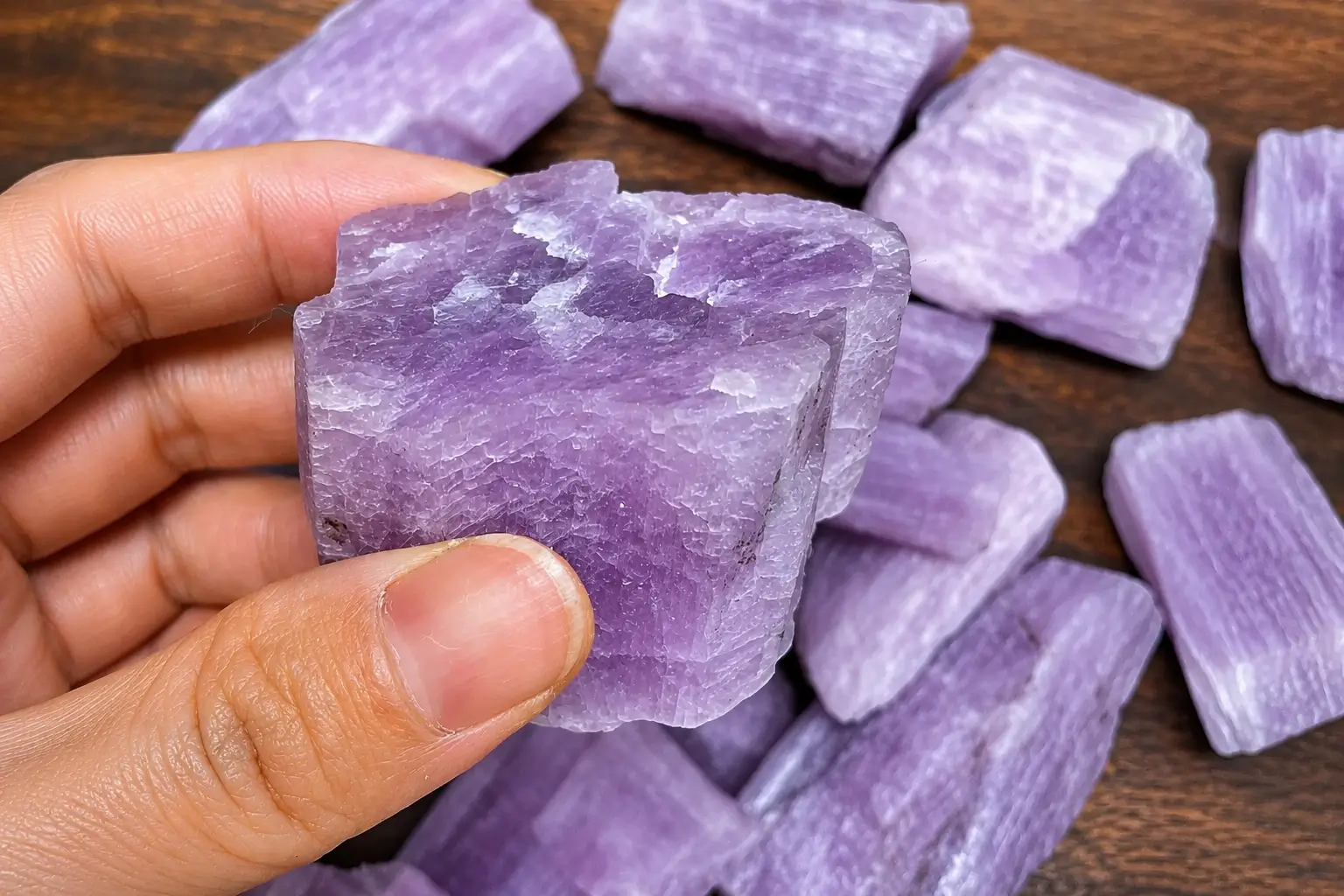
- Strong Pleochroism: Looking at the crystal from different angles reveals different shades, shifting between deep pink, violet, and even colorless.
In 1903, to honor Dr. Kunz’s outstanding contributions to gemology, this pink-purple spodumene variety was officially named Kunzite after his surname. In the Chinese market, it is phonetically translated as Kong-Sai-Shi or directly referred to as Zi-Li-Hui-Shi.
Basic Properties of Kunzite
Mineralogically, kunzite belongs to the monoclinic crystal system as a gem-quality variety of spodumene (a pyroxene group mineral). Its chemical formula is LiAlSi2O6. The crystals typically develop characteristic column shapes with highly distinct vertical striations on the crystal faces. This monoclinic symmetry grants kunzite its unique crystal orientation and intense pleochroism.
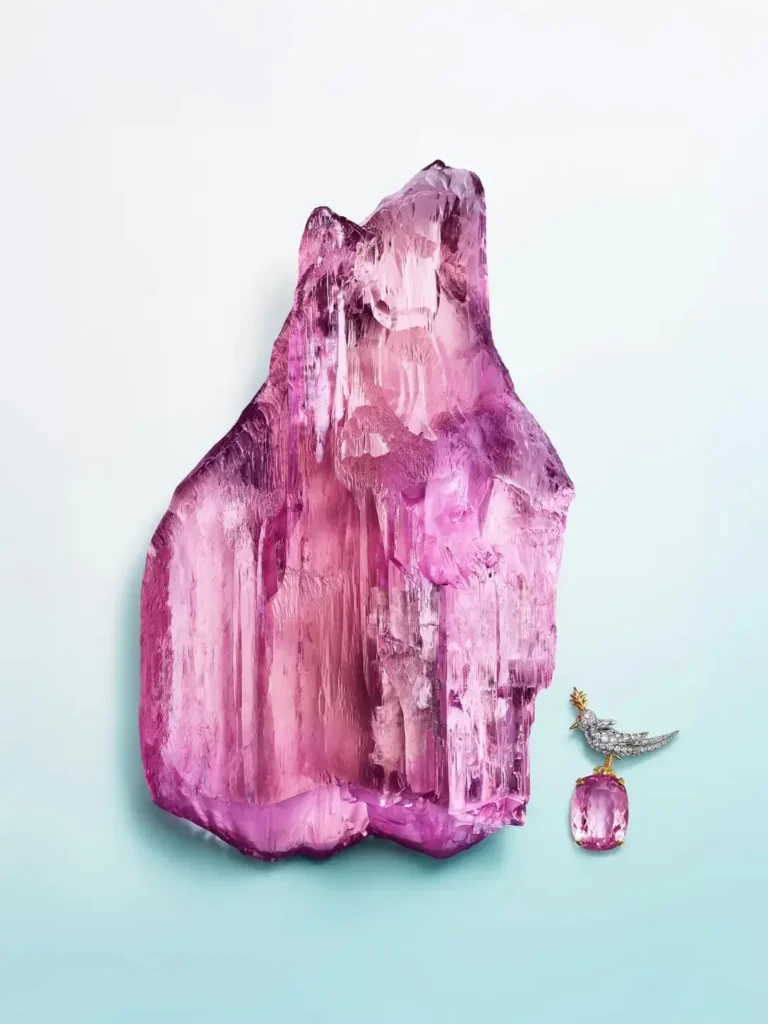
- Mineral Name: Gem-quality variety of Spodumene
- Crystal System: Monoclinic, often forming elongated prisms or thick tabular crystals along the z-axis.
- Cause of Color: Colored by trace amounts of manganese (Mn3+) within the crystal lattice.
- Physical Constants: Vitreous luster; Mohs hardness of 6.5–7; refractive index approximately 1.66–1.68; exhibits birefringence.
- Internal Inclusions: Commonly features distinctive two-phase (gas-liquid) inclusions, hollow tubes or growth channels running parallel to cleavage directions, and occasional solid mineral inclusions.
Key Geographic Origins
Granite pegmatites host most gem-quality spodumene. Crystals growing directly inside the central pockets of these pegmatites yield the finest quality.
- Global Origins: The Pala district in California, USA, holds a legendary status for this gem. Today, however, the finest kunzite primarily comes from Afghanistan, Pakistan, Madagascar, Mozambique, and Brazil. Myanmar and Canada also yield minor production.
- Chinese Origins: China possesses abundant spodumene resources, mainly distributed across Altay in Xinjiang, Kangding in Sichuan, Inner Mongolia, and Hunan. Among these, the pegmatite veins of Xinjiang and Sichuan have produced exceptional, gem-quality kunzite.
Tiffany & Co. and Kunzite: An Inseparable Bond
Kunzite was one of the first gemstones Tiffany promoted. It quickly gained attention in the early 20th century.
In the jewelry world, if we view diverse gemstones as celebrities, then the jewelry giant Tiffany & Co. acts as the ultimate talent scout and star-making agency. From tanzanite and tsavorite to morganite, Tiffany consistently uncovers and promotes new gemstone varieties, helping them shine in high jewelry. Kunzite was the first gemstone Tiffany helped bring into the spotlight.
As Tiffany’s head talent scout, Dr. Kunz urged the house to debut kunzite in its designs the exact year he introduced the stone to the gem world. This romantic, pink-purple gem immediately caused a sensation across New York high society upon its release. Over the years, Tiffany has crafted numerous iconic jewelry pieces featuring this gem, with two historic milestones standing out:
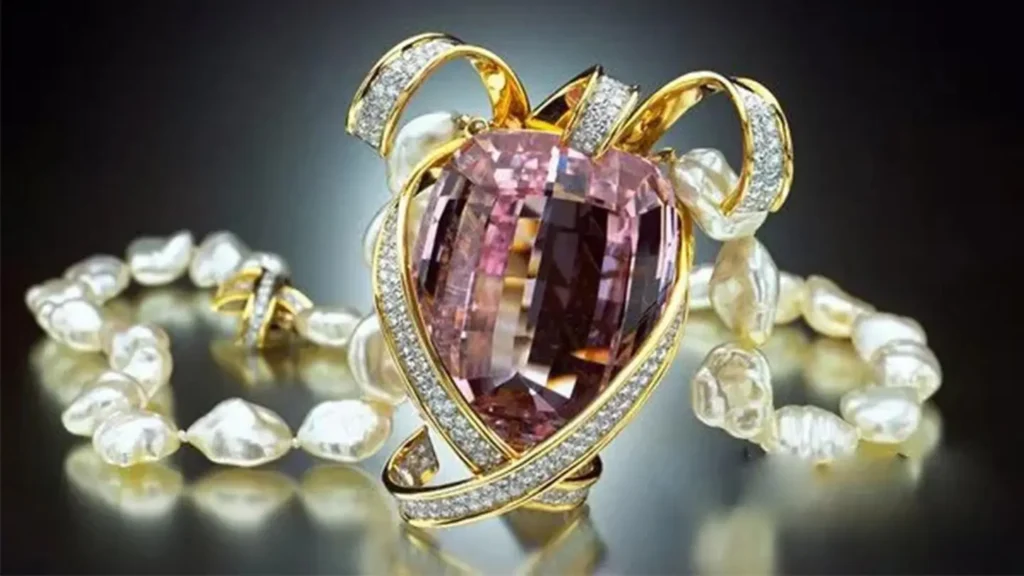
- The 150th Anniversary Masterpiece (1986): Iconic designer Paloma Picasso selected a massive, ultra-clean 396.30-carat kunzite as the centerpiece for “The Tiffany Gift”—a retro, geometric masterpiece. Today, this historic necklace resides in the permanent collection of the Smithsonian Institution’s National Museum of Natural History.
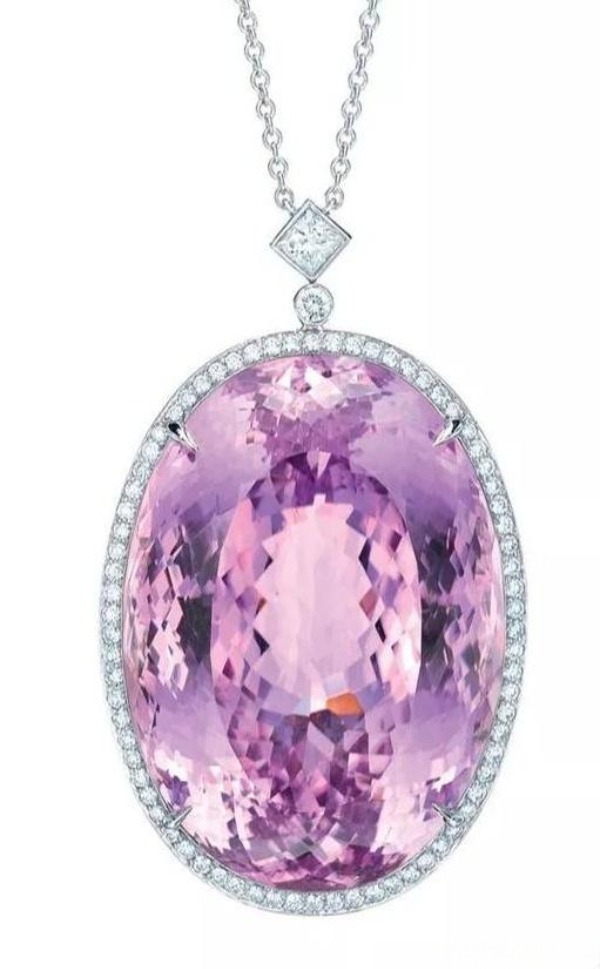
- The 175th Anniversary Celebration: Tiffany showcased a spectacular 175.51-carat kunzite pendant in its high jewelry collection, beautifully marking the brand’s century-long bond with this pastel gem.
A Legendary Actress and Her Violet Eyes
Following Tiffany’s global promotion, other top-tier luxury houses like Van Cleef & Arpels and Cartier quickly embraced kunzite, incorporating it into their high jewelry lines.
The legendary Hollywood star Elizabeth Taylor received countless extraordinary jewels throughout her life. For their ninth wedding anniversary, her husband, Richard Burton, commissioned a highly precious set of kunzite jewelry from Van Cleef & Arpels, which included a beautifully crafted kunzite brooch.
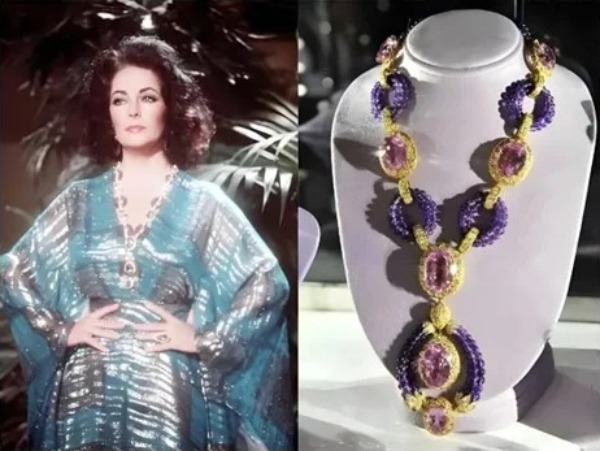
Burton beautifully noted that the captivating, multi-layered pink-violet glow of kunzite perfectly mirrored Taylor’s world-famous, exceedingly rare violet eyes.
Kunzite Buying Guide and Daily Care
While kunzite is breathtaking, it is notoriously delicate in the gemstone world. Its physical and chemical structure requires careful attention during selection and wear.
1. Color
Color serves as the absolute core value driver for kunzite. Most kunzite on the market displays a fresh, pale pink or light violet shade.
- Buying Advice: Aim for intense colors with a distinct violet-red tint (Vivid Violet to Pink-Purple). The market occasionally sees “cat’s eye kunzite” exhibiting chatoyancy. These rare stones hold immense appeal for collectors looking for unique mineral phenomena.
2. The Ultimate Nemesis: Strong Light and High Heat
The color-causing trace element Mn3+ is highly unstable in kunzite. Under prolonged exposure to intense ultraviolet rays (direct sunlight) or high heat, electrons shift within the crystal lattice. This process reduces the Mn3+ ions or alters their valence state, causing the gemstone to fade severely or turn completely colorless. This applies to both natural and irradiation-treated stones.
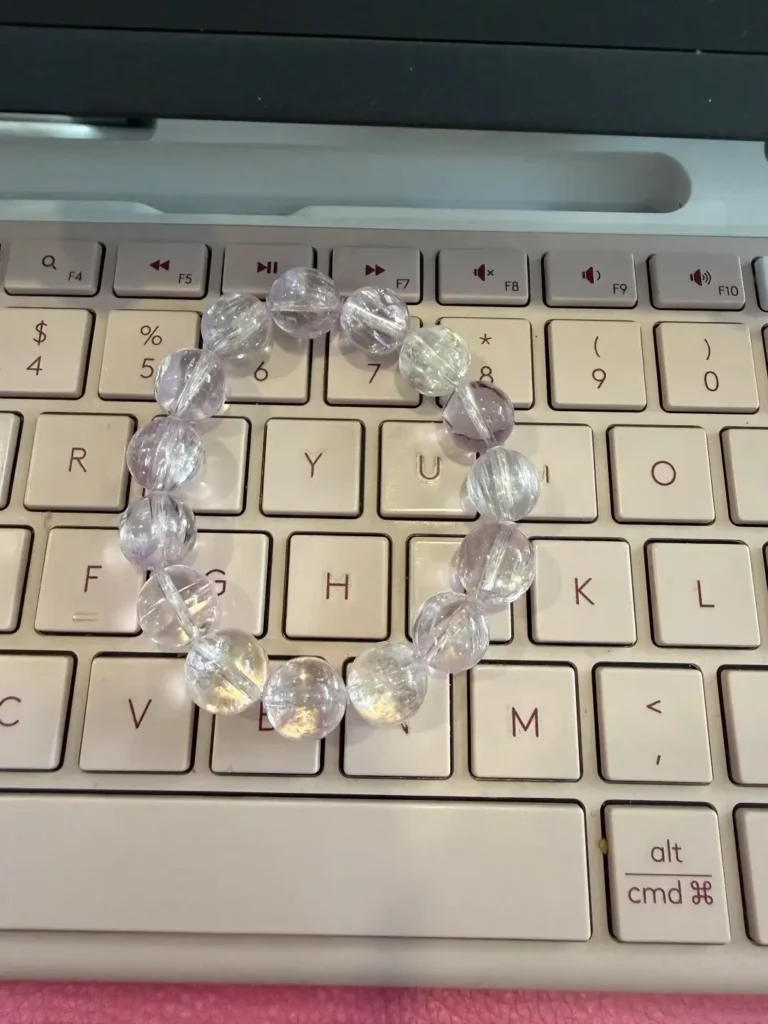
- Care Advice: Kunzite is the ultimate “Evening Jewelry.” Incandescent lighting and softer light conditions make its strong pleochroism dance with spectacular brilliance. Never wear it while sunbathing, vacationing on the beach, or during any intense daytime sun exposure. When you are not wearing your kunzite, always store it in a completely dark, closed jewelry box.
3. Cutting and Oblique Cleavage
Kunzite exhibits intense pleochroism, typically showing pink, violet, and near-colorless directions. To maximize its beauty, gem cutters must orient the table facet perpendicular to the crystal’s long axis (the c-axis) and cut a deeper pavilion. This specific orientation pools and projects the richest violet hues directly through the face of the gem.
However, spodumene possesses two directions of perfect cleavage intersecting at roughly 87° and 93°. Because these planes meet at oblique rather than right angles, a sharp impact from a specific direction can easily cause the gem to split cleanly apart—much like splitting bamboo. This makes cutting and setting kunzite a true test of an artisan’s skill.
- Wear and Care Advice: For finished jewelry, choose bezel settings or designs wrapped in protective accent stones. Wear your kunzite with extreme care. Never clean it in an ultrasonic cleaner, and strictly avoid sharp knocks or hard drops.
4. Carat Weight and Clarity
Because pegmatites frequently nurture massive individual crystals, kunzite typically shows exceptional clarity. Most faceted gems on the market are completely eye-clean, and large carat weights are incredibly common.
- Buying Advice: Since kunzite rough naturally forms in large sizes, its price-per-carat does not skyrocket exponentially with size. If your budget allows, prioritize stones over 5 carats. Larger gems offer the depth needed to truly showcase kunzite’s rich color potential.
Showcasing Timeless Masterpieces
Tiffany’s passion for kunzite shines brightest in its most celebrated high jewelry creations. Over the decades, the house has used this delicate stone to craft some of the world’s most enduring jewelry designs:
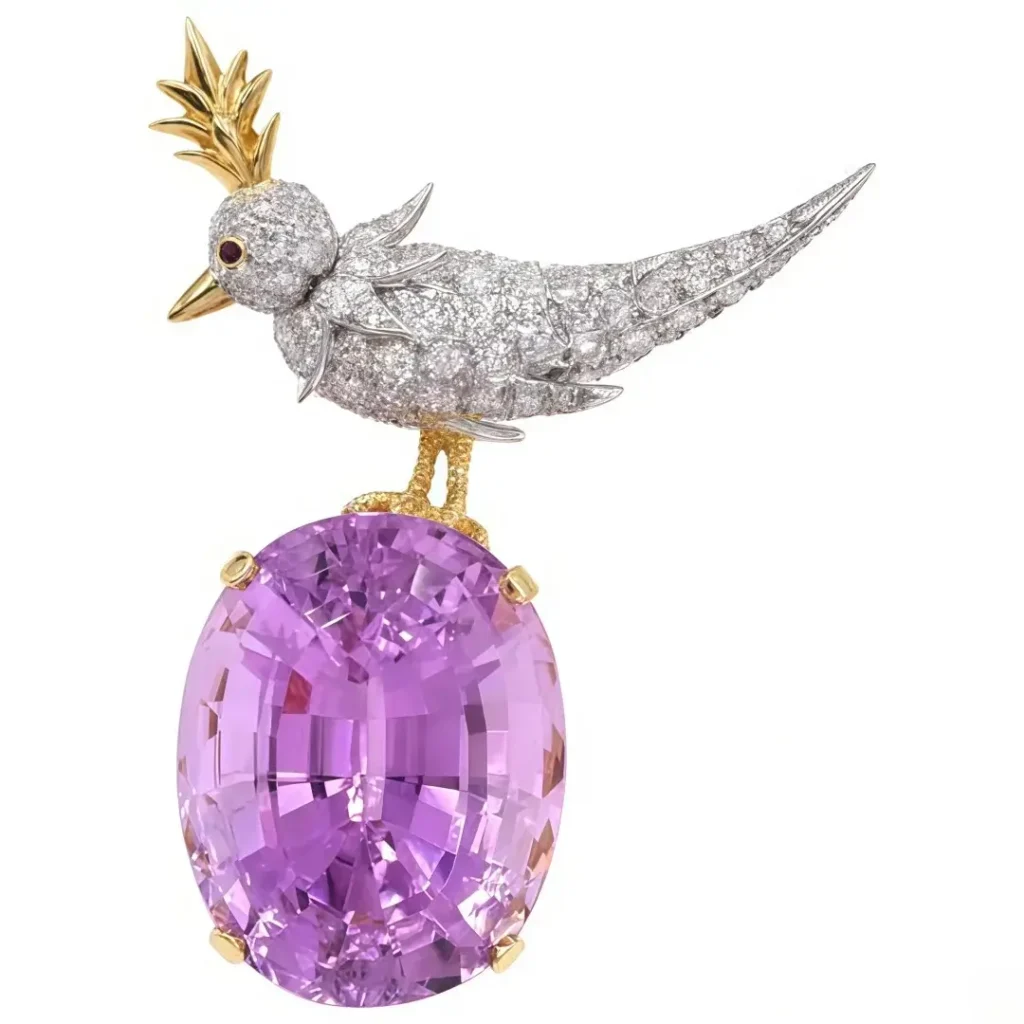
- The “Bird on a Rock” Brooch: Legendary Tiffany designer Jean Schlumberger created this iconic silhouette in 1956. It remains the brand’s most recognizable signature. While Tiffany regularly re-imagines the piece with spectacular green tourmalines, aquamarines, and the famous Tiffany Yellow Diamond, modern high jewelry editions frequently feature flawless, top-grade kunzites weighing hundreds of carats.
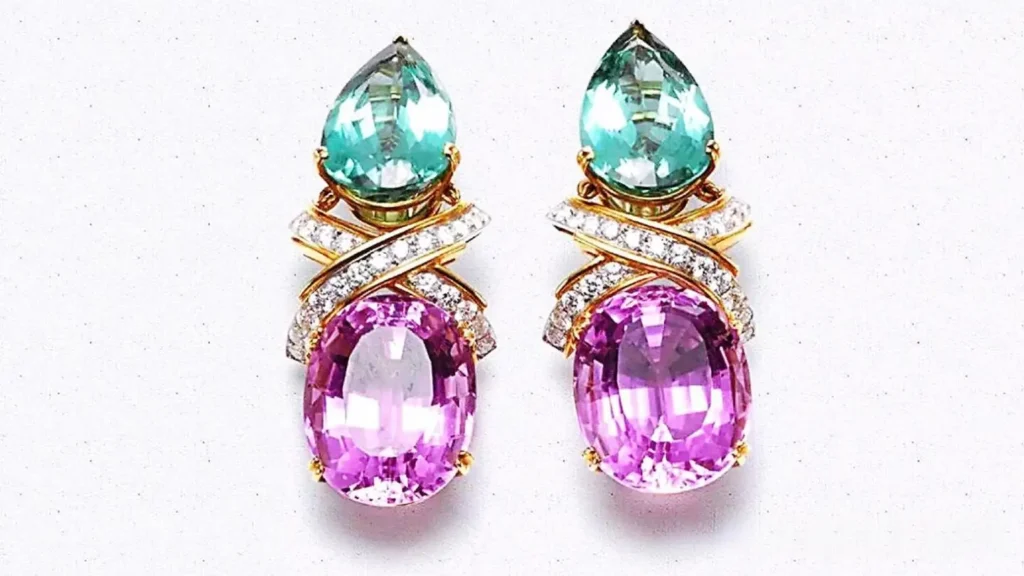
- Tiffany Archival Collection Earrings: These exquisite statement pieces combine 18K yellow gold and platinum. The intricate settings interweave diamonds and green tourmalines with highly saturated kunzites, creating a striking contrast of vivid colors.
A Note from Jewea
Kunzite expertly bridges the gap between deep heritage and remarkable optical physics, securing a frequent place in high jewelry collections worldwide.
The gem beautifully balances a playful, pastel aesthetic with the commanding presence of a large-carat statement stone. Its perfect cleavage and tendency to fade under sunlight make it notoriously delicate. However, you can easily protect its beauty by following three simple rules: wear it at night, avoid sun exposure, and prevent hard impacts. Treated with care, kunzite becomes a highly romantic, sparkling cornerstone of your personal collection. When investing in fine, large-carat kunzite, always request a certificate from a reputable gemological laboratory to guarantee a truly premium, naturally colored treasure.