Deciphering the Big Three: The World of Aka Red Coral, Momo, and Sardinia
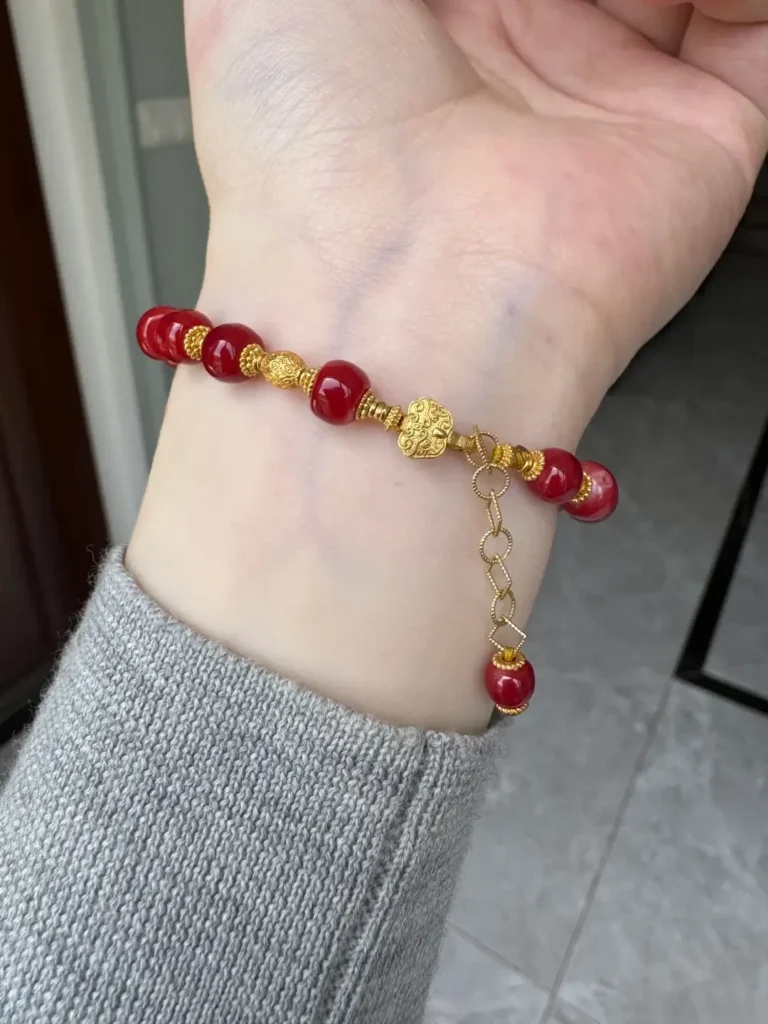
I recently received a message from a follower that perfectly captures the anxiety so many collectors feel when stepping into the world of Aka Red Coral:
“Could you take a look at my new bracelet? I spent $2,000 on this for a wedding, but now that I’ve looked closer, I’ve found some ‘flaws.’ Did I get taken for a ride?”
After carefully examining the piece, I gave her the good news: Not only is this authentic Aka Red Coral, but it is also a masterful piece of craftsmanship. While the bracelet features a few natural “wormholes” and a subtle white core, the designer skillfully positioned these marks to stay out of sight. More importantly, the beads possess that signature translucent, ruby-like luster—the unmistakable “glassy” glow that only high-quality Aka Red Coral can provide.
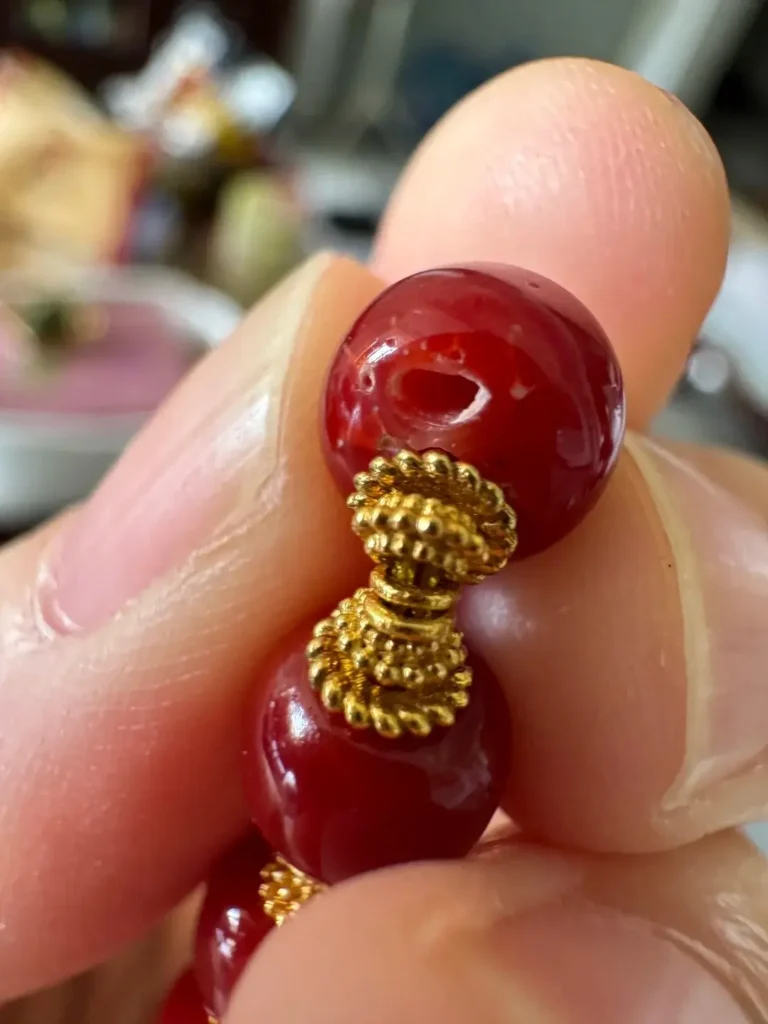
In the world of precious coral, there are three elite lineages: Aka, Momo, and Sardinia. To truly appreciate the value of your jewelry, you have to look beyond the surface. Once you understand the DNA of these corals, you’ll start seeing those “flaws” for what they really are: the authentic signature of a deep-sea treasure.
Table of Contents
- Is Red Coral Animal, Vegetable, or Mineral?
- The Three Elite Lineages of Red Coral
- Aka Red Coral: The Pinnacle of the Deep Sea
- Momo Coral: The Sculptor’s Muse
- Sardinia Coral: The Perfect Entry Point
- Why Sellers Often Swap Sardinia for Aka Red Coral
- Spotting “Fake” Aka Red Coral
- Red Coral Collection & Maintenance: Common Questions
- Jewea Final Thoughts: A Rare Gift from the Deep
Is Red Coral Animal, Vegetable, or Mineral?
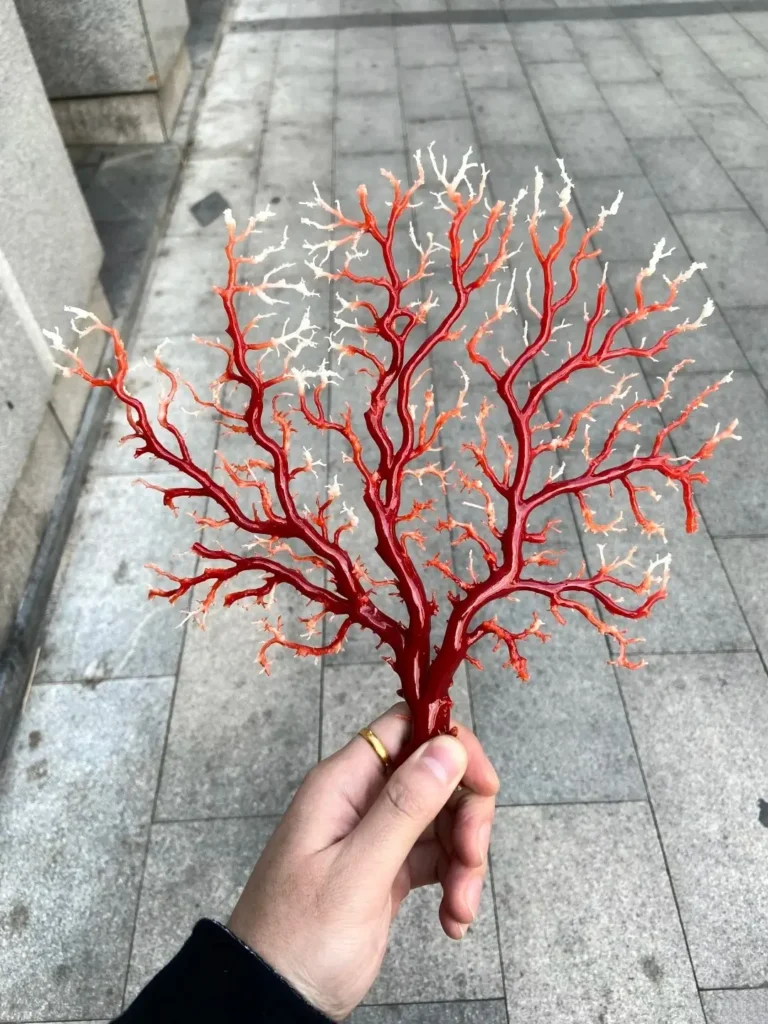
It is easy to see why so many people are confused when they first encounter a piece of Aka Red Coral. Its branch-like silhouette might suggest a plant, while its polished, stone-like surface often leads people to mistake it for a mineral.
The reality, however, is much more fascinating: Red coral is neither plant nor mineral. It is a colonial organism built by countless tiny creatures known as coral polyps.
These microscopic polyps spend their lives secreting calcium carbonate, meticulously building the rigid, protective skeletal structures that eventually form the breathtaking “forests” we see in the deep sea. Over centuries, generation after generation of these polyps add to the colony, creating the dense, intricate frameworks that have captivated humanity for millennia.
Within the vast, diverse family of corals, only a rare, select few meet the high standards required for fine jewelry. These are the precious corals that thrive in the crushing pressures and darkness of the deep ocean—producing the dense, smooth, and vibrant structures that allow them to transcend the biological world and become world-class gemstones.
The Three Elite Lineages of Red Coral
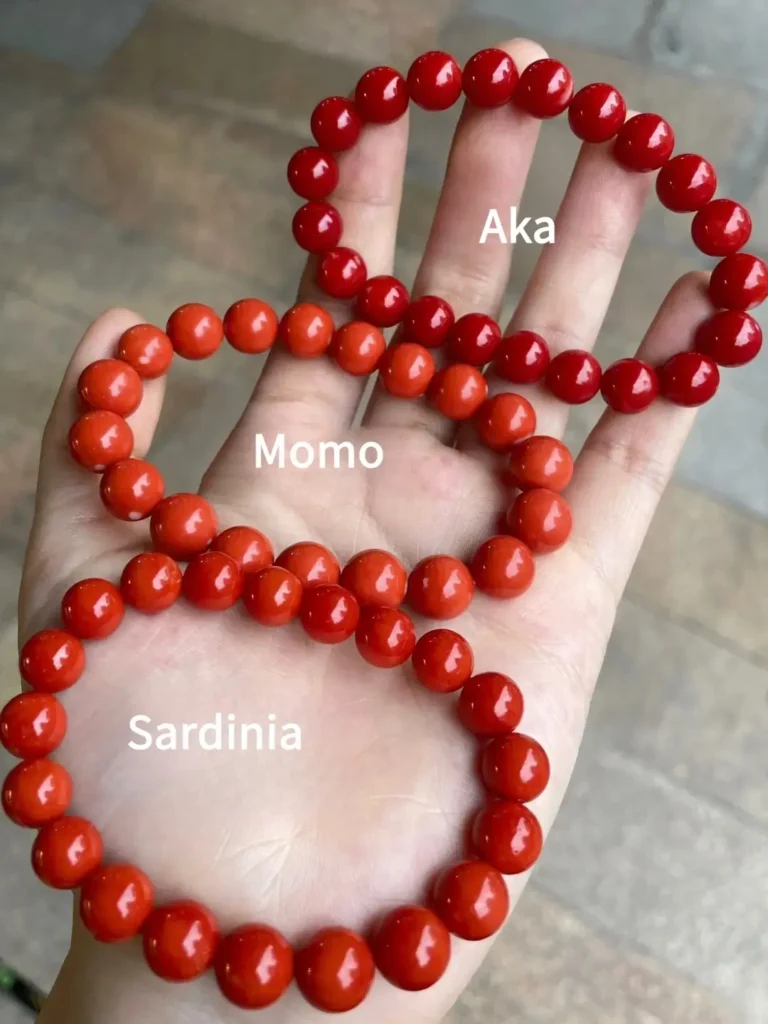
In the precious coral trade, the names Aka, Momo, and Sardinia represent more than just color. They define biological species, specific geographical origins, and unique physical properties.
- Aka Coral: Divers harvest this from the deep waters near Japan and Taiwan. It boasts a deep “Oxblood” red and a distinct, glass-like luster.
- Momo Coral: This also grows in the Pacific. It features a warm, porcelain-like texture and prized soft, peachy-pink hues.
- Sardinia Coral: Sourced from the Mediterranean, this lineage stands out for its uniform color and the complete absence of a “white heart.”
Many buyers overlook one critical industry standard: these names strictly depend on origin.
Exclusivity is absolute. A piece of Mediterranean coral cannot carry the Aka label, even if its color matches deep “Oxblood.” Similarly, Mediterranean specimens cannot claim the Momo name, regardless of their pale, petal-soft tone. If the coral originates in the Mediterranean, the industry classifies it simply as Sardinia.
This rigid classification serves a vital purpose. It does more than just categorize color. It defines the coral’s environmental history and its true value to a collector.
Aka Red Coral: The Pinnacle of the Deep Sea
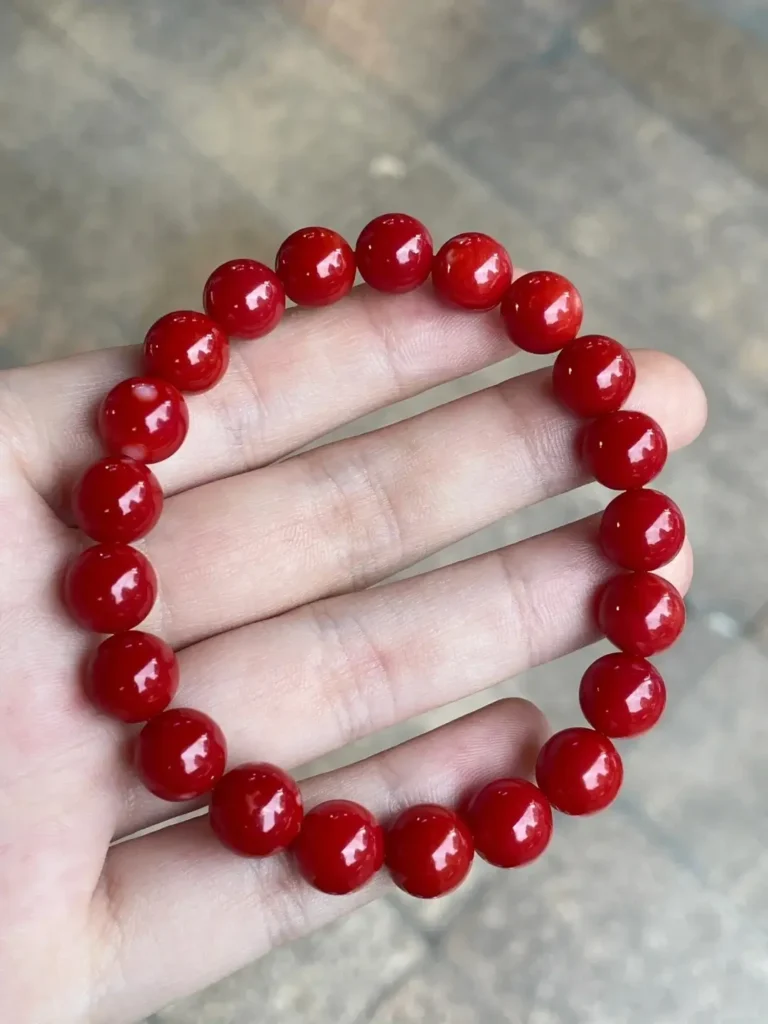
“Aka” originates from the Japanese word for “red.” Since collectors first discovered these specimens during the Meiji era (around 1870), Aka has reigned supreme. Its unmatched depth of color firmly secures its place at the top of the coral pyramid.
1. Visual and Physical Characteristics
- Color: The palette ranges from vivid scarlet to the legendary “Oxblood.” Aka features a superior, glass-like luster, offering better transparency than any other coral variety.
- Texture: The grain is incredibly fine and nearly invisible to the naked eye.
- Natural Signatures:
- The White Heart: A white, ivory-like core often appears at the center of the branch. This is the definitive “ID card” for genuine Aka.
- Pressure Cracks & Wormholes: Deep-sea pressure and marine life leave their marks. Authentic Aka often features subtle surface cracks or tiny, natural wormholes.
2. Identifying Authentic Aka Red Coral
Do not rely solely on the “white heart” to judge a piece. Instead, look for these multi-dimensional traits:
- The White Heart Paradox: If a large coral piece lacks a white heart, proceed with extreme caution. True, high-quality Aka sometimes avoids the white heart through precise cutting, but it remains a rare exception.
- Integrated Evaluation: Experts judge Aka by combining four factors: glass-like luster, fine grain, high transparency, and signature pressure cracks.
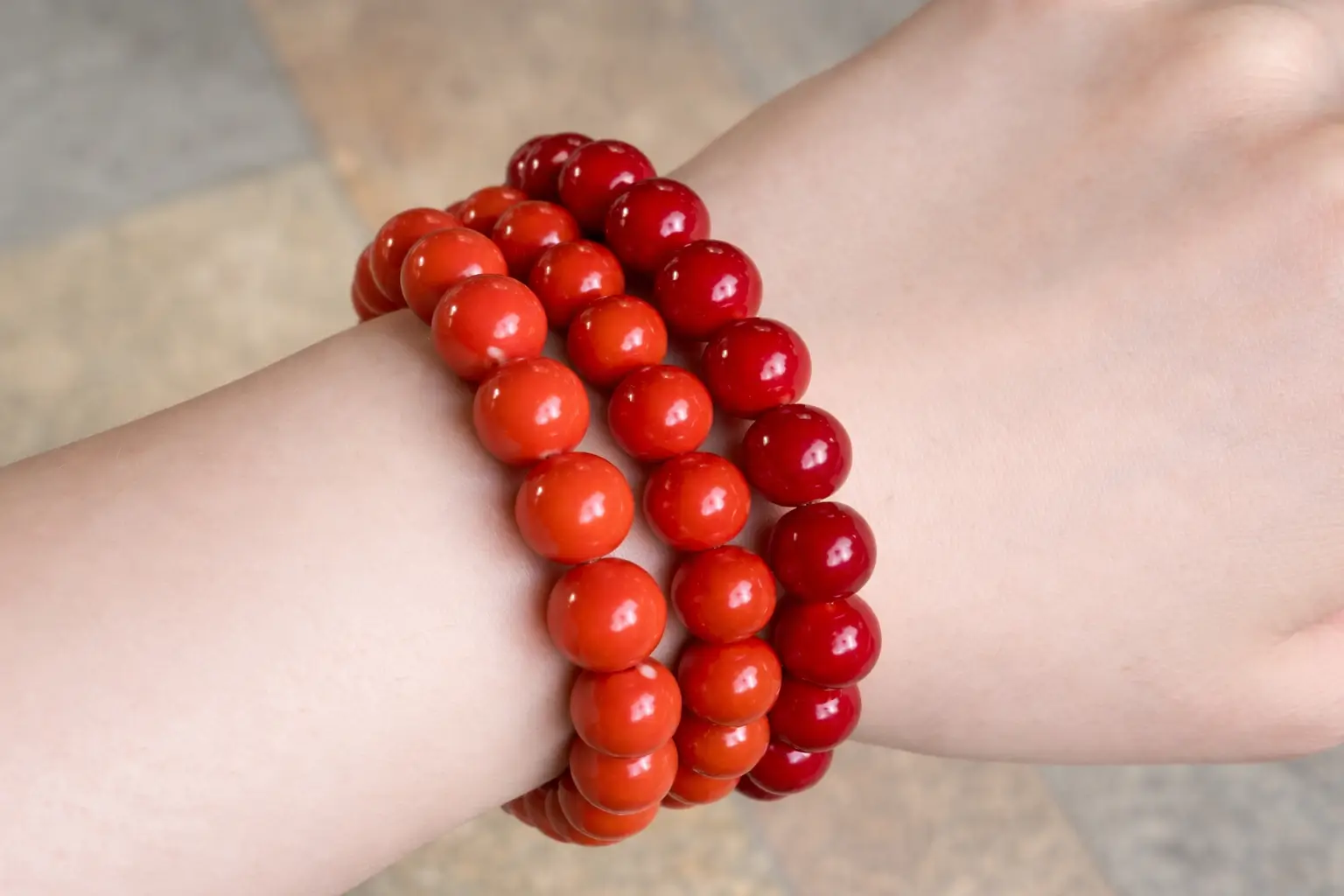
- Aesthetic Form: Aka grows in flat, turtle-shell-like branches due to deep-sea conditions. For this reason, collectors rarely find large, perfectly round beads.
3. Market Value and Rarity
Aka coral dictates the trends of the global collection market. Prices reflect its scarcity (approximate USD values):
- Entry Level: $275 – $700 per gram
- High-End Quality: $830 – $1,100 per gram
- Top-Tier Oxblood: $1,400 – $2,800 per gram
Collector’s Tip: Any Aka round bead exceeding 10mm in diameter is a rare find. Beads over 20mm belong in museums—they are true heirloom-quality treasures with immense appreciation potential.
Momo Coral: The Sculptor’s Muse
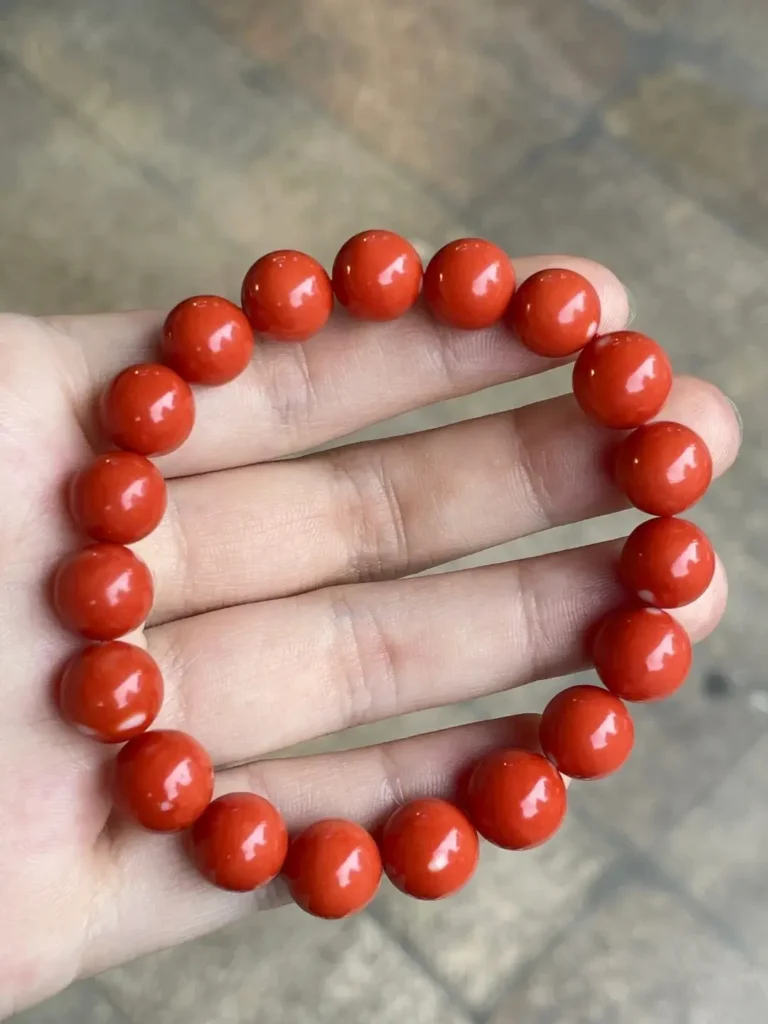
Momo coral derives its name from the Japanese word for “peach” (momoirosango). Collectors adore it for its soft, blossom-like pink hues. Within the “Big Three” of red coral, Momo serves as the backbone of the art collection world, prized for its vast variety and exceptional versatility.
1. Lineage and Identity
Momo boasts the most complex family tree in the coral world. By industry convention, if a precious coral from the Pacific doesn’t qualify as Aka or Mediterranean Sardinia, it belongs to the Momo lineage. Like its deep-sea relatives in the Pacific, Momo always carries a prominent, ivory-like white core.
2. Visual Character and Texture
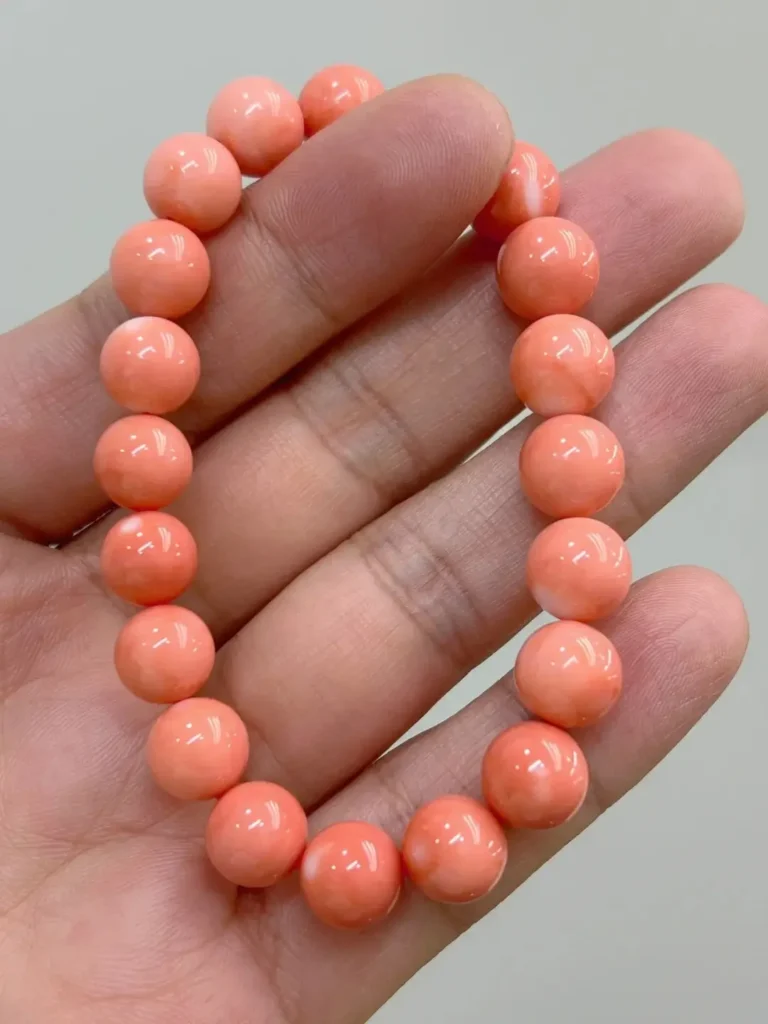
Momo offers an incredible color spectrum. It ranges from pure white and pale pink to vibrant, deep reds. While the spectrum is broad, collectors often prize the lighter, “Angel Skin” pinks above all others.
The texture sets Momo apart. It features a dense, warm, porcelain-like finish. This stands in stark contrast to the sharp, glass-like transparency of Aka coral. This unique quality gives Momo a subtle, grounded elegance that captures the essence of refined Eastern aesthetics.
3. Market Positioning and Value
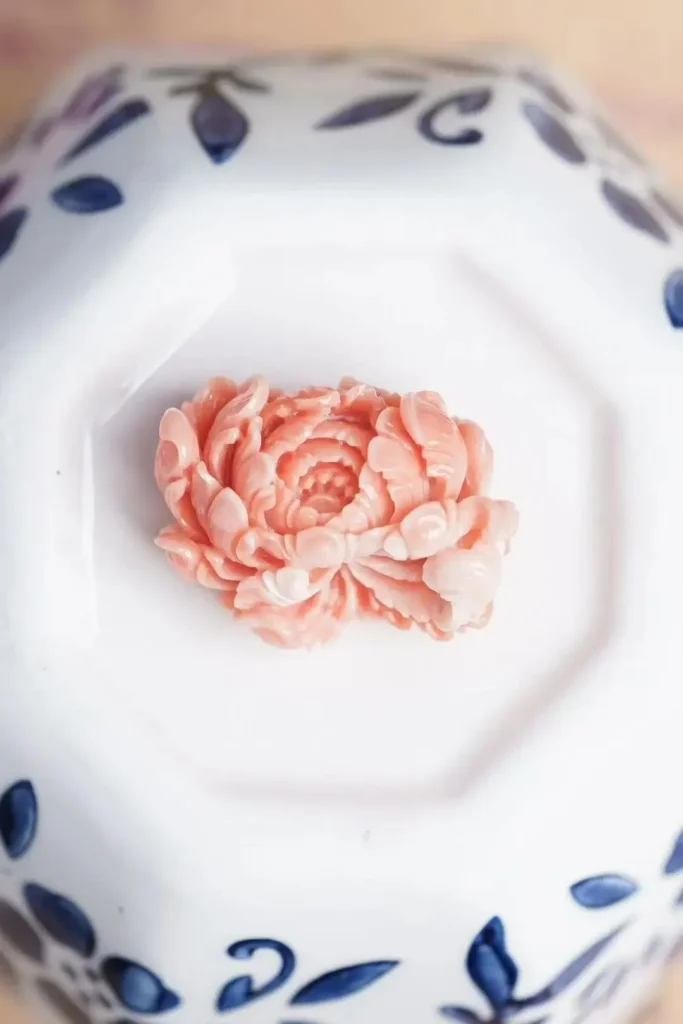
Momo branches grow significantly thicker than those of Aka or Sardinia. This makes Momo the natural choice for large-scale carvings and sculptures.
- Artistic Advantage: These sturdy branches allow for intricate, multi-dimensional carvings. Momo is the primary source for the large statues and bespoke ornaments you see in high-end galleries.
- Investment Insights (USD Estimates):
- Standard Carvings: $70 – $140 per gram.
- Large Masterpieces: For premium specimens or works weighing over 60 grams, prices can climb to $445 per gram.
How to Identify Momo Coral
You can distinguish Momo coral from other lineages by focusing on these three professional indicators:
- Examine the Texture: Look for a dense, porcelain-like finish. High-quality Momo feels incredibly smooth and opaque, yet it possesses a subtle, oily luster that sets it apart from glassier varieties.
- Analyze the White Core: While Momo shares the “white heart” trait with Aka, you will notice distinct differences. Momo’s core is typically wider and rounder, and it often appears alongside visible, organic growth rings.
- Assess the Scale: Momo branches grow much thicker than those of other corals. If you encounter a large-scale, intricately carved centerpiece, you are almost certainly looking at a piece from the Momo family.
Sardinia Coral: The Perfect Entry Point
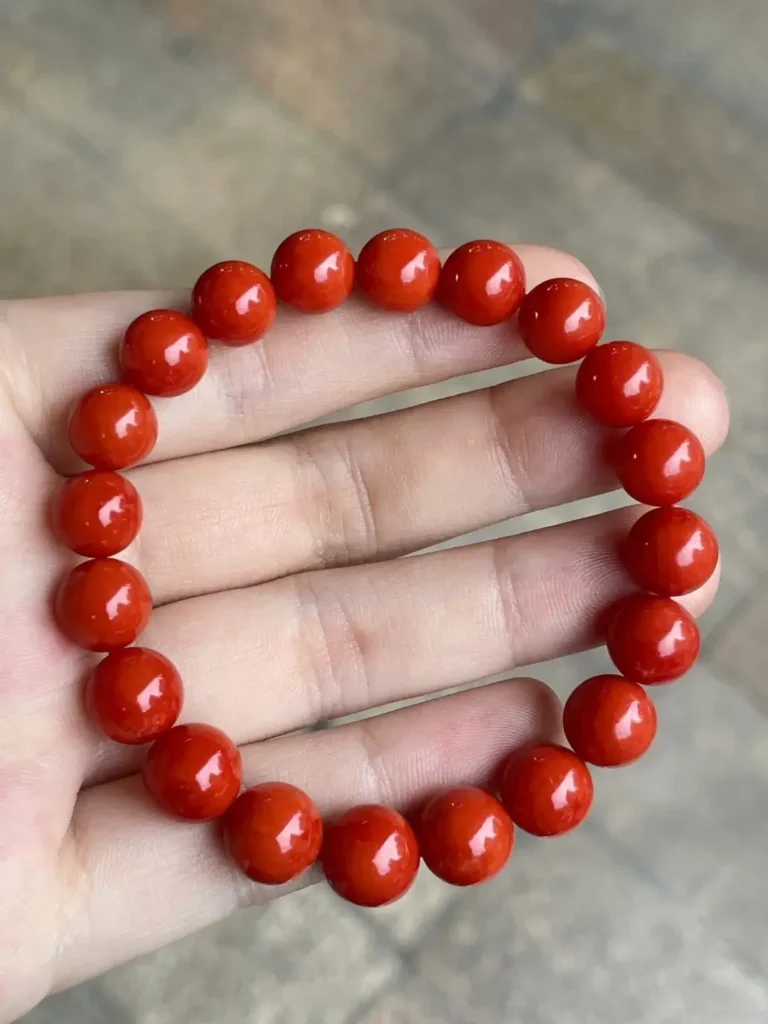
The name “Sardinia” comes from its Mediterranean home—the Italian island of Sardinia. It’s one of the most storied names in the coral world and the perfect “stepping stone” for new collectors. Thanks to its unique origins and naturally uniform color, it’s a total dream for jewelry lovers.
If you’re looking for a red coral piece that’s clean, vibrant, and perfectly matched, Sardinia coral is a fantastic choice. It might not have the “glassy” shine of Aka, but that pure, energetic red looks incredible in the sunlight. Its consistency and shape make it the ultimate go-to for everyday luxury.
1. Origins and Habitat
- Evolution of the Name: Originally, “Sardinia” referred specifically to deep-water coral harvested near the island of Sardinia. Today, the industry uses the term as a catch-all for all precious red coral sourced from the Mediterranean.
- Growth Depth: These corals thrive in relatively shallow waters, typically between 50 and 120 meters deep. This makes Sardinia the most accessible variety among all precious corals.
2. Visuals and Physical Properties
- Color: Sardinia coral displays an incredibly uniform, vibrant, and pure red.
- Structure: The defining feature of Sardinia is the complete absence of a white core or pressure cracks. This distinguishes it immediately from Aka and Momo, and it allows artisans to craft flawless, solid-red beads.
- Density and Transparency: Sardinia possesses a lower density than its Pacific cousins. It is slightly more porous and offers less transparency than Aka or Momo.
- Care Tip: Due to its unique structure, Sardinia coral may lose its luster or appear dull over time with constant wear. It requires more diligent maintenance to keep its deep, rich color.
3. Market Positioning and Pricing
Because Sardinia coral branches remain relatively thin and lack a white core, they provide the ideal material for high-uniformity beaded jewelry. Price points fluctuate significantly based on bead diameter:
- Market Status: Sardinia remains the most accessible lineage, making it the top choice for beginners who value both aesthetics and affordability.
- Market Reference (USD Estimates):
- Small Diameter (< 4mm): $12 – $30 per gram.
- Large Diameter (> 8mm): These are exceptionally rare and reach $100 – $170 per gram.
Why Sellers Often Swap Sardinia for Aka Red Coral
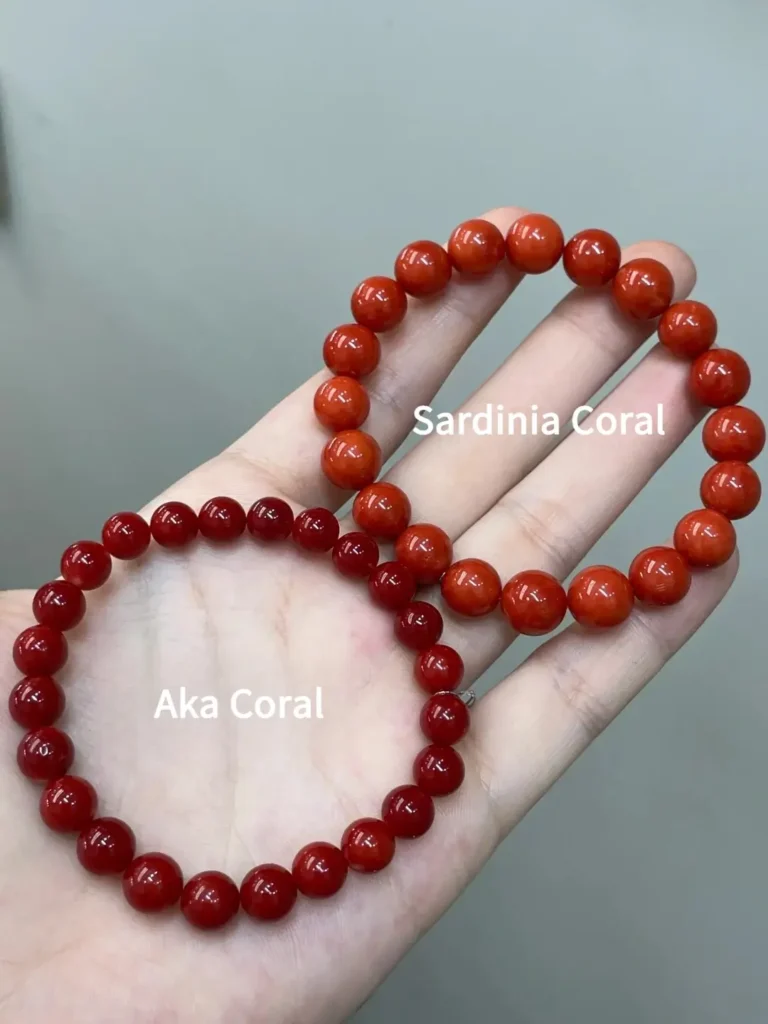
In the red coral market, “bait-and-switch” tactics happen more often than you might think. Sellers frequently mislabel Sardinia coral as Aka, or blur the lines between the two to confuse buyers. You will find this practice most common with round-bead bracelets.
Three key drivers fuel this deception:
1. The Profit Margin Gap
- Supply Mismatch: Aka coral grows slowly in the deep Pacific and remains increasingly rare, making it a top-tier collectible. In contrast, Sardinia coral grows in the Mediterranean and remains relatively abundant.
- Price Exploitation: Because Aka commands a significantly higher price per gram, sellers often pass off Sardinia as Aka to score massive, unfair profits.
2. Visual Deception
To an untrained eye, high-quality Sardinia coral and Aka coral look nearly identical in color. This visual similarity provides the perfect cover for sellers to push Sardinia at Aka prices without raising suspicion.
3. The “Flawless” Bead Myth
- The Aka Challenge: Aka coral naturally grows with a “white heart.” Crafting a perfectly round, solid-red bead requires immense effort and causes massive material waste. This makes large, flawless Aka beads incredibly rare and expensive.
- The Sardinia Shortcut: Sardinia grows without a white heart, so artisans easily carve it into uniform, deep-red beads. If you see a “flawless” all-red coral bracelet at a bargain price, it is almost certainly Sardinia, not Aka.
Spotting “Fake” Aka Red Coral
Distinguishing between Aka and Sardinia coral is easier than you might think. The secret lies in the one trait Aka cannot hide: the “white heart.”
The Aka “ID Card”: Aka coral almost always carries a white heart. Whether you are looking at a cabochon, a round bead, or a carving, this mark usually appears as a white spot, streak, or cloud-like inclusion. Master craftsmen often try to hide it on the bottom or the back of a piece, but a quick inspection of the sides or the reverse usually reveals its presence.
The Sardinia “False Positive”: Sardinia coral never features a true white heart. You may occasionally spot pin-sized white specks or faint, uneven color patches due to its slightly more porous texture, but these bear no resemblance to the dense, ivory-like core of authentic Aka.
While master craftsmen can conceal the “white heart” in top-tier Aka—as seen in the stunning bracelet our follower recently shared—remember that Sardinia coral cannot have a white core. If you find a “top-tier” piece with no white heart at an suspiciously “friendly” price, exercise caution. You are likely looking at Sardinia coral masquerading as Aka, or worse, be wary of dyed coral, which often mimics these deep red tones through artificial means. For more help, check out our guide: Is Your Red Coral Real? Unmasking 10 Common Red Coral Imitations
Red Coral Collection & Maintenance: Common Questions (FAQ)
Absolutely. Think of the white heart as a built-in “ID card”—a natural biological trait of Aka and Momo coral rather than a defect.
It depends on the overall quality. Red coral is a natural deep-sea treasure, so minor pressure cracks or “wormholes” are common characteristics of its growth. While pieces with flawless surfaces and deep, consistent color command a premium, be wary of anything that looks “perfect” at a bargain price. Often, those are simply mass-produced dyed sea bamboo or plastic imitations. In the world of genuine red coral, slight natural “flaws” are actually nature’s way of verifying authenticity.
We recommend wearing it on your left wrist.
From an Energy Perspective: Following the traditional belief of “energy in, energy out” (left-in, right-out), wearing it on the left is said to better absorb the coral’s gentle, positive energy.
From a Practical Perspective: Since most people are right-handed, wearing your bracelet on the left helps minimize accidental knocks, scratches, and wear from daily activities.
Red coral is a delicate organic gemstone, so treat it with care. Follow these simple “science-backed” guidelines to keep it vibrant:
The “Last On, First Off” Rule: Apply your makeup, perfume, and lotions first. Let them fully absorb into your skin before putting on your coral jewelry.
Avoid Chemical Contact: Always remove your pieces before showering, swimming, or doing housework involving soaps or detergents.
Watch Out for Sweat: Coral is sensitive to acidity. Avoid wearing it for long periods in high-heat environments, and wipe it down immediately after each use.
Jewea Final Thoughts: A Rare Gift from the Deep
Natural coral is the product of centuries of slow growth, a non-renewable treasure formed by coral polyps in the deep sea. Due to the extreme challenges of the marine environment, the harvesting of intact coral branches remains incredibly difficult and strictly limited.
Whether it is Aka, Momo, or Sardinia, each piece is a precious gift from nature—there is no hierarchy among them. At Jewea, we believe that every white core or natural “wormhole” is not a flaw, but a unique signature left by the ocean—a testament to the authenticity of this rare organic beauty.