Types of Quartz Crystals: A Complete Collector’s Guide to Natural Varieties
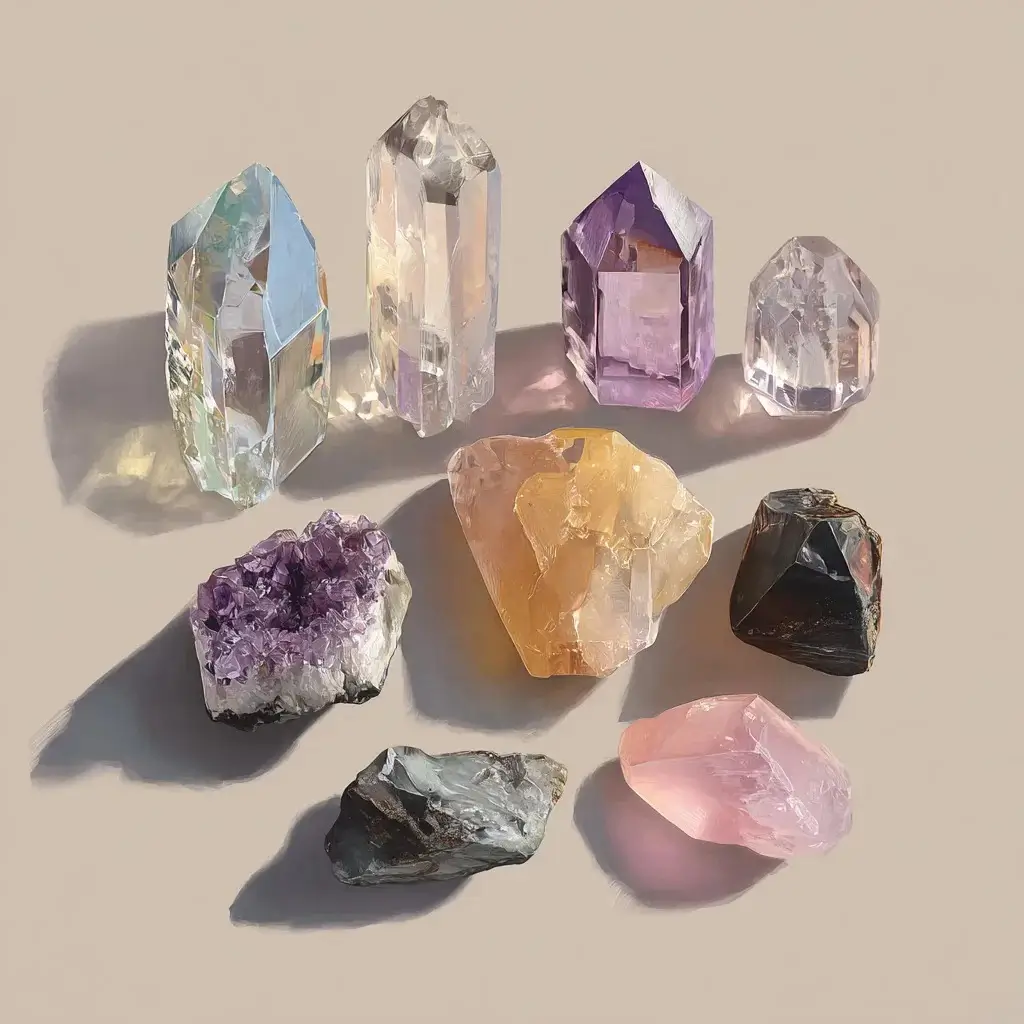
“How many types of quartz crystals are there?” It’s a question collectors often ask. While there is no precise number, the jewelry-grade crystal varieties encountered on the market easily reach into the hundreds. If you want a broader view, check out 50 Quartz Varieties: Can You Name Them All?
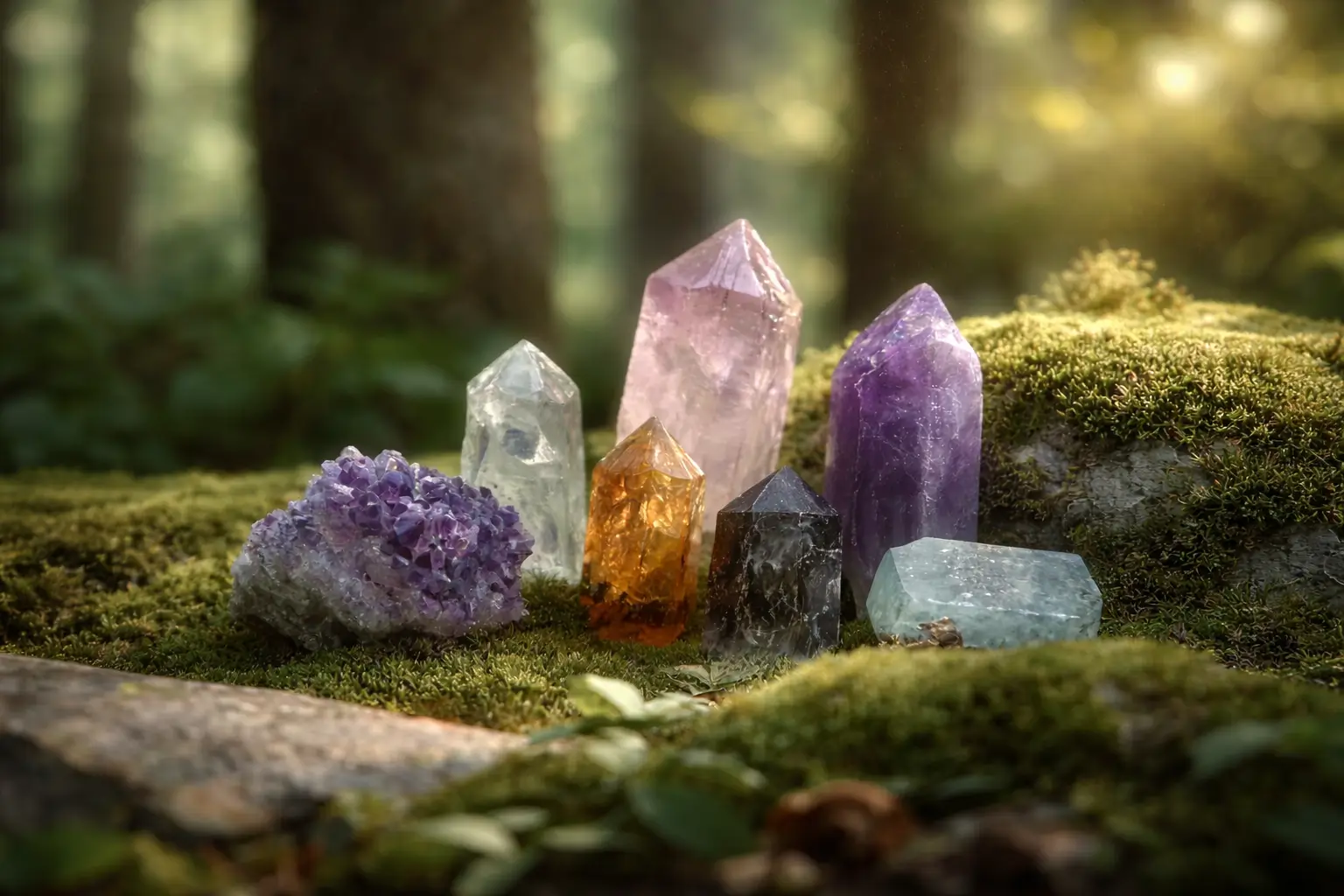
In everyday language, the word crystal is often used to describe a wide range of transparent or visually striking gemstones. From a mineralogical perspective, however, many of these so-called “crystals” actually belong to the Quartz family. Quartz is one of the most diverse minerals on Earth, capable of forming an extraordinary range of crystal varieties distinguished by color, clarity, and internal structures.
Among these, the most familiar gemstones are crystal-form quartz varieties—stones that develop well-formed crystals and are prized for their transparency, color, and fascinating internal patterns. Varieties such as Amethyst, Citrine, Phantom Quartz, and Rutilated Quartz are some of the most recognizable examples.
In our broader guide to Quartz Varieties, we explore the full spectrum of quartz forms, including chalcedony, agate, and other massive quartz aggregates. This article focuses specifically on types of quartz crystals—the transparent and inclusion-rich varieties most commonly collected and used in jewelry.
Unlike many traditional gemstones, where value is determined mainly by clarity, quartz crystals follow three distinct aesthetic and market frameworks:
- Clarity-Driven Varieties — where value lies in the purity of color and optical transparency.
- Inclusion-Driven Varieties — where rarity, internal formations, and visual patterns define the stone’s uniqueness.
- Optical Quartz Varieties — where light interactions, such as asterism or iridescence, create dynamic visual effects.
To help you navigate this fascinating world, we’ve organized the most important types of quartz crystals into a clear and practical guide. Let’s explore how these natural crystal varieties are classified and what makes each one truly distinctive.
Table of Contents: Types of Quartz Crystals
- What Are Quartz Crystals?
- I. Types of Quartz Crystals by Color
- Rock Crystal (Clear Quartz)
- Citrine (Yellow Quartz)
- Rose Quartz
- Amethyst
- Smoky Quartz
- Ametrine (Bi-color Quartz)
- Prasiolite (Green Quartz)
- II. Types of Quartz Crystals with Inclusions
- Phantom (Ghost Crystal)
- Rutilated Quartz
- Titanium Quartz
- Rabbit-Hair Quartz
- Hematoid Quartz
- Strawberry Quartz (Lepidocrocite-Inclusion Quartz)
- Enhydro Quartz (Water-Included Quartz)
- Petroleum Quartz (Oil Quartz)
- Quartz-in-Quartz
- III. Optical Types of Quartz Crystals
- Rainbow Quartz (Iris Quartz)
- Star Quartz (Asteria Quartz)
- Summary & Jewea’s Insights
What Are Quartz Crystals?
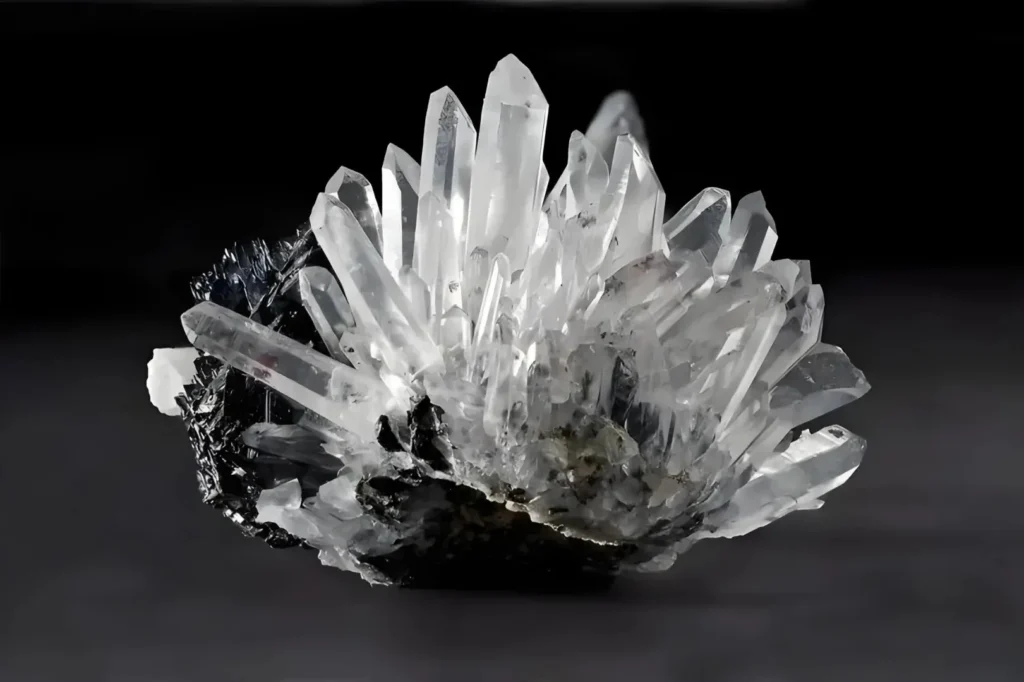
Quartz crystals are naturally formed crystals of silicon dioxide (SiO₂), one of the most abundant minerals in Earth’s crust. Under suitable geological conditions, silica-rich fluids slowly crystallize within cavities or fractures in rock, allowing quartz to develop its characteristic six-sided prismatic crystal structure with pointed terminations.
Because quartz is chemically simple but structurally stable, it can form an extraordinary range of crystal varieties. Trace elements, natural radiation, temperature changes, and internal inclusions can all influence the final appearance of a crystal. As a result, quartz crystals occur in many colors and forms, from the deep purple of Amethyst to the golden tones of Citrine or the smoky transparency of Smoky Quartz.
In mineralogy, quartz appears in two major structural forms. The first is macrocrystalline quartz, which forms visible individual crystals such as Amethyst, Citrine, and Rock Crystal. The second is cryptocrystalline quartz, where microscopic crystals grow together to form dense aggregates such as chalcedony and agate. While both belong to the broader quartz family, this guide focuses specifically on macrocrystalline varieties—commonly referred to as quartz crystals.
These crystal-form varieties are the ones most frequently encountered in jewelry, mineral collections, and the global crystal market. Their combination of transparency, color diversity, and fascinating internal structures makes them some of the most recognizable and widely collected gemstones in the world.
In the sections below, we will explore the most important types of quartz crystals, beginning with color-based varieties and then moving into the remarkable world of inclusion-rich quartz.
I. Types of Quartz Crystals by ColorI
Quartz varieties fall into distinct color groups based on the specific trace elements within their crystal lattice or the presence of color centers caused by structural defects. Consequently, the color of each crystal not only defines its visual appeal but also reflects the unique geological processes that formed it.
1. Rock Crystal (Clear Quartz)
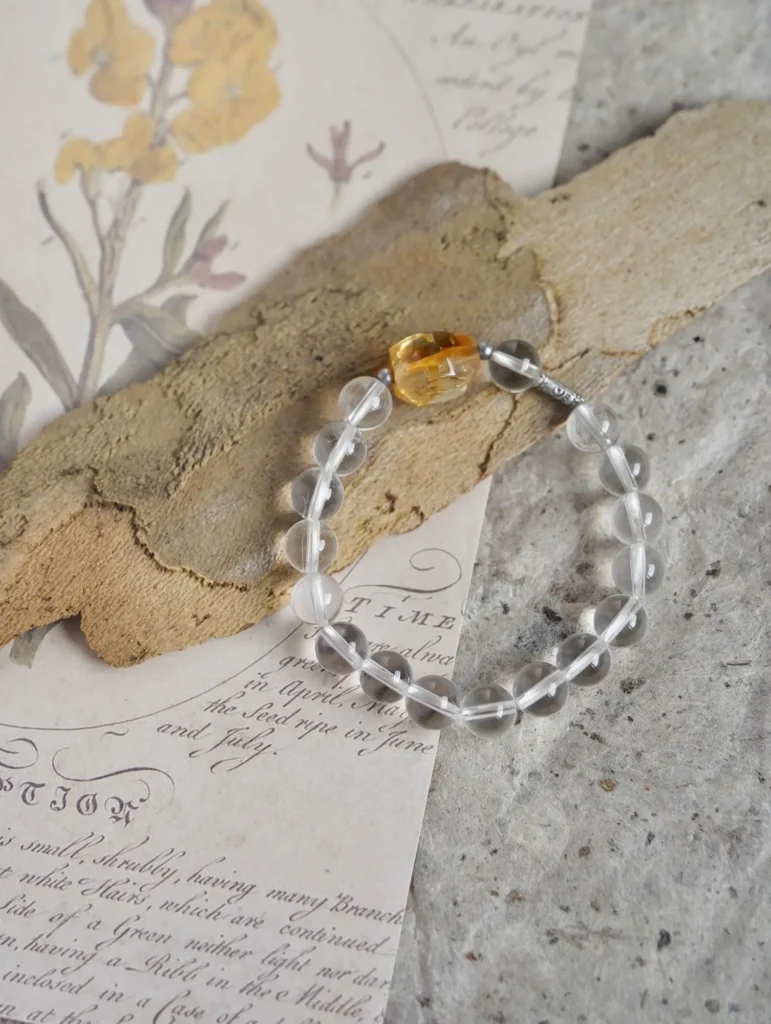
Minimalist Rock Crystal Bracelet in Natural Quartz
Rock Crystal, also known as Clear Quartz, is the purest and most fundamental form of quartz crystal. Composed of transparent silicon dioxide with no trace coloring elements, it represents quartz in its most structurally simple state.
High-quality specimens are valued for their exceptional clarity and transparency, ideally appearing “eye-clean” without visible inclusions, fractures, or cloudy zones often described in the trade as “cotton.” Because of its optical purity and durability, Rock Crystal has been used for centuries in jewelry, carvings, and ornamental objects.
In the modern gemstone market, clear quartz ranges from affordable clear quartz jewelry for everyday wear to collector-grade crystals boasting exceptional clarity and structural form. While often visually subtle, clear quartz serves as the foundation for countless other varieties, which gain their unique color or visual complexity through trace elements and natural inclusions.
2. Citrine (Yellow Quartz)
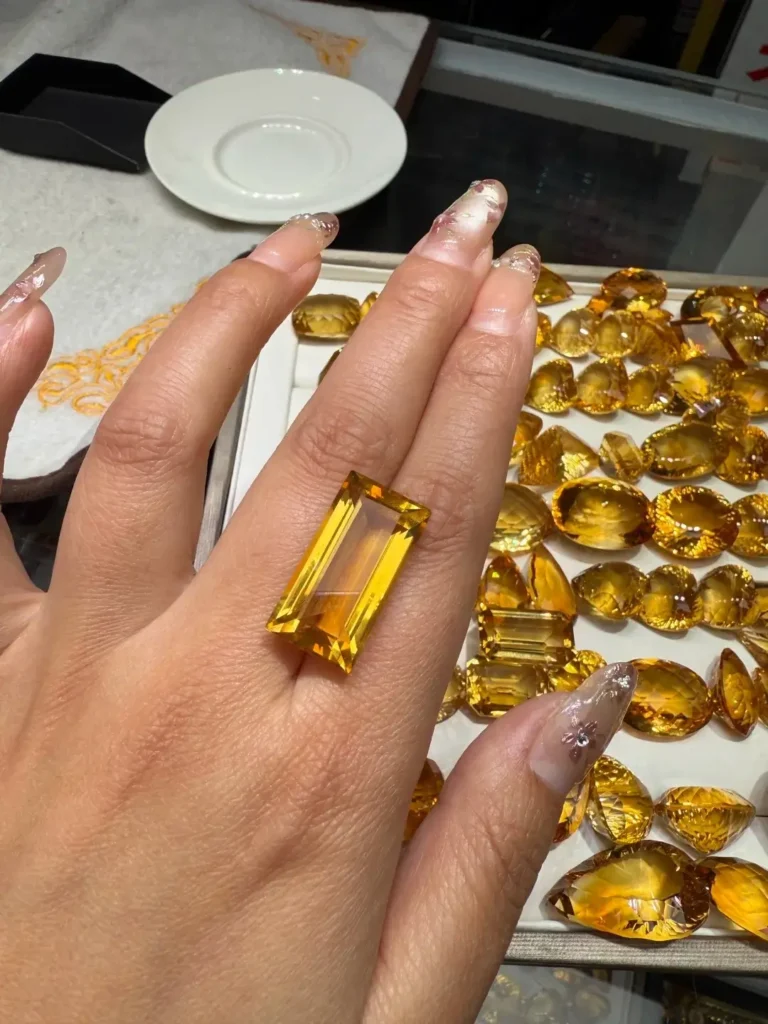
Citrine is a radiant yellow quartz crystal prized for its sunny, golden hues. Its natural colors range from soft pale yellow to deep honey gold, with the rare “Madeira” orange being most coveted. The color originates from ferric iron (Fe³⁺) within the crystal lattice.
Genuine citrine is uncommon; most market specimens are heat-treated amethyst. Collectors should focus on clarity and natural color depth rather than uniform, overly vibrant tones. True natural citrine often forms near amethyst clusters, offering subtle, earthy warmth that synthetic or enhanced stones cannot replicate.
3. Rose Quartz
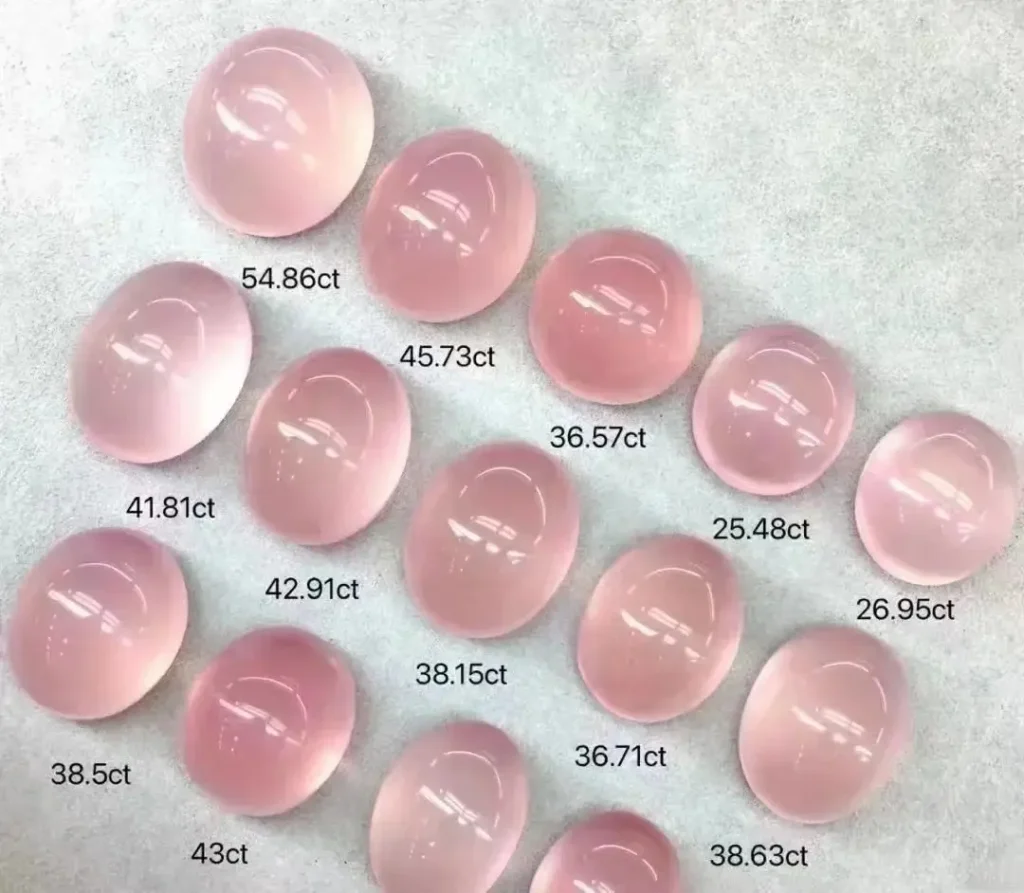
Rose Quartz captivates with its soft pastel to deep rose hues. Its pink color originates from trace manganese (Mn) and titanium (Ti) within the crystal lattice. Some specimens display dense rutile needles that create a star effect (asterism) when polished.
Rose Quartz, often referred to as “Furong” stone in China, is durable enough for daily wear; however, it remains sensitive to heat and prolonged sunlight, which can cause its delicate color to fade. Proper care is essential to preserving its ethereal beauty. To master the art of identifying and maintaining these stones, explore our guide: Furong Stone Explained: Rose Quartz vs Shoushan Stone — Two Gems, One Name.
4. Amethyst
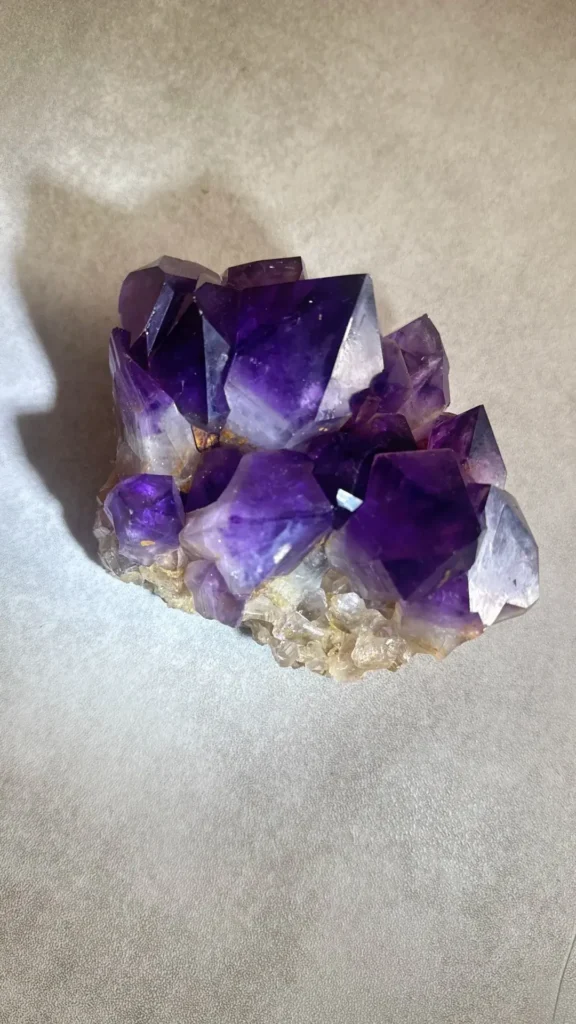
Amethyst captivates with a spectrum from soft lilac to deep violet. Its color originates from trace iron (Fe) activated by natural radiation, forming stable color centers within the crystal lattice.
This transparent-to-translucent quartz is prized in jewelry, but its hue is sensitive to heat and prolonged sunlight, which can fade the color. Proper storage away from intense light and high temperatures preserves its rich, regal tones. For those who want to integrate this gemstone into their personal style, explore our curation: Amethyst—The Aristocratic Beauty in Everyday Life.
5. Smoky Quartz
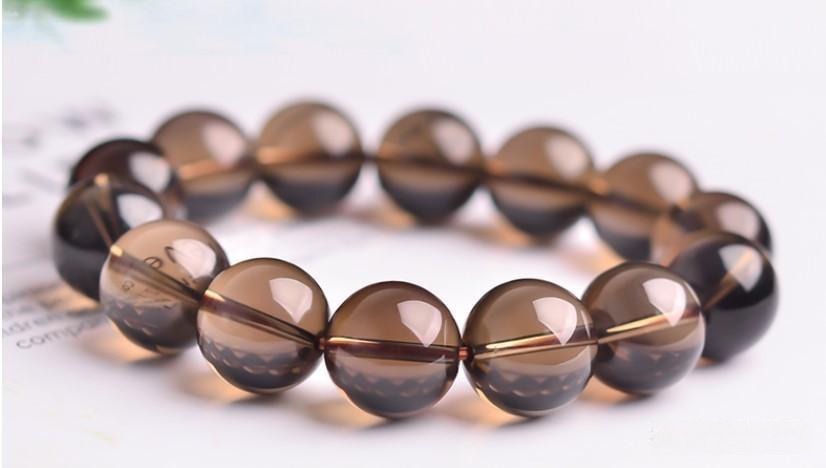
Smoky Quartz masters the art of subtlety and earth-toned elegance. It encompasses everything from ghoSmoky Quartz ranges from translucent gray to deep brown, with the nearly opaque black variety known as Morion. Its signature smoky hue forms when natural irradiation alters the quartz lattice over millions of years.
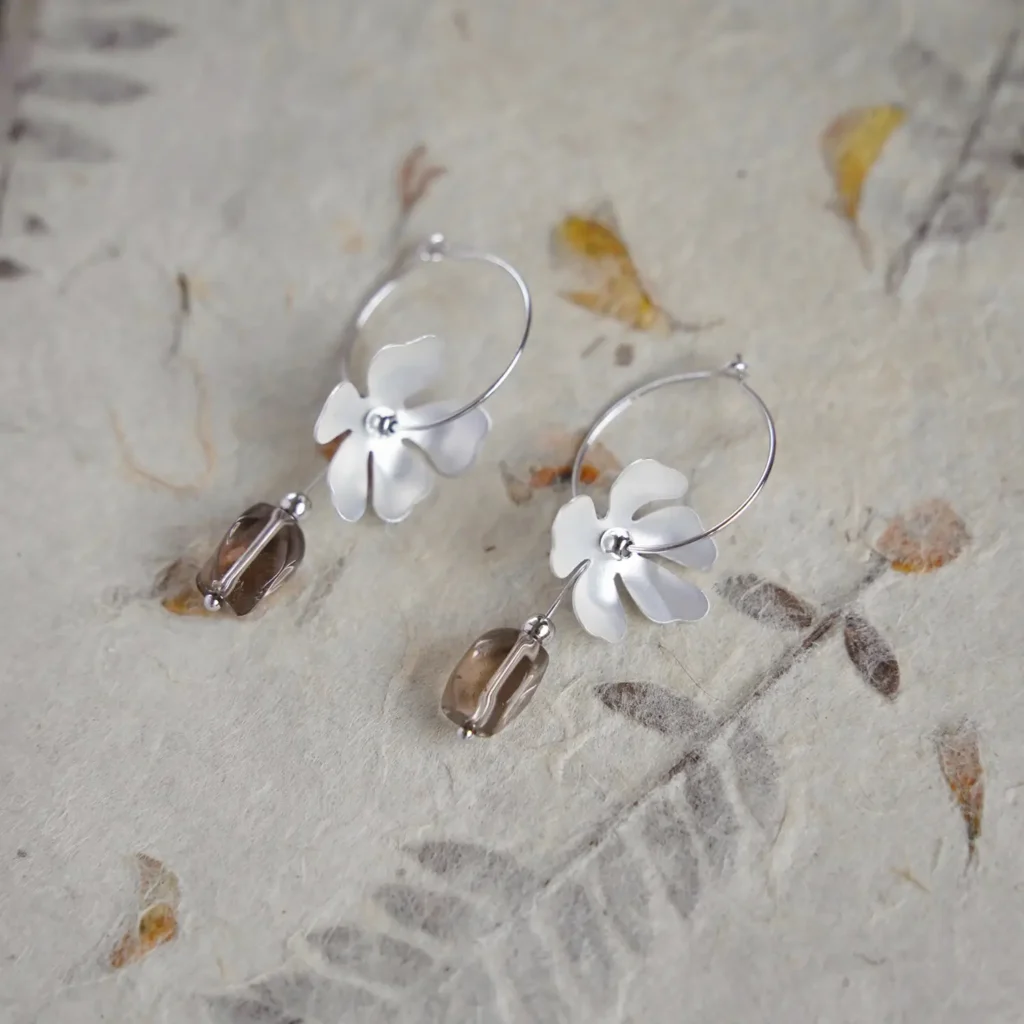
Smoky Quartz 925 Sterling Silver Hoop Earrings
The color is sensitive to heat, which can fade the dark tones back to clear quartz. High-quality specimens balance rich, earthy shades with internal clarity, capturing light while retaining their grounded, subtle elegance.
6. Ametrine (Bi-color Quartz)
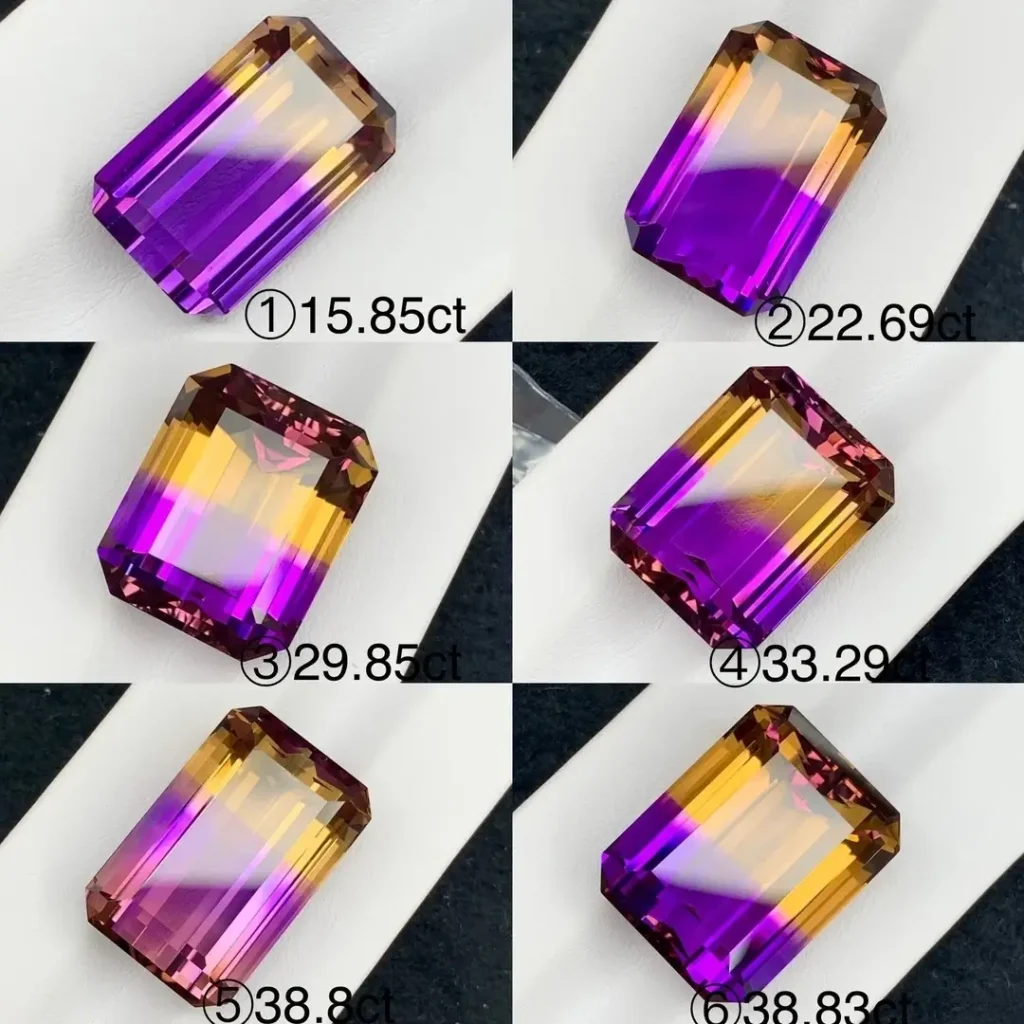
Ametrine combines Amethyst and Citrine within a single crystal, producing a natural division of purple and yellow hues. Its unique colors result from iron in different oxidation states across the crystal lattice, often enhanced by internal twinning.
Natural, gem-quality Ametrine is rare and sourced from very limited locations. Many market specimens are heat-treated Amethyst to simulate the dual tones—beautiful, but lacking true geological origin.e instances, artisans apply precise, localized heat to natural Amethyst, forcing specific zones to transform into Citrine. While these stones are beautiful, they lack the organic, geologic origin of a truly natural Ametrine. Always look for that unmistakable, naturally occurring boundary between the colors.
7. Prasiolite (Green Quartz)
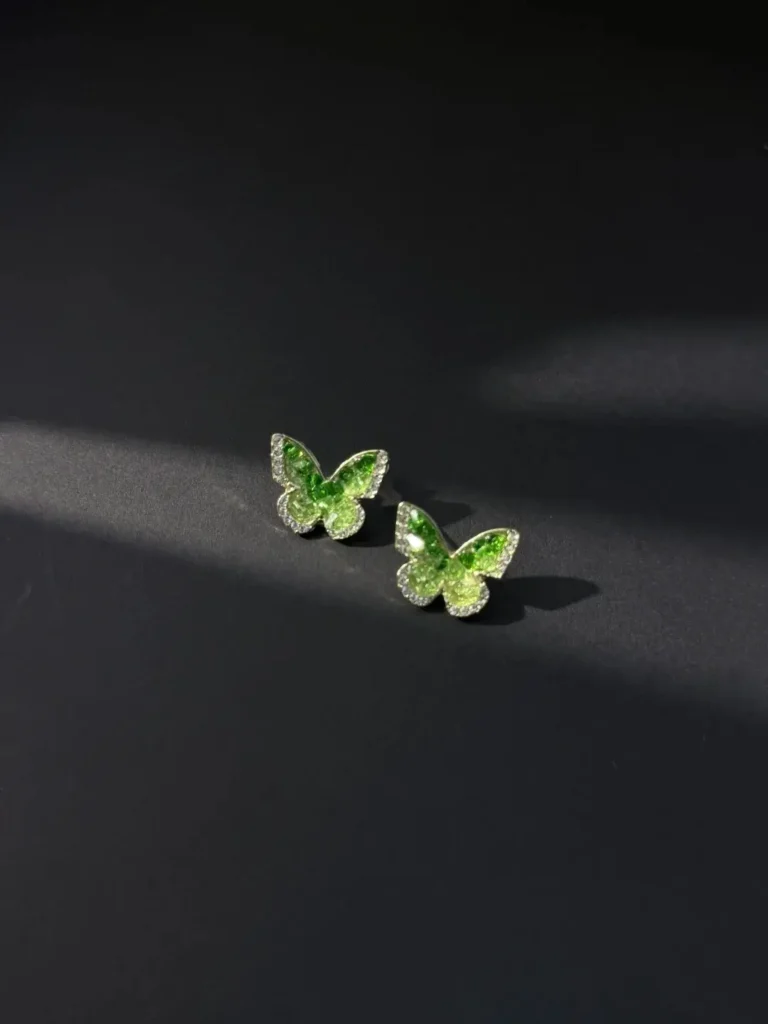
Prasiolite is a green quartz variety ranging from soft mint to vibrant yellow-green. Its color comes from ferrous iron (Fe²⁺) in the crystal lattice.
Truly natural Prasiolite is extremely rare; most market specimens are heat-treated Amethyst, carefully stopped before full conversion to Citrine. These stones are attractive but differ from naturally formed gems. Always check labeling to ensure authenticity.
II. Types of Quartz Crystals with Inclusions
Collectors prize these specimens for their geological rarity. As these crystals grow, they trap minerals and fluids, effectively creating natural “time capsules.” To explore the science behind these unique structures, read: Steel Wool, Eyelashes, and Feathers Inside Crystals? Yes, They’re All Natural! Through these complex internal inclusions, each quartz crystal tells a vivid story of the Earth’s formative processes.
1. Phantom (Ghost Crystal)
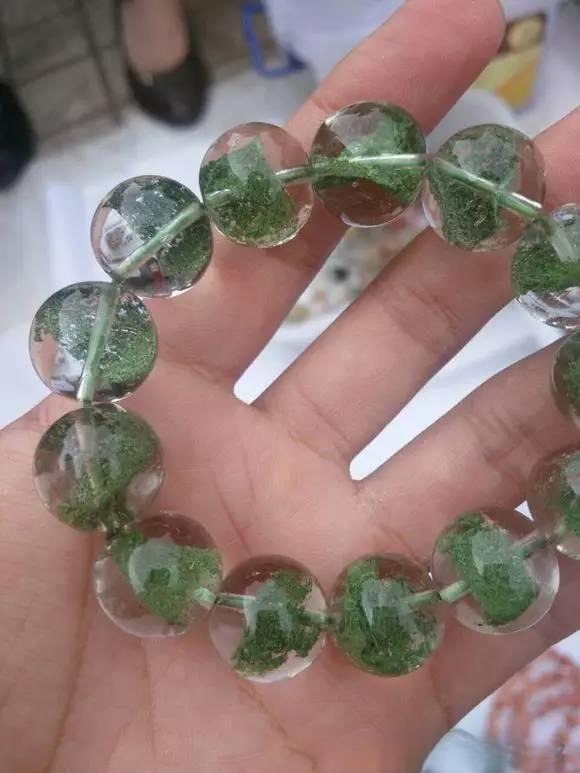
Phantom Quartz forms when a crystal traps layers of minerals during growth, creating ghostly outlines of earlier crystal stages. When these inclusions resemble miniature scenic vistas, they are called Landscape Quartz.
- Formation: Mineral particles settle on the crystal during growth, then are sealed by later quartz layers.
- Core Varieties:
- Green Phantom: Chlorite inclusions; highly prized.
- Multi-Colored Phantom: White, red, pink, yellow, or purple shades.
- Four-Season Phantom: Rare, all four colors in one crystal.
Collectors value these stones for their visual story of the crystal’s growth and the clarity that frames it. The Four-Season Phantom represents the pinnacle of this category.
2. Rutilated Quartz
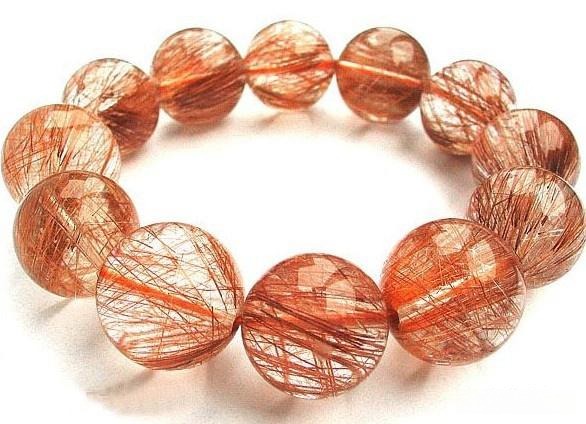
RRutilated Quartz and related varieties feature needle-like or fibrous mineral inclusions within transparent quartz, creating striking natural patterns often called “nature’s artwork.”
- Formation: Mineral fibers grow inside quartz during crystallization, creating hair-like or radiating patterns.
- Core Varieties:
- Rutilated Quartz: Golden to brownish-yellow needles, metallic luster.
- Actinolite Quartz: Deep green, flat, lath-like fibers.
- Tourmalinated Quartz: Black or green tourmaline needles, cross-section shows Reuleaux triangle.
- Limonite Quartz: Red to brown-red inclusions.
- Dumortierite Quartz: Blue fibers in dense, short clusters.
Jewea Tip: Inspect inclusions with a 10x loupe. Authentic needles show natural, rhythmic growth; color pooling or artificial uniformity often indicates treatment or dye.
3. Titanium Quartz
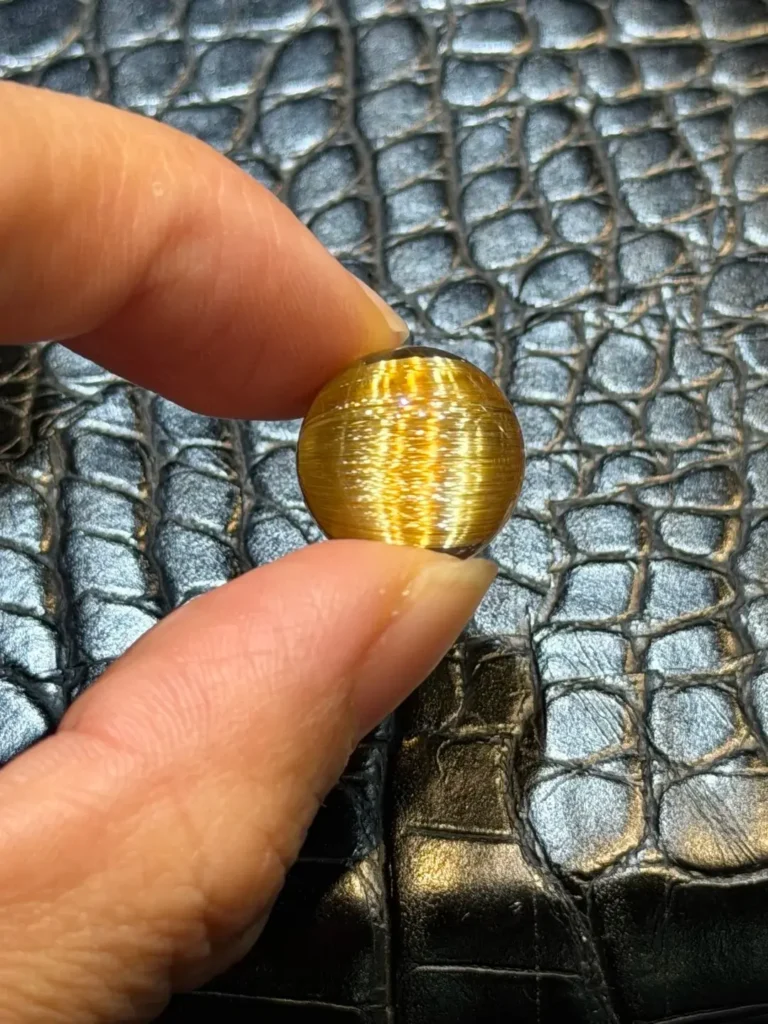
Titanium Quartz is a premium, high-density form of Rutilated Quartz distinguished by broad, bladed Rutile inclusions rather than fine needles. Its metallic sheen and optical “flash” make it a standout collector’s piece.
- Formation: Thick, plate-like Rutile crystals grow under rare geological conditions.
- Optical Effect: Broad inclusions reflect light intensely, often producing a cat’s-eye–like shimmer.
- Rarity & Value: Scarce due to the precise conditions required for dense, bladed growth.
Jewea Tip: Look for dynamic light play across the Rutile blades. Titanium Quartz is considered the “masterpiece” of Rutilated Quartz, prized for both visual impact and structural complexity.
4. Rabbit-Hair Quartz
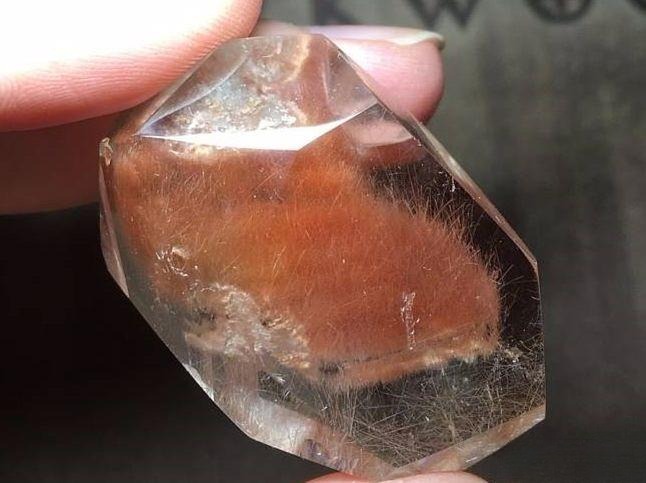
Rabbit-Hair Quartz features extremely fine, fibrous inclusions that resemble soft animal fur, creating a delicate, cloud-like texture within the crystal.
- Formation: Dense, hair-thin mineral strands interweave during crystal growth.
- Color Variants: White, Green, Red, Yellow, Gray.
- Collector Focus: High-quality specimens show uniform fiber density and a clear host quartz to maximize visual contrast.
Jewea Tip: Offers a gentle, organic beauty compared to metallic Rutilated Quartz. Transparency of the host crystal enhances the “furry” effect, making it a subtle but captivating collector’s piece.
5. Hematoid Quartz
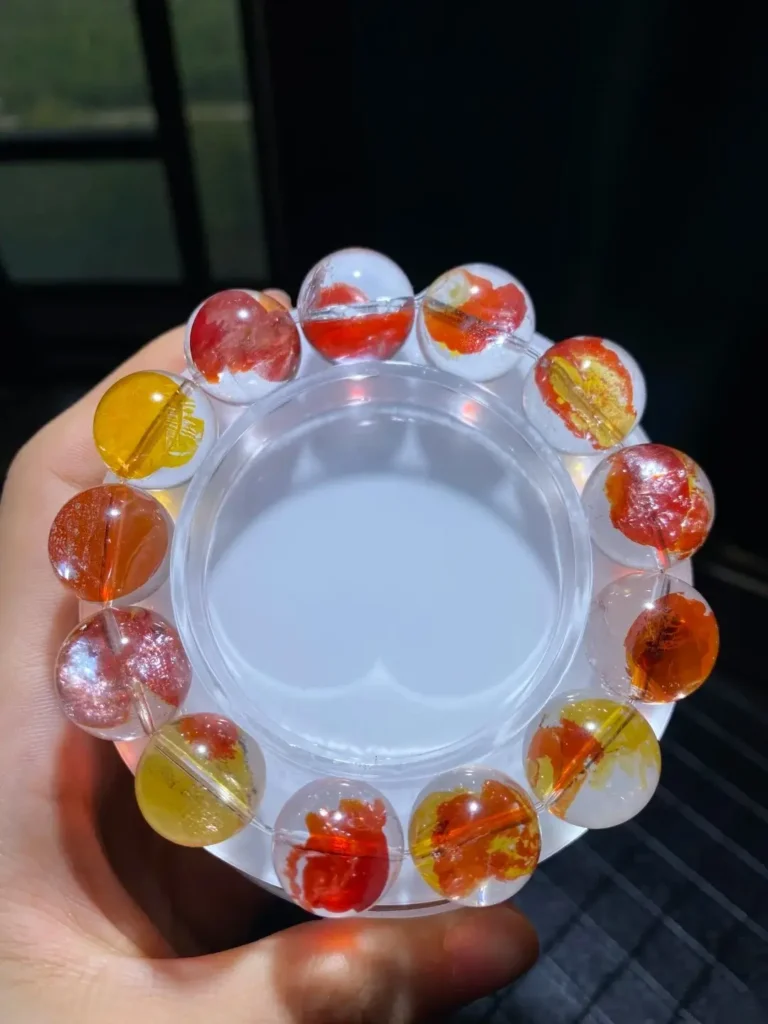
Hematoid Quartz features mineral inclusions that form delicate, petal- or flower-like patterns within clear quartz, creating a unique “second-growth” effect.
- Formation: Secondary-filling inclusions form when iron-rich fluids penetrate stress-induced fissures in the host crystal.
- Color Variants: Deep brown, reddish-brown, yellow; commonly called Red or Yellow Hematoid.
- Collector Focus: Each piece is unique; high-transparency quartz enhances the suspended, floral effect.
Jewea Tip: Treasured for its organic, unpredictable patterns that mimic miniature landscapes or blooms inside the crystal, offering a one-of-a-kind visual experience.
6. Strawberry Quartz (Lepidocrocite-Inclusion Quartz)
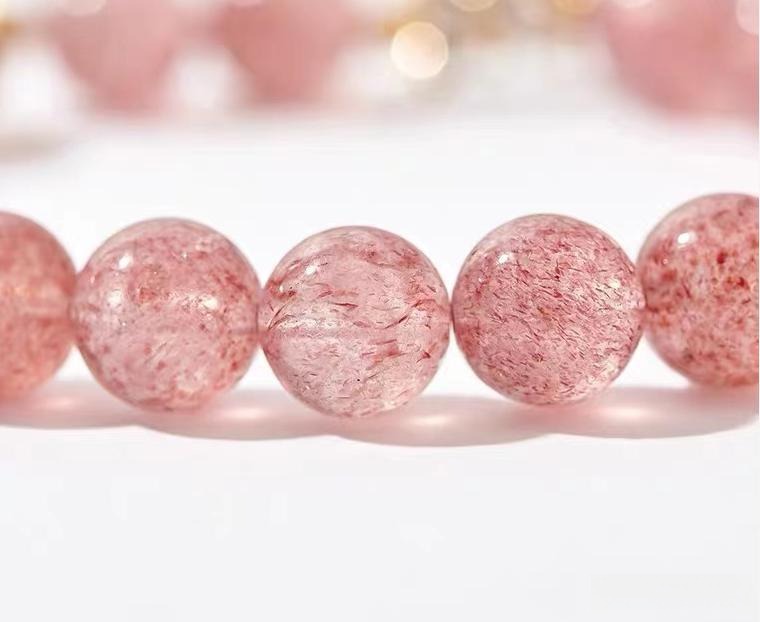
StraStrawberry Quartz features iron-oxide inclusions (hematite or lepidocrocite) that give the quartz a delicate pink to warm crimson hue.
- Formation: High-density mineral inclusions trapped during crystal growth create the characteristic “berry-like” effect.
- Appearance: Inclusions appear as fine needles, scaly particles, or dense clusters, scattering light to produce soft, textured internal patterns.
- Collector Focus: Balance is key—high-quality pieces combine vivid color with transparency that reveals the intricate internal structures.
Jewea Tip: Genuine Strawberry Quartz shows an organic, unforced arrangement of inclusions, unlike glass or painted imitations, offering a natural, “frozen strawberry pulp” aesthetic prized by collectors.
7. Enhydro Quartz (Water-Included Quartz)
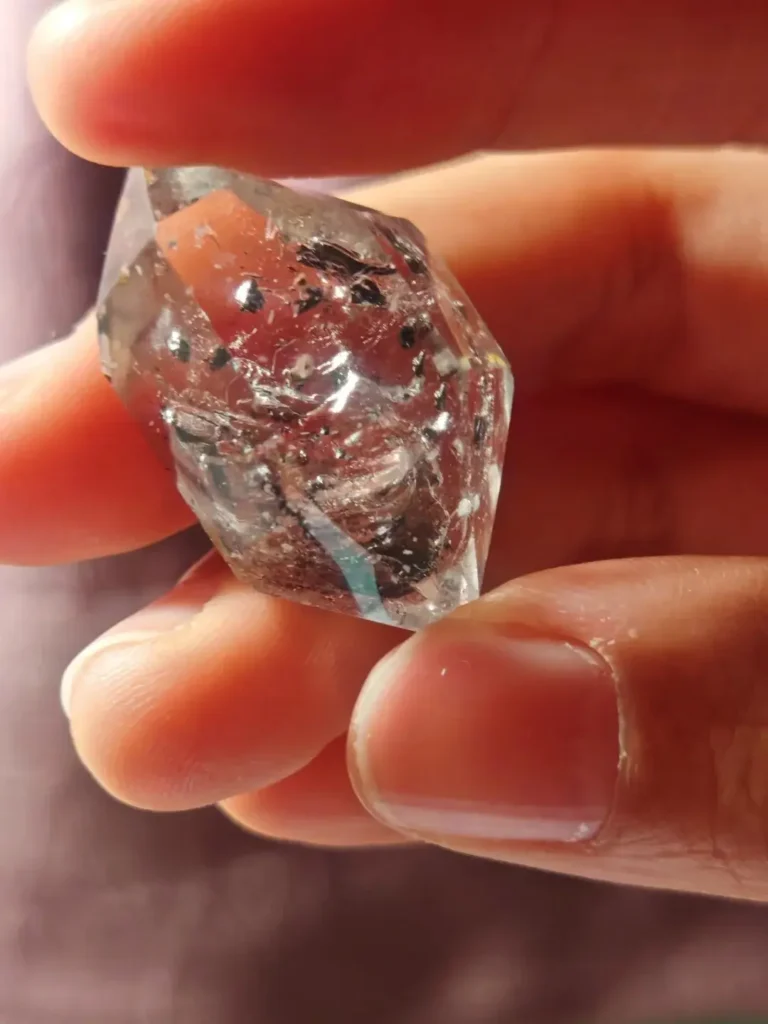
Enhydro Quartz functions as a “geological time capsule.” During the crystal’s growth process millions of yEnhydro Quartz preserves tiny pockets of ancient mineralizing fluids, acting as a “geological time capsule.” These natural inclusions make it highly prized by collectors and researchers alike.
- Formation: Quartz grows in hydrothermal systems, enclosing liquid, gas, or solid particles from the original environment.
- Classification by Inclusion:
- Single-phase liquid – cavity contains only liquid.
- Two-phase gas-liquid – liquid with a floating gas bubble; most common.
- Two-phase liquid-solid – liquid with tiny solid particles that move when tilted.
- Collector Focus: Look for clear quartz with well-defined cavities; movement of liquid or particles adds uniqueness and value.
Jewea Tip: Rotate the crystal to observe the motion of trapped fluids—this dynamic feature is exclusive to Enhydro Quartz.
8. Petroleum Quartz (Oil Quartz)
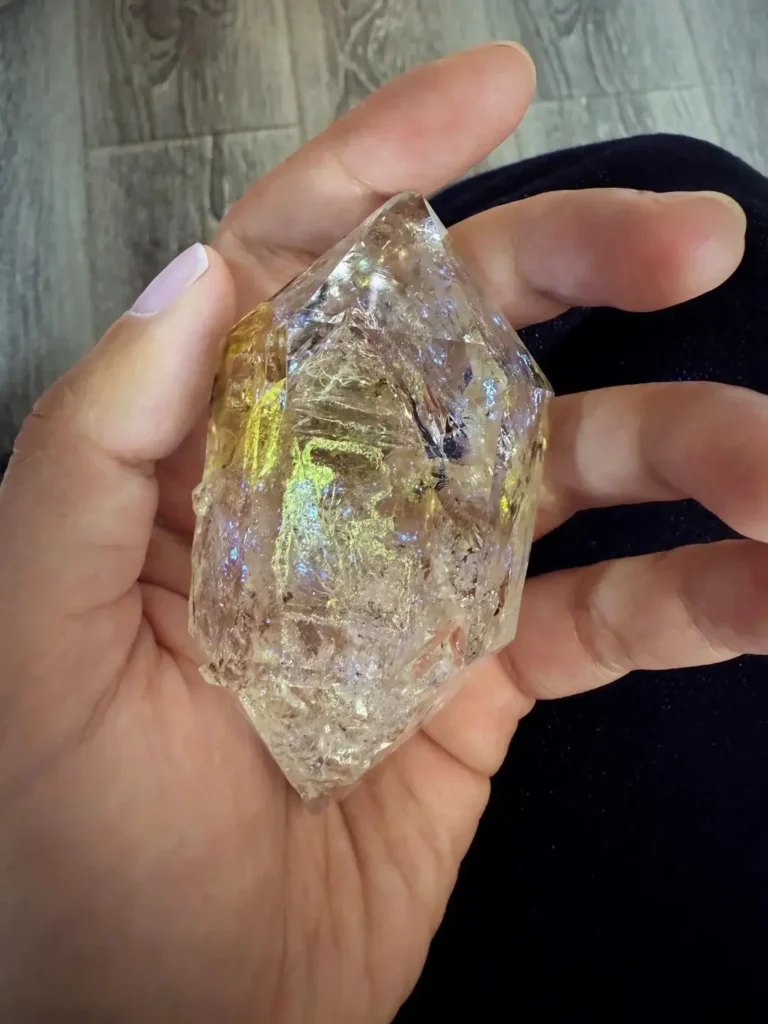
Petroleum Quartz traps liquid hydrocarbons inside clear quartz, appearing as yellow, oil-like droplets, often paired with dark bitumen inclusions. These rare specimens are prized for both their scientific intrigue and aesthetic appeal.
- Defining Feature: Liquid hydrocarbons within the quartz; often fluorescent under UV light.
- Formation & Origin: Forms in geological environments capable of preserving hydrocarbons; Pakistan is a notable source, though similar conditions exist elsewhere.
- Collector Focus: Clarity of the host crystal and the activity/contrast of the inclusions are key indicators of quality.
- Market Value: Rarer than Enhydro Quartz due to stricter geological formation requirements.
Jewea Tip: Examine under UV light to reveal vibrant fluorescence. High-contrast droplets against dark bitumen maximize visual drama and scientific interest.
9. Quartz-in-Quartz (Crystalline-in-Crystalline)
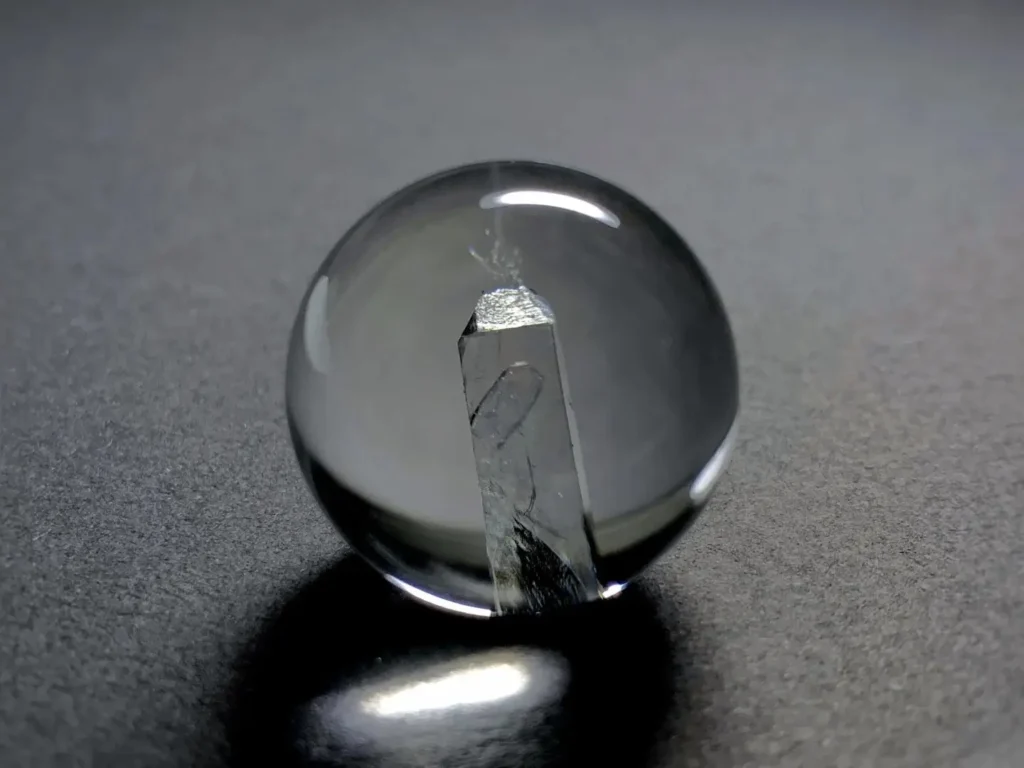
Quartz-in-Quartz stands as one of the most sophisticated anomalies in the mineral kingdom. This Quartz-in-Quartz occurs when a fully formed crystal—often quartz or another mineral—is encased within a larger quartz host, creating a rare “crystal within a crystal” effect. These specimens are prized for their structural complexity and visual contrast.
- Formation: One crystal becomes trapped during the growth of another, forming either protogenetic (earlier crystal trapped) or syngenetic (simultaneous growth) inclusions.
- Visual Appeal: Internal crystal retains sharp edges and clarity, contrasting with the host quartz.
- Collector Focus: Quality depends on the clarity, integrity, and orientation of the inner crystal.
- Market Value: Scarcity and structural perfection drive collector demand.
Jewea Tip: Examine the interface carefully—a clean, sharp boundary indicates stable growth conditions and enhances both scientific and aesthetic value. Quartz-in-Quartz captures a literal snapshot of mineral formation over millions of years.
III. Optical Types of Quartz Crystals
Some quartz crystals dazzle not with color, but with light itself. These optical varieties showcase unique visual phenomena caused by internal structures rather than chemical inclusions.
1. Rainbow Quartz (Iris Quartz)
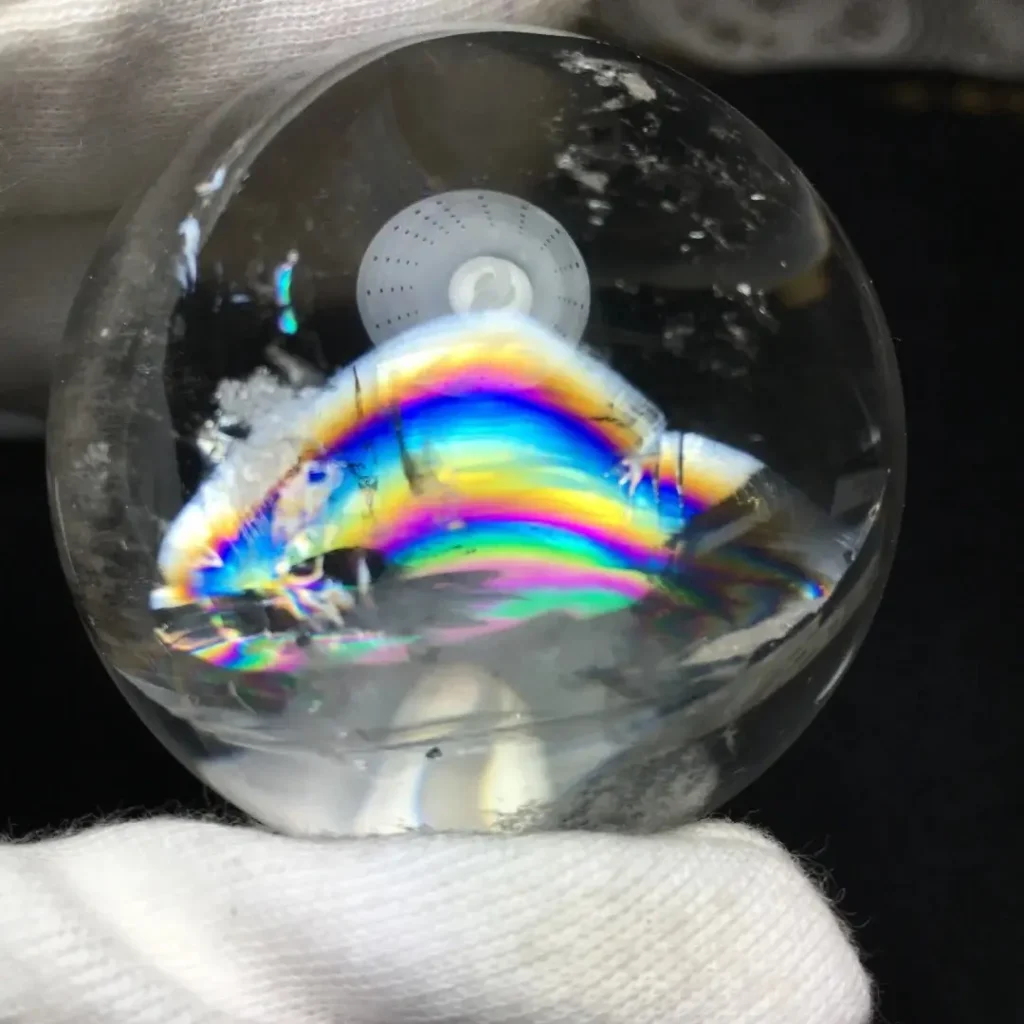
Rainbow Quartz dazzles through thin-film light interference rather than chemical inclusions, creating shifting, iridescent colors within clear quartz.
- Formation: Internal fractures form during crystal growth; microscopic fissures trap air or fluid, producing reflective surfaces.
- Optical Effect: Light interacting with these planes creates a dynamic rainbow that changes with viewing angle.
- Collector Focus: High-quality specimens display fluid, shifting colors; static rainbows may indicate shallow or artificial effects.
Jewea Tip: Rotate the crystal under light to observe the iridescence. True Rainbow Quartz combines clarity with complex fracture planes that enhance its natural spectral display.
2. Star Quartz (Asteria Quartz)
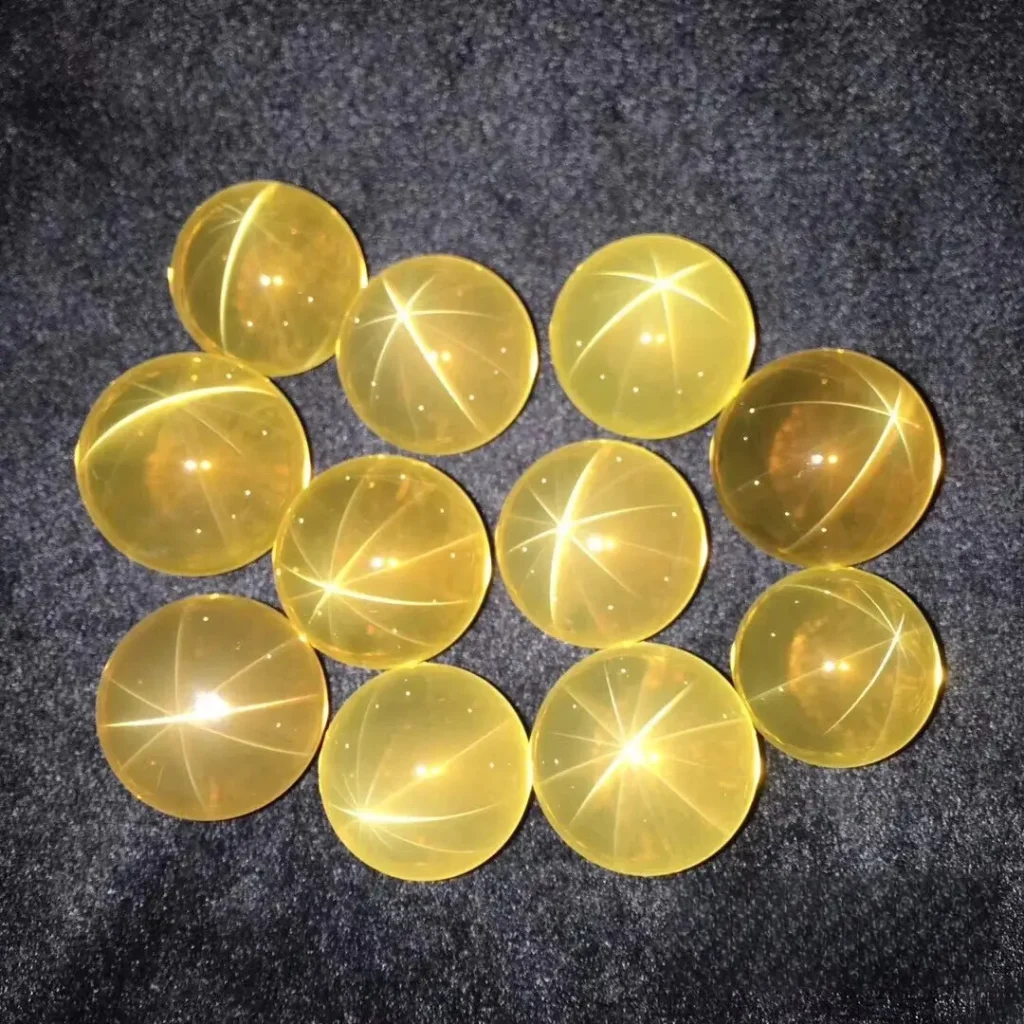
Star Quartz exhibits a luminous star effect, which is caused by fine, parallel mineral fibers—most commonly rutile—trapped inside the quartz host.
- Formation: Fibers align along crystallographic planes during growth, forming the internal structure necessary for asterism.
- Optical Effect: When light strikes the polished cabochon, a sharp, centered star appears and moves across the surface with the angle of illumination.
Jewea Tip: The sharper and more well-centered the star, the higher the value. Clarity of the host quartz enhances the visual impact of the asterism.
Summary & Jewea’s Insights
Quartz varieties fall into two main categories: color genesis and internal inclusions. Moreover, beyond the few dozen commonly discussed types, the market features hundreds of sub-varieties, each with unique rarity and value.
Core Warning from Jewea: Identical trade names often hide major differences in rarity, mineralogy, and market price.
- Example: Strawberry Quartz ranges from common “Pigeon Blood” stones to premium “Golden Strawberry” with dense Lepidocrocite, commanding 10–50× higher prices.
Jewea’s Collector Guidance: when investing in high-value types of quartz crystals such as Ametrine, Titanium Quartz, or Petroleum Quartz, always consider:
- Mineralogical Authenticity: Confirm inclusion type (Rutile, Tourmaline, or dyed).
- Structural Integrity: Assess host quartz clarity and stability of inclusions.
In essence, quartz is more than an ‘entry-level gemstone’; it is a window into geological history. By understanding the subtle differences between these various types of quartz crystals, collectors can identify truly rare specimens, turning a casual purchase into a lasting investment in beauty and knowledge.