Patina Jewelry Inspired by Dunhuang: A Journey Through Ancient Colors and Time
At JEWEA, we draw inspiration from natural materials, traditional craftsmanship, and the artistic heritage passed down through generations. These elements guide our approach to handmade jewelry design.
In our previous article, Brass Jewelry: Does It Really Lose Its Color?, we explored the natural golden tone of brass jewelry and how its surface changes over time.
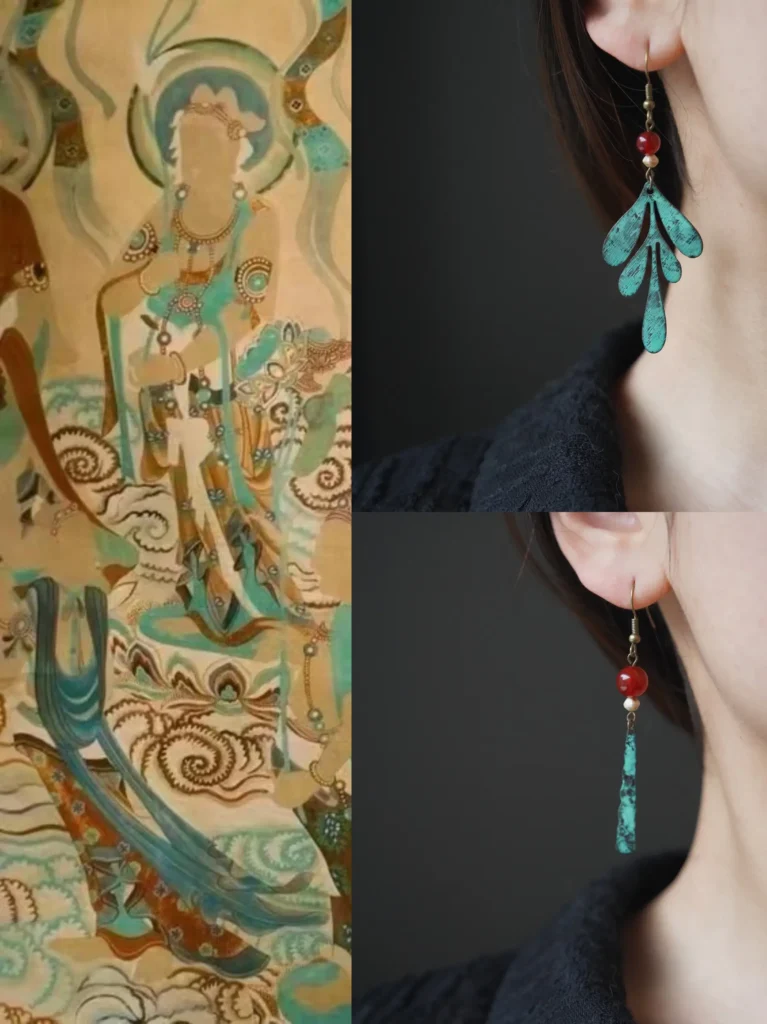
This time, we explore another side of brass beauty — patina jewelry inspired by the colors of Dunhuang murals. Through controlled brass oxidation, we transform the natural aging process of metal into unique pieces of jewelry with depth, character, and a sense of history.
The Color Origin: Ancient Mineral Tones in Dunhuang Murals
Located along the ancient Silk Road, the Dunhuang Mogao Caves preserve centuries of artistic exchange between different cultures. The murals inside the caves record religious stories, myths, and everyday life, while also revealing a unique approach to color developed through generations of craftsmanship.
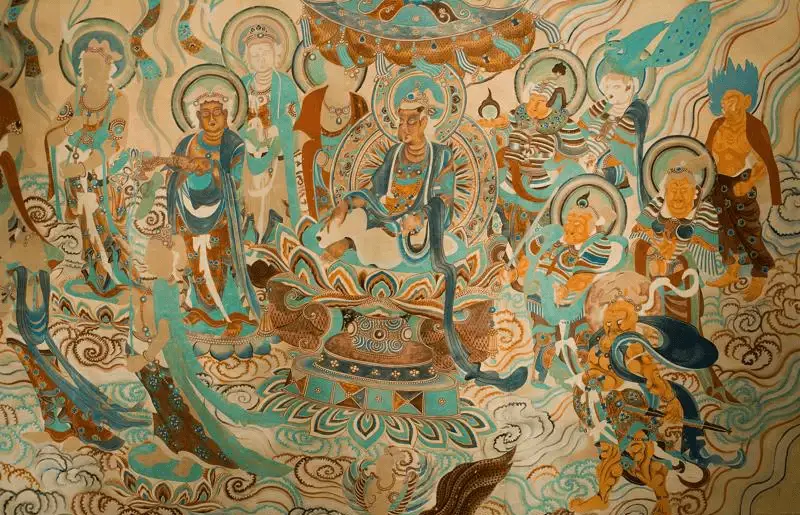
The colors used in Dunhuang murals came largely from natural minerals and organic materials rather than modern synthetic pigments. Artists worked with pigments such as azurite, malachite, cinnabar, and ochre, allowing the natural qualities of these materials to shape the appearance of the artwork.
Among these pigments, malachite created a range of green tones that changed gradually over centuries. Exposure to air, light, and environmental conditions softened some areas into delicate shades of green, while others developed deeper, weathered textures. This natural dialogue between material and time is one of the defining qualities of Dunhuang art.
Green and red frequently appear together in Dunhuang murals, creating a balanced contrast between cool and warm tones. The green found in flying apsaras, Bodhisattva garments, floral patterns, and decorative details is often paired with the rich warmth of cinnabar red. This combination creates a visual language that feels both harmonious and expressive.
Inspired by this relationship between color and history, JEWEA created a collection of five patina earrings. We translate the green tones found in Dunhuang murals into contemporary jewelry through controlled brass oxidation, bringing a piece of ancient color inspiration into modern design.
The Art of Brass Patina
To capture the aged beauty found in ancient artworks, JEWEA creates patina jewelry through a controlled brass oxidation process rather than artificial coatings or surface dyes.
Brass is primarily composed of copper and zinc. Under carefully controlled conditions, the copper within the alloy develops a natural patina layer on the surface. This process creates subtle variations in green tones and organic textures, giving each piece a distinctive appearance.
This transformation is not simply an aging effect. It is a way of working with the natural character of metal.
Each piece of brass develops its own unique appearance during oxidation. Some reveal deep moss-green tones reminiscent of ancient murals, while others display soft blue-green variations. Some retain traces of the original brass color, creating a contrast between the warm metal base and the aged patina finish.
Because every piece responds differently during the oxidation process, each JEWEA patina jewelry piece carries its own natural variations, making every design truly one of a kind.
Creating Brass Patina
Creating this green patina inspired by traditional Eastern colors requires a careful, hands-on process.
We begin with specially prepared brass and apply a professional patination solution using a natural sea sponge. Instead of creating a uniform surface, we apply the solution in an irregular pattern to encourage natural variations in color and texture.
After several hours, the brass gradually develops its signature green patina. Once the desired finish is achieved, we add a protective layer to help preserve the surface texture during everyday wear.
Unlike heat coloring or traditional antique coatings, this finish comes from the natural chemical transformation of brass itself. It reflects the relationship between the material, craftsmanship, and time.
JEWEA Patina Earrings Collection
Inspired by the color balance found in Dunhuang murals, JEWEA pairs green patina brass with red agate beads, tiger’s eye accents, and aged brass details.
Green and red have long been important colors in Eastern art. The calm tones of green and the warmth of red create a balanced visual harmony, connecting our contemporary jewelry designs with the traditional color language of Dunhuang murals.
Through this collection, JEWEA brings the spirit of Dunhuang-inspired colors into contemporary jewelry design.
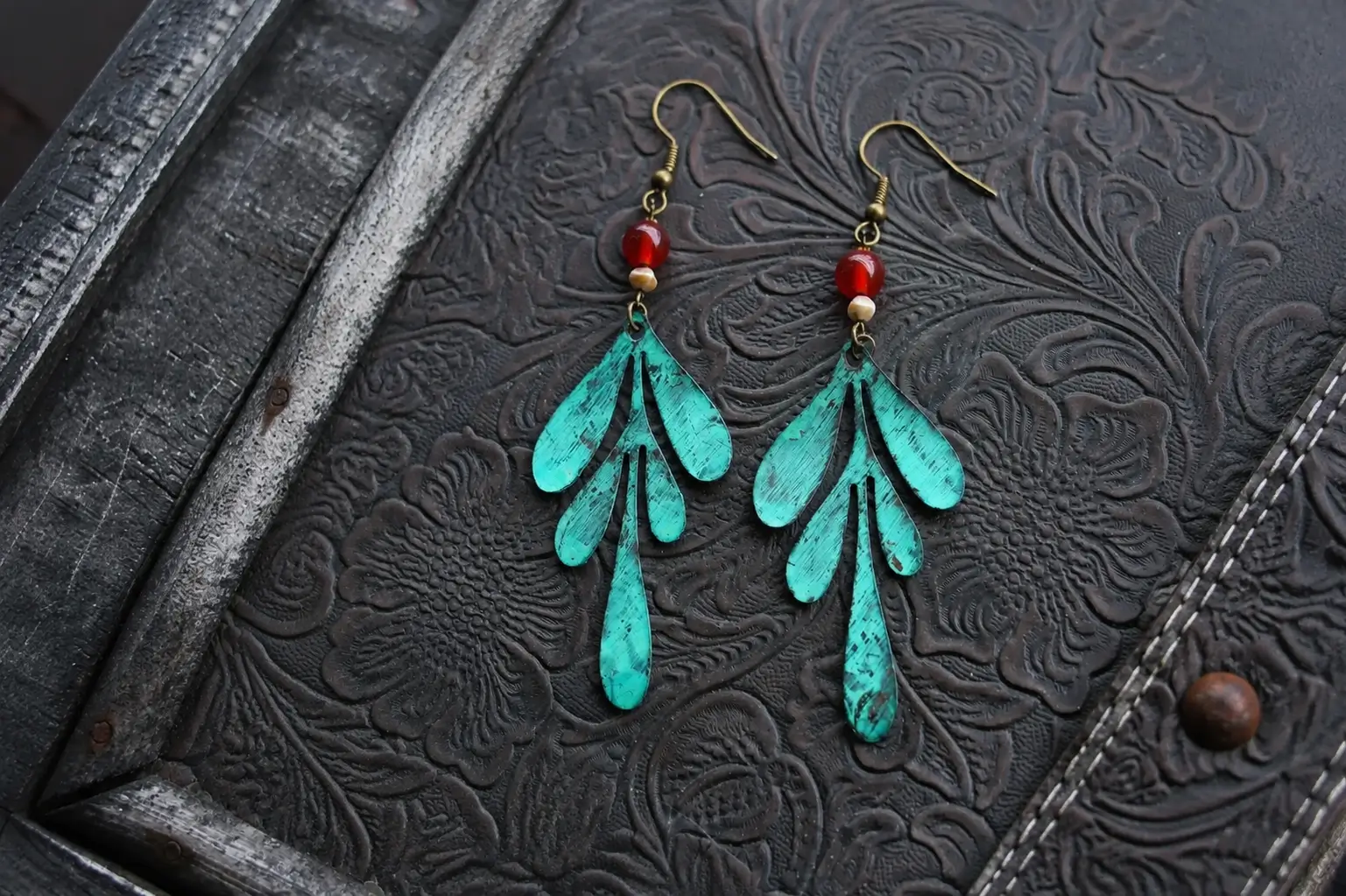
1. Openwork Leaf Earrings
Inspired by natural botanical forms, these earrings feature an openwork leaf design that creates a sense of lightness and movement.
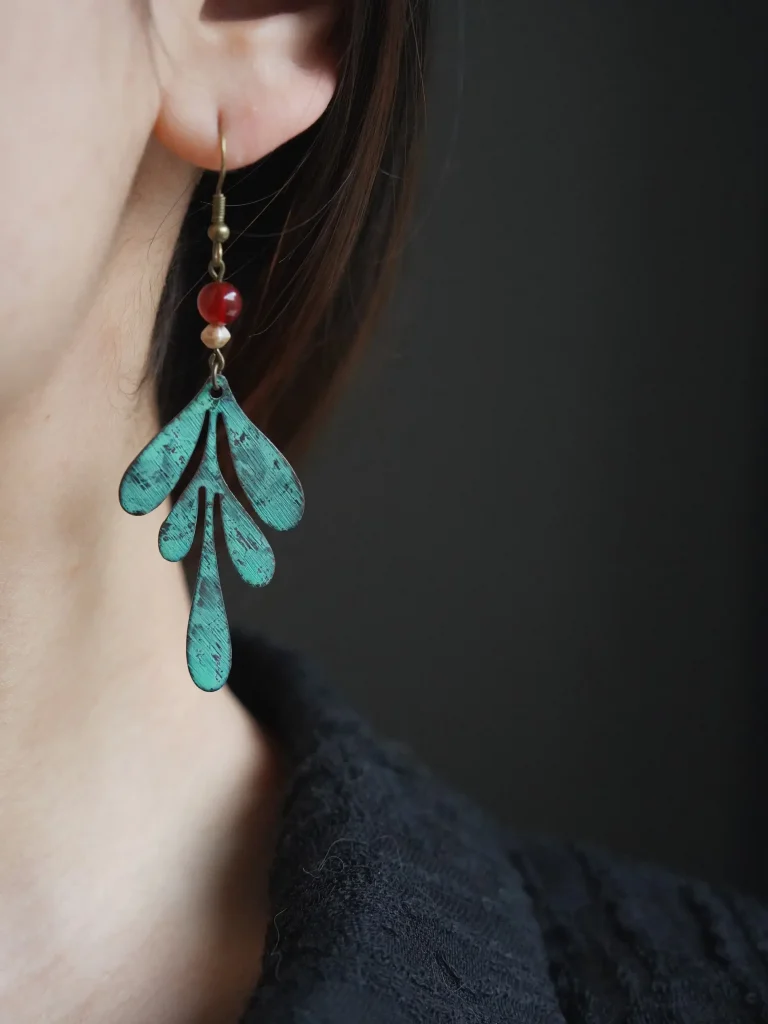
The deep blue-green patina develops across the brass surface, while the red agate accent adds a subtle color contrast. Together, they echo the flowing floral patterns and botanical motifs found in Dunhuang murals.
2. Long Bar Earrings
The clean vertical silhouette highlights a modern interpretation of Eastern minimalism.
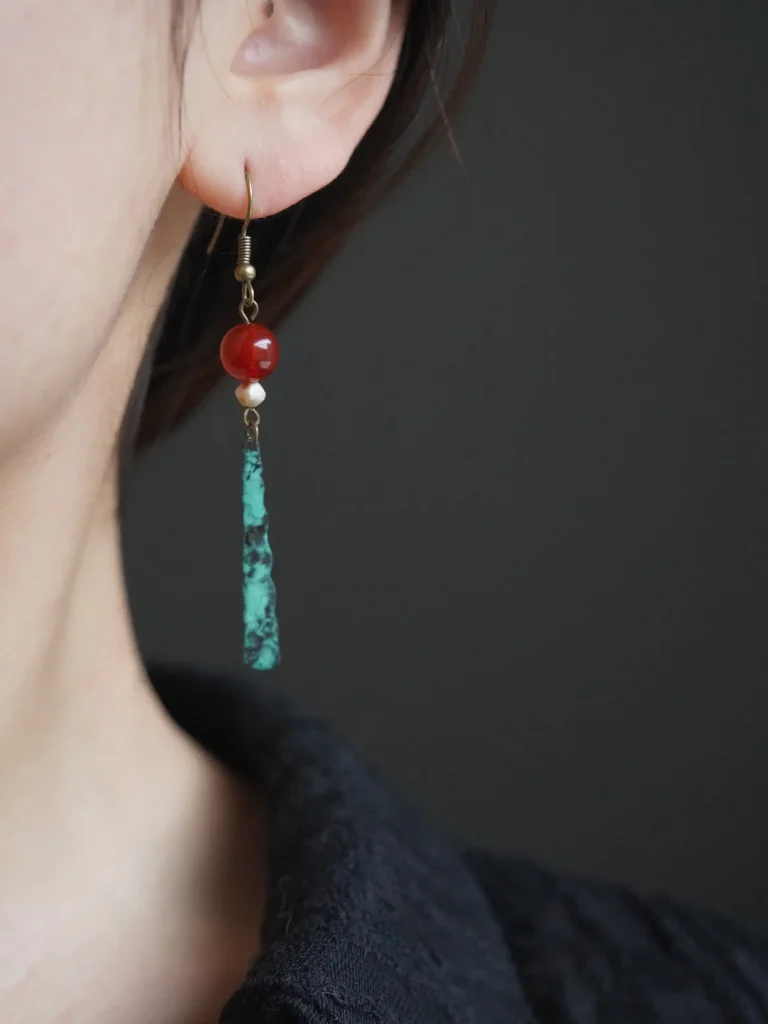
The oxidized brass surface preserves natural variations and textures, giving the simple design a sense of warmth and character. A red agate detail adds a refined touch, balancing simplicity with elegance.
3. Diamond Drop Earrings
The small diamond-shaped design combines geometric structure with the organic texture of oxidized brass.
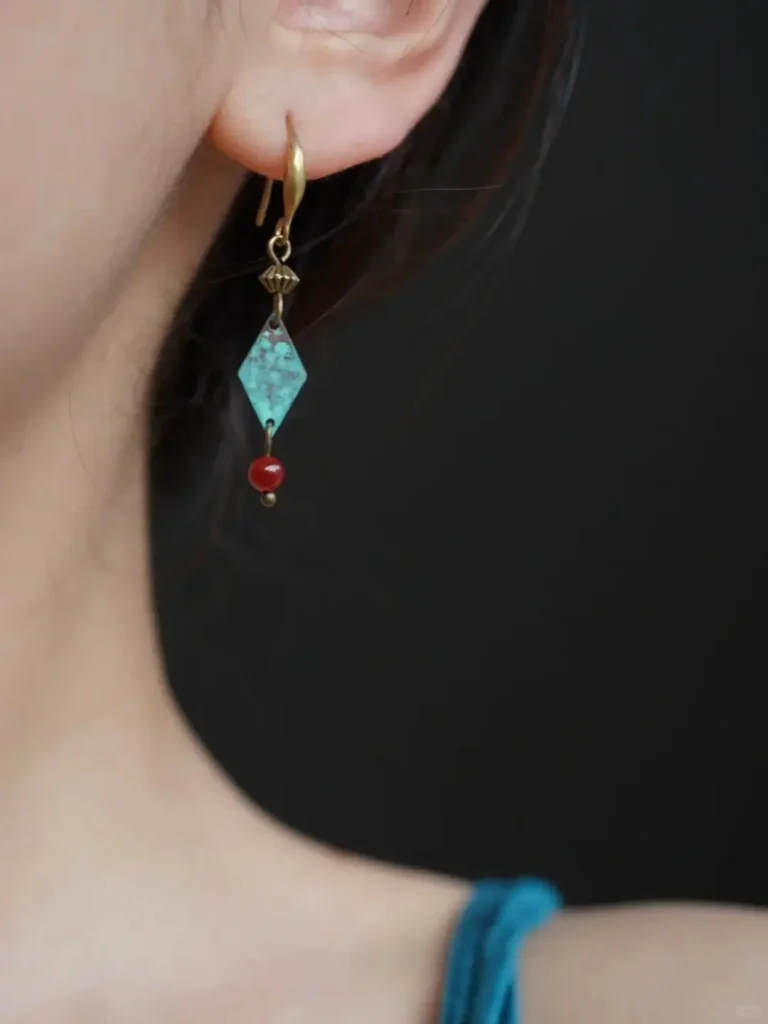
A red agate bead at the bottom creates a delicate focal point. Designed for everyday wear, these earrings bring together contemporary style and the refined balance of Eastern-inspired colors.
4. Fan-Shaped Openwork Earrings
The fan-inspired silhouette draws from traditional Eastern decorative elements.
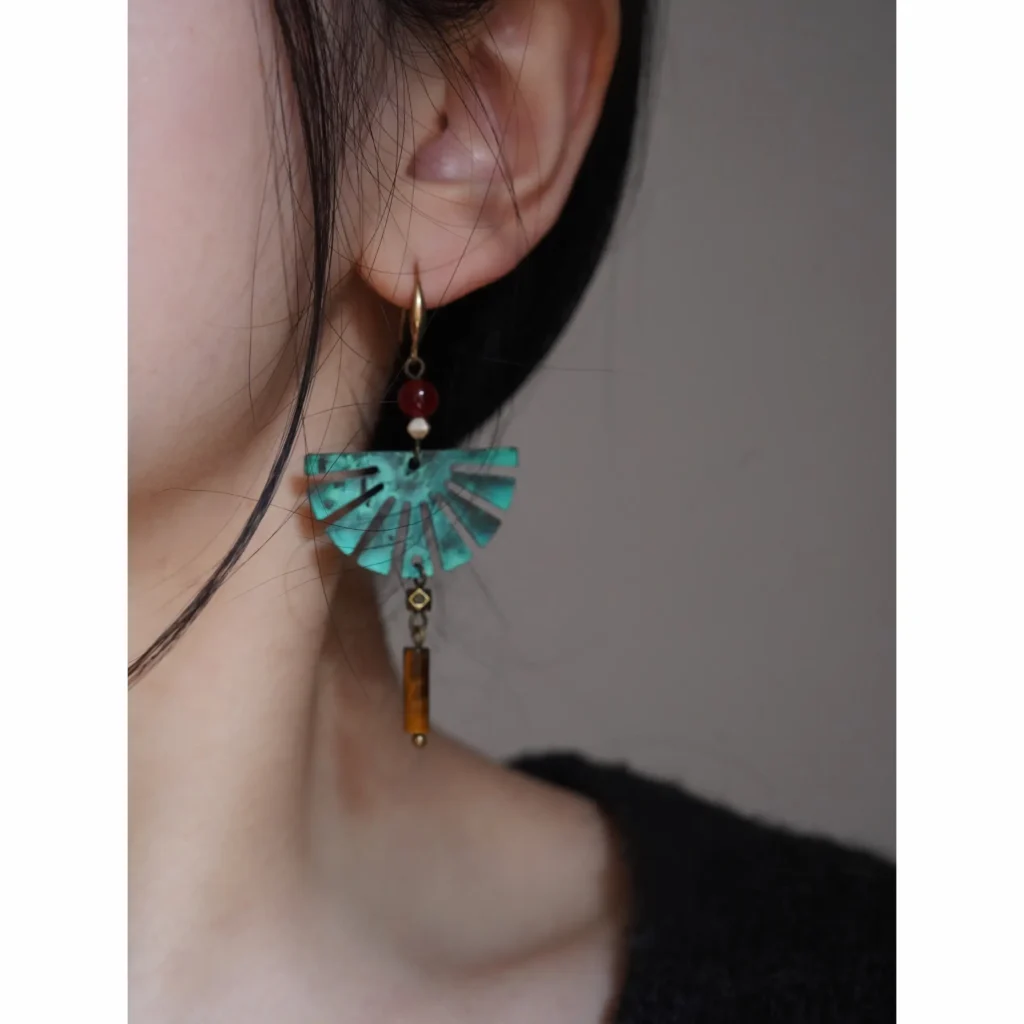
The radiating openwork pattern creates beautiful changes of light and shadow. Tiger’s eye accents, red agate beads, and green patina brass come together to create a rich and harmonious color palette.
5. Irregular Peace Knot Earrings
Inspired by the traditional Chinese symbol of the peace knot, this design combines a meaningful cultural motif with a modern handmade approach.
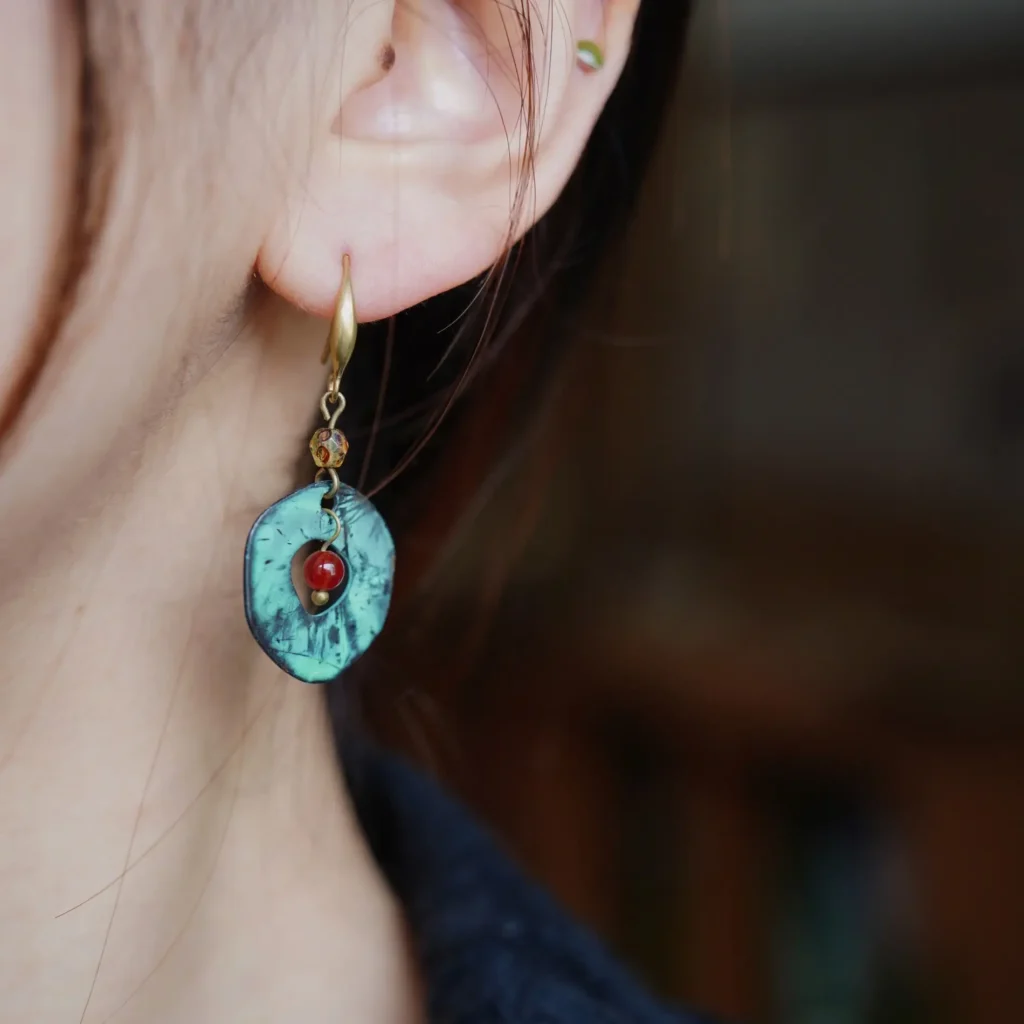
The irregular edges add an artistic character, while the suspended red agate bead brings together traditional symbolism and contemporary metal craftsmanship. The result is a pair of earrings with a rustic yet refined aesthetic.
Patina Jewelry Care Guide
Because patina is a naturally developed surface finish created through brass oxidation, proper care helps preserve its unique texture and color variations.
- Avoid prolonged exposure to water
Please remove your jewelry before swimming, bathing, or extended contact with water. Moisture, especially salt water or mineral-rich water, may accelerate changes to the brass surface. - Keep away from chemicals
Avoid direct contact with perfume, skincare products, cosmetics, and household cleaners. These substances may affect the appearance and stability of the patina finish. - Store in a dry place
When not wearing your jewelry, keep it in a dry environment and store it separately in a jewelry pouch. This helps reduce the effects of humidity on the metal surface. - Clean gently
If dust appears on the surface, gently wipe the jewelry with a soft, dry cloth. Avoid metal polishing products or abrasive cleaning methods, as they may remove the natural patina texture.
Unlike highly polished metals, patina jewelry celebrates the natural character of the material. Subtle changes may occur over time, and these evolving details are part of what makes each piece unique.
JEWEA Design Philosophy: Let Time Become Part of the Artwork
The natural transformation of brass, the colors inspired by Dunhuang murals, and the traces left by ancient art reflect the beauty created through the relationship between material and time.
Through controlled brass oxidation, JEWEA translates the color inspiration of Dunhuang murals into contemporary jewelry design, creating pieces that connect traditional artistry with modern expression.
Each JEWEA handmade piece is more than an accessory. It is a wearable work of art shaped by natural materials, craftsmanship, and the passage of time.