Brass Jewelry: Does It Really Lose Its Color?
In the handmade jewelry market, brass is one of those materials that always sparks debate.
On one hand, it carries a distinctive vintage golden glow—warm, restrained, and quietly time-worn. On the other, it is often surrounded by concerns like “tarnishing,” “turning black,” or “fading,” which can easily make people hesitate before trying it.
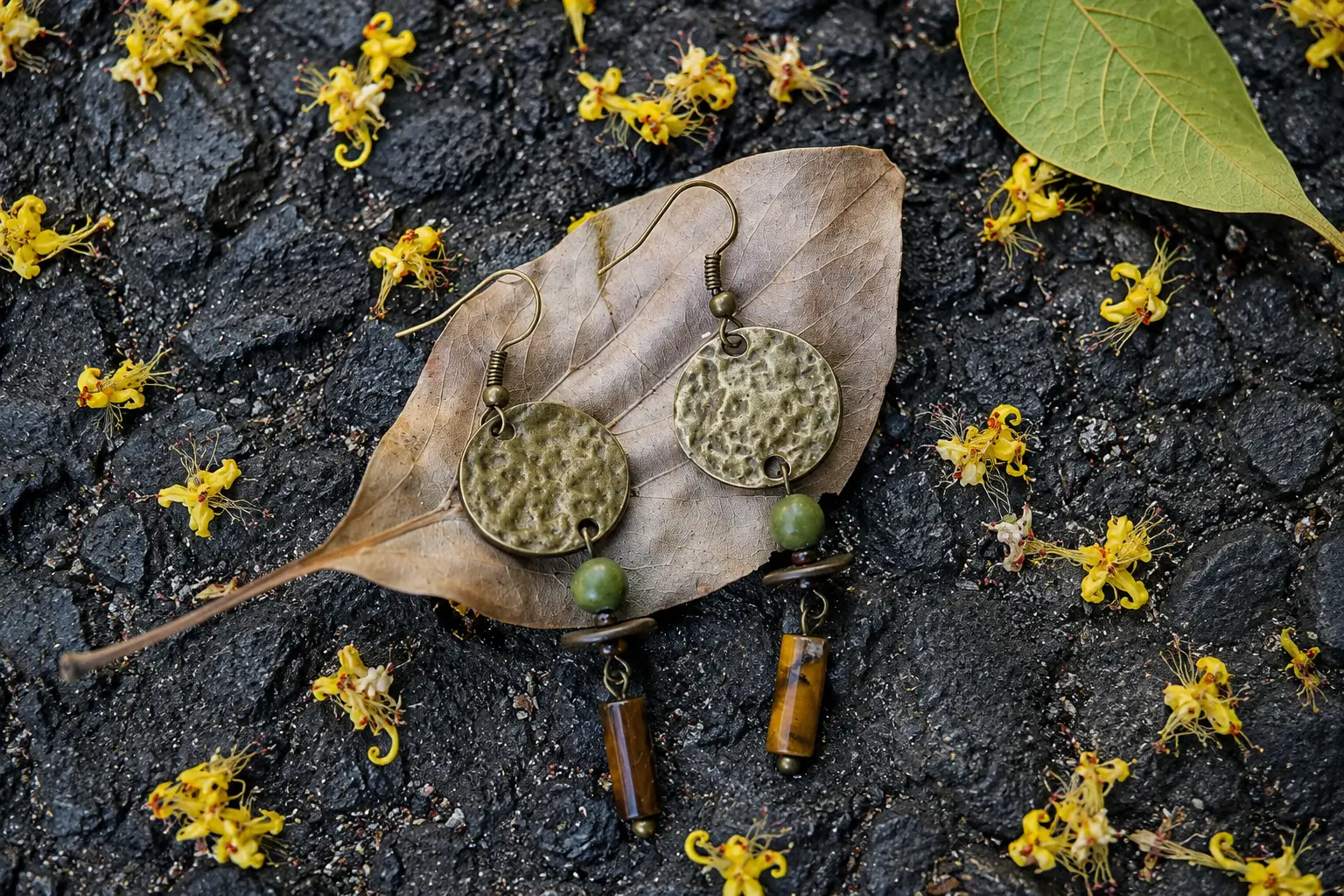
As the designer behind Jewea, we recently introduced a series of vintage brass earrings made from unplated, raw brass, allowing the metal to show its most authentic form. I also wear brass jewelry regularly myself. So in this article, I want to break things down from both a design and real-wear perspective, and answer three core questions clearly:
- Does brass jewelry actually “lose color”?
- Why does it darken or turn black over time?
- And how can we gracefully live with its natural oxidation process?
1. A Common Misconception: Does Brass Jewelry Really Lose Its Color?
Let’s start with a clear answer:
Brass does not lose its color. It oxidizes and changes tone over time.
These are two very different things, but they are often confused.
Brass is a copper–zinc alloy (typically 65/70 brass). Its golden tone comes from the metal itself, not from plating or any surface coating.
In other words:
- It is not a “painted” or coated surface finish
- There is no plating layer that can peel off or flake away
So when you see brass earrings, necklaces, or rings, you are always looking at the same base metal all the way through.
What people often call “color fading” is actually a misunderstanding.
What really happens is this: the metal reacts with oxygen, moisture, and skin oils, forming a natural surface layer of oxidation.
2. Why Brass Jewelry Turns Dark: A Natural Chemical Process
If you pay attention to brass jewelry over time, you’ll notice something interesting—it doesn’t “get damaged,” it simply ages.
My first brass necklace went through a very typical transformation:
- At first: bright, golden yellow
- After 1 month: a slight antique brass tone begins to appear
- After 2–3 months: the overall color shifts into a deeper golden-brown
- Over a longer period: darker, more irregular vintage patina develops in certain areas
This is not deterioration. It is simply the natural result of copper reacting with oxygen and humidity in the air.
What this process usually looks like
As oxidation develops, brass typically changes in predictable ways:
- Copper oxide forms on the surface → the metal takes on a deeper brown tone
- Long-term exposure to moisture → may lead to green patina (verdigris) in certain areas
What affects how fast brass Jewelry oxidizes?
The speed of this transformation is never the same for everyone. It depends on several real-world conditions:
- Body chemistry (especially the pH level and composition of sweat)
- Climate and environment (humid southern regions typically accelerate oxidation compared to drier northern areas)
- Daily wear habits (contact with perfume, skincare products, or seawater can significantly speed up the process)
Wearer Advice for Sweat-Prone Skin
If you tend to sweat easily, or if you’re concerned that necklaces and rings might oxidize more quickly with daily wear, there’s a simple way to think about placement:
Brass earrings are often the more practical choice.
The earlobe area stays relatively dry throughout the day, which means less direct contact between metal and sweat. As a result, oxidation tends to develop more slowly and more evenly, making the aging process both gentler and more stable over time.
3. Jewea Brass Jewelry Design: Not Fighting Oxidation, but Working With Time
At Jewea, we don’t treat oxidation as a flaw. We see it as part of the material’s natural story—something that develops rather than something that needs to be corrected.
That’s why we consistently work with:
- Unplated, raw brass
- Hand-hammered surface textures
- Natural materials such as gemstones and wood
Each of these choices serves a specific purpose, but the hammered surface plays a particularly important role.
It helps diffuse oxidation over time, softening how the metal ages visually.
Instead of forming harsh, isolated dark spots, subtle oxidation gradually blends into the hammered texture and surrounding materials. Over time, the surface doesn’t look “worn out”—it develops depth, variation, and a more tactile sense of time embedded in the piece itself.
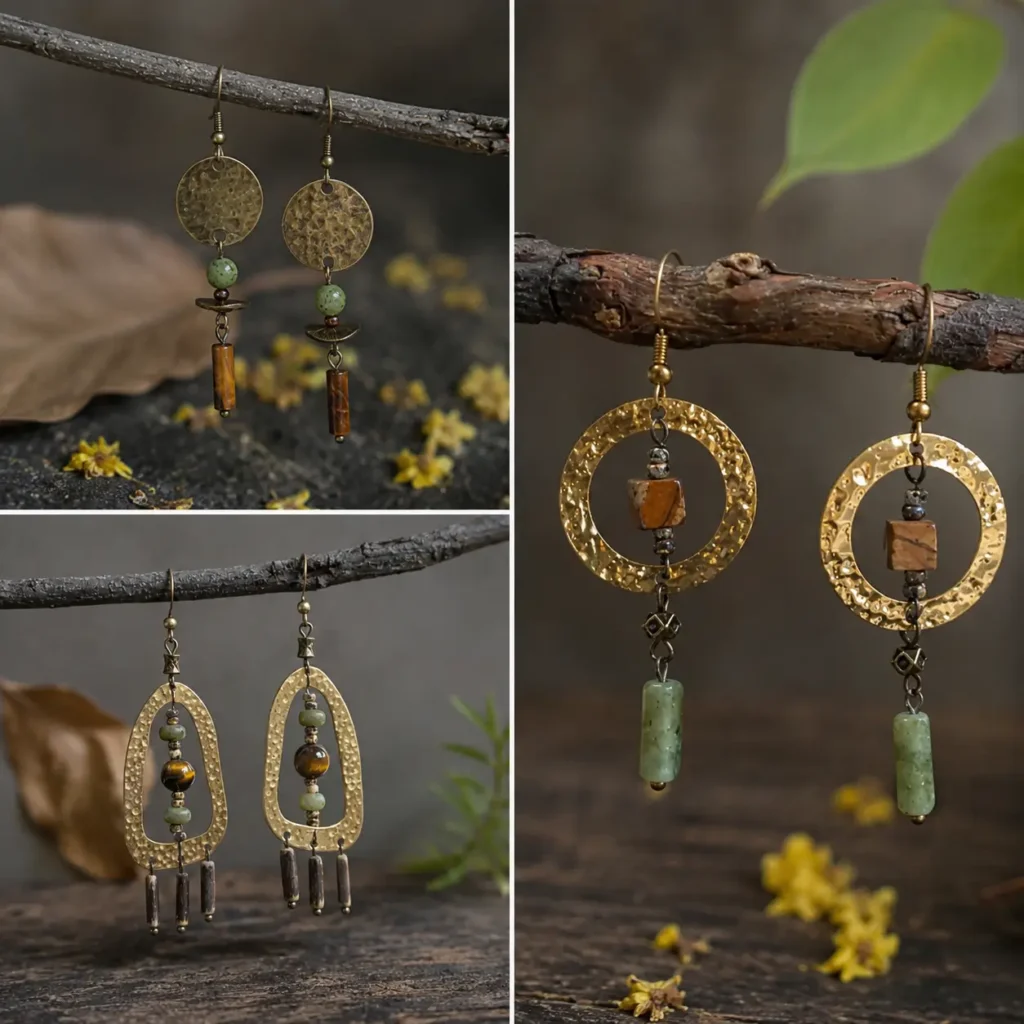
This is also the design language behind some of our hammered brass earrings, where texture, material, and natural stone come together to let time leave its mark in a quiet, controlled way.
Wilderness Echo Brass Earrings
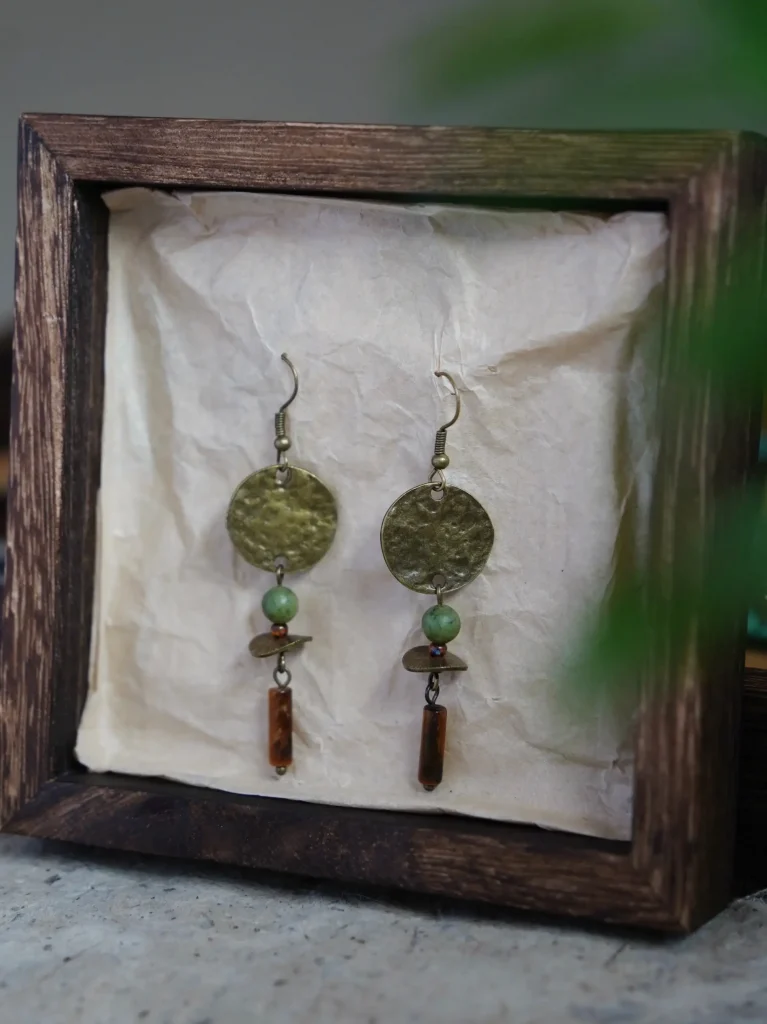
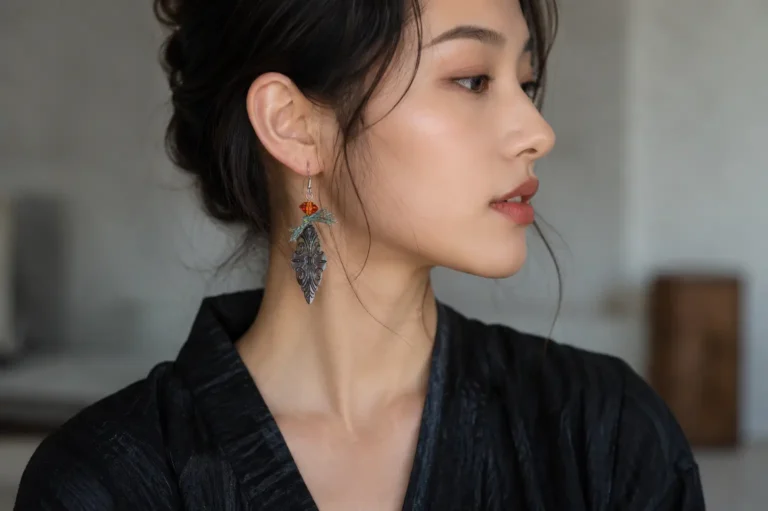
Inspired by the quiet strength of untouched nature, these handmade vintage brass earrings combine natural elements in a restrained, grounded composition. The soft green tones of Southern jade paired with amber tiger’s eye create a balanced color structure, giving the earrings a calm, understated glow.
- Length: approx. 7 cm
Whispers of the Distant Mountains Brass Earrings
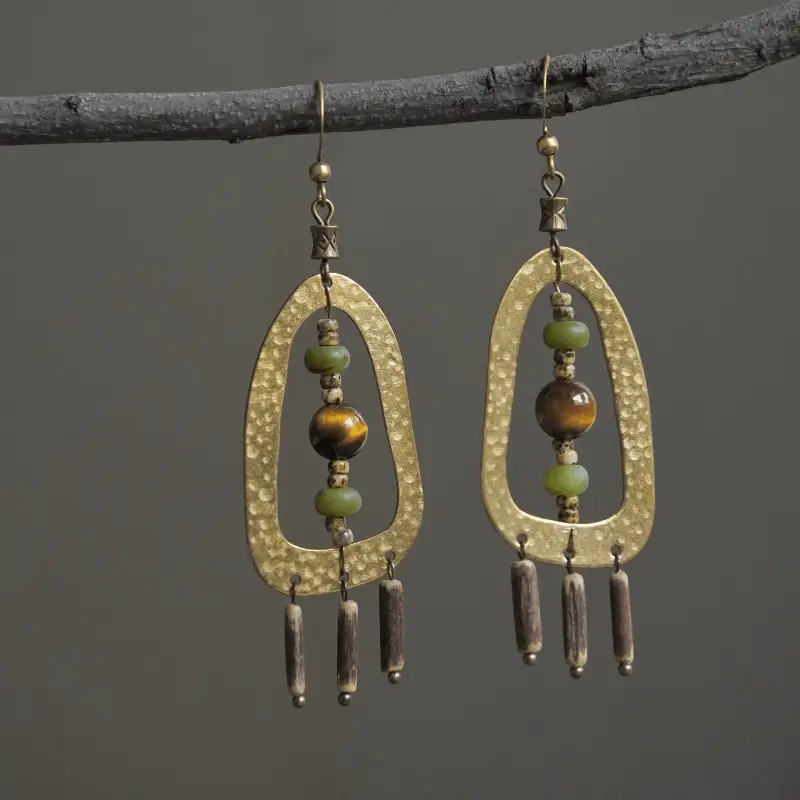
These vintage brass dangle earrings take their inspiration from distant mountain silhouettes and the quiet tension between raw texture and softness. Tiger’s eye, Southern jade, and coconut wood come together in a material contrast that feels both earthy and refined, expressing a subtle but powerful sense of natural storytelling.
- Length: 7.5 cm
- Weight (per piece): approx. 5 g
Moon Creek Brass Earrings
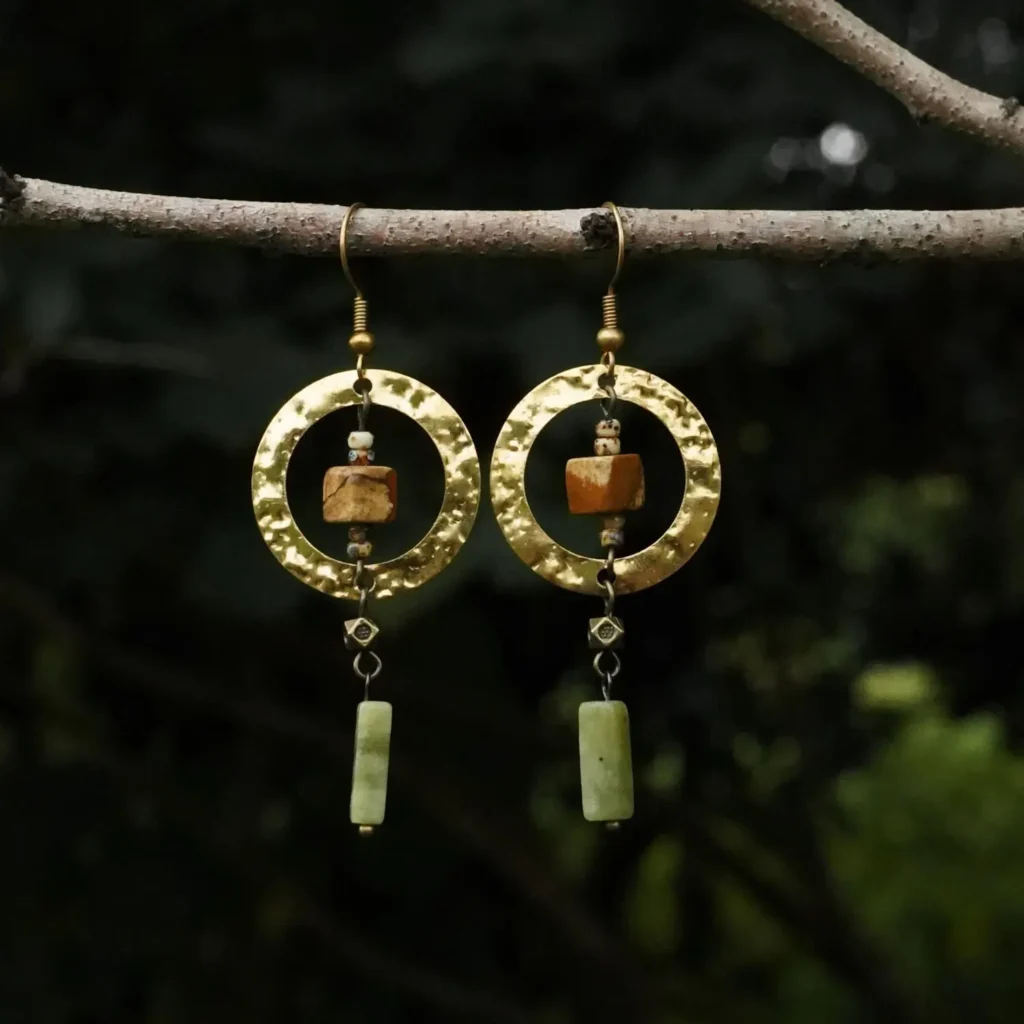
Inspired by the image of moonlight flowing over a quiet stream, these vintage brass earrings bring together hammered brass, natural jade, and picture stone, layered with subtle vintage accents. The result is a composition that holds both movement and stillness, with a visual rhythm that shifts depending on light and distance.
- Length: approx. 7 cm
Care & Storage Options
If you prefer to keep brass in its original bright golden tone, a little extra care goes a long way:
- Store it in an airtight container when you’re not wearing it
- Add a small desiccant packet to reduce exposure to moisture and air
These simple steps help slow down oxidation and keep the surface closer to its freshly polished state.
If you’re drawn to a more vintage, time-worn look:
- You don’t need to do anything at all
- Just wear it and let it develop its natural patina over time
That’s the quiet beauty of brass—you’re never locked into a single version of it.
You can choose to keep it in the present, or let it slowly move into the past with you.
4. Oxidation as a Trace of Time
When I first started working with brass, I often tried to preserve its brightness for as long as possible. I would even polish it regularly, hoping to keep that clean, golden shine unchanged.
But over time, I began to see things differently.
Oxidation is not damage. It’s a form of time made visible.
What it creates is not just a change in color, but something much more layered:
- a sense of depth and dimension
- uneven, organic shifts in metal tone
- a warmth that feels closer to aged objects than new materials
Today, many designers actively seek out this effect. They even accelerate oxidation on purpose to bring out a stronger sense of “time” in the material.
Controlled Oxidation: The Green Patina Series
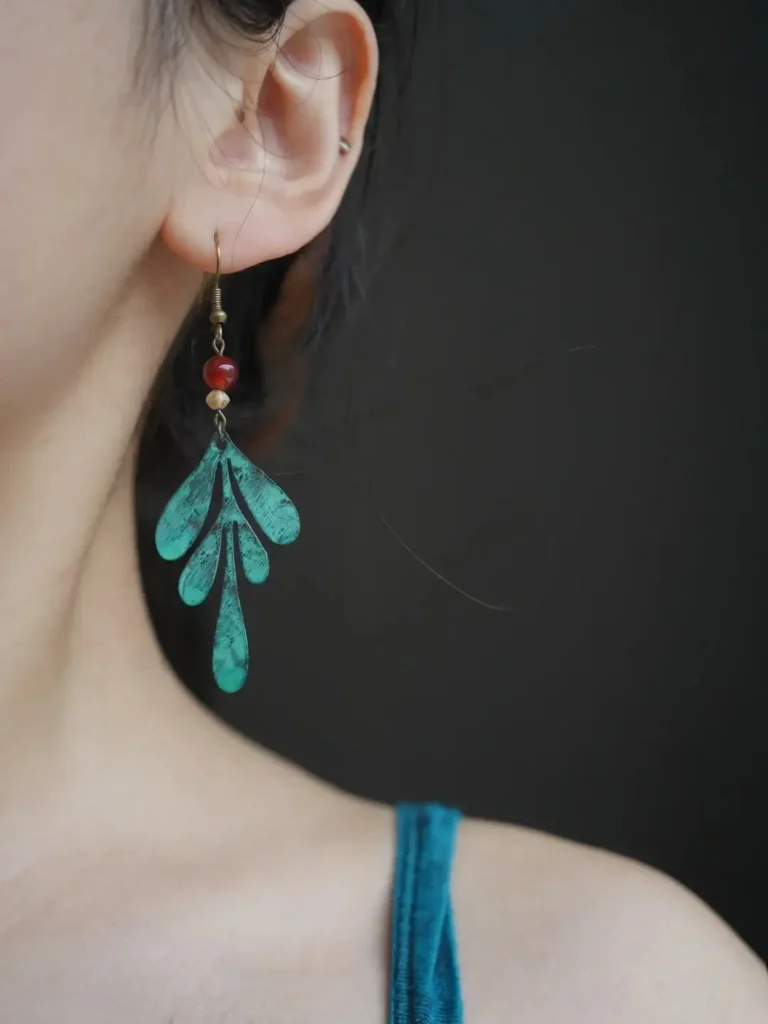
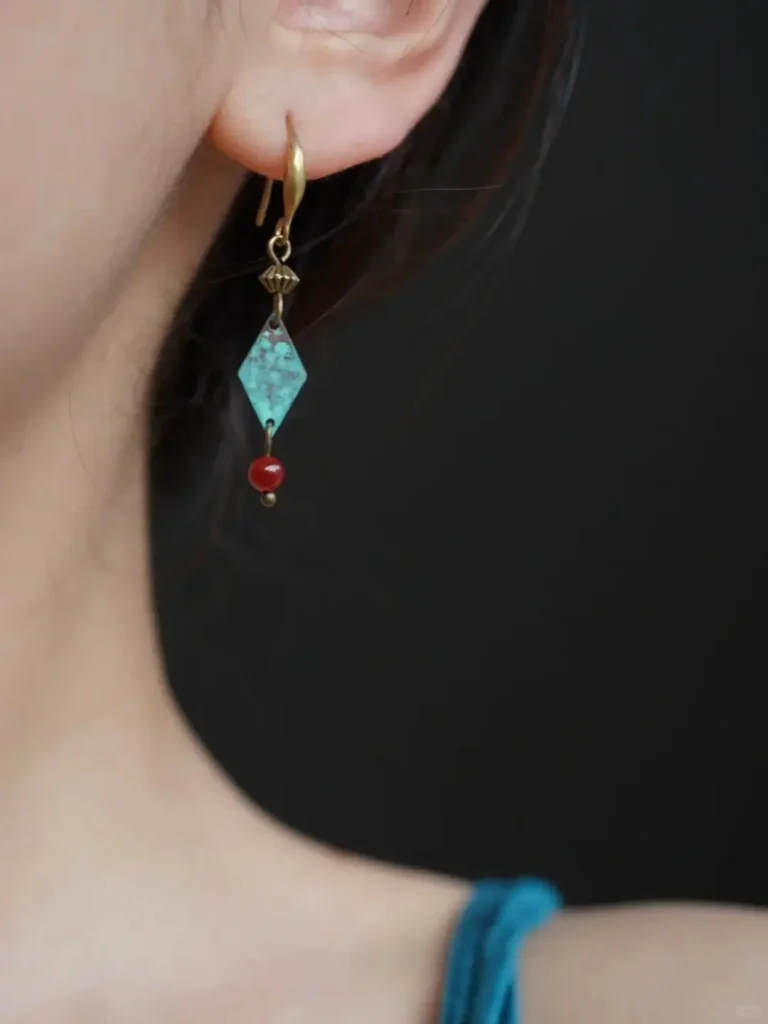
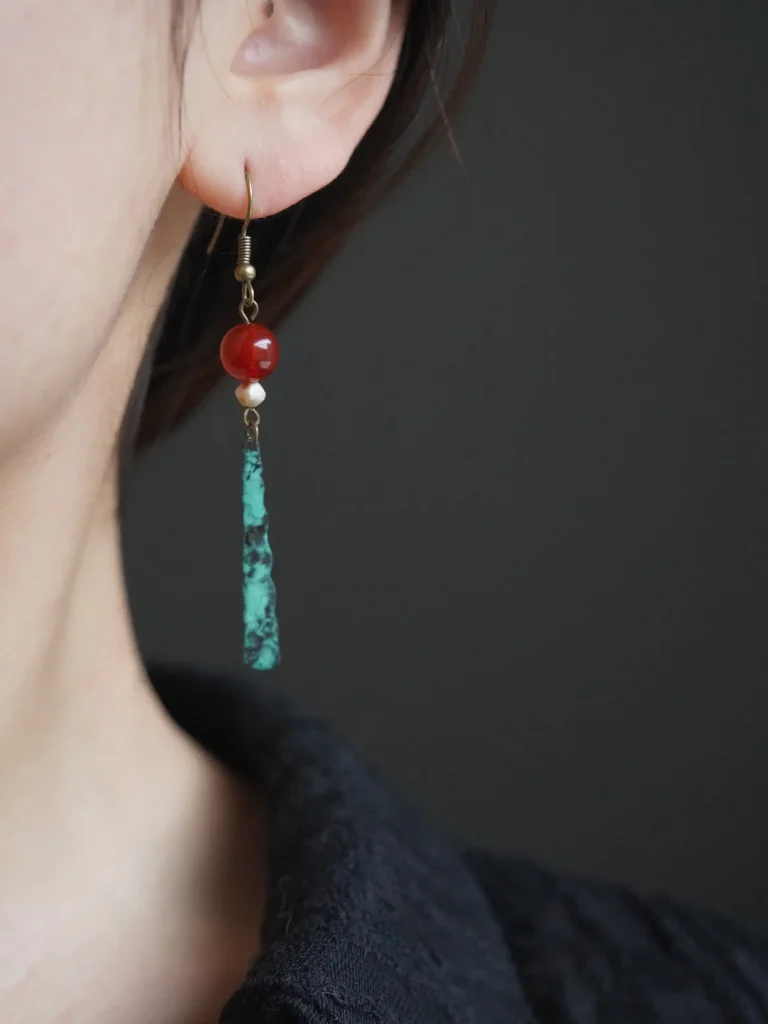
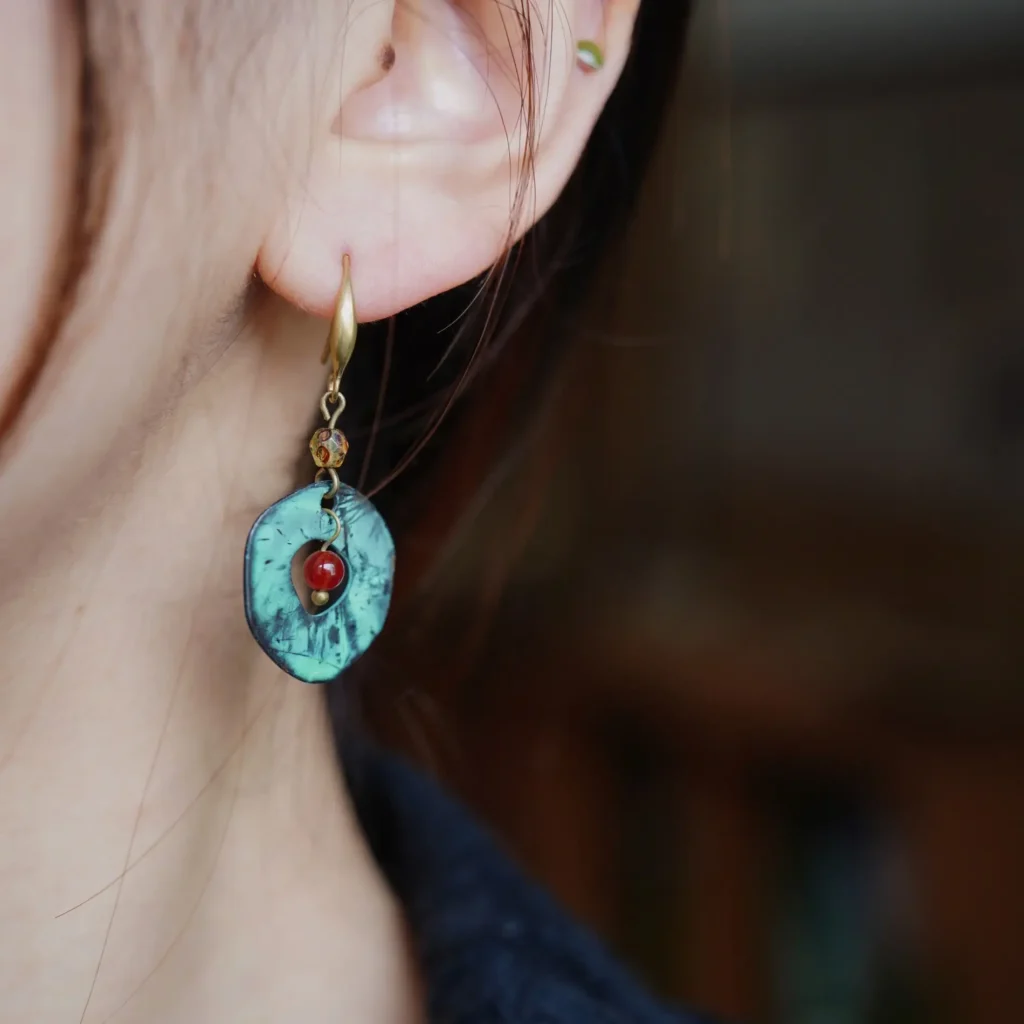
If you prefer a more pronounced vintage aesthetic, Jewea’s Dunhuang Collection of verdigris patina earrings offers a different direction.
Inspired by the colors and artistic heritage of Dunhuang murals, this collection explores the connection between ancient aesthetics and contemporary jewelry design. Through a controlled oxidation process, we develop a stable green patina directly on the brass surface, allowing each piece to take on the character of a naturally aged antique object.
Discover the story behind our Dunhuang-inspired patina jewelry and the craftsmanship that brings these timeless colors into modern wear.
When paired with linen, wool, or other vintage-inspired textiles, these earrings create a rich contrast of materials and textures, balancing a raw, organic feel with a refined artistic presence.
5. What to Do When Brass jewelry Turns Dark: 5 Real Methods I’ve Tested
If you don’t like the way brass looks after oxidation, you can absolutely bring it back to its original golden tone with a few practical methods.
Below are the ones I’ve personally tested, ranked by real-world experience rather than theory:
1. Toothpaste Cleaning (Mediocre, Inconsistent Results)
Rubbing brass with toothpaste and a soft cloth can remove some oxidation, but the results tend to be uneven.
You often end up with a patchy surface—some areas look bright, others still dull—and the effect doesn’t last long. It’s a quick fix, but not a reliable one.
2. White Vinegar + Salt (Effective but Aesthetic Loss)
Soaking brass in a vinegar and salt solution does remove oxidation fairly well.
However, it often strips away more than you want. The metal can end up looking overly “clean” and slightly artificial, losing the soft, warm character that makes aged brass appealing in the first place. The smell also lingers and requires thorough rinsing.
3. Lemon + Salt (Strong Performance, Recommended)
This method combines citric acid with a gentle abrasive action.
Cut a lemon in half, sprinkle coarse salt directly onto the cut surface, and then use it to gently rub the brass jewelry. The citric acid helps break down the oxidation layer, while the salt works as a mild abrasive to lift it off the surface.
In most cases, just a few minutes of rubbing is enough to bring back the original golden tone, while still preserving the natural metallic texture—so the finish doesn’t look overly “new” or artificially polished.
The only downside is that the lemon juice can leave your hands feeling slightly sticky afterward.
4. Ketchup Method (Surprisingly the Best All-Round Option)
This one sounds unusual, but it works extremely well.
Apply a layer of ketchup to the surface, let it sit for about 20–30 minutes, then wipe and rinse it off. The oxidation layer comes off cleanly and evenly.
Why it works:
- Mild acidity
- Even chemical reaction
- Easy to apply and control
It’s a low-cost, high-efficiency method that consistently delivers good results.
5. Professional Brass Cleaner (Most Powerful, Strongest Results)
Commercial brass cleaning products restore the metal almost instantly, often bringing it close to a “factory-new” finish.
The trade-off is the stronger chemical smell, which means you need proper ventilation and thorough rinsing afterward.
Jewea Summary
The appeal of brass jewelry has never been about staying unchanged. It’s about its ability to evolve.
You can choose to:
- keep it in its original golden finish
- let it naturally develop its own aged patina over time
- or even take an active role in how it transforms through design or care
None of these choices changes what it fundamentally is.
Brass doesn’t lose itself as it ages. It simply shifts—quietly, gradually—into something else, while still remaining entirely its own material.
In that sense, it doesn’t just sit on you. It changes with you.