How to Identify Natural Jadeite: Color, Texture & Authenticity
In our article about Burmese gemstones, we introduced Myanmar jadeite as one of the world’s most important sources of natural jadeite. Known for its fine texture, excellent translucency, and rich variety of colors, Burmese jadeite accounts for more than 90% of the jadeite traded in the global market.
In Chinese jade culture, jadeite — known as feicui (翡翠) — is valued not only for its color but also for its texture and internal structure, which are traditionally described by experts through the concept of “zhong” (种), often translated as “type” in the jade trade. There is a saying among jade enthusiasts: “Professionals look at the texture; amateurs look at the color.”
This guide will explore natural jadeite through three essential aspects: color, texture, and authenticity.
1. The Two Foundations of Natural Jadeite: Color and Texture
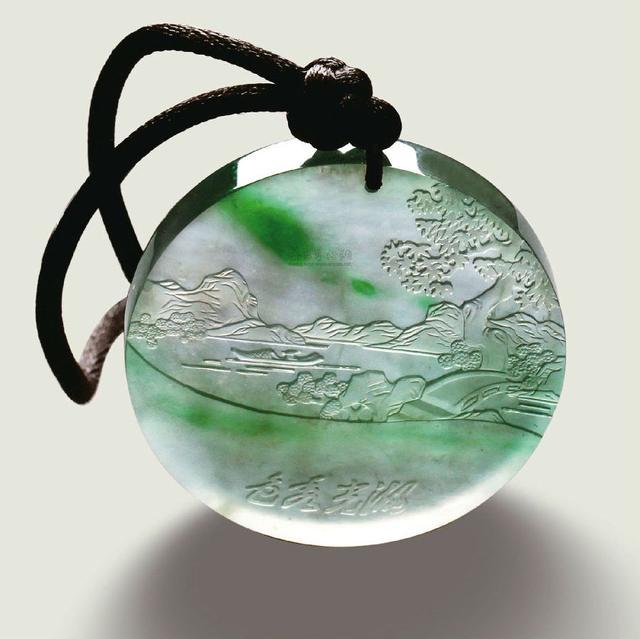
When judging natural jadeite, two factors matter most: color and texture. Even a piece with subtle or no color can look stunning if its texture is fine and smooth, while vivid color alone cannot make up for poor texture. Understanding these two foundations is the first step to spotting quality jadeite.
1.1 Color — The First Impression of Natural Jadeite
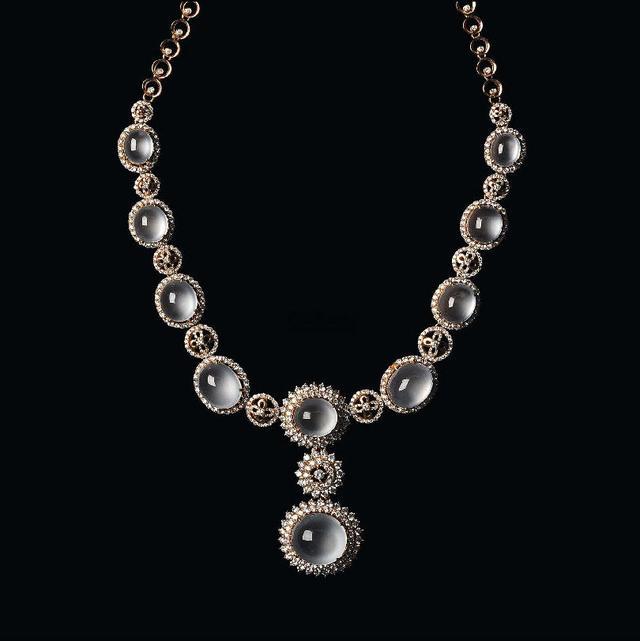
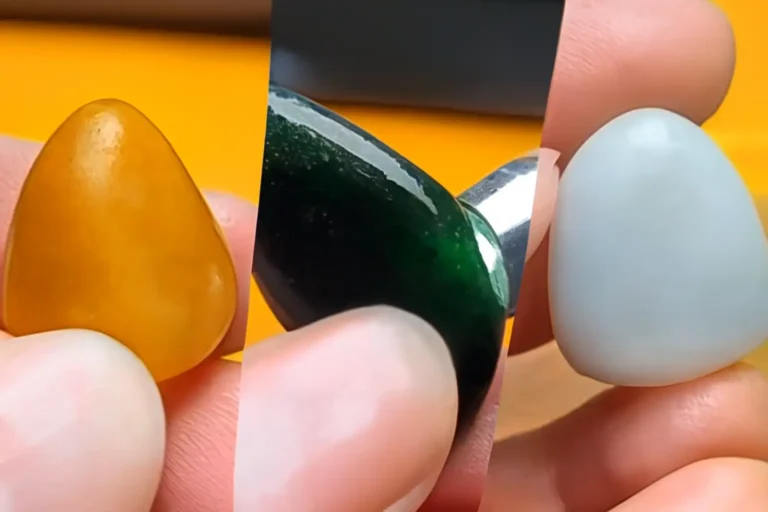
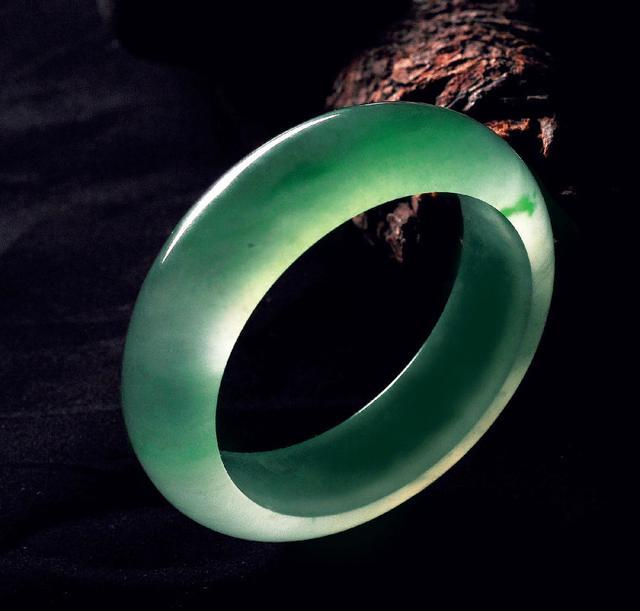
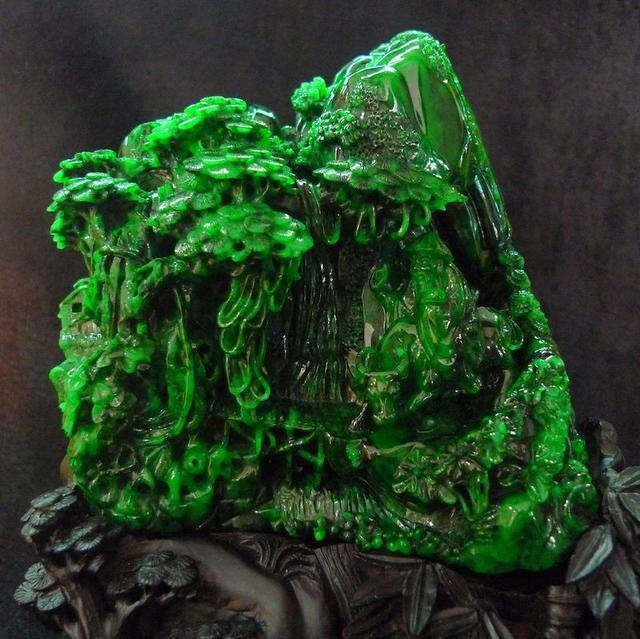
Jadeite’s color is usually categorized into colorless, green, purple, yellow, and multi-colored types.
The perfect jade color is described by five qualities: rich, bright, vivid, pure, and even. That means the color should be deep yet lively, highly saturated, pure without tinges, and evenly distributed.
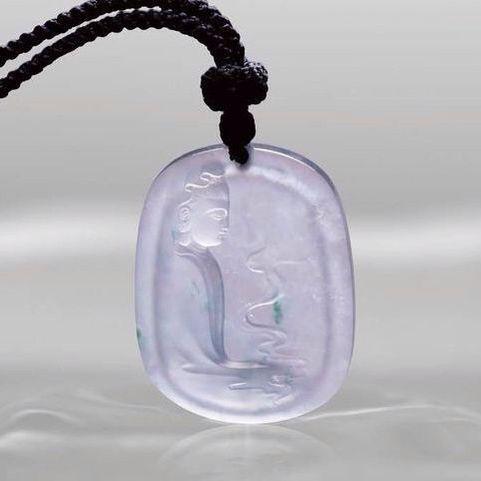
Among green jadeite, there are several commonly recognized shades such as Imperial Green, Vivid Green, Yellowish Green, Apple Green, Light Green, Bluish Green, and Oil Green.
Each subtle difference in tone can mean a huge price gap — sometimes tenfold between two seemingly similar pieces.
1.2 Texture and Transparency — The Essence of Natural Jadeite
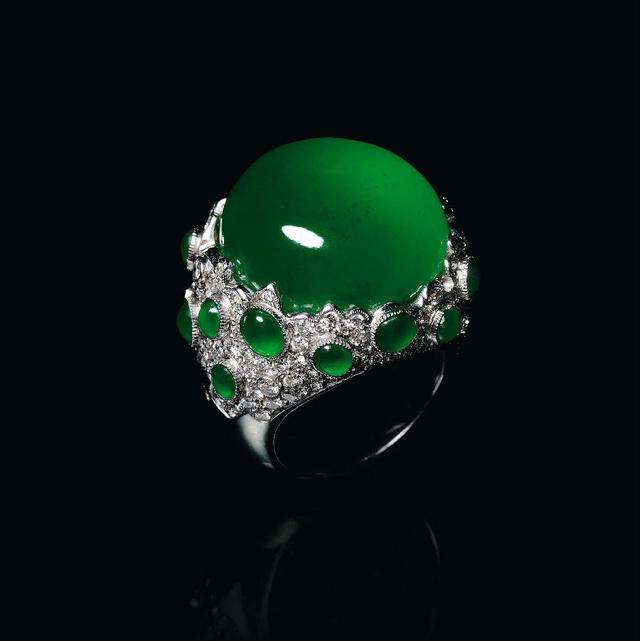
In the Chinese jadeite market, collectors often use the terms “zhong” (种, type) and “shui” (水, water) together as “zhong shui” (种水) to describe a jadeite’s overall quality.
These traditional terms do not represent a formal gemological grading system. Instead, they reflect how Chinese collectors evaluate jadeite’s appearance, texture, and light performance.
- Type refers to the texture and internal structure of jadeite, including the fineness, density, and compactness of its mineral grains.
- Water refers to translucency — how light enters and travels through the stone.
Together, zhong and shui shape how jadeite appears to the eye. A jadeite with a fine structure and good translucency often displays a softer, more refined beauty and is highly valued by collectors.
Common categories include:
| Jadeite Type | Description |
|---|---|
| Bean Type (Dou Zhong, 豆种) | The grains are relatively coarse and can often be seen with the naked eye. The structure appears less compact, and the stone is usually opaque or has very limited translucency. |
| Glutinous Type (Nuo Zhong, 糯种) | The texture is smoother and more delicate, with grains that are difficult to observe without magnification. It generally has low translucency and a soft, creamy appearance. |
| Icy-Glutinous Type (Bing Nuo Zhong, 冰糯种) | A transitional category between Glutinous Type and Icy Type. It has a finer texture and allows some light to pass through, creating a gentle translucent appearance. |
| Icy Type (Bing Zhong, 冰种) | Named for its resemblance to clear ice, this type has higher translucency, a cleaner appearance, and a more refined internal structure. |
| Glass Type (Bo Li Zhong, 玻璃种) | The finest traditional category, with an exceptionally fine structure and glass-like transparency. High-quality examples may show a subtle internal glow known in the trade as qiying (起荧), an optical effect caused by light interacting with the stone’s fine structure. |
1.2.1 What “Old Texture” Means in Natural Jadeite
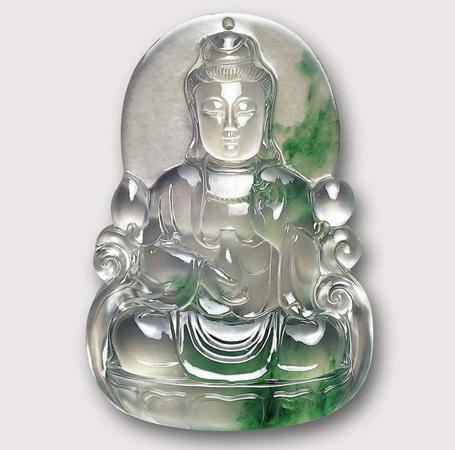
Collectors often describe high-quality jadeite as “old type” (lao zhong) — a traditional term referring to a fine, dense, and well-structured crystal texture.
This fine structure interacts with light to create the soft glow and inner luster that jadeite collectors admire. When you see this subtle radiance in fine jadeite, you can understand why collectors describe it as possessing a sense of elegance and depth.
For a deeper dive into understanding jade’s true beauty, check out the Jewea blog article: Does High-Quality Jadeite Have No “Cotton”? Understanding the True Beauty of Natural Jade.
1.3 How Jadeite Is Described
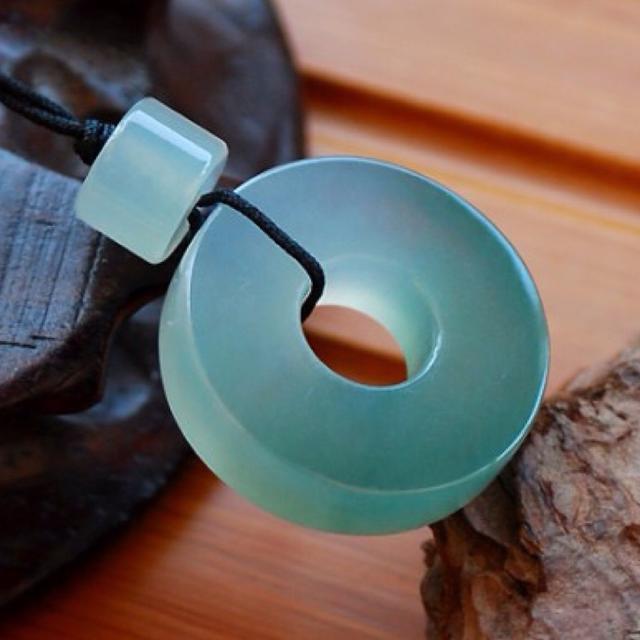
When describing jadeite, collectors and dealers often combine type and color together. For example:
- Icy Oil Green Pendant
- Nuo-Type Full-Green Cabochon
Certain combinations also have traditional Chinese names:
- Spring with Color (Chun Dai Cai) – A combination of green and lavender jadeite.
- White Base Green (Bai Di Qing) – White jadeite with a fine texture and areas of green color.
- Clear Water (Qing Shui) – Pale green jadeite with good translucency and a refined texture.
So when someone asks, “Which is better, White Base Green or Icy Type?” — it is similar to asking, “Which is better, Europe or Asia?” They belong to different categories, each with its own characteristics and beauty standards.
2. Understanding Jadeite Treatments: A, B, and C Jade Explained
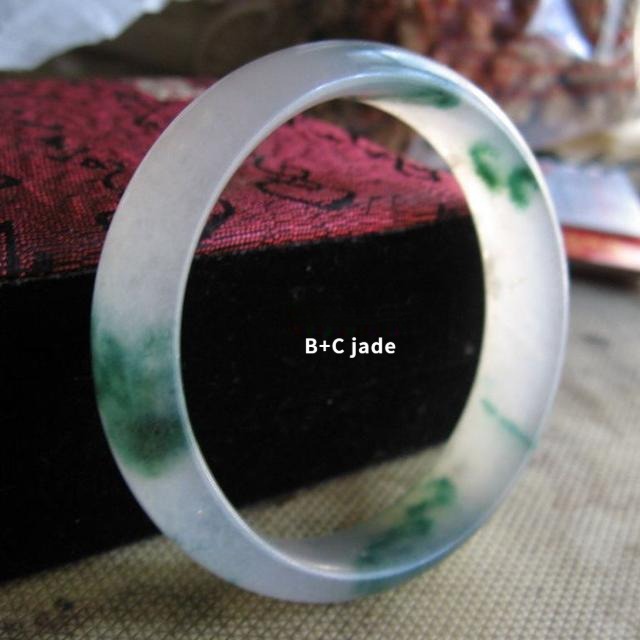
In the jade market, natural untreated jadeite is called A-jade.
- B-jade refers to jadeite that has been acid-cleaned and polymer-filled to improve its transparency.
- C-jade refers to jadeite that has been artificially dyed to enhance its color. Some low-quality stones are both treated and dyed — these are known as B+C jade.
B-jade often comes from coarse, opaque jadeite materials that are chemically bleached to remove impurities. Manufacturers then inject polymer or wax to make the material appear more translucent and vibrant.
C-jade, on the other hand, uses colorants to imitate natural green or purple jadeite colors.
2.1 Common Jade Imitations
Sellers often market many other materials as “jade,” including glass, chalcedony, aventurine, Malaysian jade (dyed quartz), and hydrogrossular garnet.
These imitations are usually softer, overly bright, unnaturally light in weight, and — most importantly — very cheap.
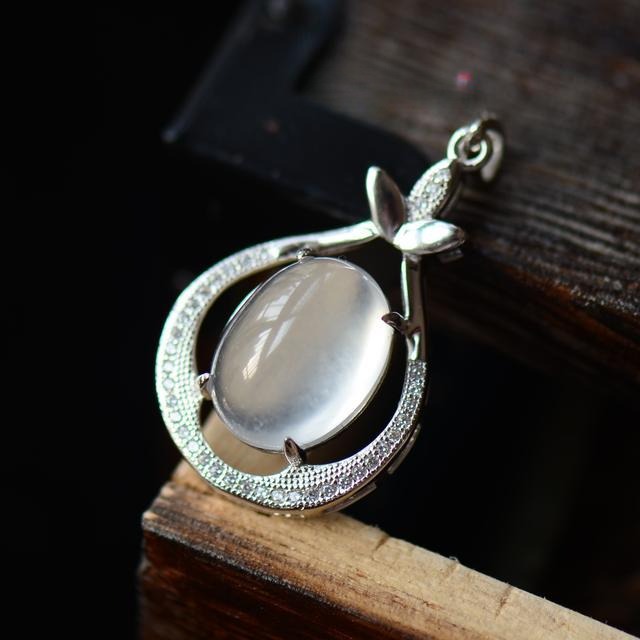
So, if someone offers you a “full green jade bangle” for a few hundred dollars, consider it a friendly invitation — to a scam.
2.2 The Myths About Testing Real Jade
You might have heard sayings like:
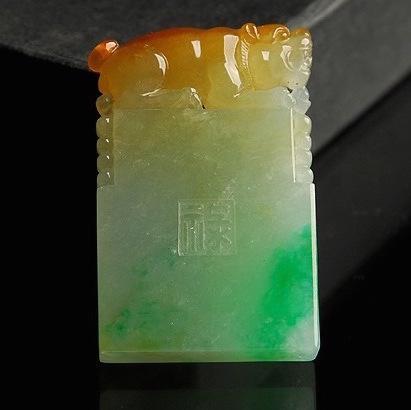
“Real jade feels cold when you lick it.”
“A hair can’t burn through real jade.”
“If a knife can’t scratch it, it’s genuine.”
Forget them. These so-called “folk methods” have no scientific basis.
The right way is to request a certificate from a reputable gemological institute — not just any piece of paper labeled “jade test report.”
2.3 Certificates Are Not Always Reliable
But beware — not all certificates are trustworthy.
Some unregulated organizations sell certificates for a few dollars, printed on the spot.
Even if the certificate is real, that doesn’t necessarily mean the jade is valuable.
Only certificates from recognized and accredited laboratories carry real authority.
We’ll soon publish a detailed guide on how to verify an authentic jade certificate — stay tuned to Jewea for that.
To learn more about gemstones, read our related blog post: Jasper vs. Nephrite Jade: The Confusing World of Red “Jade” Explained.
2.4 Don’t Believe in “Magic Jade” Stories
If a seller tells you things like:
“It has some cracks, but wearing it will heal them.”
“Jade becomes greener the more you wear it.”
“Jade can cure diseases.”
— please take them as jokes, not facts.
If jade truly could grow greener or heal illnesses, every dealer would be wearing dozens daily, turning cheap stones into treasures overnight.
Here’s the truth:
- Old-type jade is so dense that water, oil, or air can’t penetrate it — no “color-changing” happens.
- Younger jade may look glossier after wearing because surface oil and moisture temporarily enhance its reflection. But once you stop wearing it, it soon returns to its original look.
Jewea Conclusion
Learn more, buy less, and don’t rush.
There is plenty of valuable information about jadeite online — but there are also many myths and misunderstandings. Reading a few articles can help you learn the basics, but truly appreciating jadeite requires experience, observation, and time.
To understand the true beauty of natural jadeite, you need to see and appreciate it in person — whether in museums, gemstone markets, or fine jewelry collections. After seeing enough high-quality pieces, you will gradually develop an eye for the subtle differences in color, texture, and craftsmanship.
Just like natural jadeite, true beauty lies in character, craftsmanship, and attention to detail. At Jewea, we apply the same appreciation for natural beauty and artistry to our handmade vintage earrings — timeless pieces created with care and passion.