Trochus Shell Jewelry: Natural Ocean Materials in JEWEA Handmade Designs
In JEWEA handcrafted jewelry, we are drawn to materials defined not by perfection, but by the traces nature leaves behind—Trochus shell is one we return to again and again.
Formed in tropical and subtropical reef environments, it slowly develops its dense, durable structure through continuous cycles of tides, currents, and time. Unlike mother-of-pearl, known for its iridescent, mirror-like sheen, Trochus shell speaks in a more restrained visual language—soft, warm, and quietly tactile, with a subtle, bone-like natural luster that feels grounded rather than reflective.
Through JEWEA Trochus shell jewelry, this blog explores a natural material shaped by the deep sea, carefully cut and polished to preserve its organic character, without dyeing or artificial color treatment.
What Is Trochus Shell?
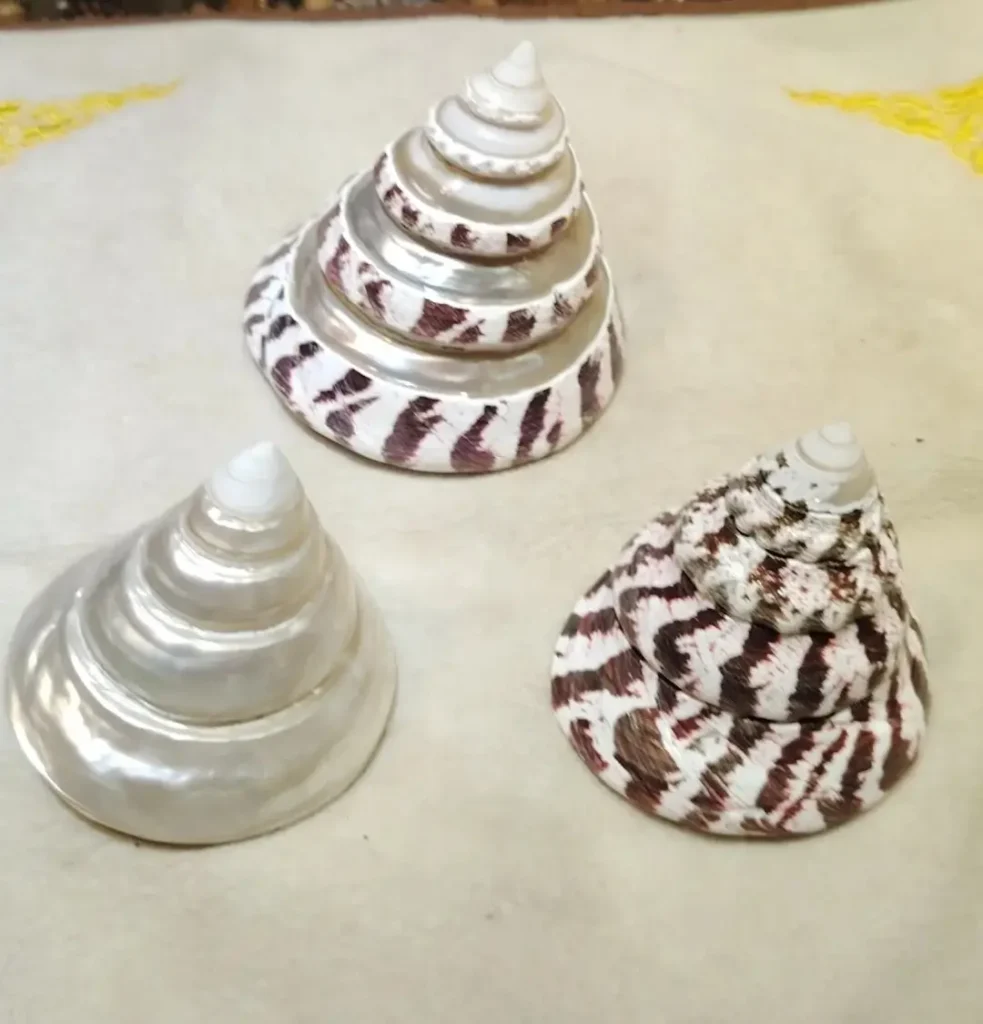
Trochus shell belongs to the class of marine gastropods. Its shell forms a naturally spiraled, layered structure that resembles a horseshoe in silhouette—hence its common name. The surface often carries organic growth textures and fine granular details, shaped by life in tropical and subtropical reef environments along shallow coastal waters.
In jewelry and craft applications, we primarily work with sliced or polished forms of the shell:
- Texture: hard, dense, and organically mineral-like in structure
- Color: ivory white, creamy beige, and soft oatmeal tones, sometimes with a warm undertone
- Luster: not a mirror-like pearl sheen, but a soft, diffuse glow with a subtle satin finish
- Surface character: natural grain, micro-porosity, and irregular, non-uniform geometry
These so-called “imperfections” are not flaws. They are the material’s identity—evidence of how it is formed, grown, and shaped by the sea.
Traditionally, Trochus shell has been used in buttons, inlay work, and everyday decorative objects. In contemporary handmade jewelry, however, it is more often shaped into beads while preserving its organic character. In JEWEA Trochus shell jewelry, this includes waterdrop and slender column forms, allowing each piece to retain a naturally irregular structure that cannot be replicated.
Trochus Shell is one of many natural materials that showcase the beauty of ocean-inspired jewelry. Explore more shell materials, craftsmanship, and design stories in our guide: Shell Jewelry: Natural Treasures from the Ocean.
Trochus Shell vs. Mother of Pearl
In organic jewelry materials, Trochus shell is often grouped with mother of pearl and other shell-based materials. Yet they follow fundamentally different visual logics.
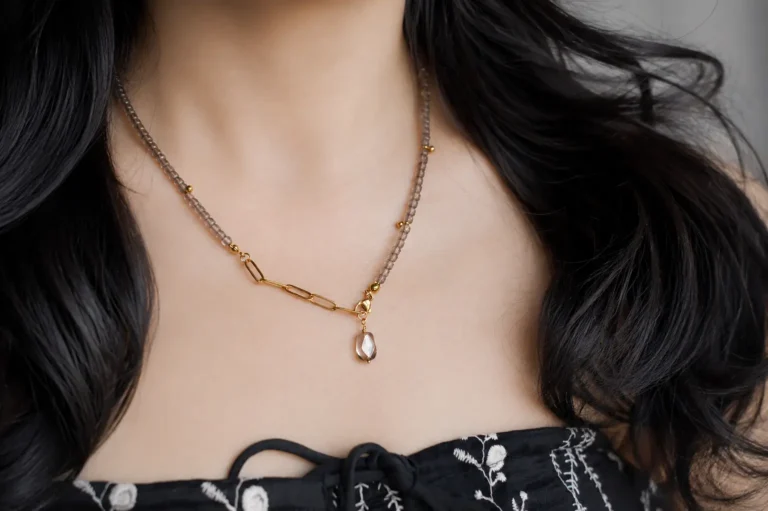
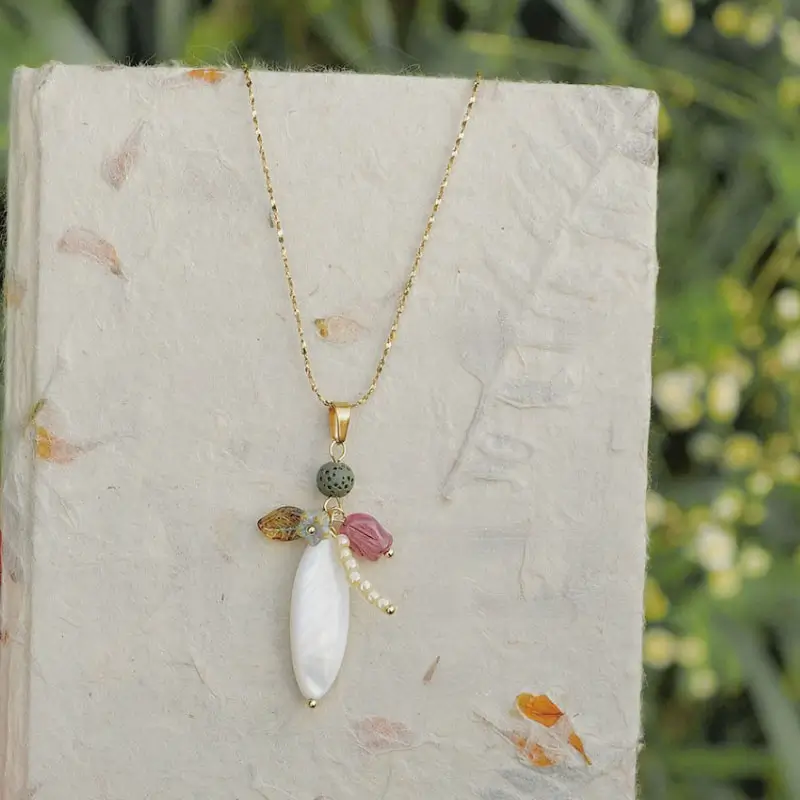
In the JEWEA 18K Gold-Plated Mother of Pearl Necklace shown below, the elongated pendant is made from natural mother of pearl.
1 | Different light behavior
Mother of pearl is defined by its iridescent interference structure, which creates strong reflections and a shifting rainbow-like sheen.
Trochus shell, by contrast, is formed from a dense calcium-based structure. It reflects light in a much softer way, producing a muted, diffused glow with a warm, satin-like finish.
One splits light; the other absorbs and softens it.
2 | Different visual character
Mother of pearl feels refined, clean, and distinctly urban in its elegance.
Trochus shell feels more grounded and elemental—raw in texture, slightly irregular, and closely tied to the visual language of coastal rock and tide-worn surfaces.
3 | Different color language
Mother of pearl tends toward cool tones—icy white, soft pink, and pale iridescent hues.
Trochus shell sits in a warmer spectrum—creamy white, oatmeal beige, and soft ivory tones with natural warmth.
Because of this, it pairs more naturally with materials such as:
- Brass and aged metals
- Earth stones like tiger’s eye and agate
- Natural textiles such as linen, cotton, and leather
JEWEA Trochus Shell Jewelry Collection
In JEWEA’s design language, Trochus shell is never treated as a decorative add-on. We approach it as part of the structural narrative itself. By pairing it with materials drawn from different cultural and geological contexts, we create a dialogue between the oceanic and the mineral within a single piece.
1 | Trochus Shell × Antique Glass Jewelry
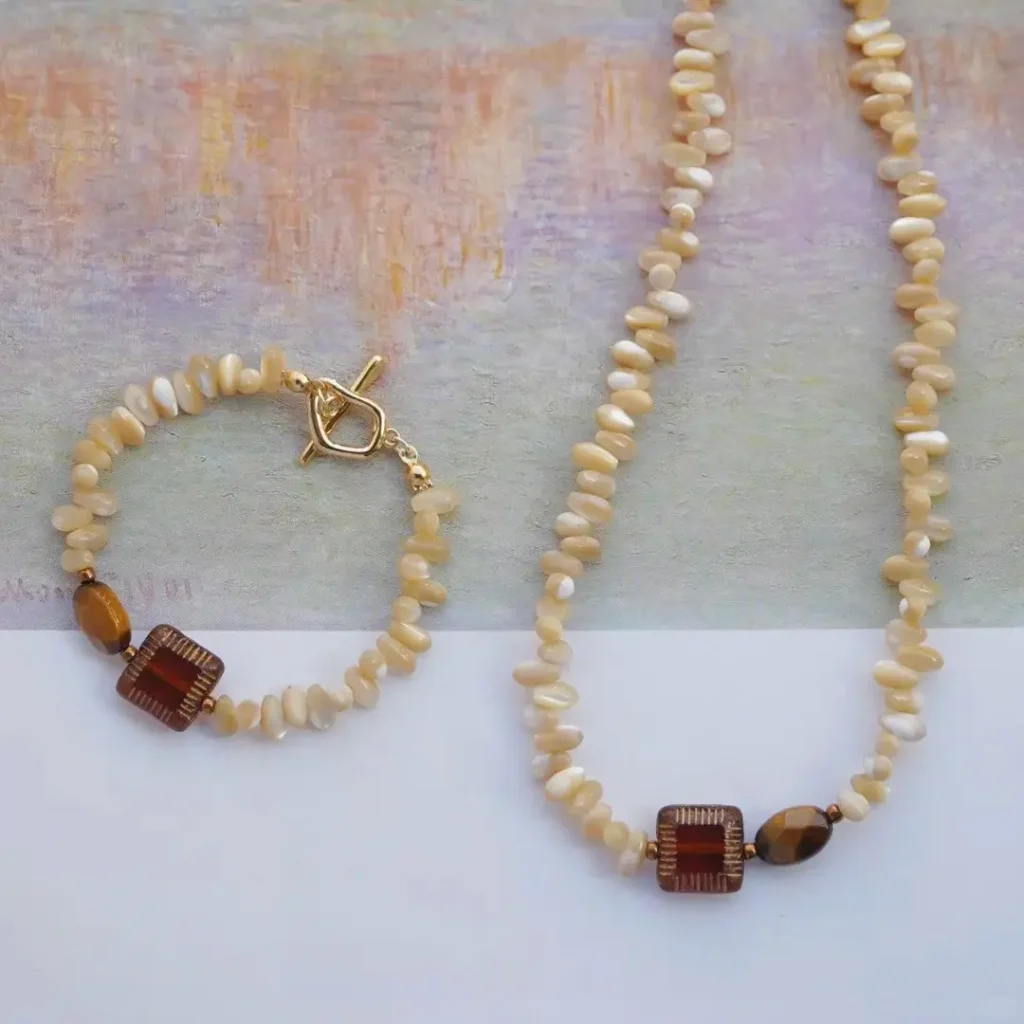
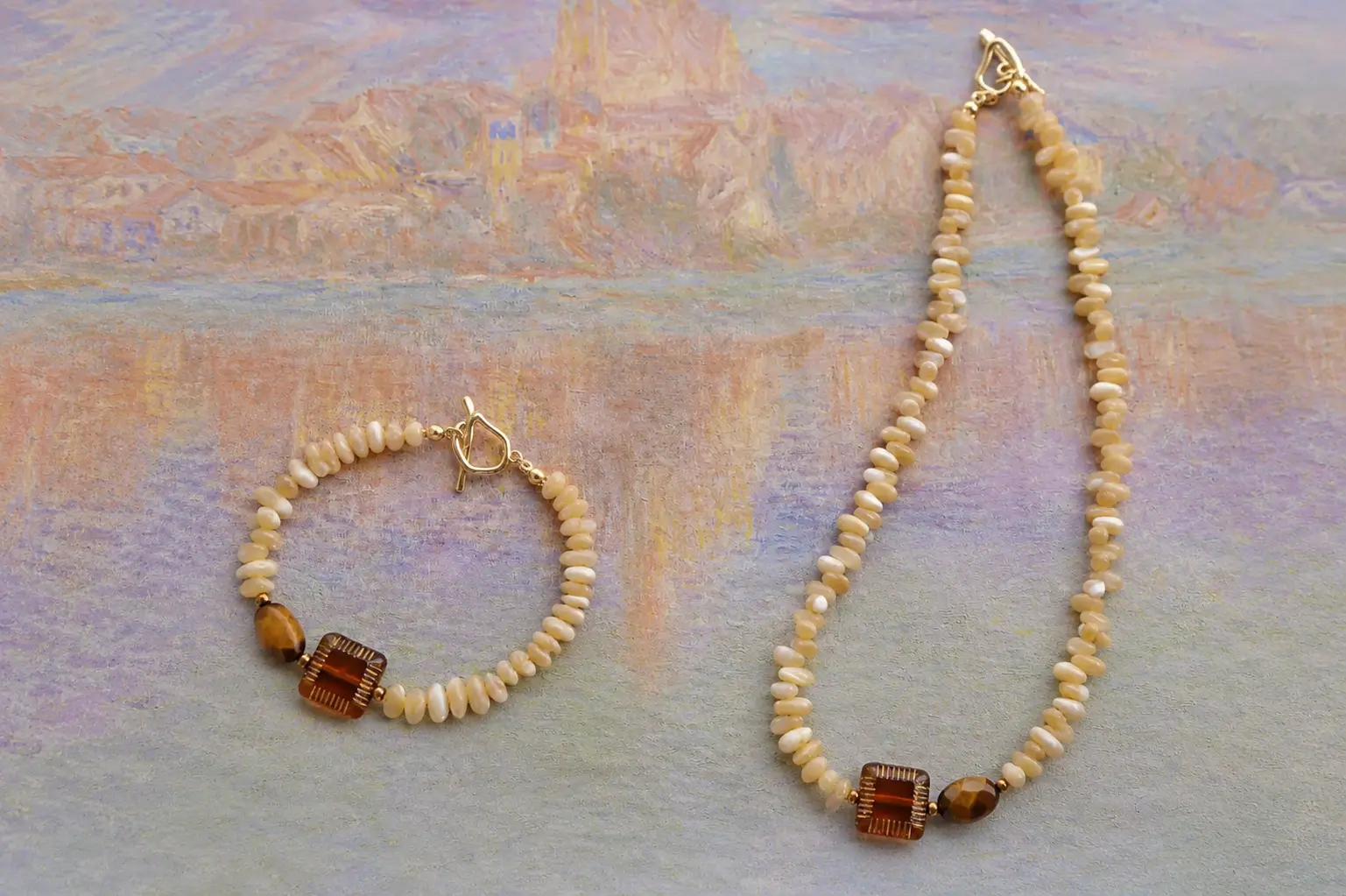
This Trochus shell jewelry set, including both a necklace and a bracelet, is built around cream-toned, waterdrop-shaped Trochus shell slices as its core material, creating a soft, low-saturation coastal palette.
Each shell element comes from naturally formed shell material, carefully cut to preserve traces of its original spiral structure and subtle growth patterns. After hand-polishing, the forms shift into a more refined waterdrop silhouette, while still retaining slight irregularities along the edges—enough to keep a balance between structure and natural imperfection.
Strung together, the shells create a rhythm reminiscent of tidal sediment layering. Light moves gently across their matte surface, producing a soft, muted glow rather than a reflective shine, which enhances their warm, organic texture.
Within this restrained palette, the design introduces two focal accents:
- A square antique-style reddish-brown glass bead
- An oval tiger’s eye stone
The depth and transparency of the glass contrast with the matte cream tone of the Trochus shell, while the tiger’s eye anchors the composition with a grounded mineral weight. Together, they hold the piece in a balance between lightness and stability.
An OT clasp completes the structure, keeping the piece relaxed in spirit while ensuring a refined, wearable finish.
Rather than appearing ornate, the design feels cinematic—quiet, slow-moving, and filled with a sense of light unfolding over time.
2|Trochus Shell × Tiger’s Eye Necklace
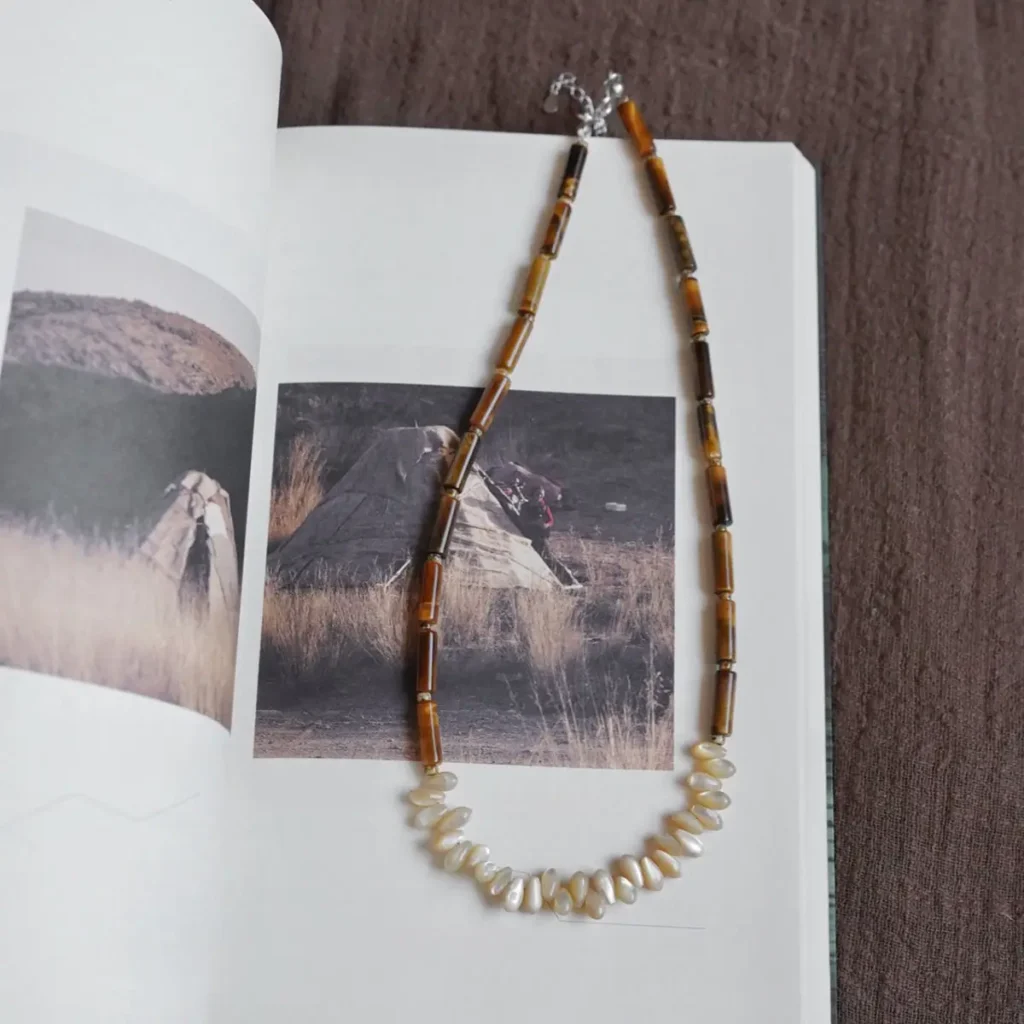
This Trochus shell and tiger’s eye necklace design alternates waterdrop-shaped Trochus shell slices with tubular brown tiger’s eye beads, creating a dialogue between oceanic organic forms and geological mineral structure.
The Trochus shell brings softness and a sense of breath—light, irregular, and naturally fluid. Tiger’s eye anchors the composition with direction, weight, and a grounded mineral presence.
The two materials meet without decorative transition. Instead, they connect through rhythm and repetition, forming a restrained, almost analytical sense of balance.
The piece feels closer to a wearable material study than a traditional decorative object.
In styling, it works particularly well with:
- Linen dresses
- Khaki, sand, and earth-toned outfits
- Everyday looks with subtle utility-inspired structure
It emphasizes a sense of order that emerges naturally from organic materials, rather than imposed design symmetry.
3|Trochus Shell × Hand-Painted Ceramic Beads Necklace
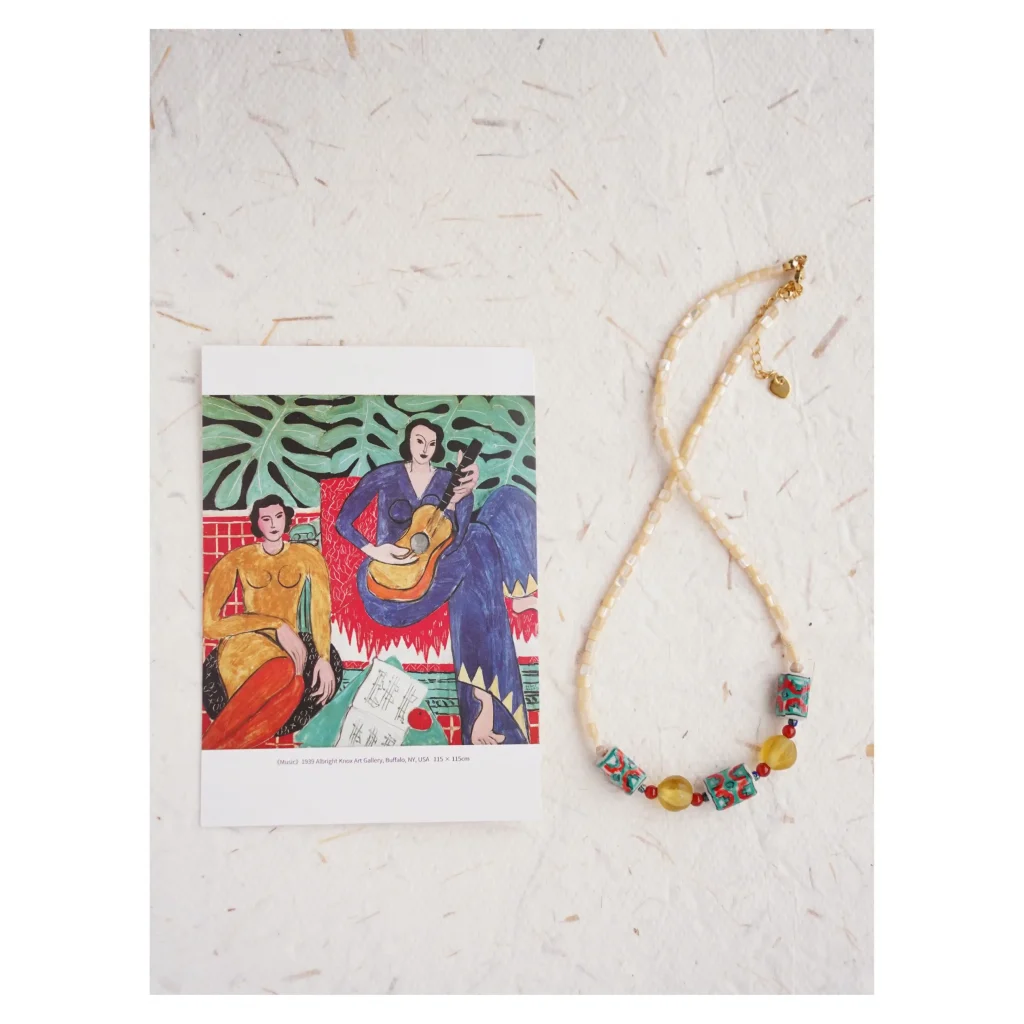
This Trochus shell and ceramic bead necklace draws inspiration from a structural interpretation of Matisse’s approach to color.
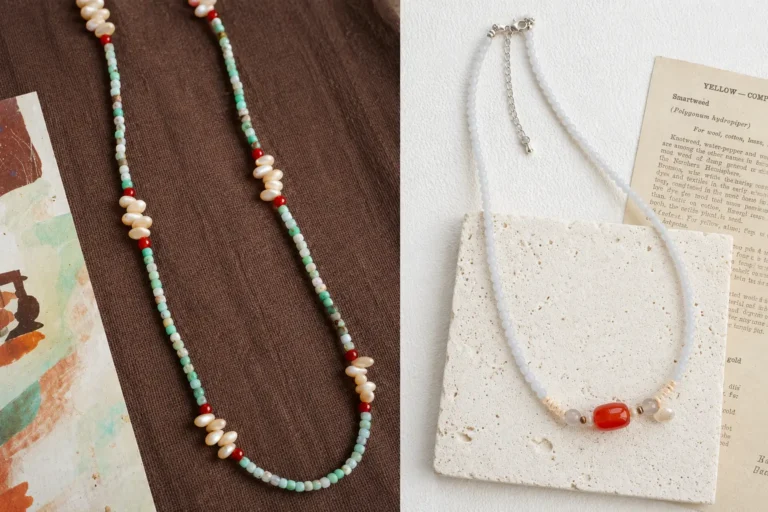
The design uses water-washed, slender column-shaped Trochus shell slices as its foundation. Strung together, they create a rhythm that resembles the flow of brushstrokes, forming a subtle sense of visual movement. On this base, we introduce high-saturation color elements:
- Hand-painted glazed ceramic beads
- Yellow Nepal glass beads
- Red agate accents
The low-saturation warm ivory tone of the Trochus shell acts as a natural canvas, while the vivid color blocks land across it like direct, expressive brushstrokes.
This design does not rely on decorative layering. Instead, it builds a visual dialogue between materials, where each element behaves like a stroke within a larger composition.
The result carries strong artistic tension and works especially well as a focal piece for monochrome outfits—black, white, or deep navy—turning everyday styling into a moving composition of color and form.
Closing Note
The value of Trochus shell does not lie in rarity or brilliance, but in how faithfully it preserves a naturally formed state.
Its irregular edges, subtle textures, and warm creamy tones are all the result of time and the ocean working together as a quiet, continuous sculptor.
In JEWEA’s language, it is never “processed into beauty”—it is simply seen as beauty, already present in its natural form.
If diamonds represent the extreme of light, Trochus shell represents the breath of time.
This season, we hope these coastal fragments—shaped by the sea—become a quieter, freer expression in your everyday styling.