Cui Qing Nephrite Jade: The “Dark Horse” Dominating the New National Standard
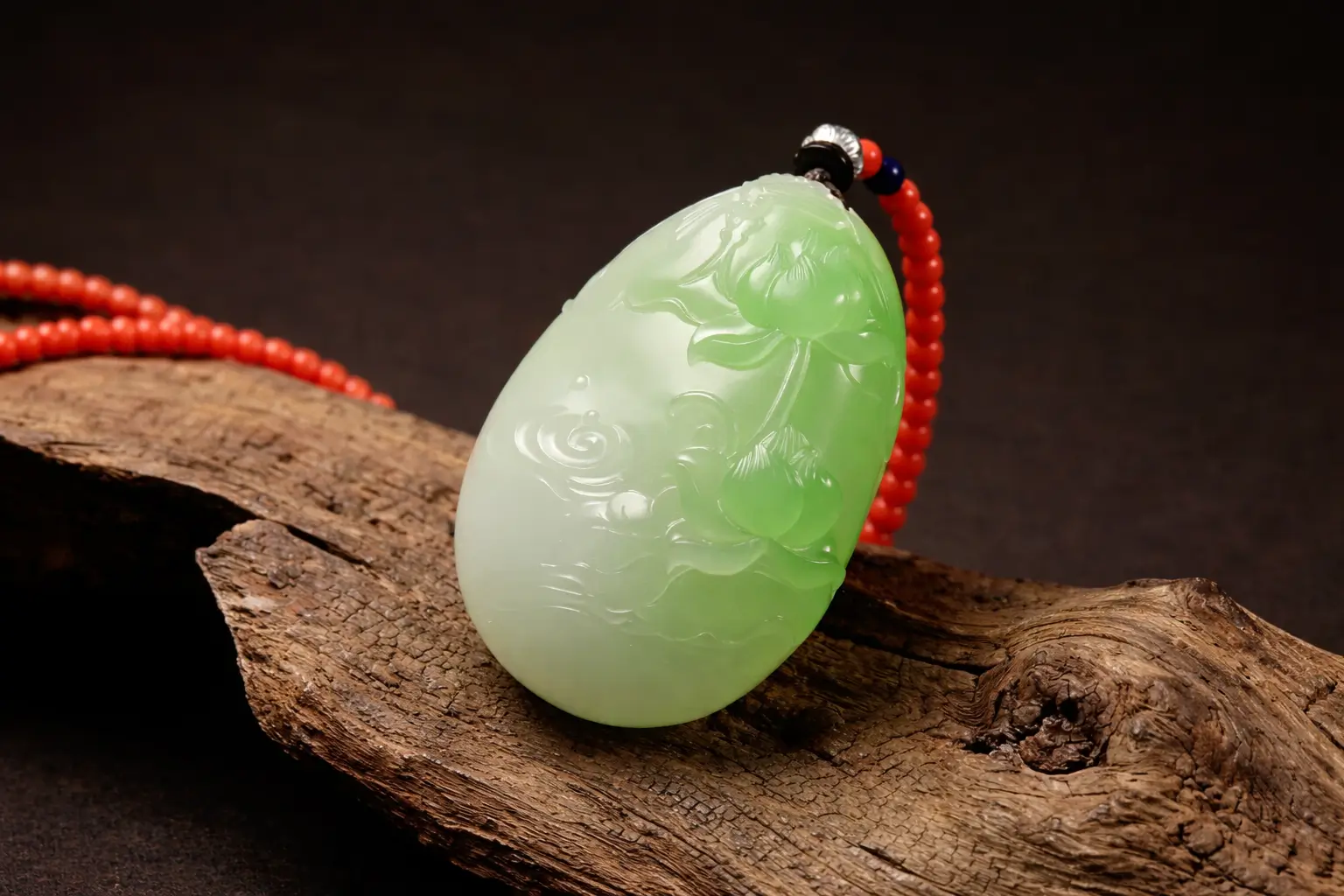
There is a long-standing proverb in the Chinese nephrite market: “When Hetian Jade carries a touch of emerald green, its value doubles.” This refers specifically to Cui Qing Nephrite Jade, a distinctive bicolor variety known for its vibrant green splashes on a white base.
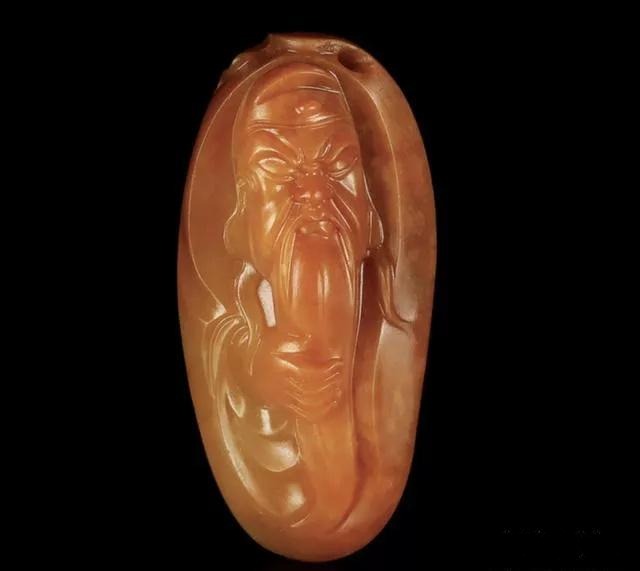
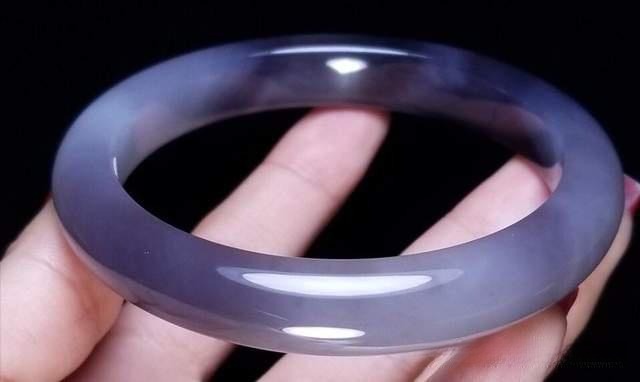
While traditional collectors have historically focused on the legendary Mutton Fat Jade or rare Red or Yellow Infusions, the market is shifting. Alongside Smoky Purple Nephrite and Pink Nephrite, Cui Qing Nephrite Jade is carving out a significant position in the world of niche, high-end gemstones.
In this article, we will examine the factors behind its official recognition as a distinct variety under the National Standards (GB/T 38821—2020) and the technical reasons for its valuation. We will also provide a professional perspective on its unique chromium-based mineralogy and offer practical advice on identifying common imitations found in the current market.
What Exactly is Cui Qing Nephrite Jade?
Under the Chinese National Standard (GB/T 38821—2020), Cui Qing Nephrite is defined by its specific green hue. This primary color ranges from a delicate pale green to a vivid emerald. To meet this classification, the green portion must cover at least 5% of the stone’s surface. Most specimens feature striking combinations, such as green-on-white or the rare tri-color blend of green, white, and smoky purple.
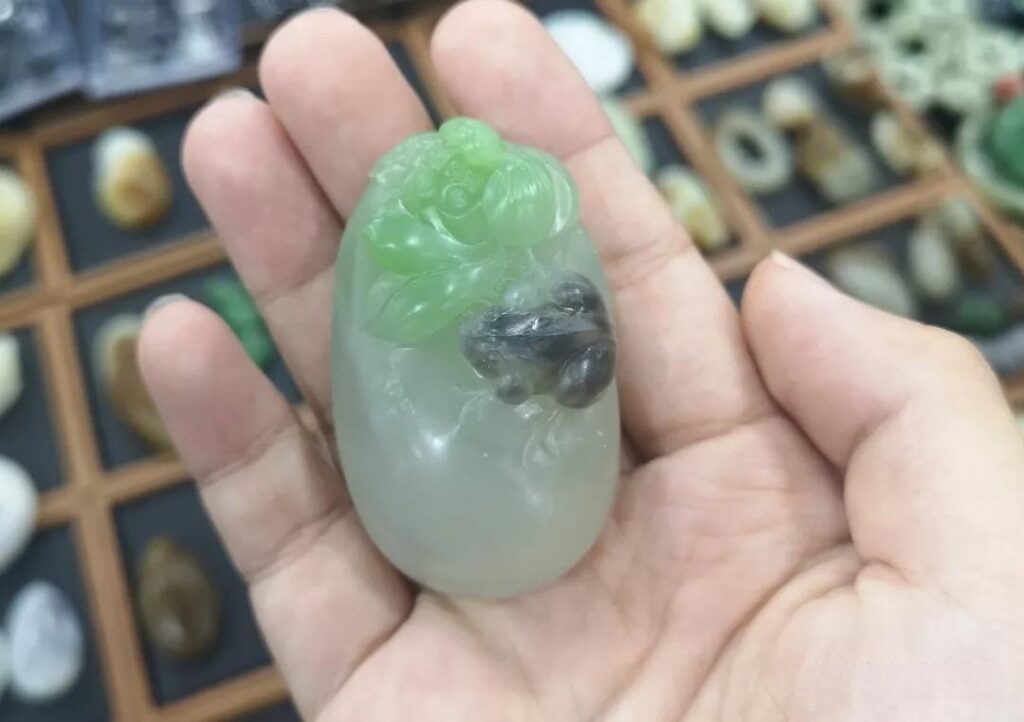
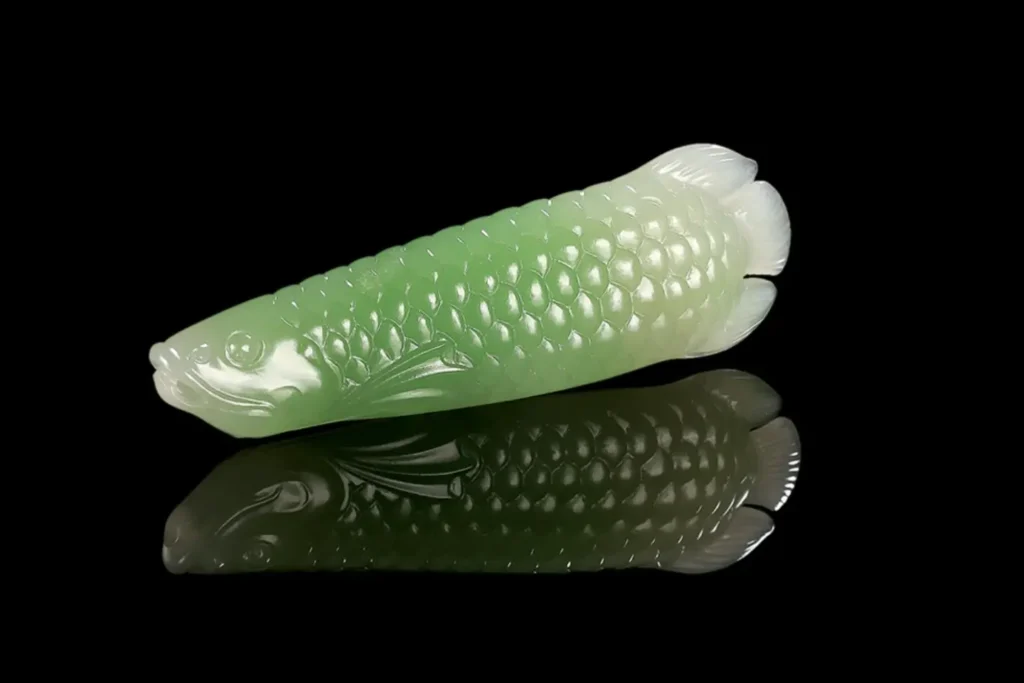
Just like the well-known White, Yellow, and Qing (Celadon) Jade, “Cui Qing” refers to a specific color profile within the Hetian family. However, its green is entirely unique. Unlike the somber, grayish-green of traditional Qing jade or the deep, saturated forest green of Spinach Nephrite (Manasi or Russian Jasper), Cui Qing possesses a vibrant, “living” quality. It resembles the tender, fresh buds of grass in early spring—a light, energetic green that feels full of vitality.
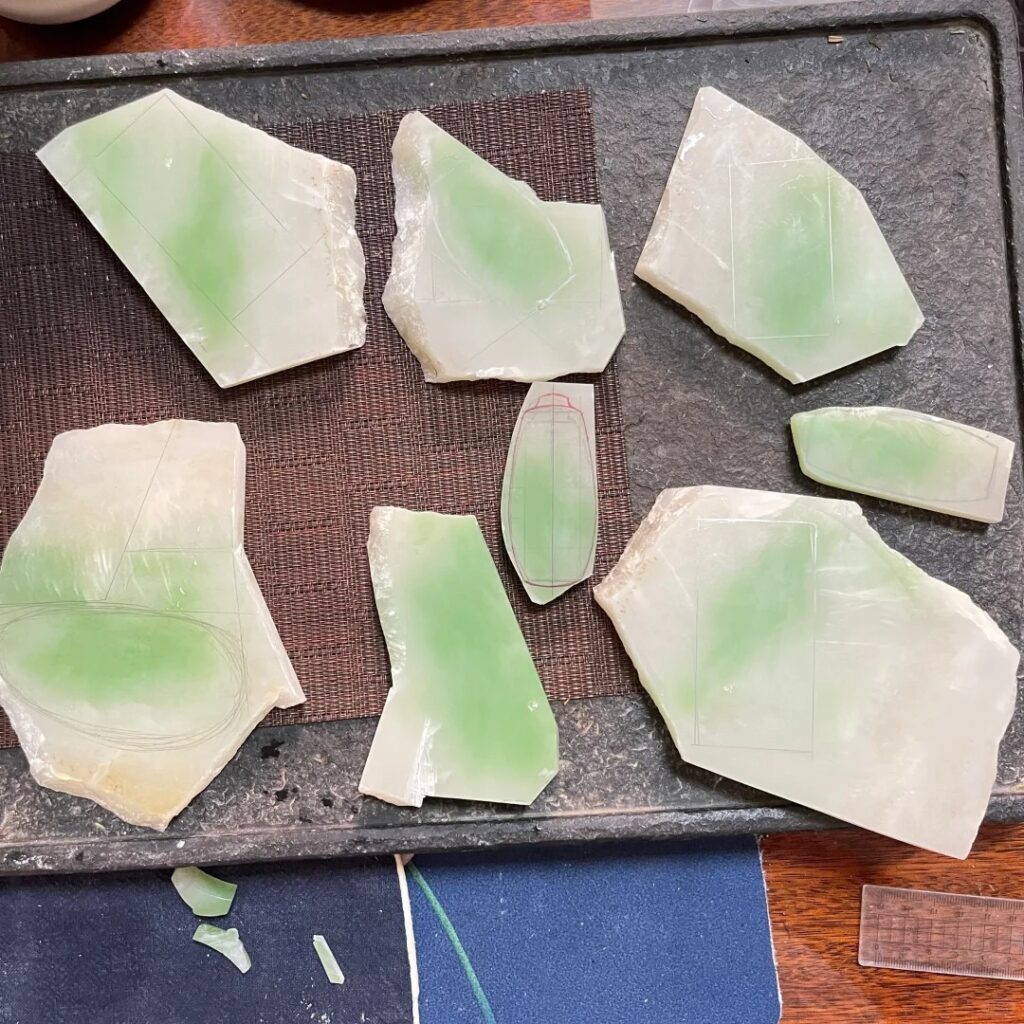
From a mineralogical perspective, this specific vibrance is tied to the presence of Chromium (Cr). While Chromium is the key coloring agent for almost all green nephrite, the concentration makes the difference. Just as varying levels of Chromium create the distinction between “Spinach Green” and “Apple Green” in Jasper-style nephrite, it is the precise infusion of this element that gives Cui Qing its signature spring-like verdancy.
Why Cui Qing Nephrite Jade Commands a Premium
In the Hetian Jade trade, a long-standing proverb suggests: “When jade carries a splash of green, its value doubles.” In our previous discussion, The Soul Within White Hetian Nephrite Jade: Understanding the Four Pillars of Quality, we defined the merit of nephrite through four essential benchmarks: Luminosity (Whiteness), Fineness of Grain, Greasiness, and Waxy Luster.
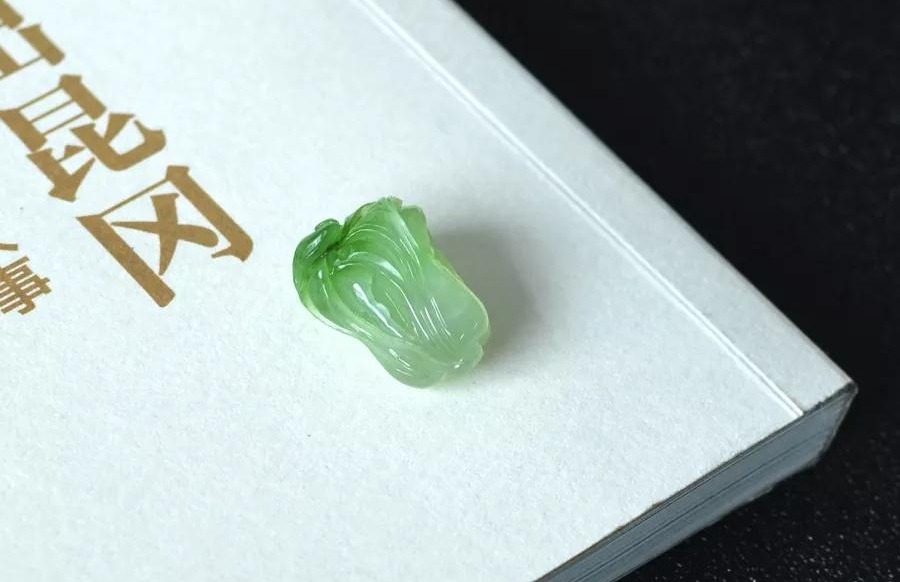
However, Cui Qing Nephrite Jade has emerged as a distinct exception to these conventional metrics. Its ability to command a consistent premium over monochromatic stones of comparable quality is the result of specific market and mineralogical factors. To understand how this variety has secured such a prominent position among modern collectors, we can analyze its value through three core dimensions:
1. Beyond Whiteness: A Multi-Dimensional Aesthetic Standard
For those new to Hetian Jade, “whiteness” is often the singular obsession. In the professional trade, you will frequently encounter the “Cigarette Reference”—a localized method where stones are photographed alongside a cigarette to use the stark white of the wrapping paper as a baseline. While useful for distinguishing subtle nuances within Grade 1 white (such as 1.2 or 1.5), this linear approach fails to capture the true character of the stone.
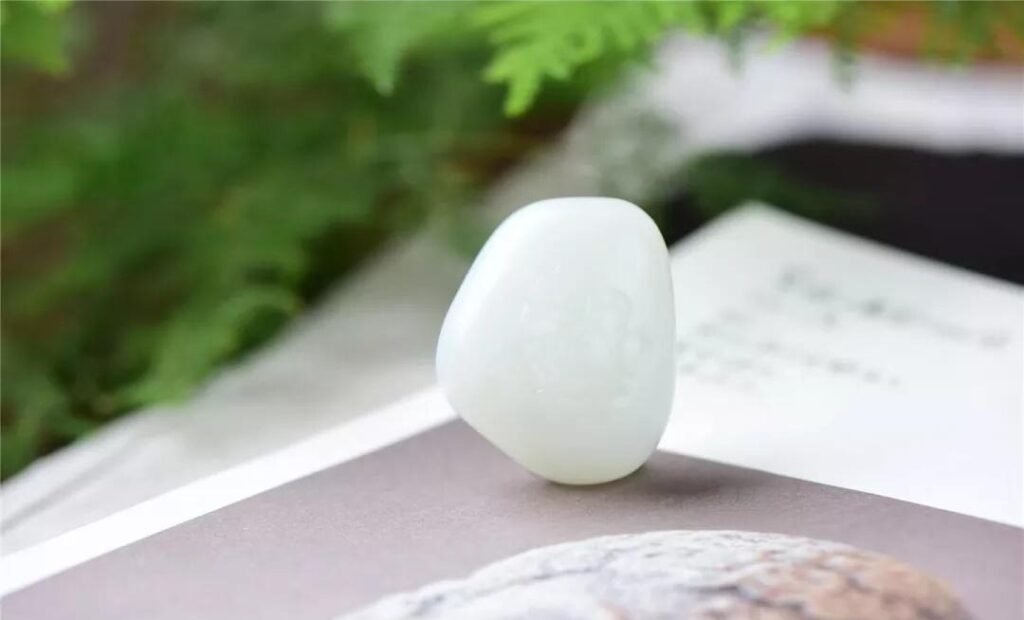
The reality of the high-end market tells a different story: many exceptional colored jade varieties now command prices that far exceed their pure white counterparts. To evaluate a material as unique as Cui Qing Nephrite, we must shift our perspective and adopt the five-fold standard traditionally reserved for fine Jadeite:
- Intensity (Nong): The color should have depth and substance, not appear thin or washed out.
- Brightness (Yang): The hue appears lively and clear, free from dull or grayish tones.
- Purity (Zheng): The color remains clean and true, without muddy or mixed undertones.
- Vibrancy (Yan): The stone carries a fresh, vivid presence—radiant, but never harsh or artificial.
- Placement (Qiao): Color appears in just the right areas, enhancing the composition like a final, well-placed brushstroke.
Viewed through this lens, top-tier Cuiqing reveals a bright, pure green that feels strikingly alive—a dynamic contrast to the stillness of single-tone jade.
2. Aesthetic Tension: Where Gravitas Meets Vitality
The distinctive appeal of Cui Qing nephrite lies in its quiet sense of contrast—a visual tension that feels both unexpected and harmonious.
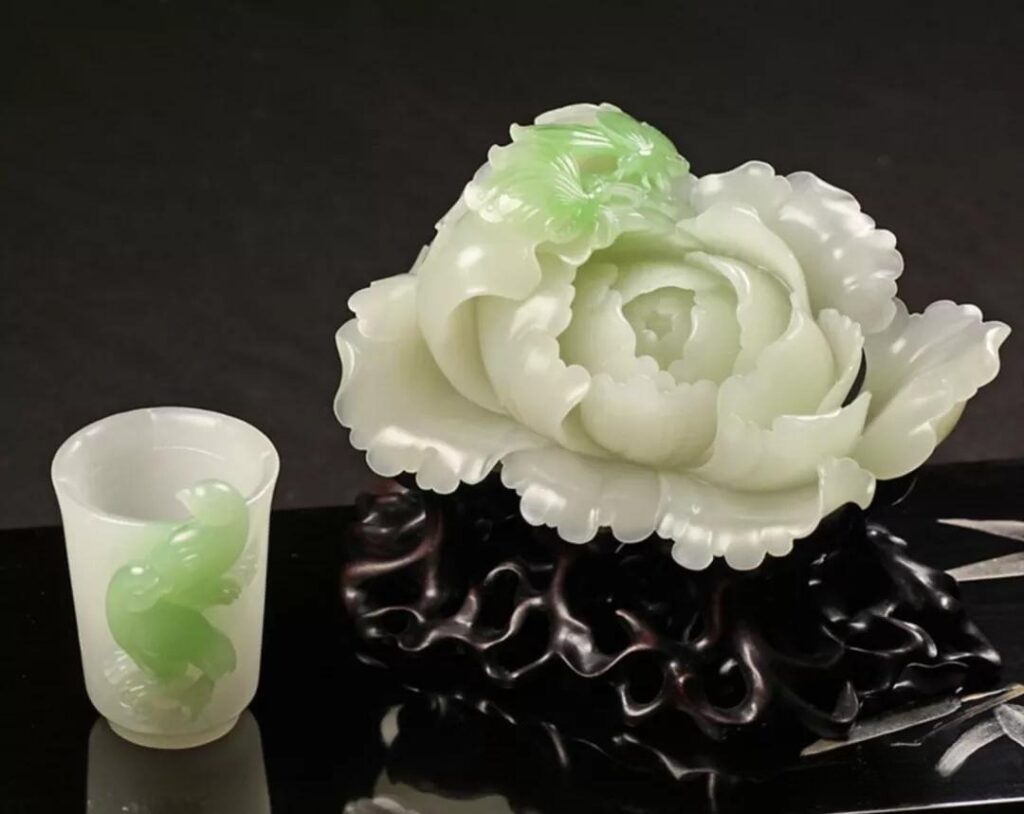
Hetian jade has long been valued for its density, restraint, and softly lustrous, waxy warmth. It carries a grounded, composed presence. In contrast, the Cui Qing hue—caused by trace chromium—introduces a fresh, pale green reminiscent of early spring growth.
Rather than disrupting the jade’s inherent dignity, this color animates it. It lifts the stillness of a single-toned stone, introducing a subtle sense of movement and vitality.
For experienced collectors, this balance is precisely the appeal. It reflects a contemporary aesthetic in which substance meets freshness—where tradition is not replaced, but quietly reawakened. This interplay is what makes Cui Qing so compelling, and why it continues to resonate with discerning collectors.
3. A Geological Alignment: Why Rarity Drives Value
From a mineralogical perspective, Cui Qing nephrite is the result of a remarkably precise geological balance. Its signature color depends on the presence of trace chromium (Cr), but only within a very narrow range.
- Too much chromium: The color deepens into the heavier, darker tones of spinach-green nephrite, losing the light, fresh character that defines Cui Qing.
- Too little chromium: The color remains faint and underdeveloped, never reaching the vivid, sprout-like green collectors seek.
This delicate balance leaves almost no room for error. Even a slight variation in chromium content can shift the stone away from the ideal. In essence, Cui Qing forms only under “just right” conditions—a classic Goldilocks scenario. Because this balance is so rare in nature, high-quality material is exceptionally scarce.
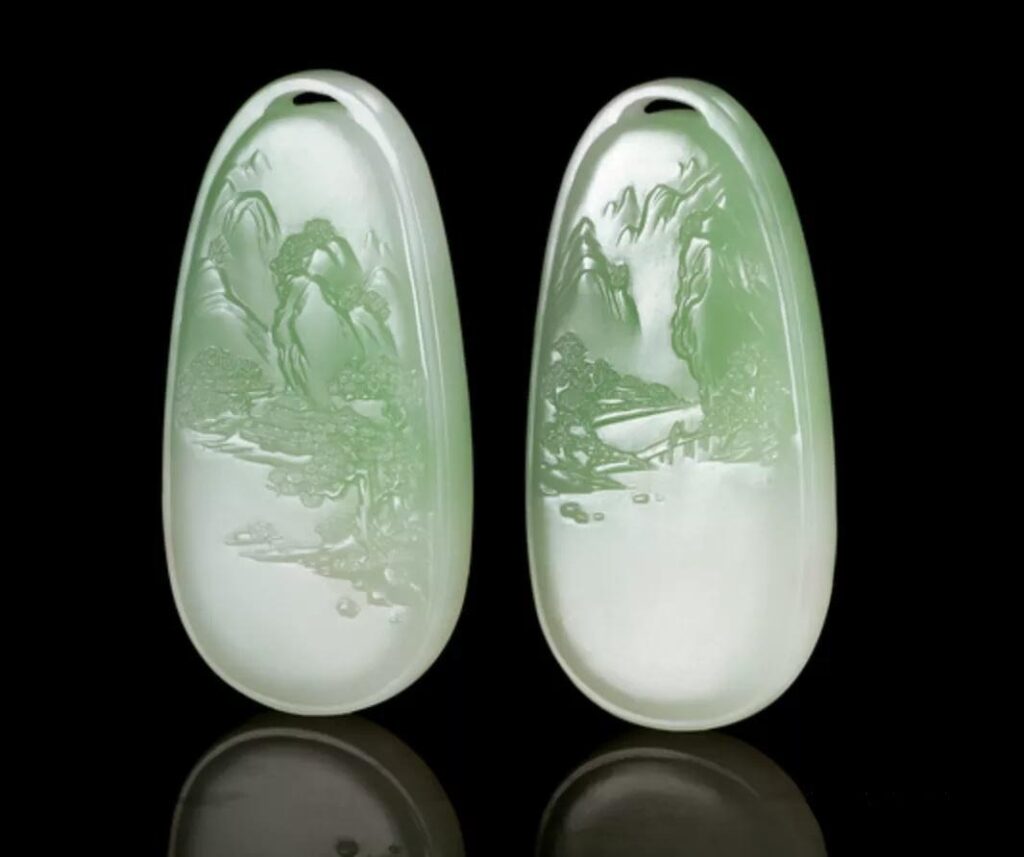
That rarity is not simply a matter of aesthetic preference; it is a geological constraint. It is this natural scarcity that ultimately underpins Cui Qing’s strong market appeal.
Identifying Authentic Cui Qing Nephrite Jade: Spotting Market Imitations
Where there is demand, imitation follows. As cuiqing nephrite gains attention, a range of lookalikes and misleading practices have entered the market. Understanding these patterns is essential if you want to buy with confidence.
1.Passing Off Standard Green Nephrite as Cui Qing
One of the most common tricks is simply misrepresenting standard green nephrite (qingyu) as cuiqing.
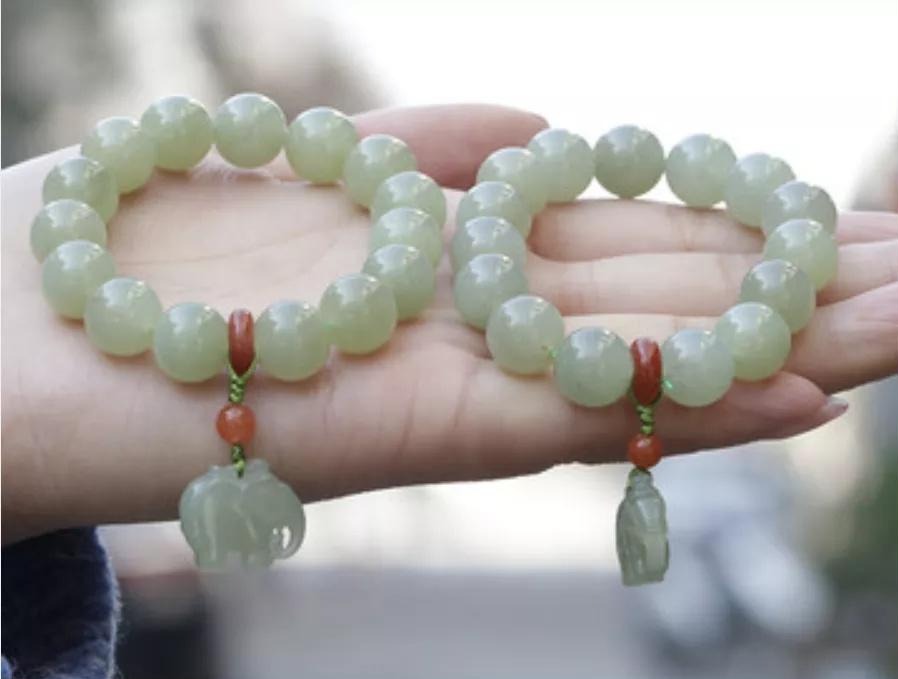
At a glance, both may appear similar—but the difference lies in character. True cuiqing carries a light, lively green with clarity and freshness, while ordinary green nephrite often appears heavier, flatter, and less refined.
For new buyers, this distinction can be easy to miss—and that’s exactly what some sellers rely on.
2. Dyed or Surface-Enhanced Material
Another practice involves applying green dyes to white jade to mimic the cuiqing effect.
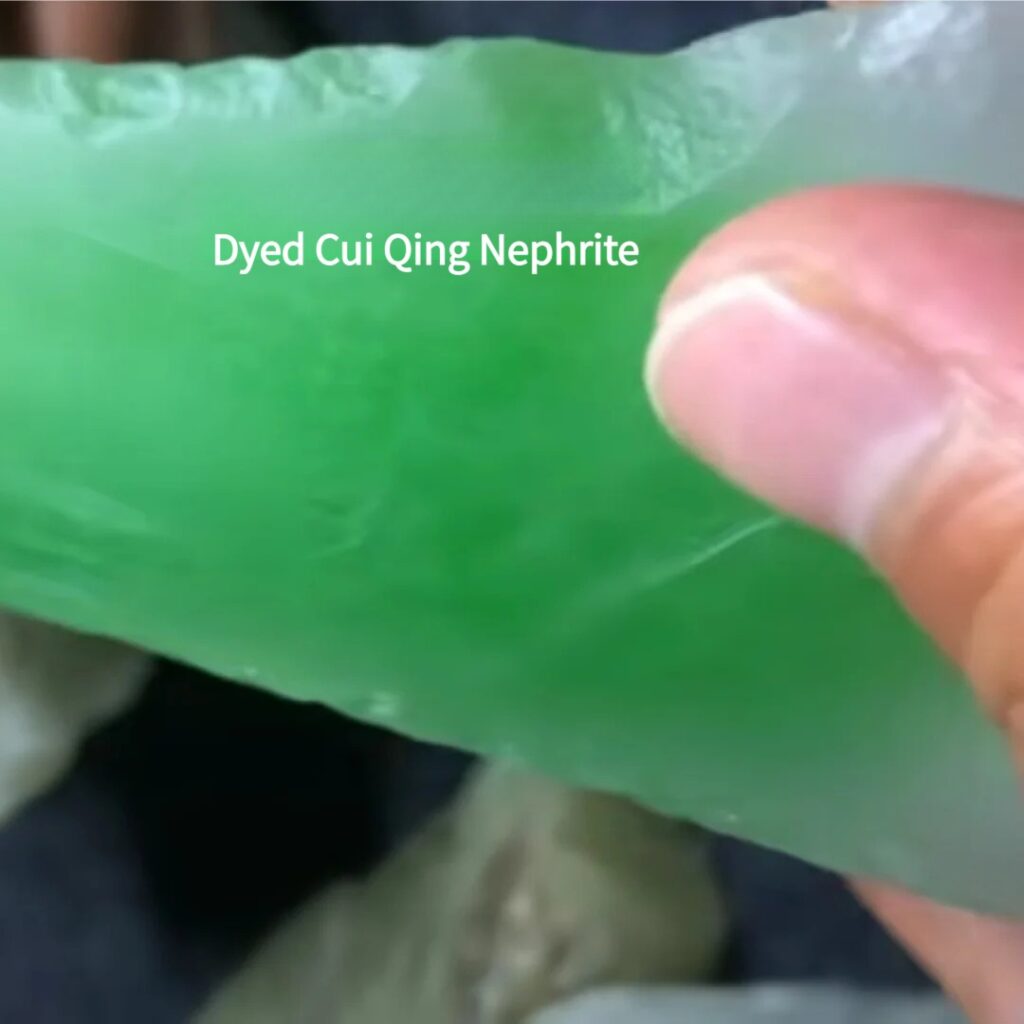
These treatments are typically unstable and sit only on the surface rather than forming within the stone.
A simple test:
Use a cotton pad with high-concentration alcohol and gently rub the colored area. If pigment transfers onto the pad, the color is not natural.
Even without testing, trained eyes can often spot the difference. Treated color tends to look flat, overly uniform, and lacks the subtle depth of naturally formed jade—what professionals would call an “instant tell.”
3. Mixing Origins to Blur Value
Not all cuiqing is equal—and origin plays a significant role.
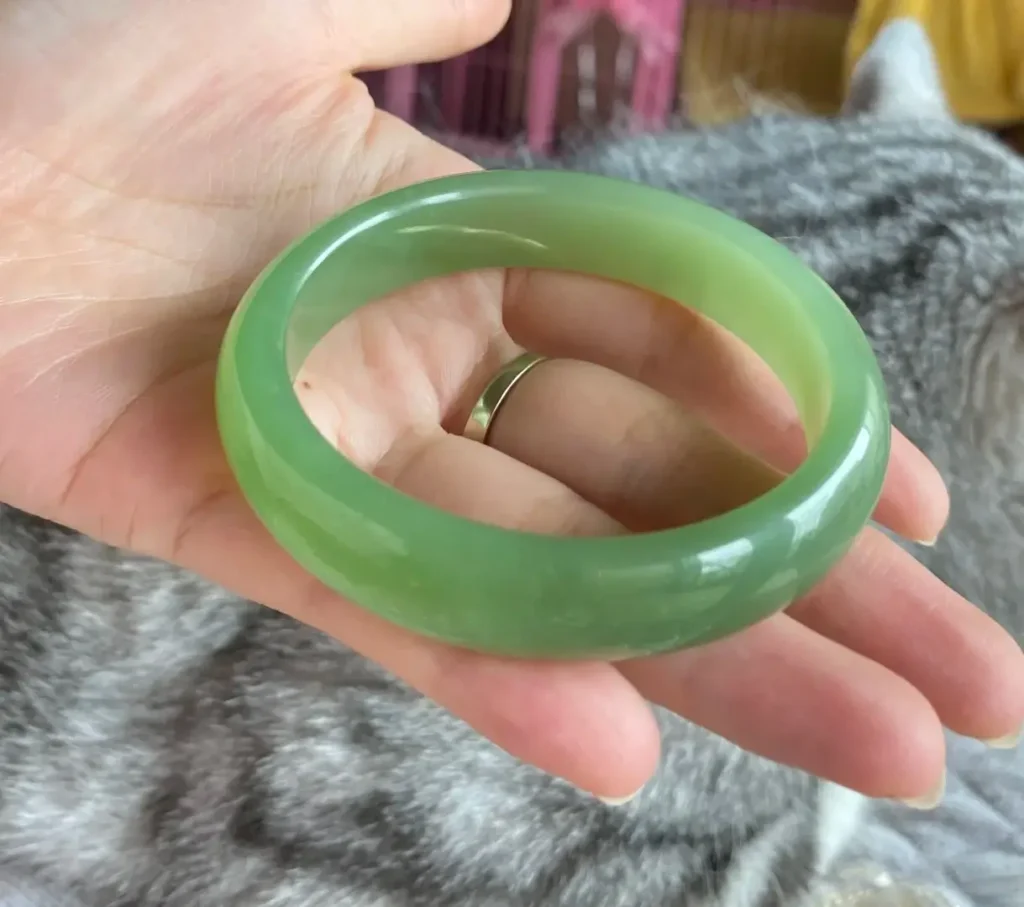
- Qinghai material: More commonly found, often more translucent with a slightly muted green. Generally more accessible in price.
- Russian material: Typically brighter and more vivid, especially when paired with a fine white base—high-quality pieces command strong premiums.
- Hetian seed jade (zi liao): Exceptionally rare. Authentic pieces with natural cuiqing coloration are scarce.
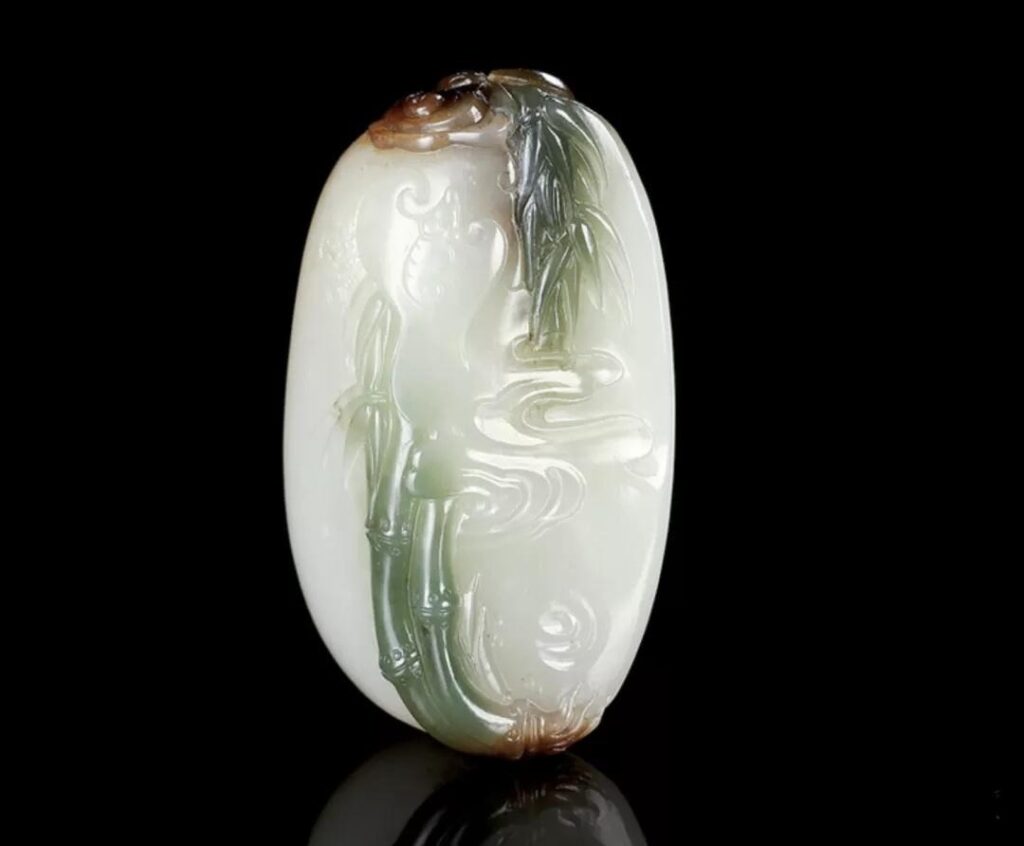
If a seller presents large quantities of so-called “seed jade cuiqing,” caution is warranted. This category is already prone to misrepresentation, and rarity should never look abundant.
4. Composite and Assembled Pieces
A more subtle form of deception involves composite construction—where a thin layer of green material is bonded onto white jade to simulate natural color placement.
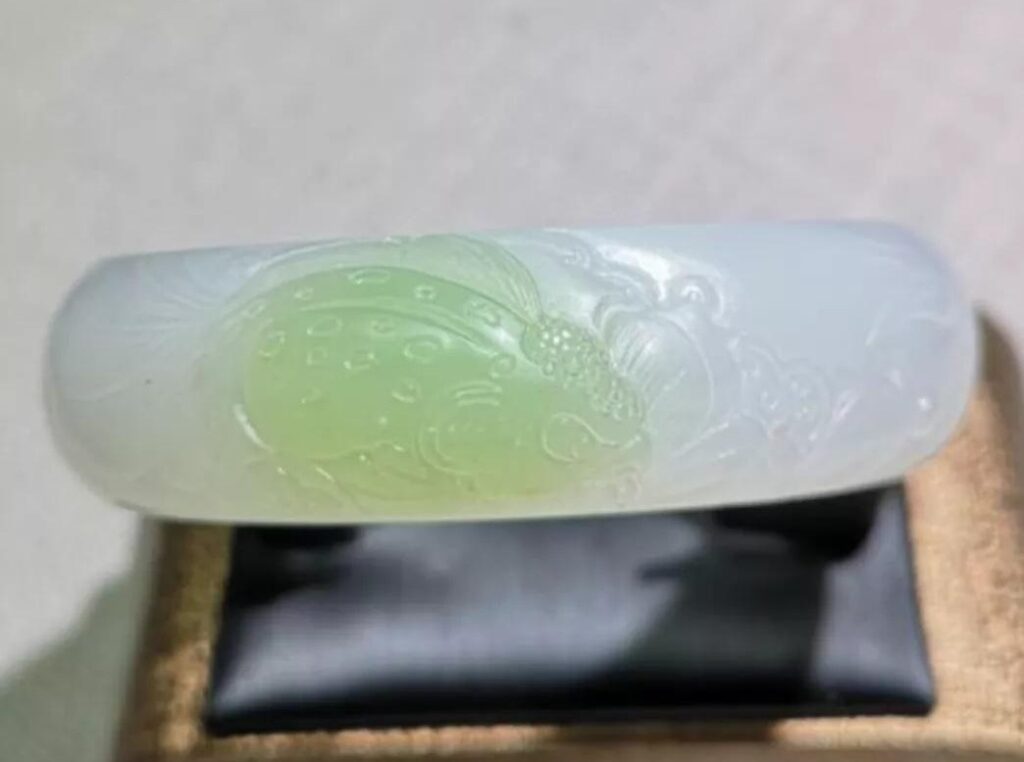
Technically, both materials may be real. But the piece itself is not a single, naturally formed stone.
What to look for:
Examine the boundary between the green and white areas. In natural jade, the transition is gradual and integrated. In assembled pieces, you may detect a sharp line or unnatural separation under close inspection.
A Final PerspectiveCui Qing Nephrite Jade
The most important principle is simple: color alone does not determine value. A hint of green does not automatically make a piece rare—or expensive. True quality lies in the harmony between color, texture, structure, and natural integrity.
At Jewea, we encourage collectors to look beyond surface appeal and focus on what truly defines fine jade: balance, authenticity, and material honesty. Because in the end, what you’re collecting is not just color—but nature’s precision, formed over deep time and impossible to replicate.