Is Imperial Green Jade Really That Cheap? How Buyers Get Misled
If you browse Imperial Green Jade (Imperial Green Jadeite) jewelry on live streams or social media today, you’ve likely encountered jaw-dropping claims:
- “Genuine Imperial Green Jade for just a few thousand dollars!”
- “Rare Old-Mine, Full-Green Jadeite—once-in-a-lifetime deal.”
- “Collector-grade quality at wholesale prices.”
Naturally, it’s common to feel a mix of excitement and doubt. You might ask:
Is it real? Is it worth buying? Am I missing something?
In this article, we’ll answer those questions step by step.
First, we’ll clarify what authentic Imperial Green Jade truly looks like. Then, we’ll examine Yongchu and Guatemalan jadeite, materials often hyped in online streams but not true substitutes for Imperial Green Jade. Finally, we’ll show you how to recognize them before buying and discuss whether they are worth purchasing.
Table of Contents
- Is Imperial Green Jade Really That Cheap? How Buyers Get Misled
- How Yongchu Jadeite Resembles Imperial Green Jade
- Guatemalan Jadeite: The Blue-Green Illusion
- How to Spot Yongchu and Guatemalan Jadeite vs. Authentic Imperial Green Jade
- How to Avoid Buying Misrepresented Imperial Green Jade
- Are Yongchu and Guatemalan Jadeite Worth Buying?
- The Jewea Perspective
1. Is Imperial Green Jade Really That Cheap? How Buyers Get Misled
Before examining imitations or substitutes, we first need a clear and realistic benchmark. In other words, what does true Imperial Green jadeite actually look like at the highest level?
A Definitive Auction Reference for Imperial Green Jade
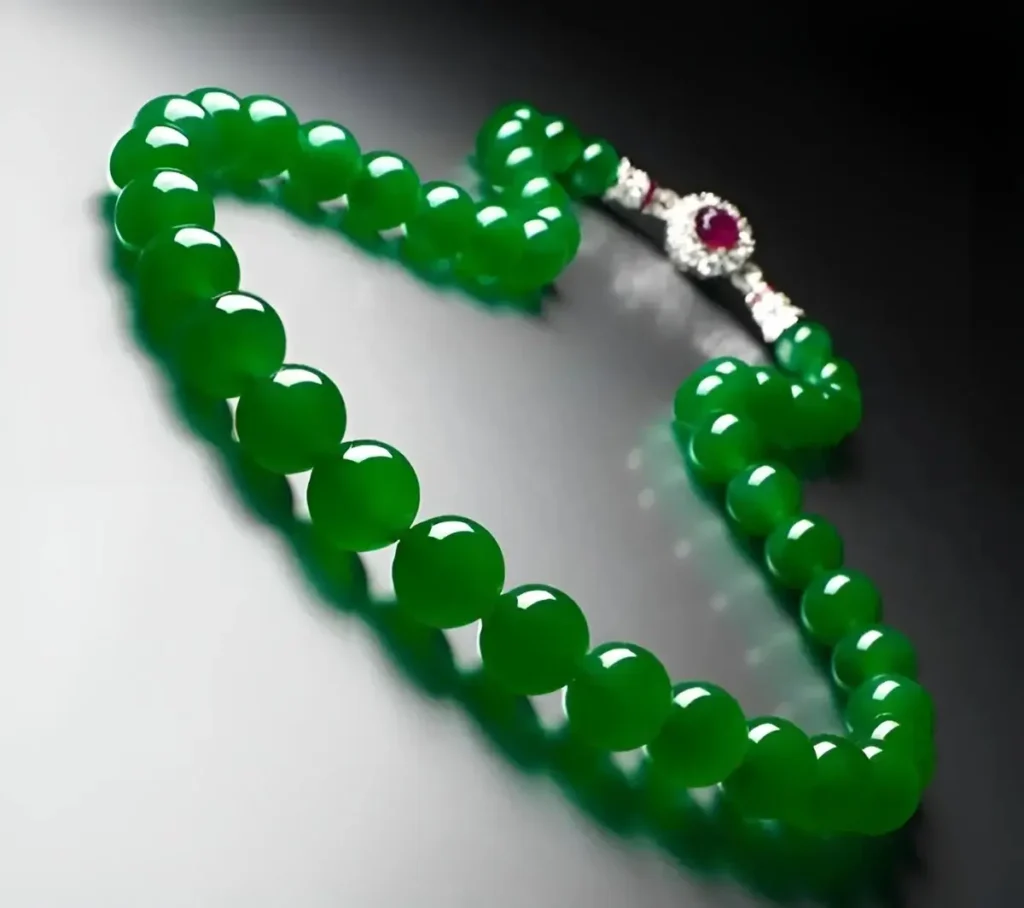
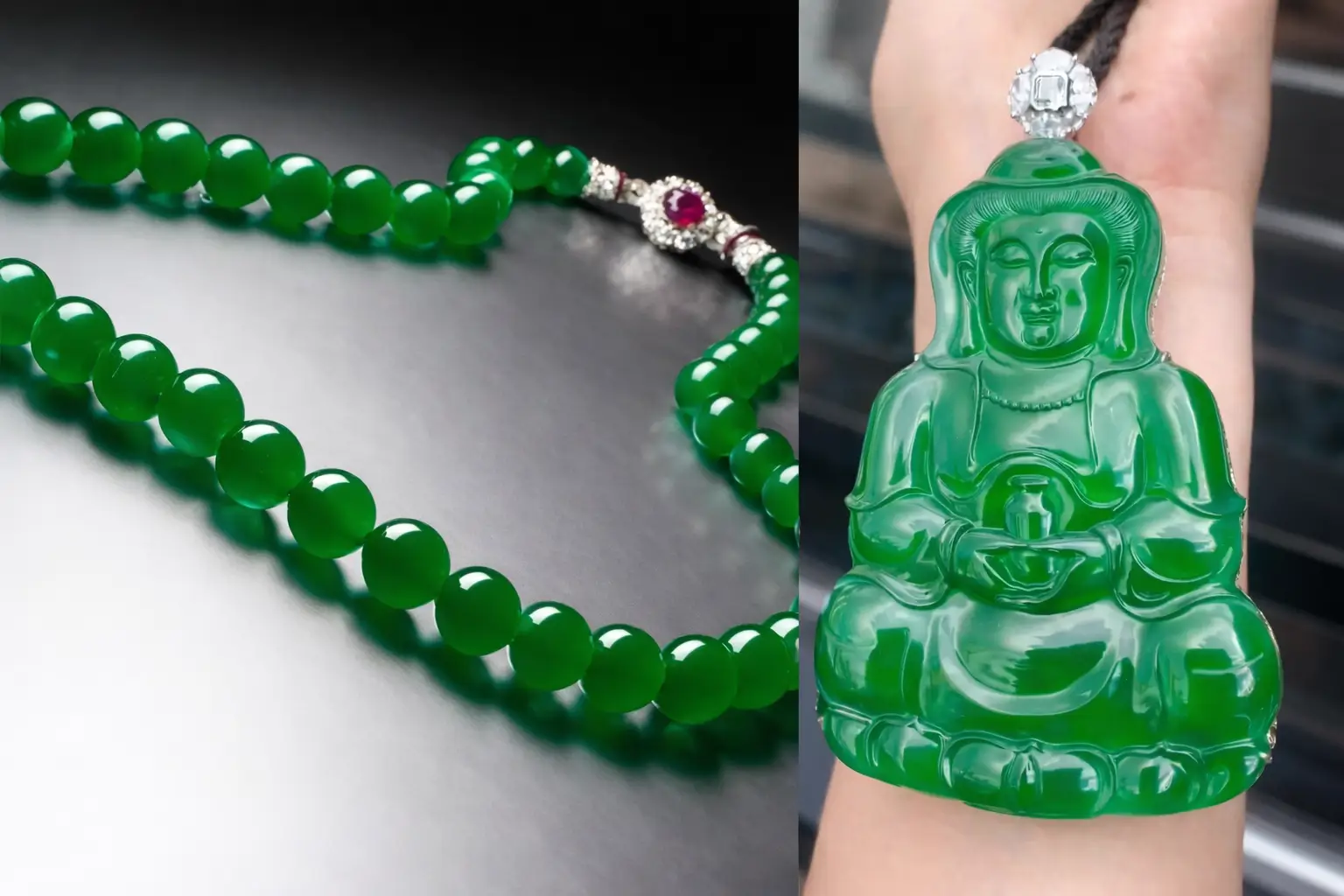
One of the most authoritative modern examples appeared at Sotheby’s Hong Kong Spring Auction in 2023. At this sale, a natural Imperial Green jadeite necklace titled “Tian Lu Lin Lang” achieved a final price of approximately USD 7.9 million.
The necklace features 43 perfectly matched jadeite beads, each measuring between 11 and 13 mm in diameter. More importantly, every bead shows exceptional consistency in color, saturation, and texture—qualities that rarely occur together in natural jadeite.
In addition, master craftsmen paired the jade beads with refined diamond and gemstone settings. As a result, the finished piece feels elegant and restrained rather than flashy, reflecting the traditional aesthetic standards of imperial jadeite jewelry.
Why the Name “Tian Lu Lin Lang” Matters
The name “Tian Lu Lin Lang” carries deep cultural weight. During the Qing Dynasty, it referred to the imperial library within the Forbidden City, where rare Song and Liao dynasty manuscripts were preserved. In 1744, Emperor Qianlong personally inscribed the name for this collection.
Therefore, in Chinese cultural tradition, the phrase symbolizes objects of the highest scholarly, artistic, and material value—items worthy of imperial ownership rather than commercial circulation. This historical context reinforces why such jade pieces appear almost exclusively at major international auctions.
The Defining Characteristics of True Imperial Green Jade
At this level, experts do not judge Imperial Green jadeite by brightness alone. Instead, professionals evaluate several core qualities together.
True Imperial Green jadeite is defined by:
- Chromatic Purity
An exceptionally even, concentrated green that appears rich rather than harsh or “painted.” - Structural Density
A fine-grained internal texture that produces a jelly-like translucency instead of a glassy shine. - Integrity of Cut
High translucency achieved through material quality—not by grinding the stone into a fragile thin shell. - Visual Depth
Unlike imitations that look flat, authentic jadeite reveals layered depth that shifts as light moves across the surface.
Together, these traits create a sense of substance and quiet power that imitations cannot replicate.
Price as a Reality Check for Buyers
Price offers another essential reference point. In the Chinese market, entry-level Imperial Green jadeite pendants typically start above USD 140,000, while finer examples rarely carry public price tags at all. Instead, collectors trade them privately or acquire them through major auction houses.
In the jewelry world, transparency equals value. If a piece promises the visual “impact” of a multi-million-dollar necklace for the price of a fine dinner, you are not discovering a hidden bargain. Rather, you are looking at a completely different material.
Why This Benchmark Matters
With this benchmark in mind, the real question changes. When a piece advertised as “Imperial Green jade” sells for a few thousand dollars, the issue is no longer whether it looks green. Instead, the question becomes what compromises were made to reach that price.
As a result, this distinction prepares us to understand why so many modern materials enter the market under the Imperial Green label—despite bearing little resemblance to jadeite at this level.
2.How Yongchu Jadeite Resembles Imperial Green Jade
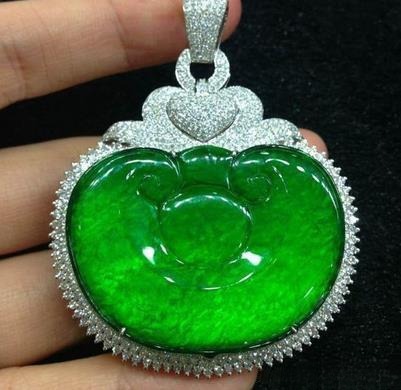
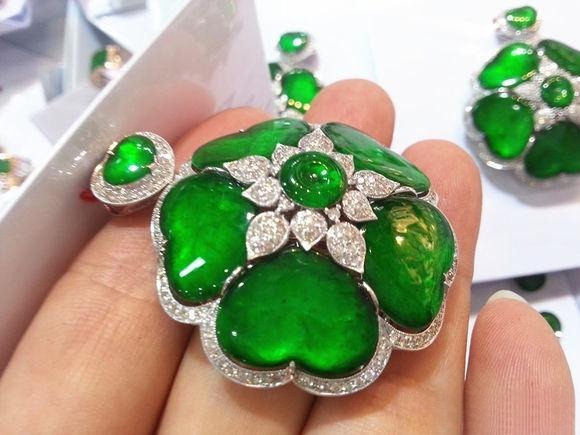
With a true benchmark in mind, it becomes much easier to spot what doesn’t belong in the same category.
Many pieces marketed as “Imperial Green jade” do not fail because they are completely fake. Instead, they rely on optical tricks and selective presentation. One of the most common examples is Yongchu jadeite.
What Is Yongchu jadeite, Really?
In the jade trade, “Yongchu” is a term commonly used to describe a type of jadeite material, particularly in Chinese jade markets. It is associated with northern Myanmar sources and is distinct from the better-known Burmese jadeite mining areas such as Hpakan and Moxisha.
From a gemological perspective, Yongchu material can exhibit characteristics similar to Burmese jadeite, including comparable refractive index and visual appearance. As a result, some Yongchu pieces may receive jadeite identification reports.
However, in the gemstone trade, value depends on more than mineral classification alone. Factors such as physical properties, internal structure, translucency, and overall visual performance all play important roles.
Compared with high-quality Burmese jadeite from classic deposits, Yongchu material often shows differences in texture, structural integrity, and optical behavior.
Core Characteristics of Yongchu jadeite
Yongchu jadeite spans a wide quality range. While a small portion of high-grade material exists, most commercial Yongchu jade displays the following traits:
Color Expression
- Primarily green-based, including apple green, bright green, and blue-green tones
- High-color pieces can look striking at first glance
- Iron-rich areas often introduce dark specks or uneven saturation
Texture and Translucency
- Medium to moderately fine grain structure
- Often comparable to icy-waxy or glutinous-ice textures rather than true “icy” jadeite
- Natural translucency varies widely and is usually limited in untreated rough
Structural Weaknesses
- Frequent internal fractures and cottony inclusions
- Clean, crack-free material in strong color is rare and commands a premium
- Larger, thicker pieces quickly appear dark and lifeless
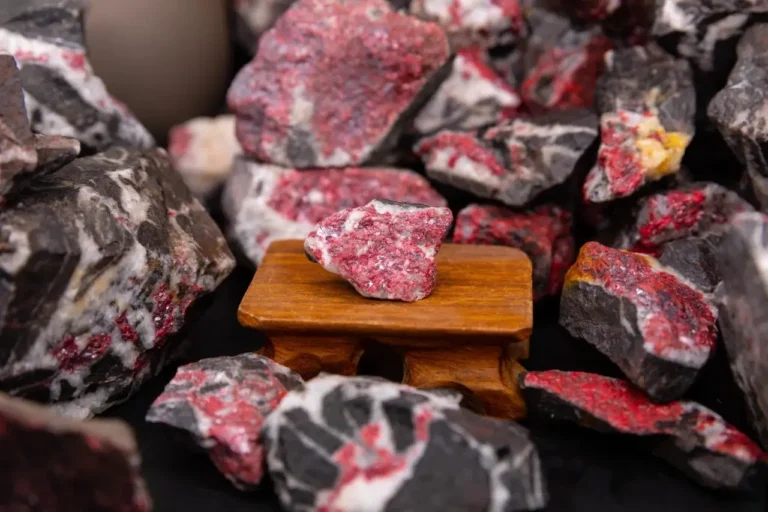
On its own, most Yongchu rough looks dense, dark, and opaque—not at all like auction-grade Imperial Green jadeite.
The Science Behind the “Glow”
So why does Yongchu jadeite so often appear vivid and translucent in finished jewelry?
The answer lies in how it is cut and set.
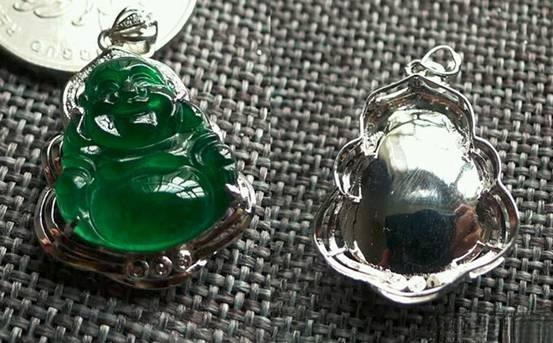
To enhance visual appeal, craftsmen typically rely on three techniques:
- Extreme Hollowing
They grind the jade down to an unusually thin layer, often between 2 and 3 mm, and sometimes even thinner at the center. - Closed-Back Mounting
Jewelers permanently seal the stone into a metal backing. The reflective surface acts like a mirror, forcing light back through the thin green layer. - Optical Amplification
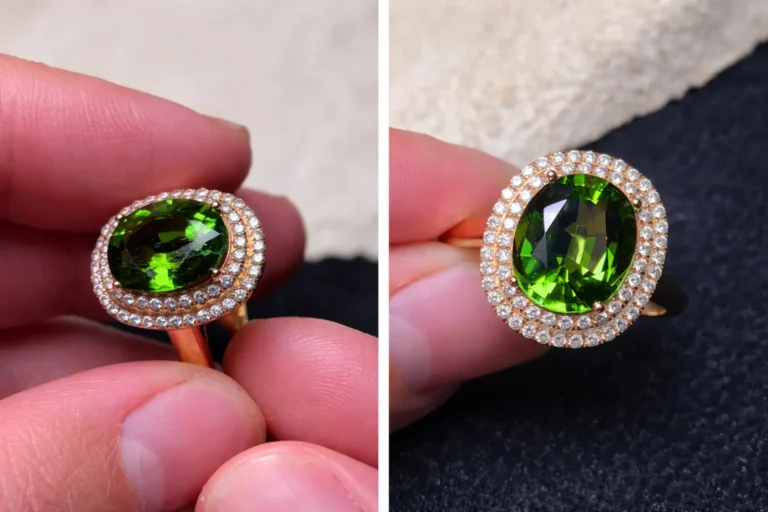
Together, thin cutting and metal reflection create the illusion of deep color and strong translucency—temporarily mimicking the look of Imperial Green Jade.
As a result, the stone looks vibrant under display lighting, especially in photos and live-stream sales.
Yongchu jadeite Durability vs. Imperial Green Jade
Every illusion has a cost.
Because Yongchu jadeite must be cut extremely thin to look “imperial,” it sacrifices structural integrity. In the trade, professionals often refer to these pieces as “eggshell pendants.”
At this thickness, combined with internal fractures and structural weaknesses, the stone loses the structural resilience that gives high-quality jadeite its legendary toughness.
- Minor pressure can crack the stone
- A small accidental impact can shatter it
- Long-term wear becomes risky
Moreover, because most of these pieces use permanently closed-back settings, buyers cannot inspect thickness, internal fractures, or stress points before purchase.
By the time damage occurs, the reason becomes painfully clear.
Why Yongchu jadeite Is So Often Misused
Yongchu jadeite is not inherently worthless. In fact, when priced appropriately and disclosed honestly, it can serve as decorative jewelry for buyers who value color over longevity.
The problem arises when sellers present Yongchu jadeite as:
- “Old mine”
- “Collector-grade”
- “Imperial Green at a rare opportunity price”
At that point, the issue is no longer taste—it is misrepresentation.
3. Guatemalan jadeite: The Blue-Green Illusion
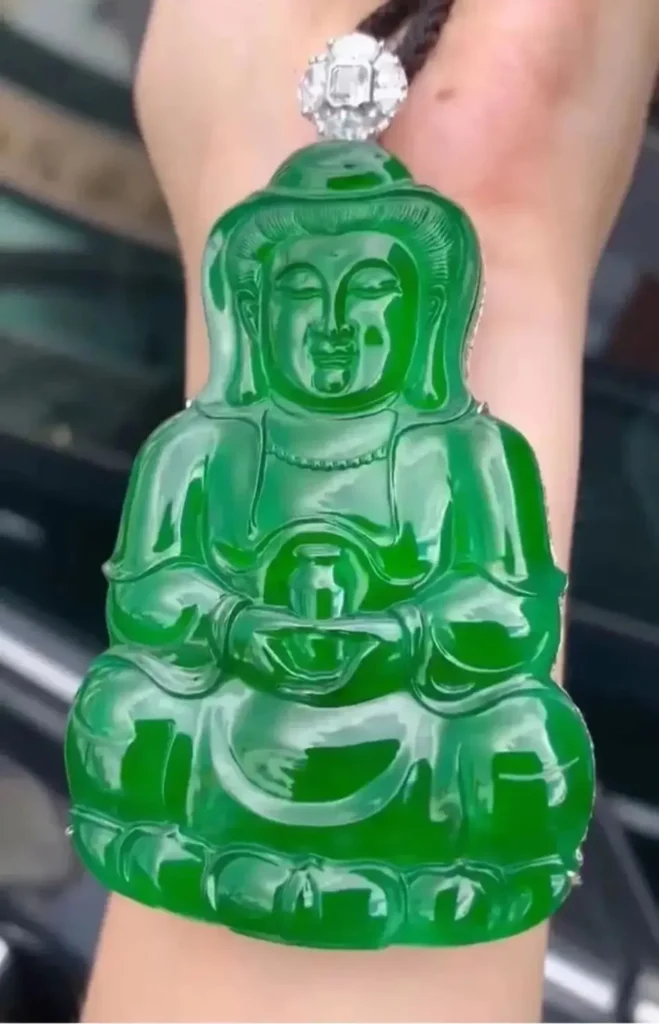
In our guide Is Guatemalan Jadeite Worth Buying? The Truth About a Burmese Alternative, we explain how Guatemalan jadeite is often thinned down to mimic ‘Imperial Green,’ particularly in mounted jewelry.
Guatemalan jadeite entered the modern gemstone market after Hurricane Mitch swept through Central America in 1998. Massive landslides exposed previously hidden jadeite-bearing rock layers.
Researchers from Harvard and the University of California Riverside later confirmed these formations as a long-lost jade source, historically prized by Mesoamerican civilizations.
Mineralogy: Why It Can Pass as Burmese jadeite
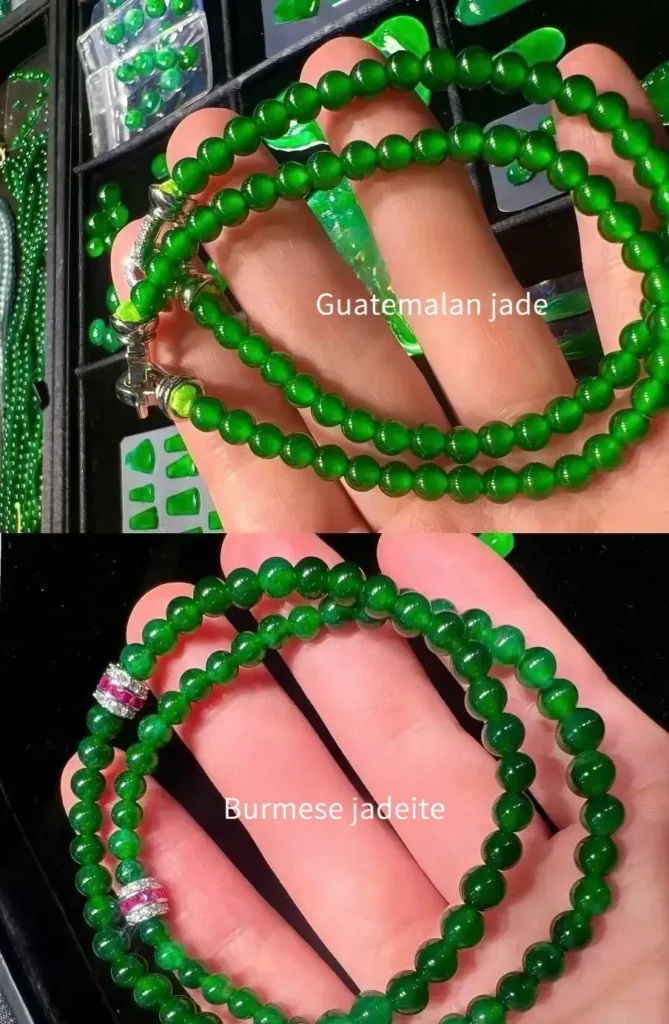
From a mineralogical perspective, Guatemalan jadeite is remarkably similar to Burmese jadeite:
- Refractive Index: 1.66–1.68
- Hardness: 6.5–7 (Mohs scale)
- Composition: ~90% jadeite, ~8% albite, trace muscovite
These properties explain why some Guatemalan jade pieces can receive official jadeite certification (A-grade), even though they differ in visual and physical characteristics.
Visual Tricks: Light and Color
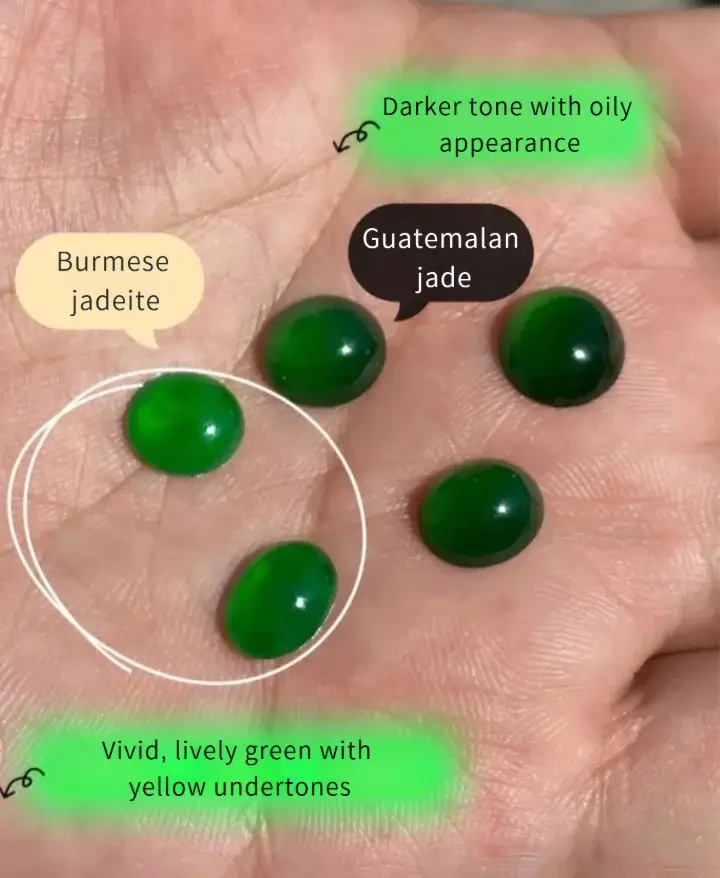
Guatemalan jadeite often performs a color illusion under display lighting:
- Under lamps: It may appear rich blue-green, closely resembling top-tier Burmese jadeite.
- In natural light: The color becomes muted or dark, with minimal edge glow.
- Internal inclusions: Cotton-like white spots resemble a starry sky scattered throughout the stone.
To enhance visual appeal, jewelers typically employ thin cutting, hollowing the back to 1–2 mm. Without this treatment, thicker pieces appear nearly black.
Spectral and Filter Characteristics
- Absorption Spectrum: Guatemalan jadeite frequently shows diffuse absorption bands in the red region, unlike the clear red lines in Burmese jadeite.
- Color Filter Response: Under a Charles color filter, some pieces exhibit a muted red tone, whereas high-quality Burmese jadeite remains largely unaffected.
Key Takeaways
Guatemalan jadeite demonstrates how mineral similarity combined with optical tricks can create the illusion of Imperial Green. However, careful observation under natural light, examination of internal inclusions, and awareness of cutting techniques reveal its true nature.
Like Yongchu jadeite, Guatemalan jadeite highlights a trade-off between appearance and durability: thin cuts improve color but increase fragility, and permanent metal settings often hide the stone’s true thickness.
4. How to Spot Yongchu and Guatemalan jadeite vs. Authentic Imperial Green Jade
Once you understand what authentic Imperial Green jade looks like, spotting lower-quality alternatives becomes much easier. The difference is often visible at a glance, yet many online buyers still fall for it due to lighting tricks, streaming effects, and limited knowledge of jade quality.
Color and Visual Depth: The Most Telling Sign
- True Imperial Green Jade: Exhibits a deep, even green with natural 3D depth. The color seems to glow from within, and the translucency remains strong even in thicker pieces.
- Yongchu jadeite: Appears bright green but can look “flat” or light when compared side by side with Imperial Green. Dark inclusions or black specks are common.
- Guatemalan jadeite: Often shows a muted, oily green to blue-green. Under display lighting, it may appear vivid, but in natural light, it looks darker and less vibrant. Internal cotton-like inclusions are typically visible.
Thickness and Durability: Thin but Fragile
Both Yongchu and Guatemalan jadeite rely on extreme hollowing to simulate high-quality translucency:
- Thickness often reaches 1–2 mm at the center, compared to several millimeters for authentic Imperial Green pieces.
- This extreme thinness dramatically reduces structural integrity. Even minor pressure, a bump, or a pet’s paw can crack or shatter the stone.
- Permanent metal settings (closed-back mounts) hide these risks from the buyer.
Light Tricks and Streaming Effects
Live-streaming sellers frequently enhance perceived color and wateriness using:
- Spot lighting and reflective backings
- Photo filters or “beauty mode” effects
- Selective framing to hide imperfections
Combined, these techniques can make Yongchu or Guatemalan jadeite look like Imperial Green, creating the illusion of a bargain.
Key Takeaway for Imperial Green Jade Buyers
When comparing side by side:
- Imperial Green maintains consistent depth and vibrancy in all light conditions.
- Yongchu and Guatemalan jadeite lose intensity in natural light and show internal flaws.
- Durability is a hidden risk in thin, hollowed pieces, even if certificates are provided.
Understanding these differences allows buyers to make informed decisions and avoid low-cost “traps” that appear too good to be true.
5. How to Avoid Buying Misrepresented Imperial Green Jade
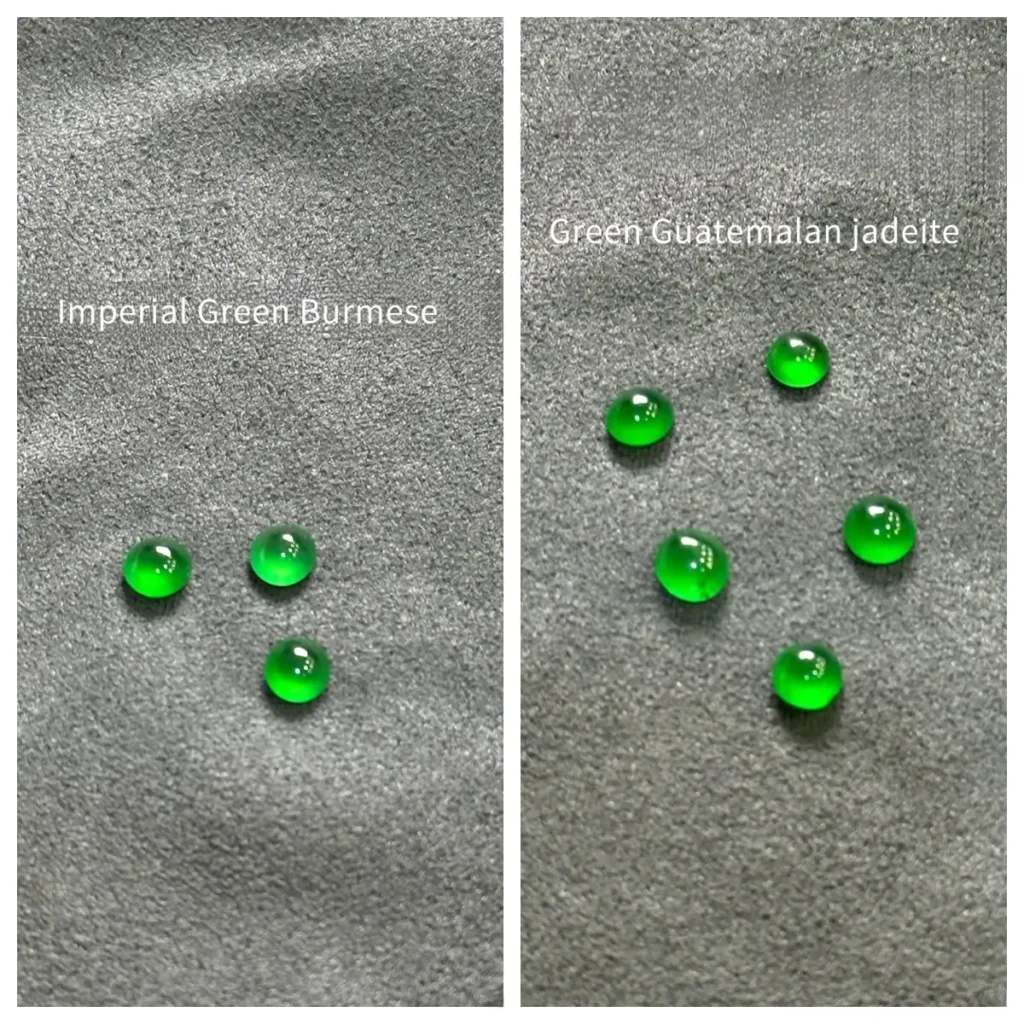
After learning how to distinguish Imperial Green jade from Yongchu and Guatemalan jadeite, the next step is practical guidance for buyers. These tips help you make informed decisions whether shopping online, in a live stream, or at a jewelry store.
1. Inspect the Setting Carefully
Always check if the jade is mounted with a fully sealed back.
- High-quality jade, even when set in jewelry, usually features an openable back so you can examine the stone.
- Permanently sealed or closed-back settings can hide extreme thinness, cracks, or internal inclusions, making the stone appear more vibrant than it really is.
- When possible, ask the seller for photos of the stone outside the setting or request a certificate that notes the inspection method.
2. Evaluate Color Depth, Not Just Brightness
- Imperial Green jade maintains even, deep color and natural translucency, even under different lighting conditions.
- Yongchu and Guatemalan jadeite often look bright and vivid in studio or streaming light, but they lack depth in natural light.
- Examine the stone from multiple angles and lighting: look for 3D depth and a consistent glow, not just surface brightness.
3. Check Size and Thickness
- Thick pieces of Yongchu or Guatemalan jade tend to darken and lose appeal, while thin pieces are extremely fragile.
- Authentic Imperial Green jade can maintain vibrant color even in substantial thickness.
- When possible, verify thickness measurements or ask the jeweler for live inspection or professional consultation.
4. Ask About Certification and Provenance
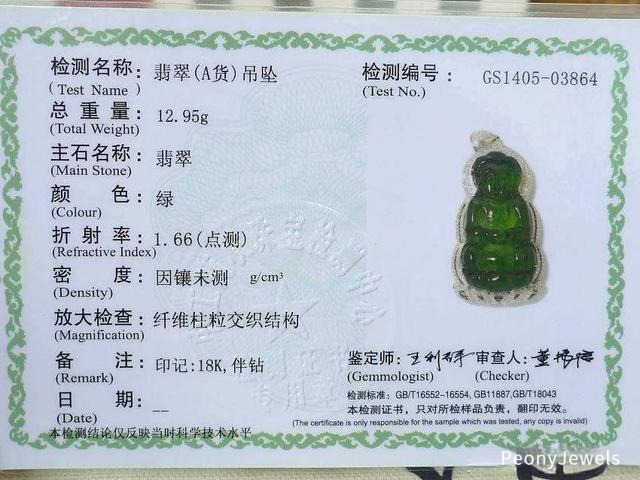
- Request a reputable gemological certificate from an independent lab.
- Look for terms like “A-grade jadeite” and check for density measurements or material notes.
- Be cautious if the certificate only references the material generically or is tied to the seller’s own lab.
5. Buy from Trusted Sellers
- Choose jewelers with a proven track record of transparency and expertise.
- Avoid purchases based solely on low prices or flashy online presentations.
- Read reviews, ask questions, and verify their knowledge of Imperial Green, Yongchu, and Guatemalan jadeite.
Key Takeaway
By carefully inspecting settings, evaluating color depth, checking size and thickness, confirming certification, and purchasing from trusted sellers, you can avoid misrepresented jade and make informed choices. Remember, low price alone rarely indicates a bargain when it comes to high-quality Imperial Green jade.
6. Are Yongchu and Guatemalan jadeite Worth Buying?
First, let’s set the record straight: Yongchu and Guatemalan jadeite are not “fake” jade. They are legitimate jadeite varieties that deserve to be understood on their own terms.
Just like moissanite has its place alongside diamonds, Yongchu and Guatemalan jadeite occupy a distinct niche in the jade market. When correctly recognized, they offer unique aesthetic value and affordable entry points into jade jewelry.
Unique Aesthetic and Practical Value
- Distinct Colors: Both Yongchu and Guatemalan jadeite feature characteristic green shades—Yongchu leans toward bright apple-green, while Guatemalan jade displays blue-green to oily green tones.
- Design-Friendly: Their visual appeal, combined with lower material cost, makes them ideal for inlay jewelry, pendants, and decorative pieces.
- Accessible Price Range: Compared with high-quality Burmese jadeite, a fine Yongchu or Guatemalan piece typically costs 1/5 to 1/3 of a comparable color Burmese jadeite, making them practical for mid-range buyers.
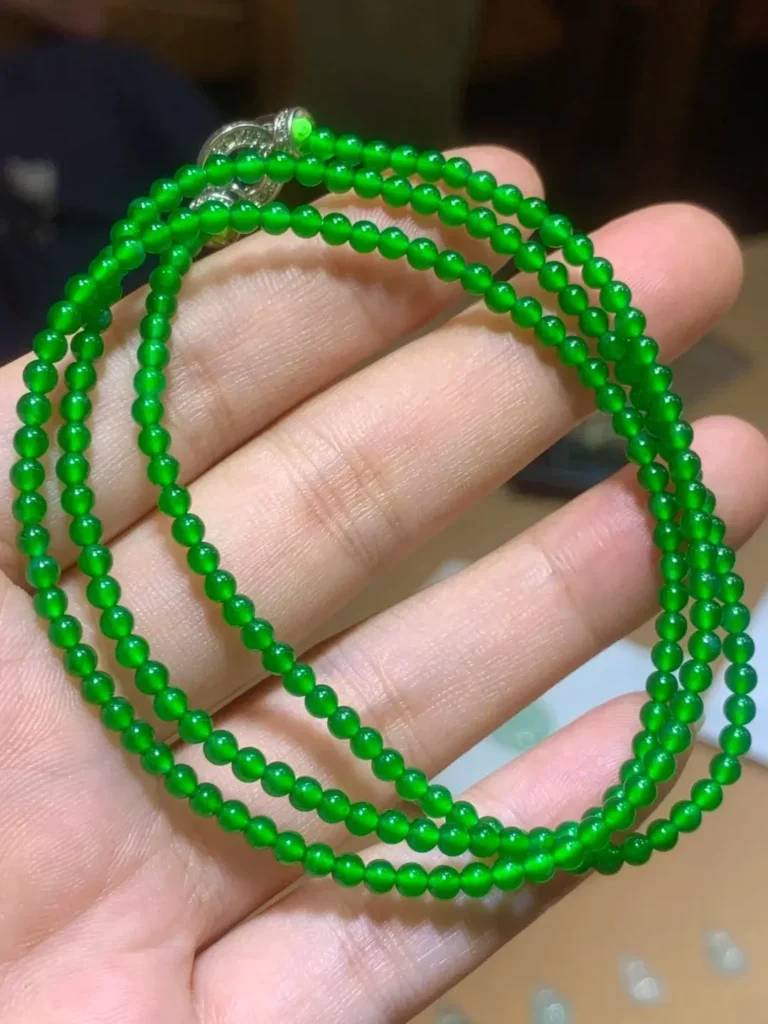
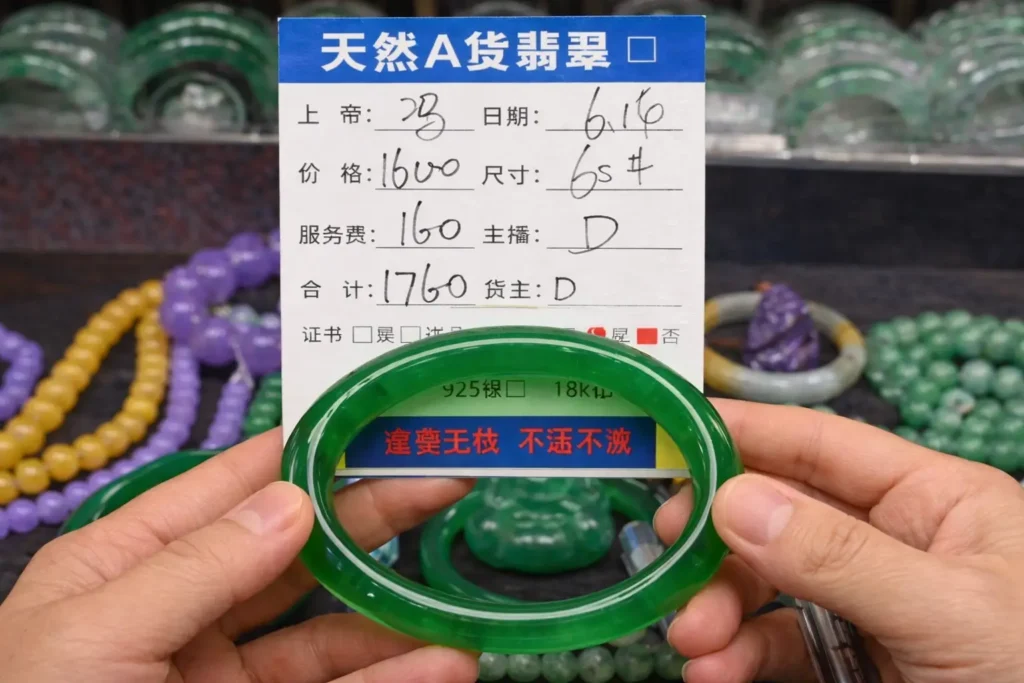
To give readers a clear perspective, we are showing a strand of small Guatemalan jade beads from Jewea. The cost of this strand is known in trade as “Xiao Wu Er Kai.” Readers familiar with our Jadeite Buying Guide: How to Understand Jade Trade Terms Before You Buy will recognize that “Xiao Wu Er Kai” corresponds to roughly RMB 20,000 (about USD 2,700).
Insider Tip: Understanding “Xiao Wu Er Kai”
In traditional jadeite trading, professionals often rely on a long-established numerical shorthand rather than quoting prices directly. “Xiao Wu Er Kai” is a specific term indicating a price in the low RMB 20,000 range (roughly USD 2,700–3,200 in 2025). Knowing this terminology doesn’t make a stone more valuable—but it helps buyers understand where a piece truly sits in the market hierarchy.
Understand the Trade-Offs
Like all gemstones, these materials come with trade-offs:
- Fragility: Thin-cut pieces designed to mimic Imperial Green jade can break easily.
- Limited Investment Value: While visually attractive, they do not hold the same long-term value as top-tier Burmese jadeite.
- Risk of Misrepresentation: They are often mistakenly or intentionally sold as high-grade Imperial Green, which can mislead buyers.
The Key to Smart Buying
If the price matches reality and you know what you are buying, Yongchu and Guatemalan jadeite can be perfectly acceptable for jewelry. The golden rule:
Do not expect them to be high-grade or investment-level jadeite. Appreciate them for what they are, not what they pretend to be.
A Philosophical Take
Just as each piece of jadeite carries its unique cotton pattern, every person has intrinsic value in their authenticity. Trying to be something you’re not rarely works, but embracing your own character—be it in gemstones or life—lets true value shine through.
By recognizing Yongchu and Guatemalan jadeite for their own qualities, buyers can enjoy beauty, affordability, and uniqueness without falling into the trap of chasing imitation Imperial Green.
7. The Jewea Perspective
At Jewea, we believe that jewelry is more than decoration—it’s a reflection of trust, care, and understanding.
We focus on helping you make informed choices, whether you are exploring Burmese Imperial Green jade, Yongchu jade, or Guatemalan jade. We provide:
- Clear material guidance so you know exactly what you are buying.
- Thoughtful design that highlights the natural beauty of each gemstone, without relying on tricks or illusions.
- Durable, wearable pieces crafted to last a lifetime.
Beyond jade, we specialize in custom gemstone jewelry and original handmade vintage earrings, each crafted individually to ensure authenticity and attention to detail.
If you are considering a jade purchase—or simply want a piece that reflects your personal style—we are always happy to guide you. We explain what makes a stone special, why it’s valued the way it is, and how it fits your vision.
At Jewea, our goal is simple: empower you to make confident, meaningful choices in jewelry, while enjoying pieces that are as unique as you are.