Even Pros Get Fooled: Identifying High-End Fake Nephrite Jade
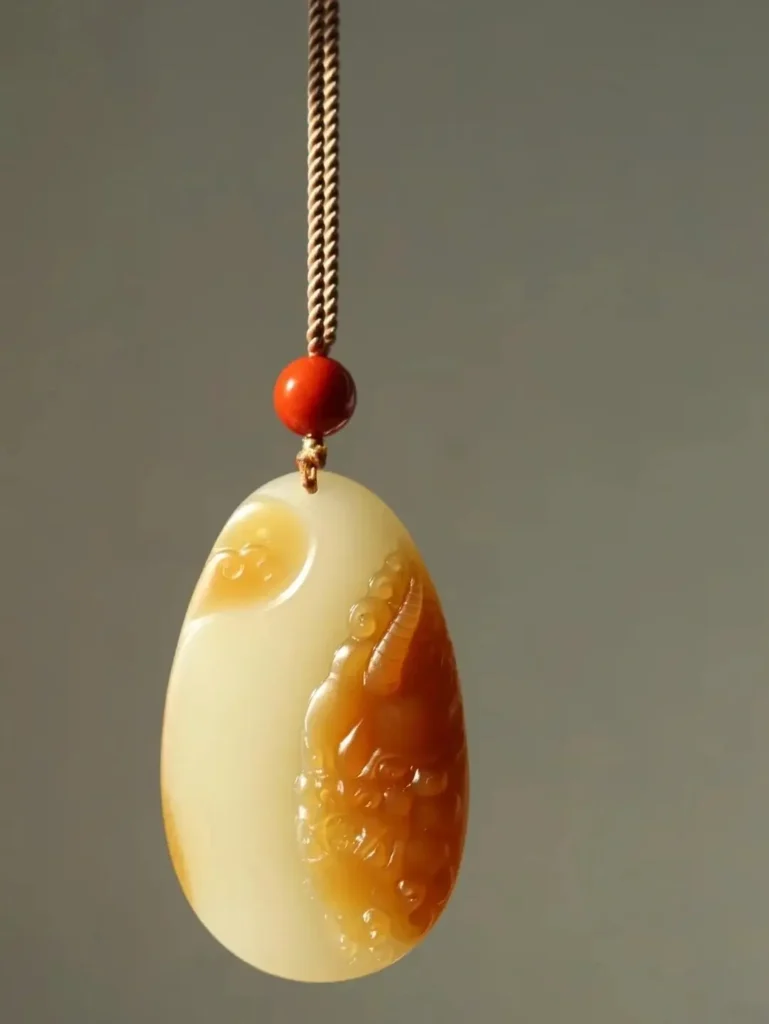
In our previous discussion, The Nephrite Deception: Your Expert Guide to Authentic Hetian Jade and Its Natural Imposters, we broke down the mineral science behind top-tier simulants., but a question we often get from our readers is: “If I spend enough time in the markets, can I eventually spot fake Nephrite jade with just my naked eye?”
The truth is, it’s rarely that simple. In the jewelry trade, we live and die by our “eye,” but the reality of a busy market is a far cry from a controlled lab. Between the tricky lighting and the sheer volume of stones, your judgment can easily be clouded. After all, when you’re out in the field, you’re usually armed with nothing more than a flashlight and a loupe—not a full suite of diagnostic equipment.
As the saying goes, “Even the best horse stumbles.” Despite our team having spent years on the front lines of global sourcing, we’ve seen even the most seasoned veterans “buy a lesson” once in a while. In this article, I want to pull back the curtain on the sophisticated imposters currently making waves in the market—specifically, how Anhydrite and Xiuyan jade are being used to mimic the real deal.
Anhydrite: The “High-End” Master of Fake Nephrite Jade
When most people hear the word “Gypsum,” they think of drywall and home construction. But have you encountered its crystalline cousin, Anhydrite?
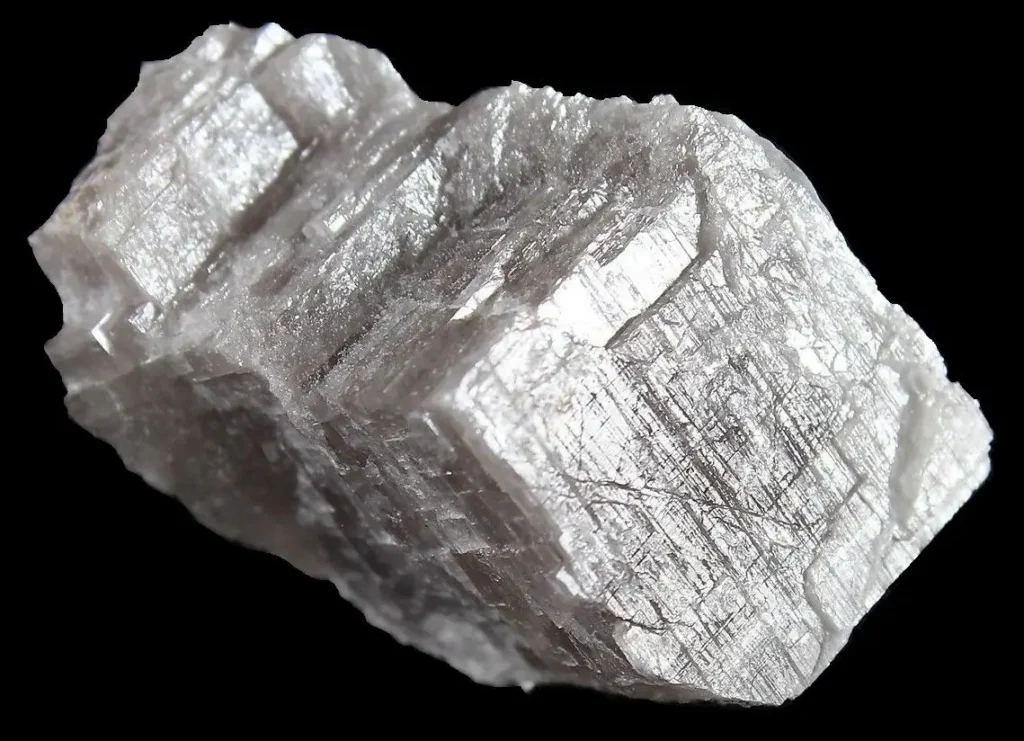
In the world of mineralogy, Anhydrite is essentially “dry” gypsum. While standard gypsum (CaSO₄·2H₂O) is a hydrous mineral with a Mohs hardness of 2—literally softer than a human fingernail—Anhydrite (CaSO₄) is the anhydrous (water-free) version. This lack of water makes it slightly tougher, ranking between 3.0 and 3.5 on the Mohs scale.
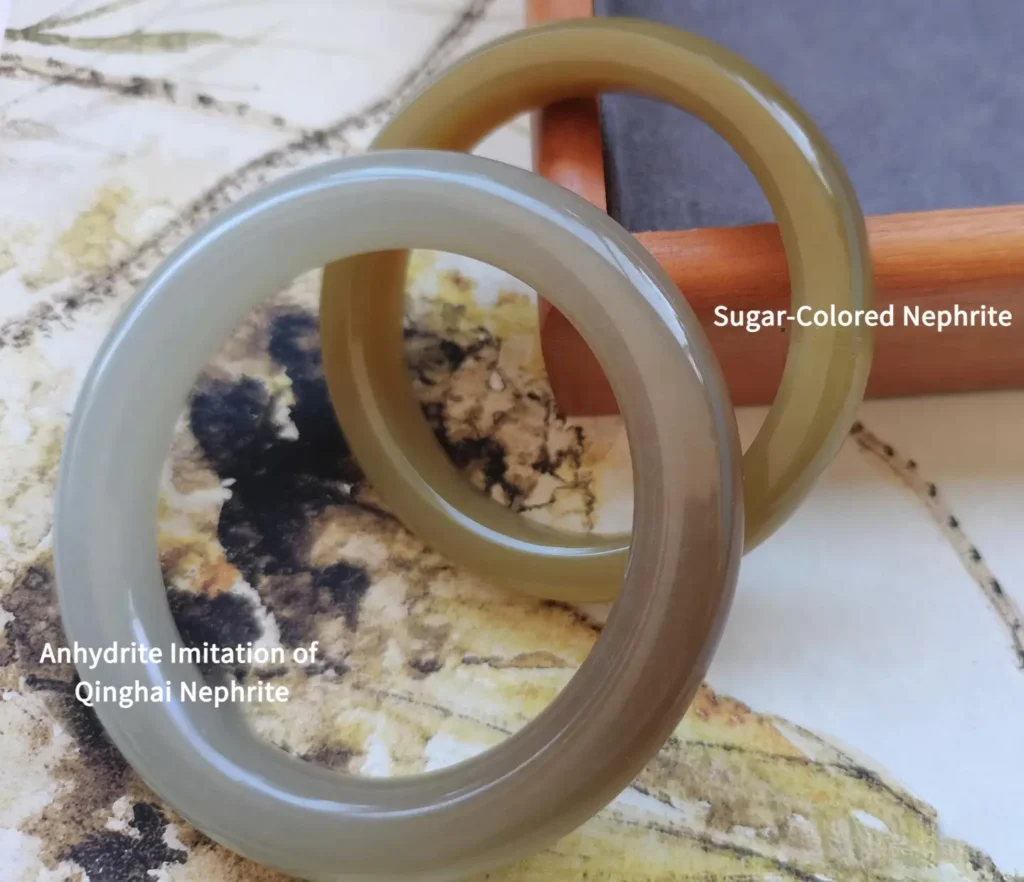
While it is commonly sourced from salt lake deposits in Mexico (known for “Angel Wing” blue), Canada, and Switzerland, it has recently surfaced in Asian gem markets with a much more deceptive purpose: mimicking high-quality Nephrite Jade.
Fake “Sugar-White” Nephrite Jade
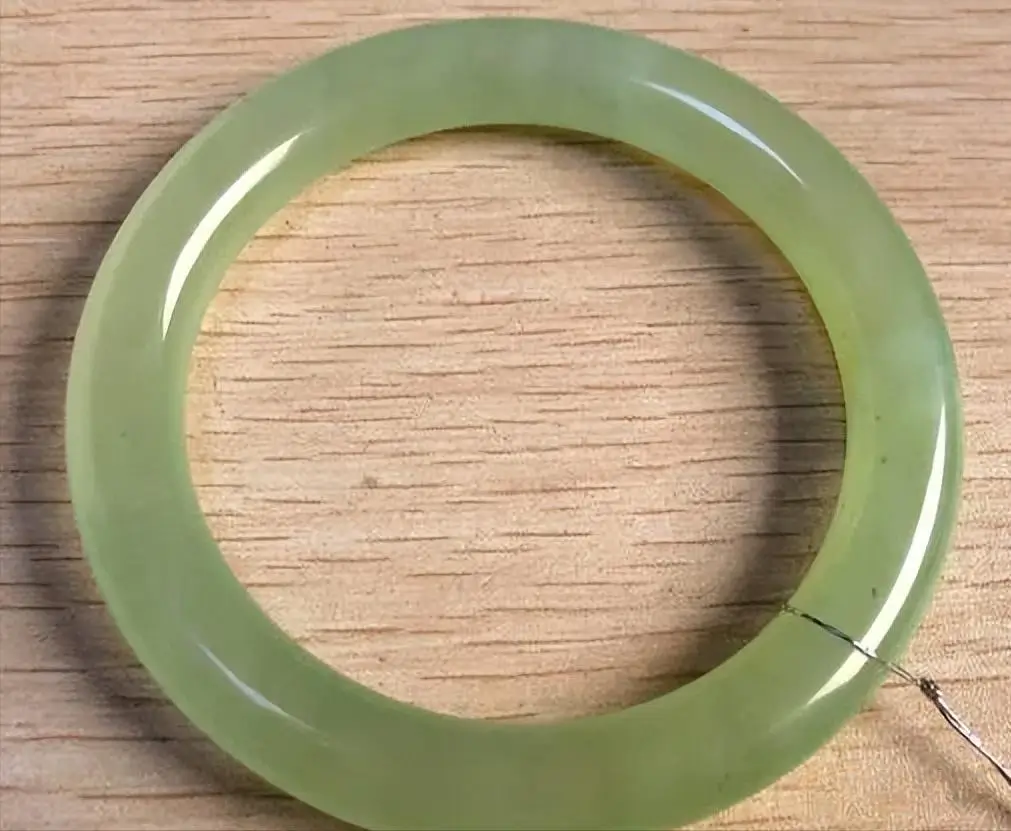
Take a look at the bangle pictured below. To the untrained eye, it appears to be a textbook example of “Sugar-White” (Tangbai) Hetian Jade. It possesses that coveted oily lustre, a “creamy” saturated body, and a delicate weight that feels right in the hand.
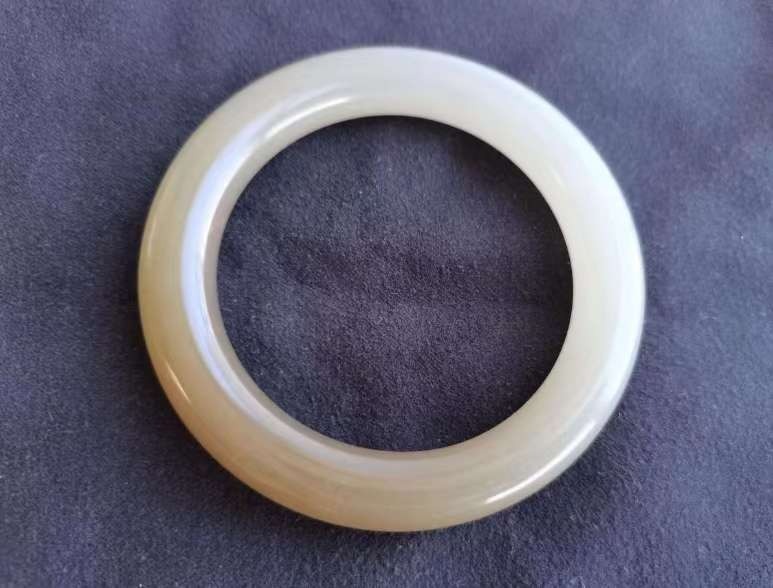
If you encountered this at a trade show, its visual “glow” and heft would closely mirror authentic Nephrite. Even under a jeweler’s loupe, you’ll see a flocculent (cloud-like) structure almost identical to Nephrite sourced from the Qinghai region. For a buyer looking for a “high-value” or “entry-level luxury” piece, this bangle looks like an absolute steal.
Why It Fools the Pros
The reality? This is a sophisticated imposter that has tripped up even veteran dealers. Once Anhydrite is expertly cut and polished, its refractive qualities, tactile “greasiness,” and density are dangerously close to real Jade.
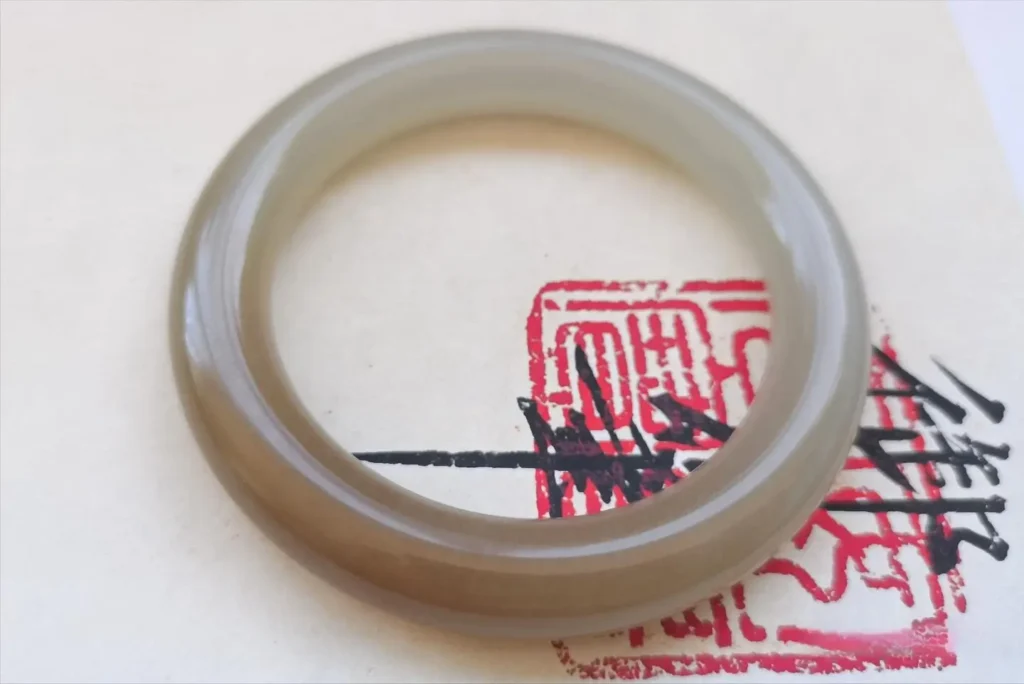
While we occasionally see it used to mimic “Sugar-White” varieties, it is increasingly common to find Anhydrite being sold as “Qinghua” (Black and White) Jade. In these fakes, the color banding is often slightly too “neat,” making them a bit easier to flag. However, for a general consumer, the physical properties—the hand-feel and surface texture—are so similar that without a professional laboratory test, the deception is nearly perfect.
How to Identify Anhydrite Fake Nephrite Jade
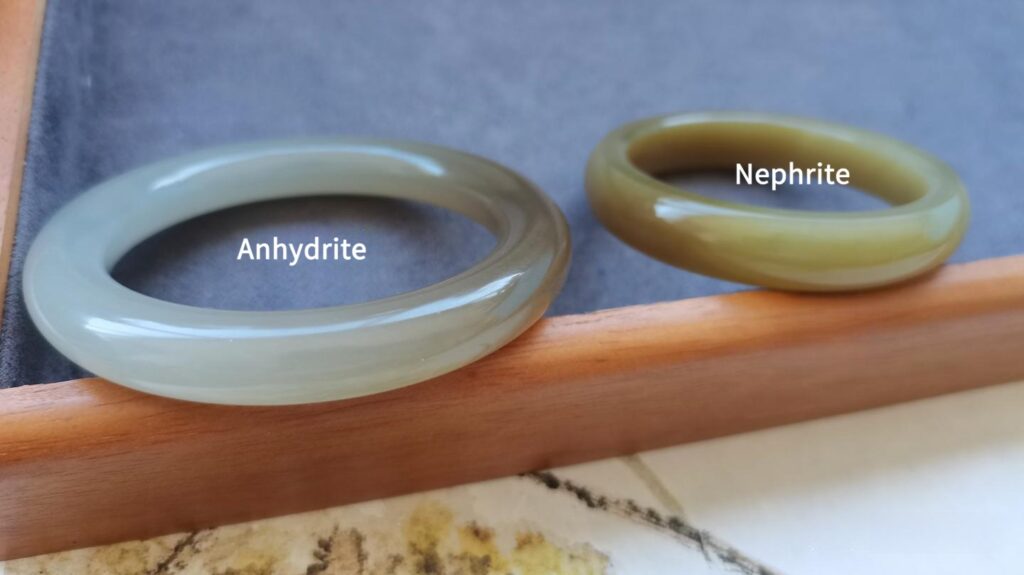
In the field, traditional methods like naked-eye inspection, “heft” (hand-testing weight), or checking for light-refraction are often inconclusive because the two minerals are visually so similar. The primary physical difference lies in their hardness, though this typically only becomes apparent through surface wear and tear over a long period of constant use.
However, there are subtle visual cues if you know where to look, especially with “Qinghua” (Black-and-White) varieties:
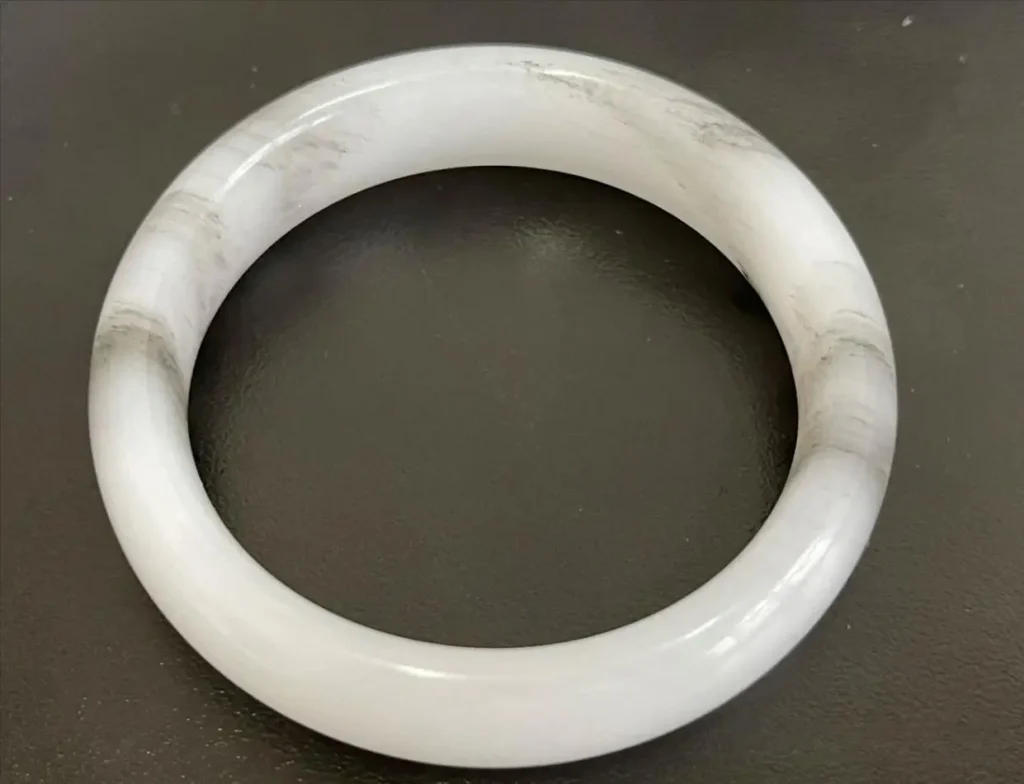
- Anhydrite “Qinghua”: The white portions often appear “stiff” or chalky white, while the black inklings are faint and tend to have a stringy, fibrous appearance.
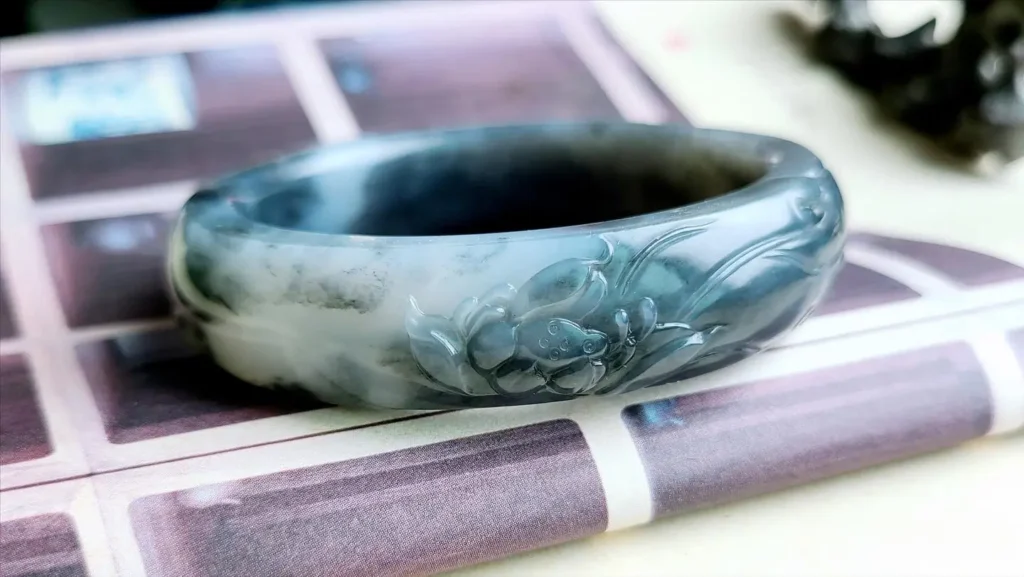
- Authentic Nephrite “Qinghua”: The black pigmentation is generally much deeper and richer. The “ink” is typically distributed in distinct bands, flakes, or concentrated spots rather than thin threads.
If you are unfortunate enough to break a piece, the fracture surface tells the real story. Anhydrite displays a distinct pearly lustre on the broken edge—a dead giveaway that it isn’t jade.
The Final Verdict: Professional Lab Testing
While these visual tips help, they aren’t foolproof for the average buyer. For a definitive identification, we always recommend submitting the piece to a reputable gemological laboratory.
A professional lab will use Infrared Spectroscopy (FTIR) and X-ray Fluorescence (XRF) to analyze the mineral’s chemical fingerprint. A word of caution: make sure you send your pieces to a major, well-established lab. Smaller local shops often lack the reference databases for Anhydrite; while they might detect something is “off,” they may not be equipped to issue a formal certificate identifying it correctly.
Xiuyan Jade: The “Icy” Variant of Fake Nephrite Jade
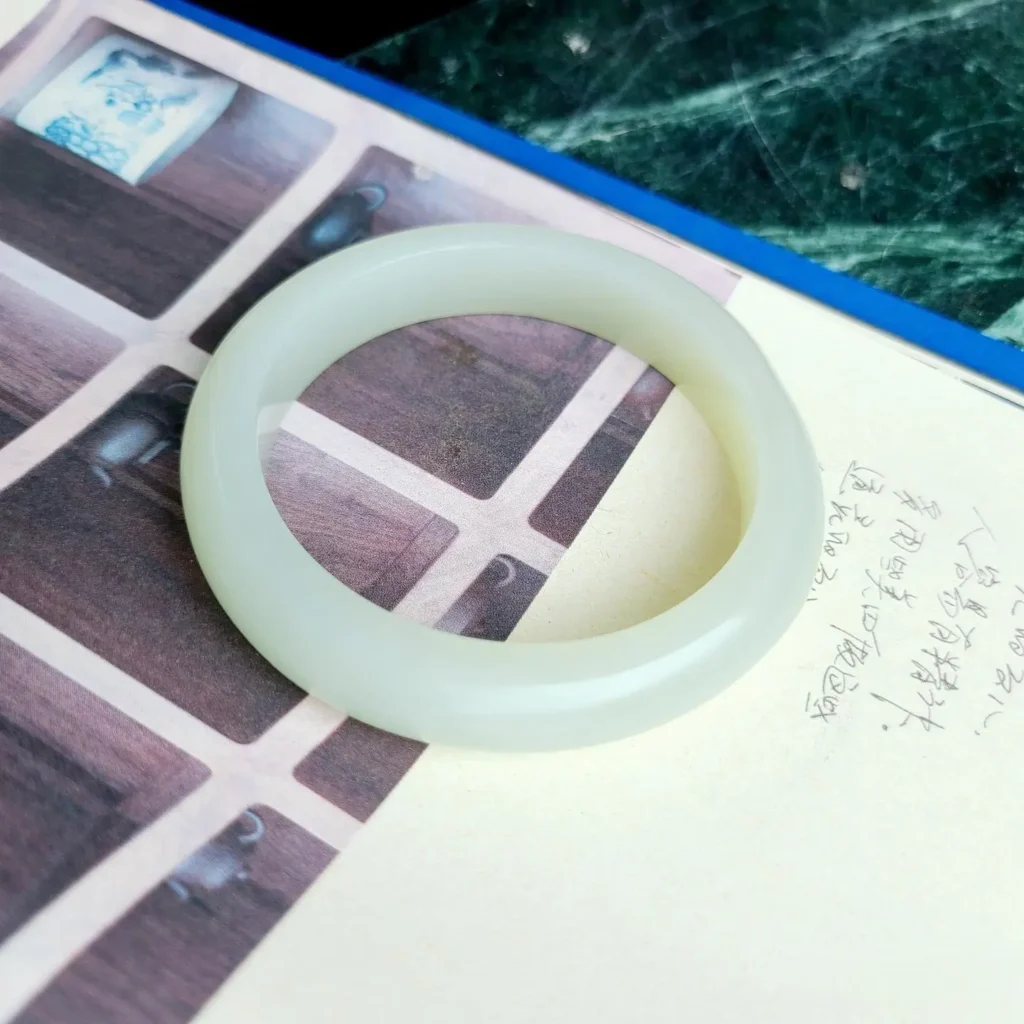
Historically, collectors have viewed “mutton fat” quality as the gold standard for Hetian Nephrite. They prize these stones for their oily texture, high density, and warmth. Unlike Jadeite, transparency does not define traditional Nephrite. Instead, experts judge it by its “fineness” and “body”—the characteristic we call zhifen in the trade.
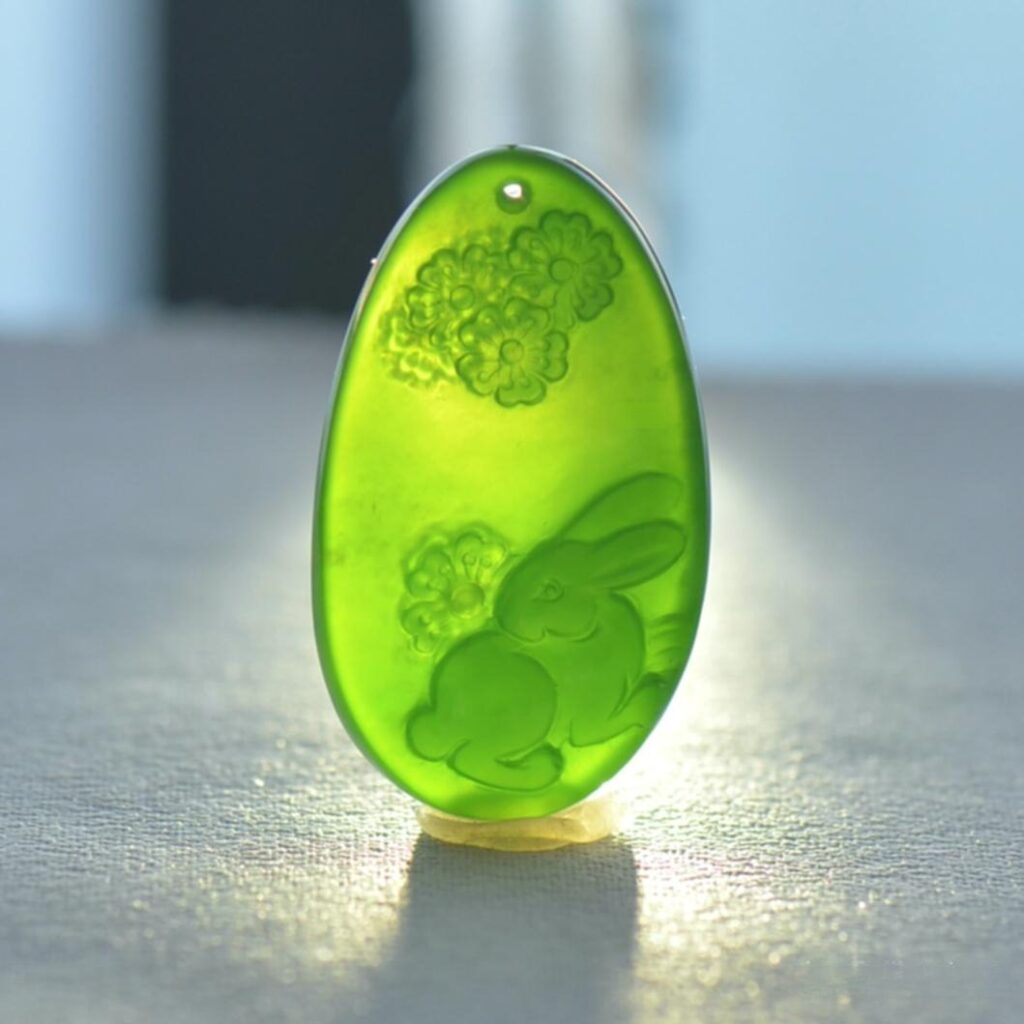
However, market trends are shifting. High-quality “Icy-Base” (Ice-bottom) Nephrite has surged in popularity recently. It has become a favorite for niche collectors and a new benchmark for modern style.
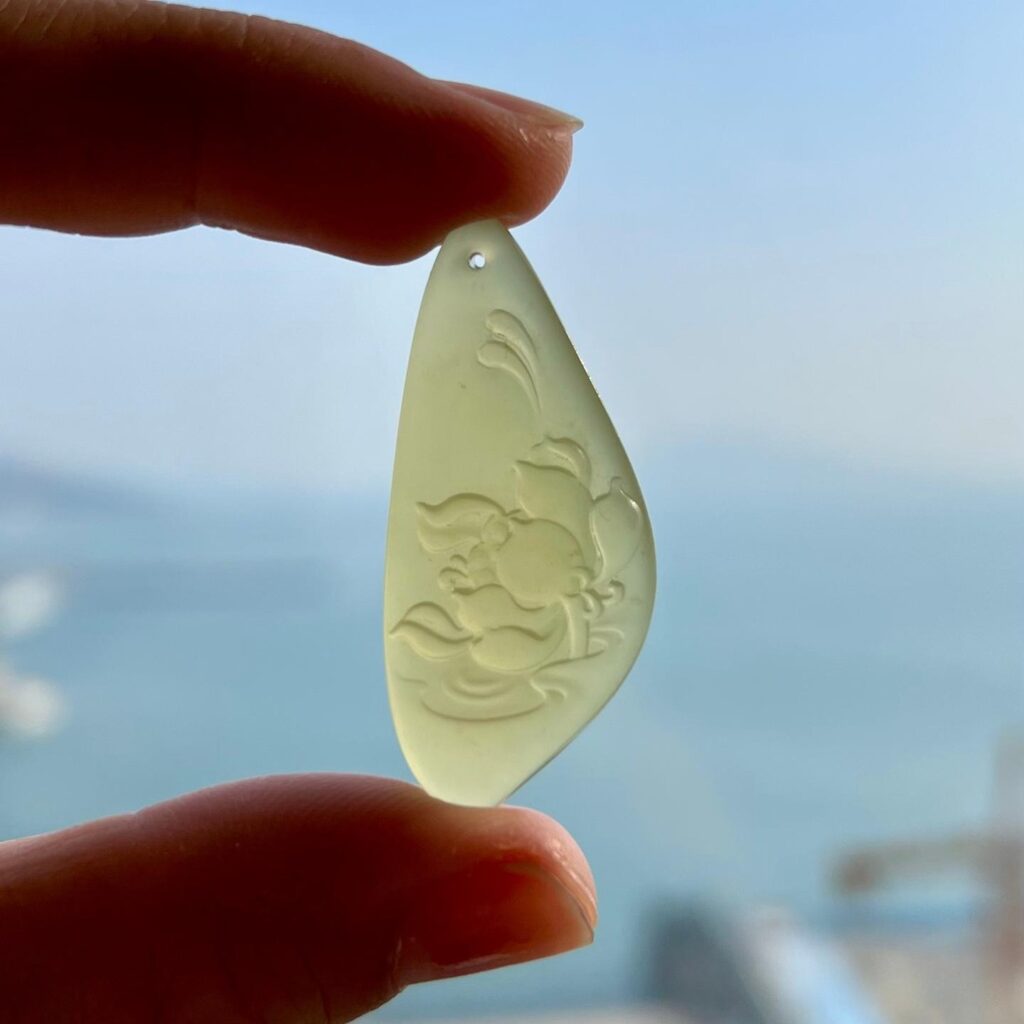
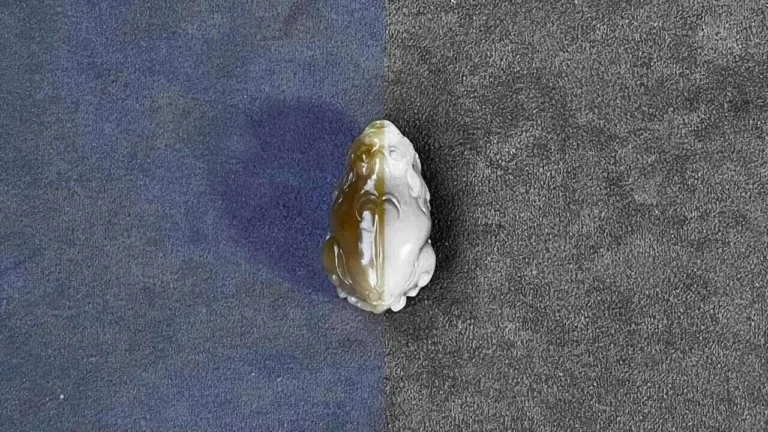
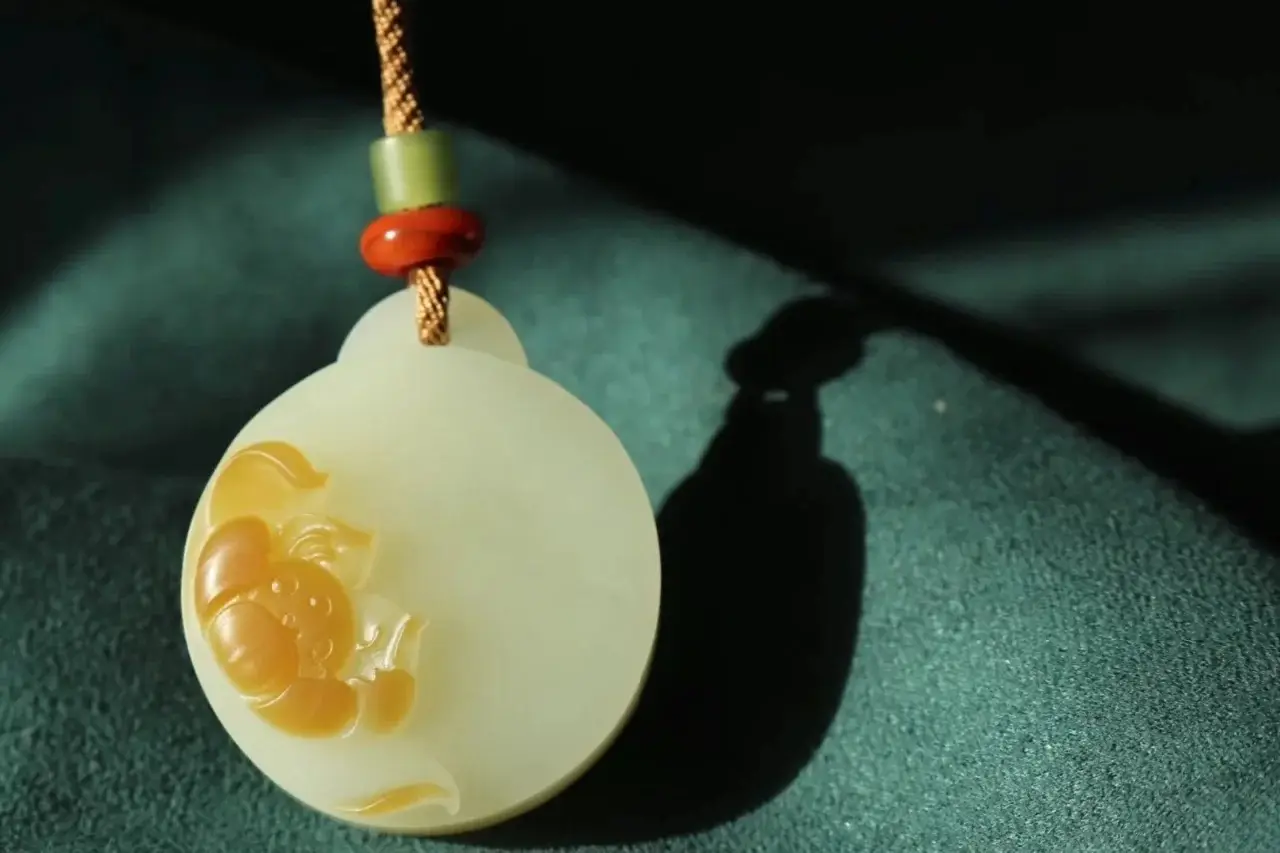
“Icy Yellow” (Bing Huangkou) Nephrite is the current dark horse in this category. Buyers demand these translucent yellow stones, but the “clean” yield rate remains low. This scarcity keeps prices skyrocketing. Unfortunately, this price gap creates a lucrative window for unethical sellers. They often substitute Xiuyan Jade (Serpentine) for premium icy materials, especially in small carvings or cabochons. Even an expert can rarely rely on a 100% naked-eye identification for these small pieces.
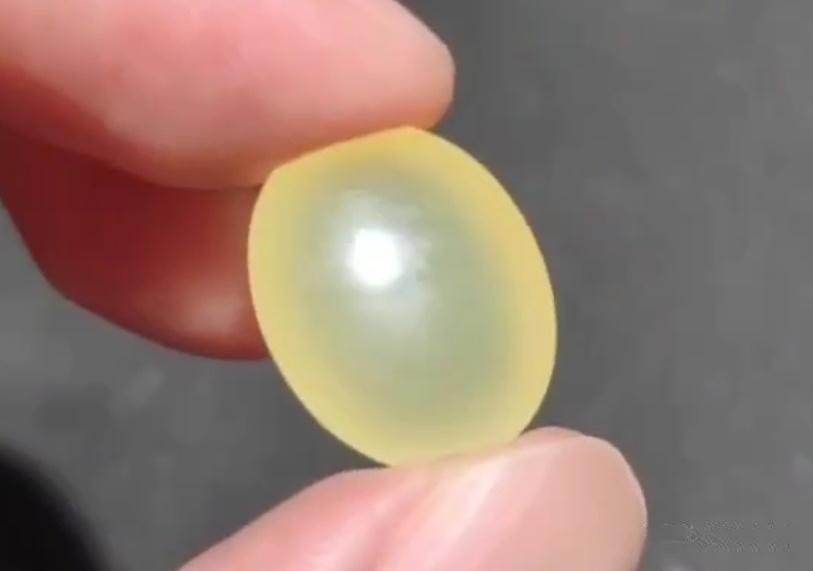
A Lesson from the Source Market
During one of my sourcing trips, I encountered a batch of what appeared to be top-tier “Icy Yellow” Nephrite cabochons. They were stunning—fine-grained, exceptionally oily, and possessed that perfect translucent “ice” feel. Because the stones were so small, the difference in density (specific gravity) was impossible to detect by hand-testing their weight.
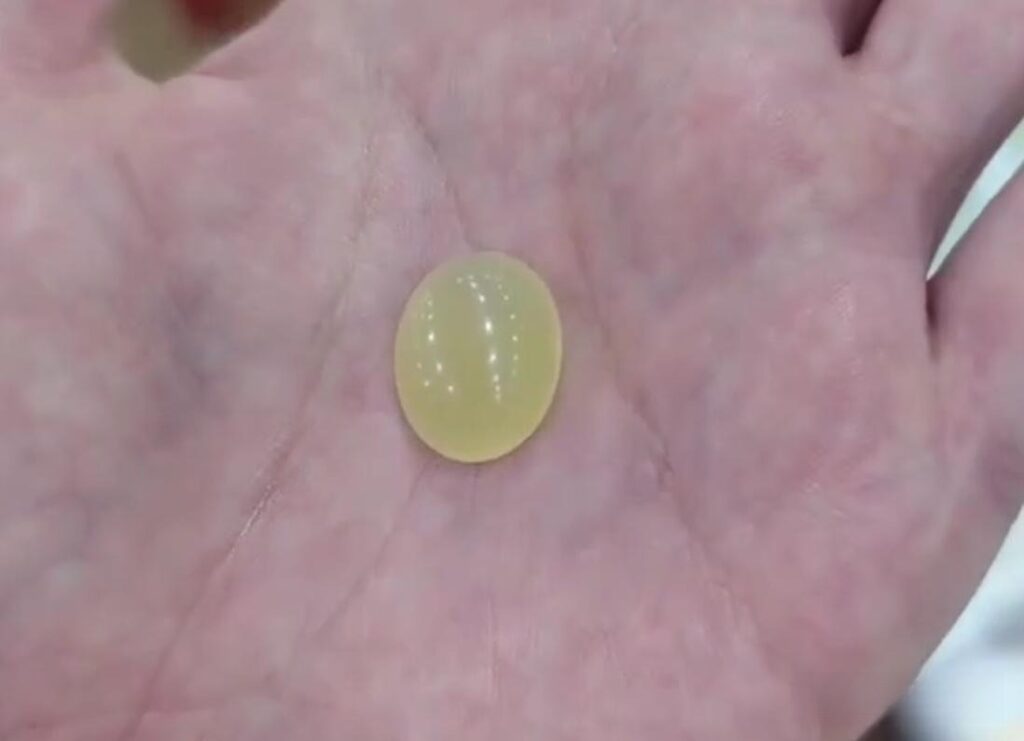
It wasn’t until we sent them for lab testing that the truth came out: what looked like premium “Honey-Water” Icy Yellow Nephrite was actually a high-grade Xiuyan Jade. The deception was so thorough that even the primary wholesaler hadn’t realized they were selling an imitation.
Why Small Pieces are a “Blind Spot”
Under normal circumstances, distinguishing Xiuyan Jade from Nephrite isn’t difficult for a professional. Their lustre, internal texture, color range, and Mohs hardness are quite distinct.
However, when a fine-grained Xiuyan stone perfectly matches the color profile of a Nephrite and is cut into a small accessory, the visual cues vanish. This is particularly true when compared to “Water-Thru” Qinghai Nephrite, which is naturally more translucent. In small volumes, the differences in texture and specific gravity become so negligible that “passing off a fish eye for a pearl” (as the saying goes) becomes dangerously easy.
The takeaway? The only foolproof way to protect yourself is through certified laboratory testing. More importantly, be wary of “unbelievable deals.” As the price of genuine Icy-Base Nephrite continues to climb, those hunting for a “bargain” are often the first to fall into the trap.
Xiuyan “Seed” Materials: A Rare Type of Fake Nephrite Jade
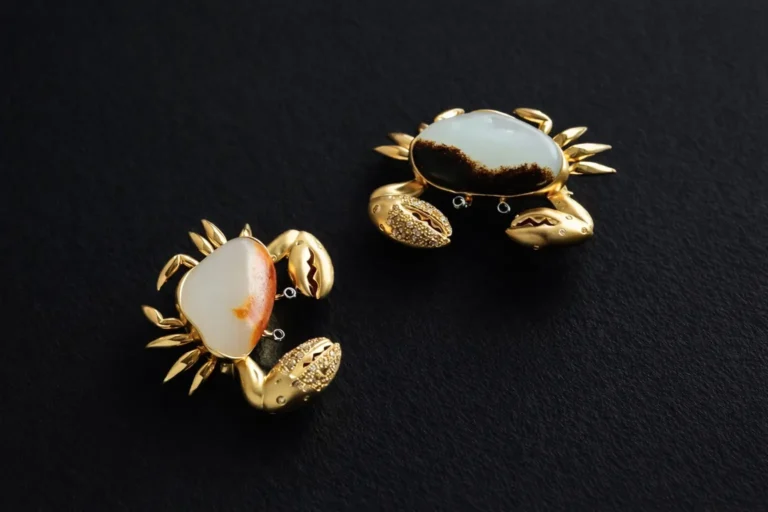
Xiuyan jade comes in a vast array of colors and patterns. While most varieties are easy to distinguish from Nephrite, some “high-level” imitations can fool even the sharpest experts. Beyond the “icy” materials we discussed earlier, a much rarer threat exists: natural Xiuyan “seed” stones that mimic rare “Inclusion-Rich” (Qin-liao) Nephrite.
Technically, “Xiuyan” (or Xiuyu) serves as a general trade name for Serpentine. Just as “Hetian Jade” refers to tremolite rather than a specific location, the term “Xiuyan” describes the mineral species. While the name originates from Liaoning Province, the National Standard of China (GB/T 16552-2017) uses it to classify all serpentine-group minerals regardless of their origin.
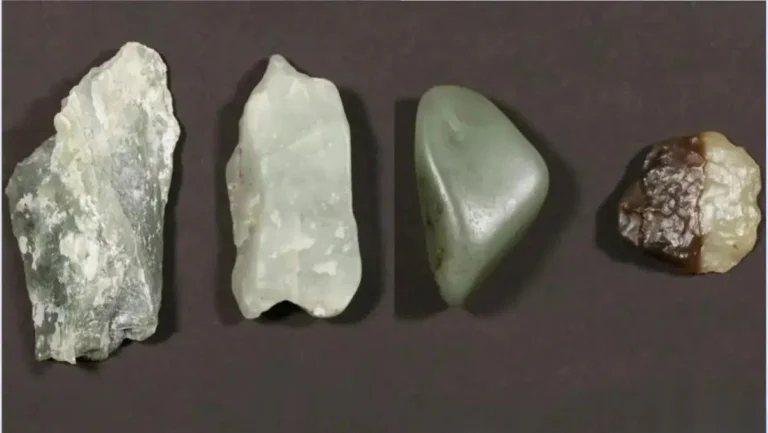
Occasionally, nature produces Xiuyan “raw seeds”—river-worn pebbles formed similarly to Nephrite seed stones. However, finding a Xiuyan seed that perfectly mimics a Nephrite “Yellow-Qin” (Yellow Inclusion) stone is truly a once-in-a-decade occurrence.
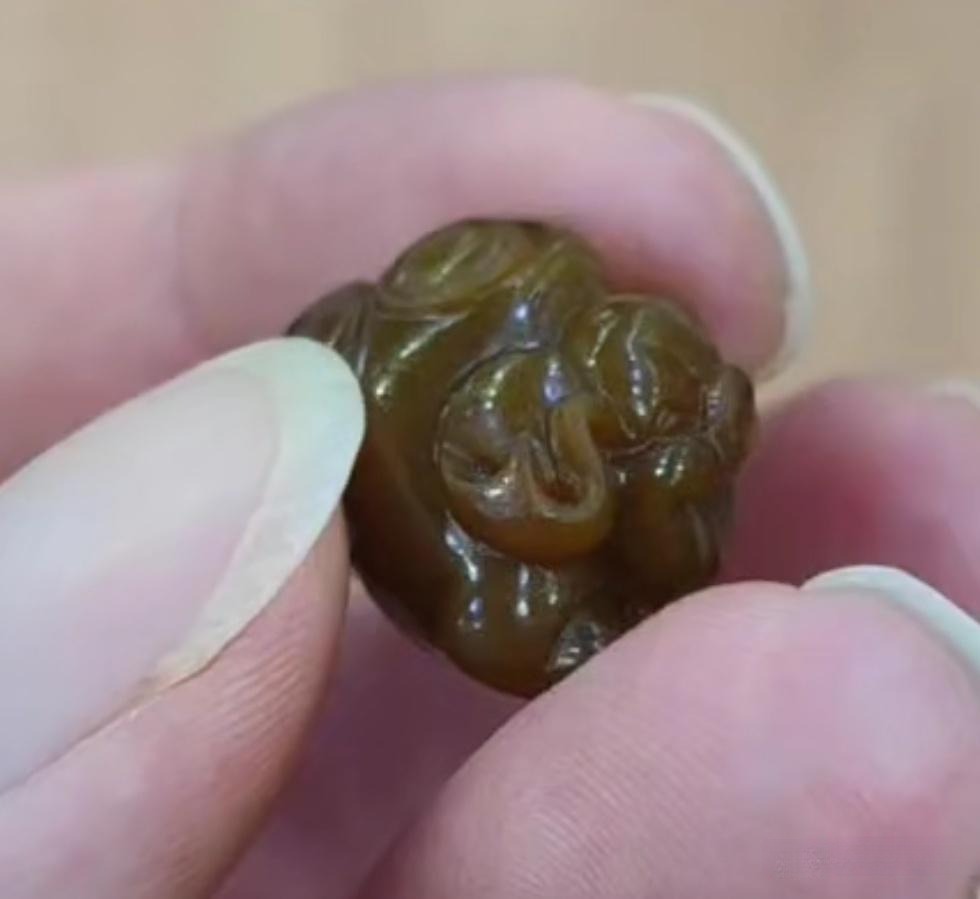
When carvers turn these deceptive seeds into small pieces while retaining the “skin” (the natural outer crust), the results are indistinguishable from authentic Nephrite specimens. Their small size hides many diagnostic features. Because the exterior looks so “natural,” seasoned collectors struggle to spot the difference by hand. In these cases, only a formal laboratory certificate can reveal the truth.
Can You Trust the Lab? Avoiding Certificate Scams
We have covered three sophisticated types of fake Nephrite jade that trip up even veteran buyers. In each case, a lab test eventually saved the day. However, not all labs operate with the same integrity. You must seek out authoritative, third-party institutions. Some low-tier, commercial labs maintain questionable ties with unscrupulous sellers, leading to “rigged” results.
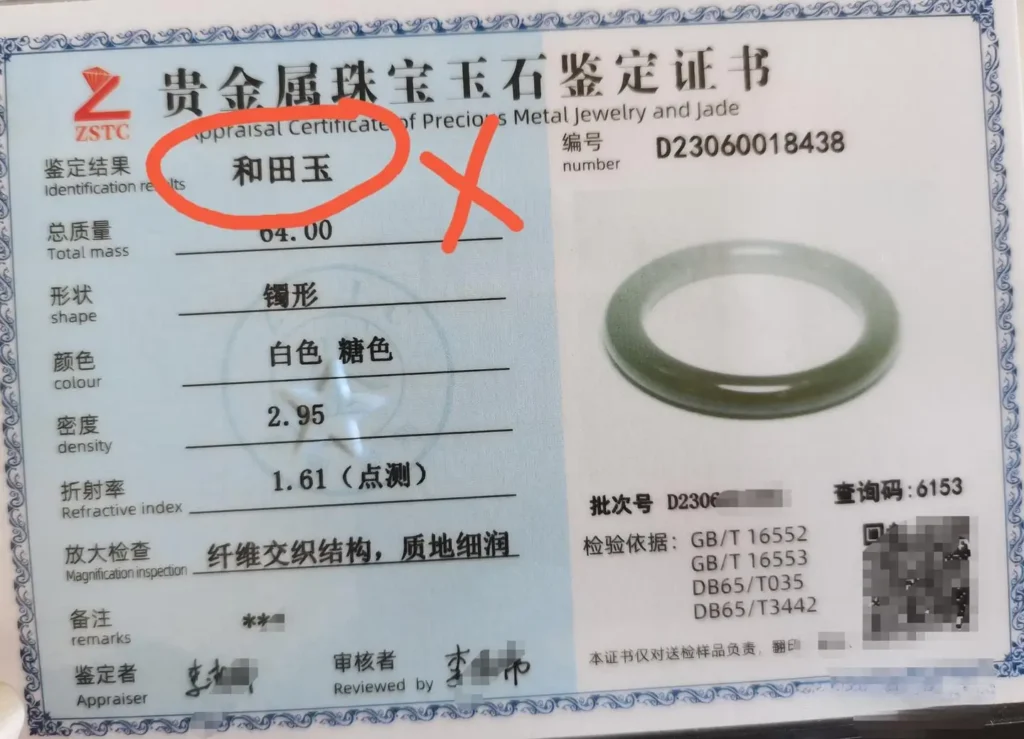
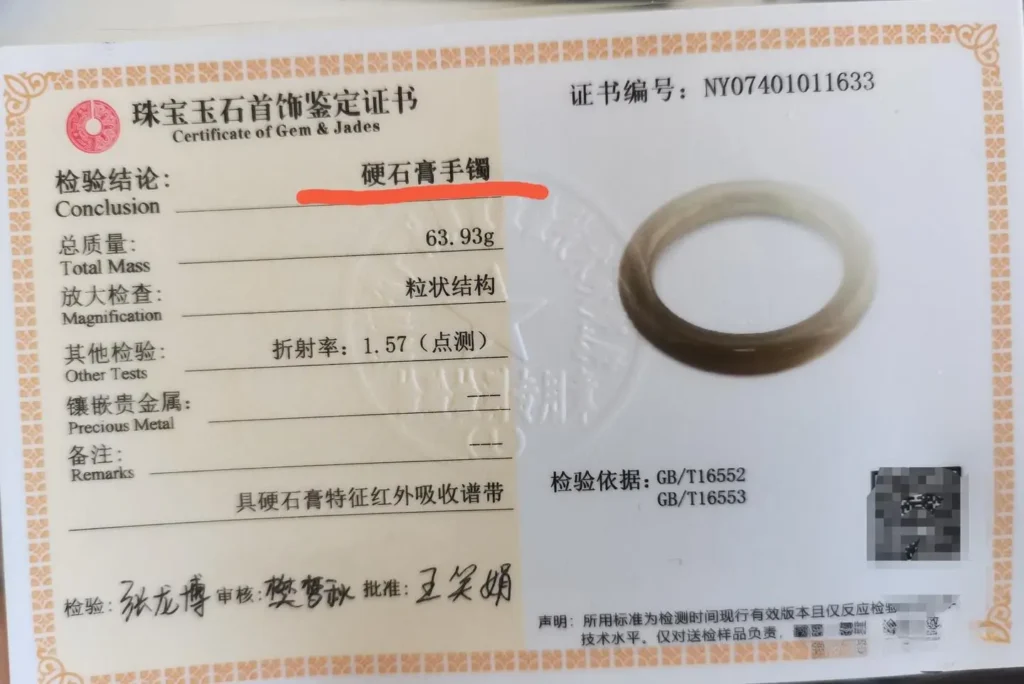
For example, a wholesaler might use their influence at a Tier-3 lab to obtain a “Nephrite” certificate for an Anhydrite bangle. When you send that same piece to a strict, reputable institution, the results tell a completely different story.
Does this sound intimidating? It shouldn’t. You simply need to know where to look. To help you navigate this, we have compiled a comprehensive List of 172 Trusted Jewelry Identification Agencies. This guide ensures you never have to worry about a “fake” certificate again.
If you already hold a certificate but feel suspicious, we can help there too. We have exposed the “5-dollar certificate” industry in our previous guides. Check out our articles on How to Spot Fake Jewelry Certificates: A Buyer’s Guide to Authentic Reports to ensure your investment is protected by real science, not just a piece of paper.
The Jewea Standard: Science Over “Expert Eyes”
In an ever-evolving market, even the most seasoned collectors don’t have “X-ray vision.” Modern fake Nephrite jade has become so sophisticated—appearing as flawless, small-scale masterpieces—that naked-eye identification is now a subjective gamble.
At Jewea, we believe intuition isn’t enough. While our veteran team hand-selects every stone, we never rely on sight alone. Every piece we offer undergoes rigorous testing at accredited laboratories to ensure absolute authenticity. In a world of high-end imitations, professional certification isn’t just an option—it is the only true safeguard for your investment.