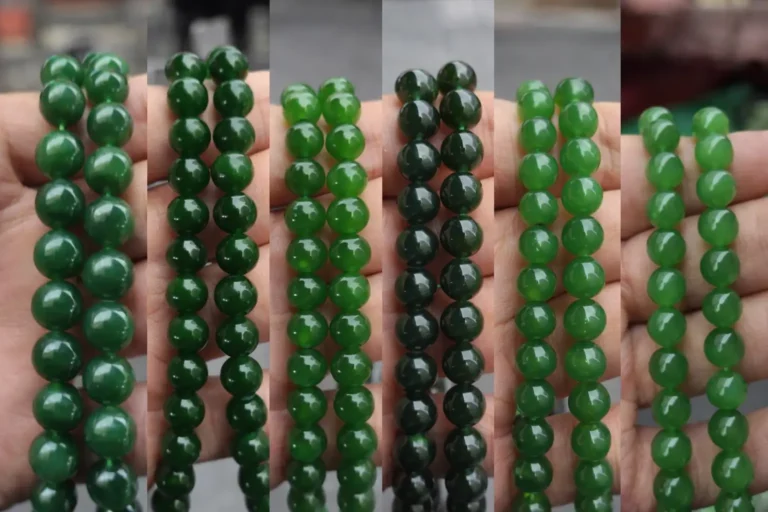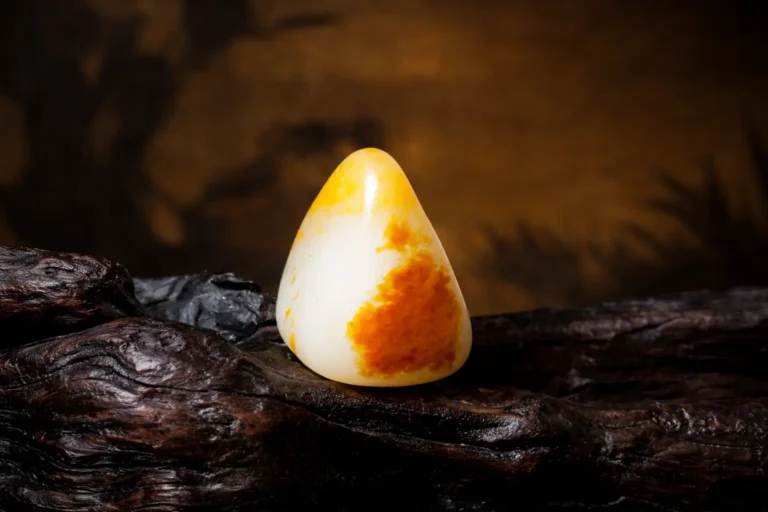
Green Nephrite Grading: Is Your Siberian Jade Truly “Old Mine” Quality?
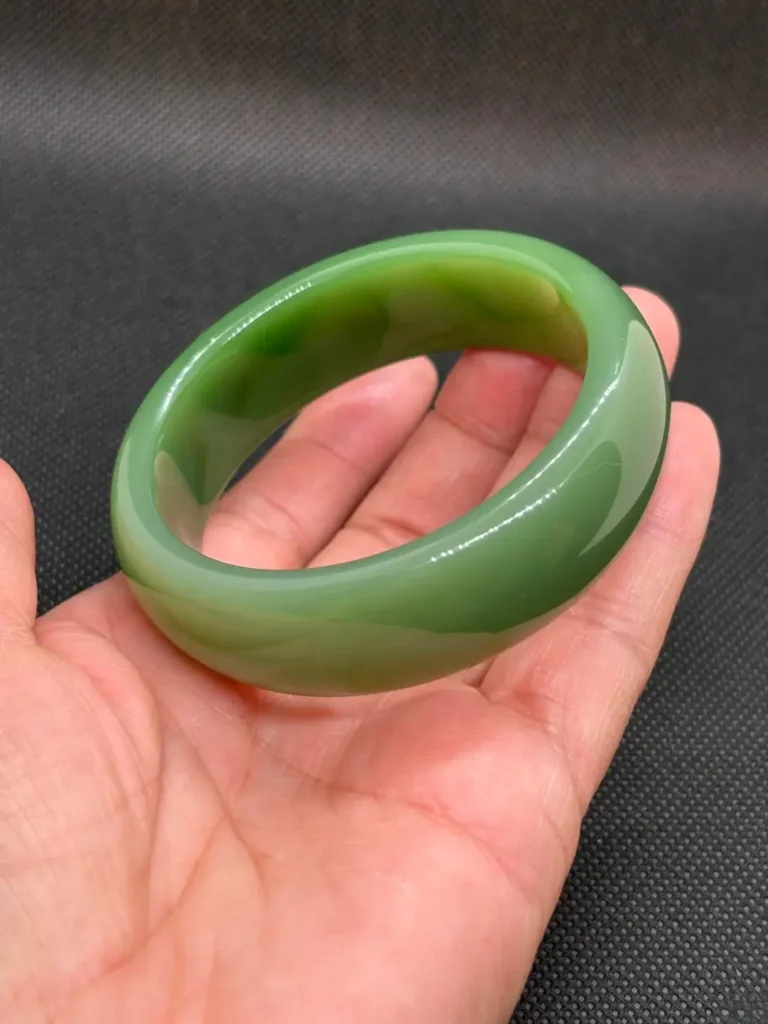
Green Nephrite Jade—especially the legendary Siberian variety—captivates collectors with its vivid hues and signature “icy-moist” luster. But as any seasoned enthusiast knows, not all green jade is created equal. Prices swing by thousands of dollars based on subtle shifts in origin and texture. This makes mastering Green Nephrite Grading essential for any serious buyer.
At retail, you’ll likely face a storm of buzzwords: Old Mine, New Mine, Interlayer material, or Powdery base. Are these just marketing gimmicks from sellers who can’t trace their supply chain? Or do they hold the secret to a stone’s true value?
Today, we demystify these industry “tongue-twisters.” Learn to identify investment-grade Nephrite with confidence and see beyond the sales pitch.
Green Nephrite Grading: Siberian “Old Mine” vs. New Mine
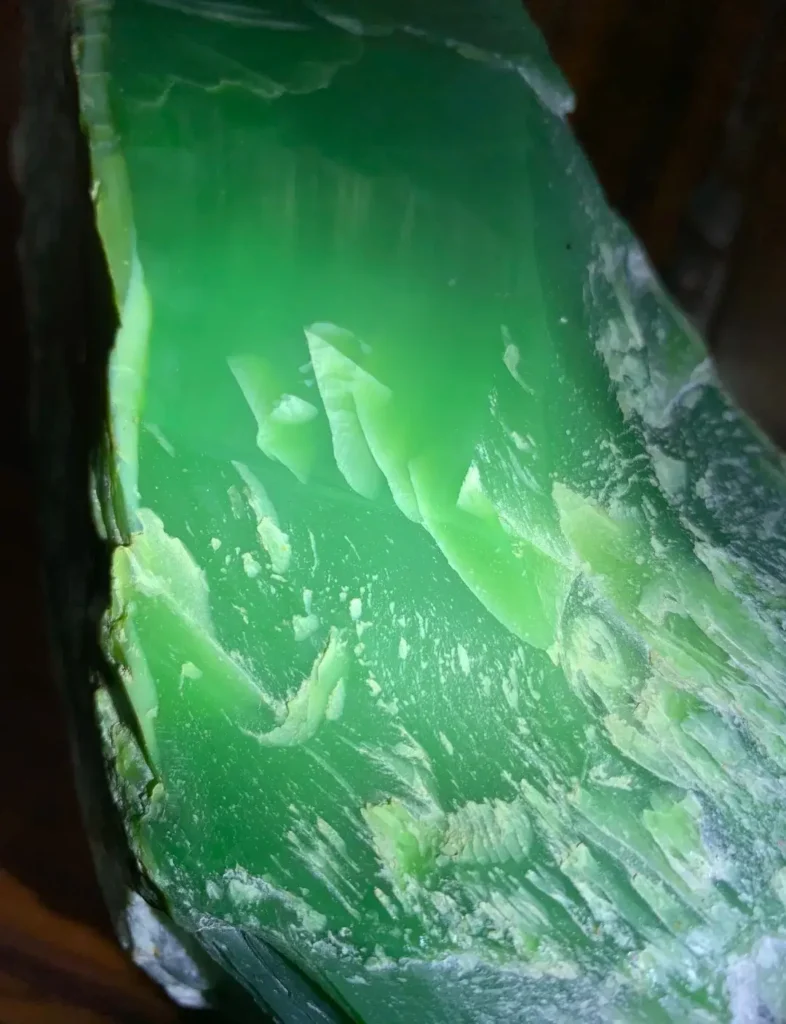
In elite jade circles, the term “Siberian Old Mine” is the gold standard. To truly master Green Nephrite Grading, one must look beyond the surface. The distinction between “Old” and “New” mines isn’t just about discovery dates—it’s about a specific geological pedigree that defines a stone’s ultimate value.
The Origin: The Elite Heritage of Mines 1–8
Understanding this classification requires tracing the stone back to its specific source. Historically, a true “Old Mine” designation refers exclusively to material from Mines No. 1 through 8 in the Sayan Mountains of Siberia.
- The Old Mines (The Legacy): These eight original sites yielded the first Russian Nephrite known to the market. They are the gold standard for stability, producing stones with the most consistent gem-quality texture in history.
- The New Mines (The Modern Era): Any deposit discovered beyond these original eight legendary pits falls under the “New Mine” category. While these newer sources broaden the market, they rarely achieve the historic prestige or structural perfection of their predecessors.
For a deeper dive into the specific characteristics of each Russian pit, including the legendary 7th mine, explore our comprehensive resource: Beyond Mine No. 7: The Complete Guide to Russian Nephrite Jade Deposits.
Vertical Grading: Why Surface Deposits Outshine the Deep
The specific depth of a deposit often dictates its market worth. It’s not just about the mine’s number—it’s about how close the stone lay to the earth’s surface.
Surface Deposits (The Old Mine Advantage)
Early “Old Mine” material typically came from shallower rock layers. These stones underwent millennia of natural weathering, often developing a distinctive “weathered skin” or oxidation crust. In the Siberian mining regions, these upper-layer deposits possess a far more compact internal structure, resulting in the dense, “oily” texture that collectors crave.
Deep-Seated Deposits (The New Mine Standard)
In contrast, “New Mine” material usually originates from deep underground. Because these stones haven’t benefited from the same long-term geological evolution and surface-level pressure, they often lack structural maturity. As a result, deep-seated jade tends to be less stable and more prone to internal inconsistencies.
Identifying “Siberian Old Mine” Quality
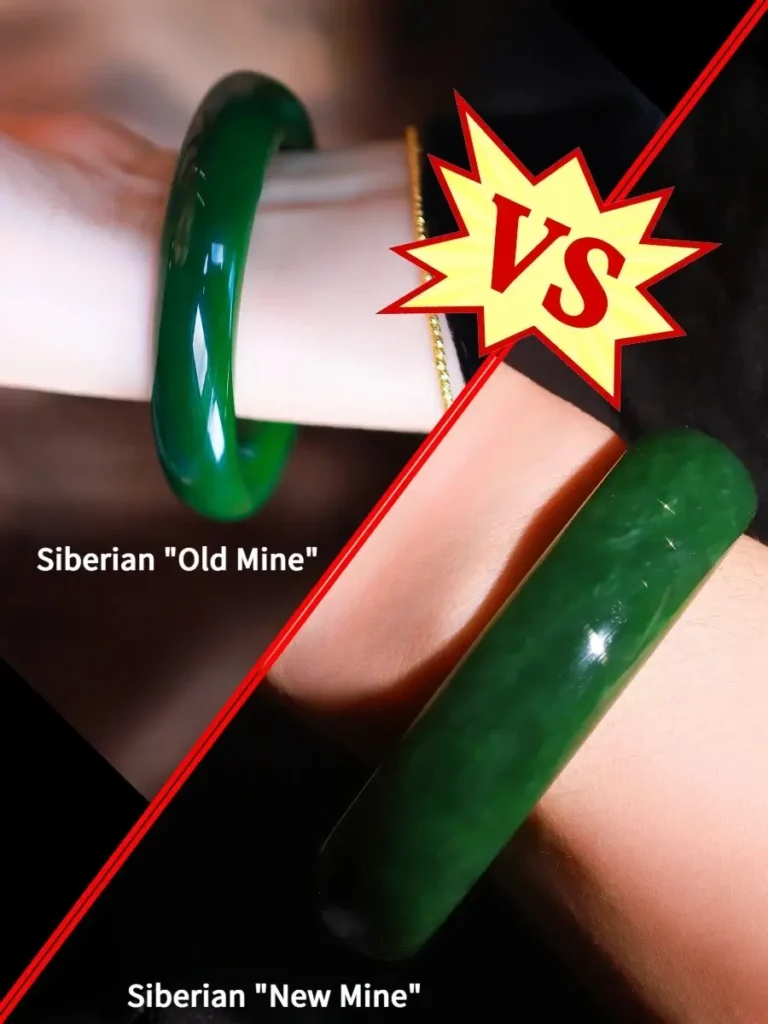
The physical contrast between these two sources directly dictates their market premium. To evaluate these specimens accurately, you must identify these hallmark differences at a glance:
| Attribute | Old Mine (Siberian Legacy) | New Mine (Modern Deposits) |
| Texture | Dense and compact. A rich, “gel-like” depth. | Loose and grainy. Often appears “cloudy” or uneven. |
| Luster | Fine and waxy. Develops a deep, oily patina with wear. | Glassy but superficial. Color feels “thin” with more impurities. |
| Stability | Highly resilient. Maintains its structural integrity. | Unstable. May develop surface fractures once the wax wears off. |
Expert Advice: While Mines No. 1–8 serve as a prestigious endorsement, the final judgment must always rest on the individual specimen. Nature is unpredictable: exceptional “dark horses” can emerge from New Mines, just as subpar material can originate from legendary sites. Always prioritize a holistic assessment of fineness, color, and clarity.
Green Nephrite Grading: Understanding “Interlayer Material”
If you define “fineness of grain” as the ultimate benchmark for quality, then Interlayer Material is a topic you simply cannot ignore. This specific formation has exploded in popularity among elite collectors for one reason: the world’s most sought-after, “structure-less” jade specimens almost exclusively originate from these interlayer deposits.
The Geology: A “Layered Cake” of Jade
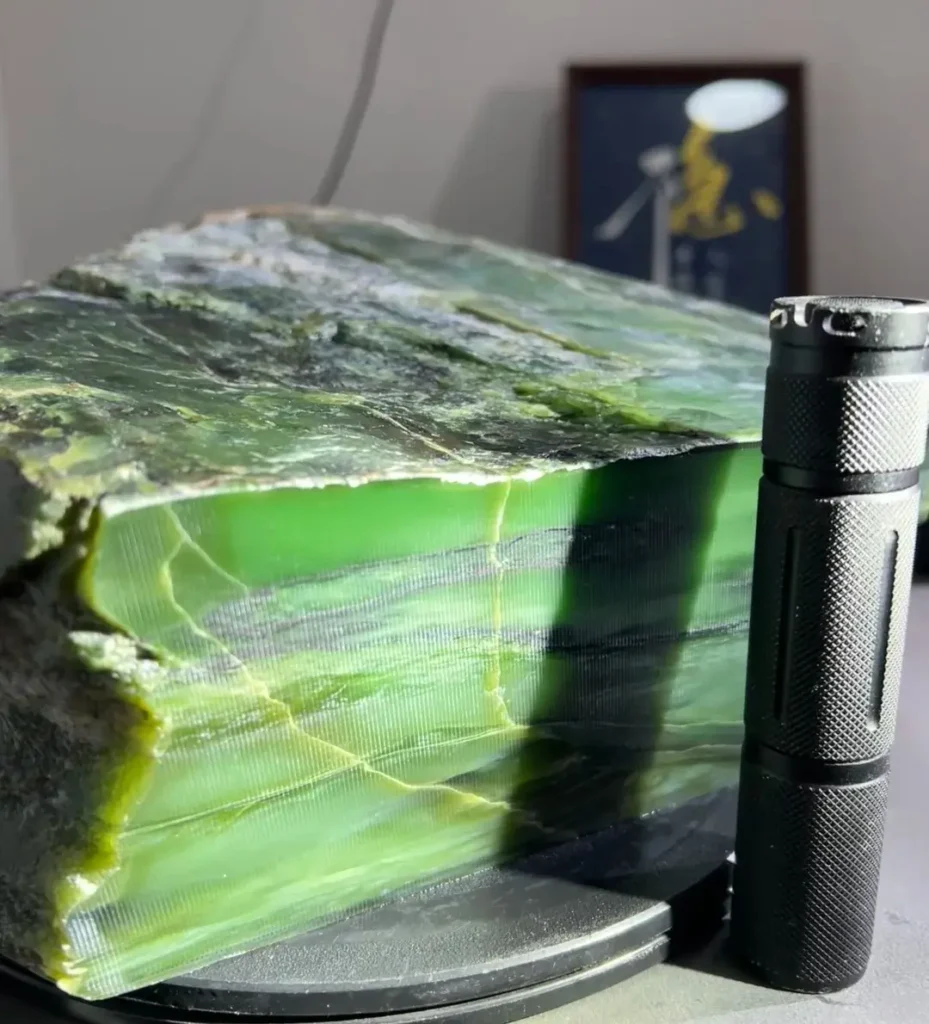
Interlayer Material is a unique geological occurrence found across various Siberian mining sites. It typically forms in the transitional zones—either between the raw nephrite and its rocky outer skin (cortex) or at the intersection of different mineral densities.
The structure stacks like the pages of a book, with the jade spreading out in thin, concentrated ribbons. Think of it like a “Mille-feuille” or a layered crepe cake: tucked between layers of surrounding rock, the Earth has compressed and squeezed out the most refined “essence” of the jade.
Four Primary Body Types of Interlayer Material
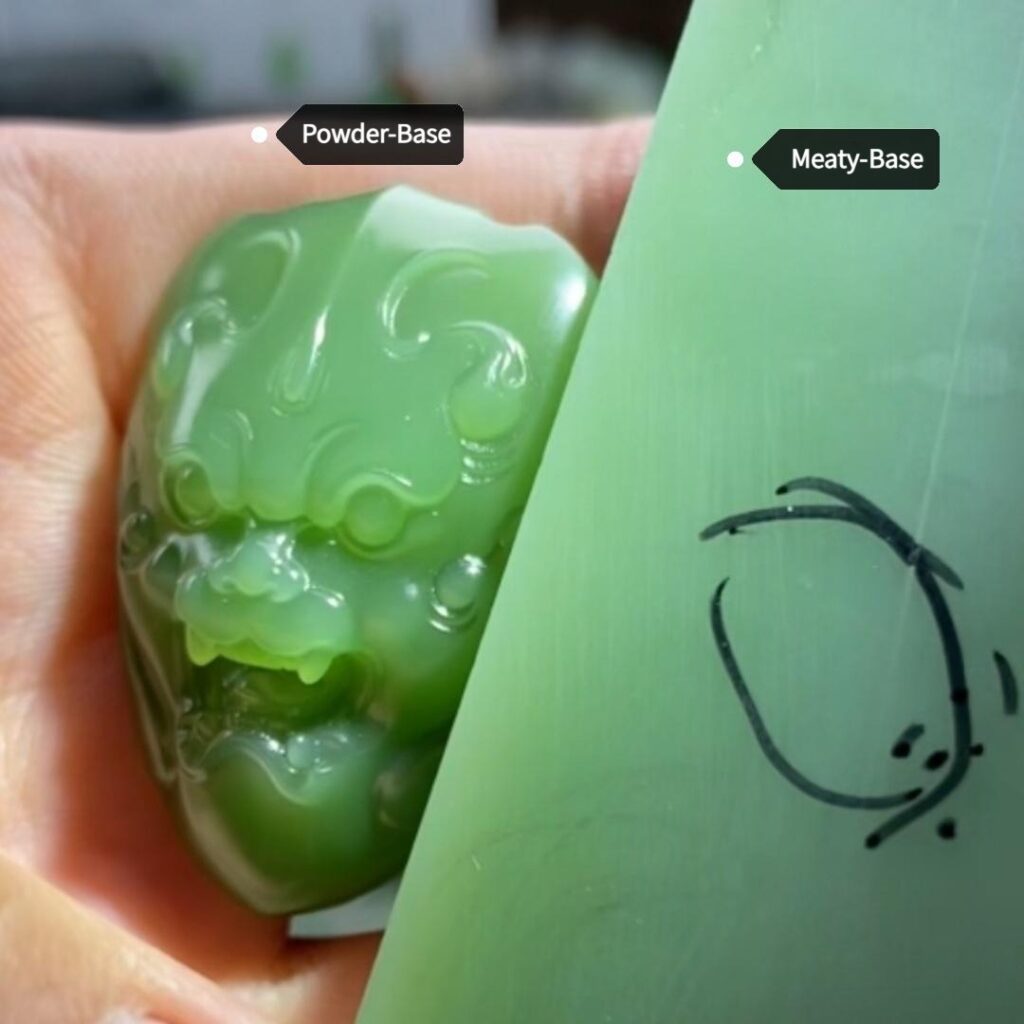
- The “Powder” Base (Fen-Di): Prized for its buttery density and strong internal glow. It possesses a compact structure that remains resilient—not brittle—under the blade.
- The “Icy” Base (Bing-Di): Exhibits high translucency and a radiant, watery luster. Note: Its “glow” comes from microscopic cat’s eye fibers. When the crystal alignment matches the cutting angle, it achieves jewelry-grade clarity, though it is prone to brittleness.
- The “Meaty” Base (Rou-Di): Known for superior tenacity and a “thick,” oily appearance. It is more stable than Icy or Powder bases; the legendary “White-plus-Green” is the gold standard here.
- The “Porcelain” Base (Ci-Di): Feels solid and dense with a distinctive matte-like heft. It is less prone to chipping and is highly valued for its structural stability.
Key Characteristics: Unrivaled Fineness and Extreme Rarity
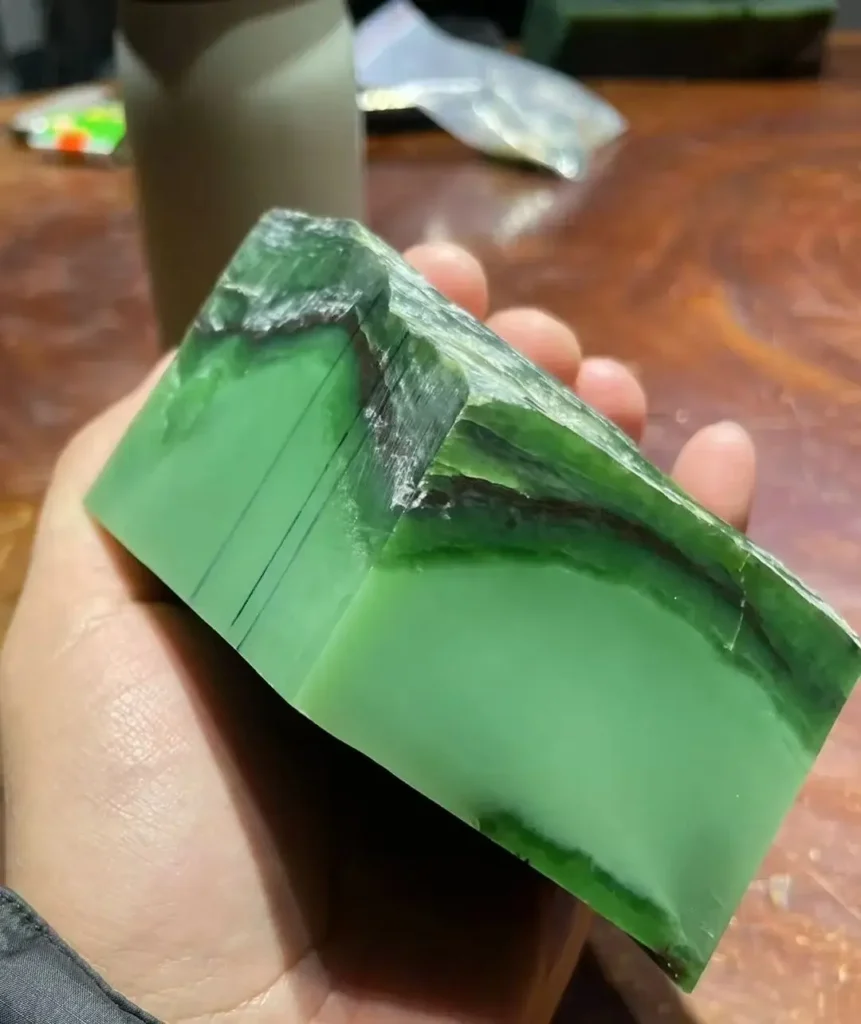
Interlayer material is the “holy grail” for collectors who prioritize texture above all else. However, its exceptional quality comes with a unique set of geological challenges.
1. Structural Perfection: The “No-Structure” Standard
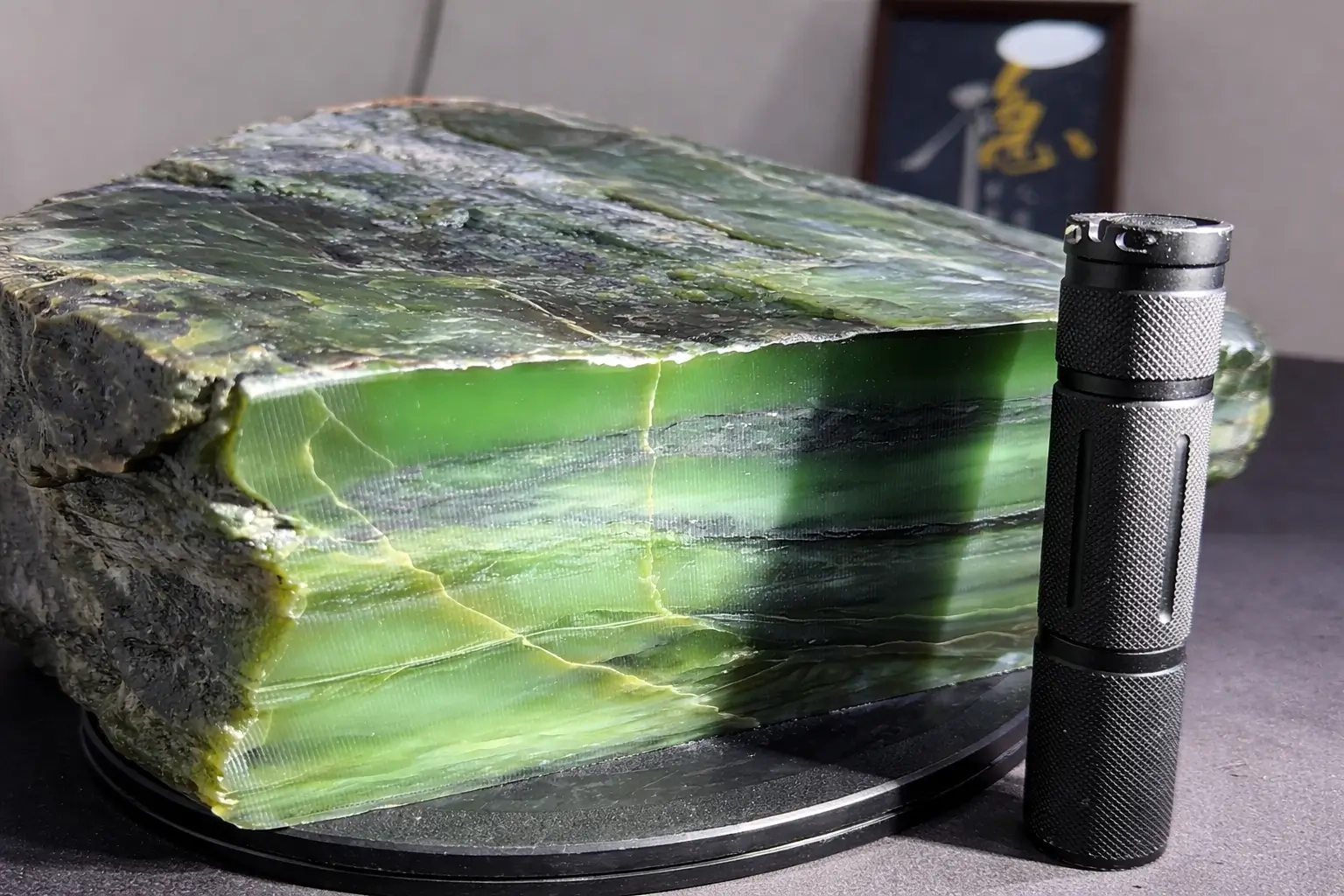
Top-tier Interlayer jade exhibits a saturated, remarkably uniform color. Its most defining trait is its microscopic grain—a texture so refined that it achieves a “structure-less” state. Even under a high-intensity gemological torch, the internal grain remains invisible, representing the pinnacle of nephrite density.
2. Geological Complexity: The Risk of Inclusions
Because this material forms in volatile transitional zones, it is rarely “clean.” While the jade itself is ultra-fine, it frequently hosts a chaotic mix of natural inclusions. Collectors must watch for root streaks, “cat’s eye” chatoyancy, white clouds (cotton), calcified “dead stone” (Jiang), and surface fractures. Furthermore, this material is notorious for “ink-clouding”—where dark, misty impurities (black gas) permeate the jade, muddying its clarity.
3. Absolute Scarcity
Interlayer jade is not a primary vein deposit but a rare geological occurrence. Its overall yield remains incredibly low, making it one of the most precious and sought-after resources in the entire mining region.
Interlayer Material: High Reward vs. High Risk
Investing in Interlayer jade is a high-stakes balancing act. While the aesthetic rewards are breathtaking, the process of extracting a finished piece remains one of the industry’s most daunting challenges, humbling even the most seasoned experts.
The Advantages (The Allure)
- Exceptional Color Expression: It offers a remarkably rich and vibrant color palette that stands out in any collection.
- Superfine Texture: The material is prized for its extreme density and “structure-less” grain, providing a silky, liquid-like finish.
The Disadvantages (The Gamble)
- Abysmal Yield Rates: The efficiency of this material is incredibly low. From a 150kg boulder, a master cutter might only extract 2 to 3 kilograms of gem-quality finished jade.
- Extreme Cutting Volatility: The internal composition is notoriously unstable. Every millimeter cut by the saw can reveal a sudden shift in quality or hidden inclusions. This unpredictable nature makes it a legendary “gamble” in the trade.
The “Water Line” Interlayer Material
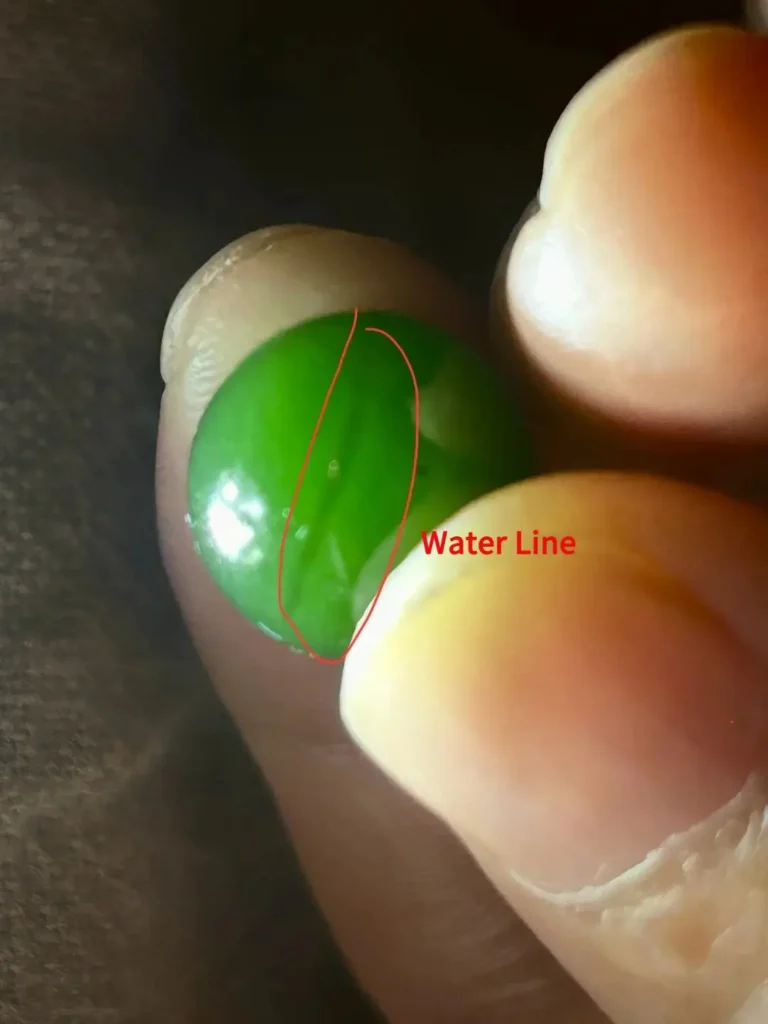
While a “Water Line” is typically dismissed as a flaw, it represents a hidden treasure within Interlayer Material. If a pigmented (green) Water Line is wide enough to be carved independently, it yields some of the finest, most high-density jade in the market.
A Water Line is a translucent band formed by intense geological shear and compression. This pressure forces nephrite fibers into an ultra-ordered, parallel alignment, allowing light to pass through and creating its signature “water-like” clarity.
Because this formation is the direct result of extreme localized pressure, the Water Line—and the jade immediately flanking it—becomes the densest and most resilient part of the entire specimen. This structural disparity is what creates the exceptional texture and visual contrast prized by top-tier collectors.
Green Nephrite Grading: “Red Skin” (Hong-Pi) Material
In the Russian Nephrite market, “Red Skin” (Hong-Pi) is a term frequently used—and occasionally misunderstood—by collectors. When a merchant presents a “Red Skin” specimen, they are typically referring to one of two distinct geological occurrences.
1. Authentic Red Skin (River-Worn Secondary Deposits)
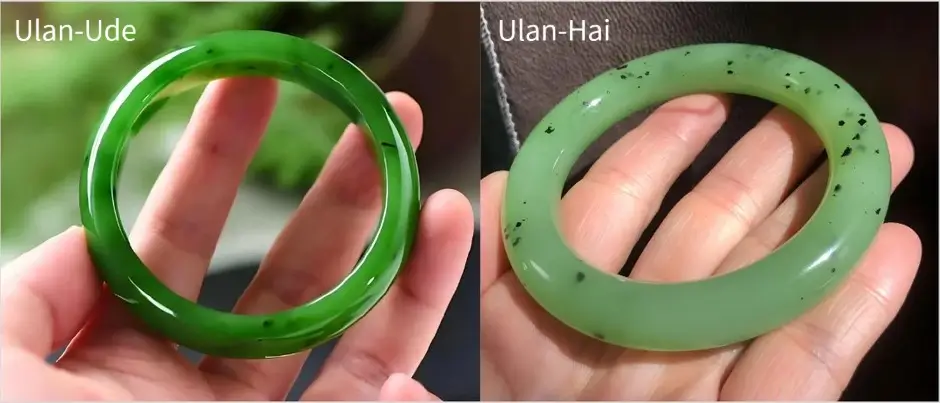
True Red Skin material originates from specific deposits like Ulan-Hai or Ulan-Ude. Because these stones are located near water sources, they undergo a natural weathering process similar to “mountain-flow” (sub-alluvial) jade.
- Characteristics: Much like Gobi desert jade, these stones develop a genuine reddish oxidation on their outer cortex. While the jade itself offers a strikingly vibrant and “chic” green hue, it is notorious for being heavily peppered with black iron/chrome inclusions.
2. Generalized Red Skin (Internal Red Pigmentation)
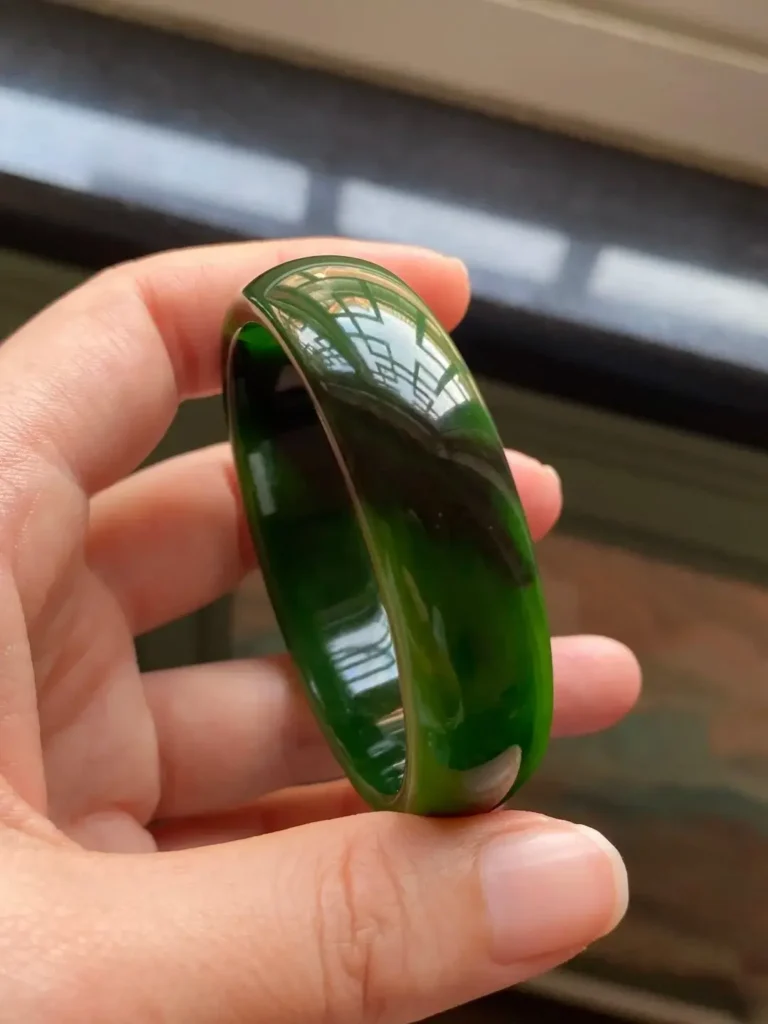
The second category refers to material mined directly from primary veins. Although it is labeled “Red Skin,” the pigmentation is actually located within the jade body rather than on the surface.
- The Visual: These dense red clusters often appear black to the naked eye. However, when a gemological torch is applied, they glow with a deep, saturated red. Within the trade, professionals still categorize this concentrated internal pigment as “Red Skin” due to its rare aesthetic appeal.
Green Nephrite Grading: “Minor Deposits” vs. “Wild Deposits”
In our previous explorations, we discussed Minor Deposits (San-Kuang-Liao). These refer to specific, localized jade mines that—while not part of the “Big Four” primary jade fields in Russia—have still carved out a reputable name for themselves. Notable examples include the famous No. 32 and No. 37 mines.
But as you navigate the market, you will likely encounter another term: Wild Deposits (Ye-Kuang-Liao). What exactly is the difference?
The “Minor” (San-Kuang): Recognized but Limited
The “Minor” in this context simply means the deposit lacks the massive scale of a primary jade field. However, these mines are far from anonymous. They are well-documented locations with a established following among professional lapidaries and collectors who prize their specific geological signatures.
The “Wild” (Ye-Kuang): The Great Unknown
By contrast, Wild Deposits encompass jade sourced from non-mainstream, isolated, or informal mining sites, regardless of their geographic origin. These are the “outliers” of the jade world.
- The Appeal: For the “completist” collector who loves a good hunt, Wild Deposits are fascinating. They often exhibit unique mineral compositions and rare host-rock inclusions that you won’t find in standard commercial jade.
- The Risk: For the average consumer, these stones can be incredibly deceptive. Because they lack a standardized grading history and often host complex associated minerals, their quality is highly volatile.
Curious about these “outlier” sources beyond the mainstream? Explore our post: Beyond Russia: 7 Lesser-Known Nephrite Jade Origins Every Collector Should Know.
A Final Note from Jewea
Regardless of the name or origin, never lose sight of the four pillars that dictate its true value—the same ‘soul dimensions’ we explored in The Soul Within the Glow: Whiteness, Fineness, Greasiness, and Waxy Texture.
Our Green Nephrite Grading guide provides the framework, but every stone is a unique geological event. As a collector, your greatest asset is knowledge. By understanding these nuances, you empower yourself to see past the marketing hype.
Our Advice: Don’t let a merchant “lead you by the nose.” When you shop with a clear concept of quality and market pricing, you ensure that your investment is worth every penny.
Explore the Market Value of Your Collection: Nephrite Jade Price Guide: Quality Grades, Value Factors, and Origins.