Peridot: The “Gem of the Sun” from the Lunar Mantle to Earth’s Depths
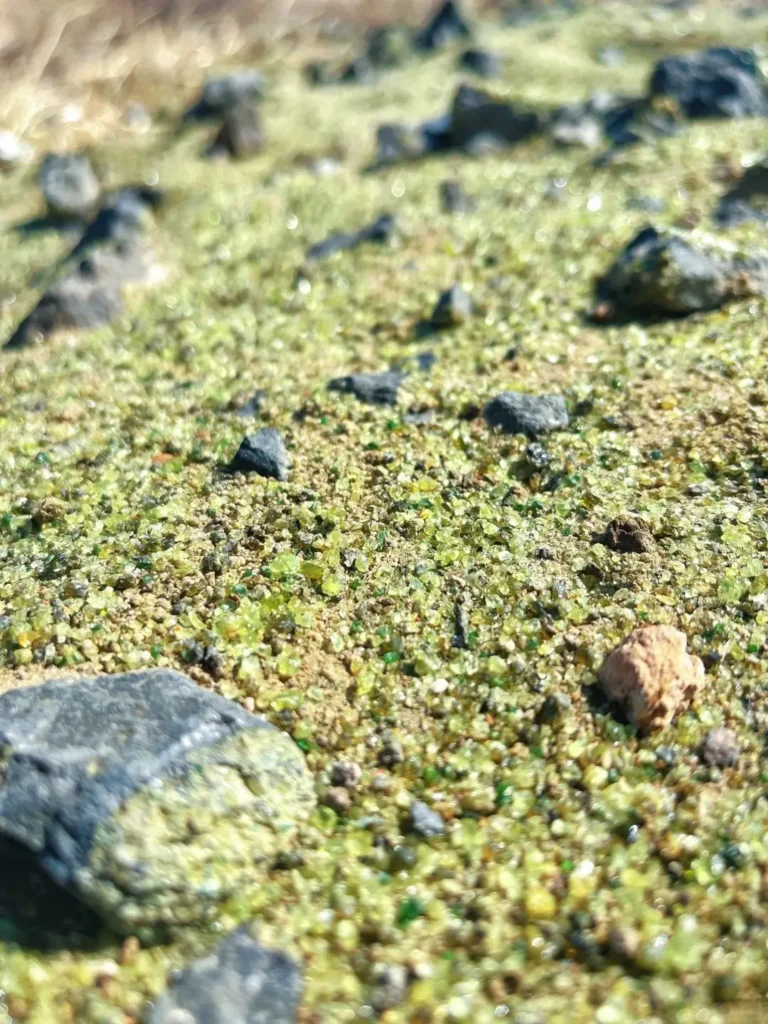
Have you ever wandered across a silent volcanic landscape and caught a glint of vibrant, rhythmic green amidst the jagged black rock? Last week, I did exactly that. I went searching for Peridot—the gemstone ancient Egyptians once revered as the “Gem of the Sun.” Today, these treasures rest quietly on unassuming hillsides, waiting for those patient enough to find them.
Treking through the terrain with eyes peeled, you quickly realize that finding a crystal even the size of a soybean is a rare stroke of luck. Yet, this “treasure hunt” connects us to a primal awe of nature. From the soil beneath our boots to the remote Von Kármán crater on the far side of the Moon, Peridot whispers secrets of our planet and the stars beyond.
Join me today as I retrace my steps and explore the fascinating world of Peridot, a true messenger from the depths of the Earth.
Peridot: An Iron-Magnesium Silicate from the Deep Mantle
On May 15, 2019, the prestigious journal Nature unveiled a landmark discovery in lunar exploration. Data beamed back from the Chang’e 4 mission—specifically from the Von Kármán crater on the far side of the moon—confirmed the presence of deep-seated materials rich in peridot (olivine) and low-calcium pyroxene. This find provided the first direct evidence for the long-standing scientific theory that the lunar mantle is abundant in peridot.
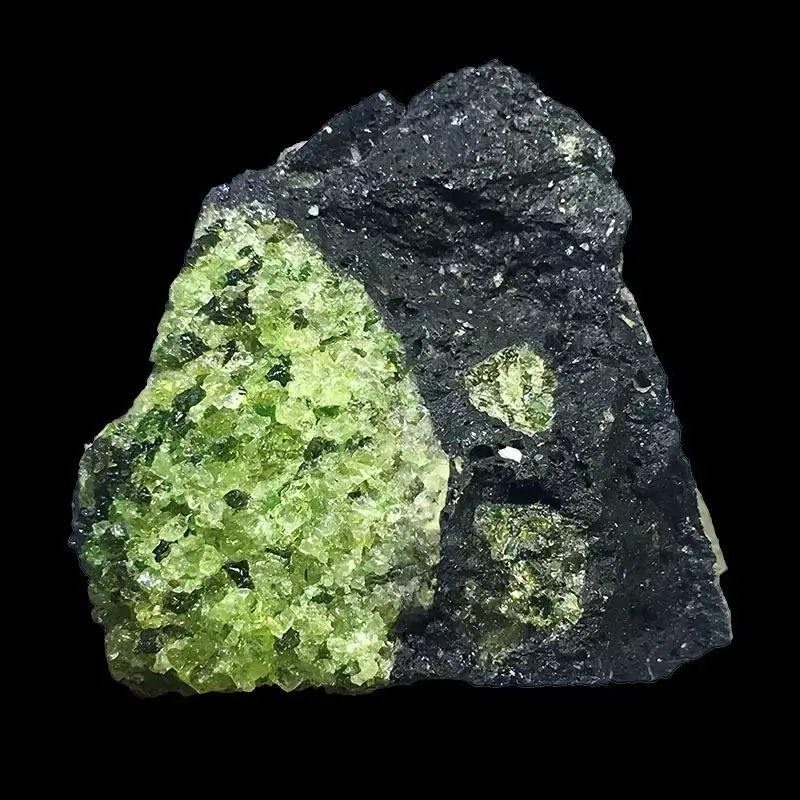
Back on our own planet, peridot is more than just a beautiful gem; it is a primary component of Earth’s makeup. As a magnesium-iron silicate with the chemical formula (Mg,Fe)2SiO4, its parent rock stands as one of the most common minerals in the Earth’s crust and mantle. Most peridot crystals form under intense pressure deep within the mantle and only reach our reach when violent volcanic eruptions hitch them a ride to the surface.
Hawaii’s Peridot Rain and the Papakolea Green Sand Beach
In Hawaiian mythology, peridot carries a poetic soul—the locals revere these shimmering green crystals as the tears of Pele, the Goddess of Fire and Volcanoes. This isn’t just ancient folklore; it’s a living geological reality. During the June 2018 eruption of Kilauea, peridot crystals encased within volcanic rock were blasted into the sky, falling back to earth in a literal “gemstone rain.” Residents found these olive-green treasures scattered across streets and beaches, a rare gift from the earth’s interior.

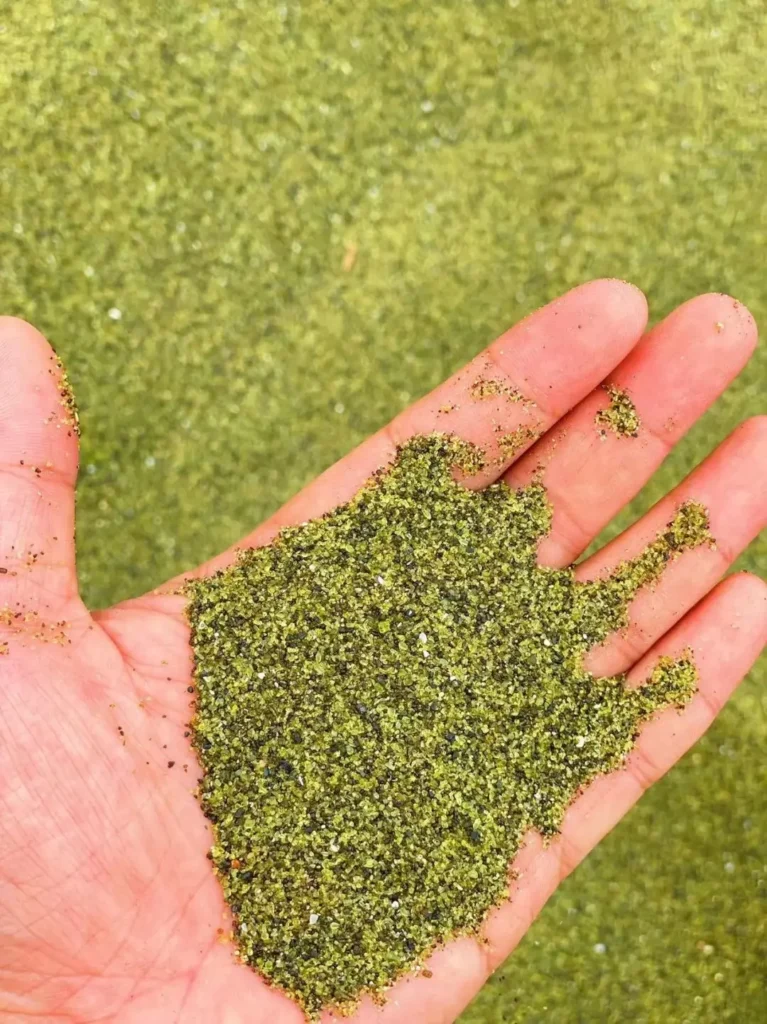
The most breathtaking tribute to this mineral lies at the southernmost tip of the Big Island: Papakolea Beach. One of only two green sand beaches in the world (the other being in Kourou, French Guiana), its entire shoreline is composed of crushed peridot crystals. For matcha lovers, the beach looks like a surreal “matcha cake” paradise. However, while you can soak in the beauty, you must leave it undisturbed—local laws strictly prohibit visitors from taking even a single grain of sand.
Peridot: A 3,500-Year Legacy from the “Gem of the Sun”
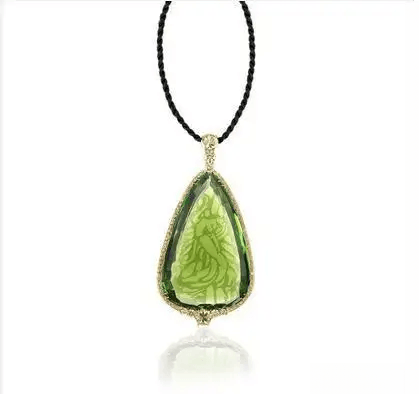
Peridot’s history is as dramatic as its volcanic birth. Over 3,500 years ago, ancient Egyptians discovered peridot deposits on Zabargad (St. John’s Island). This desolate Red Sea rock lacked water and sat amid shark-infested waves. Because the trek was so treacherous, the Egyptians guarded the island as a forbidden zone. They called the crystals the “Gem of the Sun.” They believed these glowing stones could ward off night terrors and evil spirits.
From Crusader Spoils to Royal Treasures
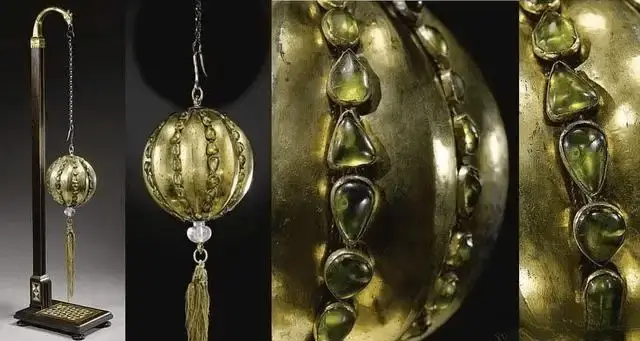
In the Middle Ages, Crusaders returned from the East with peridot in hand. The gem quickly became a staple in European church jewelry and cathedral shrines. Its prestige peaked during the late Ottoman Empire (1300–1918). Sultans amassed vast collections of the stone. They valued it as one of the most precious gems in the imperial treasury.
A Case of Mistaken Identity
Before the Age of Discovery, many people mistook it for true emerald. Only the expansion of colonial trade and better mineralogy finally set peridot apart. This confusion runs deep. Many historians now believe Cleopatra’s legendary ’emeralds’ were, in fact, vibrant peridots sourced from the Red Sea.
Resilience and the Modern Comeback
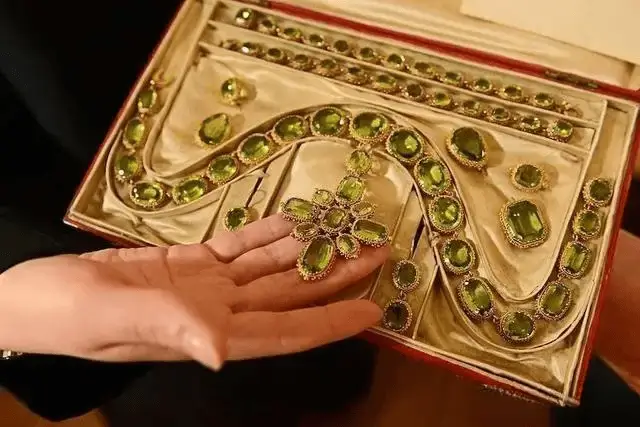
Peridot enjoyed immense popularity in 19th-century Europe and America. However, its status dipped as harder stones like diamonds took center stage. With a Mohs hardness of 7, it faced unfair criticism for being “softer” than emeralds.
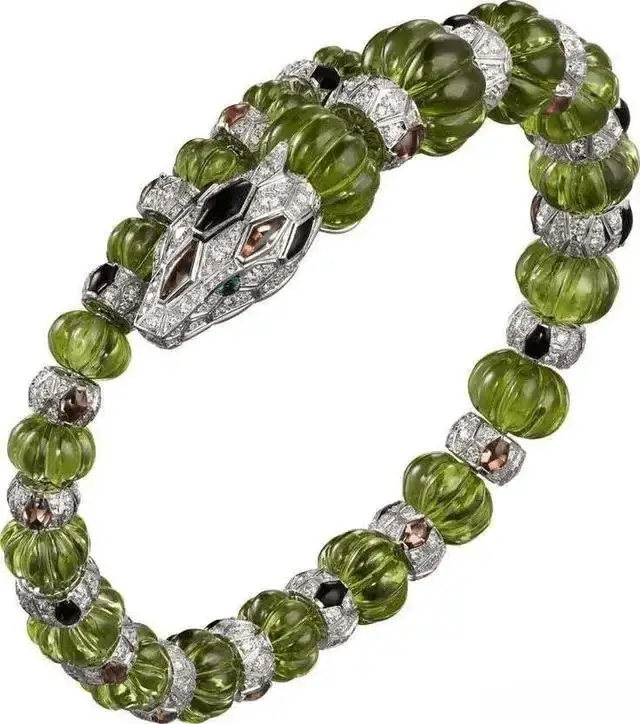
Today, the tide has turned. Demand for unique, vibrant stones is skyrocketing. Top-tier jewelry houses and designers are rediscovering peridot’s serene green. This ancient treasure is making a sophisticated comeback on the global fashion stage.
Global Sources: Where the Finest Peridots are Found
Today, the world’s supply of gem-quality peridot comes from a handful of prestigious locations. While each region offers unique characteristics, the following are the most significant:
- Arizona, USA: Currently the world’s most prolific supplier, producing a steady volume of bright, commercial-grade stones.
- St. John’s Island (Zabargad), Egypt: The legendary original source, still famed for producing exceptionally high-quality specimens with deep historical roots.
- International Deposits: Fine-grade peridot is also unearthed in Northern Pakistan, Myanmar’s Mogok region, Sunnmøre in Norway, Minas Gerais in Brazil, and various regions across Kenya.
The Rise of Chinese Peridot
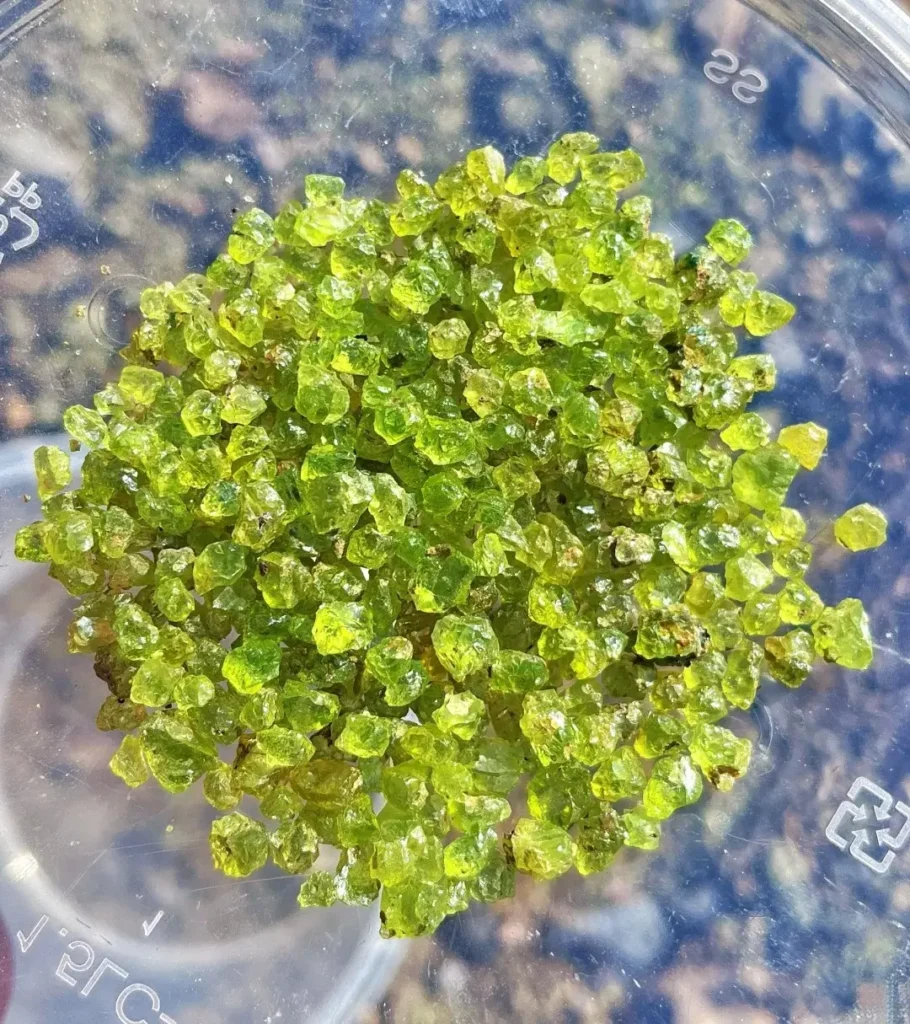
In 1979, a major discovery put China on the gemological map: a massive deposit of gem-quality peridot was found in the Xuanhua district of Zhangjiakou, Hebei Province. Since then, this region has become a vital hub for the gemstone industry. In fact, inspired by this history, I headed to Xuanhua just last week and successfully collected a bounty of raw peridots—each smaller than a soybean, yet glowing with an intense, rhythmic green light.
Beyond these green crystals, Xuanhua is also a renowned destination for agate hunting. Visitors to the area can discover the vibrant, intricate patterns of “Warring States Red” Agate. To learn more about these unique treasures, explore our full article: Gemstones of Hebei: Peridot and “Warring States Red” Agate | Chinese Gems Series for an in-depth look at Hebei’s iconic stones.
How to Buy Peridot: Evaluating Quality and Value
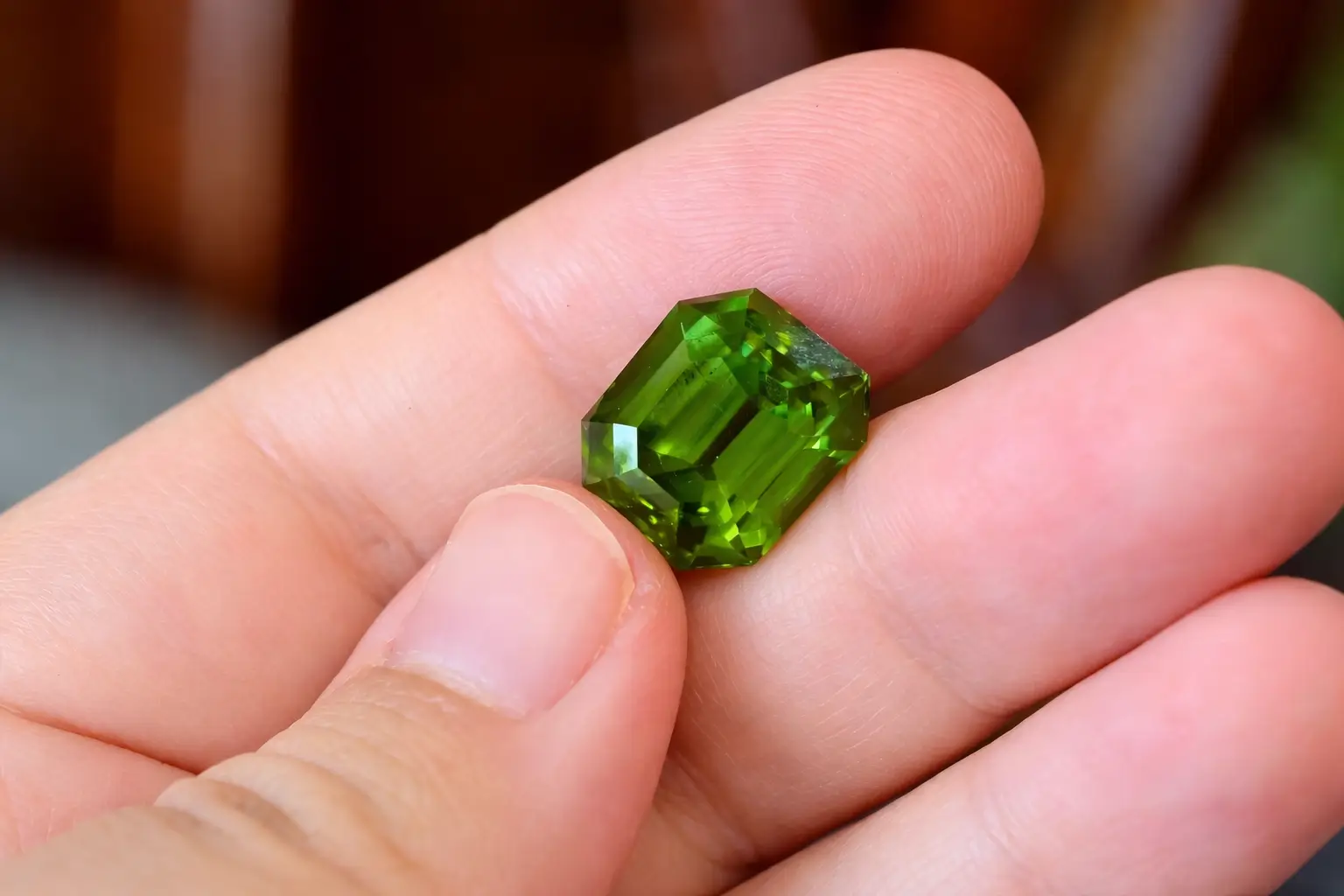
When you evaluate a peridot, follow three simple rules: the larger the carat, the greener the hue, and the higher the clarity.
Carat Weight: Finding the Rare Finds
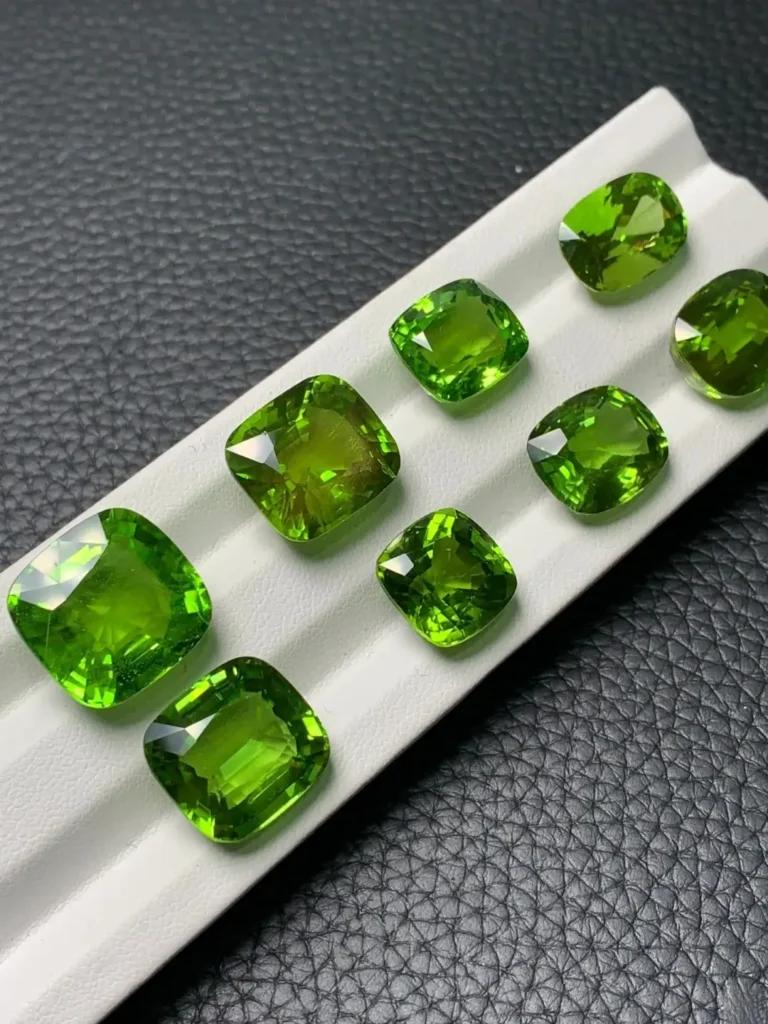
Large peridot crystals are surprisingly scarce. While stones under 3 carats are common, those between 3 and 10 carats are considered medium-rare. If you find a peridot exceeding 10 carats, you are looking at a specimen with exceptional collection value.
Color Grading: The Power of Iron
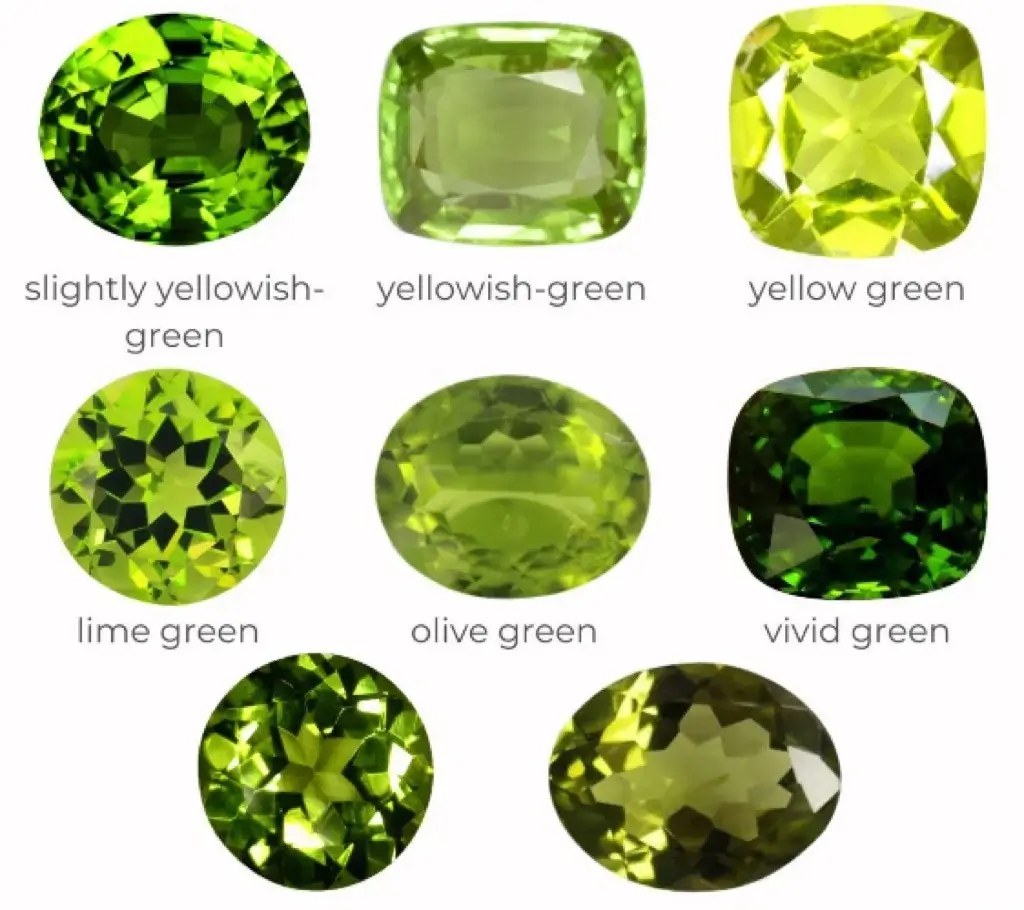
Peridot comes in several shades: intense yellow-green, golden green, yellowish-green, and deep forest green. Iron content determines this saturation. More iron usually means a richer green. However, if the iron oxidizes, the stone develops a dull brown tint. This brownish undertone significantly lowers the gem’s market value.
Clarity: Seeking the “Water-Clear” Look
Since peridot rough often grows in large sizes, buyers expect high clarity. Inclusions—internal flaws—drastically impact the stone’s beauty. Look for “eye-clean” gems with no visible spots. A crystal-clear peridot best showcases the stone’s elegant, vibrant energy.
Authentication: How to Spot a Genuine Peridot
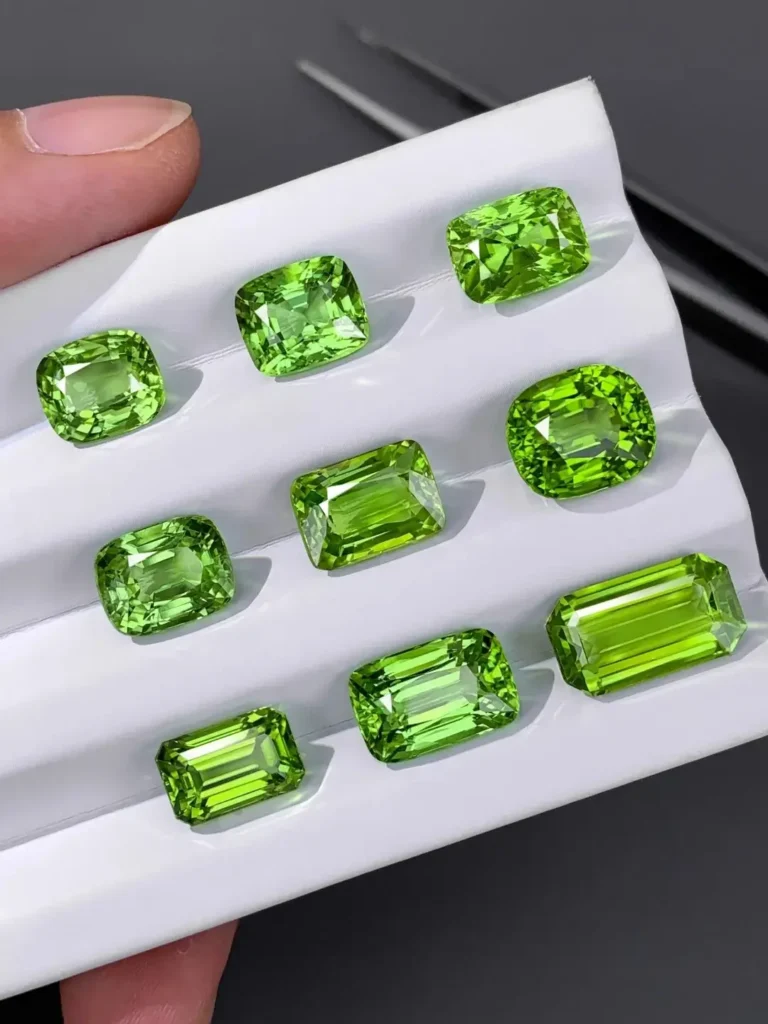
One major advantage for buyers: peridot has no known synthetic or artificial treatments. This makes it a relatively “honest” gemstone. However, you should still know how to distinguish a natural peridot from common imitations or similar-looking stones.
The Double-Vision Test
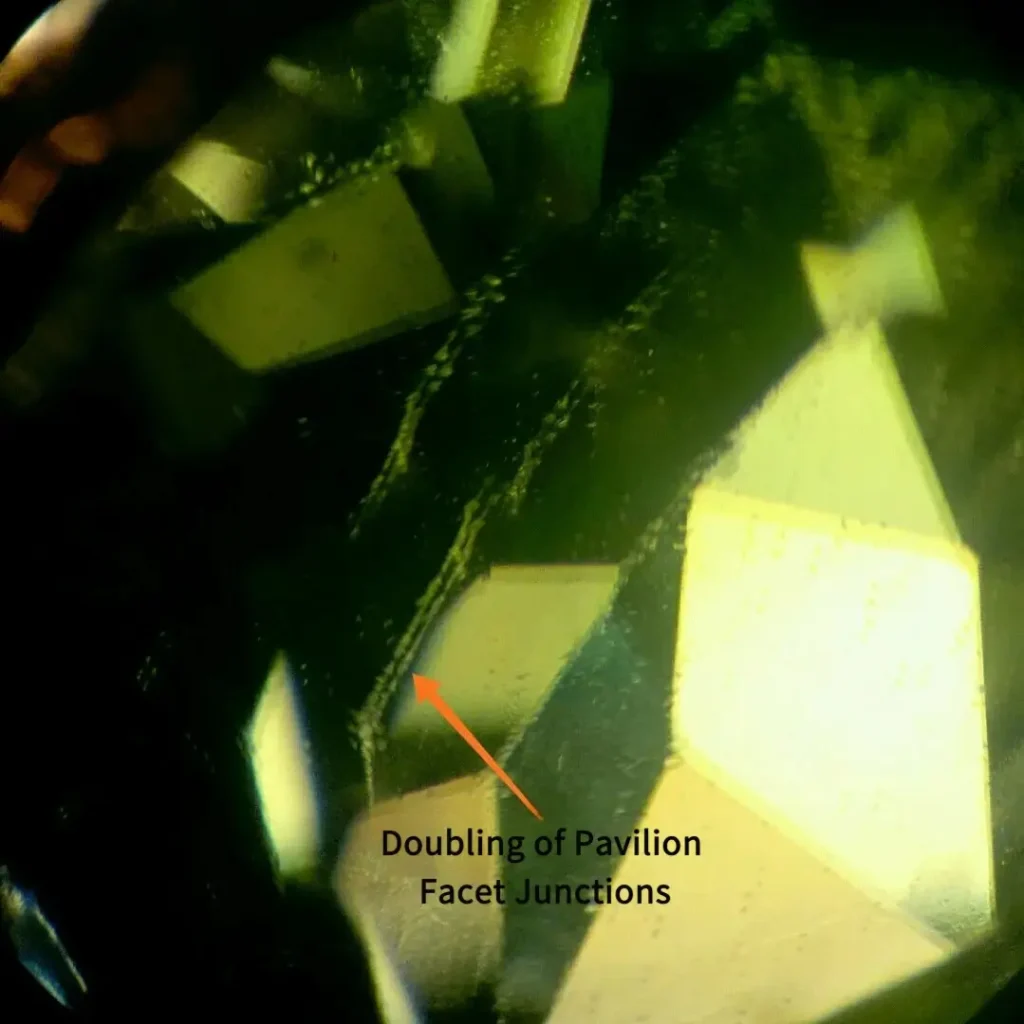
Peridot features high double refraction. If you look through the “table” (the flat top) with a jeweler’s loupe, look closely at the back facet edges. You will see a clear doubling effect, almost like a ghost image or double vision. This is a signature trait of a genuine stone.
The “Lily Pad” Inclusion
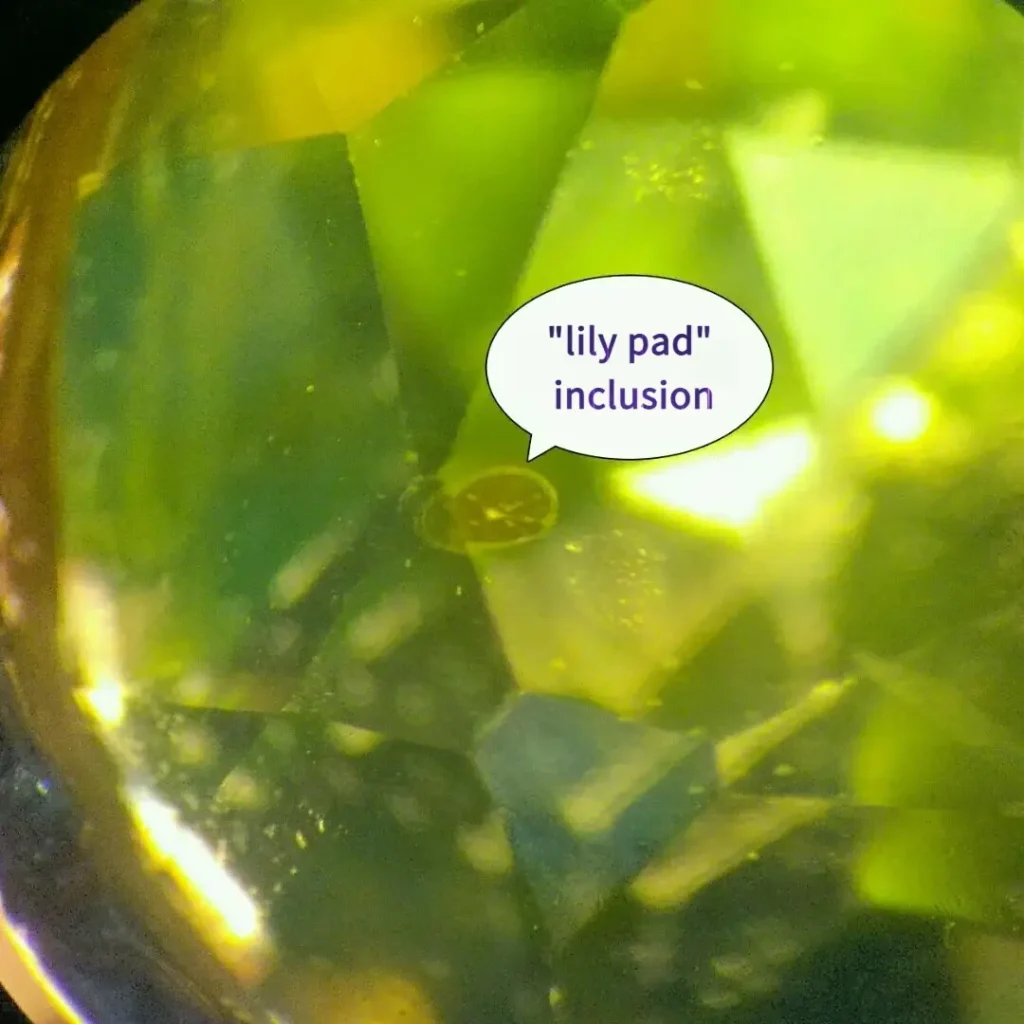
Under a microscope, peridot often reveals a world of its own. Look for the famous “lily pad” inclusion. This unique pattern consists of a tiny mineral crystal at the center surrounded by a circular, flat stress fracture. It looks strikingly like a lily pad floating on a pond.
Light and Fluoresence
Unlike many other green gems, peridot remains inert under UV light. It shows no fluorescence. Additionally, peridot is famous for holding its vivid color even in low-light environments, earning its nickname as the “Evening Emerald.”
Common Look-Alikes
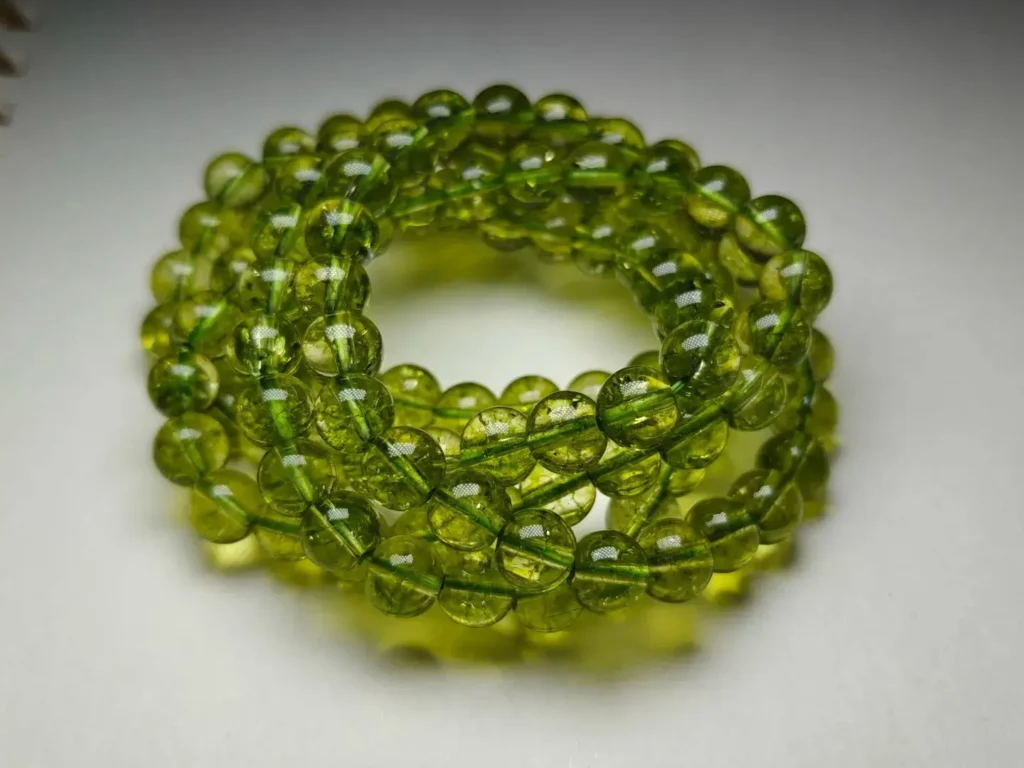
While peridot shares a green hue with Tourmaline, Green Zircon, and Demantoid Garnet, glass remains its most common imitation. Glass is a “universal fake,” but it has clear giveaways. Look for tiny air bubbles or swirl marks inside. Most importantly, glass never shows double refraction—if you don’t see that “double vision” effect, it’s likely not a peridot.
A Final Thought from Jewea: The Resilience of the “Sun Gem”
Peridot’s journey—from a royal treasure to a forgotten relic and back to the height of high fashion—perfectly mirrors the highs and lows of a life well-lived.
While trekking through the rugged hills of Xuanhua this week, I spent hours picking through black volcanic rock to find tiny glints of green. In those moments, I realized something: these gems remain indifferent to the shifting tides of fame. Whether celebrated or overlooked, peridot continues to glow with a steady, quiet brilliance. It simply shines for itself.
I hope every woman finds a “peridot heart” within herself. In a world of constant ups and downs, may you remain steady and unshakeable. Like this ancient stone, true beauty doesn’t spring from external praise. It comes from an inner strength that shines regardless of who is watching. Stay grounded, stay radiant, and let your inner light become your most dazzling medal of honor.
✨ Wear Your Inner Strength
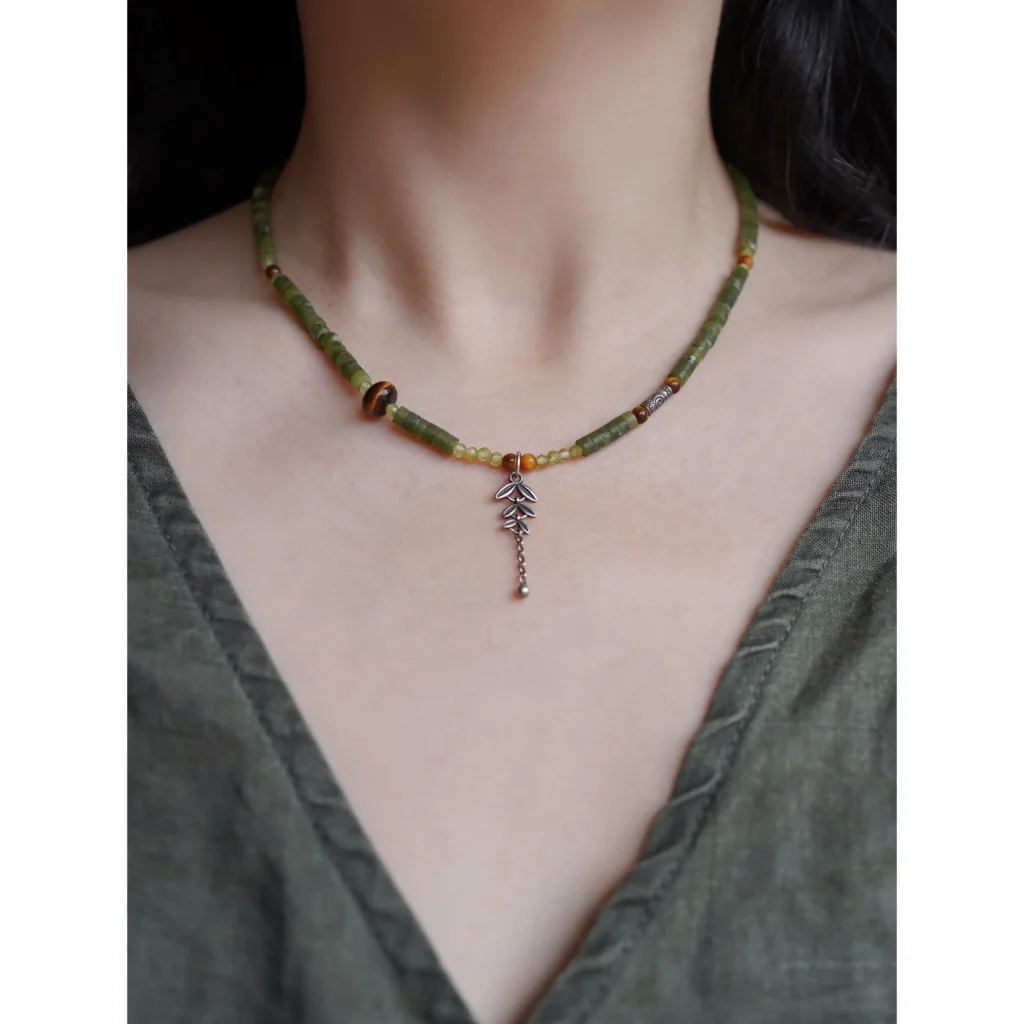
To capture this unshakeable spirit, we created the Jewea Handcrafted Natural Jade & Peridot Necklace. This original piece harmoniously pairs the serene, earthy grounding of natural green jade with the vibrant, rhythmic sparks of peridot and the golden warmth of tiger’s eye. Accented with intricately detailed S925 handmade Thai silver, it is crafted not just as jewelry, but as a wearable amulet for the modern woman who stays beautifully grounded and shines from within.