Buying Your First Emerald: A Comprehensive Guide from Loose Stones to Custom Jewelry
Buying your first emerald is a journey that often begins with a mix of exhilarating wonder and lingering hesitation. It is easy to fall in love with that deep, mesmerizing green, yet the same questions haunt almost every first-time collector: Is this gem truly natural or lab-grown? Why are there so many inclusions? Am I paying a fair price?
For those new to the world of colored gemstones, navigating the complexities of clarity, certification, and market value can feel overwhelming. It’s common to find yourself second-guessing a purchase that should be a source of joy. To help you navigate these waters with confidence, I’ve put together this practical guide, framed through the lens of a real client’s recent experience.
Buying Your First Emerald: A Gift of 1.1 Carats
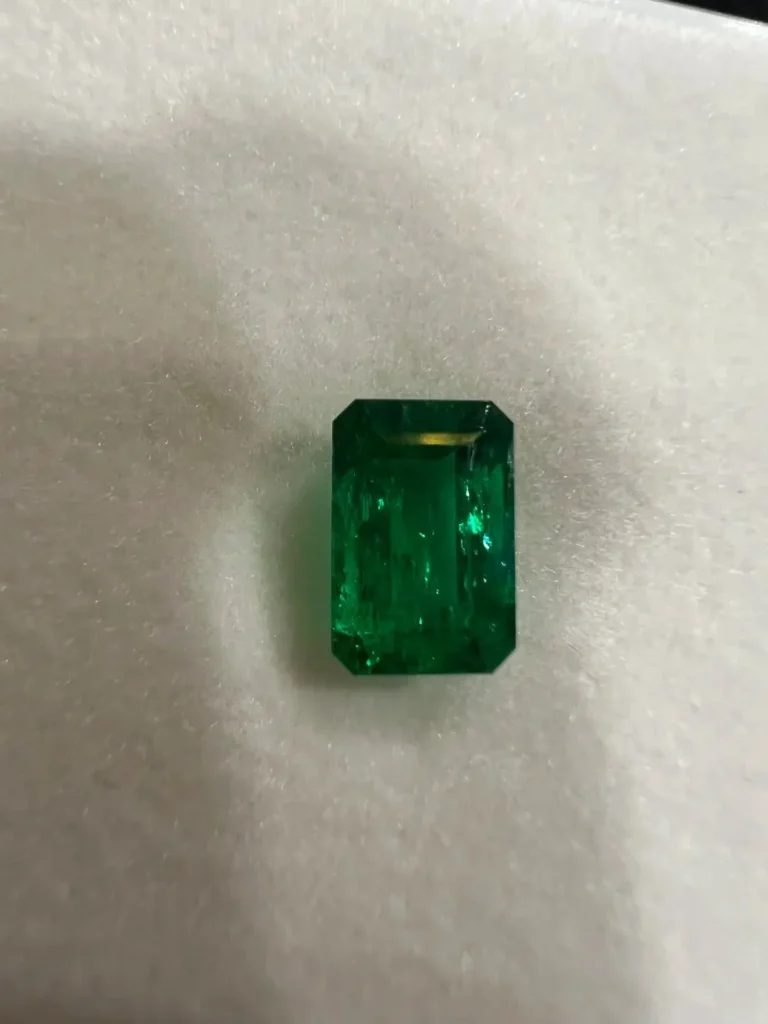
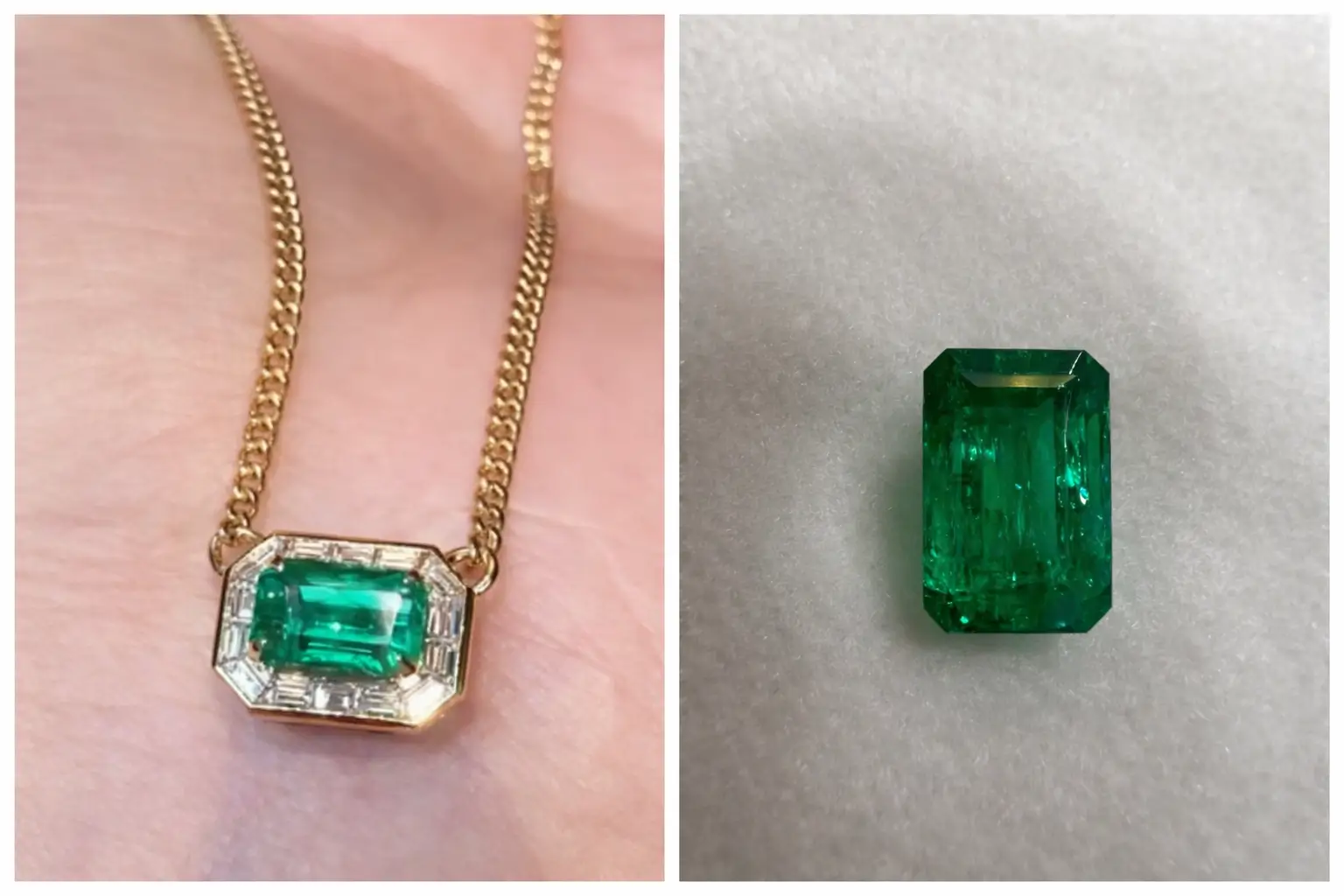
Recently, a long-time client reached out to me regarding a 1.1-carat emerald she had just received. Her husband had hand-picked the stone at a jewelry fair in Japan for 290,000 JPY (≈ 2,000 USD) as an anniversary surprise. It was a beautiful gesture, yet she felt a nagging sense of uncertainty. “The booth only provided a small card stating ‘Natural Emerald,'” she explained. “There was no report from a major lab like the GIA or NGTC. How do I know if this is a gift from the earth or one grown in a lab?”
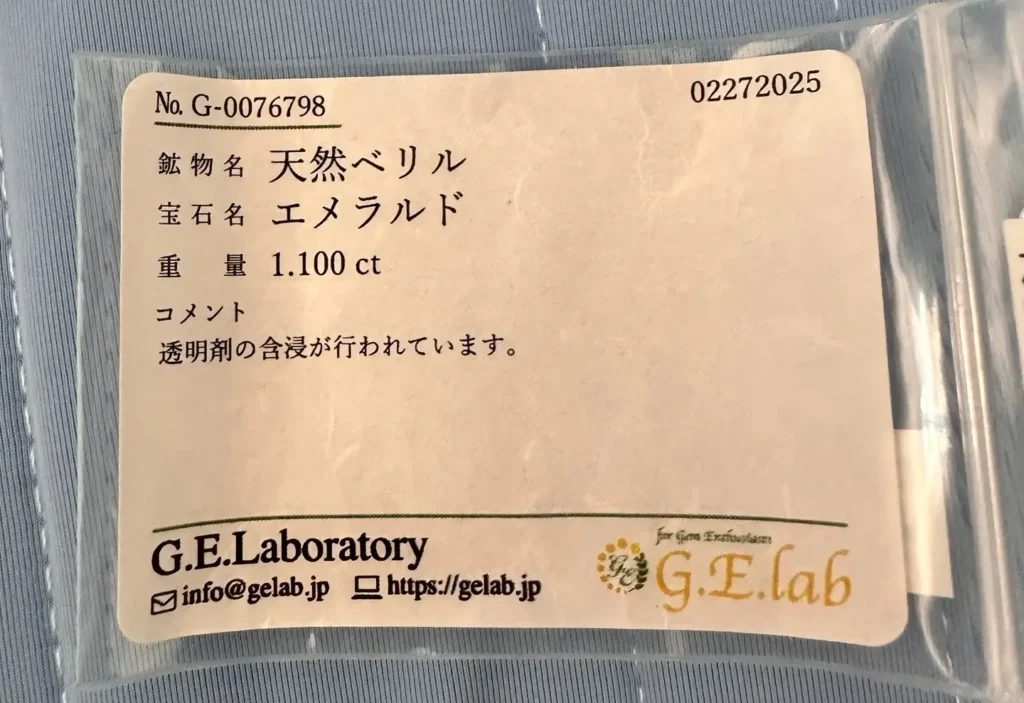
It was a thoughtful, high-stakes gift, and her concerns were entirely valid. To give her the peace of mind she deserved, we started by breaking down the fundamental differences between natural emeralds and their lab-grown counterparts.
Buying Your First Emerald: Natural vs. Lab-Grown Guide
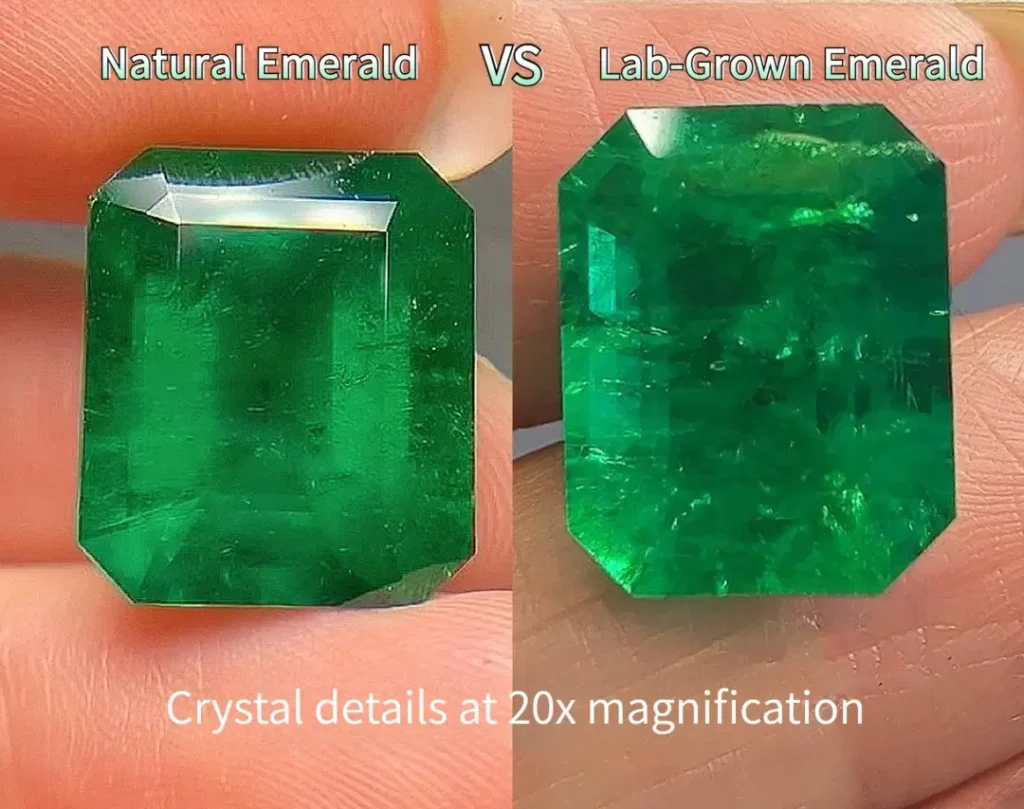
After reviewing the photos and videos provided by the client, we conducted a preliminary assessment based on two critical factors: color and inclusions.
- Color Profile: Lab-grown emeralds simulate natural conditions. However, their color often appears “flat” or overly uniform. Nature rarely produces a single, static shade of green. Natural emeralds possess complex color depth. They often exhibit subtle transitions, such as yellow or cool blue undertones.
This 1.1-carat stone displayed a captivating bluish-green base. It felt vibrantly organic and alive. To learn how top labs grade these nuances, explore our Understanding Emerald Color Grading: Your Guide to the World’s Most Captivating Green. It will help you master the professional standards for every gem. - The Inclusion Profile: Lab-grown stones tend to be suspiciously “clean,” sometimes containing only tiny gas bubbles from the synthesis process. Natural emeralds, however, tell the story of their violent birth deep within the earth. They are almost always “included” with delicate silk, fractures, and wispy veils. Specifically, stones from legendary regions like Colombia often feature “three-phase inclusions”—tiny internal cavities containing a solid crystal, a liquid, and a gas bubble all at once.
Expert Tip: Because natural and lab-grown emeralds share nearly identical physical and chemical properties, a definitive diagnosis can be challenging. While a jeweler’s loupe and a keen eye offer strong clues, laboratory instrumentation is the only way to reach a final verdict. Given the internal fractures and the context of the merchant’s certificate, our preliminary conclusion was that this stone is indeed a natural emerald.
Are Those Internal Fractures Really “Flaws”?
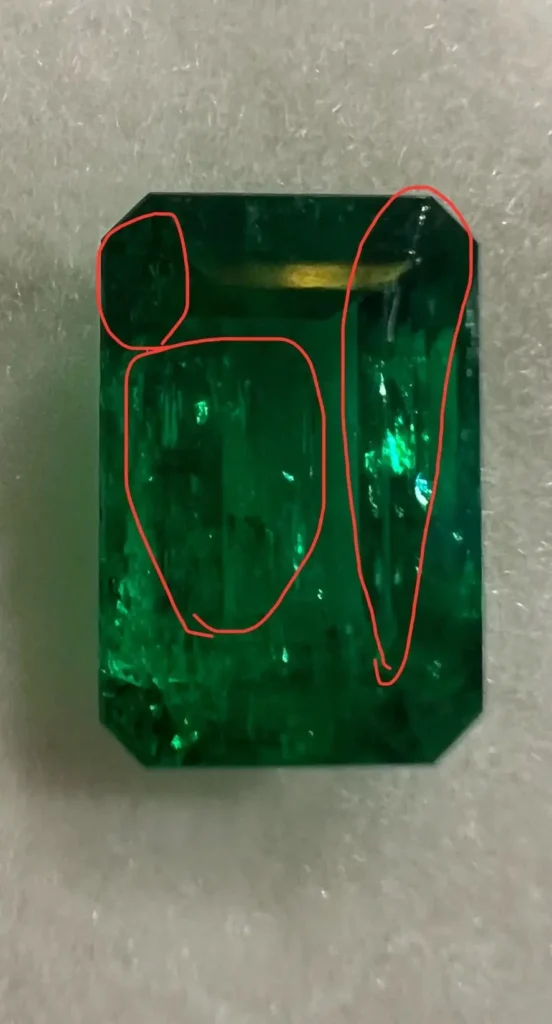
Even after confirming the stone was natural, my client still felt a bit uneasy. She asked a question I hear quite often: “But will those internal cracks take away from its beauty?”
I told her exactly what I tell everyone: in the world of gemology, we don’t look at these as “defects.” We call them the “Jardin”—the French word for garden.
Think of them as nature’s fingerprints. These tiny veils and fractures are life-marks left behind from the violent, magnificent geological journey the emerald took deep underground—enduring shifting crusts and volcanic activity. Unlike diamonds, which we often prize for clarity, an emerald that is as clear as glass is almost unheard of in nature. It is precisely this “Jardin effect” that breathes soul and personality into every individual stone.
From a practical standpoint, as long as these fractures don’t reach the surface of the facets, they generally won’t compromise the gem’s structural integrity. In the entire jewelry world, the emerald is the only gemstone where having natural internal “fissures” isn’t just accepted—it’s actually seen as a mark of high-end authenticity and character.
The Origin Myth: Is Colombia the Only Choice?
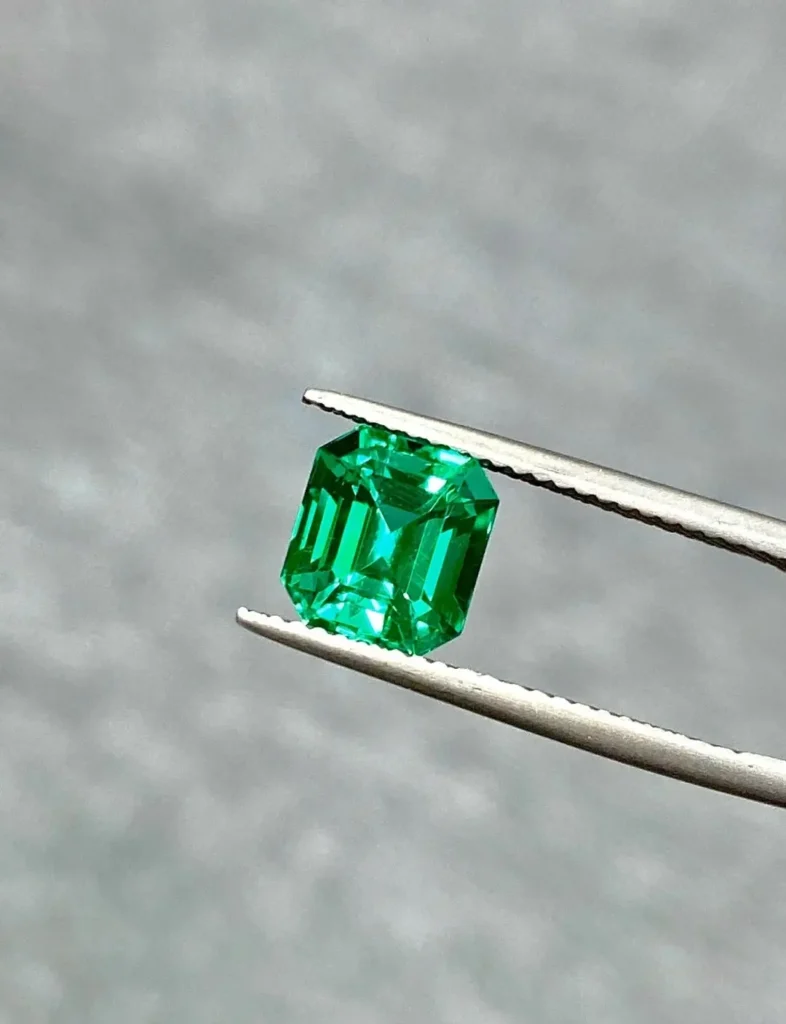
The next question my client asked is perhaps the most famous one in the industry: “Is it from Colombia?”
It’s easy to see why people ask. Colombian emeralds are legendary for their world-class color. But here’s the secret I share with my clients over tea: a high-quality Zambian emerald can offer breathtaking fire and luster that rivals the best in the world, while Brazilian emeralds are beloved for their incredible value and approachable price points.
I always encourage my clients to look past the “origin label” on a piece of paper and return to the beauty of the gem itself. Instead of obsessing over a name on a certificate, I recommend focusing on these three pillars:
- Color Purity: Is the green vivid, or does it look muddy?
- Lustre: Does the stone have that “inner glow” and brilliance?
- Inclusion Profile: Does the “Jardin” look balanced and natural?
In today’s market, it’s unfortunately common to see lower-quality stones slapped with a “Colombia” tag just to justify a massive price hike. A savvy buyer knows that a beautiful stone from an “unsung” mine is far more valuable than a dull, lifeless stone with a famous pedigree. Don’t fall into the “origin trap”—focus on the quality logic, not the label.
Can You Really “Score a Deal” at Jewelry Fairs?
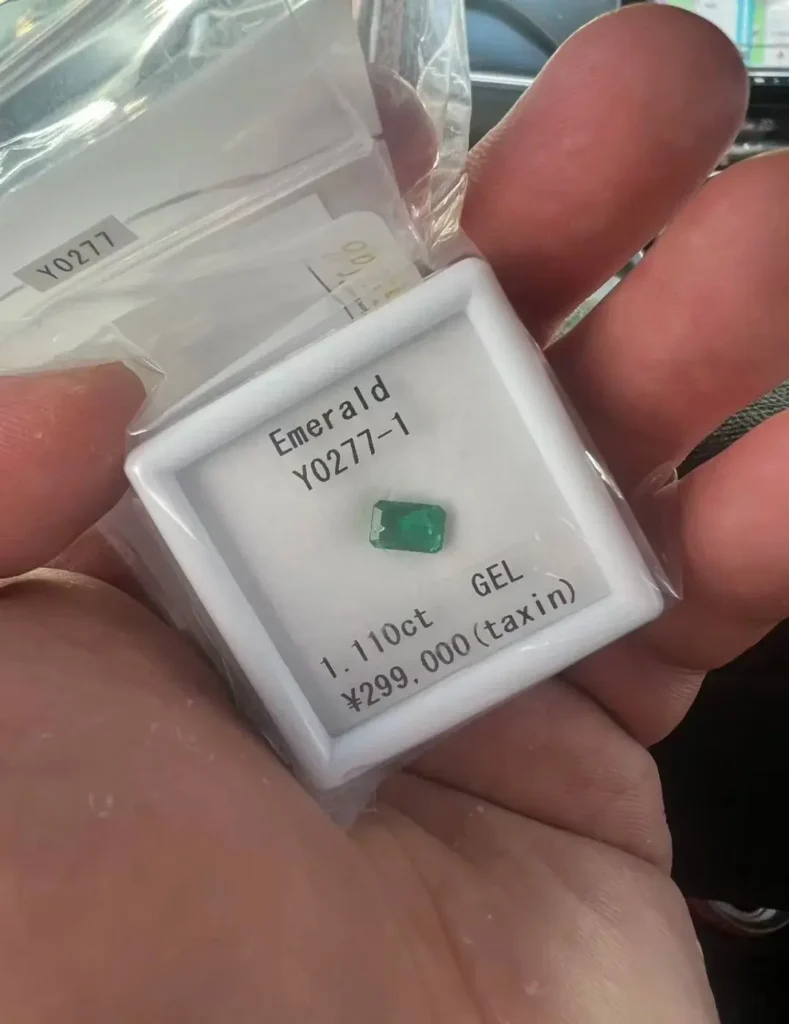
Then, my client asked the question that was truly weighing on her mind: “Did we pay too much? Is 290,000 JPY a good price?”
It is a common misconception—one I see all the time—that buying directly at a gemstone source or an overseas jewelry fair is a guaranteed way to “score a bargain.” Many assume prices there must be lower than back home in China. In reality, the logic is often the exact opposite.
The Chinese jewelry market currently holds a significant price advantage globally. Established domestic wholesalers maintain long-term, high-volume partnerships with major mines, giving them immense bargaining power. When an individual buyer walks into a massive international fair, they lack that institutional leverage. Without a steady track record of buying, a retail tourist is often viewed as a “one-time transaction,” and the quotes they receive can actually be higher than standard retail prices.
Taking this 1.1-carat emerald as an example, 290,000 JPY reflects a standard international retail rate—it certainly wasn’t a “steal.” However, when we looked at the price per carat alongside the stone’s actual color and brilliance, it sat comfortably within a fair market range. I always tell my clients: instead of obsessing over whether you hit rock-bottom pricing, ask yourself if you paid a fair price for the quality you received.
Finally, I shared one more perspective with her.
When jewelry is given as an anniversary gift, its emotional weight far outweighs the price per carat. The fact that her husband spent his time and energy hand-picking this stone is the most meaningful “premium” of all—an added value that no laboratory report could ever quantify.
Design Philosophy: From Ring to Cuban-Link Pendant
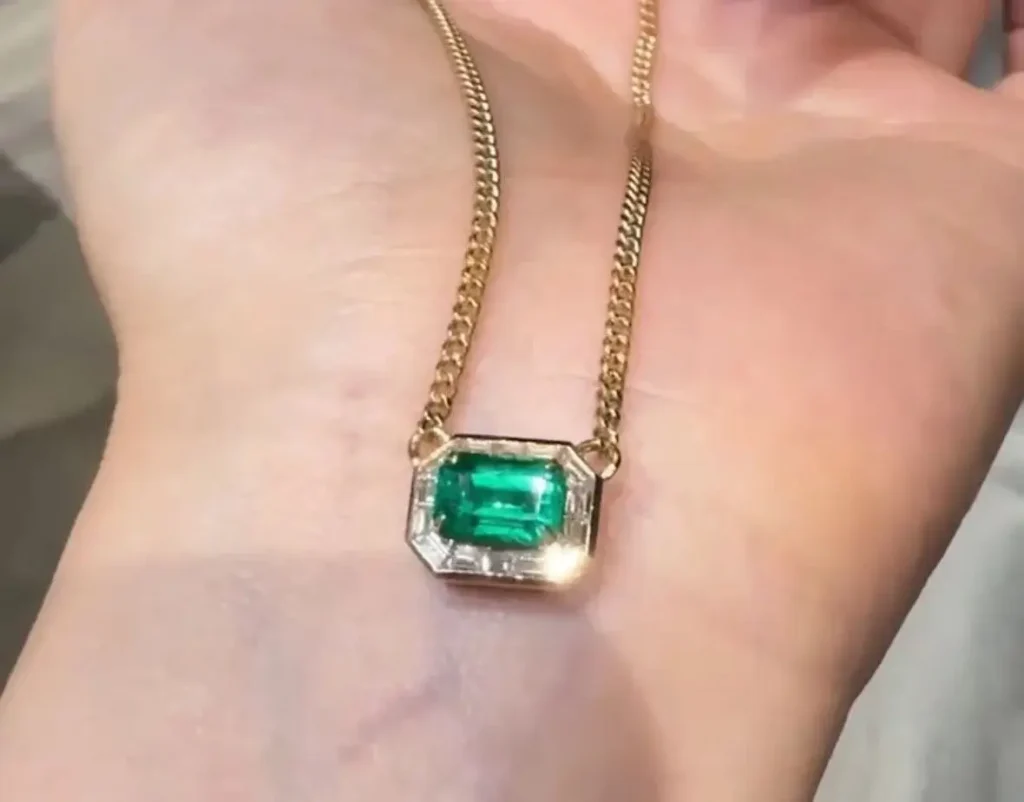
Initially, my client had envisioned a ring. However, we had to take the nature of the stone into account. Emeralds are notoriously brittle, and because this particular gem already had visible internal fractures, wearing it as a ring would expose it to daily risks—from simple hand-washing to the inevitable bumps and knocks of everyday life.
To protect both the stone and the sentiment behind it, we decided to pivot to a custom Cuban-link necklace.
- Enhanced Safety: By wearing the emerald as a pendant near the chest rather than on the finger, we eliminate the high-frequency impact that a ring endures.
- The Style Factor: The bold, vintage aesthetic of the Cuban chain provides a perfect counter-balance to the lush, deep green of the emerald. It creates a piece that feels both understated and sophisticated—a modern classic.
A Note of Caution: Designing for emeralds requires an extraordinary level of skill. Because the stone is naturally “brittle with fissures,” it tests the limits of a jeweler’s experience. A master who specializes in diamonds or jadeite is not necessarily a master of emeralds. In our trade, expertise is everything; emeralds demand a jeweler who understands their unique temperament. Always trust your heirloom, or your anniversary gift, to a specialist who has dedicated their craft to this specific gemstone.
Choosing the Right Cut When Buying Your First Emerald
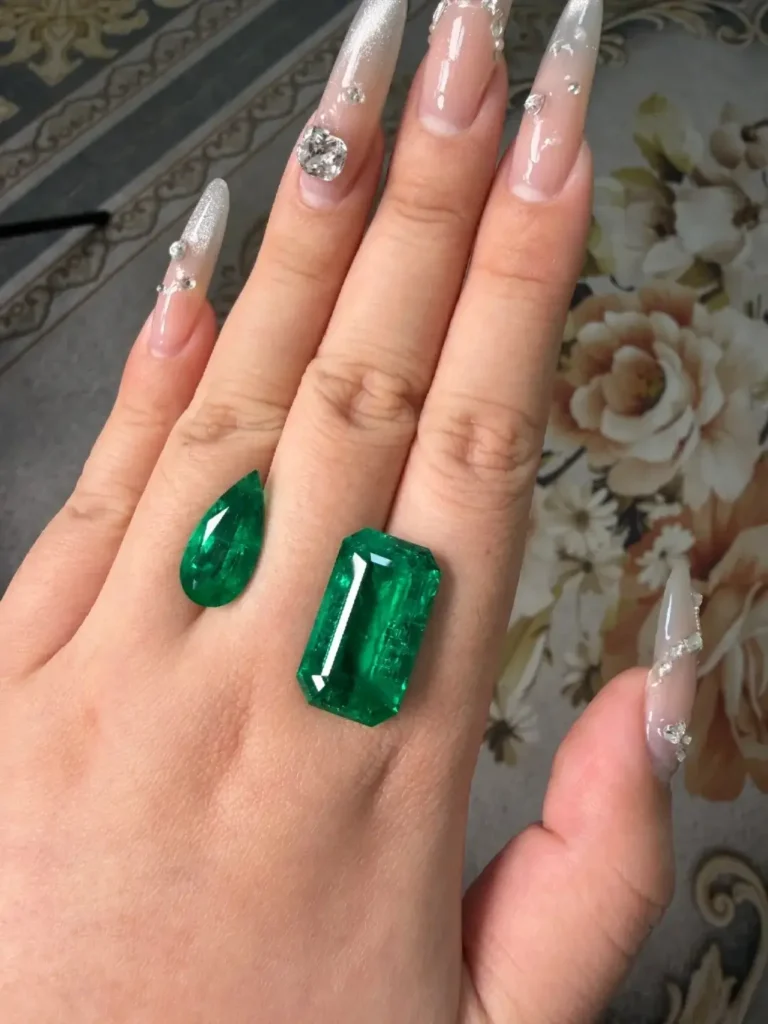
For those buying your first emerald, my strongest recommendation is the classic Emerald Cut.
Fancy shapes like the Pear Cut are undeniably playful and dynamic. However, the traditional step-cut facets of an Emerald Cut offer a sense of gravity that is hard to match. This cut does more than frame the stone. It acts as a stage for the emerald’s deep, velvety color.
The distinctive, elongated rectangular facets create a play of light that feels both intentional and iconic. They offer a sense of heritage and understated elegance that fancy cuts often lack. If you are looking for a centerpiece that exudes class and timelessness, the Emerald Cut is the gold standard.
A Final Word on Buying Your First Emerald
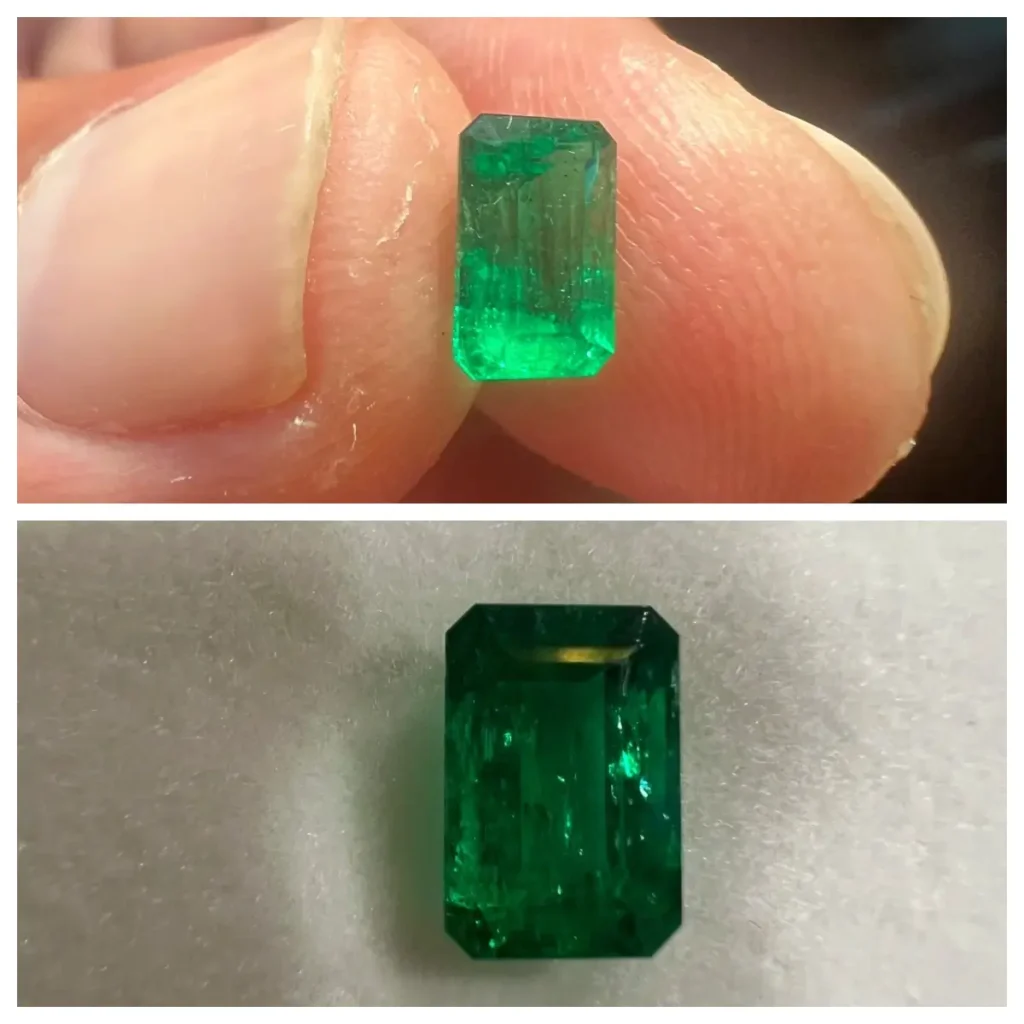
Finally, please remember that emeralds are famous “camera killers.” Their unique optical properties shift dramatically under different lighting conditions. A standard photograph rarely captures a stone’s true depth, life, or inner fire. If possible, always view your emerald in person before you buy.
When buying your first emerald online, choose a merchant you trust. This helps you avoid “color deception” or potential disappointment. Remember, true beauty is personal. You will only know a stone is “the one” when you see it with your own eyes.
Buying your first emerald is an exciting milestone. It is just the beginning of your journey. To deepen your expertise, I highly recommend reading our Emerald Buying Guide: 10 Essential Questions About Color, Origin, Cut, and Care. It covers essential gem grading to ensure a lifelong purchase.