Phosphophyllite: The Rare and Fragile Gemstone Behind Land of the Lustrous
Many people first encountered phosphophyllite not in a mineralogy textbook, but through Haruko Ichikawa’s manga and anime series Land of the Lustrous.
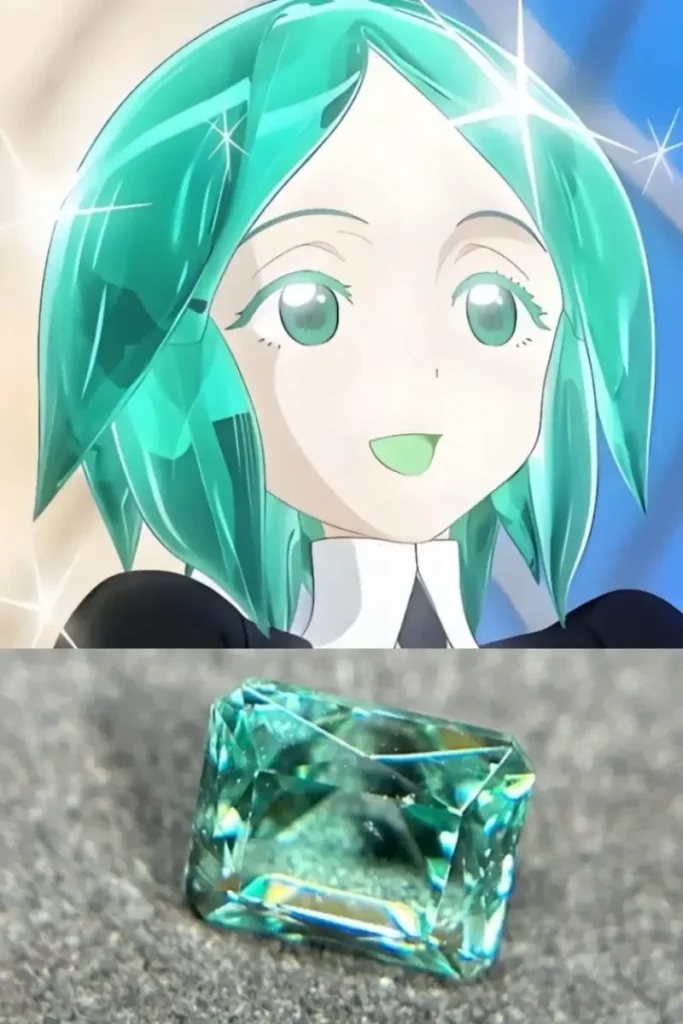
In the story, Phosphophyllite begins as a fragile and inexperienced character. Over time, it goes through a long and painful transformation. Its body suffers repeated destruction, while its personality and fate change along the way. By the end, it has become almost unrecognizable from the character it once was.
But what is phosphophyllite like in the real world?
Is it really as easy to break as it appears in Land of the Lustrous?
Can this rare mineral actually be used in jewelry?
Let’s take a closer look at phosphophyllite.
What Is Phosphophyllite?
Phosphophyllite is a rare hydrous phosphate mineral with the ideal chemical formula Zn₂Fe²⁺(PO₄)₂·4H₂O.
German mineralogists Heinrich Laubmann and Hermann Steinmetz officially named the mineral in 1920. The name combines “phosphate,” referring to its chemical composition, with the Greek word phyllos, meaning “leaf.” The name also reflects the mineral’s prominent cleavage.
Phosphophyllite belongs to the monoclinic crystal system. Its crystals commonly form as plates or thick plates, although they can also develop in other crystal forms. Another distinctive feature is twinning.
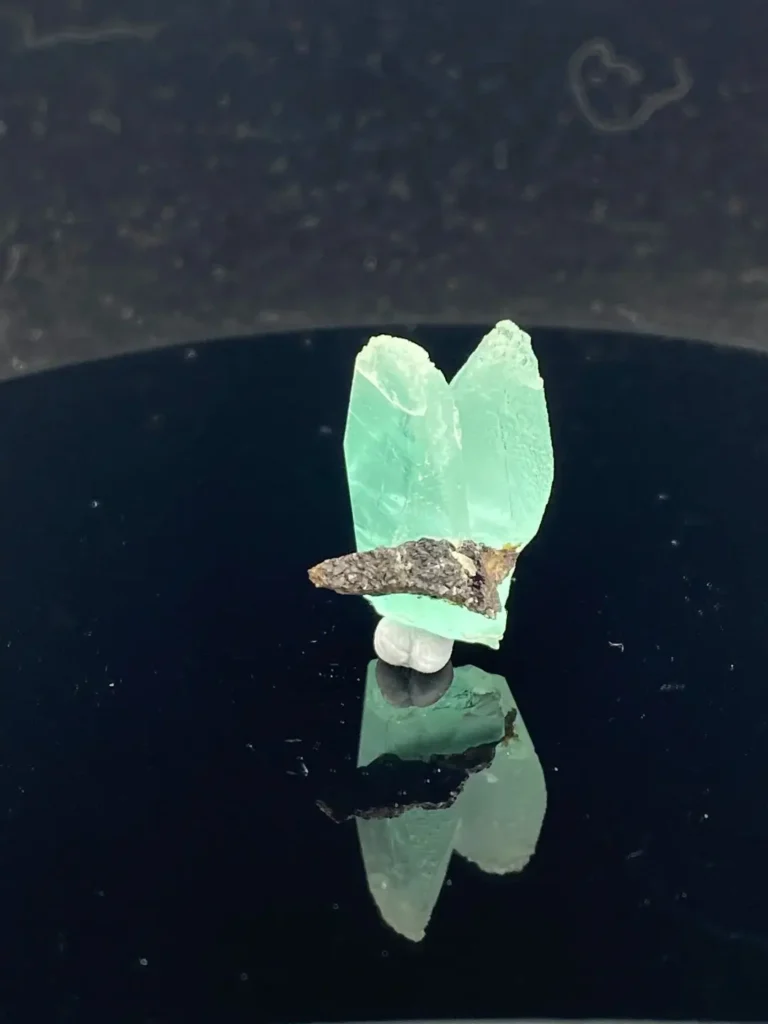
One of its most recognizable forms is fishtail twinning, in which two or more crystals grow together in a specific crystallographic relationship, creating an attractive geometric pattern.
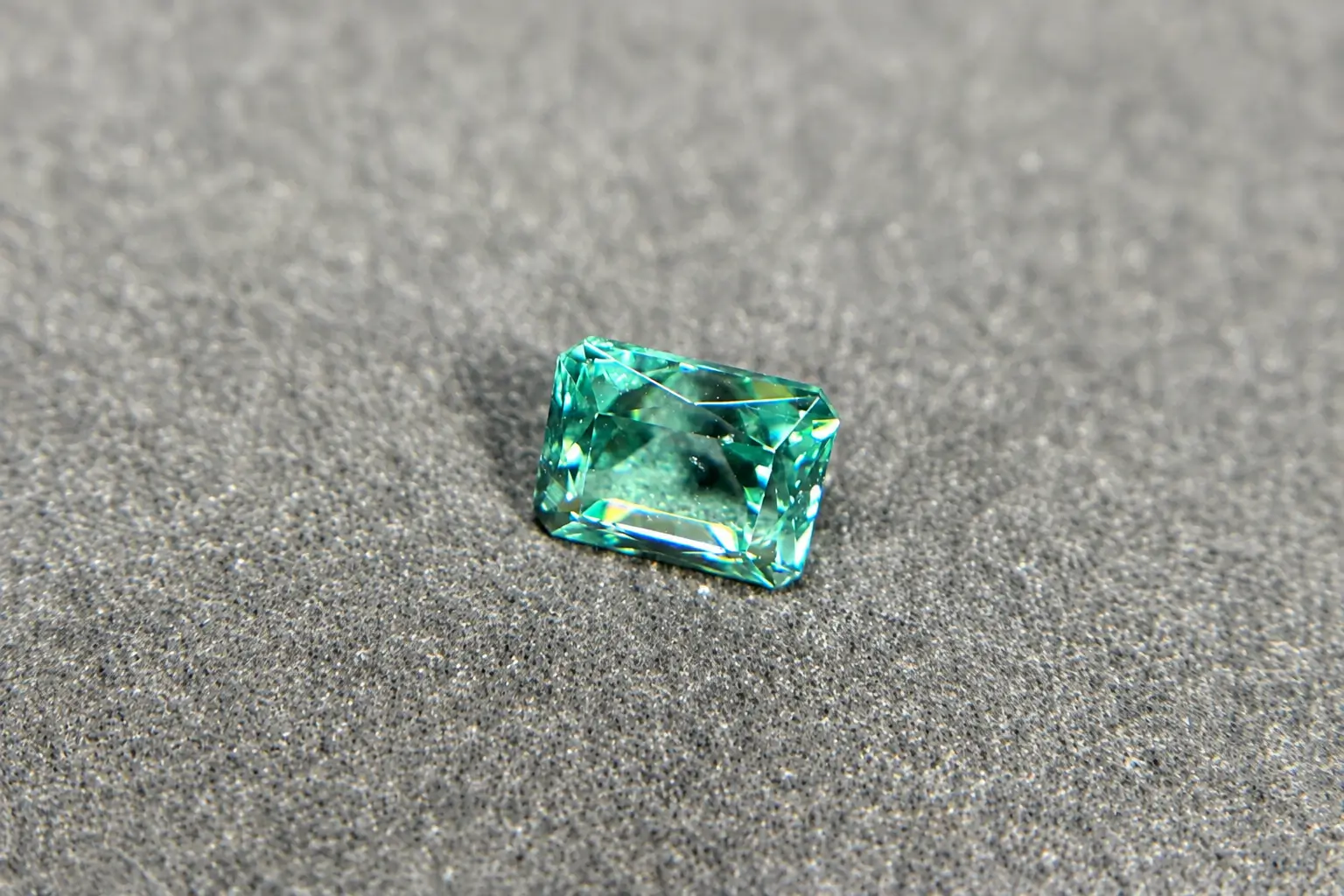
Phosphophyllite is usually colorless, pale blue-green, blue-green, or green. Some highly transparent crystals show a soft aqua-like color, reminiscent of thin ice, shallow seawater, or pale blue-green glass.
Mineralogical studies indicate that Fe²⁺ contributes to its blue-green color. Unlike emerald, which typically shows a richer and more saturated green, phosphophyllite tends to have a much lighter blue-green hue. It also differs from aquamarine, which generally leans more toward blue.
This delicate color, combined with its transparent crystals and vitreous luster, is one of the main reasons phosphophyllite attracts mineral and gemstone collectors
Why Is Phosphophyllite So Rare?
Phosphophyllite is not a common mineral.
It usually occurs as a secondary mineral in complex granite pegmatites. It can also form in association with the alteration of sphalerite and iron-manganese phosphates. These specific formation conditions make high-quality crystals difficult to find.
Specimens with high transparency, attractive color, and well-preserved crystals are especially rare in the mineral collecting market.
The type locality of phosphophyllite is the Hagendorf North Pegmatite in Bavaria, Germany. Today, phosphophyllite from the Potosí region of Bolivia is particularly well known. Some crystals from this area show attractive blue-green color, good transparency, and well-defined crystal forms. These qualities have made them a long-standing focus of mineral collectors.
Is Phosphophyllite Really That Easy to Break?
If the phosphophyllite in Land of the Lustrous makes you think, “How can it break so easily?”, the real mineral has plenty of mineralogical reasons to be so fragile.
Its Mohs hardness is only 3–3.5.
That makes it much softer than common gemstones such as quartz, corundum, and diamond. In everyday surroundings, hard particles such as quartz dust can even leave scratches on its surface.
But low hardness is not the only reason phosphophyllite is so unsuitable for everyday jewelry.
Its perfect cleavage and brittleness matter even more.
Cleavage describes a mineral’s tendency to break or separate along specific crystallographic directions. Phosphophyllite has perfect cleavage along certain crystal planes. When it takes an impact, it may not simply develop a small chip on the surface. Instead, it can break significantly along its cleavage direction.
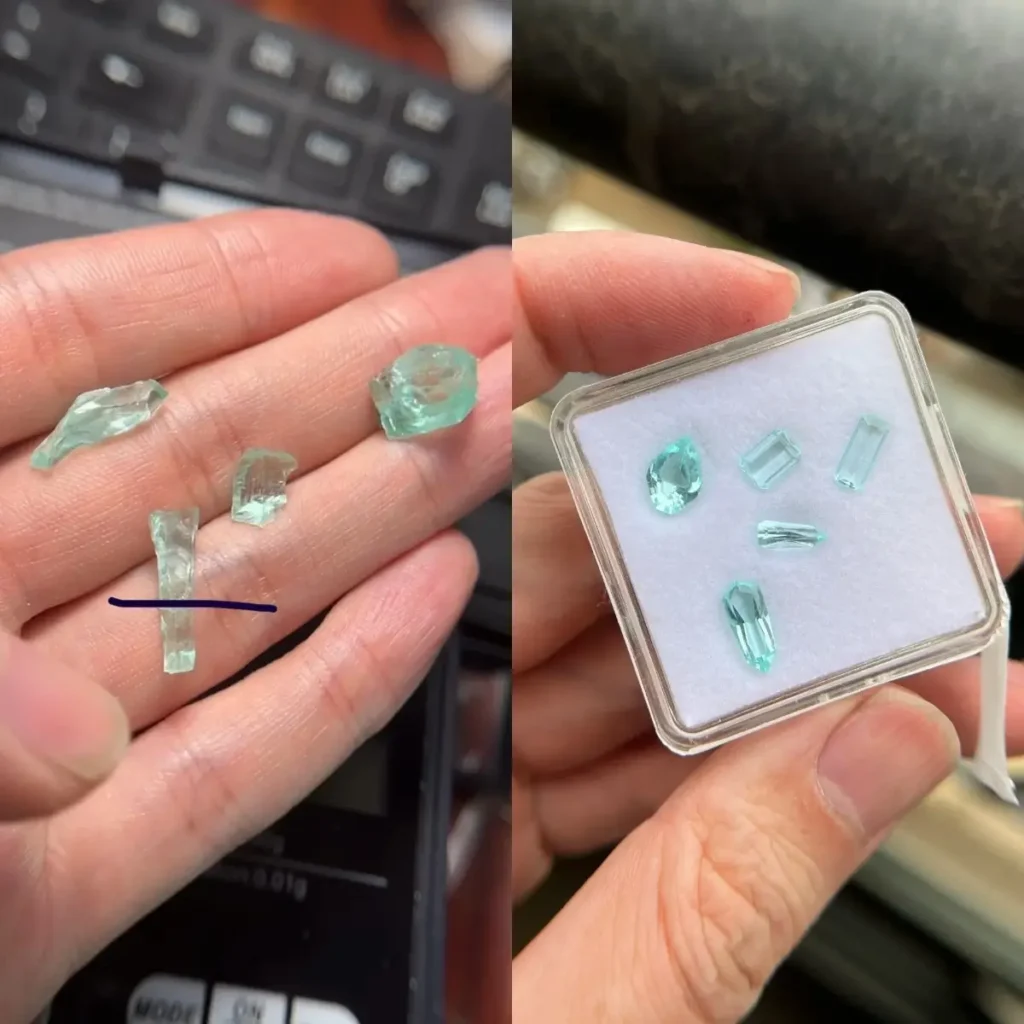
For this reason, although phosphophyllite can be cut into faceted gemstones, faceted examples remain very rare. Collectors more often keep it as a mineral specimen, which requires particularly careful handling and storage.
When we compare it with Land of the Lustrous, we could put it this way:
Real phosphophyllite does not “break apart on its own” like the character in the anime. But it really is a fragile mineral that requires very careful handling.
How Much Is Phosphophyllite Worth?
Phosphophyllite does not have a mature and standardized pricing system like diamond.
Very little of the material is suitable for cutting, and public transaction records are relatively limited.
For example, Bonhams estimated a specimen from Potosí, Bolivia, at US$4,000–5,000 at its 2016 minerals and gemstones auction in Los Angeles.
The mineral has also appeared in special jewelry pieces.
For example, TASAKI created a phosphophyllite necklace as part of its collaboration with Land of the Lustrous. The piece features 18K white gold, a South Sea pearl, and phosphophyllite, and was priced at ¥3,240,000 including tax, or about US$29,000 including tax based on the 2017 exchange rate.
A price like this cannot be explained by the weight of the stone alone. It also reflects the design, craftsmanship, rare materials, and the piece’s cultural connection to Land of the Lustrous.
This shows that phosphophyllite is not simply valued by price per gram. Its value depends on factors such as specimen quality, design, craftsmanship, brand, and cultural significance.
What Are Some Alternatives If You Like Phosphophyllite’s Color?
If you love phosphophyllite’s clear blue-green color but want a gemstone that is more practical to wear, consider these alternatives.
1. Apatite
Apatite is an interesting option.

Some apatite shows beautiful blue-green colors with a vivid neon effect. These colors can look somewhat similar to those of phosphophyllite.
Apatite usually has a Mohs hardness of around 5, which is higher than phosphophyllite. However, it is still relatively easy to scratch and has low toughness. It is therefore better suited to careful wear, away from heavy impacts and prolonged friction.
For more information about apatite, see Apatite: The Affordable Alternative to Paraiba Tourmaline.
2. Topaz
If you mainly want a light blue or blue-green look that works better for everyday wear, topaz is another option worth considering.

Topaz has a Mohs hardness of 8, giving it much better scratch resistance than phosphophyllite and apatite.
However, greater hardness does not mean it cannot break.
Topaz has perfect cleavage, so a strong impact can still cause it to fracture or chip. In other words, topaz is more suitable for everyday wear than phosphophyllite, but you should still protect it from hard knocks.
For more information about topaz, see The Hidden Royalty of Topaz: Why Imperial Topaz is a World-Class Rarity.
Jewea’s Takeaway
Phosphophyllite in Land of the Lustrous is a character full of drama.
Real-world phosphophyllite is a rare mineral that is just as fascinating in its own way.
It does not have diamond’s hardness or corundum’s durability, yet it has a distinctive blue-green color, remarkable transparency, and unique crystal forms.
Perhaps what makes phosphophyllite most fascinating is this contrast:
Beautiful yet fragile; transparent yet rare; capable of being cut as a gemstone, yet not well suited to everyday wear.