The Ultimate Pearl Color Guide: Varieties, Overtones, and How to Spot Dyed Pearls
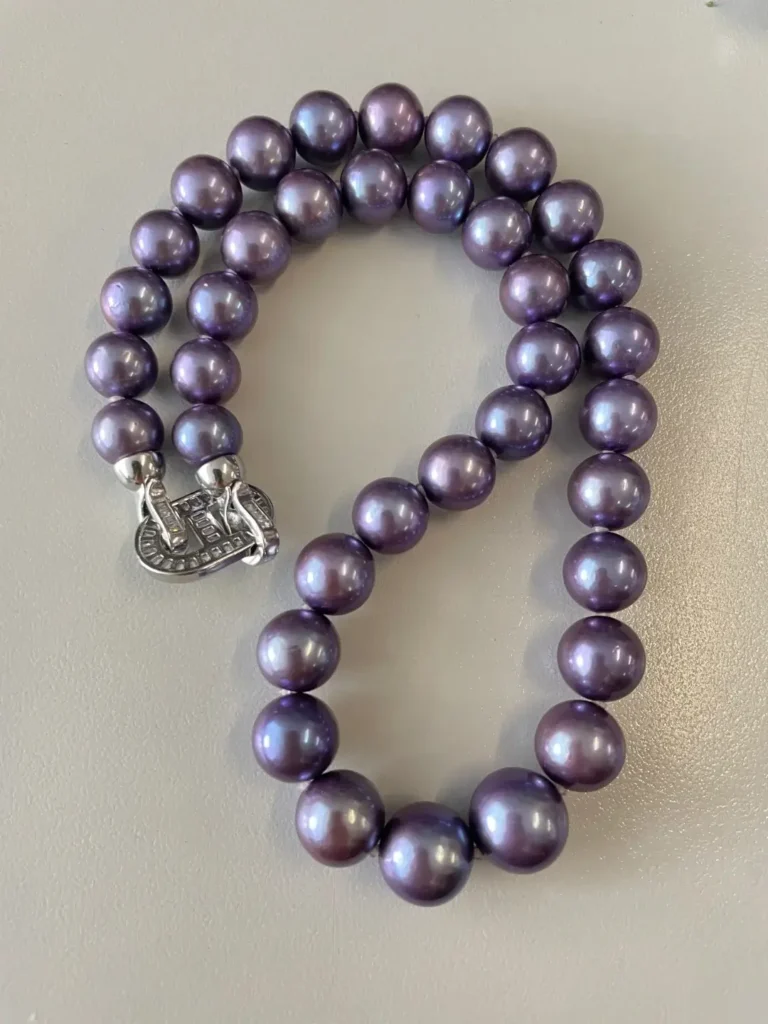
Recently, a long-time client brought a strand of “Natural Edison Pearls” into our studio for a custom redesign. She had purchased them years ago for $300, drawn to their striking “Vibrant Violet” hue. However, upon inspection, we identified a subtle unnaturalness in their color.
While there were slight variations between individual pearls, the overall saturation was suspiciously uniform. These weren’t “fake” pearls in the sense of being plastic or glass; rather, the seller had used dye to achieve a perfectly matched look without disclosing the treatment to the buyer.
In the gemstone world, “treatments” or “optimizations” are perfectly acceptable—provided they follow scientific standards and the seller remains 100% transparent. Unfortunately, the current market is flooded with dyed pearls masquerading as “natural color,” while synthetic imitations continue to fill the gaps.
We previously shared a deep dive into color treatment techniques and how to distinguish them. Today, we are returning to the fundamentals. In this Pearl Color Guide, we’ll explore the breathtaking palette of genuine natural gems and teach you how to “read” color like a professional, ensuring you can shop with confidence and avoid these common market traps.
Table of Contents: Your Natural Pearl Color Guide
- What Actually Determines a Pearl’s “Color”?
- The Natural Pearl Color Guide: Understanding the Spectrum
- Varieties and Color Profiles: Saltwater vs. Freshwater
- How to Spot Dyed Pearls: A 5-Step Pearl Color Guide
What Actually Determines a Pearl’s “Color”?
When evaluating a pearl’s value, color stands out as one of the most critical metrics.
Newcomers to the world of pearls often find themselves puzzled: “My pearl looks white at first glance, but it glows with a rainbow shimmer when I move it. So, what color is it exactly?”
In this Pearl Color Guide, we define what you see as a sophisticated interplay of three distinct layers. To truly “read” a pearl, you must understand how these components stack together:
1. Bodycolor
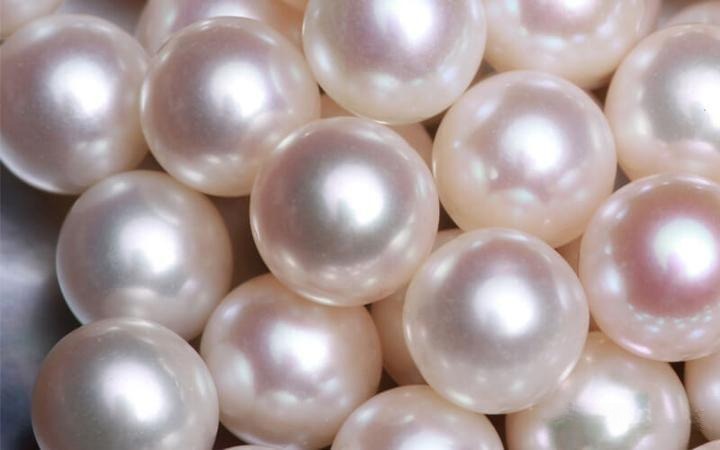
Think of this as the pearl’s base or background color. It is the dominant hue that results from the pearl’s selective absorption of light. This foundational color depends entirely on the organic pigments and trace metallic elements present within the mollusk during the pearl’s growth.
2. Overtone
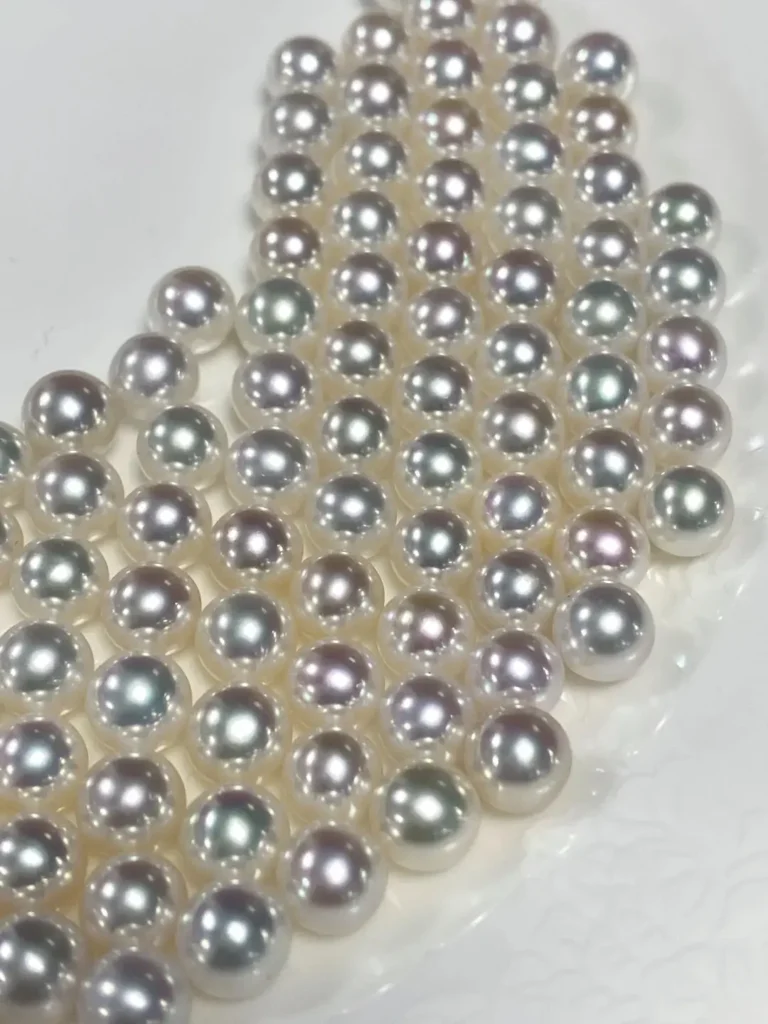
Overtones are the translucent colors that appear to float across the pearl’s surface. In natural pearls, you will most often encounter delicate overtones of rose (pink), silver-white, ivory, or subtle green.
3. Orient (Iridescence)
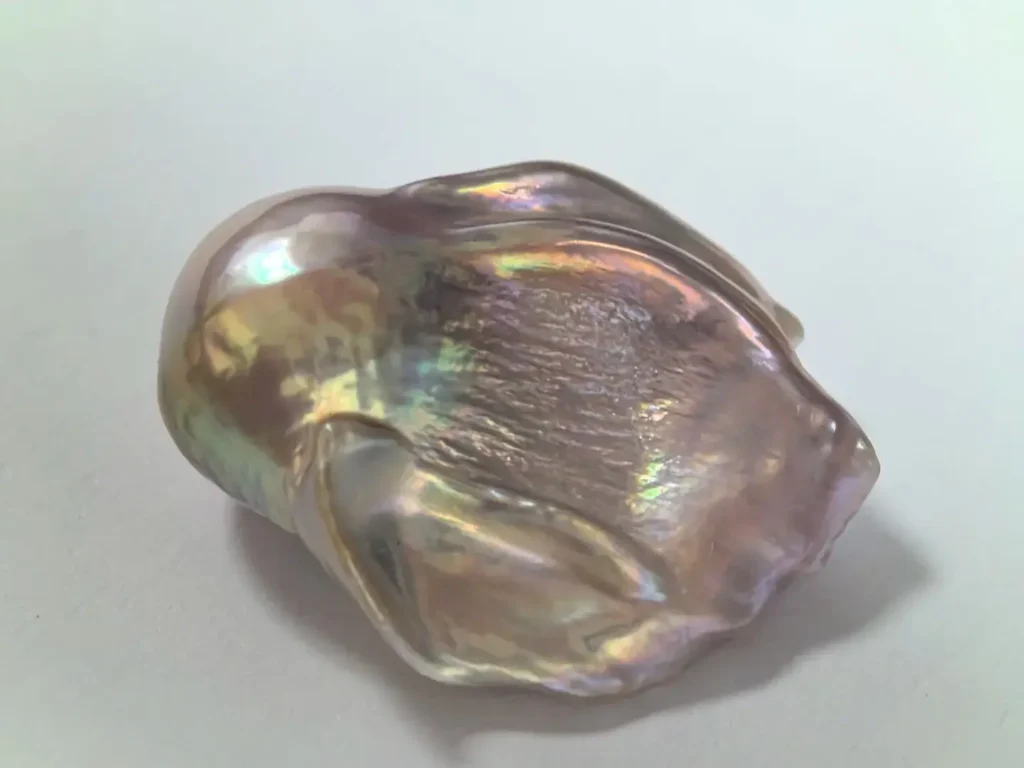
The orient is that mesmerizing, rainbow-like shimmer that dances across or just beneath the surface as you move the pearl. This phenomenon occurs when light reflects and refracts through the microscopic layers of nacre, giving the pearl its “soul” and vitality. We grade the intensity of this orient on a scale ranging from Very Strong and Noticeable to Faint or None.
Expert Insight: When professionally describing a pearl’s color, we always lead with the Bodycolor and then refine the description by noting its Overtone and Orient.
The Natural Pearl Color Guide: Understanding the Spectrum
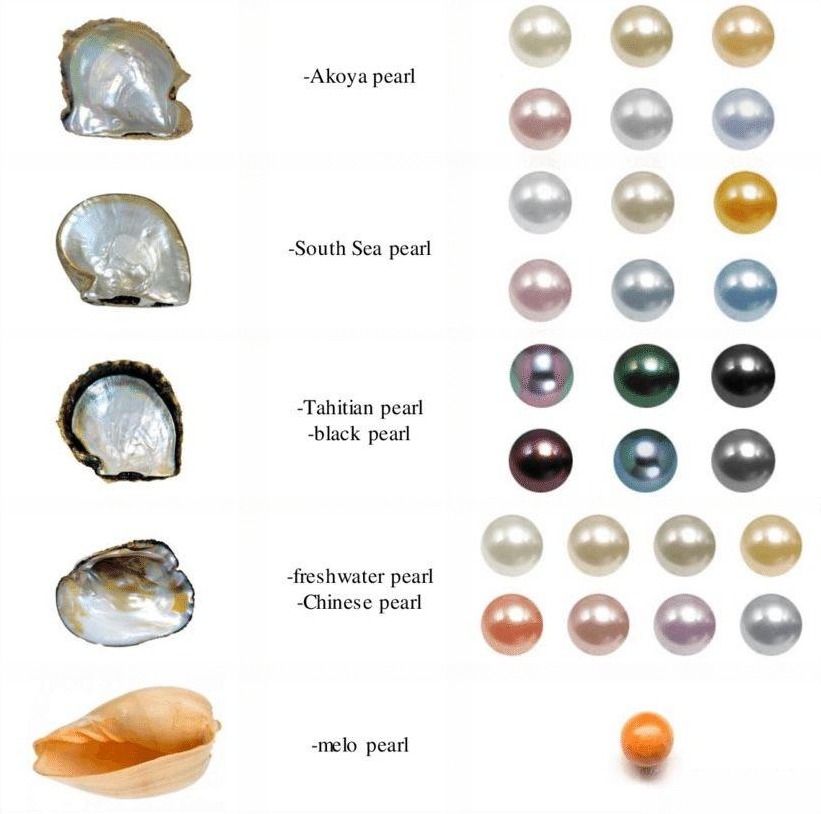
The origin of a pearl’s color is incredibly complex. In the gemological community, two primary theories exist: coloration by organic pigments and coloration by inorganic trace ions. Beyond chemistry, the specific mollusk species, the length of the growth cycle, and the unique water environment all play a profound role in the final hue.
It is common for newcomers to see a pearl with intense saturation and immediately suspect it has been dyed. However, the natural color palette of pearls is surprisingly vast—it is simply that many of these rare, vivid shades are seldom seen in the mainstream market.
According to the classification standards in Systematic Gemology, pearl bodycolors are categorized into five primary series:
- White Series: Pure white, cream, silver-white, and porcelain white.
- Red/Pink Series: Soft pink, pale rose, and light mauve.
- Yellow Series: Champagne (pale yellow), ivory, gold, and vibrant orange-gold.
- Black Series: True black, blue-black, charcoal grey, violet-black, and gunmetal grey.
- Multi-color Series: Rare shades of purple, bronze, teal, copper, and yellowish-green.
Varieties and Color Profiles: Saltwater vs. Freshwater
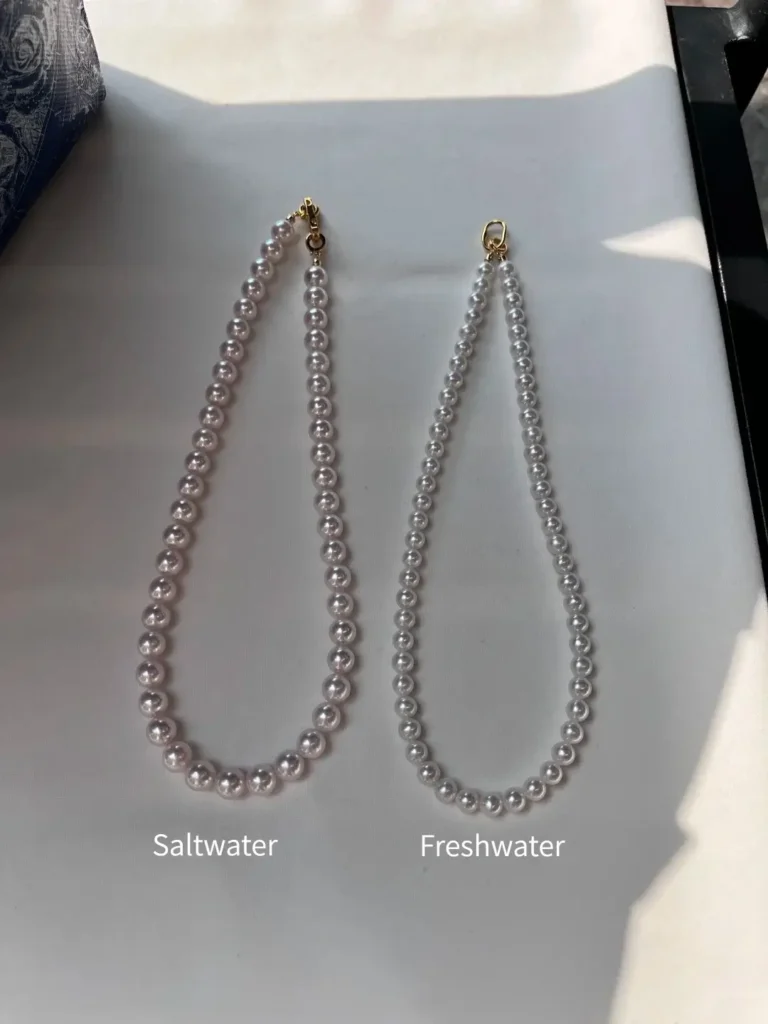
While the world of pearls is incredibly diverse, each variety carries its own unique “color calling card.” Here is a breakdown of what to expect from the most iconic saltwater and freshwater pearls:
Saltwater Pearls: The “Color Signatures”
While saltwater pearls offer incredible diversity, each variety carries a distinct “color signature”—a unique identity tied to its origin that defines its character and market value. To truly master the art of selection, you must understand the deep connection between a pearl’s birthplace and its quality.
📖 Deep Dive: — How to Choose a Top-Quality Pearl: Know Its Origin First
White South Sea Pearls (Australian White)
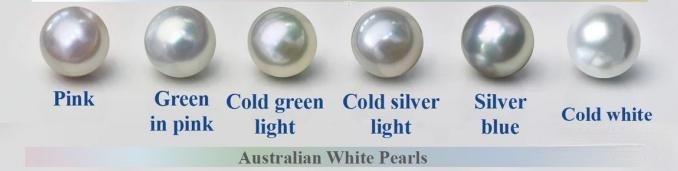
Renowned for their signature “Cool White” skin, Australian South Sea pearls define elegance. Beyond the classic pure white, their spectrum includes crisp blue overtones, soft pink flashes, and the exceptionally rare “Blue Blood”—a prized silver-blue hue.
Tahitian Pearls
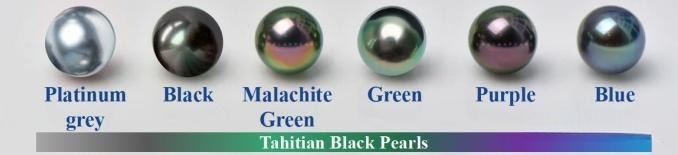
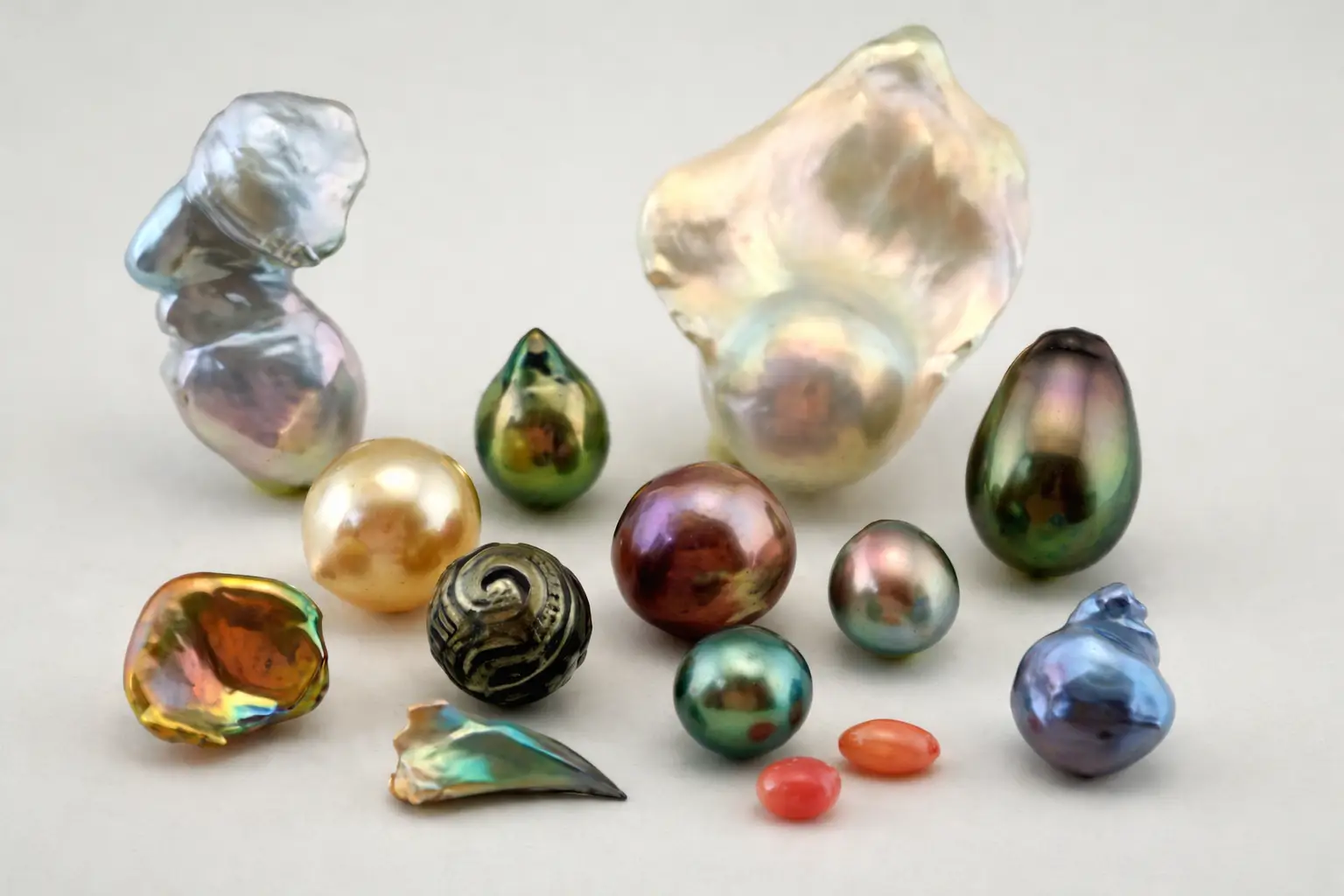
Often celebrated as “the most colorful black in the world,” Tahitian pearls are anything but plain. While their bodycolor is dark, they possess mesmerizing overtones. The most coveted include Peacock Green, Aubergine (purple-green), Peacock Blue, Silver-Grey, and warm Bronze.
Golden South Sea Pearls
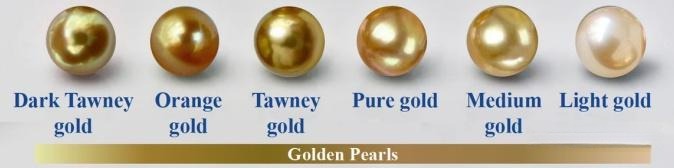
These pearls radiate warmth with a predominantly golden palette. We categorize them by saturation into Rich Gold, Champagne (light gold), and Pale Gold. Within this variety, the “Golden-Green” (gold body with green overtones) and the “Orange-Gold” (vivid sunset hues) are incredibly rare, with minimal annual yields.
Akoya Pearls
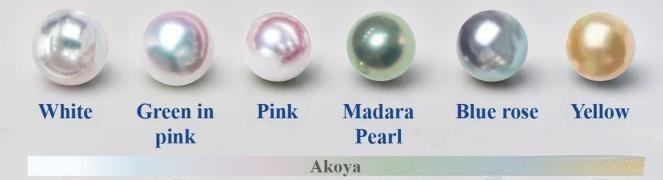
The classic Akoya is primarily white, but it is famous for its intense mirror-like luster and delicate overtones. You will most commonly see them in Pinkish-White and Silvery-Blue. Specific color grades have earned prestigious trade names, such as “Madama” (natural grey-blue) and “Queen” (pale, creamy yellow).
The Spectrum of Freshwater Varieties
Many newcomers to the pearl world hold a common misconception: that freshwater pearls are naturally less vibrant or valuable than their saltwater counterparts. In reality, top-tier freshwater pearls often serve as the perfect “affordable luxury” alternative to saltwater varieties, with some specimens boasting a luster and iridescent shimmer that actually outshine their saltwater cousins.
Edison Pearls
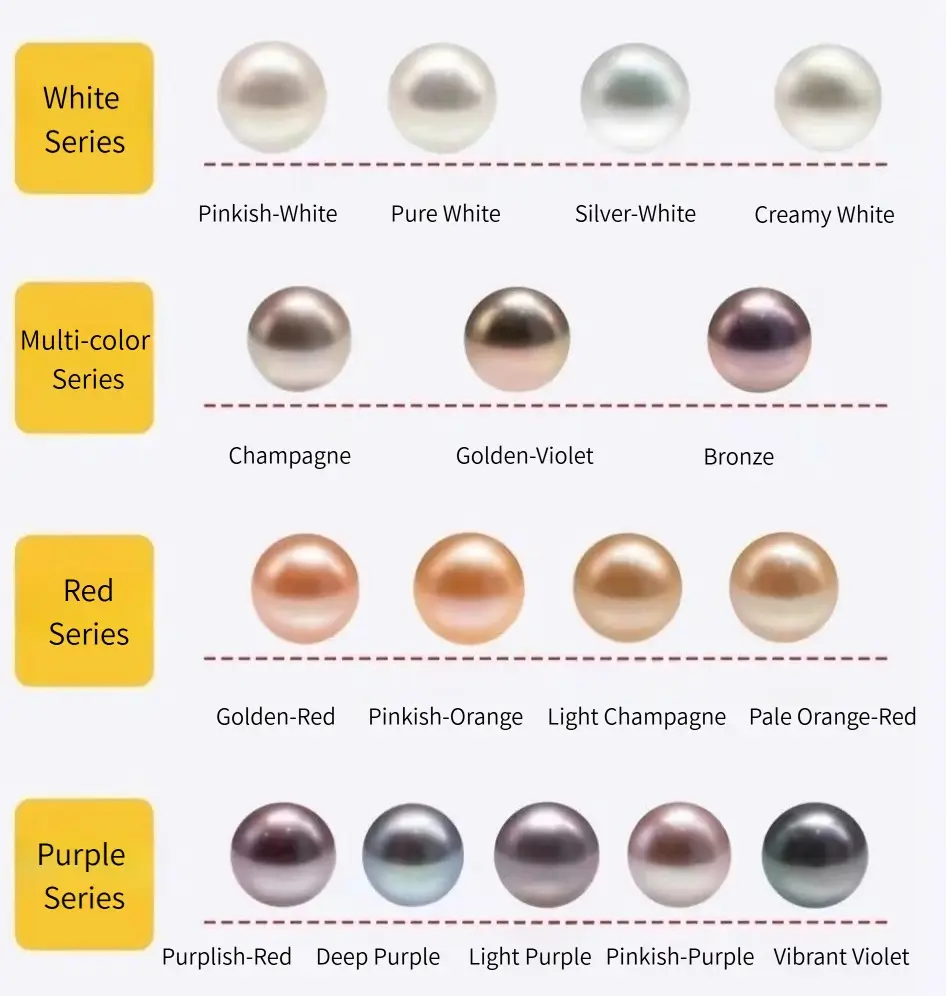
As the standout stars of modern freshwater cultivation, Edison pearls offer an astonishingly broad spectrum of colors. Beyond the classic whites, pinks, and oranges, they produce show-stopping shades like “Vibrant Violet” (the exact color of the strand from our client’s story) and deep “Blueberry.” You will also find a range of high-luster “Fancy” tones that are prized for their intense individuality. These rare finds include metallic-sheen Avocado, rich Bronze, and deep Copper—colors with such a mirror-like finish they are often mistaken for premium saltwater pearls.
Traditional Freshwater Pearls
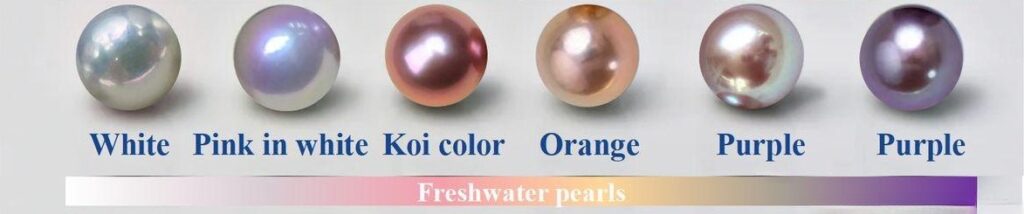
Standard freshwater pearls cover a palette of white, pink, peach, and lavender, as well as the deep, saturated “China Red” (a vivid reddish-orange). Don’t let their “freshwater” label fool you—top-tier specimens possess a surface luster and iridescent glow that easily rival their saltwater counterparts.
How to Spot Dyed Pearls: A 5-Step Pearl Color Guide
While pearls are breathtakingly beautiful, the market is unfortunately flooded with dyed enhancements. Many collectors worry about overpaying for a treated pearl marketed as “natural color.” To help you navigate these risks, we’ve developed this 5-step Pearl Color Guide to assist with your everyday identification and ensure you’re investing in true natural treasures.
Step 1: Inspect the Color—Spotting the “Unnatural” at First Glance
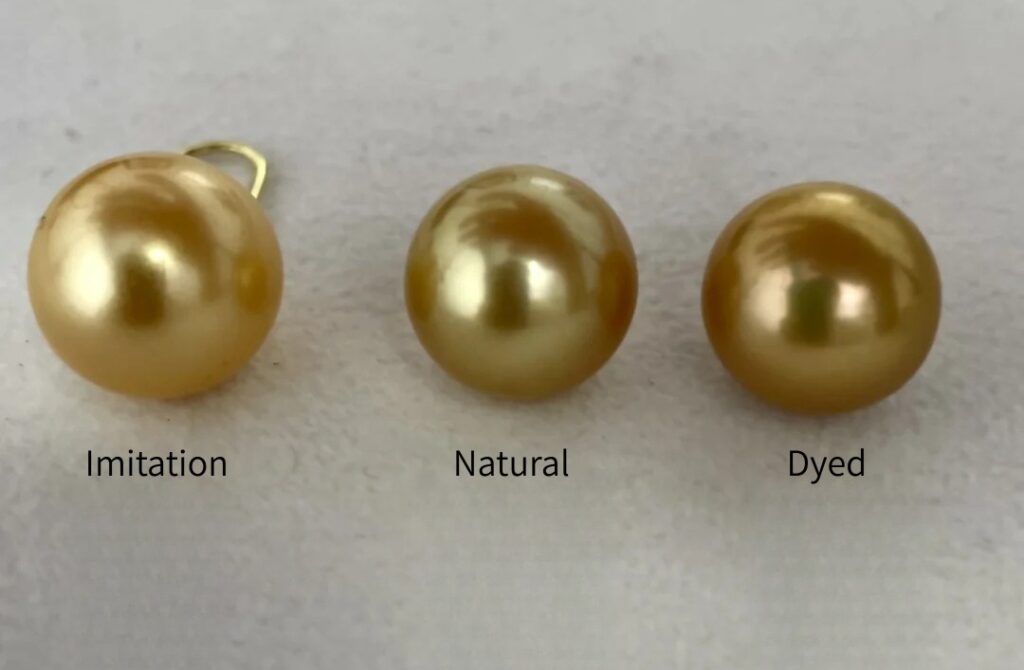
Natural pearls possess a subtle, organic color gradient—think of the warm, sun-kissed glow of a Golden South Sea or the mysterious, shifting depths of a Tahitian black. In contrast, dyed pearls often scream with artificial intensity. If a pearl looks neon-green or an eye-searingly saturated red, it’s a major red flag. Most importantly, dyed pearls usually lack “Overtone”—that essential layer of color that gives natural pearls their three-dimensional depth.
💡 A Real-World Example: Take the “Vibrant Violet” pearls I mentioned earlier. Even though the individual pearls showed slight variations, the overall saturation was clinically uniform and unnaturally dense. That lack of organic “breathing room” in the color is exactly what triggered our suspicion.
⚠️ Pro Warning: Be extra cautious with Gold pearls. Light-colored freshwater or pale South Sea pearls dyed to look like “Deep Gold” are the most common offenders. Because these dyes mimic natural tones so closely, they are often the hardest to distinguish for the untrained eye.
Step 2: Examine the Luster and Surface Texture
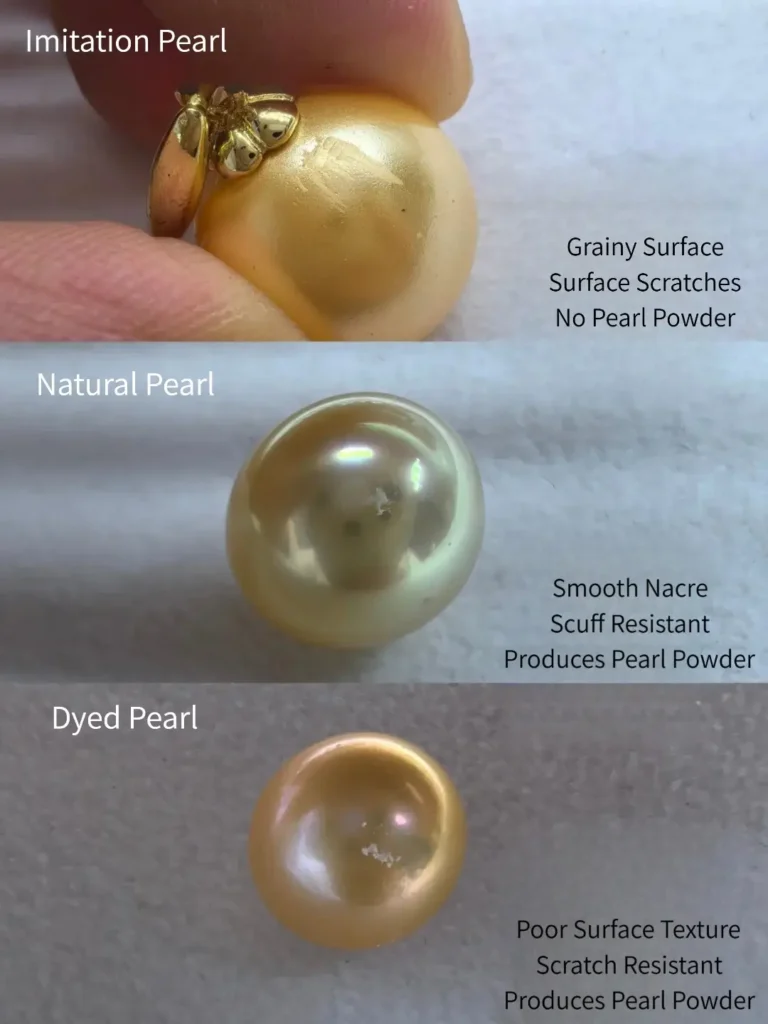
A natural pearl’s surface is a marvel of nature—it feels exceptionally smooth and refined, much like a luxurious satiny silk. If you gently rub two natural pearls together, a tiny amount of fine pearl powder will appear. Once you wipe it away with your finger, the surface remains flawless and unmarked.
While dyed pearls might also produce powder, you will often notice a loss of surface smoothness due to the chemical treatment. Imitation pearls (glass or plastic), however, are the easiest to catch: they often have a gritty, grainy texture. If you rub them, the “skin” will scratch or peel away, revealing the unsightly base material underneath.
💡 Pro Tip: When testing for powder, simply rub two pearls against each other with very light pressure. Do not use force—you want to identify the pearl, not damage a genuine treasure!
Step 3: Inspect Drill Holes and Flaws for Pigment Buildup
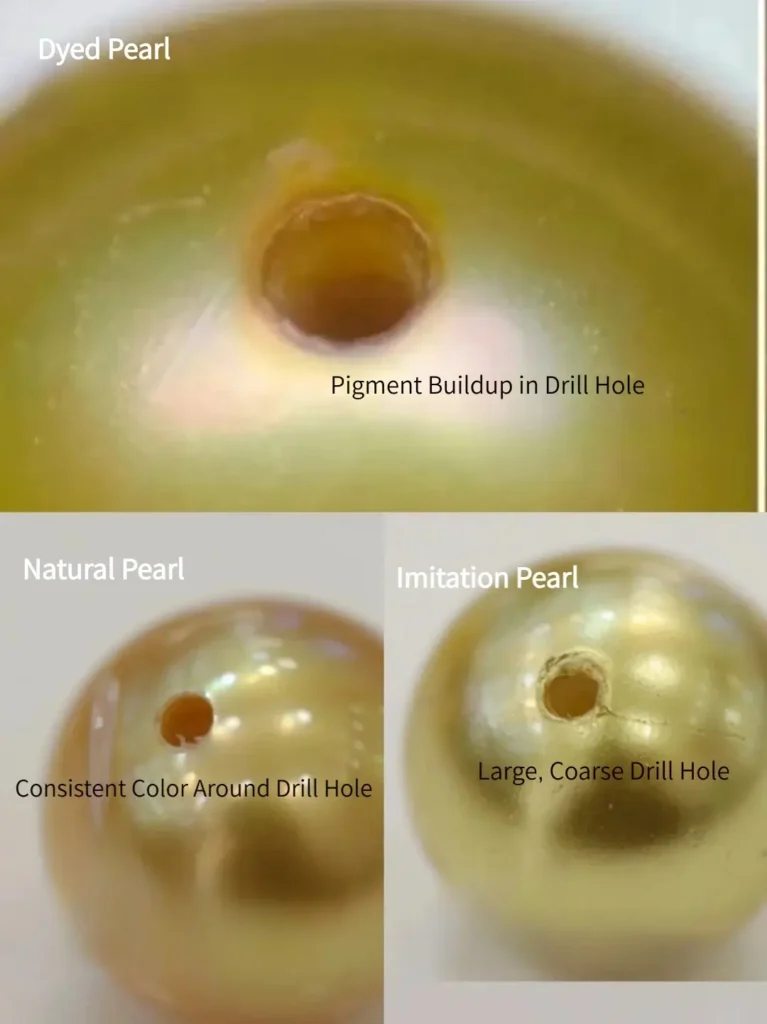
Nature is seamless. In a natural pearl, the color remains consistent and fluid even around the drill holes and natural surface characteristics (flaws). However, dyed pearls almost always leave a “paper trail.” Because dye tends to settle in crevices, you will often find pigment concentrations in these areas, making the drill holes and imperfections look “dirty” or unevenly dark. In contrast, imitation pearls usually have noticeably rough, oversized drill holes with jagged edges.
💡 The Magnifier Test: Use a jeweler’s loupe or a magnifying glass to inspect the drill holes. In a natural pearl, the color inside the hole matches the surface perfectly. In a dyed pearl, the color around the rim and inside the hole will appear significantly darker and “clumpy”—a dead giveaway of artificial treatment!
Step 4: Use Backlighting to Reveal Internal Spotting
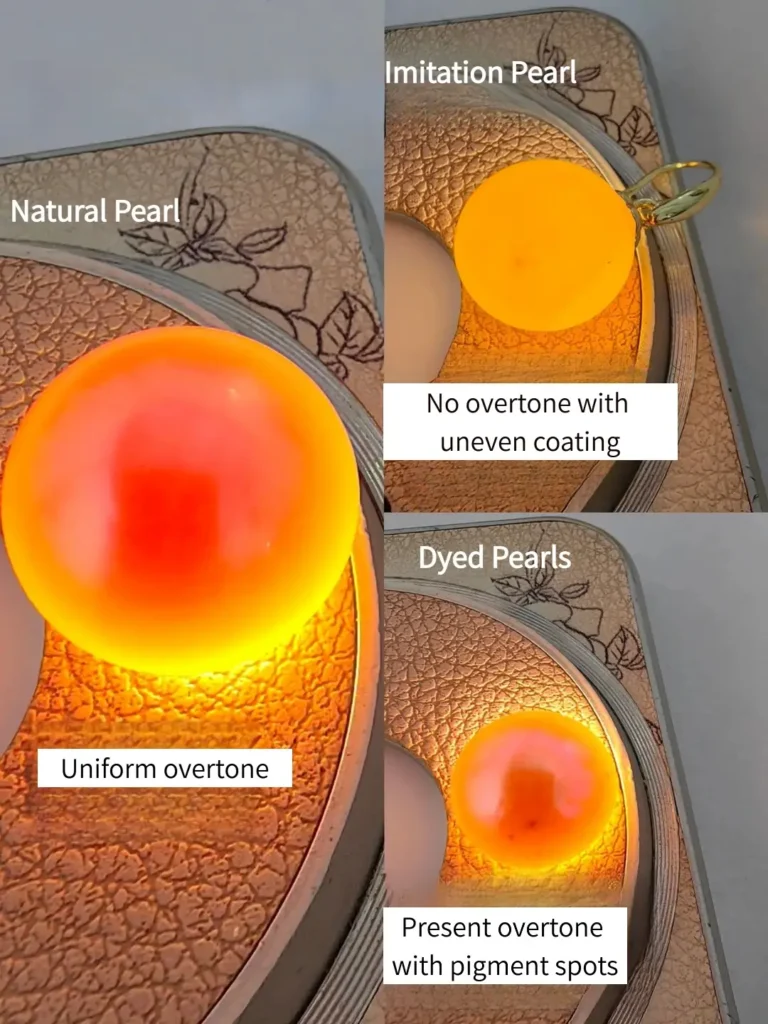
This is where artificial pigments have nowhere to hide. By using a powerful flashlight to backlight the pearl, you can inspect its internal optical density. A natural pearl will show a consistent, harmonious glow with a soft, diffused halo.
In contrast, when you light up a dyed pearl, you will often see dark, granular spotting—these are the telltale traces of pigment clusters trapped within the nacre. Imitation pearls are even easier to dismiss; they lack a natural halo entirely and often reveal an uneven, blotchy coating that looks like sprayed-on paint.
💡 The Visual Difference: Under backlighting, a dyed pearl’s color appears “mottled” or “speckled,” like a series of tiny dots. A natural pearl, however, displays a seamless, ethereal gradient. Once you see the two side-by-side, the difference is undeniable!
Step 5: Inspect the Internal Nacre Layers
If you were to cross-section a natural pearl, you would find that the nacre (the pearl material) is consistent in color throughout every single layer, all the way to the core. In a dyed pearl, the “magic” is only skin-deep; the color typically only penetrates the outermost layers, leaving the interior original and pale. Imitation pearls, of course, have no nacre at all—they consist of a solid bead (glass or plastic) hidden under a thin, fragile coating.
💡 A Word of Caution: This is a destructive test! Only cut into a pearl if you are prepared to sacrifice the piece for the sake of science.
Final Pro Tip: Let Science Have the Last Word
If you’ve tried these steps and still feel uncertain, don’t leave it to guesswork. The most foolproof way to protect yourself is through professional laboratory testing. Leading gemological institutions use advanced tools like Infrared (FTIR) and Raman Spectroscopy to perform a “forensic analysis” of the pearl. These instruments can detect artificial pigments with 100% accuracy, giving you absolute peace of mind.
Jewea’s Final Insight: The Soul of a Natural Gem
We hope this Pearl Color Guide empowers you to see beyond the surface. While pearl enhancements evolve, they can never replicate the breathtaking beauty nature bestows upon a genuine pearl.
Developing a “keen eye” for high-quality jewelry requires more than just technical knowledge; it requires choosing a jeweler who values transparency and integrity above all else. At Jewea, we believe that true beauty shouldn’t be a mystery.
Our most sincere advice is this: when in doubt, let science speak. The most reliable appraisal will always come from a certified professional laboratory. In an industry full of imitations, forensic testing remains the ultimate way to protect your investment and ensure that the piece you bring home is as authentic as the story it tells.