Is Your Red Coral Real? Unmasking 10 Common Red Coral Imitations
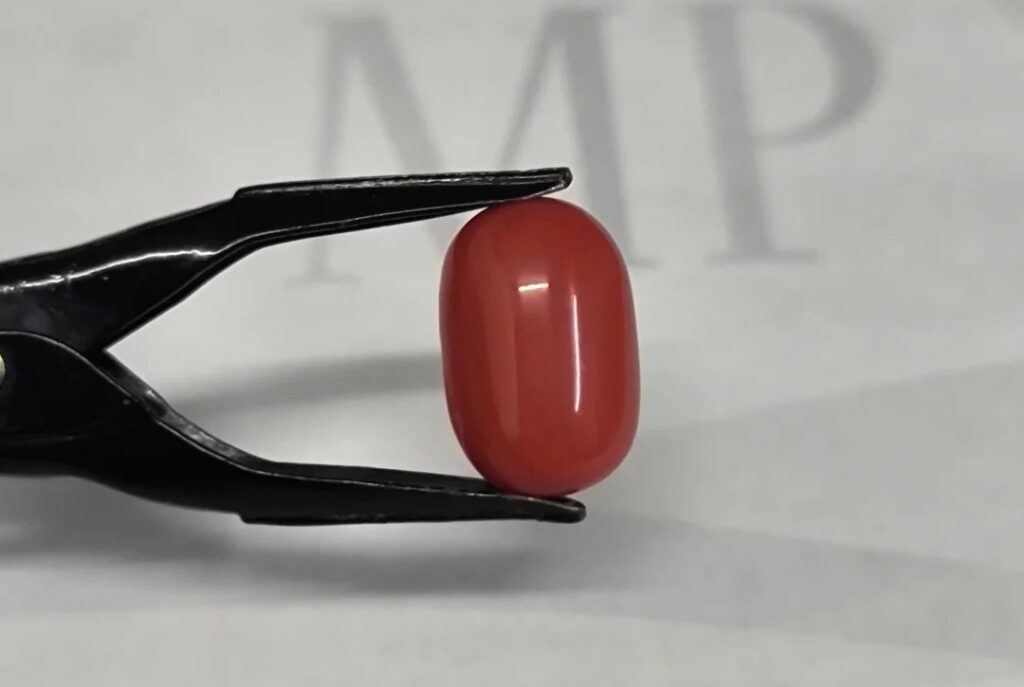
During a recent private jewelry consultation, a client presented a “red coral” she had acquired years ago, hoping to commission a bespoke platinum ring. At first glance, the specimen was vibrant and striking. However, a preliminary inspection quickly revealed the truth: this wasn’t a treasure from the deep sea, but a skillfully polished piece of red glass. These common red coral imitations are becoming increasingly prevalent, often catching even seasoned collectors off guard.
Since antiquity, red coral has reigned as one of the most coveted organic gemstones, prized for its breathtaking hues and unique skeletal forms. Yet, because true deep-sea coral is an incredibly finite resource—and one that has faced historical over-exploitation—its natural growth cannot keep pace with global demand. Consequently, market prices for high-quality specimens have soared, remaining firmly at the premium end of the spectrum.
Where there is high profit, there is “opportunity” for deception. Unscrupulous traders have become masters of mimicry, flooding the market with common red coral imitations. From basic plastics and glass to sophisticated dyed bone and synthetic composites, modern forgery techniques are becoming so advanced that they can deceive even an experienced eye.
Using that “red glass” anecdote as a cautionary tale, we are diving deep into a comprehensive review of the 10 most frequent imitators found in the market today. We’ll also share professional tips on how to spot the fakes, helping you develop the “trained eye” necessary for any serious collector.
Table of Contents: Common Red Coral Imitations
- “A Thousand Years for Coral, Ten Thousand for Red”
- Identifying Common Red Coral Imitations: A Collector’s Guide
- Category 1: Natural Organic Simulants for Identifying Precious Coral
- Impostor #1: Dyed Bone Artifacts
- Impostor #2: Dyed Marble Imitations
- Impostor #3 & #4: Shell-Based Simulants & Queen Conch
- Impostor #5: Conch Pearls (The Rare Look-Alike)
- Impostor #6: Dyed Bamboo Coral (Sea Bamboo)
- Category 2: Synthetic and Manufactured Materials in the Coral Market
- Impostor #7: Glass (The “Liuli” Legacy)
- Impostor #8: Plastic Imitations (Low-End Coral Substitutes)
- Impostor #9: Gilson Coral (Synthetic Composite)
- Impostor #10: Reconstituted Coral (Pressed Coral Scraps)
- Category 1: Natural Organic Simulants for Identifying Precious Coral
- Conclusion: Mastering the Identification of Gem-Grade Precious Coral
“A Thousand Years for Coral, Ten Thousand for Red”
Across cultures and centuries, red coral has held a fascination that few other gemstones can match. In the West, it carries an ancient tradition as a protective talisman, believed to shield the wearer from misfortune. In the East, particularly within Chinese history, red coral has served as a prestigious hallmark of rank and status for the nobility. Its spiritual significance is equally profound, being revered as one of the “Seven Treasures” in Buddhist tradition.
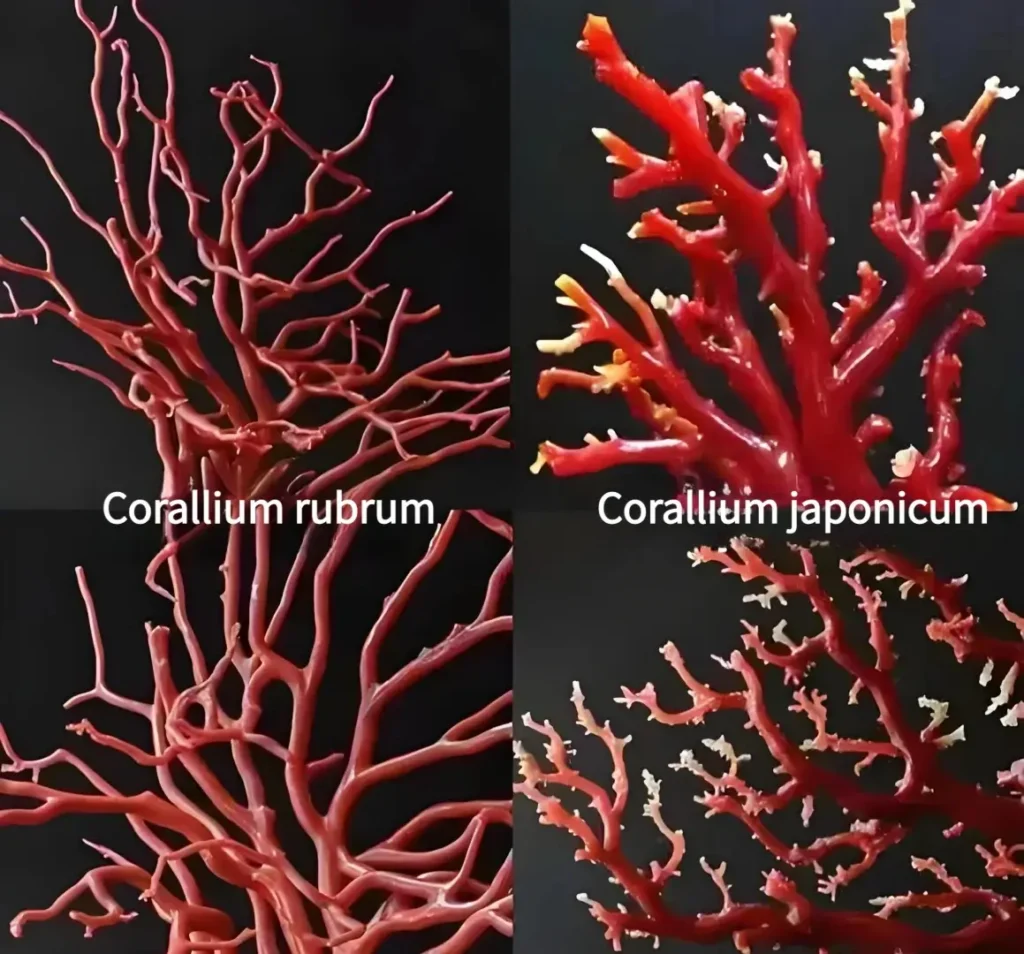
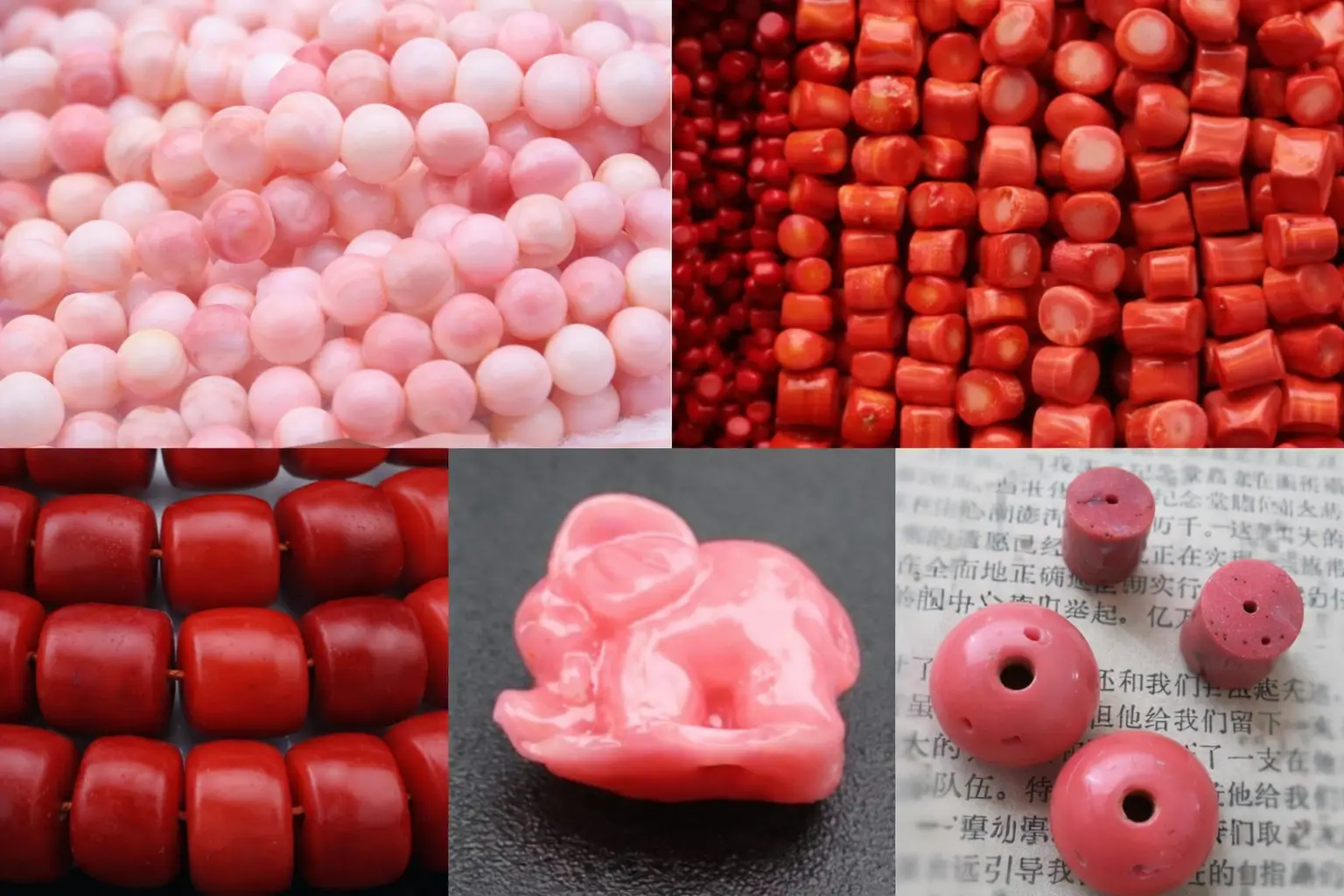
A common misconception is that coral is a type of marine plant. In reality, precious red coral is the calcified exoskeleton secreted by colonies of tiny marine organisms known as coral polyps. While the ocean is home to a vast array of coral species, only a tiny fraction qualifies as “gem-grade.” In the professional trade, the market exclusively recognizes the high-quality specimens within the orange-pink-red spectrum as authentic gem-grade precious coral.
The Scientific Profile of Authentic Coral
To distinguish true specimens from common red coral imitations, it helps to understand their biological roots:
- Scientific Classification: Gem-grade red coral belongs to the Phylum Coelenterata, Class Anthozoa (Subclass Octocorallia), Order Alcyonacea, and Family Coralliidae.
- The Rare Genera: Globally, authentic precious coral originates from only two specific genera: Corallium and Pleurocorallium.
In the precious coral trade, the “Big Three”—Aka, Momo, and Sardinia—are more than just names for colors; they define distinct biological species, specific geographic origins, and unique physical characteristics. Learn more: Deciphering the Big Three: The World of Aka Red Coral, Momo, and Sardinia
Identifying Common Red Coral Imitations: A Collector’s Guide
The market for precious coral look-alikes generally falls into two categories: natural organic simulants (such as bone, shell, or low-grade coral) and synthetic materials (such as glass, plastic, or resin). Understanding which category a suspect piece falls into is the first step toward accurate identification.
Category 1: Natural Organic Simulants
This category includes materials like dyed bone, marble, shell, conch pearls, and treated shallow-water coral—all of which mimic the appearance of precious coral through clever processing.
Impostor #1: Dyed Bone Artifacts
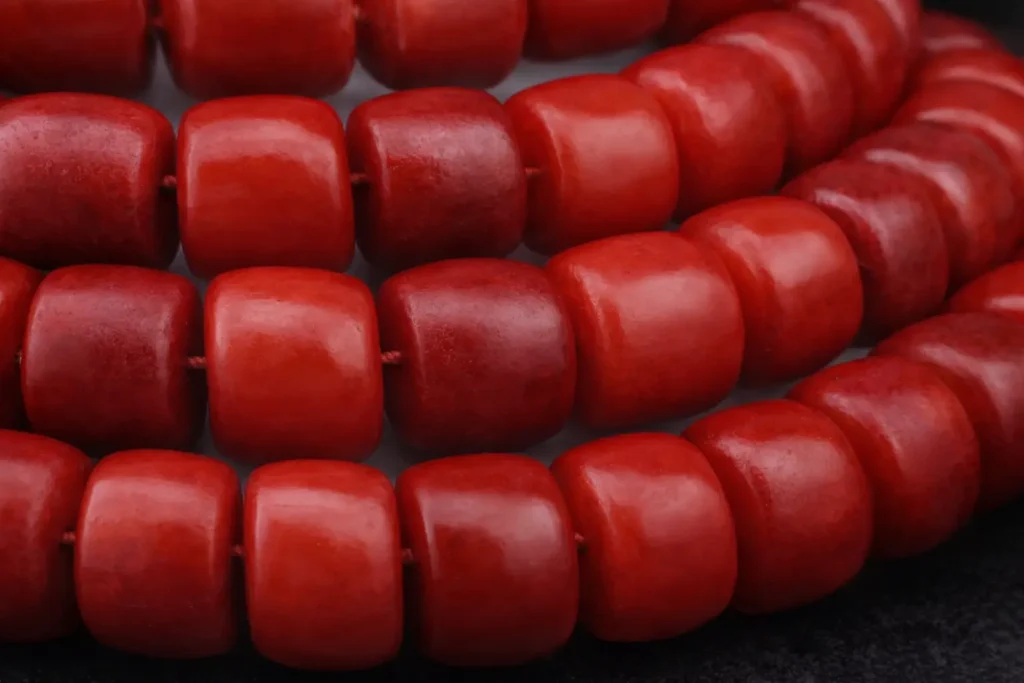
Often crafted from bovine or camel bone, these items are frequently dyed or coated to replicate the rich, deep tones of genuine red coral. Because they share an organic origin, they can easily confuse the untrained eye, but a closer inspection reveals significant discrepancies.
How to Identify Dyed Bone
While a professional gemological appraisal is always recommended, you can perform several preliminary tests at home to distinguish genuine red coral from dyed bone. Here is what to look for:
- Growth Structure: This is the most reliable indicator. Under magnification, genuine coral exhibits a distinct radial or concentric structure in cross-section. Bone, however, reveals a porous, tube-like structure. On the longitudinal plane, look for coral’s continuous, wavy patterns, contrasted against the fragmented, straight lines typical of bone.
- Fracture Texture: Genuine coral is brittle, resulting in a relatively flat, clean break. Bone is fibrous and resilient; when it breaks, the fracture is uneven and jagged, much like a serrated edge.
- Color Distribution: Authentic red coral carries its color naturally throughout, often featuring a uniform hue or a characteristic “white core.” Conversely, dyed bone often displays inconsistent color; it may fade over time, show signs of peeling in coated specimens, or reveal the paler, underlying bone color near the drill holes.
- Drill Hole Details: Examine the drill holes closely. You will often see a concentration of pigment if the piece was dyed after drilling, or conversely, a stark white ring if the material was dyed before the hole was bored.
- The “Tapping” Test: When gently tapped, genuine coral produces a crisp, melodic sound. Bone, by comparison, yields a dull, dampened thud.
- Acid Reaction: A tiny drop of dilute acid will cause genuine coral to effervesce, whereas bone will remain completely inert.
Impostor #2: Dyed Marble
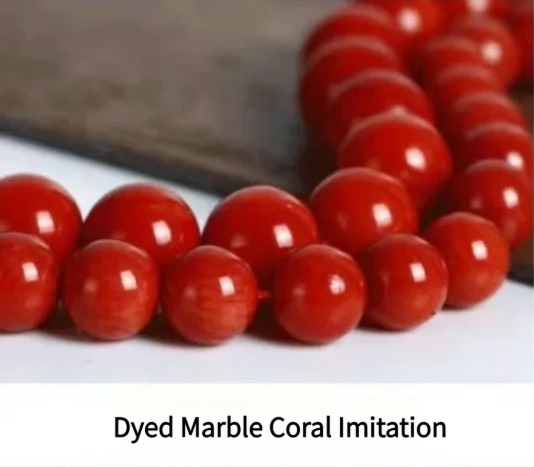
Often presented as a budget-friendly alternative to precious coral, dyed marble—composed primarily of calcite—is frequently marketed as a genuine organic gem. However, it lacks the biological growth structures of authentic coral, revealing a granular, crystalline composition instead.
How to Identify Dyed Marble
When evaluating a suspect piece, look for the following tell-tale signs that distinguish dyed marble from common red coral imitations:
- Color Distribution: In natural coral, color is typically integrated into the skeletal structure. In contrast, dyed marble often displays color concentrations along grain boundaries, as the dye settles into the spaces between calcite crystals, effectively “outlining” the granular structure.
- The Acetone Wipe Test: This is one of the quickest field tests. Dip a cotton swab in acetone and gently rub an inconspicuous area of the piece. If it is dyed marble, the pigment will easily transfer to the swab, staining it red.
- Acid Sensitivity: When a tiny drop of dilute acid is applied to the surface, dyed marble will react and potentially turn the surrounding solution red as the dye leaches out. Conversely, when genuine red coral is tested with dilute acid, the reaction remains clear or white.
- Growth Structure: Under magnification, dyed marble lacks the continuous, organic growth patterns (such as radial or wavy lines) of coral. Instead, you will see a distinct, coarse, granular texture.
- Crystalline Reflections: Using a jeweler’s loupe, look closely at the surface. Marble is a crystalline rock; you will often spot the characteristic flashes of light reflecting off the cleavage planes of the calcite crystals—a feature never seen in organic, non-crystalline coral.
Impostor #3 & #4: Shell-Based Simulants (Dyed Shell vs. Queen Conch)
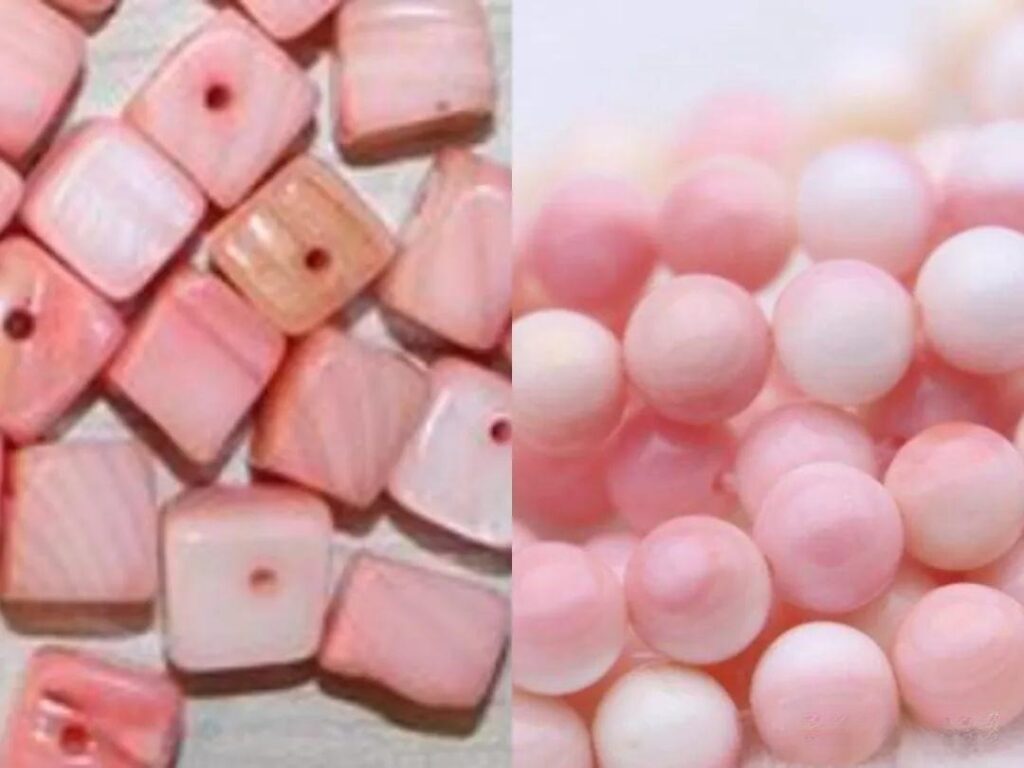
Shells often mimic the delicate pink or red tones of precious coral. In the trade, we categorize these into two distinct types: shells that have been chemically dyed to replicate coral’s color, and the naturally occurring Queen Conch (Queen Shell), which possesses a physical appearance remarkably similar to certain coral varieties.
Identifying Dyed Shell Imitations
Market traders frequently use dyed shell to replicate high-value pink coral. While they may deceive the eye from a distance, microscopic analysis reveals their true nature:
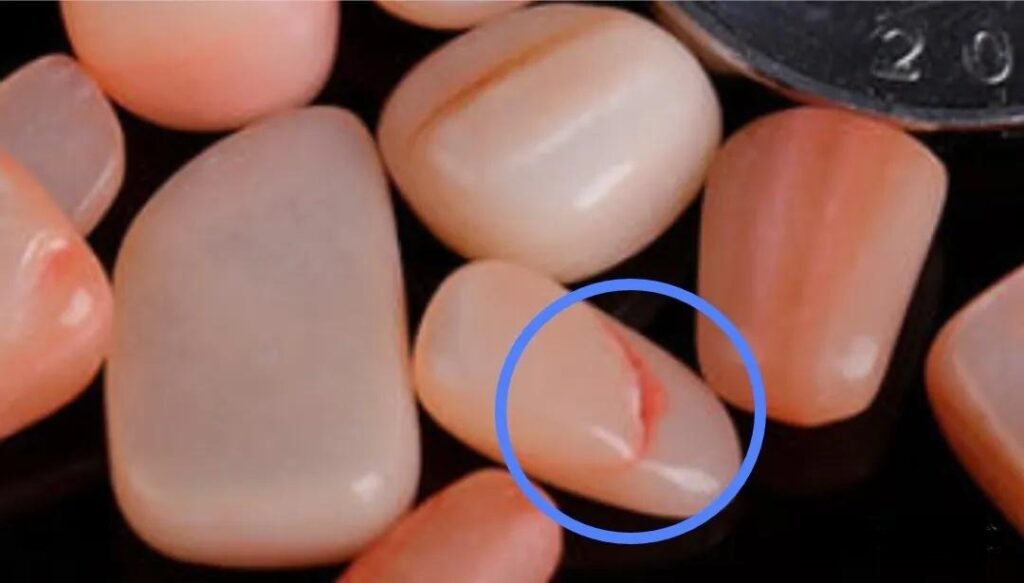
- Layered Structure: Unlike the porous, organic skeletal structure of coral, shells are built in layers. When dyed, the pigments tend to accumulate within these thin layers, creating a visible “banding” of color that looks unnatural under magnification.
- Characteristic Growth Patterns: Genuine coral exhibits distinct growth markers—radial lines in cross-section and continuous wavy, flowing patterns on the longitudinal plane. Shells lack these features entirely.
- Luster Variation: Pay close attention to the surface sheen. A shell typically displays a characteristic pearly or iridescent luster, whereas genuine coral possesses a distinct waxy or sub-vitreous luster.
Identifying the Queen Conch
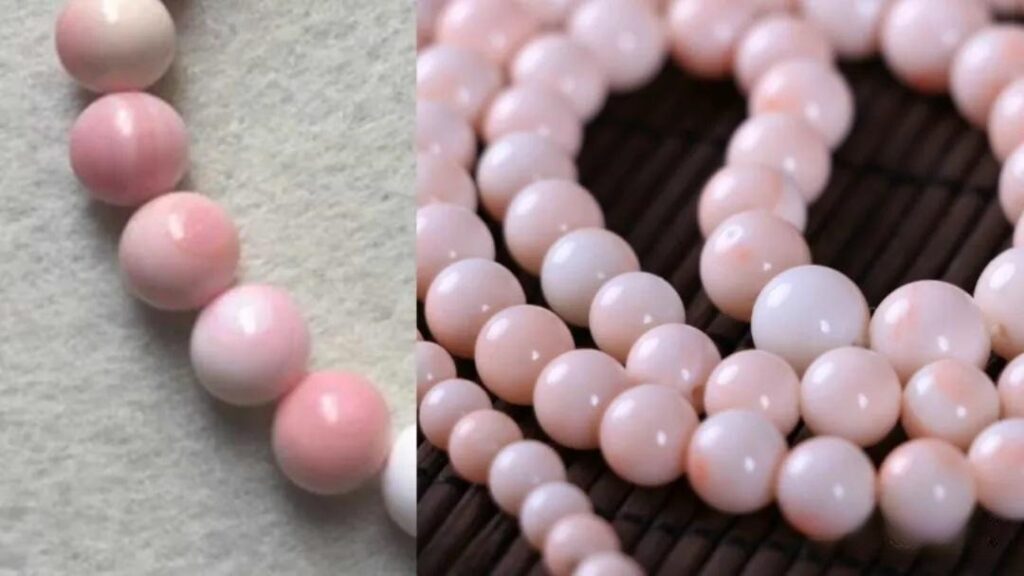
The Queen Conch (often referred to in the trade as “Queen Shell”) is a natural material that frequently “coincides” with the appearance of high-quality MOMO coral. Because it is a natural product, it can be particularly difficult for collectors to distinguish.
- Internal Structure: The definitive way to separate the two is by examining the growth structure. If you look at a polished section of Queen Conch, you will observe a dense, stacked, layer-upon-layer (laminar) structure.
- Growth Texture: As mentioned previously, genuine coral displays signature growth textures—radiating from the center in a cross-section or undulating in waves along the vertical axis. If you see flat, plate-like layers rather than these flowing, organic patterns, you are likely holding a piece of Queen Conch rather than authentic red coral.
Impostor #5: Conch Pearls (The Rare Look-Alike)
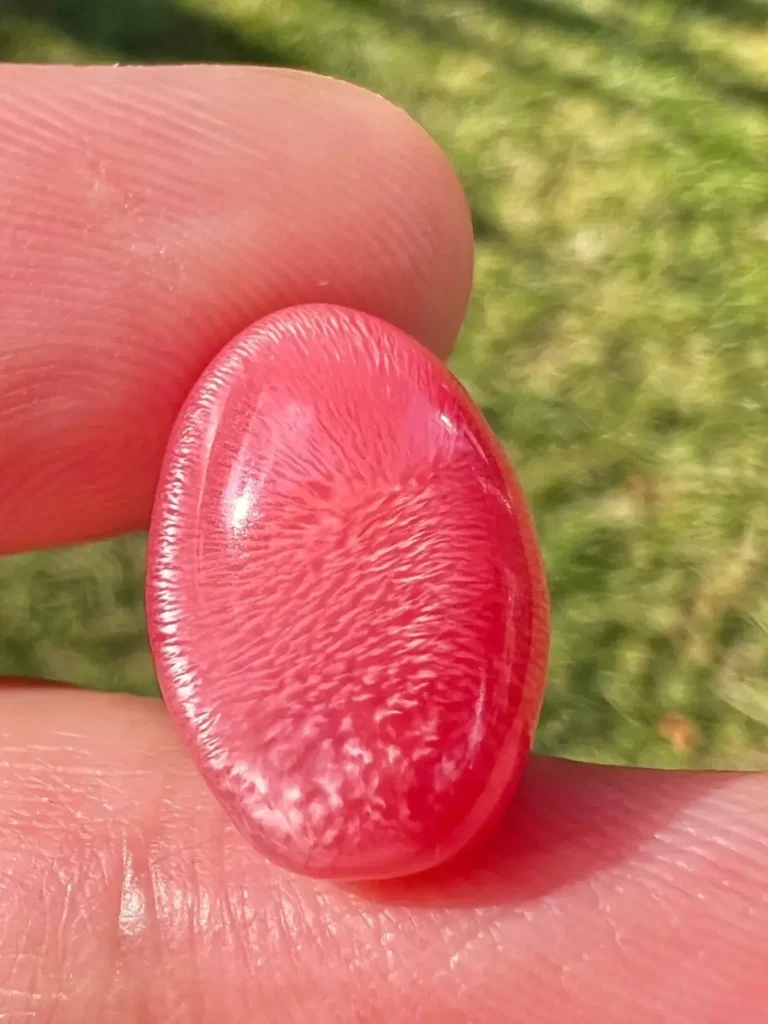
Derived from the Queen Conch (Strombus gigas), the Conch Pearl ranks among the world’s rarest treasures. These gems form only in the wild; collectors cannot farm or culture them. While they share a color palette with pink coral, they rarely serve as a deliberate “fake.” Because they hold immense market value, jewelers do not typically use them to imitate coral. However, confusing a high-value Conch Pearl with pink coral remains a common mistake for novice collectors.
How to Identify Conch Pearls
If you suspect you have a Conch Pearl rather than precious coral, check for these distinct features:
- The Signature “Flame” Pattern: This is the most diagnostic feature. While pink coral displays a consistent growth texture, a Conch Pearl reveals a unique, shimmering “flame structure” beneath its lustrous surface. Under magnification, this pattern appears as a series of interlocking, undulating waves of light that seem to dance as you move the stone.
- Density and Weight: Conch Pearls are significantly denser than coral. They have a specific gravity of approximately 2.85 g/cm³, making them feel noticeably heavier in the hand than a piece of pink coral of the same size.
- Surface Morphology: Conch Pearls typically form in small, irregular, or oval shapes. If the piece displays a perfect, uniform geometric shape, it is almost certainly a processed material rather than a natural Conch Pearl.
- The “Carat” Premium: Perhaps the most practical indicator is the price tag. Conch Pearls are among the few gems traded by the carat, with prices that frequently eclipse even the finest pink coral. If a seller is offering an “affordable” Conch Pearl, proceed with extreme caution—it is likely an imitation.
Impostor #6: Dyed Bamboo Coral (Sea Bamboo)
Bamboo coral, known in the trade as “sea bamboo,” grows in shallow waters. As a marine invertebrate belonging to the Isididae family, it earns its name from its bamboo-like, jointed appearance. In its natural state, sea bamboo appears yellowish-white. Unscrupulous sellers often dye these fast-growing corals a deep or vibrant red to pass them off as gem-grade red coral. Because sea bamboo grows rapidly, it remains common and affordable, though its coarse texture usually betrays its identity.
How to Identify Dyed Bamboo Coral
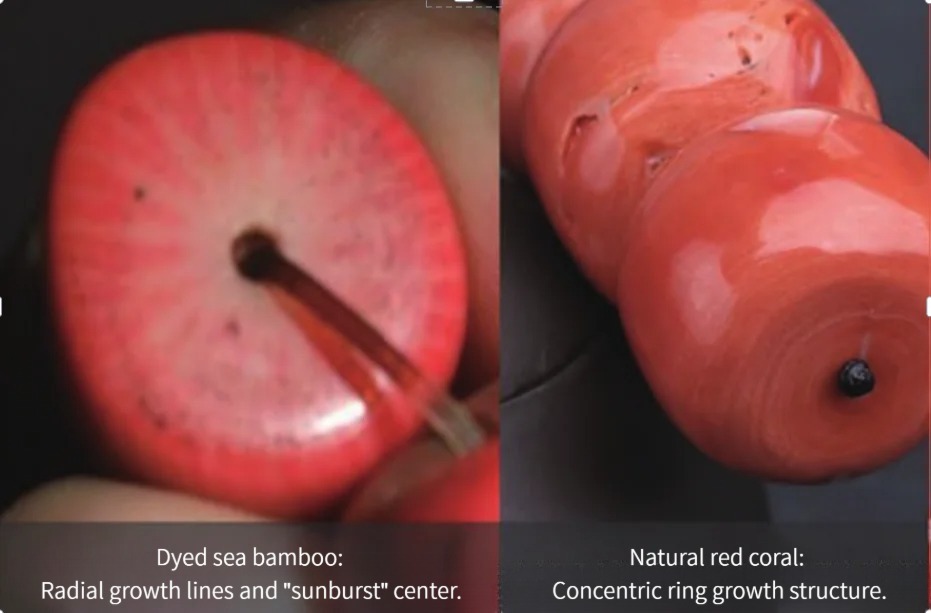
You can spot these common red coral imitations by looking for the following biological and chemical markers:
- Growth Structure: Natural precious coral features fine, tight concentric growth rings. In contrast, bamboo coral grows quickly, resulting in coarse, widely spaced (approximately 1mm) radial patterns often described as a “sunburst” or “sun center.”
- Color Distribution: Examine the color carefully. Dyed bamboo coral rarely shows uniform saturation; look for concentrated dye deposits within cracks and pores under magnification. The overall tone and luster often appear flat and artificial. While genuine coral sometimes shows a “white core,” dyed bamboo coral transitions unnaturally. You may also notice dark spots on the surface—these occur where lower-density areas absorbed excess dye.
- The Acetone Wipe Test: This remains a definitive field test. Dip a cotton swab in acetone and rub the coral firmly. If the piece is dyed sea bamboo, the swab will pick up the red pigment immediately.
- Acid Reaction: Genuine red coral reacts vigorously to hydrochloric acid. It releases carbon dioxide and produces intense bubbles as the calcium carbonate decomposes. Dyed bamboo coral reacts much more mildly. Because its skeleton consists primarily of gorgonin (a horny protein) with only a trace amount of calcium carbonate, it produces little to no bubbling.
Category 2: Synthetic and Manufactured Materials
The market for common red coral imitations frequently utilizes various synthetic and manufactured substances. Collectors should remain particularly vigilant against red glass, plastic, high-pressure synthetic “Gilson” coral, and reconstituted coral—which manufacturers create by compressing coral powder and binders.
Impostor #7: Glass (The “Liuli” Legacy)
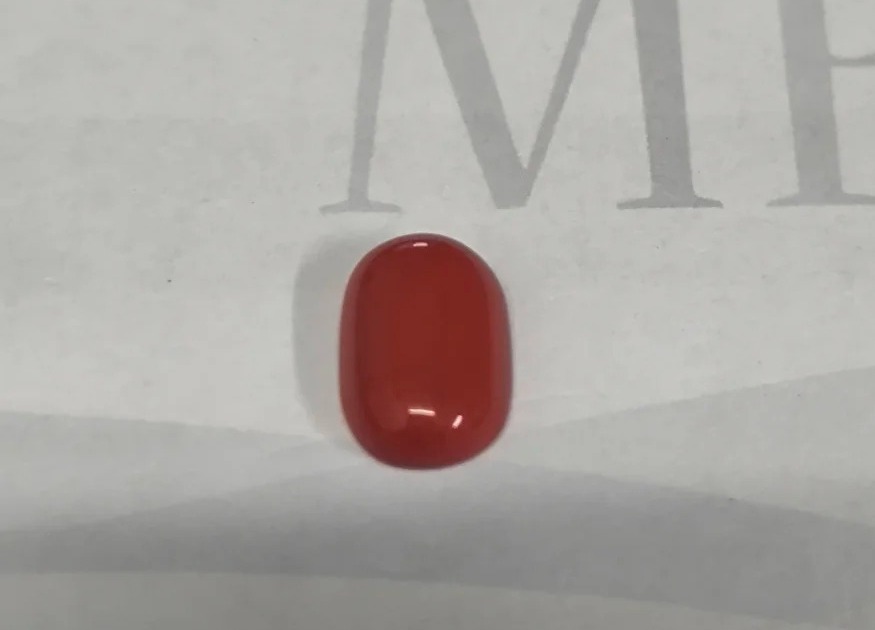
Because precious coral has held such immense value throughout history, artisans in China developed techniques to mimic it using glass centuries ago. This practice birthed the “Child-Face Glass” (Haier Mian Liuli), a variety that remains popular in traditional antique circles today. In fact, the specimen our client presented during a bespoke jewelry consultation—hoping to have it set into a custom platinum ring—turned out to be a classic glass imitation.
How to Identify Glass Imitations
While glass can mimic the vibrant red hue of coral, it lacks the biological complexity of the genuine gemstone. Use these markers to identify it:
- Luster: Glass produces a sharp, high-intensity vitreous (glassy) luster. In contrast, authentic red coral displays a soft, waxy, or sub-greasy luster.
- Microscopic Inspection: Use a 10x jeweler’s loupe to inspect the piece. You will often see spherical air bubbles trapped inside the material, or delicate, swirling flow lines—both clear indicators of glass manufacturing.
- Hardness and Fracture: Glass possesses a higher hardness than coral. When it chips, it exhibits a distinct, curved, shell-like (conchoidal) fracture, whereas coral breaks in a more brittle, splintered fashion.
- Internal Structure: Glass lacks the signature growth rings or radial structures found in organic coral. It remains entirely homogenous and structureless under magnification.
- Acid Reaction: Glass remains completely inert when exposed to dilute acid. It will not effervesce or bubble.
Collector’s Corner: Understanding Ancient “Liuli”
In the Chinese context, historical glass is often referred to as Liuli. Its history stretches back to the Western Zhou Dynasty, originating as a decorative byproduct of bronze casting. Collectors should note that ancient Liuli involves different materials, artisanal methods, and price points than modern industrial glass, but it remains a non-organic simulant when compared to true gem-grade precious coral.
As glass can mimic nearly any gemstone, mastering identification is essential. Learn more here: Glass Imitation Gemstones: How to Spot Fake Gem Glass Before You Buy
Impostor #8: Plastic Imitations (Low-End Coral Substitutes)
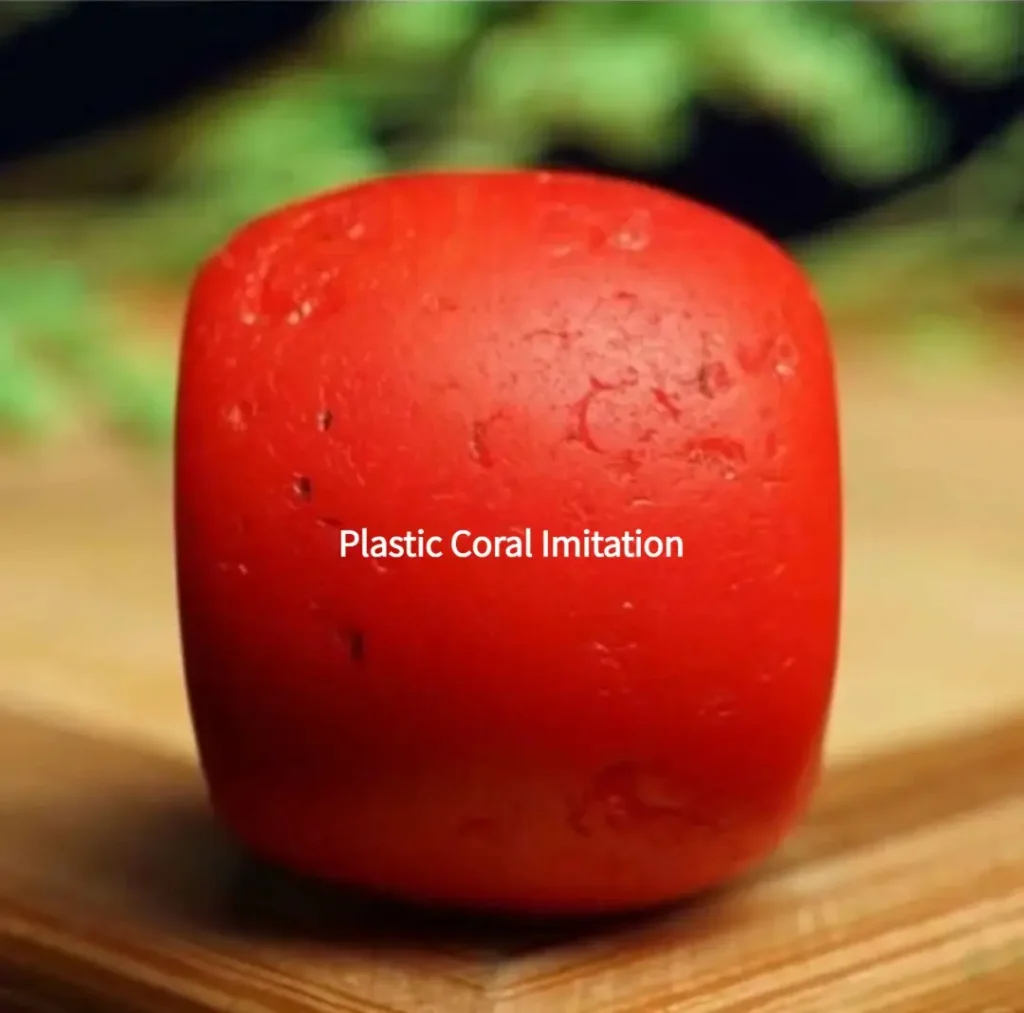
In the world of gemstones, plastic serves as the “universal” mimic. Manufacturers use it to replicate almost any color, size, or shape, producing everything from simple beads and intricate carvings to convincing replicas of raw, branching coral. While it ranks as a low-end substitute among common red coral imitations, its ability to flood the market makes it a frequent trap for unsuspecting buyers.
How to Identify Plastic Imitations
If a piece feels suspiciously light or displays uncharacteristic uniformity, it is likely plastic. Use these field-tested methods to identify it:
- Surface Inspection: Examine the piece under a magnifying glass. Many plastic replicas retain subtle mold lines or injection marks. Furthermore, if the piece features a carved design, notice how the details often appear soft or “mushy” compared to the crisp, defined lines found in hand-carved, genuine red coral.
- Density and Weight: Plastic possesses a significantly lower density than organic coral. A piece that should feel substantial in the palm of your hand will instead feel unnaturally light. This is a classic “red flag” for any collector.
- Internal Structure: Unlike genuine coral, which shows distinct radial or concentric growth patterns, plastic remains entirely homogenous. Under 10x magnification, you may spot tiny air bubbles trapped within the material—a definitive sign of synthetic, industrial production.
- Lack of Organic Texture: Plastic mimics the color of coral, but it cannot replicate the natural skeletal structure. It lacks the characteristic growth rings, wavy patterns, or unique textures of a marine colony.
- Acid Reaction: Genuine red coral will effervesce when you apply a tiny drop of dilute acid. Plastic, however, remains completely inert and shows no chemical reaction whatsoever.
Impostor #9: Gilson Coral (Synthetic Composite)
“Gilson Coral” is a misleading name, as it is not a genuine coral variety but a sophisticated synthetic product. Manufacturers create this material by compressing calcite powder with a small amount of dye under intense heat and pressure. Because this process allows for total color control, the resulting material exhibits a vast, often suspiciously uniform, range of hues.
How to Identify Gilson Coral
While this material mimics the aesthetic of high-end coral, its physical “DNA” differs significantly from the organic growth of genuine marine specimens. Use these tests to distinguish it:
- Color Distribution: Gilson coral typically displays a suspiciously uniform color saturation. If the pigment looks perfectly consistent across the entire surface without any natural tonal shifts, treat it as a potential synthetic.
- Microscopic Structure: Under a 10x jeweler’s loupe, look for a fine, granular, sugary texture. Unlike genuine coral, which shows continuous, organic growth markers, Gilson coral reveals a mass of fused particles.
- Lack of Organic Patterns: Genuine red coral features signature longitudinal wavy lines or concentric radial structures (the “sunburst” effect). Gilson coral lacks these organic identifiers entirely, appearing structurally homogenous and artificial under magnification.
- Density Testing: Genuine red coral generally possesses a higher density than this composite. Gilson coral maintains a specific gravity of approximately 2.45 g/cm³. If you have access to a hydrostatic balance, this density reading serves as a definitive identifier.
Impostor #10: Reconstituted Coral (Pressed Coral Scraps)
Manufacturers create reconstituted coral by pulverizing unusable coral offcuts, waste fragments, and dust into a fine powder. They then compress this material with binding agents to form new shapes. While it technically uses real coral components, it loses all the biological integrity and market value of natural, branch-form coral.
How to Identify Reconstituted Coral
When you inspect a suspected piece of reconstituted coral, look for a lack of natural structure and inconsistencies in the material’s composition:
- Absence of Growth Patterns: This is the most telling sign. Natural precious coral exhibits continuous, organic growth structures, such as radial rings in cross-section or wavy patterns along the length. Reconstituted coral appears completely structureless. Under magnification, you will fail to find any of these signature growth markers.
- Uniformity vs. Natural Variation: Because the material is crushed and re-pressed, the natural variations found in live coral colonies disappear. If the material looks too “flat” or lacks the depth and variation inherent in a natural branch, it is likely reconstituted.
- The “Fake-on-Fake” Trap: Always remain vigilant. Some unscrupulous sellers attempt to pass off cheaper, non-coral substances (such as dyed plastic or marble) as “reconstituted coral.” Because the material is already a composite, it can be extremely difficult to detect these additional fillers without professional gemological testing.
Conclusion: Mastering the Identification of Precious Coral
Distinguishing between genuine treasure and common imitations requires a sharp eye and a methodical approach. To summarize the key markers we have covered:
- Growth Texture and Structure: Always inspect for biological authenticity. Genuine coral exhibits a distinct radial, “sunburst” structure in cross-section and continuous, flowing, wavy patterns along the longitudinal plane.
- Color Distribution: Look for natural, organic transitions. Authentic red coral displays uniform or naturally gradient color. It should never show concentrated dye residues around pores, drill holes, or surface fissures.
- Characteristic Growth Markers: Embrace the “imperfections.” High-quality, natural red coral frequently displays small, organic indicators such as a white core, subtle white spots, or natural growth inclusions (sometimes referred to as “insect eyes”). These are the signatures of a living organism, not signs of a defect.
A Message from Jewea: Honoring the Gift of the Sea
Beyond the gemological value, every piece of red coral once served as a living foundation for a thriving marine colony. While red coral captivates the human eye with its timeless crimson hue, we must remember that over-harvesting threatens fragile marine ecosystems.
As a strictly protected species—classified as a Tier-1 National Protected Wildlife species in China and internationally monitored under secondary protection status—the harvest of red coral faces stringent regulations. We view these precious pieces as rare, hard-won gifts from nature. At Jewea, we believe that every piece of gem-grade red coral deserves our utmost respect, care, and appreciation.
When you choose a piece of red coral, you are not just acquiring jewelry; you are becoming the custodian of a natural wonder that took centuries to form. Let us treasure these gifts responsibly.