Unveiling the Truth About “Pink Hetian Jade”: Is It Real Nephrite or Anthophyllite Jade?
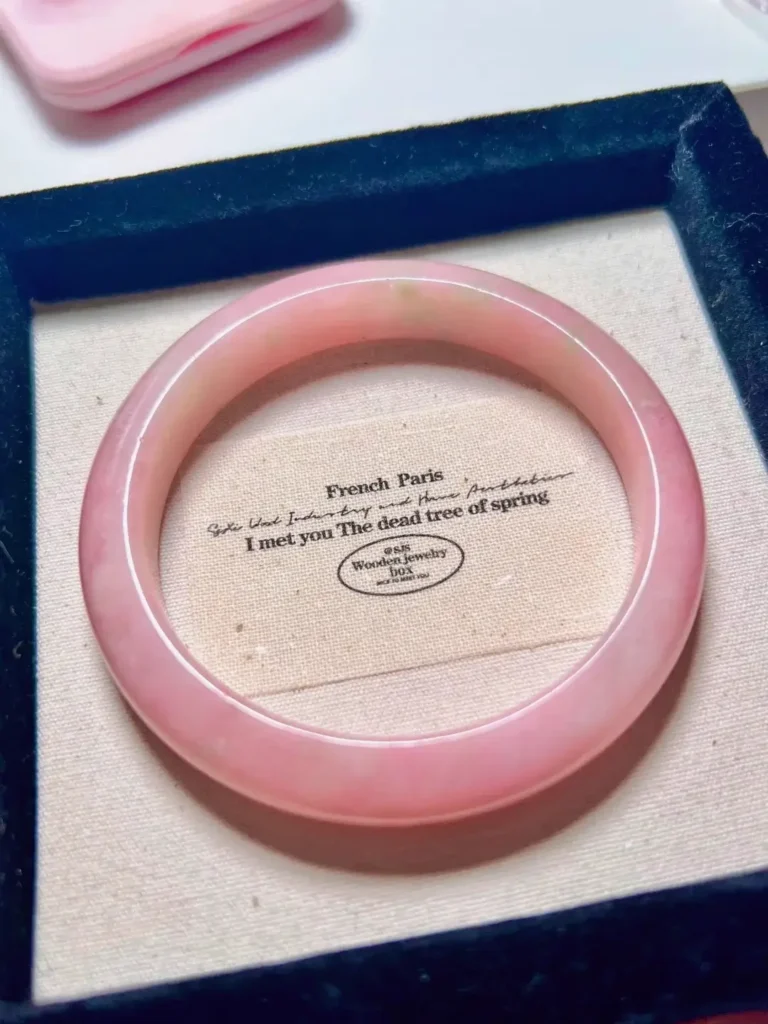
A reader recently reached out with a fascinating question: “I found a stunning, soft pink bracelet labeled as ‘Pink Hetian Jade.’ The seller mentioned it is actually Anthophyllite—does that still count as Hetian Jade?”
It is an undeniably beautiful stone, but from a mineralogical standpoint, we must be clear: Pink Anthophyllite Jade is not Hetian Jade.
While these two stones share a similar appearance and geographic origin, they belong to different mineral branches. To truly understand what you are holding, we need to look past the surface shimmer and into the boundary between Anthophyllite and Tremolite (true Hetian Jade).
Understanding Anthophyllite
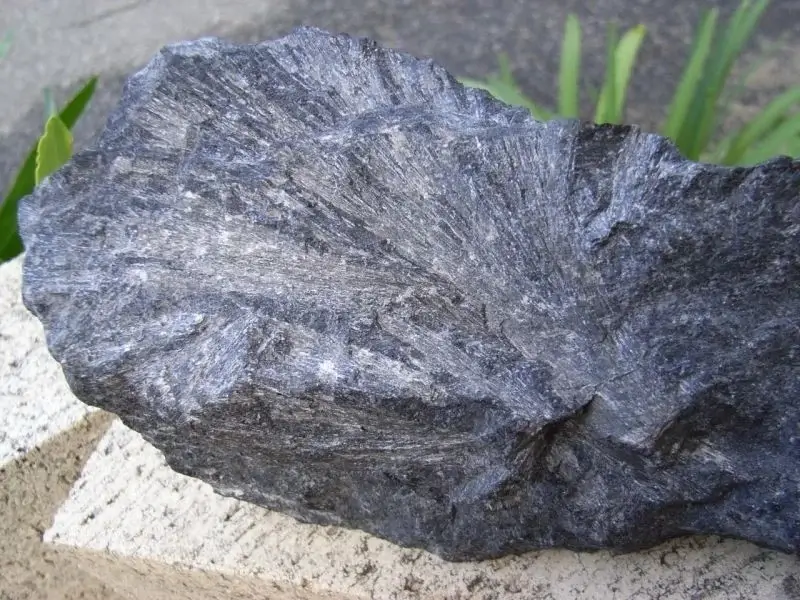
The name Anthophyllite is derived from the Latin word anthophyllum, meaning “clove”—a nod to its characteristic brownish-pink to purplish-pink hues. It belongs to the broader Amphibole group, a major category of rock-forming silicate minerals that are found abundantly throughout the Earth’s crust.
Amphiboles are essential components in many types of rocks, appearing as either primary or secondary minerals. Depending on their specific chemical composition, the Amphibole family branches into several distinct varieties. Some of the most notable members include:
- Anthophyllite
- Tremolite (The primary component of true Hetian Jade)
- Hornblende
- Glaucophane
- Riebeckite
In essence, while Anthophyllite and Tremolite are “siblings” within the same mineral family, their internal chemistry sets them apart as unique species.
Anthophyllite vs. Tremolite: The Scientific Distinction
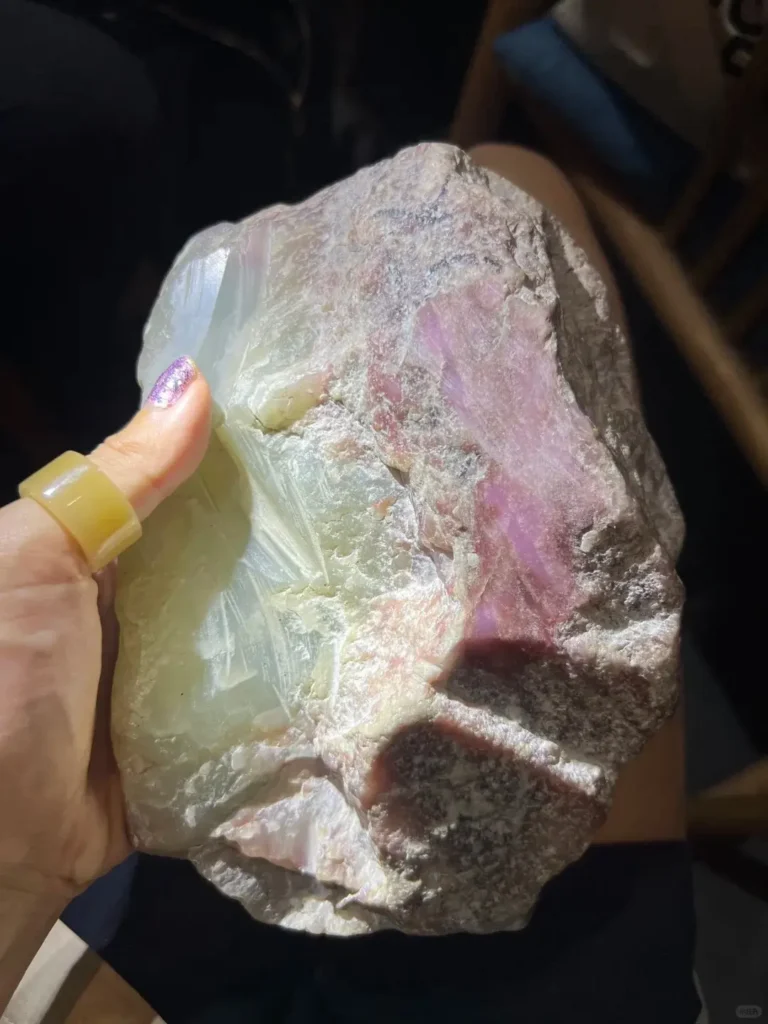
While both Anthophyllite and Tremolite belong to the broader Amphibole mineral family, their roles in the world of gemstones are quite different.
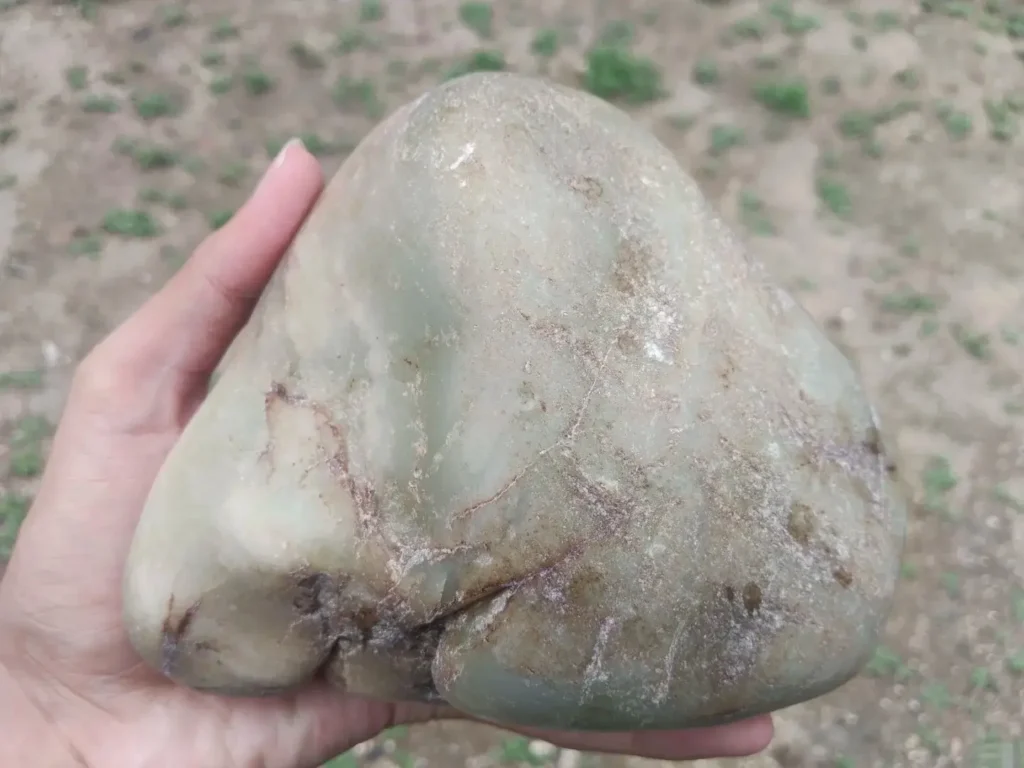
In the gemstone market, when we discuss Hetian Jade, we are almost always talking about Tremolite. Under current national standards, true Nephrite (Hetian Jade) must primarily consist of Tremolite or Actinolite. These minerals give the stone its signature toughness and “mutton fat” texture.
A Quick Lesson: Why is Hetian Jade called “Nephrite”? Historically, when Western scholars first compared Chinese Jadeite and Hetian Jade, they categorized both under the umbrella term “Jade.” To differentiate them, they named the vibrant green variety Jadeite (referring to its supposed medicinal properties for the kidneys) and the white-to-green variety Nephrite (derived from the Greek word for “kidney stone”).
Later, Chinese mineralogists translated these terms as “Hard Jade” (Ying-yu) for Jadeite and “Soft Jade” (Ruan-yu) for Nephrite—terms still used today. While the trade overwhelmingly prefers the name “Hetian Jade,” you will still find “Nephrite” used in most academic and geological circles.
Compared to the widespread fame of Tremolite, Anthophyllite remains relatively obscure. Because it has only recently gained traction in the market, specialized academic literature and formal research on Anthophyllite Jade are still quite scarce, leaving much of its story yet to be written by modern mineralogists.
Anthophyllite Jade: The Rare “Cousin” of Hetian Jade
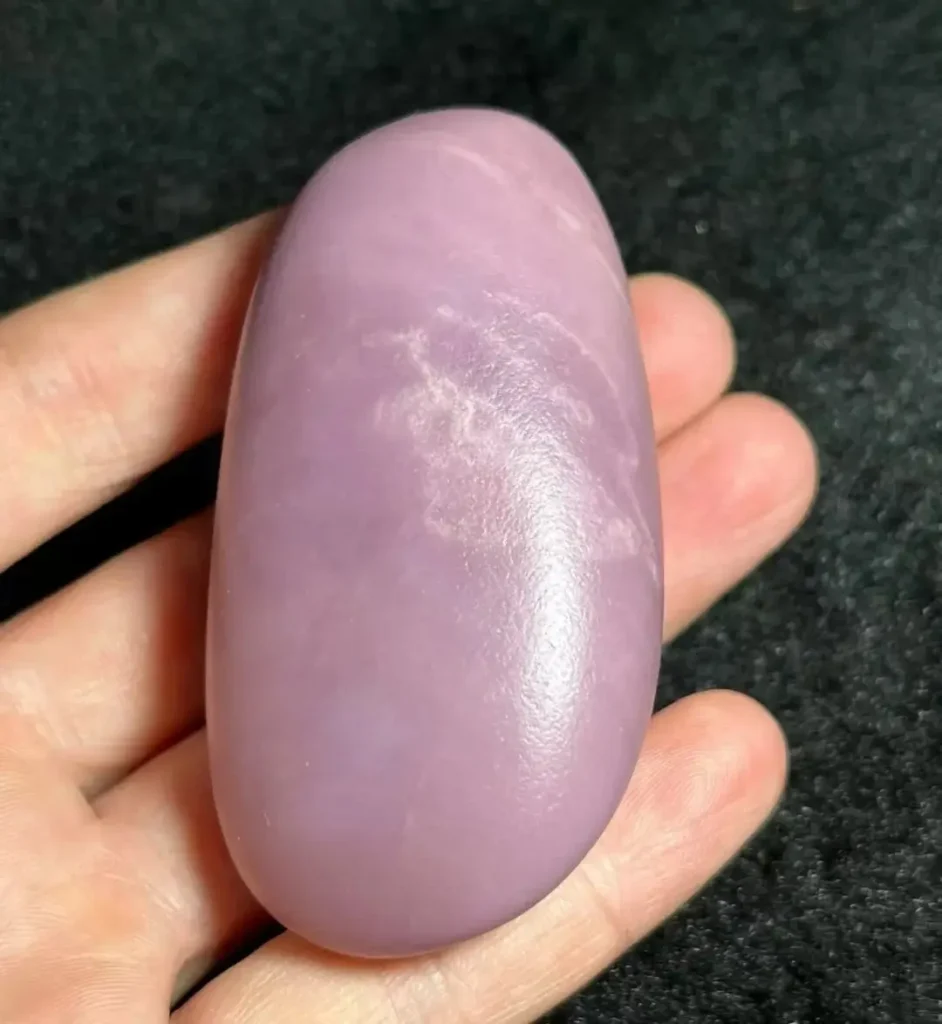
Anthophyllite Jade has long existed on the fringes of the market, but it has recently ignited a wave of interest among collectors. Composed primarily of the mineral Anthophyllite, this rare stone originates exclusively from the Karakash and Yurungkash rivers in Hetian, Xinjiang.
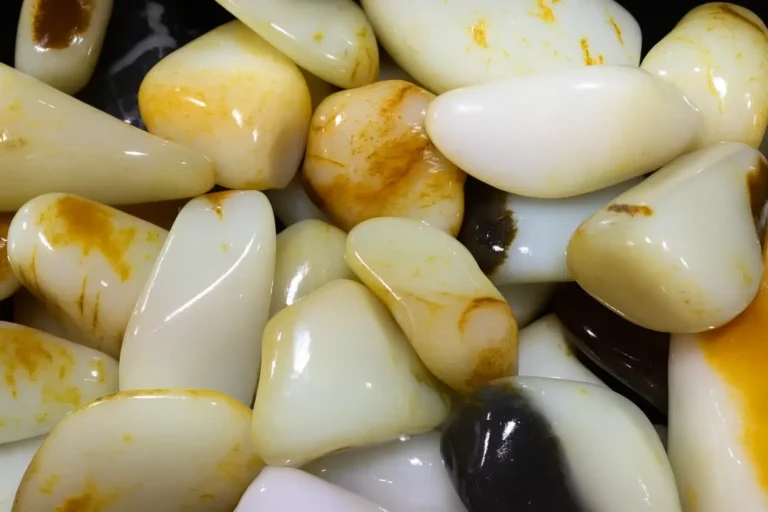
Because it shares the same riverbeds as authentic Hetian “seed” jade, its appearance and oily texture often mirror those of true Nephrite. In fact, their physical and optical properties are so similar that distinguishing them without laboratory equipment is nearly impossible for most enthusiasts.
In the trade, we generally categorize Anthophyllite Jade into two distinct color families:
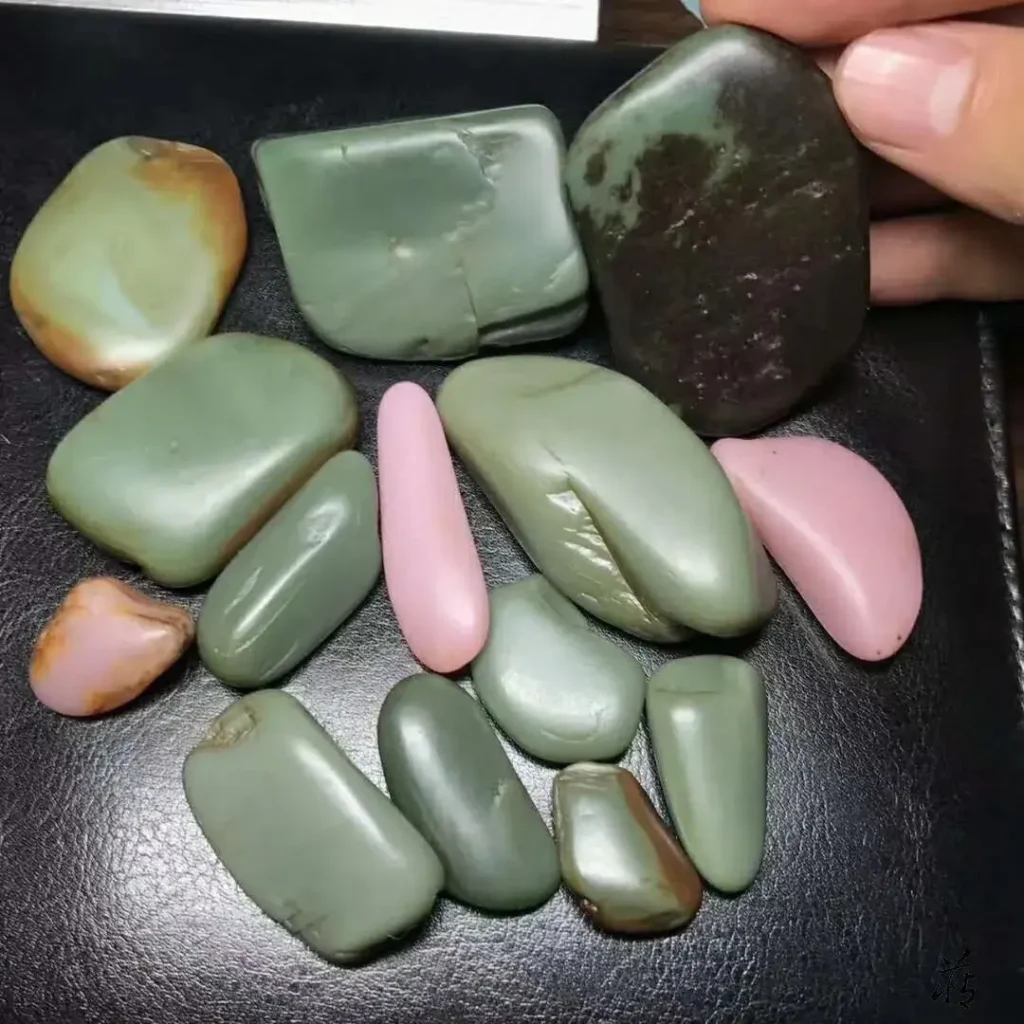
- The Pink Family: Often sold under the commercial name “Violet Jade” (Zi-luo-lan).
- The Greenish-Blue Family: This includes the famous “Sha-zao-qing” (Oleaster Green) variety that we explored in our previous articles.
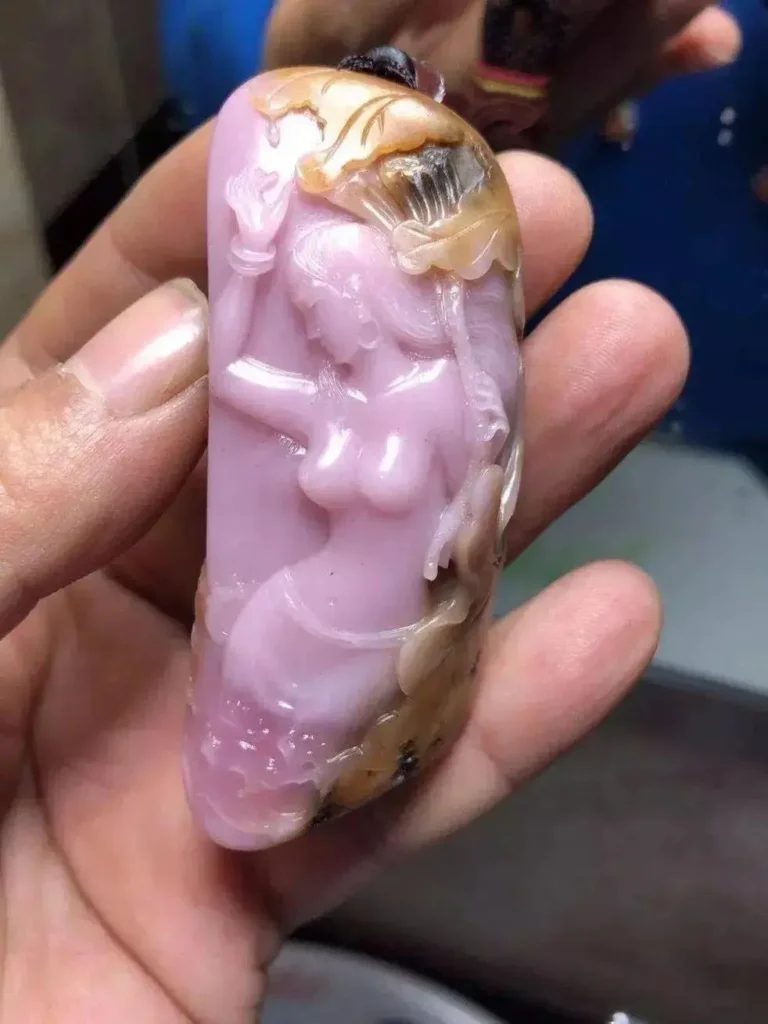
Despite its rising popularity, formal academic research on Anthophyllite Jade remains incredibly scarce. Most of the information available online today comes from personal anecdotes or marketing descriptions from sellers. To be precise, Anthophyllite Jade is a close relative of Hetian Jade, but it currently lacks an official, standardized classification within the national grading system.
Does “Pink Hetian Jade” Actually Exist?
As we discussed earlier, the official classification of Hetian Jade is quite specific. According to the latest national standards, true Nephrite must primarily consist of Tremolite or Actinolite. Without these as the dominant mineral components, a stone simply does not qualify as Hetian Jade.
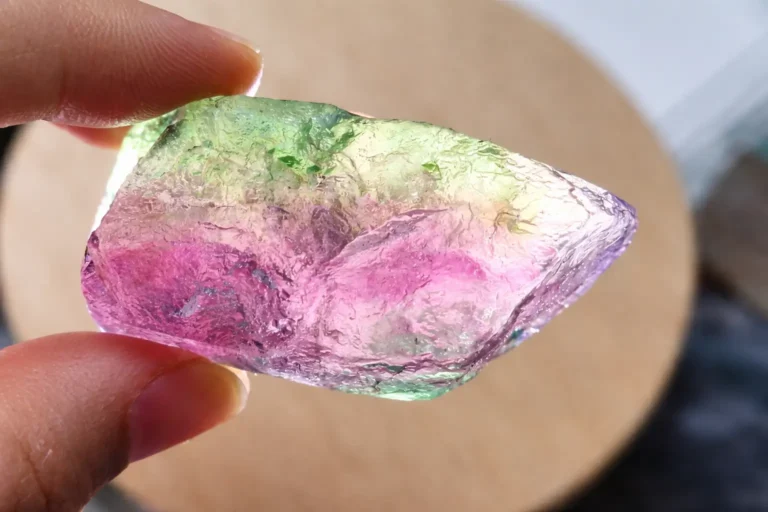
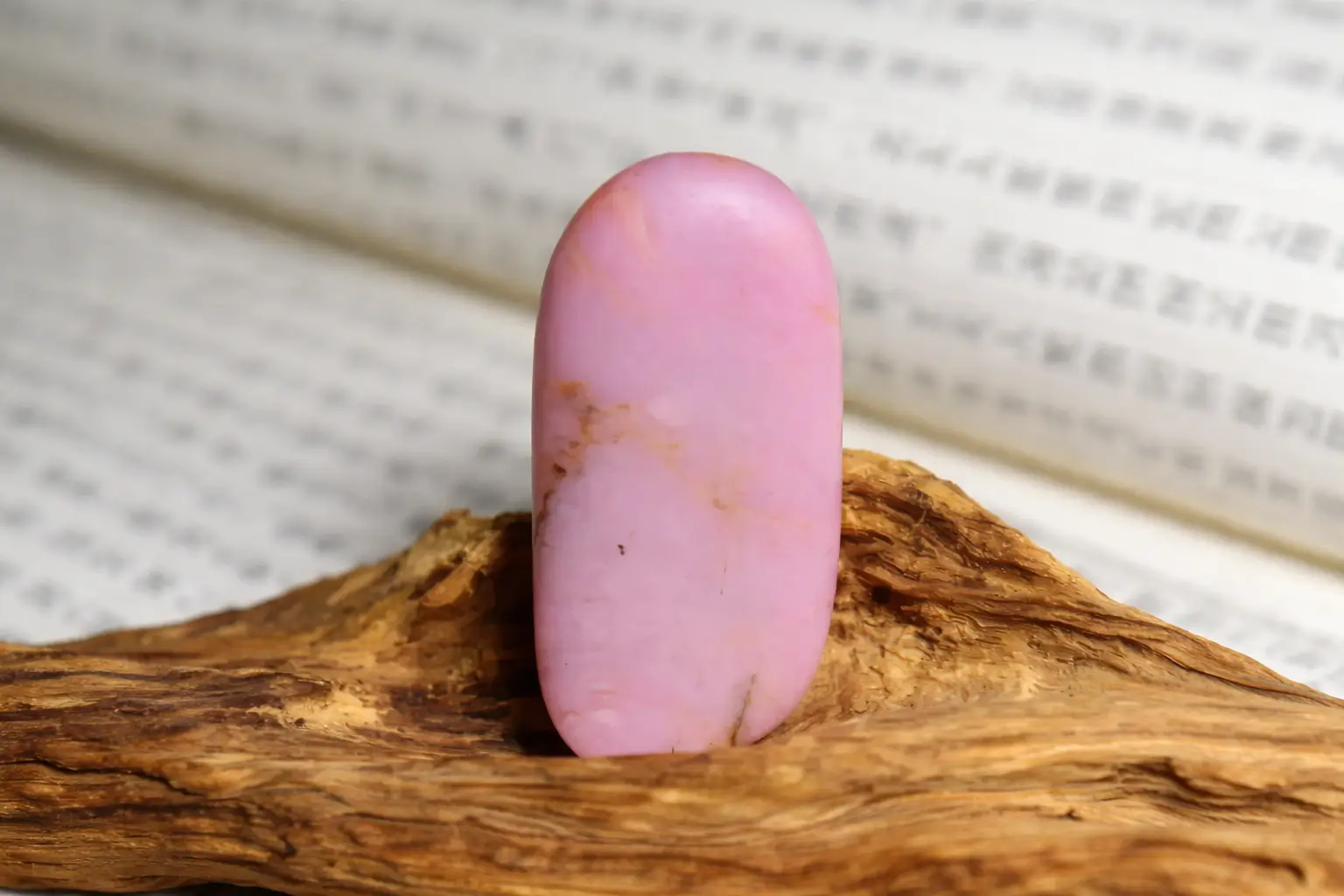
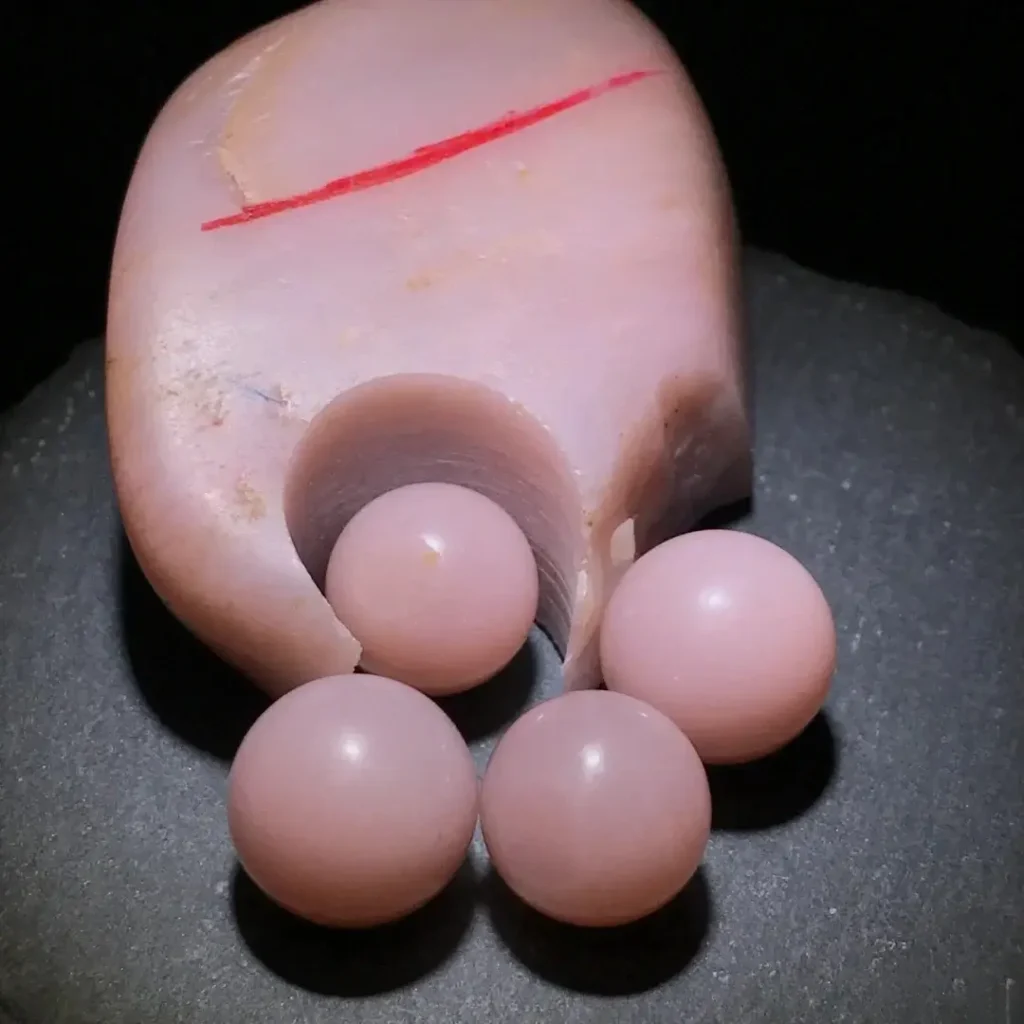
This brings us to the “Pink Hetian Jade” (often marketed as Violet Jade) that has recently flooded social media. While these stones boast captivating hues of soft pink, lavender, and even pale orange, laboratory testing consistently reveals their primary mineral composition to be Anthophyllite.
Mineralogists believe these unique pink tones likely result from trace amounts of Manganese (Mn) within the crystal lattice. However, no matter how closely its texture or physical properties mimic those of the finest river-bed “seed” jade, its chemical identity remains distinct. Strictly speaking, Pink Anthophyllite Jade is not Hetian Jade.
Does true Pink Hetian Jade exist? Yes, but it is a distinct mineral category. Authentic pink Nephrite is characterized by its “Lotus Root Pink” (Ou-fen) hue—a delicate, fleshy, and milky tone that originates from specific mountain mines.
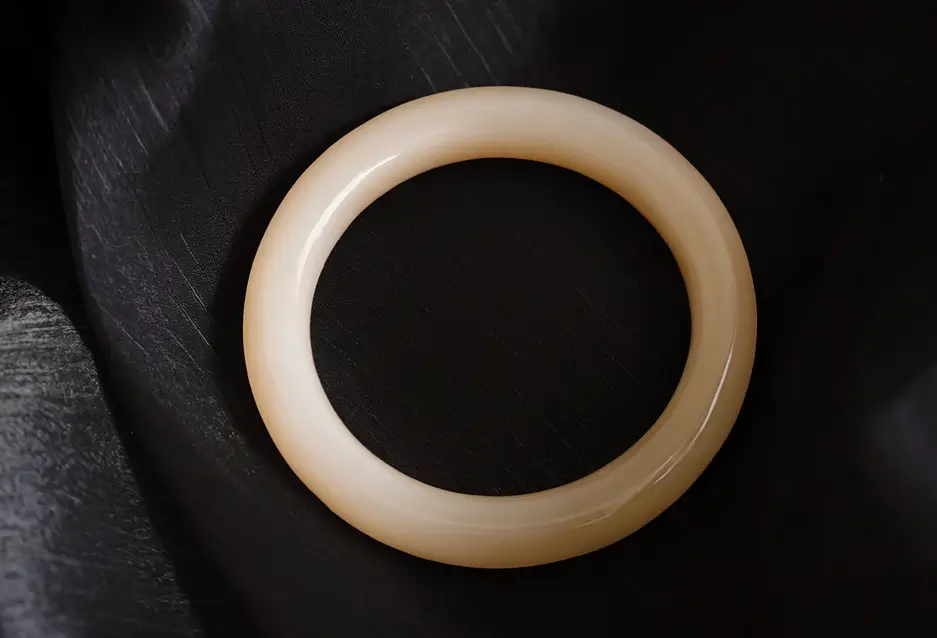
Unlike Manganese-rich (Mn) Anthophyllite which leans toward “Violet” or “Lavender” saturations, true Nephrite pink is prized for its “sweet” and dense appearance. To explore how genuine pink Nephrite is breaking the traditional mold, see our previous guide: The Rise of Pink Nephrite Jade: Sweet, Chic, and Breaking the Traditional Mold.
The Enigma of Pink Anthophyllite Jade
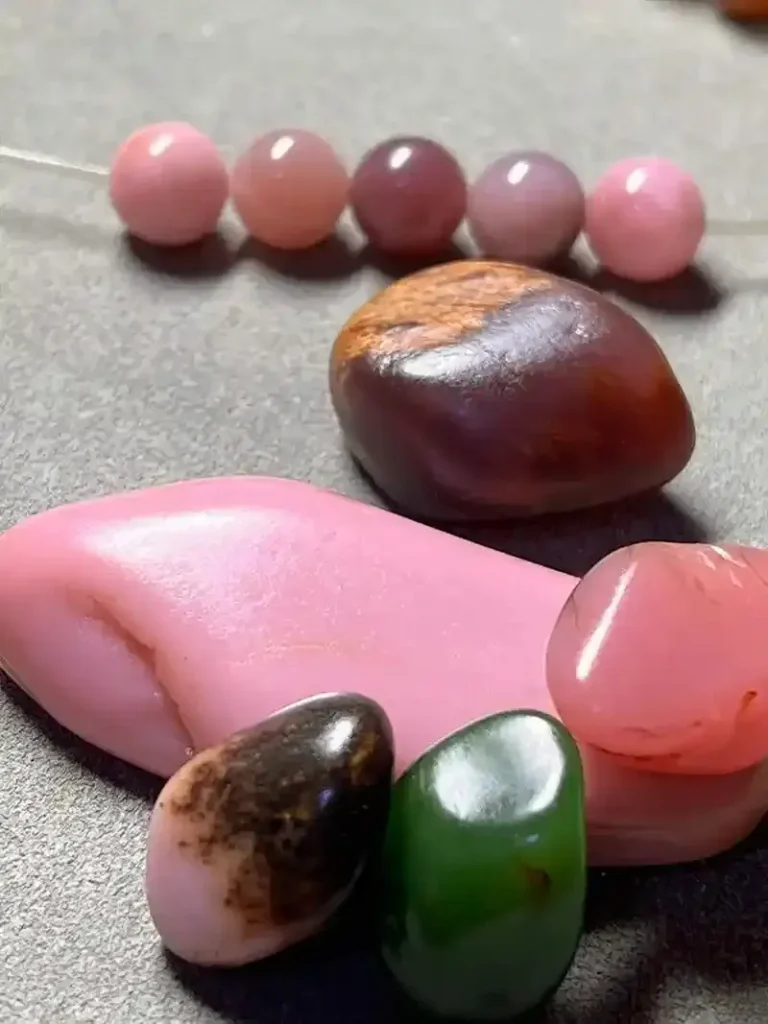
For a long time, collectors mistakenly categorized Pink Anthophyllite as a rare variety of Hetian “seed” jade. While it doesn’t meet the technical definition of Hetian Jade, its undeniable beauty and scarcity have earned it a dedicated following. High-quality specimens with vibrant pink hues and fine texture often command premium prices in today’s market.
A Maze of Commercial Names
One of the biggest challenges for buyers is the chaotic naming convention surrounding this stone. You will find it marketed under a dizzying array of trade names, including Pink Jade, Violet Jade, Sazi Jade, and Peach Blossom Jade.
While most of these names—like Pink and Violet Jade—simply describe the stone’s color, “Peach Blossom Jade” (Tao-hua-yu) creates significant confusion. In the Chinese market, this name traditionally refers to Rhodonite (Tao-hua-shi), a completely different mineral. It is crucial to distinguish between the two to avoid misidentification.
The Mystery of “Sazi Jade”
The term “Sazi Jade” (Sha-zi-yu) is a colloquialism frequently used by locals in Xinjiang. This name may even have deep historical roots. In the Ming Dynasty, the scholar Cao Zhao wrote in Essential Criteria of Antiquities (Ge Gu Yao Lun):
“This jade is exceptionally rare. Compared to white jade, it is pink, moist, and lustrous. It is often used for sword hilts or rings, as large pieces are seldom found.”
This historical account highlights four key characteristics: rarity, pink coloration, a lustrous texture, and small dimensions. While these descriptors perfectly align with modern Pink Anthophyllite Jade, scholars are still researching whether the “Sazi Jade” of the Ming Dynasty and the Anthophyllite we see today are truly one and the same. Regardless of its ancient lineage, this stone remains a fascinating outlier in the world of fine minerals.
Not All “Sha-zao-qing” is Anthophyllite Jade
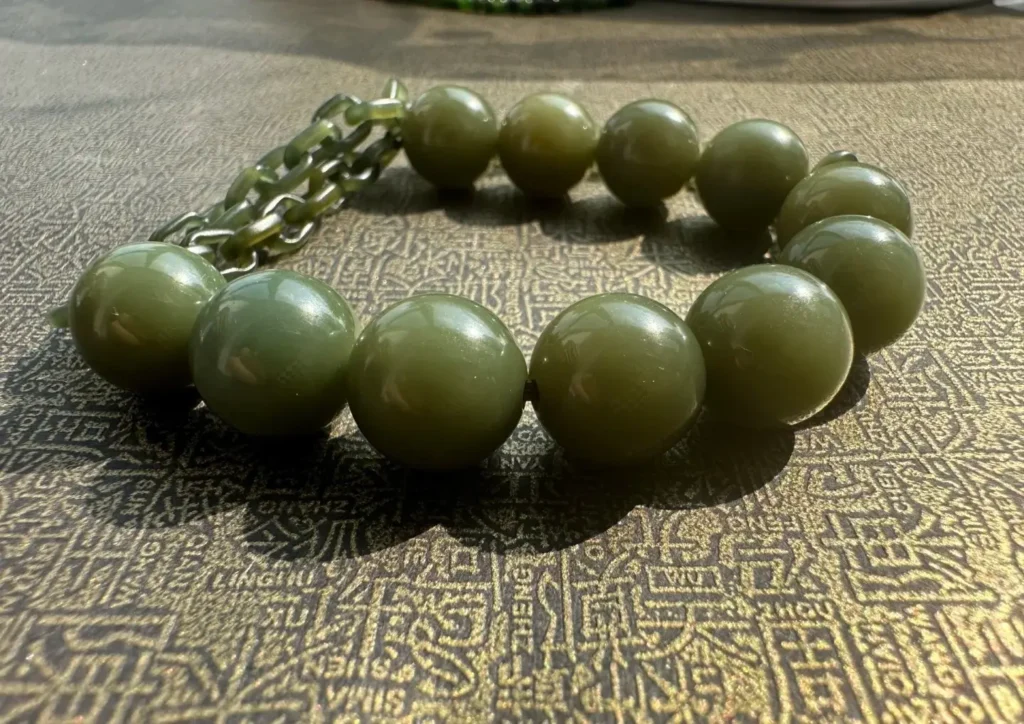
We explored the unique characteristics of Sha-zao-qing in our guide, Nephrite Jade Varieties: Distinguishing Duck Egg Green from Sha-zao-qing. Many experts identify this variety as Anthophyllite Jade due to its high Anthophyllite content. Despite this, the trade still overwhelmingly categorizes it as a subset of Hetian Jade.
In reality, “Sha-zao-qing” is not an officially recognized classification. Neither national nor regional Xinjiang standards use this term. It serves merely as a descriptive trade name. Collectors and dealers use it to identify a specific aesthetic and texture.
This name lacks a formal scientific definition in official grading systems. Therefore, you will never see “Sha-zao-qing” listed on a laboratory certificate. Gemological reports will typically identify these pieces by their primary mineral composition. Depending on test results, they appear simply as “Nephrite” or “Anthophyllite Jade.”
Distinguishing Sha-zao-qing: Nephrite or Anthophyllite Jade?
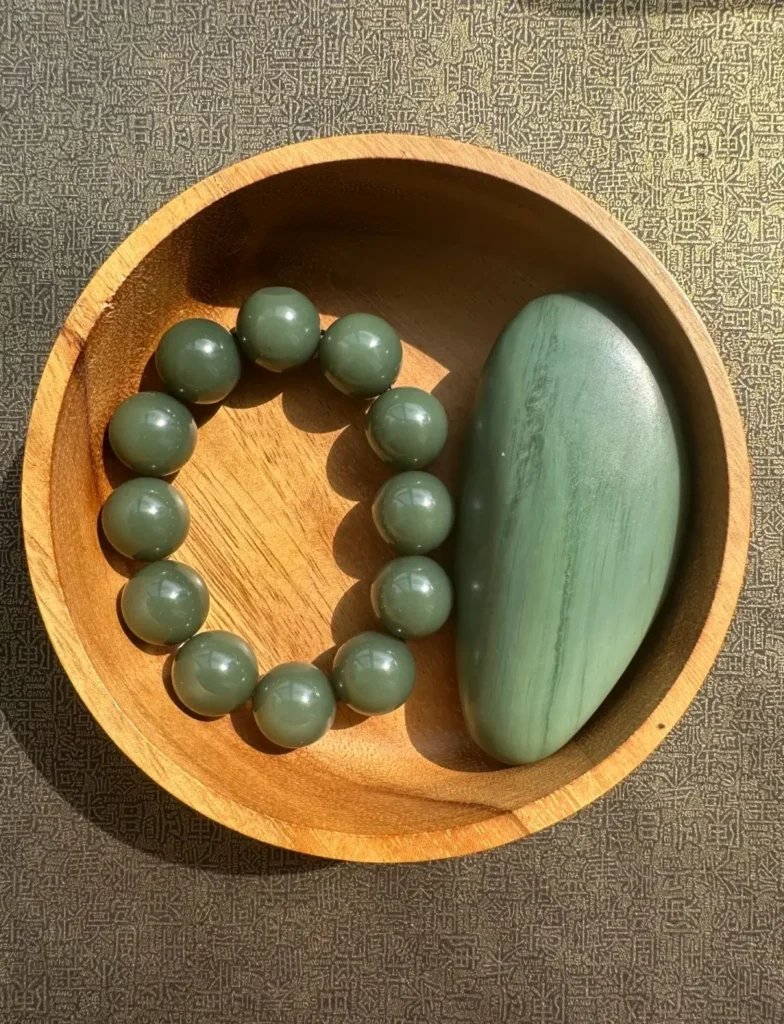
How do we actually identify Sha-zao-qing in the market? Traditionally, collectors rely on three key markers:
- Seed Origin: The piece must be a genuine Hetian “seed” jade (Zi-liao).
- Unique Color and Texture: It should display a muted, bluish-green hue resembling the leaves of the “Sha-zao” (Oleaster) tree. More importantly, it must have a dense, velvety texture—often described as “mung bean paste”—which many attribute to high Anthophyllite content.
- Silky Structure: Many enthusiasts look for a unique “silky” or fibrous structure. The theory suggests that linear alignments of Anthophyllite crystals create this distinct visual effect.
However, scientific data from the Gemological Institute at the China University of Geosciences (Wuhan) tells a different story. Researchers conducted Infrared Spectroscopy and XRD analysis on representative samples of both pink and greenish-blue “Anthophyllite Jade” (Sha-zao-qing). The results were surprising.
The tests revealed that while the pink samples were indeed composed of Anthophyllite, the greenish-blue Sha-zao-qing samples primarily consisted of Tremolite—the main component of true Nephrite.
This proves that commercial standards like color and texture are not foolproof. Using these traits alone to classify a stone as “Anthophyllite Jade” is often inaccurate. Remember: not all Sha-zao-qing is Anthophyllite Jade.
A Final Thought from Jewea
While science tells us that these stunning “Pink Jades” are not technically Hetian Nephrite, their biological classification takes nothing away from their natural beauty. Whether a stone is composed of Tremolite or Anthophyllite, its value lies in the connection it makes with you.
At Jewea, we believe the most important part of any collection is clarity. As long as you love the piece and understand exactly what you are holding, it is a treasure well-found. After all, the true spirit of a gemstone is found in its story, its rarity, and the light it brings to your life.