Unveiling Jinsi Jade: The Silk Road Quartzite from China
In our previous article, “What is Shetaicui Quartzite? The Truth Behind the “New Jade” Craze”, we discussed how many sellers in live-stream rooms mislabel various quartzite jades as “Shetai Jade.” Among them, Jinsi Jade from Xinjiang is one of the most common varieties used to confuse buyers.
After reading that post, many of you reached out with the same question: “Are Jinsi Jade and Shetai Jade really that similar?”
The truth is, whether it is Shetai Jade, Golden Silk Jade, or Aventurine, they are all essentially quartzite jade. Their different names are simply a result of their different origins and commercial designations. Some varieties have managed to stand out from their “siblings” due to their massive output or successful market promotion. Today, we are going to talk about the one that has truly made a name for itself—Jinsi Jade.
Jinsi Jade: A Quartzite with Its Own “Regional Standard”
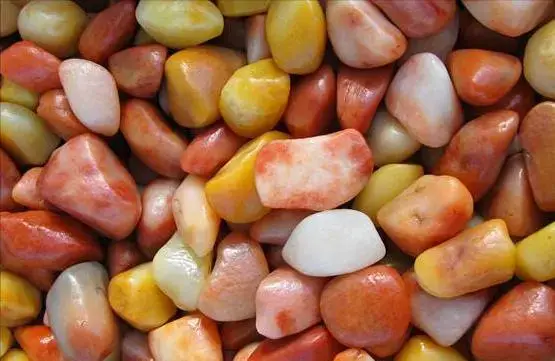
If you have ever joined a tour of Xinjiang, China, the name “Jinsi Jade“ (Jinsiyu) will undoubtedly sound familiar. Tour guides often summarize the region’s rich mineral heritage with a single phrase: “Nephrite in the South, Jinsi Jade in the North.”
At its core, Jinsi Jade is a variety of quartzite, whereas Nephrite (Hetian Jade) consists primarily of tremolite and actinolite. From a mineralogical standpoint, most experts would say that comparing this variety of quartzite jade to the prestigious Nephrite is a bit of a “reach” for the former. However, there is no denying its significant status within Xinjiang. Just like its famous counterpart, Jinsi Jade holds its own exclusive and independent Regional Quality Standard in the province.
What Exactly is Jinsi Jade?
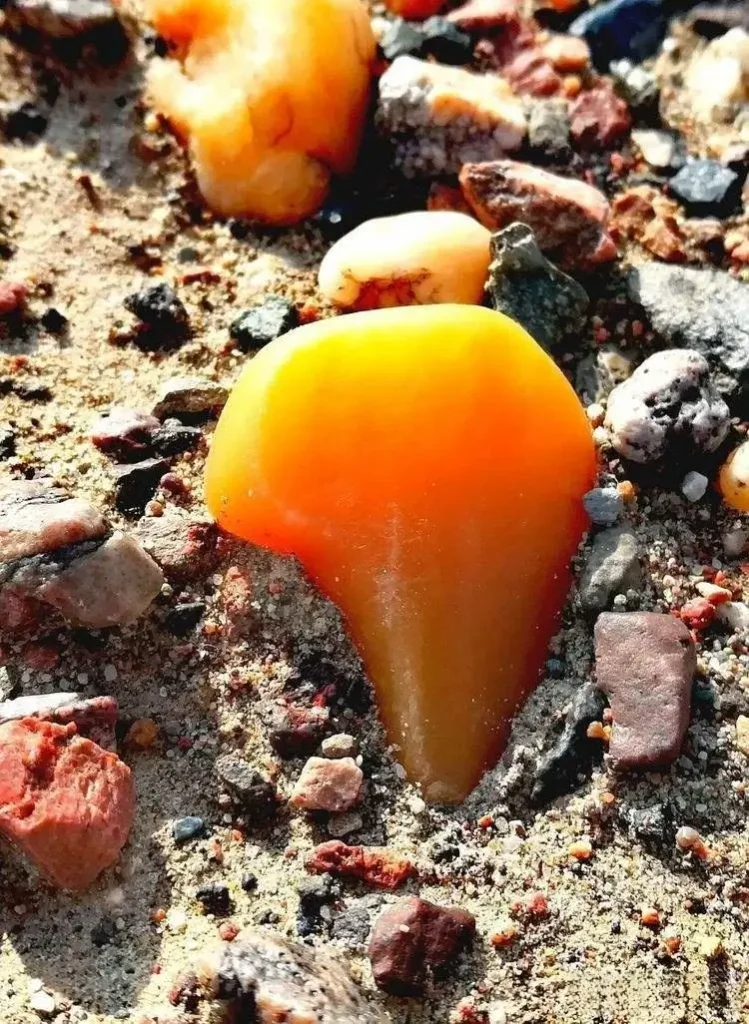
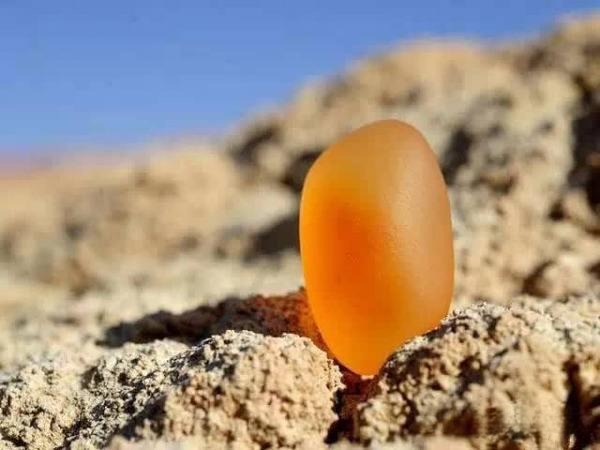
Jinsi Jade is a variety of quartzite jade sourced from the Hotan and West Kunlun regions of Xinjiang, China. Throughout different periods and regions across the Chinese market, this stone has carried many names:
- In Altay, people call it “E-He Jade” or “E-He Color Jade.”
- In Karamay, the local government officially named it “Karamay Jade.”
- In Beijing, it often goes by “Loulan Jade” or “Desert Jade.”
- In Guangzhou, the trade name “Jinsi Jade” became the standard.
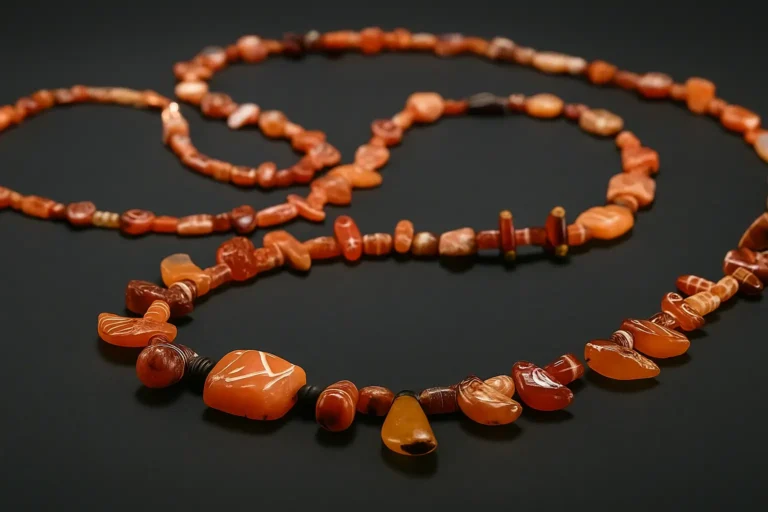
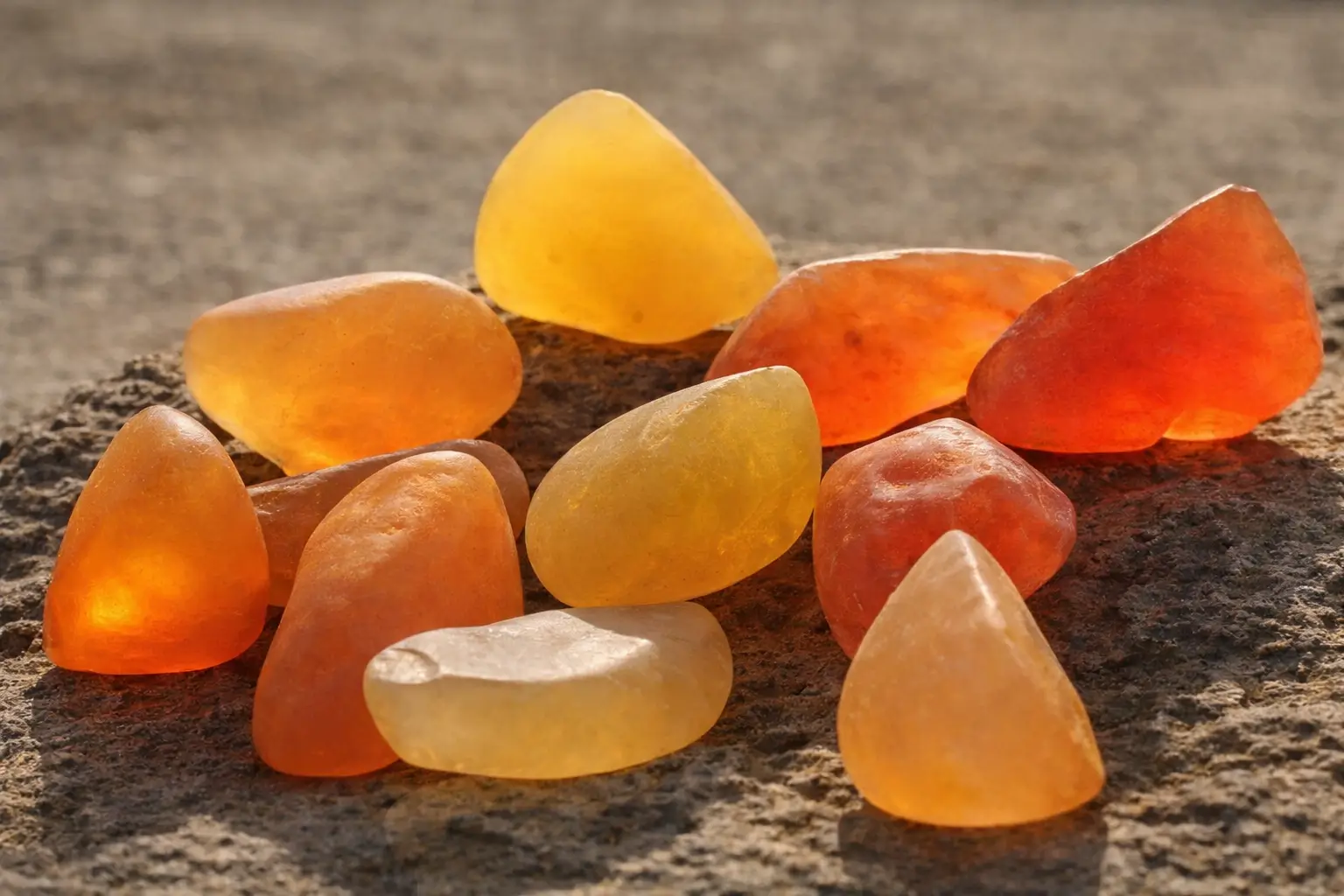
Industry professionals eventually settled on the name “Jinsi Jade“ because the stone originates along the ancient Silk Road, typically displays golden-yellow hues, and features a signature internal fine, cloud-like vein structure (traditionally referred to in China as the “radish-pulp” pattern).
The Official Regional Standard
In 2013, the Xinjiang Uygur Autonomous Region implemented the local standard Jinsi Jade (DB65/T3442-2013). This document provides a scientific and precise definition for this emerging quartzite variety:
Jinsi Jade refers to mineral aggregates found within the Xinjiang Uygur Autonomous Region, primarily in and around the Junggar Basin. It consists mainly of cryptocrystalline to phanerocrystalline quartz, with trace amounts of mica, sericite, chlorite, and limonite. Its chemical composition is primarily SiO₂, with a Mohs hardness of 6.5–7.
Common colors include yellow, red, and white. It can exhibit various other hues depending on trace elements (such as Fe, Mn, Ni, Cr) or the inclusion of other colored minerals.
— Extract from “Jinsi Jade” (DB65/T3442-2013)
Quality and Market Value
As the market for Jinsi Yu continues to expand, its commercial value is seeing a steady upward trend. For newcomers entering the world of Xinjiang gemstones, common questions often arise: Which color is best? Should I choose a translucent or opaque stone? What exactly defines a high-value piece?
1. Color and Texture
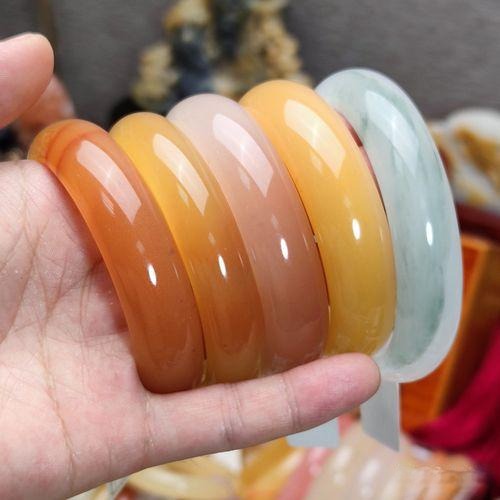
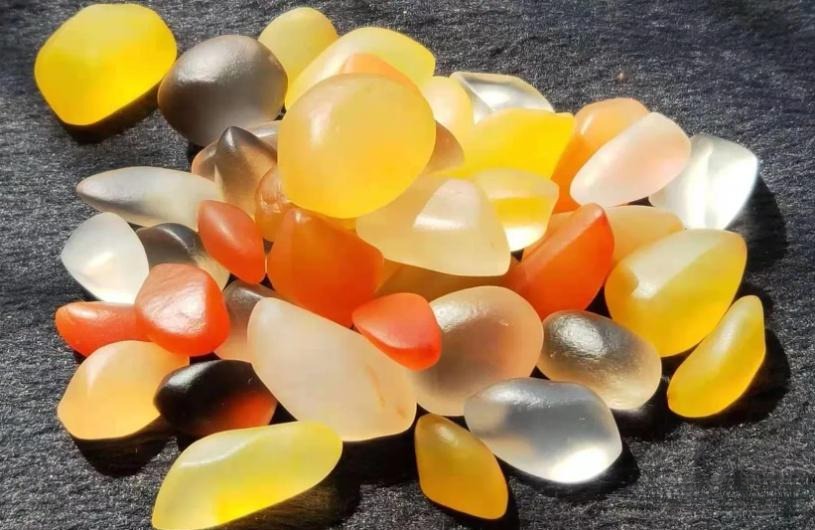
Jinsi Yu quartzite boasts an incredibly diverse palette, including vibrant yellows, deep reds, colorless varieties, and even moody grays, blacks, and purples. Unlike some gemstones, there is no rigid hierarchy for color. Instead, value is driven by purity and uniformity. A stone with a clean, consistent hue and a fine, silky texture will always command a premium.
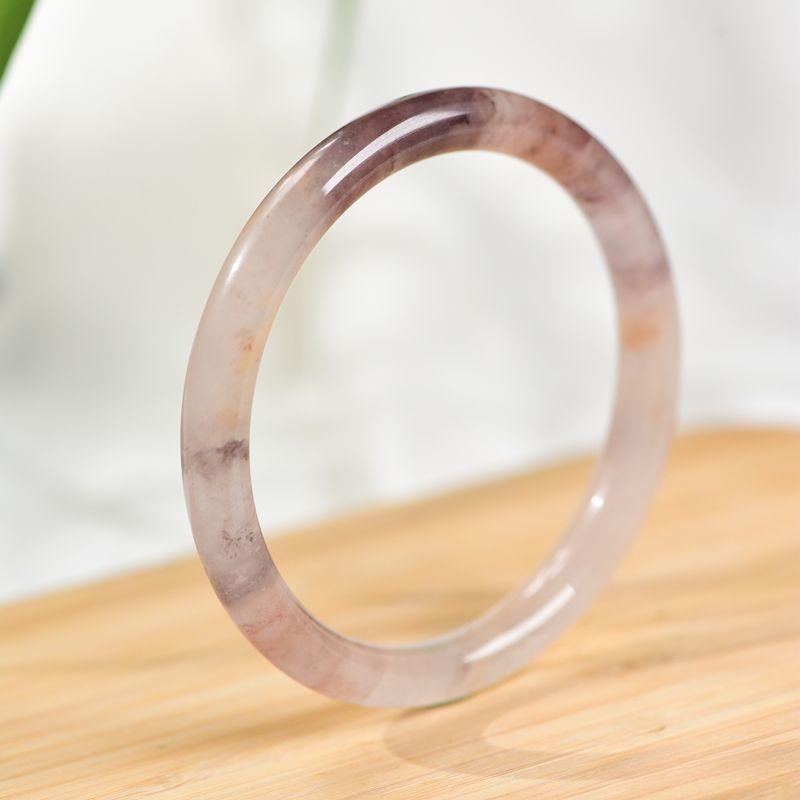
Additionally, “flowering” patterns (known as Piao Hua or floating inclusions) have gained a dedicated following. These pieces are prized for their unique, artistic internal “landscapes.”
2. Translucency: The Secret of “Gemslight”
Because Jinsi Yu is a cryptocrystalline to phanerocrystalline quartzite, its appearance changes based on its internal structure:
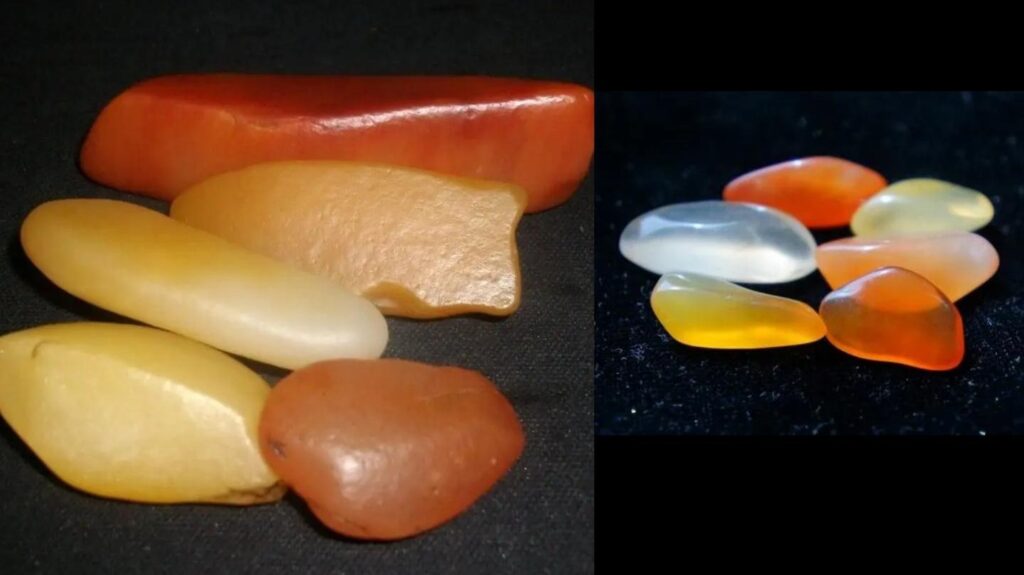
- Cryptocrystalline structures result in a beautiful semi-transparency.
- Phanerocrystalline (coarser) structures appear opaque or only slightly translucent.
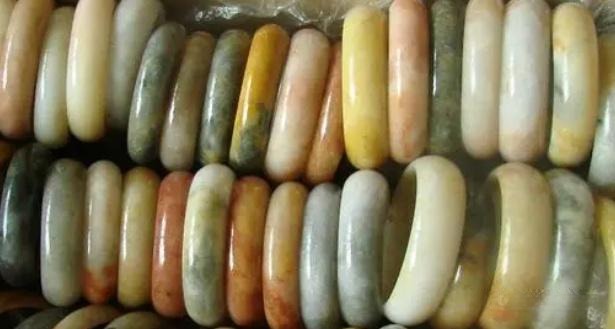
The true “creme de la cream” of this category is the Gemslight (Bao Shi Guang). These rare, cryptocrystalline specimens represent the pinnacle of Jinsi Yu—highly translucent, exceptionally fine-grained, and possessing a radiant glow. Naturally, these elite pieces hold a much higher market value than their opaque counterparts.
High Similarity: Common Stones Often Confused with Jinsi Jade
Since the 2016 implementation of the national standard Classification and Nomenclature of Quartzite Jade, Jinsi Jade has enjoyed a massive surge in popularity. Some sellers even go so far as to rank high-quality Jinsi Jade alongside the prestigious Nephrite (Hetian Jade) or the legendary Tianhuang stone. While its beauty is undeniable, we must stay grounded: at its core, Jinsi Jade is a high-yield quartzite. Because of its abundance, its market value simply cannot rival that of top-tier Nephrite.
So, Which gems are the ultimate ‘look-alikes’ for Jinsi Jade?
1. Nephrite (Hetian Jade) vs. Jinsi Jade
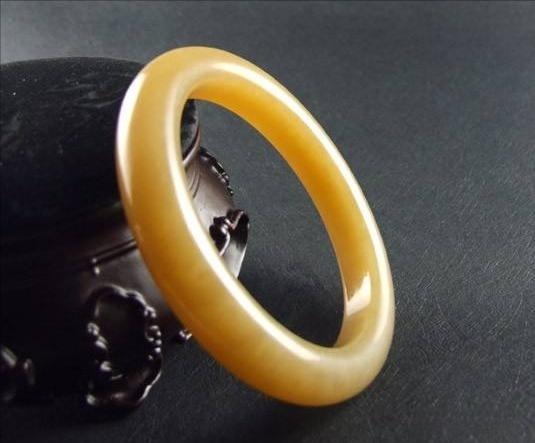
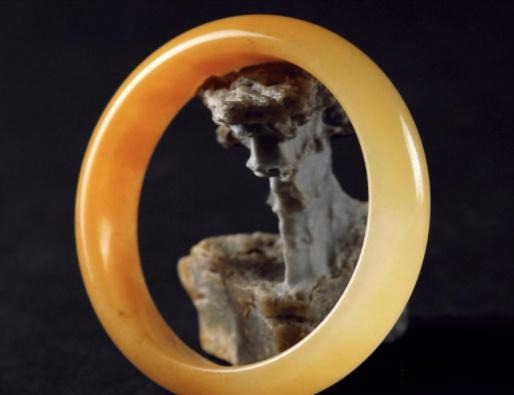
Visually, the “Sugar Jade” (reddish-brown) variety of Nephrite looks strikingly similar to brownish-yellow Jinsi Jade. Furthermore, the “Blue and White” (Qinghua) Nephrite often “clashes” with the black-and-white phanerocrystalline varieties ofquartzite Jade.
Love the look of Sugar Jade but worried about its longevity? Explore Sugar Jade Fading Explained: Causes, Myths, and What Collectors Should Know to learn how to identify and maintain the beauty of this unique nephrite variety.
How to Tell Them Apart with the Naked Eye
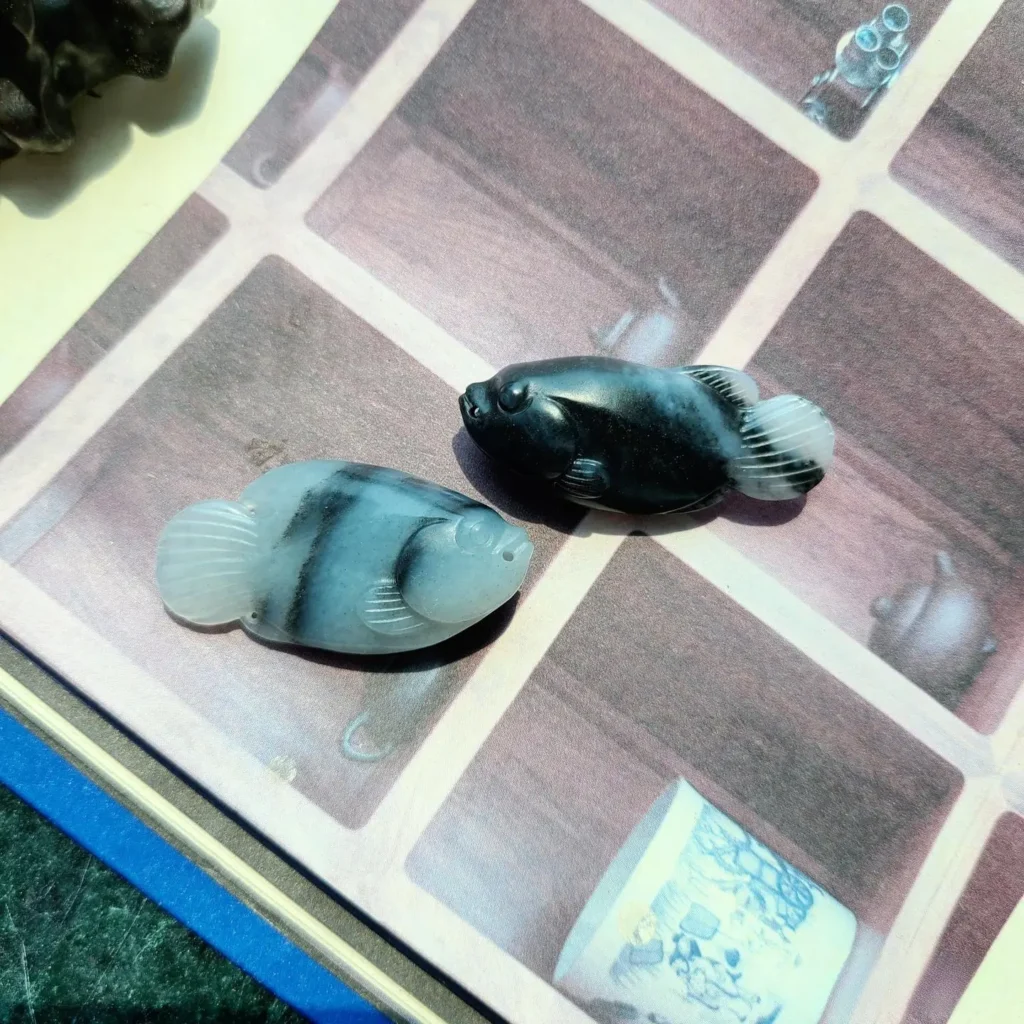
To distinguish these two, you must focus on internal structure and luster:
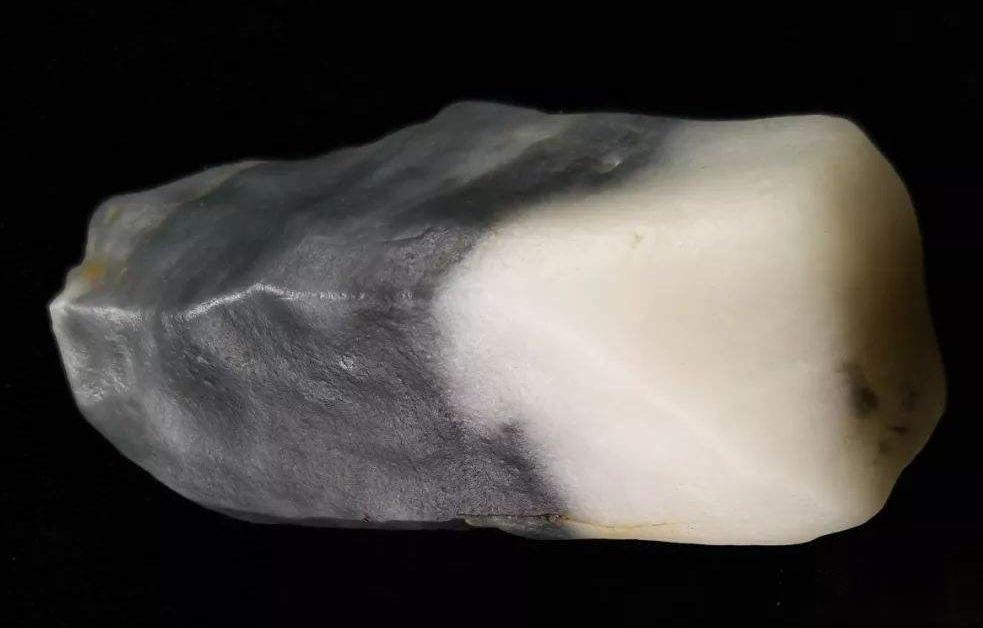
- Structure: Under a flashlight, Jinsi Jade reveals a granular (grain-like) structure, occasionally containing mica or other mineral inclusions. You will also spot its signature cloud-like vein structures (the “radish-pulp” pattern).
- Texture & Luster: Nephrite displays a fibrous, felted structure. While Jinsi Jade has a glassy (vitreous) shine, Nephrite is prized for its distinct greasy luster—a smooth, “oily” tactile quality that quartzite cannot replicate.
2. Shoushan Stone vs. Jinsi Jade
Sourced from Fujian, China, Shoushan Stone is a national treasure and one of the “Four Great Seal Stones” of traditional Chinese culture. Its sub-categories are vast, ranging from the legendary Tianhuang (Field Yellow) and Peach Blossom Jelly to Furong and Ox-horn stones. To truly appreciate its unique charm, you can explore the distinction between Rose Quartz or Shoushan Stone? The Captivating Beauty of China’s “Furong” Gems, as these varieties—especially the yellow, orange, and red ones—are most frequently confused with Jinsi Jade.
How to Distinguish Them with the Naked Eye
To tell them apart, focus on hardness, luster, and texture:
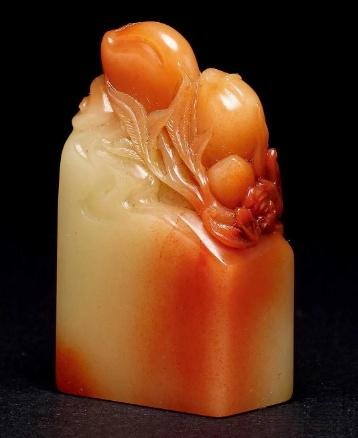
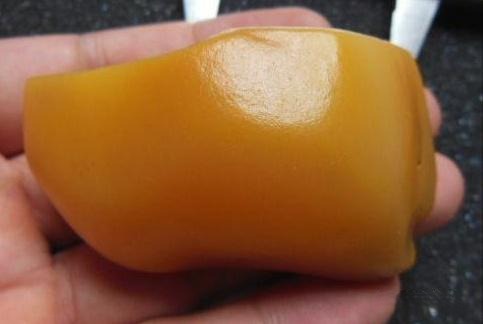
- Hardness & Composition: Shoushan Stone consists primarily of kaolinite-group minerals. Its soft texture makes it perfect for intricate seal carving (it can be easily scratched with a steel blade). In contrast, Jinsi Jade is a high-hardness quartzite (Mohs 6.5–7) that resists simple scratches.
- Luster: Once polished, Shoushan Stone exhibits a more ‘muted’ or waxy luster, whereas Jinsi Jade delivers a much brighter, vitreous shine—with premium cryptocrystalline varieties possessing a distinctively moist, translucent glow that Shoushan Stone lacks.
3. Huanglong Jade vs. Jinsi Jade
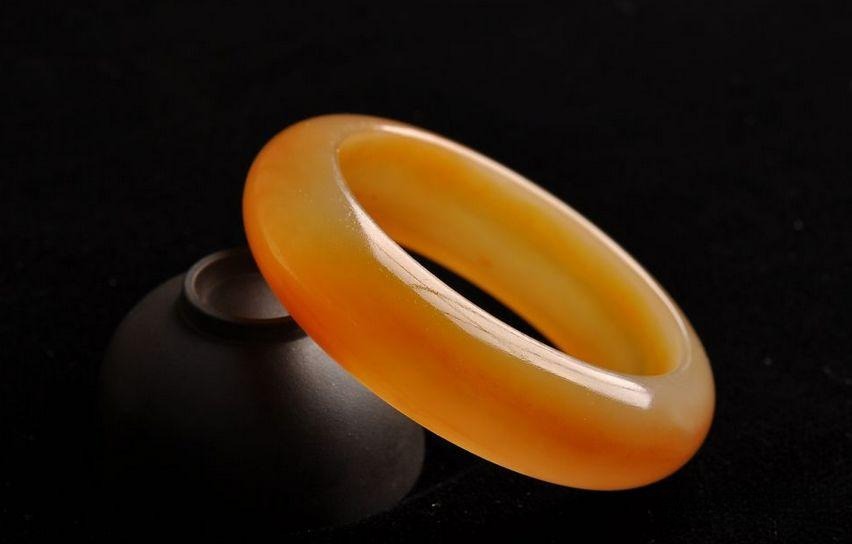
First discovered in 2004 in Longling, Yunnan, Huanglong Jade features a primary color palette of yellow and red, though it can also appear in mutton-fat white, greenish-white, black, gray, and green. During its early years, Huanglong Jade saw a massive market surge, with its yellow varieties commanding the highest prices. For a balanced look at its market evolution and quality standards, you can read our full report: Is Huanglong Jade Worth Buying? The Reality and Value of This Quartzite in a Post-Hype Market.
Shared Origins and Composition: Technically speaking, they are varieties of quartzite jade. Since both consist primarily of silicon dioxide SiO₂, they share a very similar appearance and color range.
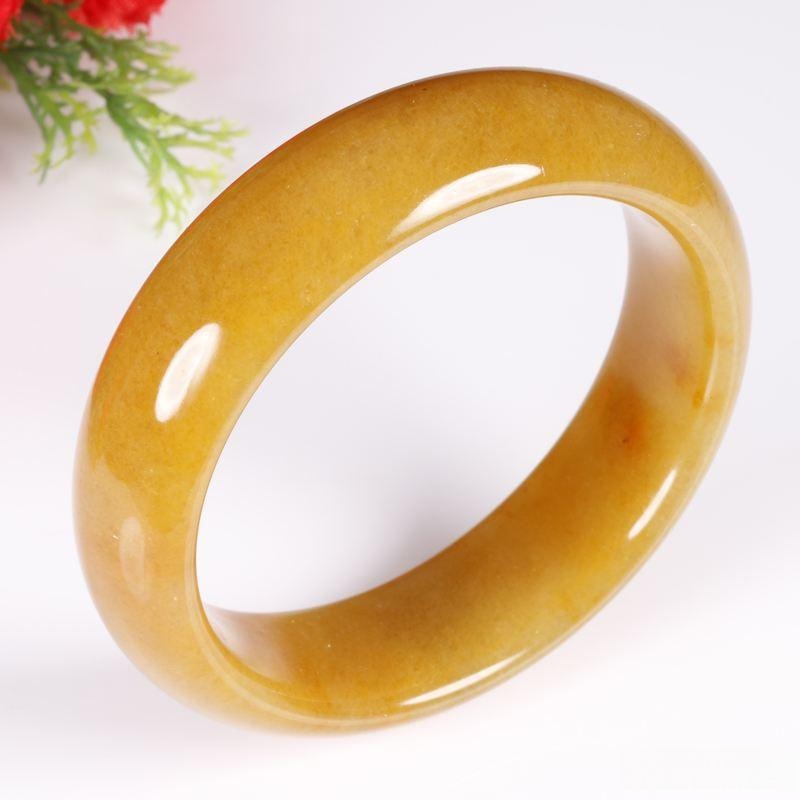
The Key Distinguishing Feature: According to official classifications, the most significant difference between the two is their internal texture:
- Jinsi Jade features characteristic fine, cloud-like vein structures (the signature internal grain).
- Huanglong Jade generally lacks this specific textured pattern.
In my professional opinion, because both are essentially high-yield quartzite jades, their intrinsic market value remains largely on par with one another.
Shetai Jade vs. Jinsi Jade
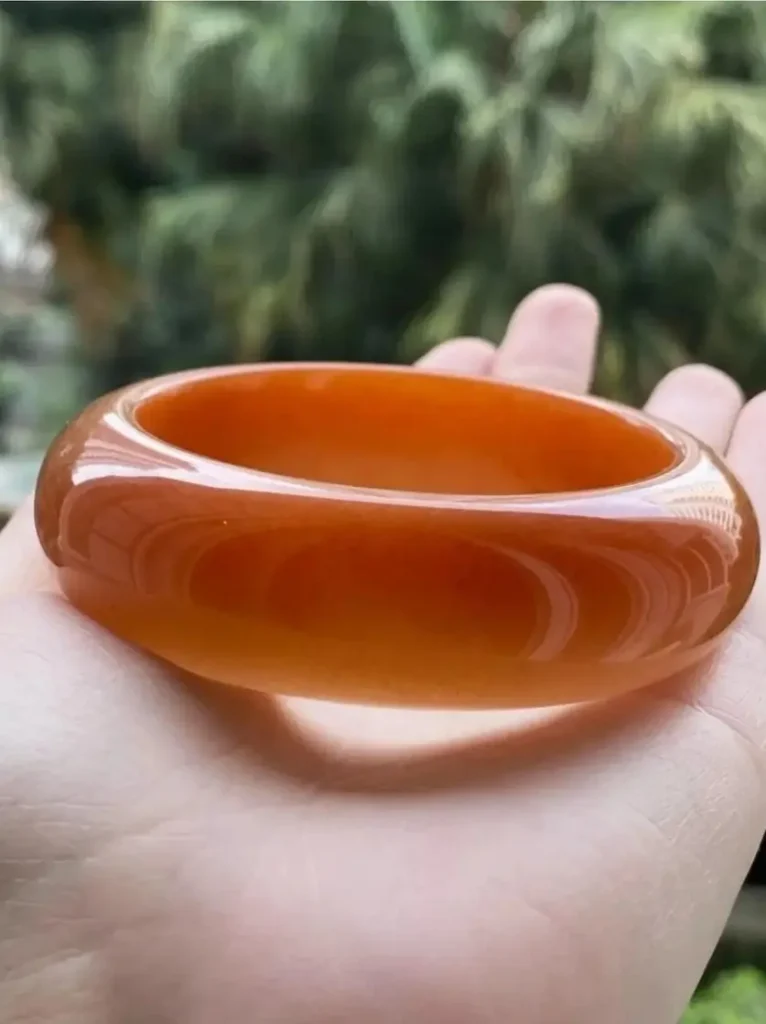
Both Shetai Jade and Jinsi Jade belong to the quartzite jade family, yet they originate from different regions: the former comes from Inner Mongolia, while the latter hails from Xinjiang.
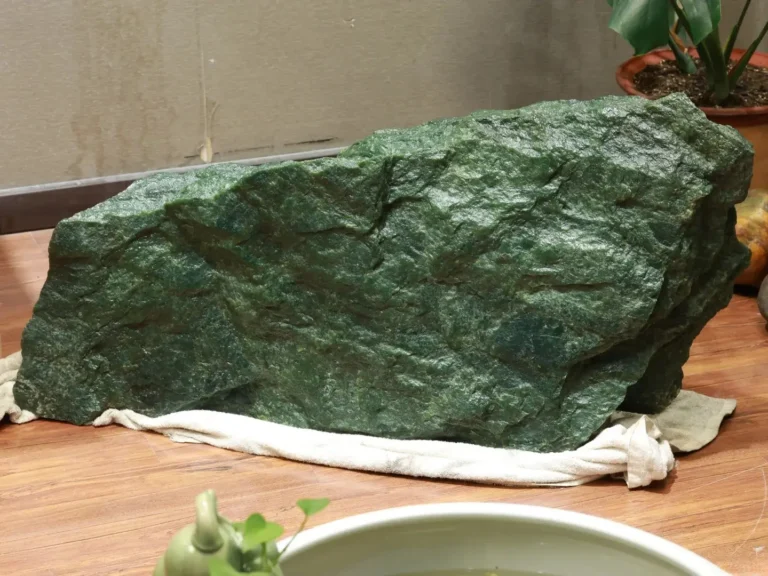
Generally, these two varieties occupy distinct color profiles. Shetai Jade, sourced from Dayutai Town in Inner Mongolia, predominantly features green hues. In contrast, green is exceptionally rare in Xinjiang’s Jinsi Jade, which instead showcases a palette dominated by yellow, orange, red, and white tones.
Jewea’s Expert Insight
Quartzite is one of the primary rock-forming minerals on Earth, making quartzite jade the most budget-friendly and accessible category in the world of gemstones. (Want to dive deeper into the world of quartz? Check out our guide: [50 Quartz Varieties: Can You Name Them All?]
As a natural stone for daily wear, Jinsi Yu is an excellent choice. Its durability and vibrant colors make for stunning jewelry. However, due to its abundant natural reserves, it does not typically possess the potential for short-term investment or significant appreciation. I recommend choosing Jinsi Yu for its aesthetic beauty and the joy of wearing it, rather than as a financial asset.