Types of Agate: Exploring Rare and Unique Varieties from China
In our previous article, we explored some of the most famous types of agate—the “celebrity” red varieties, including Southern Red, Northern Red, and Warring States Red Agate.
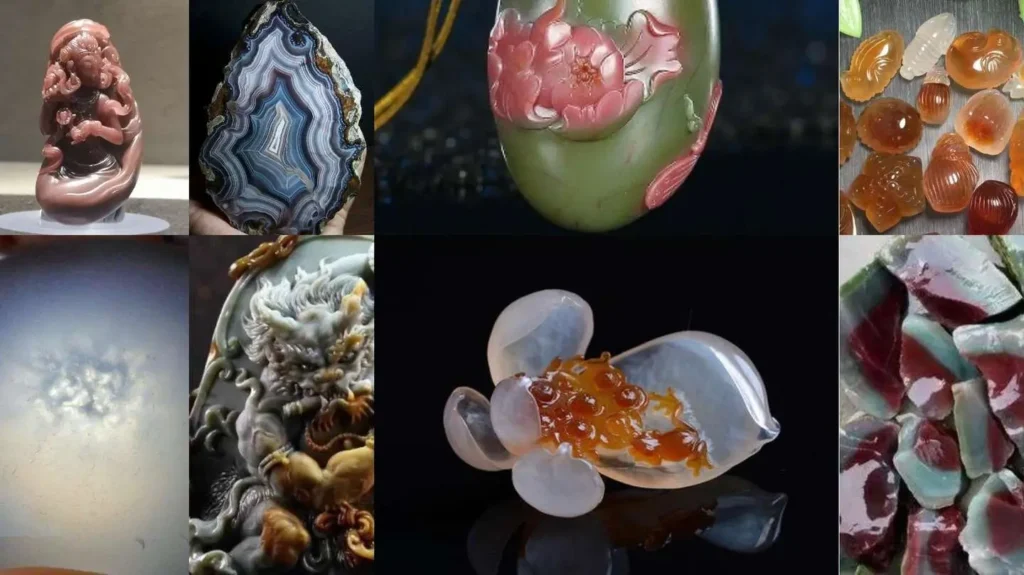
But beyond these well-known varieties, there are many other stunning and distinctive agates, each with its own unique character. In this article, Jewea introduces some of China’s lesser-known but captivating agates, including anyuan, Purple-Green, Alashan, Enhydro, and Banded Agate.
Yanyuan Agate: The “Walking Rainbow” Among Types of Agate
When collectors discuss fine agates from China’s Sichuan province, Nan Hong (Southern Red) Agate typically dominates the conversation. For those seeking a deeper technical analysis, explore our study: Southern Red Agate: The Complete Guide to Colors, Quality, and Authenticity.
However, tucked away in the western reaches of Liangshan Prefecture lies another stone: Yanyuan Agate. Geologically speaking, Yanyuan and Nan Hong are close cousins, sharing a similar regional origin yet offering a completely different visual narrative.
Yanyuan Agate: Expanding into the Mass Market
The market presence of Yanyuan Agate has grown significantly in recent years. Once a localized material known only to regional collectors, it is now a standard staple in the gemstone market. High-quality specimens are no longer niche items; they now command stable professional prices per gram due to their increasing demand.
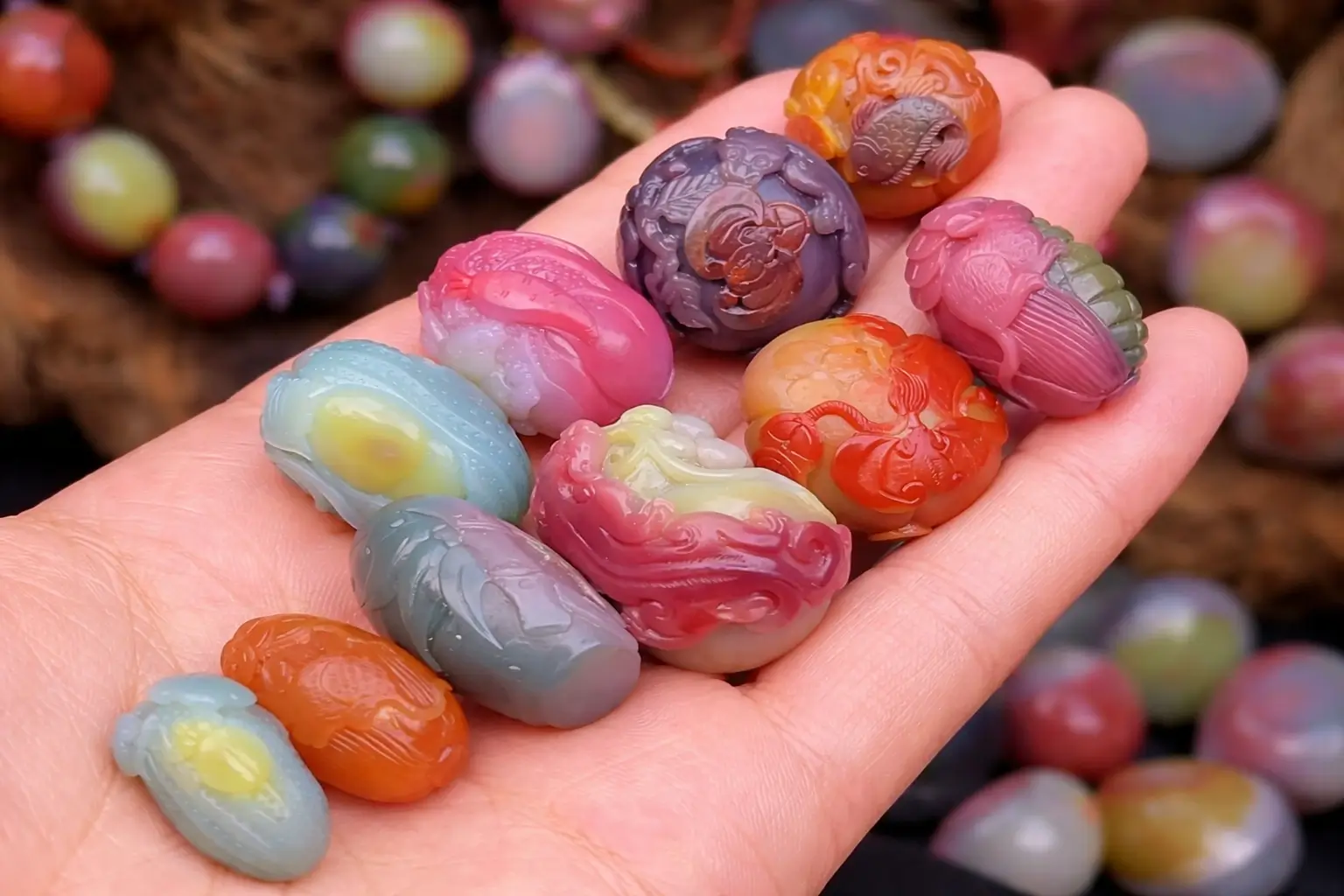
This market expansion is driven by the stone’s diverse color range. Yanyuan Agate naturally occurs in a broad spectrum, including yellow, green, red, purple, and earthy brown. Because of this variety, it is commonly referred to in the trade as “Multi-Color Jade” or “Seven-Color Jade.” The material is often characterized by its dense, pastel hues, which provide a distinct aesthetic compared to the more transparent chalcedony varieties.
Exceptional Texture and Aesthetic Appeal
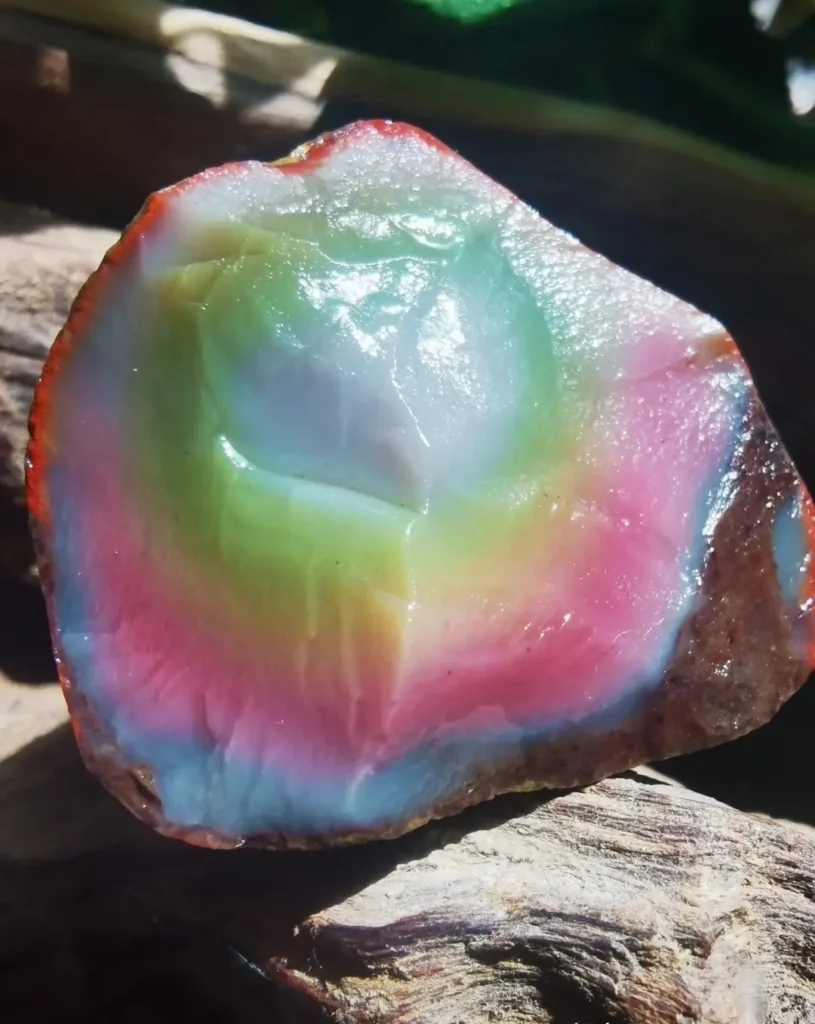
What truly sets Yanyuan Agate apart is its seamless color transitions. Instead of harsh bands or abrupt lines, the colors bleed into one another like delicate ink wash paintings, creating a sense of fluid, rhythmic movement within the stone.
Beyond its visual charm, the physical properties of Yanyuan Agate are exceptional:
- A Refined, Tactile Experience: The stone possesses a dense, compact structure with a jade-like warmth that feels substantial and smooth to the touch.
- Oily, Lustrous Finish: Once expertly polished, Yanyuan Agate emits a rich, “waxy” or oily luster. It avoids the cheap, glassy glare of lesser stones, opting instead for a sophisticated, understated glow.
- Well-Suited for Carving: Its unique toughness and diverse color zones provide master carvers with an infinite playground for “color-point carving” (Qiaose), where the natural hues of the stone are integrated into the artistic subject itself.
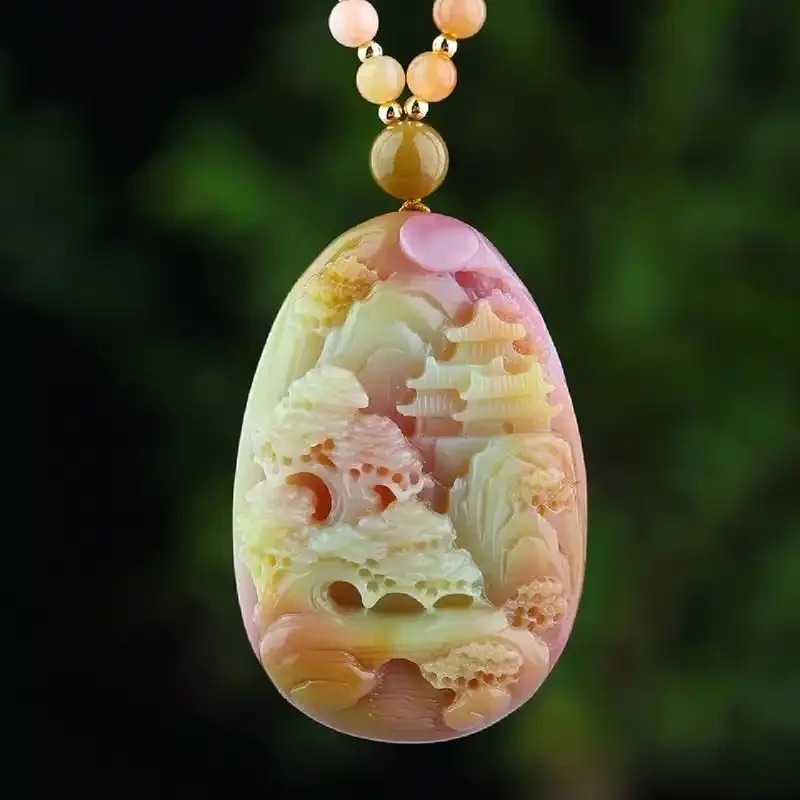
Purple-Green Agate: Among the Distinctive Types of Agate from China
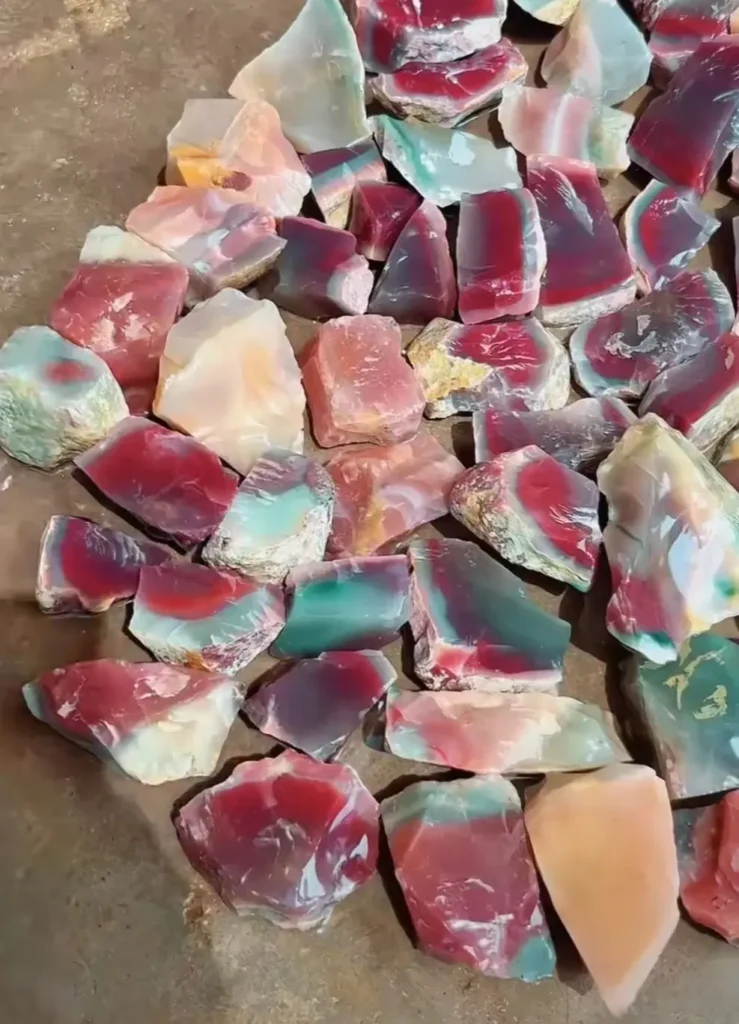
Deep within the majestic Qinling Mountains of Shaanxi Province, China lies a highly distinctive silicate variety: Purple-Green Agate. While geological surveys first hinted at its presence in 2011, this variety officially captivated the market in late 2015. Centered around four key mining hubs in Luonan County—Maping, Shimen, Shipu, and Xunjian—this agate quickly rose to prominence in the world of fine lapidary art, prized for its exceptionally fine texture and dignified color palette.
Deep Tones and a Velvety Soul
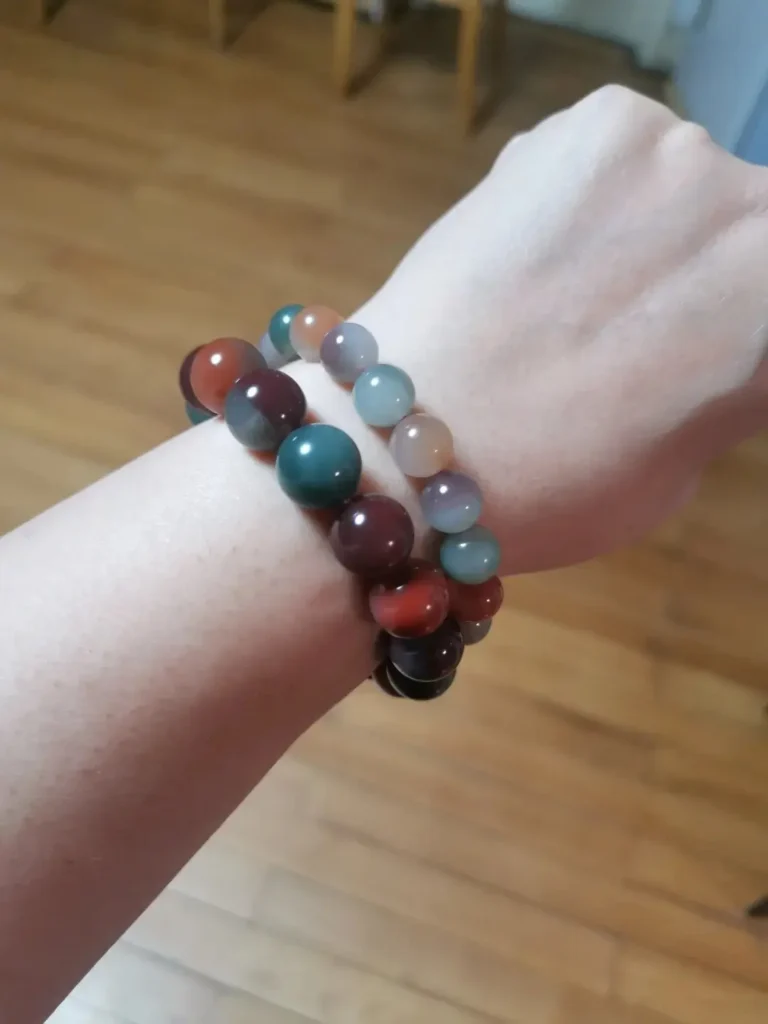
While it shares a waxy luster with Yanyuan Agate, Purple-Green Agate is characterized by its high color saturation and varying transparency.
- Primary Palette: High-quality specimens feature a distinct tri-color combination of deep violet, forest green, and honey yellow.
- fine, paste-like texture: High-grade specimens are defined by an ultra-fine grain (microcrystalline), resulting in a smooth, uniform consistency. This density produces a diffused, internal glow rather than a sharp, glassy surface reflection.
A Volcanic Legacy
The striking beauty of Purple-Green Agate is a gift of ancient volcanic activity. Geologists typically categorize the raw material based on its formation:
- Nodule-Type Deposits: Formed within volcanic cavities or geodes, these nodules are prized for their structural density and consistent mineral texture.
- Flow Material: Created as volcanic magma spilled across the landscape, cooling into layered veins.
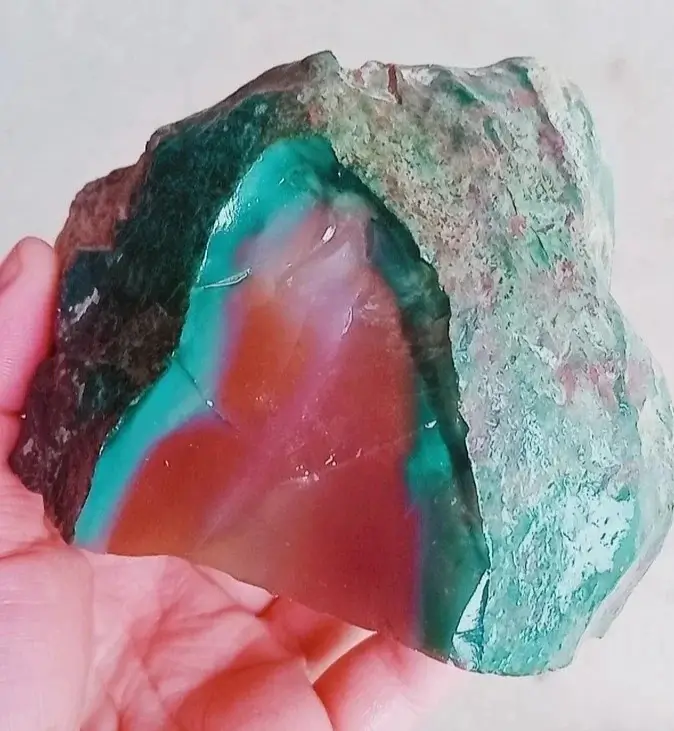
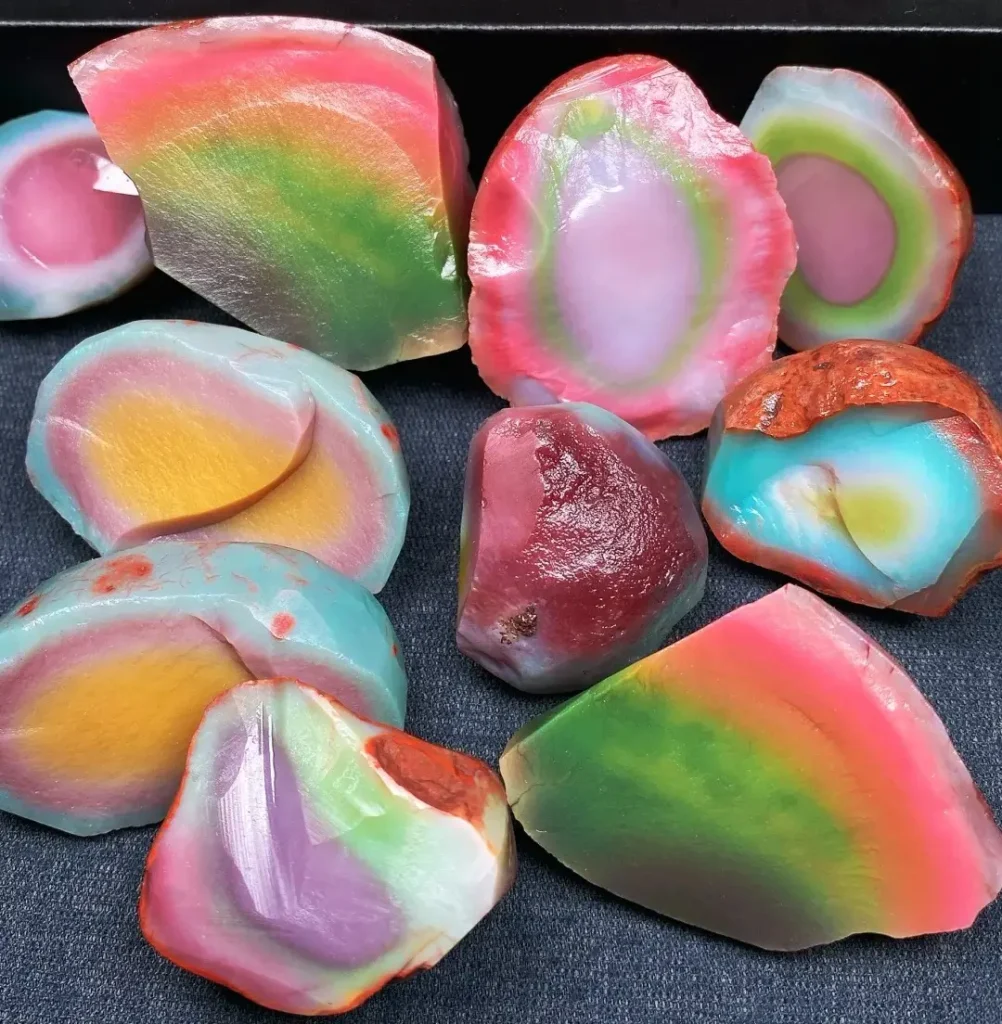
Visually, many raw specimens feature a lush green outer crust encircling a vivid purple or red core—a natural phenomenon reminiscent of the iconic Watermelon Tourmaline. However, the true magic lies in the stone’s unpredictable color zoning and “overlapping” hues, which offer master carvers a three-dimensional playground for creative storytelling.
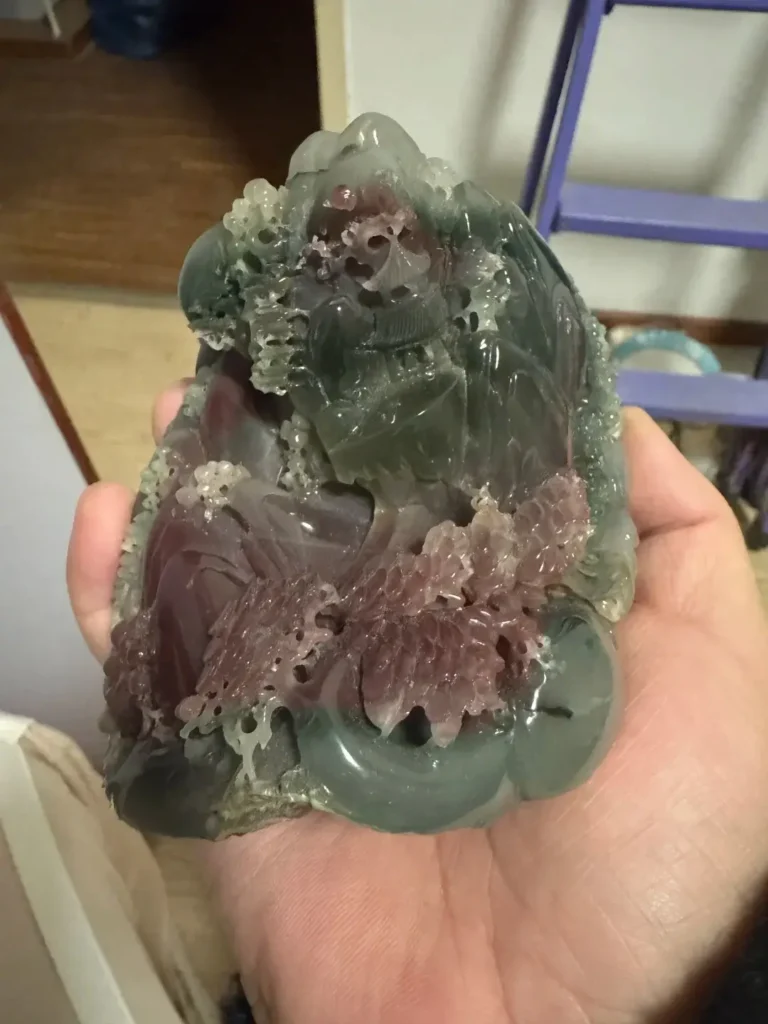
As top-tier raw material becomes increasingly scarce and artisanal appreciation grows, the market value of Purple-Green Agate continues to climb. This stone—a perfect marriage of stately grandeur and raw, natural spirit—has gained increasing recognition among collectors.
Alashan Agate: Unique Types of Agate from the Gobi Desert
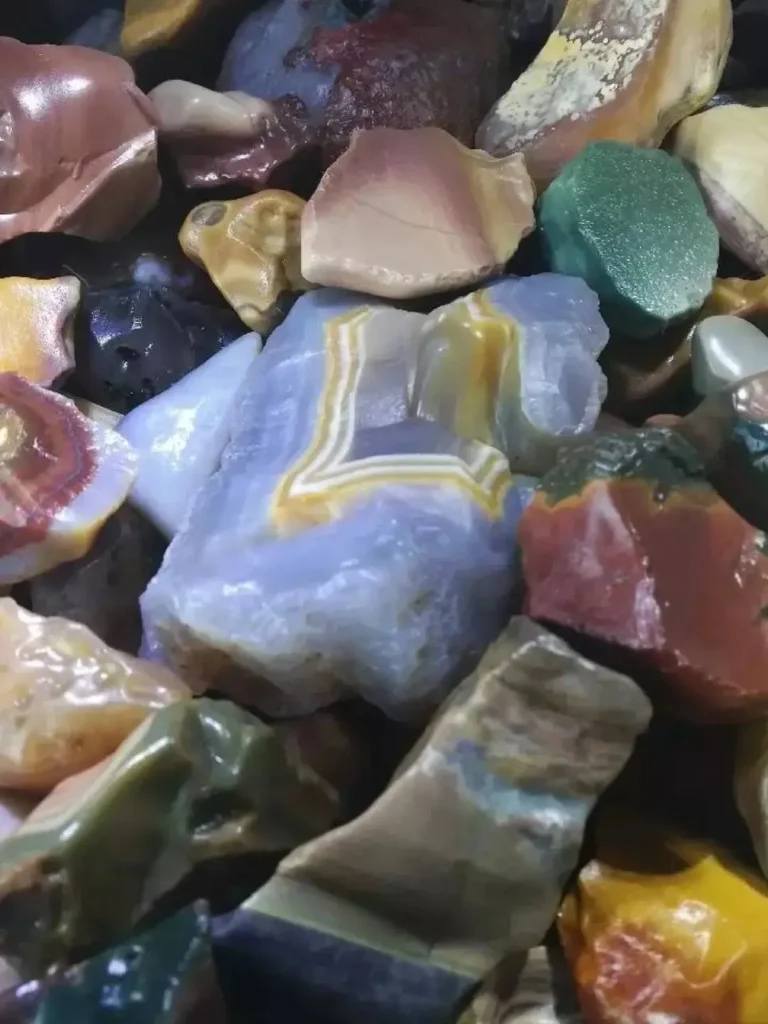
Alashan Agate, sometimes referred to in the trade as “Alashan Jade,” encompasses an exceptionally diverse range of materials. Despite this naming, it is important to note that these stones are not true jade in the gemological sense, but belong to the broader quartz (chalcedony) family.
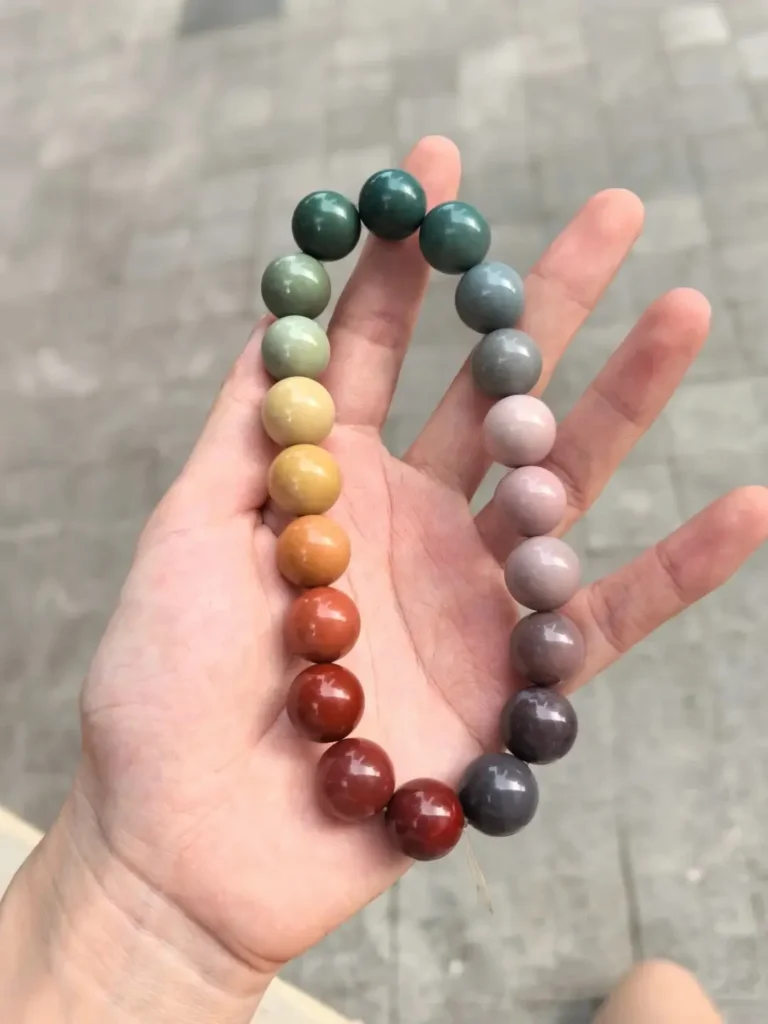
From a geological and structural perspective, Alashan materials are generally grouped into two primary categories: agate-type chalcedony and siliceous jasper. In recent years, varieties such as “Alashan Multicolored Jasper” and “Sugar-Heart Agate” have gained increasing recognition among collectors and lapidary artists for their distinctive visual character and versatility.
Alashan Multicolored Jasper
In gemological classification, “Alashan Multicolored Jasper” belongs to the [Quartzose] chalcedony family (Related Reading: Jasper vs. Nephrite Jade: The Confusing World of Red “Jade” Explained).
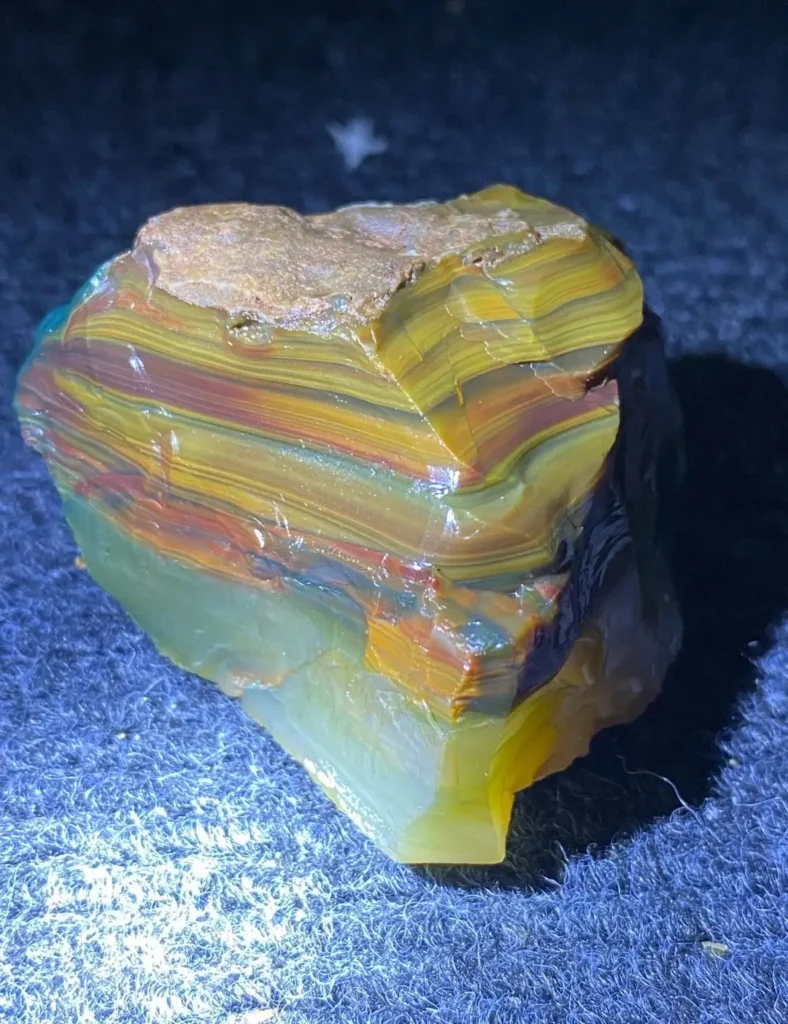
- Physical Properties: This variety features an exceptionally fine-grained texture and high mineral hardness, exhibiting a remarkably broad chromatic spectrum.
- Lapidary Utility: The frequent occurrence of vibrant contrast colors (qiaose) within a single stone provides an ideal foundation for complex three-dimensional carvings. Its distinctive, high-saturation “macaron” color palette has seen extensive use in contemporary artistic lapidary work.
Sugar-Heart Agate
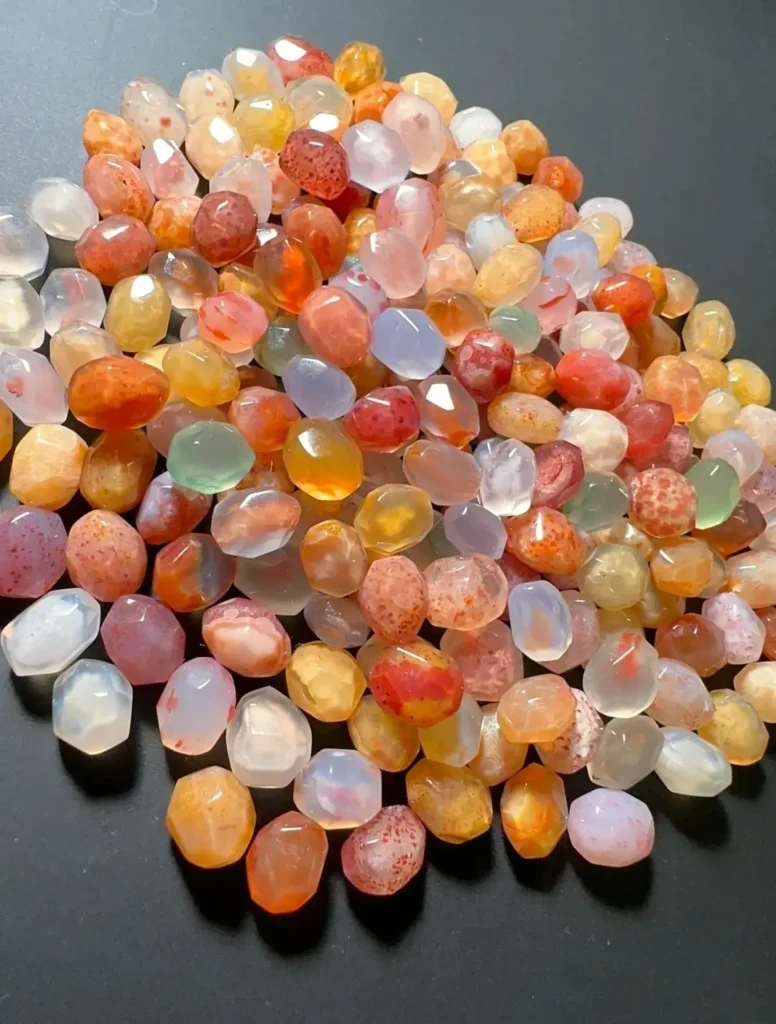
The Alashan Left Banner region in the Gobi Desert serves as the global distribution hub for this variety.
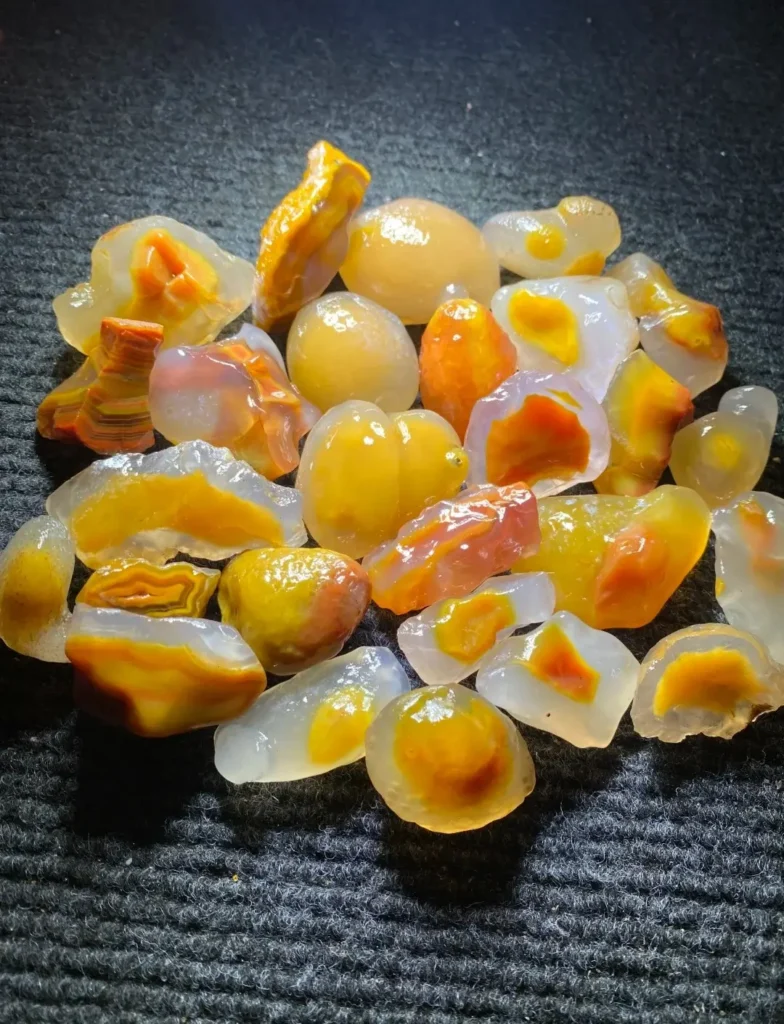
- Distinctive Structure: Unlike monochromatic stones, Sugar-Heart Agate features a highly recognizable “core-and-crust” formation. In particular, a translucent outer layer encases a saturated, darker mineral center known as the “sugar heart.”
- Carving Potential: This natural contrast allows carvers to utilize the spatial relationship between the layers. As a result, they can create complex, high-relief works of art with distinct internal depth.
Enhydro Agate: A Unique Type of Agate with Trapped Water
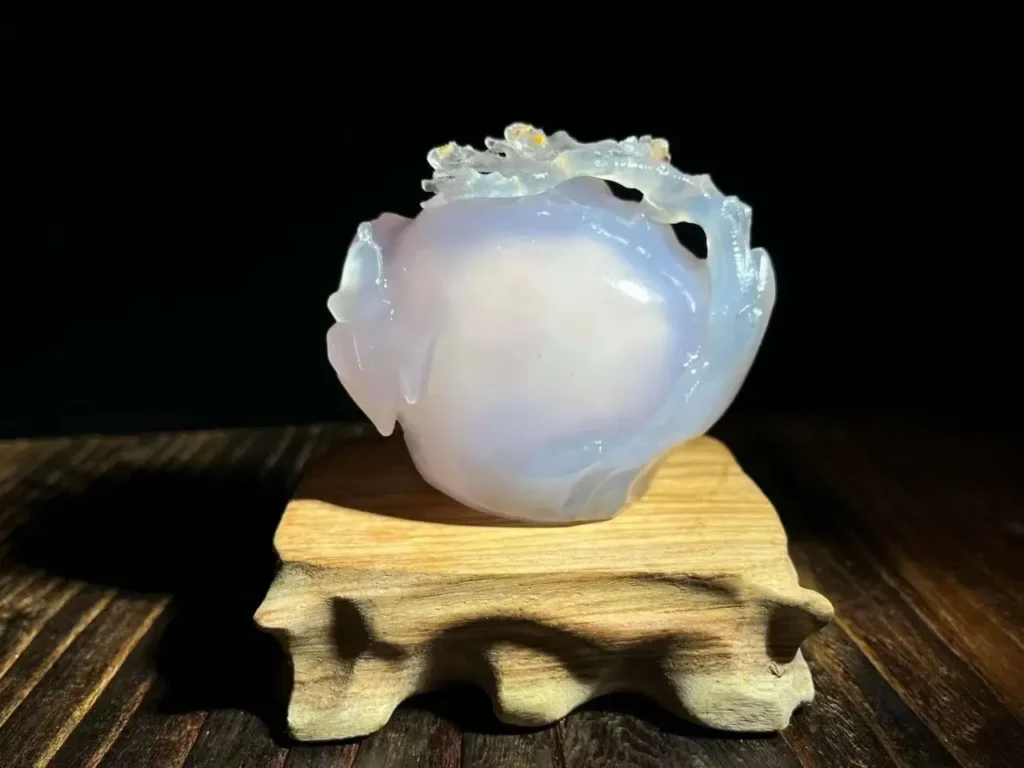
An Enhydro Agate is a geological rarity featuring prehistoric water hermetically sealed within its central cavity. While raw specimens may only reveal their liquid interior through a distinct rattling sound when shaken, professional polishing transforms the stone. By thinning the agate walls to a translucent finish, lapidary artists create a window to the internal fluid, significantly increasing its collectible value. Consequently, this variety has gained increasing recognition among collectors for its rare combination of mineral banding and liquid inclusions.
How Enhydro Agate Forms
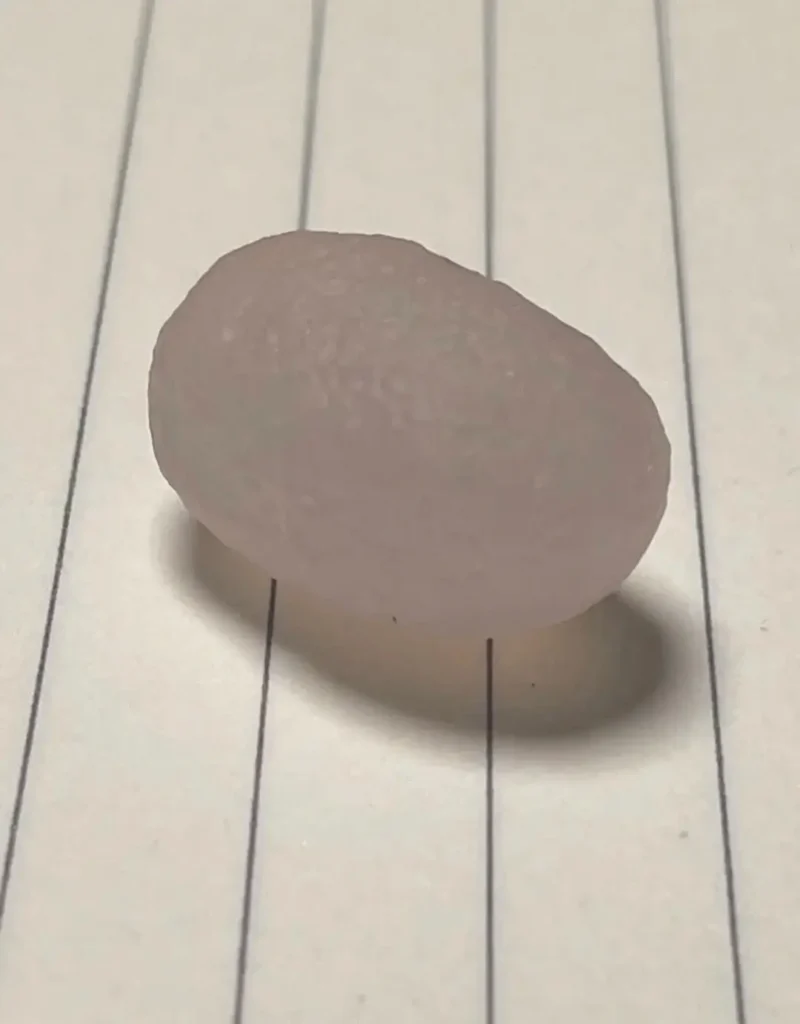
The formation of an Enhydro Agate occurs during a precise sequence of volcanic crystallization:
- Layer Deposition: Silica-rich fluids deposit mineral layers along the walls of a volcanic cavity, creating the signature banded structure.
- Fluid Sealing: If the agate walls seal the void before the core fully crystallizes, residual hydrothermal solutions remain trapped inside.
- Solidification: As the surrounding chalcedony solidifies, it preserves a permanent “liquid pocket” from the stone’s original environment.
Artificial Enhydro Agate and How to Identify It
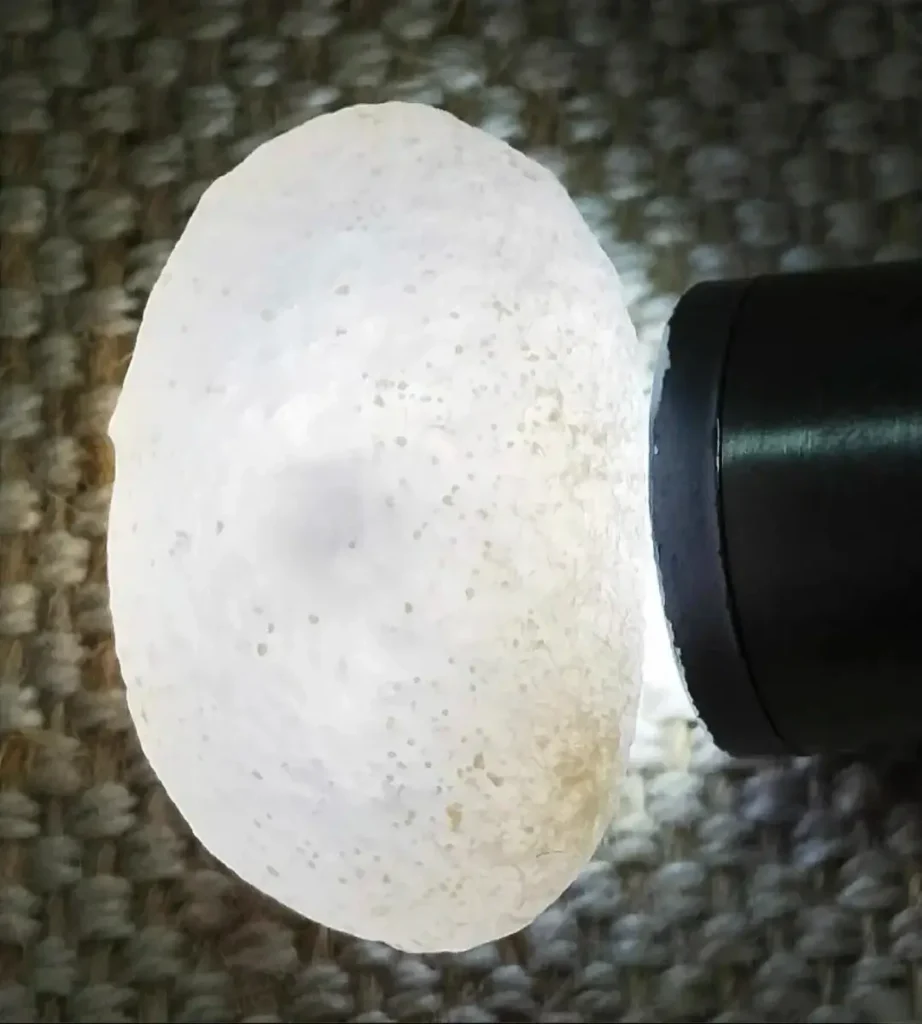
Due to market demand, artificial “injected” specimens are increasingly common. Manufacturers create these fakes by drilling minute holes into “dry” agate cavities and manually adding water.
- Concealment Methods: In raw stones, vendors often hide drill sites under layers of mud or resin. In finished carvings, they use transparent adhesives to mask the entry points.
- Durability Risk: Unlike natural specimens, these artificial seals frequently fail over time, leading to “leakage” and the eventual loss of the fluid.
- Detection Strategy: To verify authenticity, professionals use ultraviolet (UV) light. Natural specimens show a consistent surface, whereas artificial versions reveal abnormal fluorescence at the seal points, exposing modern resin residues.
Banded Agate (Onyx): Structured Types of Agate
Banded Agate is one of the most recognizable types of agate, characterized by its distinct, concentric, or parallel mineral layers. While many agates feature chaotic patterns, certain structured varieties are highly prized for their symmetry and contrast.
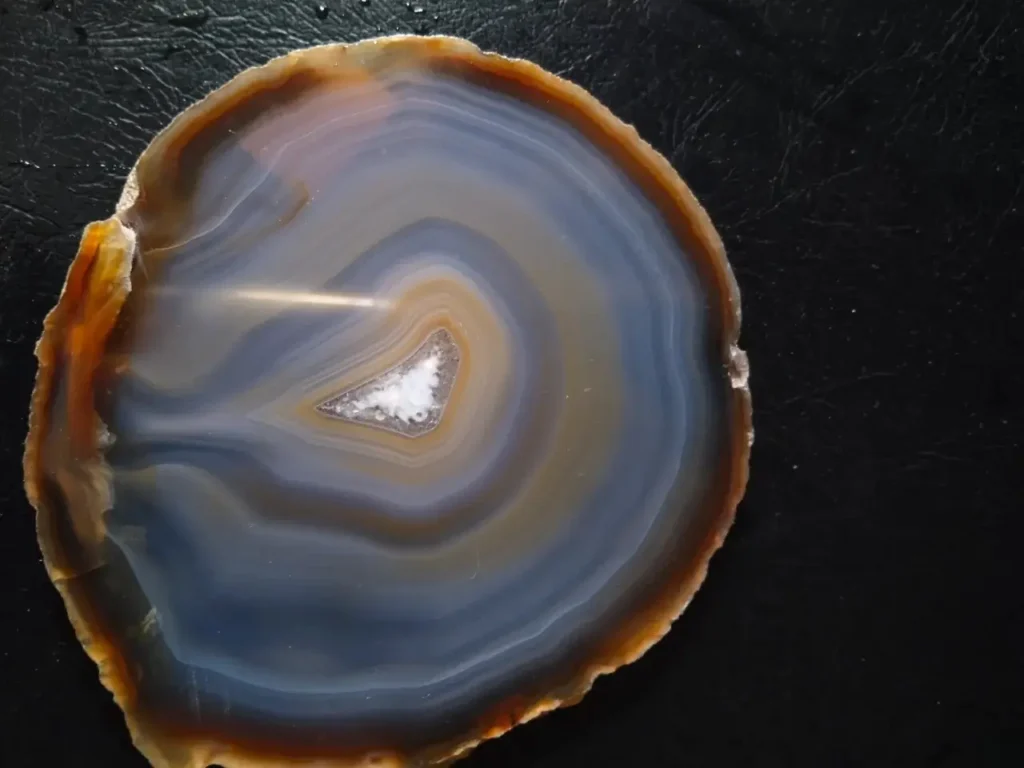
In gemological terms, Onyx refers specifically to banded agate with straight, parallel layers. These specimens typically feature simplified color palettes, most commonly in black-and-white or red-and-white combinations. Unlike moss or dendritic agates, the appeal of Onyx lies in its formal, architectural aesthetic.
Silk-Banded Agate and Sardonyx
When the banding becomes exceptionally fine and thread-like, it is often described as Silk-banded Agate.
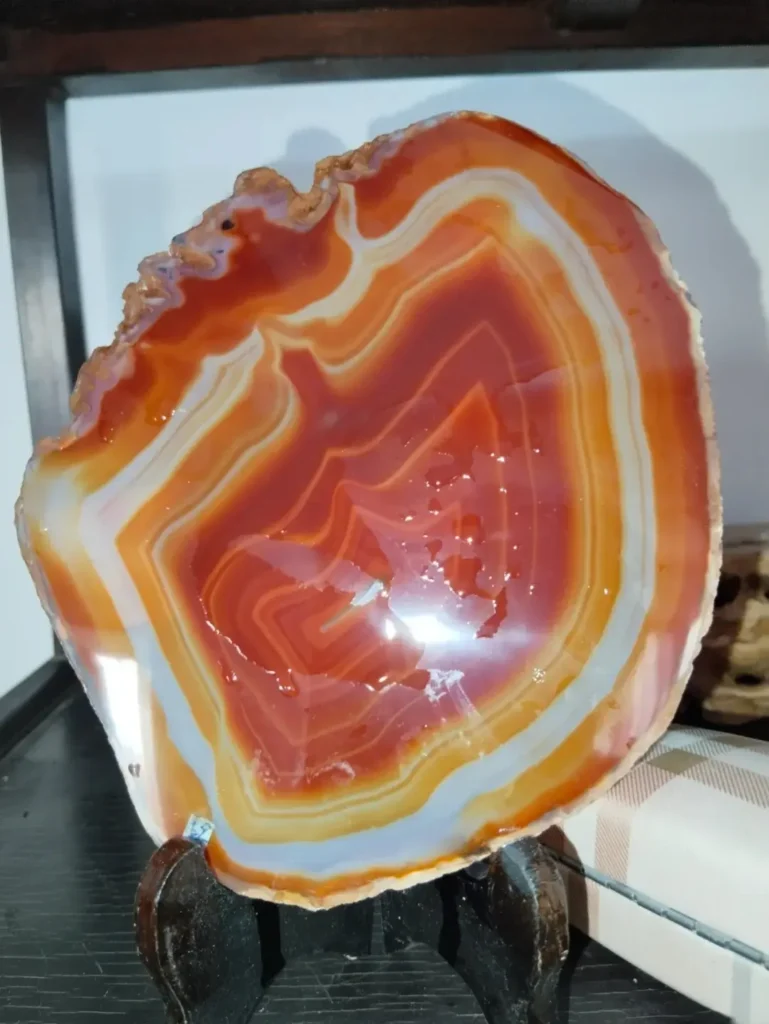
- Sardonyx: This is a specific and premium variety of silk-banded agate. It consists of alternating layers of reddish-brown (Sard) and white chalcedony.
- Artisanal Value: The high contrast and structural integrity of Sardonyx make it a preferred medium for classical cameo carving and precision lapidary work.
Market Integrity: Natural vs. Enhanced Colors
While banded structures are globally abundant, high-saturation colors often indicate artificial treatment.
- Artificial Dyeing: A vast majority of commercially available specimens featuring vivid neons—such as intense blues, greens, or purples—are the result of chemical dyeing.
- Collector Awareness: The distinction between these enhanced decorative items and natural earth tones has gained increasing recognition among collectors.
- Authentication: Natural banded agate generally exhibits more muted, mineral-based colors. Specimens with artificial-looking saturation are typically classified as commercial crafts rather than natural gemstones.
Conclusion: Embracing the Diverse Types of Agate
Though nature widely distributes agate across the globe, its vast range of subtypes offers surprising depth. Each type of agate possesses a distinct “geological character,” expressing its own natural beauty through unique structures and colors.
At Jewea, we believe the true appeal of agate lies in its individuality. From the “liquid heart” of an Enhydro Agate to the vibrant desert tones of Alashan Jasper, every stone tells a story. Which variety resonates most with your personal style?