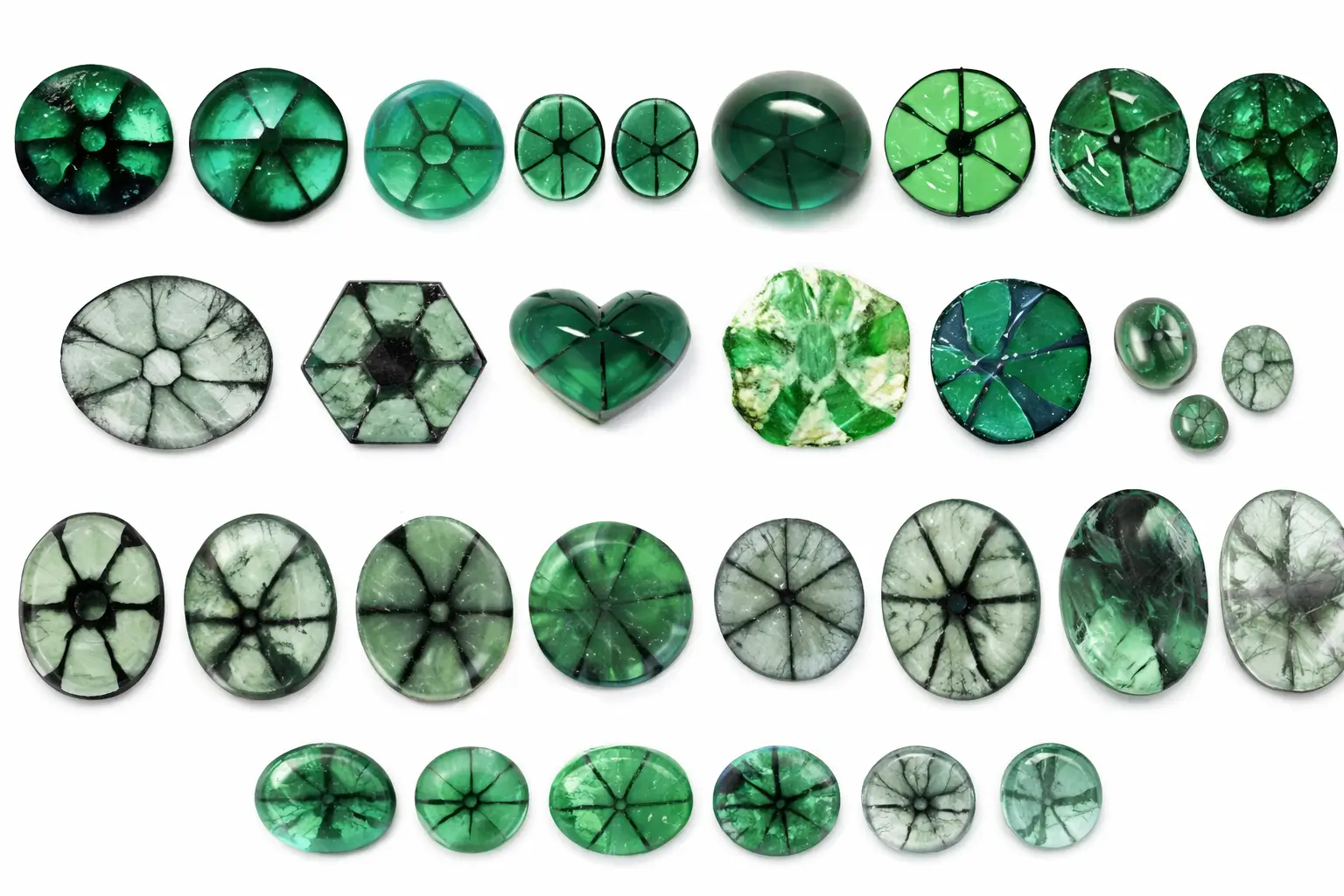
The Rebel of the Emerald World: “The Eye of the Angel” Trapiche Emerald
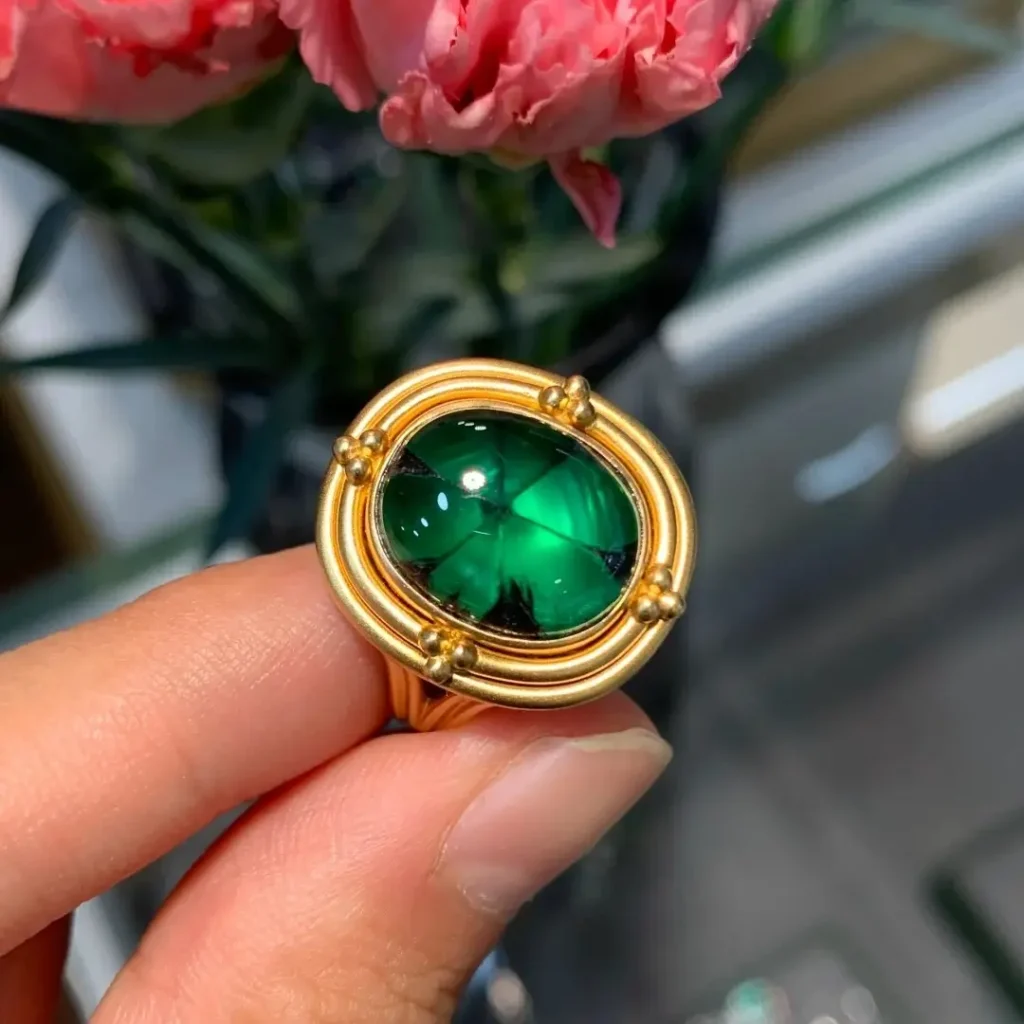
A few days ago, I showcased a remarkably unique Trapiche Emerald ring to a client. Her reaction was immediate skepticism: “Is this actually an emerald? The cracks are so obvious—do you have anything with better clarity?”
It’s a common reaction. In the collective imagination, a fine emerald should be a pool of deep, velvety green—and while we expect a few “mysterious” inclusions, we certainly don’t expect such bold, jagged lines. However, what looks like a “shattered” stone to the untrained eye is actually the Trapiche’s most prestigious hallmark.
That “divided” geometric pattern isn’t a defect; it is the very soul of the gem and the ultimate expression of its value.
Decoding the Trapiche: Not All “Six-Point Stars” are Created Equal
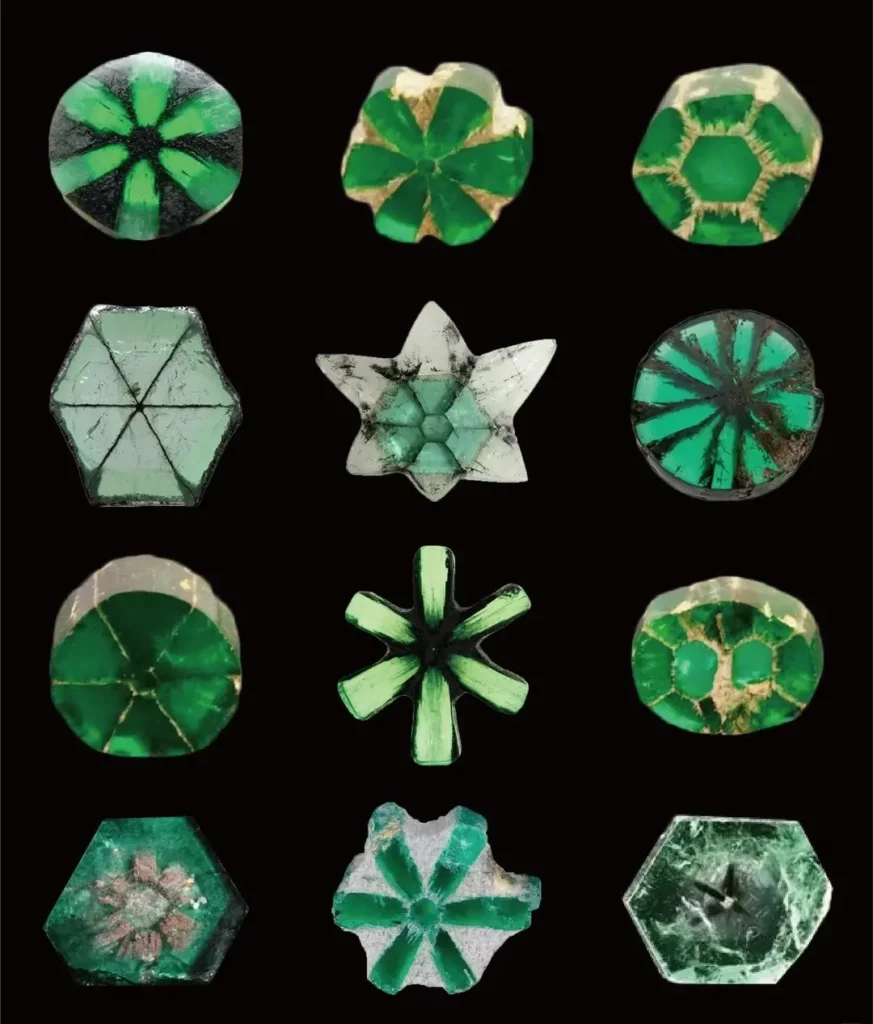
A common misconception is that “Trapiche” refers to a specific type of gemstone. In reality, it describes a rare growth phenomenon, much like the famous “star” (asterism) seen in sapphires. While this pattern can theoretically occur in any trigonal or hexagonal crystal system—such as ruby, sapphire, or quartz—it is the Trapiche Emerald that remains the undisputed icon of the category.
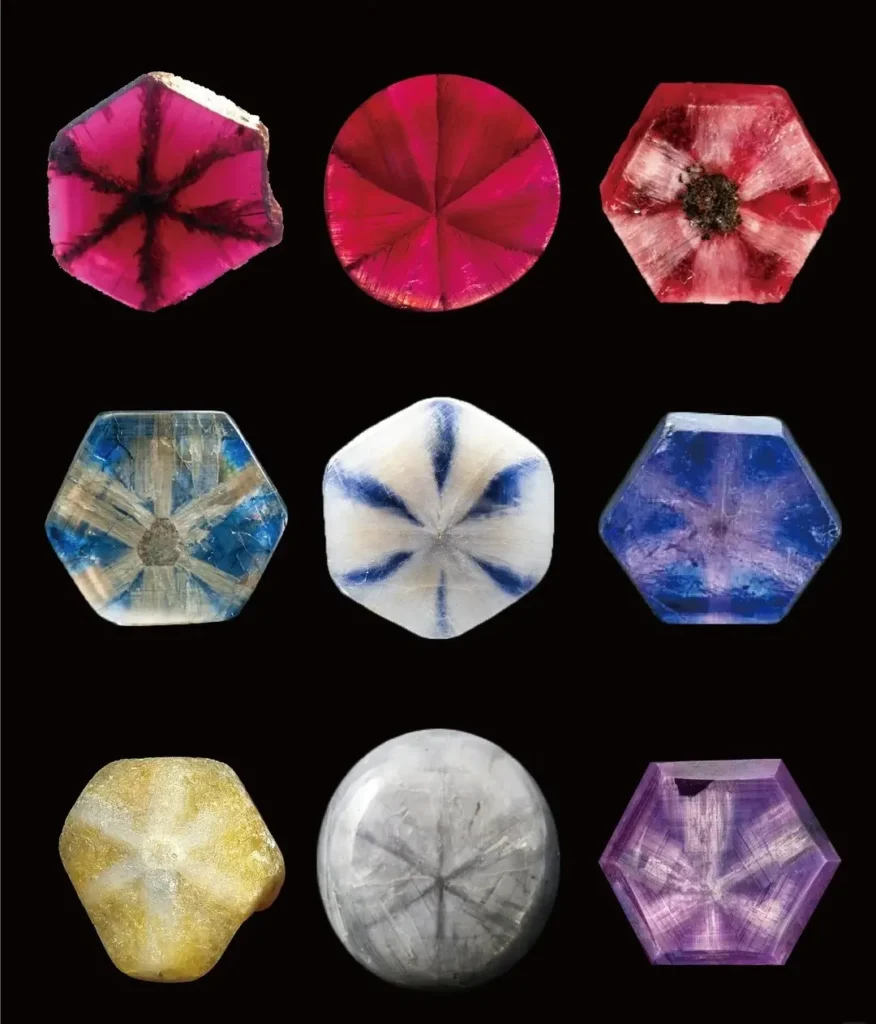
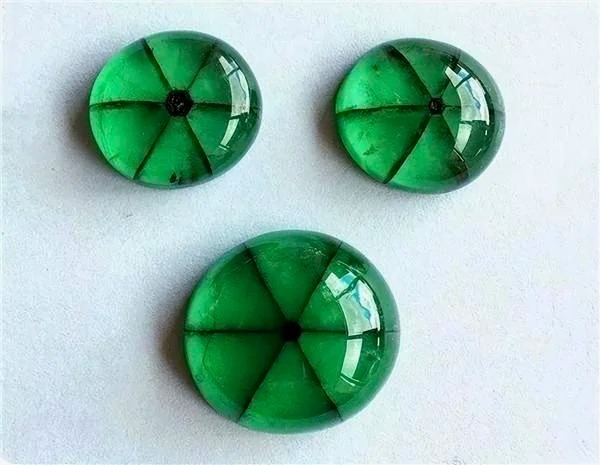
- The Origins of the Name: The word Trapiche comes from the Spanish tra·pi·che (de azúcar), referring to the heavy cogwheels used in traditional sugar mills. If you look at the stone’s six-spoke radial pattern, the resemblance to those ancient grinding wheels is uncanny.
- The “Eye of the Angel”: Beyond its industrial namesake, the stone carries a much more poetic title. Because of its deep, pupil-like center and radiating “iris” lines, collectors often call it the “Eye of the Angel.”
- Expert Tip: Growth vs. Light: Don’t let the six-point pattern confuse you with “Star Emeralds.” A star (asterism) is an optical effect caused by light reflecting off internal needle-like inclusions—it’s a trick of the light. A Trapiche, however, is a structural birthmark. It forms as the crystal grows, physically trapping impurities between its growing sectors.
In short: a “Star” is a light show; a “Trapiche” is a DNA signature.
A Century of Mystery: The Chronicle of Discovery
Far from being a “trendy” modern find, the Trapiche Emerald has been captivating scientists and explorers since the 19th century. It wasn’t just “found”; it was chronicled by some of the era’s most meticulous minds:
- The 1840s: Mapping the Unknown. During his monumental project to map the Colombian landscape, Italian geographer and engineer Colonel Agustín Codazzi first documented these peculiar crystals while surveying the legendary Muzo mines.
- 1879: The Scientific Unveiling. It wasn’t until decades later that French geologist Émile Bertrand conducted a rigorous systematic analysis. His work finally pulled back the curtain on the mineralogical secrets of the Trapiche, establishing its place in formal gemology.
The Divine Six: From Science to Soul Beyond the ledgers of geologists, Colombian folklore offers a far more intimate perspective. Local tradition holds that the Trapiche Emerald is a celestial gift—a “divine blessing” literally set in stone. In this cultural lens, each of the six radiating lines represents a specific sacred blessing.
This spiritual heritage elevates the stone from a mere mineral to a powerful talisman, making it a “guardian” for those who wear it.
The Art of the “Squeeze”: How Nature Crafts a Trapiche Emerald
A question I often hear is: “How does a perfectly normal emerald grow into such a radical shape?”
The answer lies in a fascinating process of “selective filtration” during the crystal’s formation. Think of it as nature’s own architectural struggle. As the emerald crystal undergoes periods of rapid growth, it essentially “pushes” impurities—most notably black carbonaceous matter—away from its core.
Rather than absorbing these impurities uniformly, the growing emerald compresses them into the junctions between its six hexagonal growth sectors. The result? A stunning geometric miracle:
- The Core: A central hexagonal “hub” of pure emerald or dark carbon.
- The Spokes: Six distinct radial arms branching outward, tracing the crystal’s original symmetry.
When a lapidary performs a cross-section cut and polishes the stone into a cabochon, this internal “squeeze” reveals the mesmerizing wheel-like pattern that has become the hallmark of the Trapiche Emerald. It is not a flaw; it is the physical map of the gemstone’s birth.
Provenance & Pedigree: The “Bloodlines” of the Trapiche Emerald
Not all Trapiche Emeralds are created equal. These gems are incredibly rare, sourced almost exclusively from the legendary Colombian mines of Muzo and Chivor. Interestingly, the “personality” of the stone changes depending on the soil it called home. Each mining district leaves a distinct aesthetic signature on its crystals:
- The Muzo Signature: Known for high contrast and bold geometry. A typical Muzo Trapiche features a dark, central core with striking radial arms composed primarily of carbonaceous inclusions and albite. It is the “classic” look that many associate with the sugar-mill wheel.
- The Chivor Aesthetic: These stones offer a softer, more ethereal look. In a Chivor Trapiche, the center is often a transparent green hexagonal core. Six green “arms” extend outward, while the V-shaped areas between the spokes are filled with a delicate mix of albite and emerald.
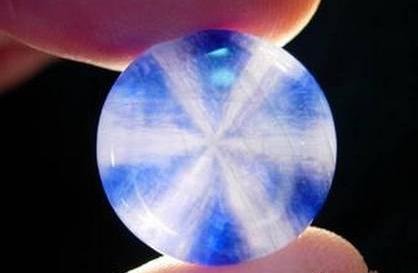
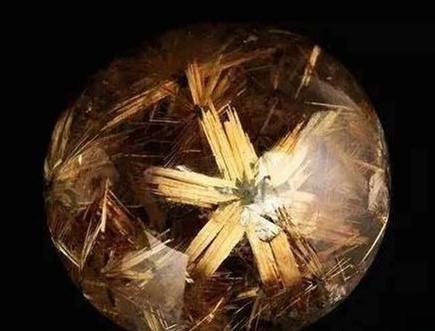
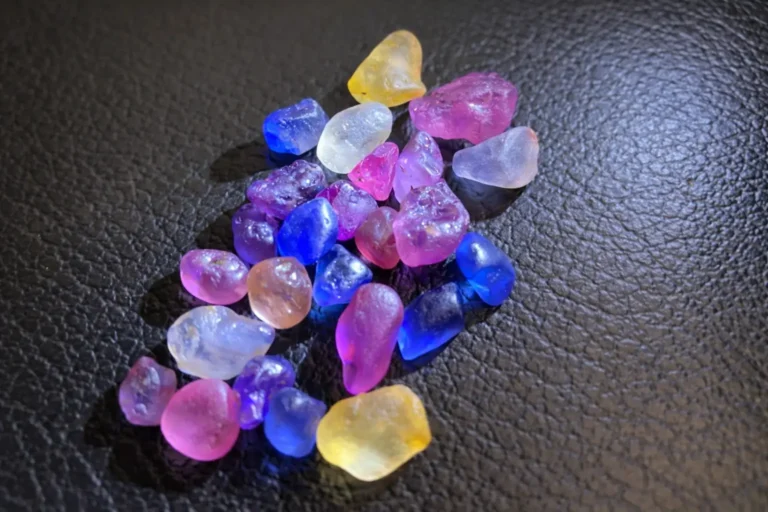
While the emerald remains the most iconic example of this phenomenon, the Trapiche family extends far beyond a single gemstone. Over the decades, gemologists have documented this mesmerizing “spoke” structure in Rubies, Sapphires, Quartz, and even Mica. For the serious connoisseur, these varieties represent the broader diversity of mineralogical art, turning any collection into a true gallery of nature’s geometric wonders.
A Jewea Perspective: Embracing the “One in Ten Thousand”
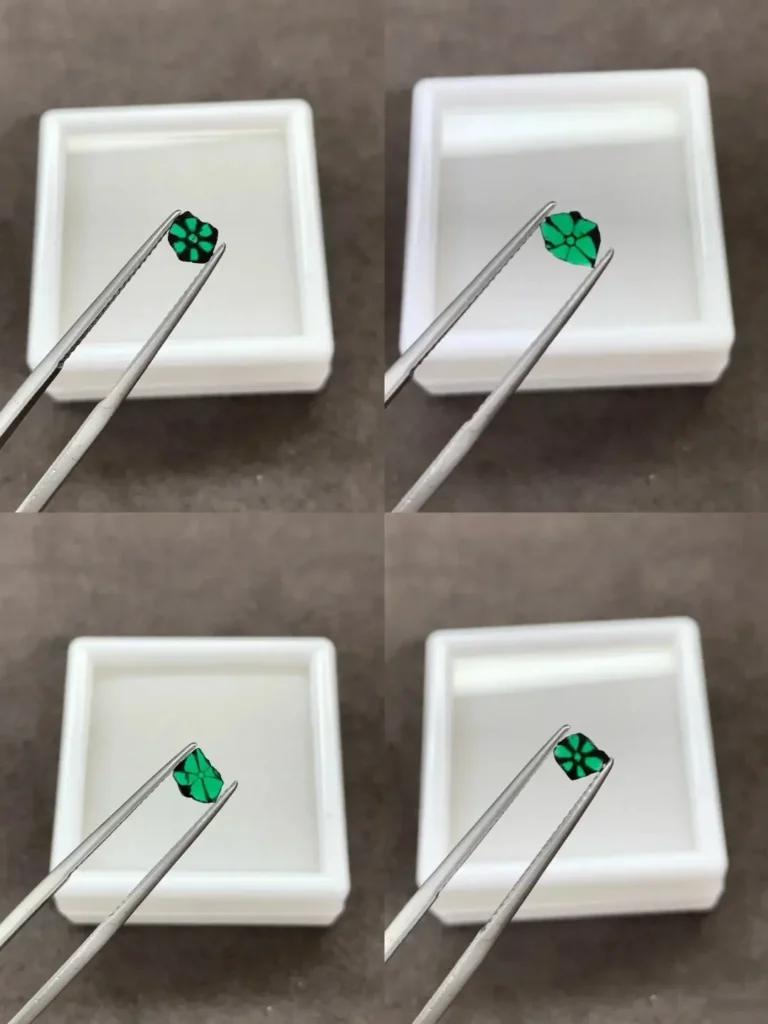
When it comes to the Trapiche Emerald, we must discard the traditional rulebook of gem cutting. To honor the “Eye of the Angel,” these stones almost never undergo a standard faceted emerald cut. Instead, we polish them into smooth, elegant cabochons—a choice that allows the radial pattern to breathe and take center stage.
To some, the Trapiche may seem less “perfect” than its crystal-clear cousins. But for the true collector, this one-in-ten-thousand rarity is nature’s most generous gift. At Jewea, we believe its beauty lies precisely in that “shattered” geometry. These are not flaws; they are nature’s high-definition fingerprints—a guarantee of scarcity and a bold statement of individuality.
If you are fortunate enough to encounter a Trapiche that speaks to you, do not let those visible lines hold you back. At first glance, they may look like “cracks,” but through the lens of a connoisseur, they are the kiss of the divine—a unique mark left by the earth itself.
In a world of mass-produced perfection, why not choose a masterpiece that was millions of years in the making?