The Pharaoh’s Choice: The 7,000-Year Mystery of Afghanistan’s Celestial Blue Lapis Lazuli
If you were to ask me, “Which gemstone possesses the purest, most mesmerizing blue?”
Beyond the prestige of a Royal Blue Sapphire, only one other stone has captivated the hearts of emperors and artists for millennia: the Celestial Blue Lapis Lazuli of Afghanistan.
Why I’ve Been Obsessed with Afghan Lapis Lazuli for Over 10 Years
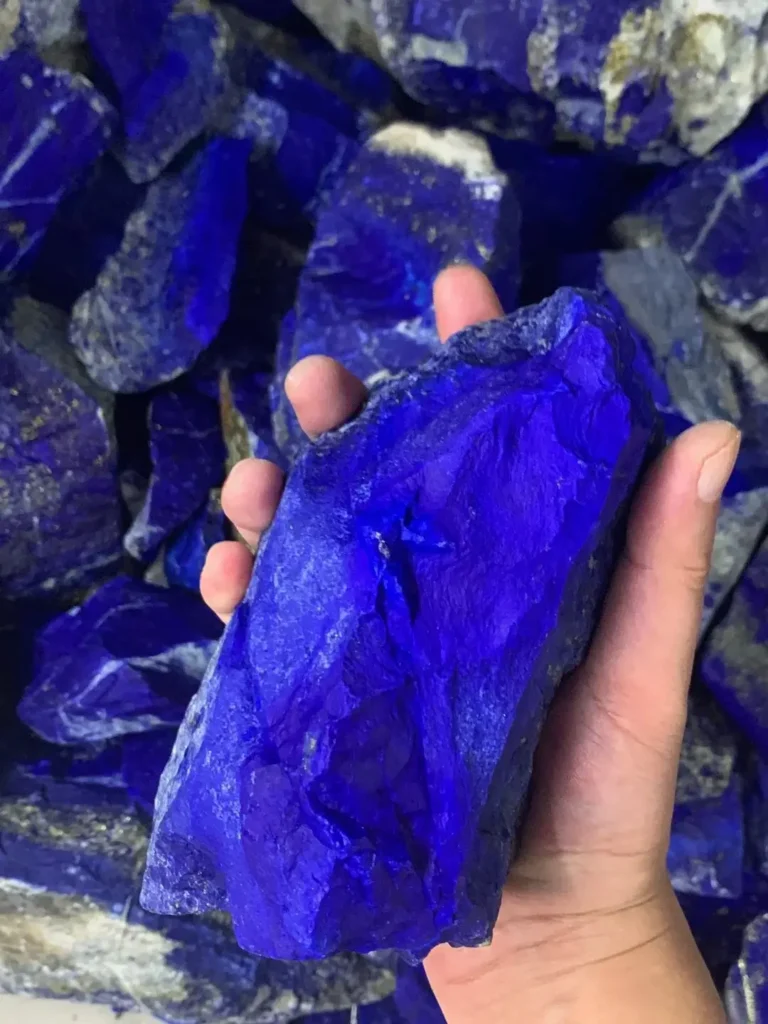
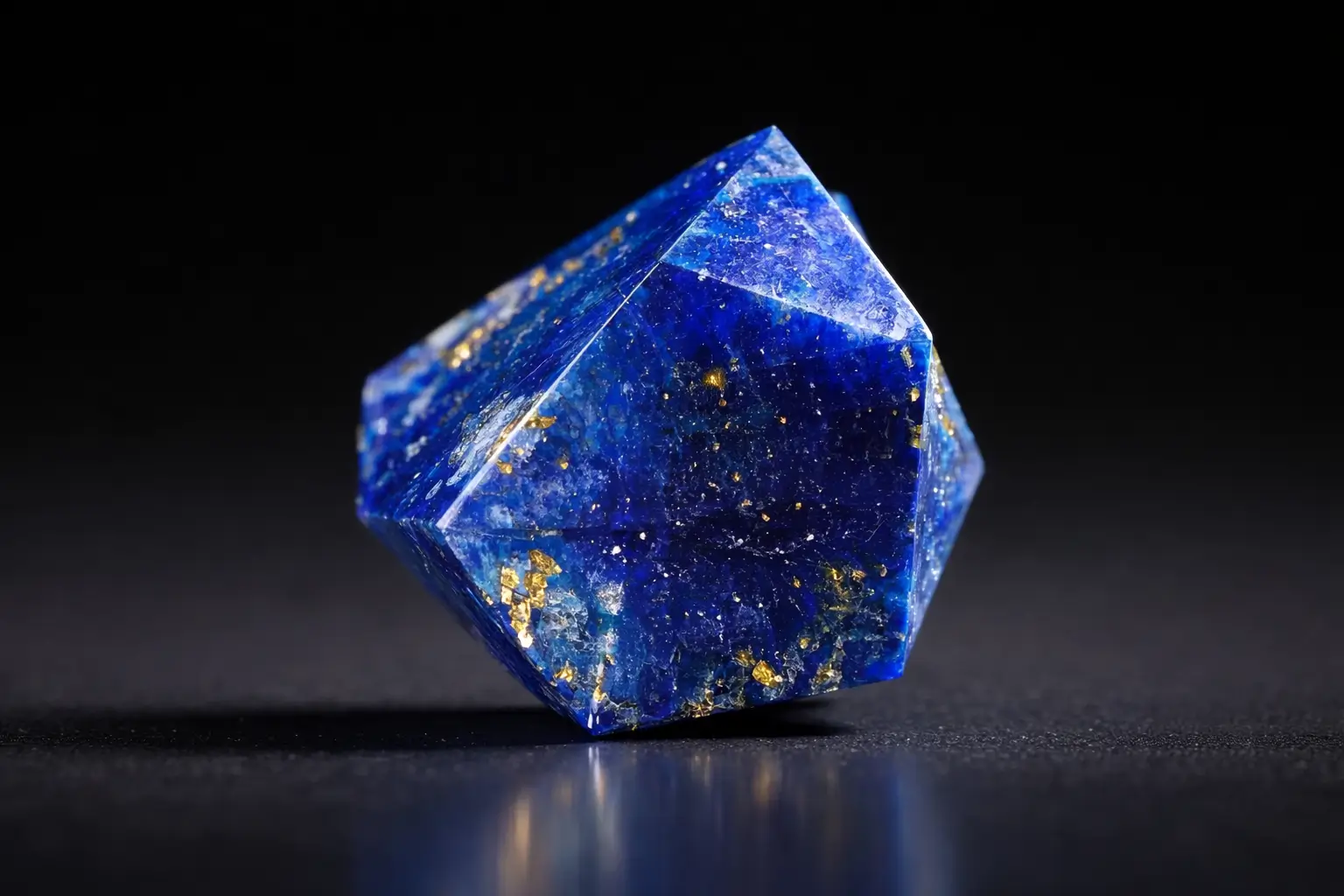
I still remember the first time I held a top-grade Afghan Lapis. It felt like holding a piece of the midnight sky. What mesmerizes me is that deep, soulful violet-blue unique to these mines, accented by “stars”—shimmering flecks of golden pyrite that dance across the surface.
Over the past decade, I’ve handled thousands of gems, yet Lapis Lazuli still holds a unique grip on my heart. It’s humbling to know that 7,000 years ago, an Egyptian Pharaoh gazed upon this exact same “starry night.”
In this guide, I want to share that passion with you and help you navigate the nuances of choosing a piece of this “Heavenly Stone” that you will cherish forever.
Lapis Lazuli Directory
- What is Lapis Lazuli?
- Afghanistan’s National Gem: The Soul of Lapis Lazuli
- Lapis Lazuli: A 7,000-Year Legacy Etched in Blue
- Lapis Lazuli Selection Guide
- The Grading Secrets: Understanding Lapis Lazuli Value and Price
- Red Flags: Spotting Common Fakes in the Lapis Market
- Pro Tips: How to Verify Your Lapis Lazuli at Home
- Caring for Your “Starry Night”: My Essential Maintenance Tips
- Lapis Lazuli: Your Burning Questions Answered (FAQ)
What is Lapis Lazuli?
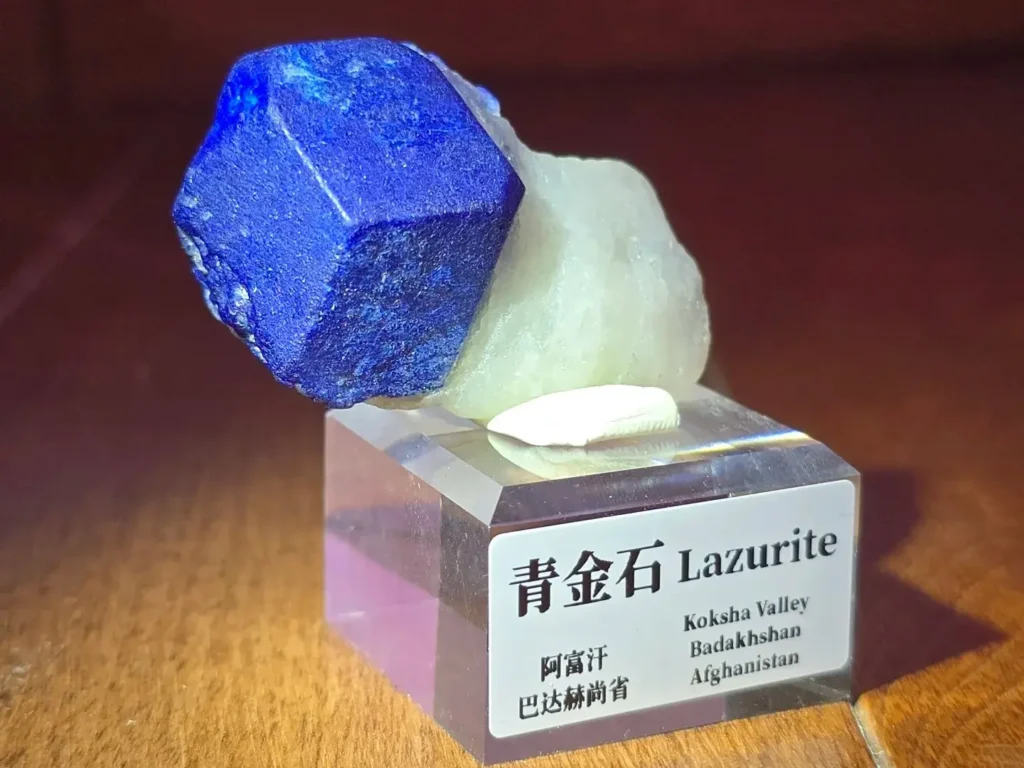
Lapis Lazuli is a storied semi-precious stone composed of multiple minerals, rather than a single mineral species. It owes its legendary “starry night” appearance to this unique natural blend. Understanding these three primary components is key to evaluating its quality:
- The Deep Blue (Lazurite): As the soul of the stone, Lazurite provides the intense violet-blue or celestial saturation. This mineral serves as the source of “Ultramarine”—the prestigious pigment that has remained vibrant for millennia in masterpieces ranging from the Dunhuang murals to Renaissance paintings.
- The Golden “Stars” (Pyrite): These shimmering golden flecks lend the stone its regal character. While they create the iconic cosmic effect, balance is essential; excessive pyrite can make the surface appear “busy” rather than elegant.
- The White “Clouds” (Calcite): These white streaks or patches, often accompanied by trace minerals like diopside, mica, or hornblende, represent the stone’s matrix. In high-end Lapis, collectors prioritize minimal “clouding” to ensure the blue remains as deep and pure as possible.
With a Mohs hardness of 5.5, this opaque to semi-translucent gem radiates a natural vitreous to greasy luster. Historically revered as the “Stone of Heaven,” it was once the sacred choice for ancient emperors in their most divine rituals.
Afghanistan’s National Gem: The Soul of Lapis Lazuli
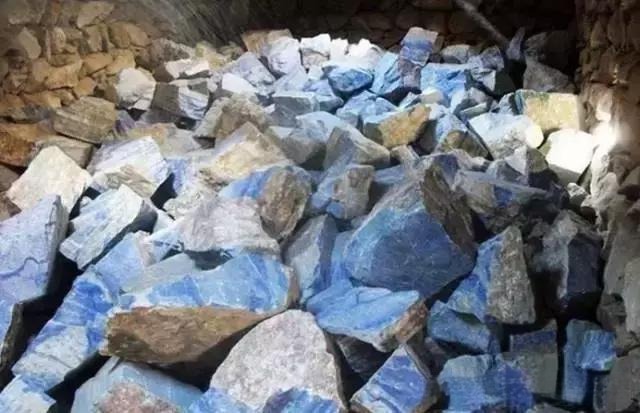
While Lapis Lazuli is found globally—from the shores of Lake Baikal in Russia and the Andes of Chile to regions in Myanmar and North America—the ancient, rugged mines of Badakhshan remain the premier choice for serious collectors. As Afghanistan’s National Gem, these stones possess an unrivaled saturation, offering a deep, celestial blue with a subtle violet undertone—a “royal” character that other origins struggle to match.
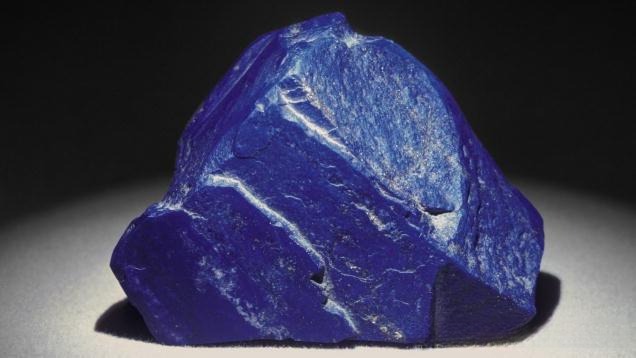
The quality of stones from this region is unmistakable. Afghan Lapis is characterized by its remarkable clarity, featuring finer, more rhythmic pyrite flickers and significantly less distracting white calcite. Within the gemstone industry, it is recognized as the global benchmark. A piece of Badakhshan Lapis is more than just a gemstone; it represents a 7,000-year-old pulse of human history, connecting ancient civilizations to modern luxury.
🌍 Explore More Afghan Gemstones: Afghanistan’s Hidden Gemstones: From Panjshir Emeralds to Sar-e-Sang Lapis Lazuli
Lapis Lazuli: A 7,000-Year Legacy Etched in Blue
1. The Dawn of Civilization: A Treasure from Afghanistan
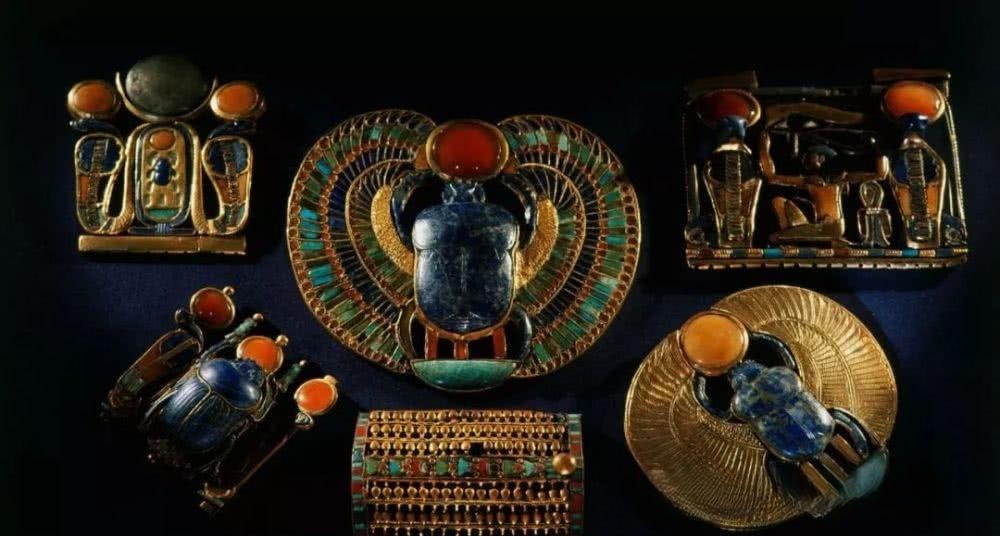
Lapis Lazuli’s name traces back to Latin, and it is recognized alongside Turquoise and Zircon as a traditional birthstone for December.
The story begins over 7,000 years ago in the Sar-e-Sang region of Afghanistan’s Badakhshan province—mines that remain the gold standard to this day.
- Mesopotamia: The Sumerians were among the first to worship this stone, weaving it into their deepest myths.
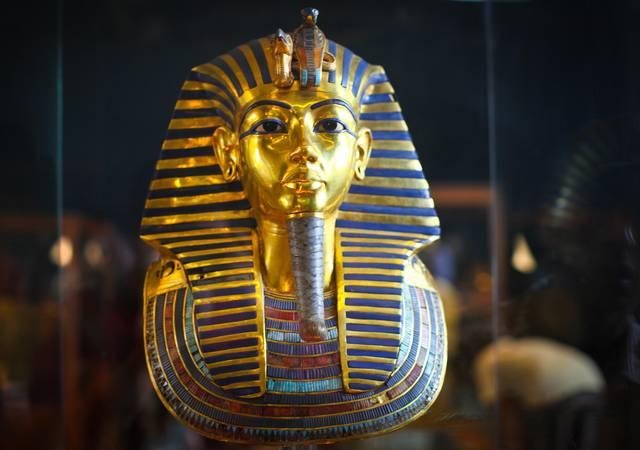
- Ancient Egypt: To the Pharaohs, Lapis was the ultimate status symbol. Look no further than King Tutankhamun’s golden mask—those stunning blue inlays are Lapis Lazuli. Archaeologists even found countless Lapis scarabs in his tomb, crafted to guide the soul toward eternal life.
2. The Soul of Art: From Dunhuang to Vermeer
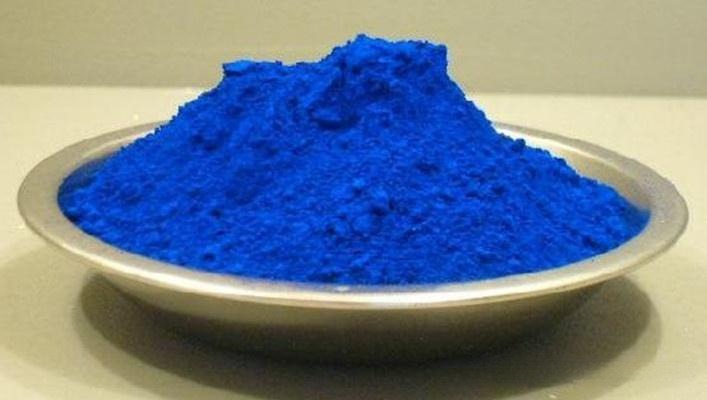
Beyond its role as a gemstone, Lapis Lazuli has historically led a dual life as a prized pigment. For centuries, it served as the sole source of Ultramarine, the most rare and expensive blue paint in the world.

- The European Masters: During the Renaissance, artists ground Lapis into fine powder. That breathtaking blue headband in Vermeer’s Girl with a Pearl Earring? That’s pure Lapis.
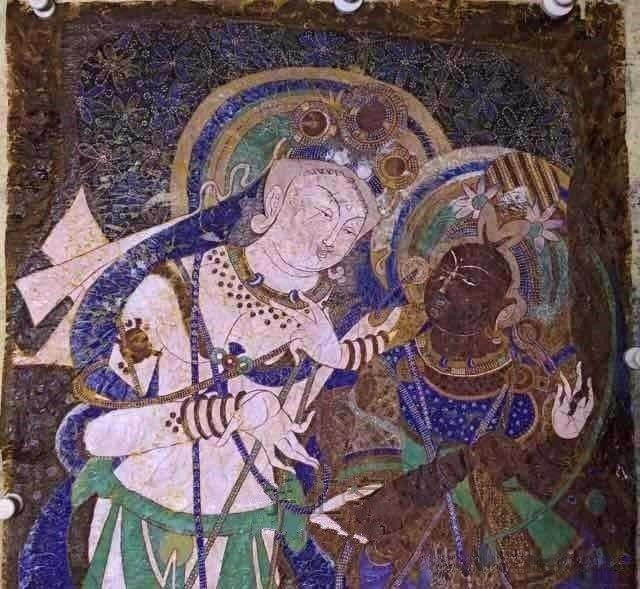
- The Eastern Glow: Long before that, Lapis provided the unfading blue in China’s ancient Buddhist murals. As a witness to the Silk Road, it arrived in China under poetic names like “Lan Chi” or “Dian Dai,” symbolizing the cultural bridge between East and West.
3. The Choice of Emperors: “As Blue as the Heavens”
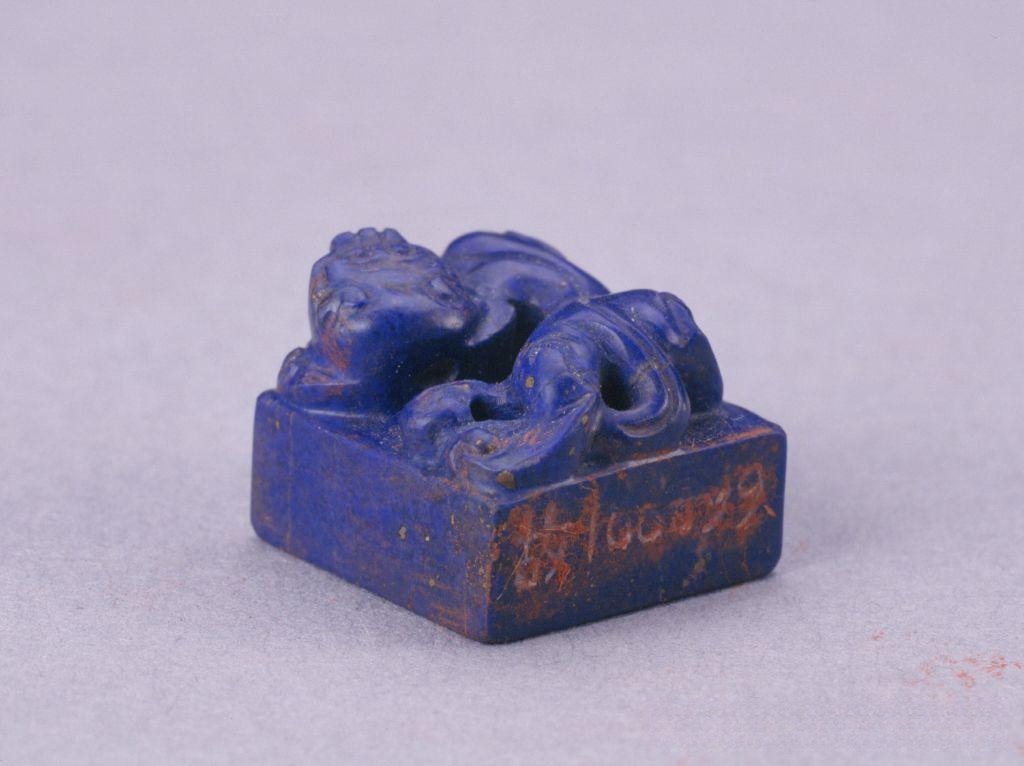
In my research into Chinese history, I found that during the Ming and Qing dynasties, Lapis was revered because its color resembled the sky—“Celestial Blue.”
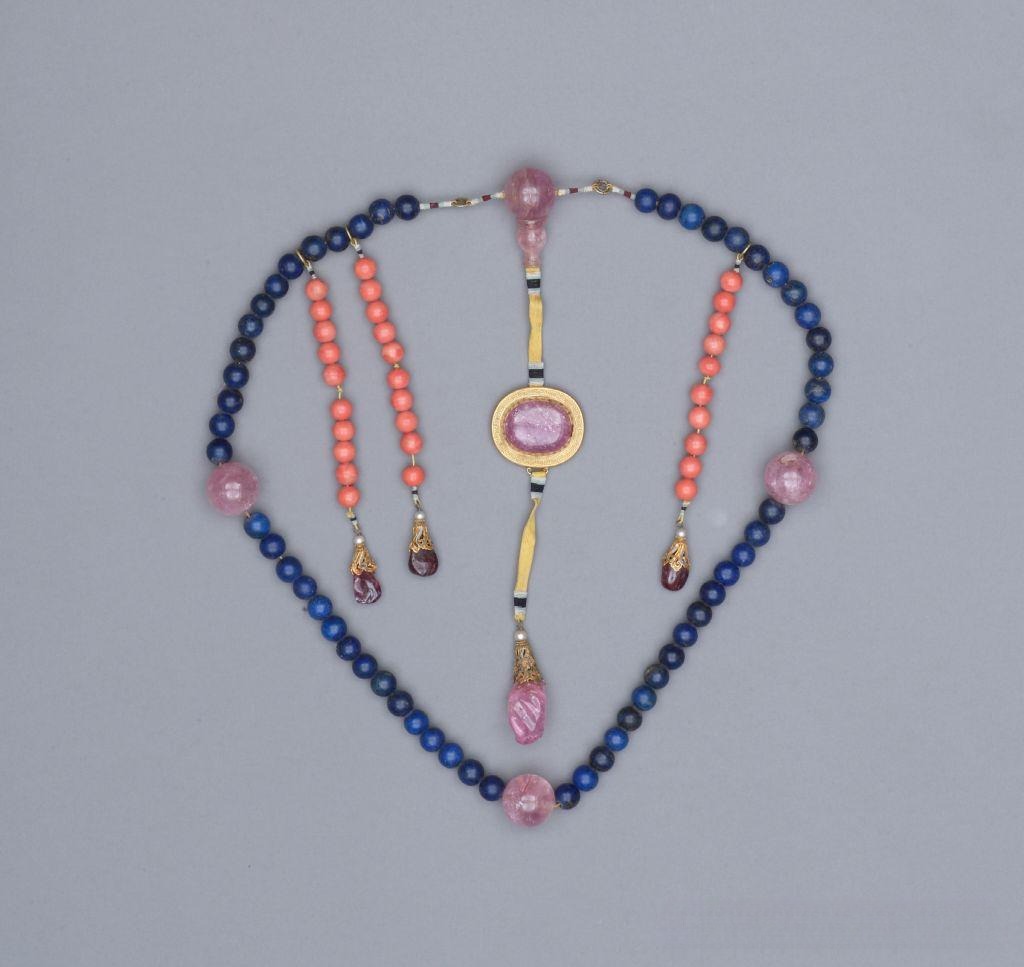
- Imperial Rituals: Qing dynasty emperors wore Lapis court beads (Chaozhu) specifically for sacrifices at the Altar of Heaven.
- Symbol of Rank: Records from the Palace Museum show a strict dress code: Lapis for the Heavens, Amber for the Earth, Coral for the Sun, and Turquoise for the Moon. Even fourth-rank officials wore Lapis on their ceremonial hats.
- Poetic Praise: Geologist Zhang Hongzhao once described Lapis as “a hue as blue as the sky, scattered with gold like stars shining across the heavens.”
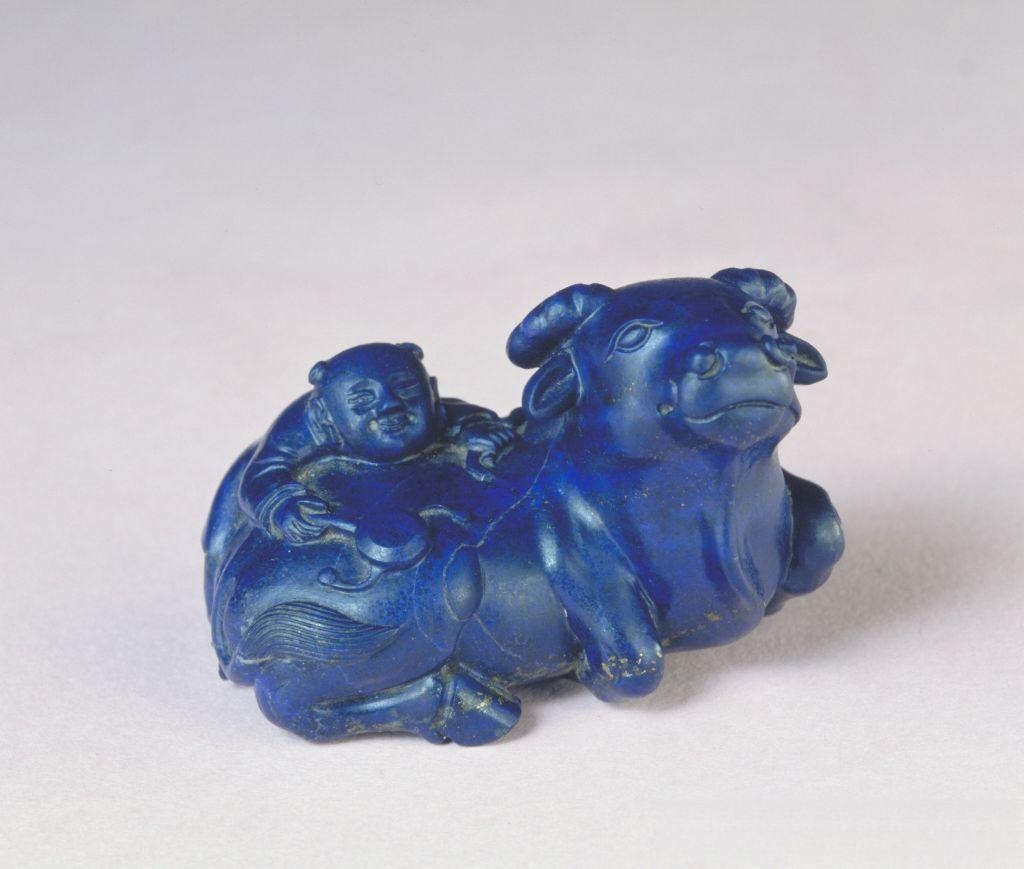
4. Faith and Protection: Wisdom for the Modern Soul
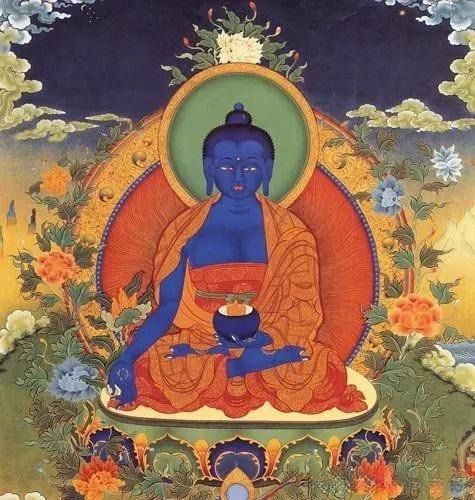
Lapis carries different blessings across cultures, a fact that always fascinates my clients:
- Protection: In Western folklore, many wear it to ward off evil and protect the wearer’s spirit.
- Spirituality: In Buddhism, it is known as one of the “Seven Treasures.” In Tibetan Buddhism, this deep blue represents the Medicine Buddha, symbolizing healing and inner peace.
- Today’s Meaning: Today, we celebrate Lapis as a stone of wisdom and truth. It’s the perfect gift for those seeking clarity in a chaotic world.
Lapis Lazuli Selection Guide
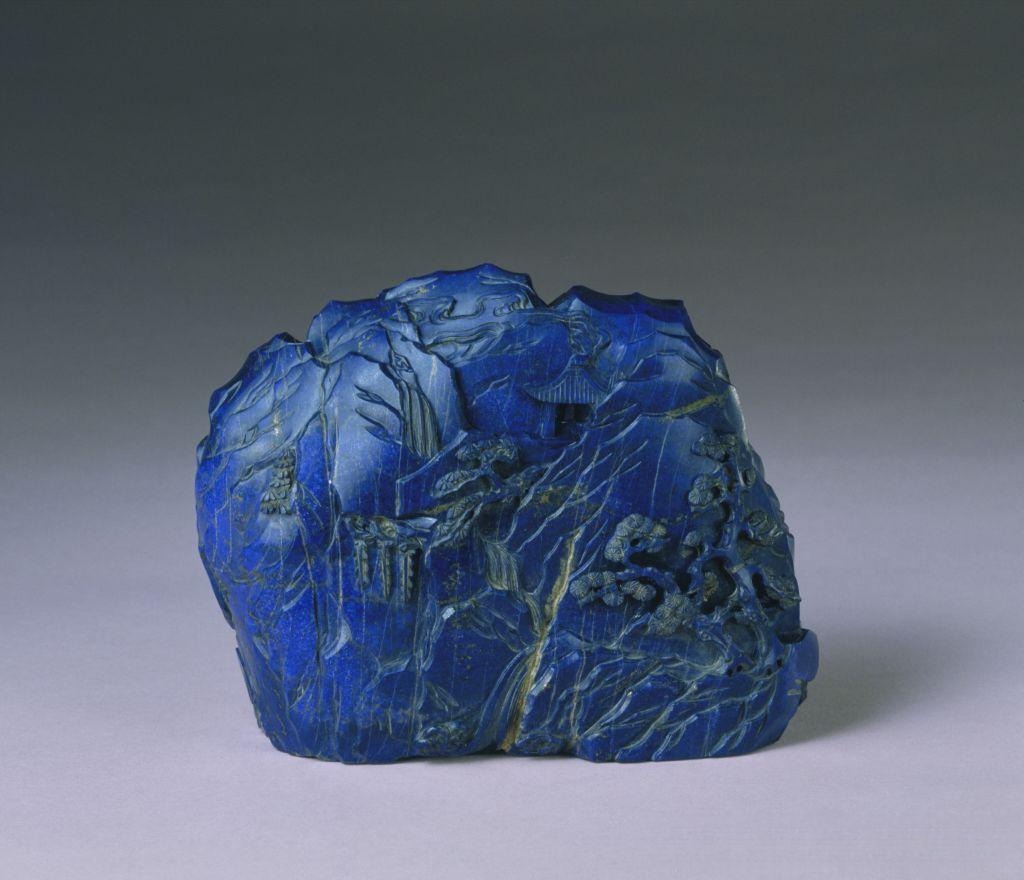
The value of Lapis Lazuli hinges on a comprehensive evaluation of its color, clarity, and size. When sourcing a high-quality piece, prioritize these three core pillars:
- Color: As the most critical value driver, color should be rich, pure, and uniform. The finest specimens exhibit a deep Imperial Blue or intense indigo, free from any discernible green or violet undertones.
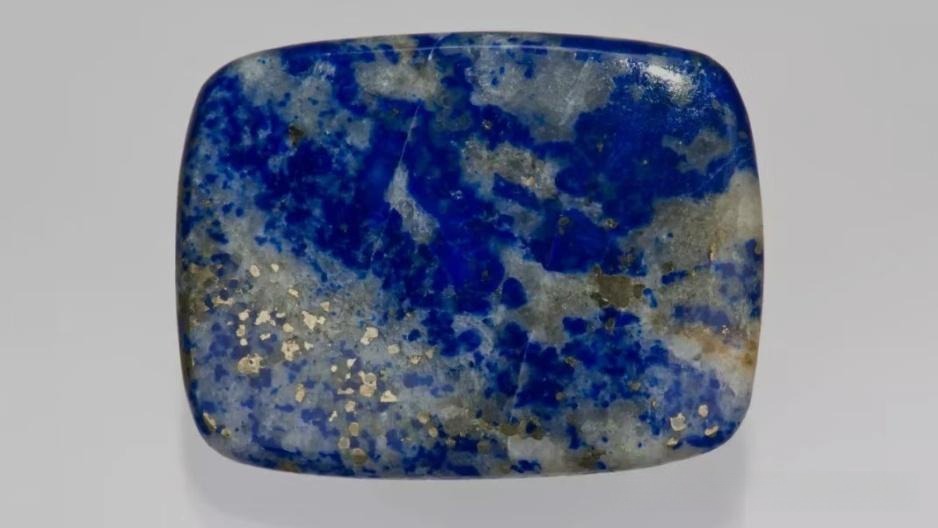
- Clarity: Examine the distribution of mineral inclusions. High-grade stones feature minimal white calcite and well-balanced pyrite. While golden “stars” define its character, look for fine, evenly scattered pyrite flecks—resembling a dusting of gold—rather than large, distracting patches.(See below for an example of what to avoid.)
- Size: Larger specimens command higher value when quality remains equal.
The Grading Secrets: Understanding Lapis Lazuli Value and Price
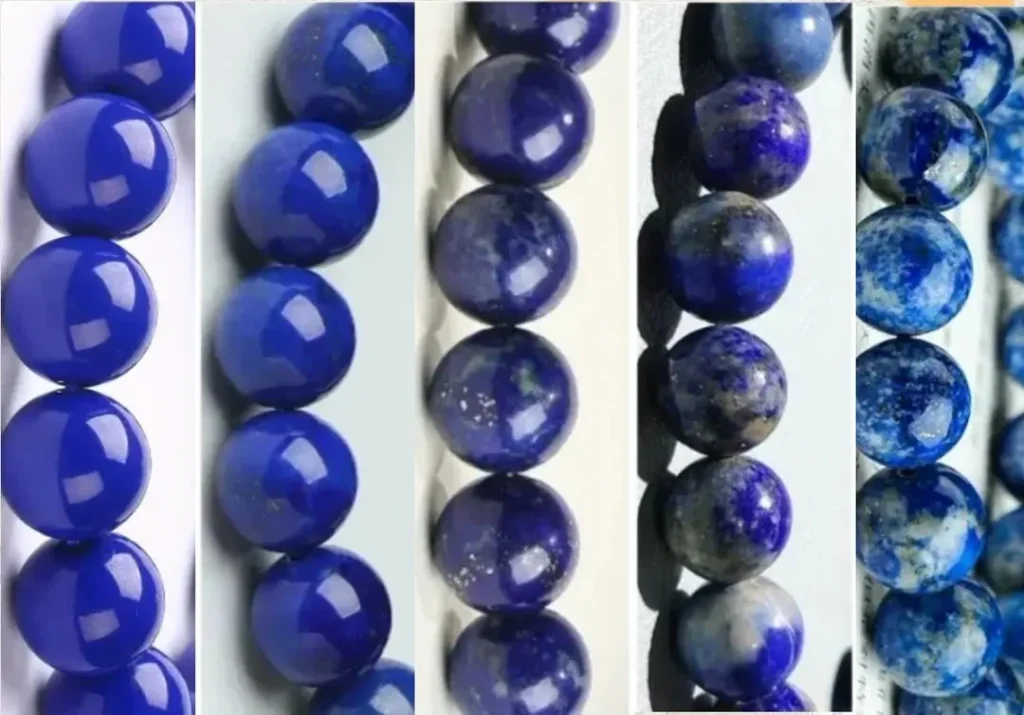
Compared to other semi-precious stones, Lapis Lazuli is remarkably accessible. However, the market is flooded with varying qualities, making it tricky to find that perfect balance of price and beauty.
My golden rule is simple: The more intense and uniform the blue, and the fewer the inclusions, the higher the grade (and the price). Here is how I break down the different tiers, starting from the rarest of the rare:
(1) Investment Grade: Extremely Rare
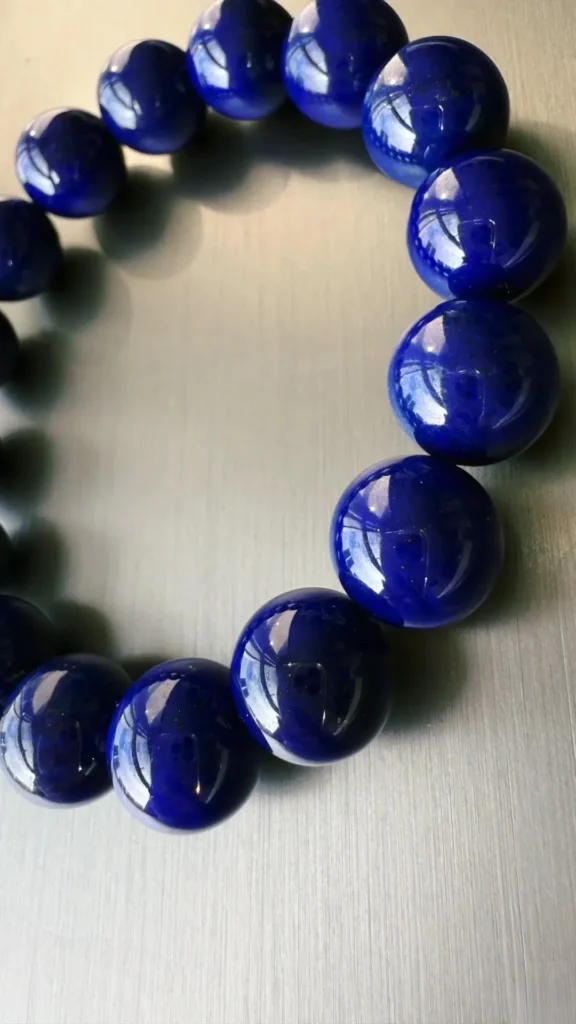
This is the “Top Collection” of Lapis—the absolute pinnacle of quality.
- The Details: These stones boast a lazurite content of over 99%, reaching a “No-White, No-Gold” or “Micro-Gold” state. You won’t find pyrite patches or white calcite streaks here. The texture is incredibly dense, fine, and silky, presenting a deep, vivid, and perfectly uniform blue.
- My Take: I call this “Celestial Perfection.” If your budget allows, don’t hesitate. It’s an heirloom-quality piece that exudes an unparalleled sense of nobility.
- Price Reference: For a high-end bracelet, expect to see prices starting from $1,200 and up. These are exceptionally rare in the open market.
(2) Collector Grade: The Connoisseur’s Choice
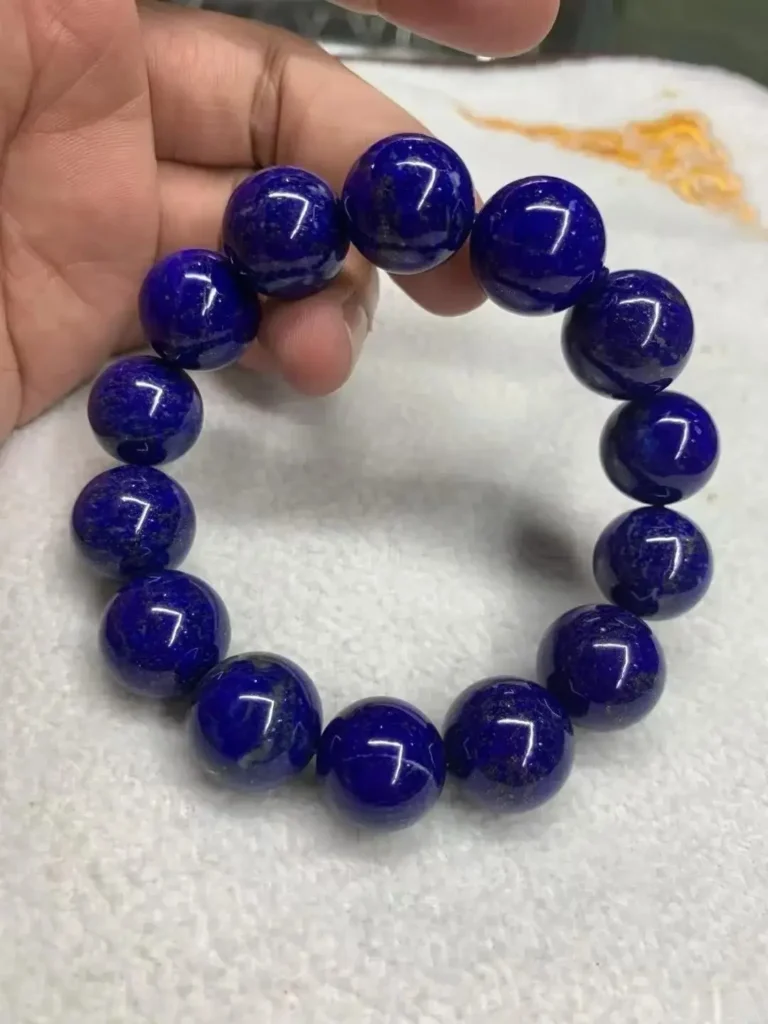
For seasoned enthusiasts, this is the “sweet spot” where rarity meets undeniable beauty.
- The Details: At this level, the lazurite content usually sits between 90-95%. I call this the “Clean Base, Fine Sparkle” state. You’ll find almost no white calcite, only tiny, pin-point flecks of golden pyrite evenly scattered across the stone. While the color saturation and texture are just a hair below the Investment Grade, it remains incredibly dense and refined.
- My Take: My summary for this grade is “Deep Blue with a Dusting of Stars.” It offers fantastic value—it’s a total head-turner for daily wear, striking that perfect balance between artistic flair and high-end luxury.
- Price Reference: For a solid bracelet in this category, prices typically start at $500 and up. Truly exceptional pieces can command even higher premiums.
(3) The Galaxy Grade: The Best Value for Style
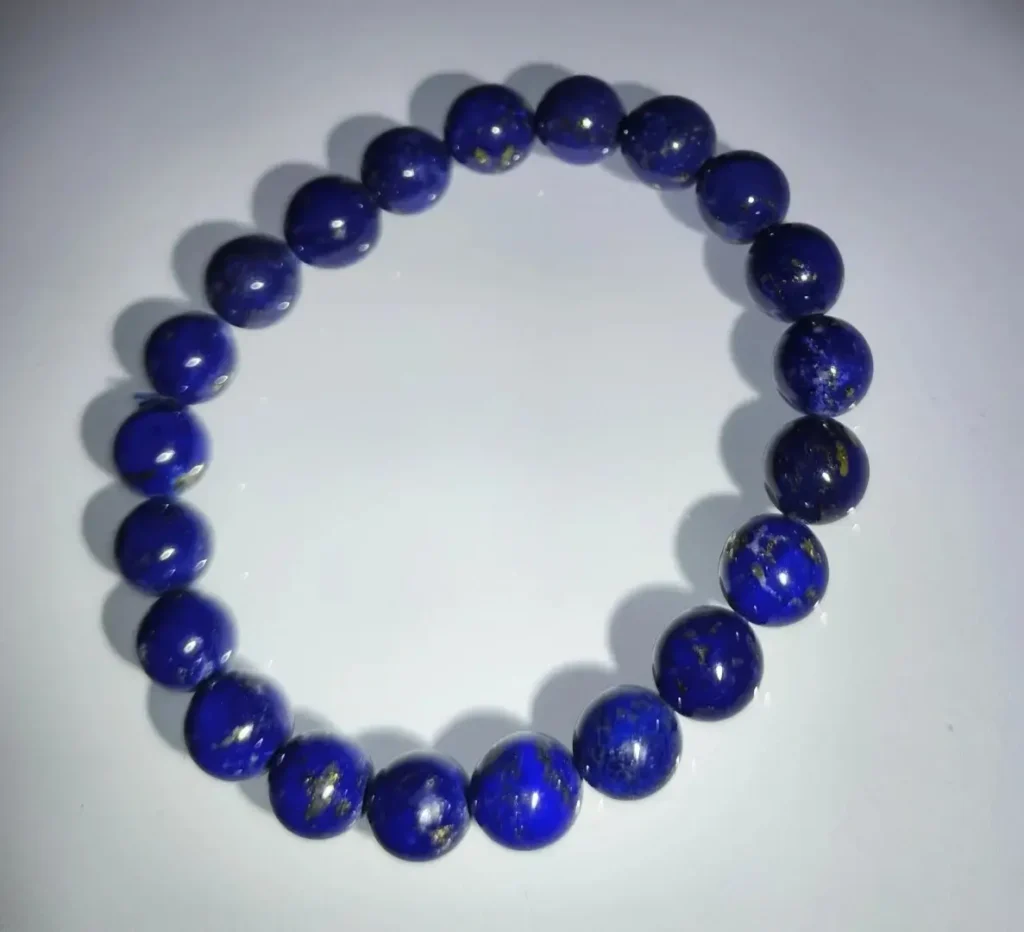
This is the heartbeat of the market—the most popular choice for those who want a stunning natural stone without the “Investment Grade” price tag.
- The Details: At this level, you’ll notice a visible shift in the stone’s personality. The lazurite content is lower, making way for more abundant and dense pyrite (the “gold”). Instead of tiny pin-points, the gold often appears in bolder patches or clouds. You might also see occasional streaks of white calcite. The blue itself is usually a lighter, more varied shade rather than a solid, deep ink.
- My Take: I sum this grade up as “Golden Blooms on a Blue Canvas.” If you love a more textured, “niche” look and want something that feels organic and alive, this is for you. It’s full of character, and because no two stones look alike, you’ll never have to worry about “clashing” with someone else’s jewelry. It’s a total statement piece that commands attention.
- Price Reference: For a typical bracelet, prices range widely from $30 to $500. Because the quality varies so much in this tier, the price really depends on the unique “pattern” of the stone.
(4) The Porcelain Grade: The Perfect Entry Level
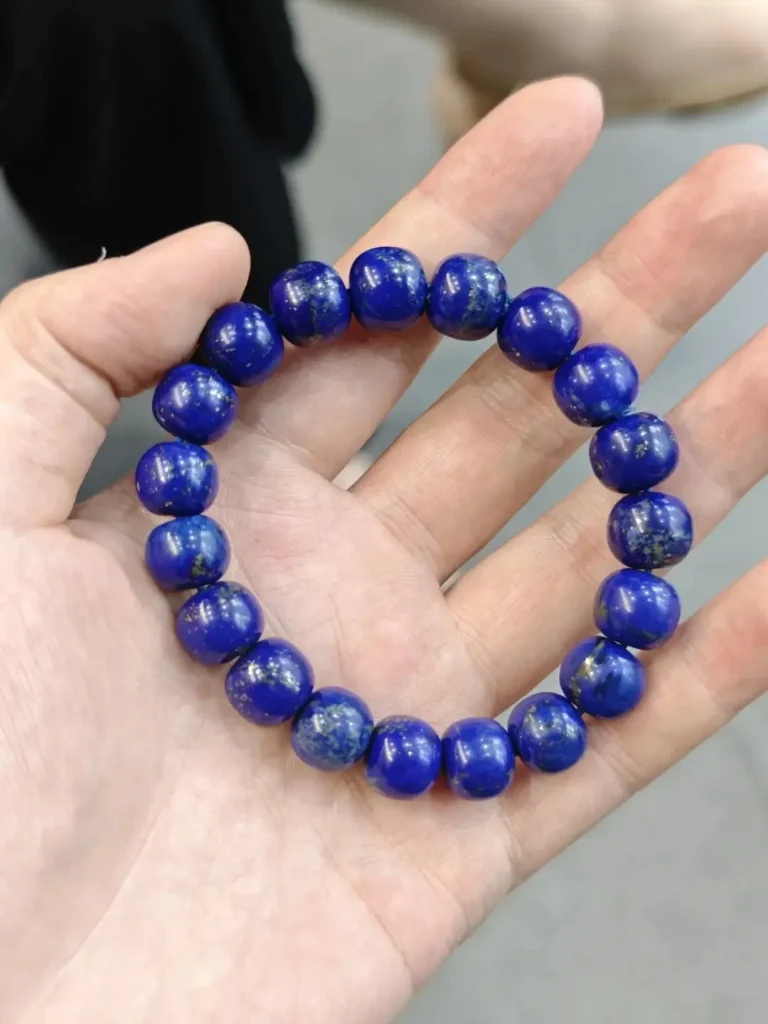
If you’re looking to experiment with the unique Lapis style without a heavy commitment, this is your best starting point. It’s budget-friendly, and when styled right, it looks incredibly chic.
- The Details: In this tier, the stone features a blue base woven with white streaks or patches of calcite. This creates a mottled, artistic pattern reminiscent of classic blue-and-white porcelain. While it contains significantly more calcite and other minerals than the higher grades, the overall look is balanced and rhythmic.
- My Take: I define this as “Blue Heart, White Veins.” It’s uniform enough to look intentional but patterned enough to feel unique. It’s the “jeans and a white tee” of the Lapis world—effortless, versatile, and full of character.
- Price Reference: For a standard bracelet, you can find beautiful pieces around the $30 mark.
(5) The Earthy Grade: The Budget-Friendly Base
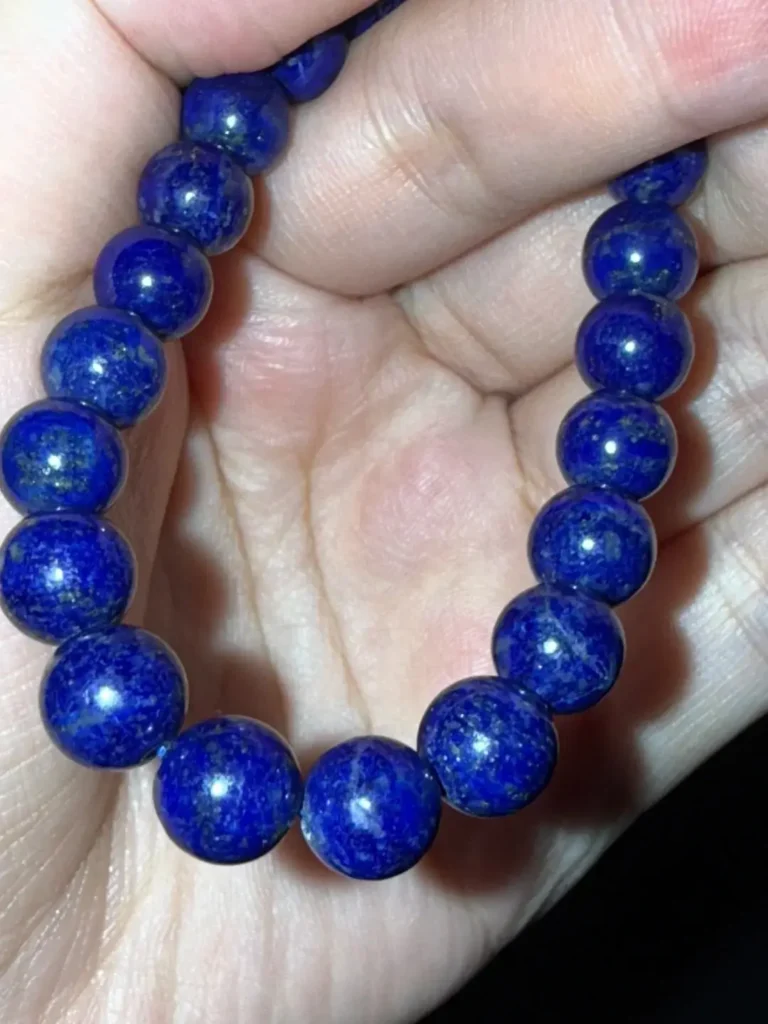
This is the most entry-level tier. If you’re on a tight budget or just curious to see the stone in person, this grade offers an accessible way to experience natural Lapis.
- The Details: At this level, the lazurite content usually drops below 30%. The color is a pale, uneven blue, heavily mixed with large amounts of white calcite. It creates a mottled, “patchy” appearance. You might see a few specks of gold here and there, but the overall look is dominated by a mix of blue and white minerals, which can feel a bit chaotic or rustic.
- My Take: I sum this one up as “Rustic Mix, Patterned Blue.” While it lacks the regal depth of higher grades, it has a certain raw, organic charm. I often recommend this tier for DIY craft projects or creative jewelry accents where a “perfect” look isn’t the goal. It’s all about personal preference and seeing the beauty in nature’s randomness.
- Price Reference: For a standard bracelet, these are typically under $20, with a price per gram usually falling below $1.
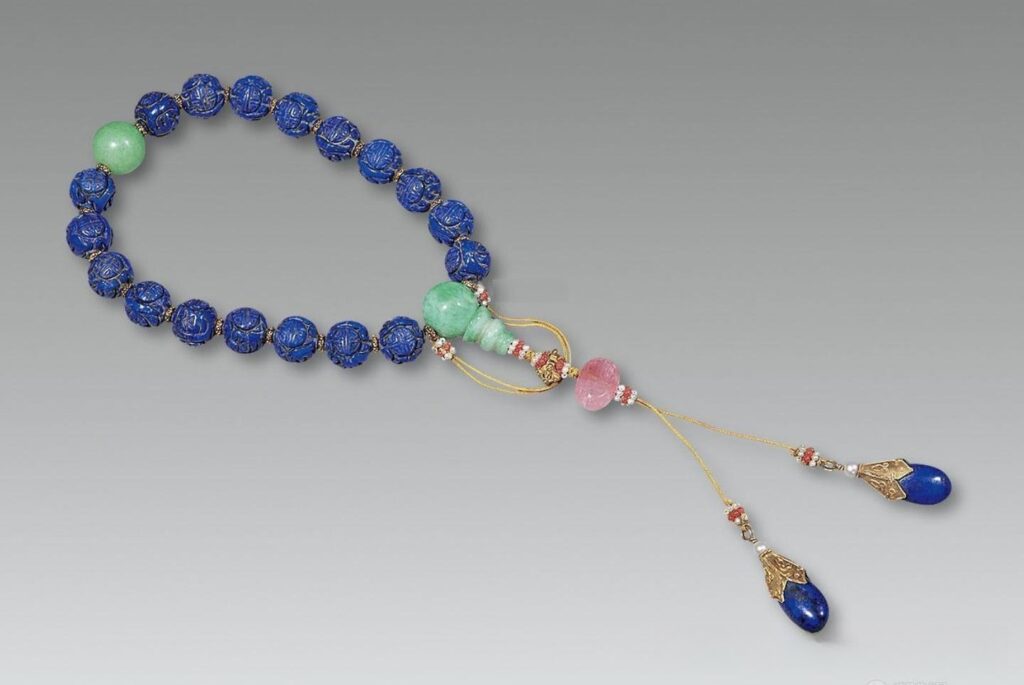
🔗 Read More: If you’re inspired to create your own piece, check out our guide: The Art of the Shibazi Bracelet: DIY Guide to Crafting the Eighteen Beads Treasure
The Price Gap: A $25 vs. $300 Bracelet — Can You Tell the Difference?
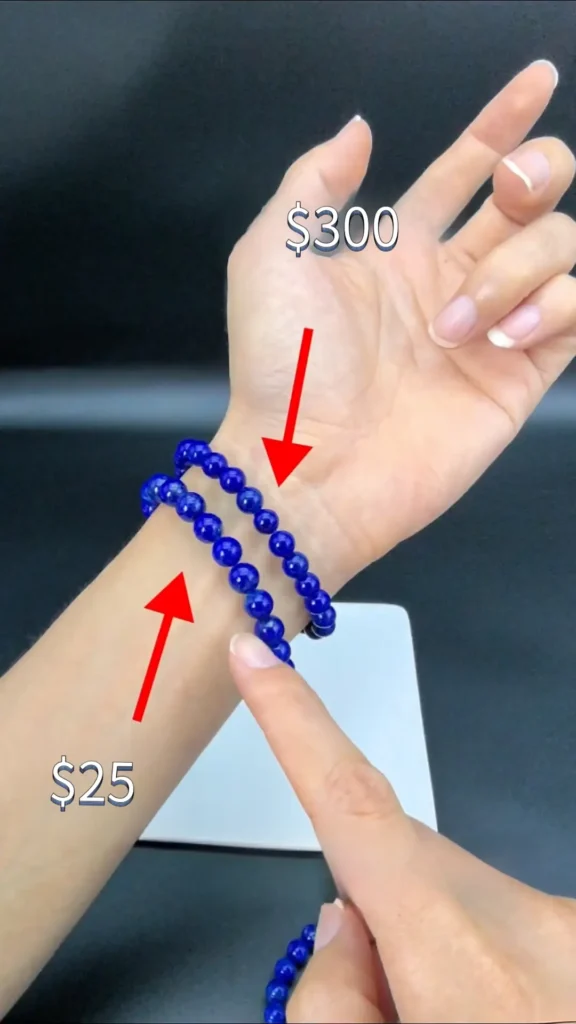
Take a look at these two bracelets. One is priced at $25, while the other sits at $300. At first glance, can you tell which is which?
I’ll be honest: through a camera lens, the gap might not look as massive as the price tag suggests.
If you’re wearing them out and about, a casual observer from a social distance might not notice a thing. But the moment you hold them in your hand, the story changes. The $300 piece is remarkably “clean.” While it may still have subtle traces of pyrite or calcite, its depth and purity stand in a different league compared to its budget-friendly counterpart.
Having handled Lapis for over a decade, I’ve developed a very grounded philosophy: I never look down on budget-friendly pieces, and I never blindly push high-end ones. Everyone’s budget is different, and there is a place for every stone. Does wearing a $50 or $100 “accessible luxury” piece make it any less special? Absolutely not. It’s still that same beautiful, natural blue. The only difference is that the affordable option has more “roommates”—those symbiotic minerals like gold pyrite and white calcite that are clearly visible on the surface. The premium piece simply offers a cleaner, more refined aesthetic.
At the end of the day, a Lapis bracelet is an accessory. It’s no different from buying any other lifestyle item: Choose what feels right for your lifestyle and your wallet. Whether it’s a rustic, patterned piece or a pristine, royal blue treasure, as long as it speaks to you, it’s the right choice.
Red Flags: Spotting Common Fakes in the Lapis Market
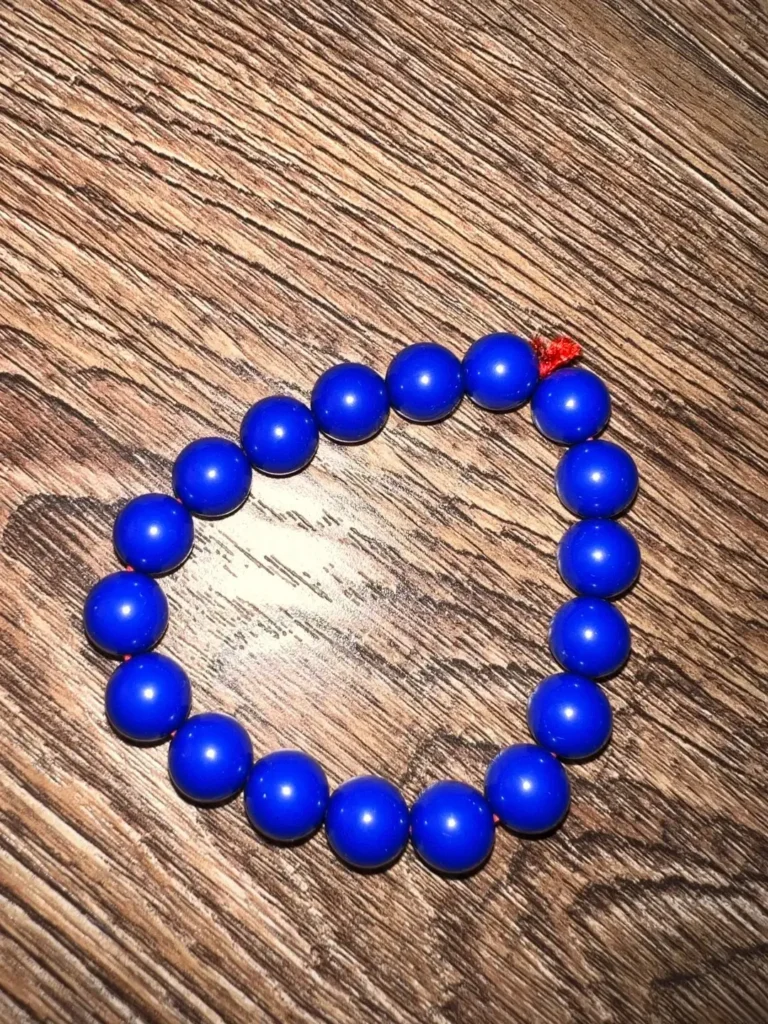
While high-quality Lapis is hard to replicate, I’ve seen some unscrupulous sellers go to great lengths to fake it for a quick profit. After years in the industry, I’ve learned exactly how to spot these imposters. Here are the three most common “Lapis” traps you’ll find made from dyed quartzite, resin, or glass:
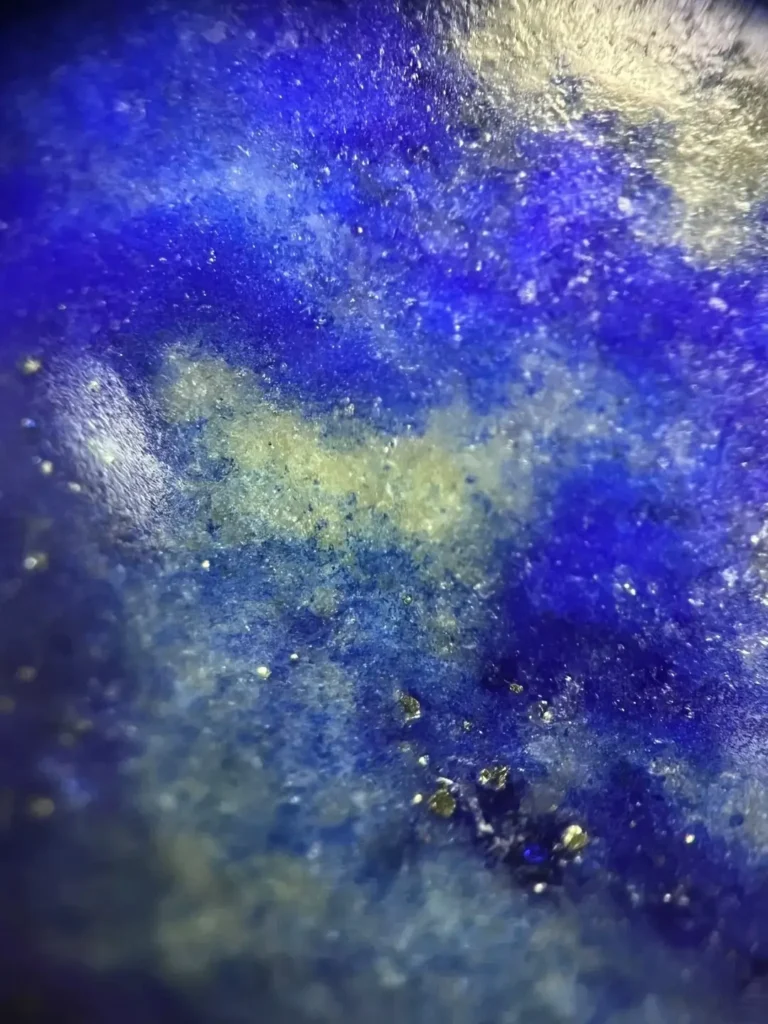
- The “Blue Paint” (Dyed Fakes): Some sellers take low-grade white stones and drench them in blue dye. The result looks incredibly stiff—almost like it was painted with thick blue lacquer. If you look closely at the drill holes, you’ll see “color bleeding” or pooled dye. A quick swipe with a cotton swab dipped in alcohol will often reveal the truth, and more importantly, wearing these can irritate your skin over time.
- The “Featherweight” (Synthetic Resin): These are essentially plastic. The surface is unnaturally smooth with zero natural texture, and they feel “warm” to the touch rather than having that distinct, natural chill of real stone. They are roughly 20% lighter than authentic Lapis, and if you hold them under a strong light, you might even spot tiny air bubbles trapped inside.
- The “Hidden Flaws” (Deceptive Labeling): This is the most common trick. Sellers take low-grade material—the kind heavily marbled with white calcite—and slap on a fancy name like “Imperial Afghan Royal Blue.” They inflate the price by several hundred percent, hoping you won’t notice that the quality doesn’t match the grand title.
Pro Tips: How to Verify Your Lapis Lazuli at Home
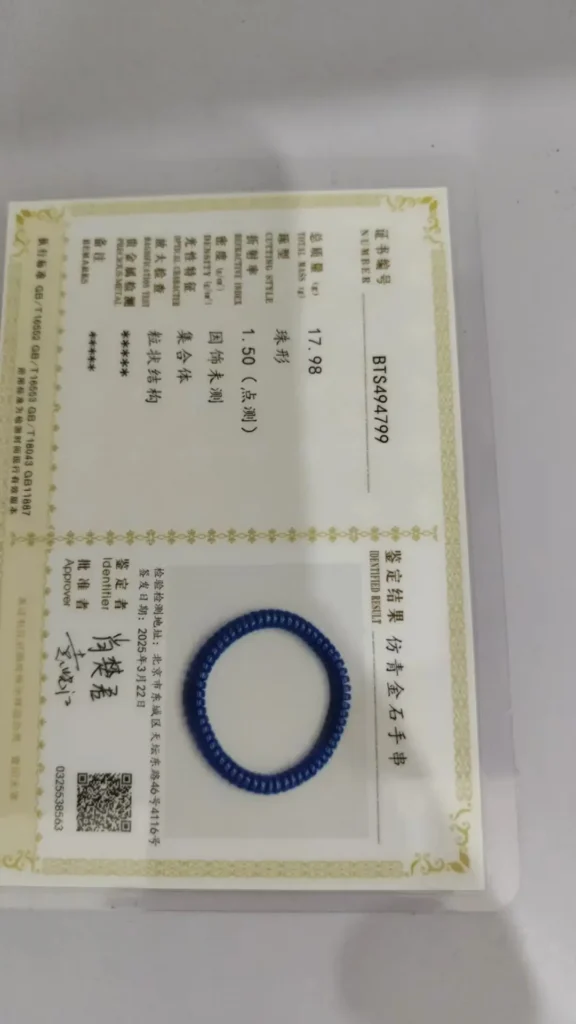
Even if you’re spending less than $100 and the seller provides a “certificate” (which, let’s be honest, can be faked just as easily as the stone), you should still stay vigilant. Some sellers count on the fact that you won’t spend more on a professional lab report than you did on the bracelet itself.
To give you more confidence in your everyday purchases, I’ve distilled my years of experience into these three essential checks:
1. The Visual Inspection (The Details Don’t Lie)
- The Hue: Authentic Lapis features a deep, soulful blue with a hint of violet. The color transitions should feel natural, not robotic or “stiff.” Look for those irregular white calcite veins and shimmering golden pyrite flecks.
- The “Gold” Test: Real gold spots are pyrite minerals. They appear as uneven flakes or grains and sit perfectly flush with the surface of the stone. Red Flag: If the gold looks like it was “painted on” or feels like a powder you can scratch off with your fingernail, it’s a fake.
- The Pattern: Natural Lapis has microscopic mineral grains and subtle veining. If the stone is a perfectly uniform blue with zero texture, or if the white veins look “stained” blue, you’re likely looking at a dyed imitation.
2. The Light Test
- Natural Lapis: Even under a powerful gemstone flashlight, it remains completely opaque. No light should pass through the body of the stone.
- The Fakes: Imitations like dyed chalcedony or glass will often show a translucent “glow” or brightness around the edges when light hits them.
3. The Sparkle Check
- Real Pyrite: The golden specks should have varying sizes and a slightly muted, metallic luster.
- Synthetic Gold: Artificial sparkles often look too “perfect” or overly uniform, flashing like cheap craft glitter.
💡 The Pro’s Secret: The Alcohol Swipe
If you suspect your Lapis is dyed, try this: dip a cotton swab in rubbing alcohol and gently rub a small area. If the swab turns blue, the stone is a fake. Authentic Lapis will never bleed its color.
Caring for Your “Starry Night”: My Essential Maintenance Tips
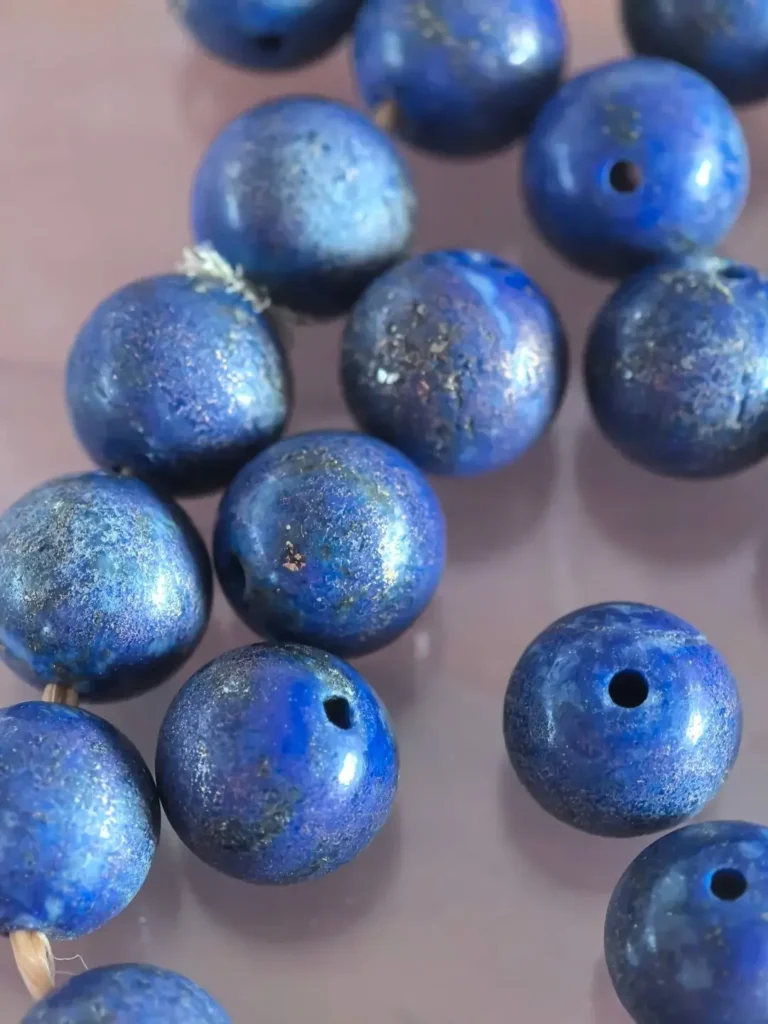
Recently, a client brought in her mother’s Lapis bracelet, which she had worn for years. Looking at the dull, faded surface (as seen in the photo), she asked me, “Is this even Lapis? What happened to the color?”
One look told me everything. I asked, “Did she wear this every single day—while cooking, doing laundry, showering, or even during those hot, humid summer days?” The answer was a definitive yes.
The truth is, it was authentic Lapis, but it had been slowly corroded by years of sweat, steam, and household chemicals. To ensure your Lapis retains its celestial glow for a lifetime, here is my personal guide to care:
The Golden Rule: Gentle & Dry
Lapis has a Mohs hardness of only 5 to 5.5, making it far softer than Jade or Agate. For daily cleaning, simply use a soft cotton cloth or a jewelry glove to dry-wipe it gently.
Always remove your Lapis before showering or doing housework, and store it separately to avoid scratches from harder gems. Beyond that, remember these Three Taboos:
- Avoid Impact: Because Lapis is relatively soft, it scratches easily. Never wear it alongside hard metals or tougher gemstones like Rubies or Sapphires. One accidental bump can leave a lasting scar on your stone.
- Minimize Sweat & Acid: Lapis contains carbonate minerals that are highly sensitive to acidity. Over time, prolonged contact with human sweat can cause a chemical reaction that dulls its luster. Keep it far away from acidic substances, or you’ll find your vibrant blue turning into a matted, lifeless grey.
- Never Soak in Water: Unlike Jadeite or Nephrite, Lapis is a porous aggregate of multiple minerals. Its structure is relatively loose. If you soak it in water, minerals from the water can seep into the stone and form stubborn “stains” or residue that are nearly impossible to clean.
Pro Tip: Always apply your perfume and hairspray before putting on your Lapis. These chemicals are the silent killers of a gemstone’s shine.
Lapis Lazuli: Your Burning Questions Answered (FAQ)
Not necessarily! While a deep, royal blue is iconic, it’s all about saturation and purity. A vibrant violet-blue or a high-saturation sky blue can actually be more valuable than a “dark” blue that looks dull or almost black. I always tell my clients: look for a blue that feels “alive” and uniform, rather than just choosing the darkest stone available.
Blue is definitely its signature, but you’ll find a spectrum ranging from greenish-blue to deep violet-blue. However, the classic, intense “Imperial Blue” remains the gold standard. If you see a stone with large patches of green, it’s usually a sign of other mineral intrusions, which typically lowers its value as a Lapis specimen.
In my professional opinion, always go for round beads when buying Lapis. Here’s a little industry secret: for Lapis, buying disc or “tablet” shapes usually isn’t the best bang for your buck.
Now, I need to clarify—for most crystals (like Quartz or Amethyst), disc beads are actually more expensive because they are “wasteful” to cut from a round bead. But with Lapis, the raw ore can be sliced directly into tablets, making them easier and cheaper to produce. That’s why, for Lapis specifically, round beads offer much better value for your money!
Generally, no. Unlike some brittle or highly fractured gemstones that require stabilization for cutting, lapis lazuli is a naturally dense and cohesive rock. There is typically no practical need for resin infusion to maintain its structural integrity.
Jewea’s Final Thoughts
Lapis Lazuli is more than just the “vintage beauty” of the gemstone world; it is a cultural icon that has transcended millennia. When you compare the price of a high-quality Lapis to the “Royal Blue” of a Sapphire, the value you get for such a stunning cobalt hue is truly unbeatable.
Whether you are buying for a serious collection or just to elevate your daily style, remember my golden rule: Focus on the richness of color, the refinement of texture, and the authenticity of the origin. Do that, and you’ll find your very own piece of the “starry night.”
From classic beaded bracelets to trendy 18K gold settings, if you’re a fan of deep, royal blues, I encourage you to take the plunge and add some Lapis to your jewelry box. It might just bring you a surprising new spark of inspiration!