Jingbai Jade Unveiled: A Mutton-Fat Nephrite Alternative or Just Quartzite in Disguise?
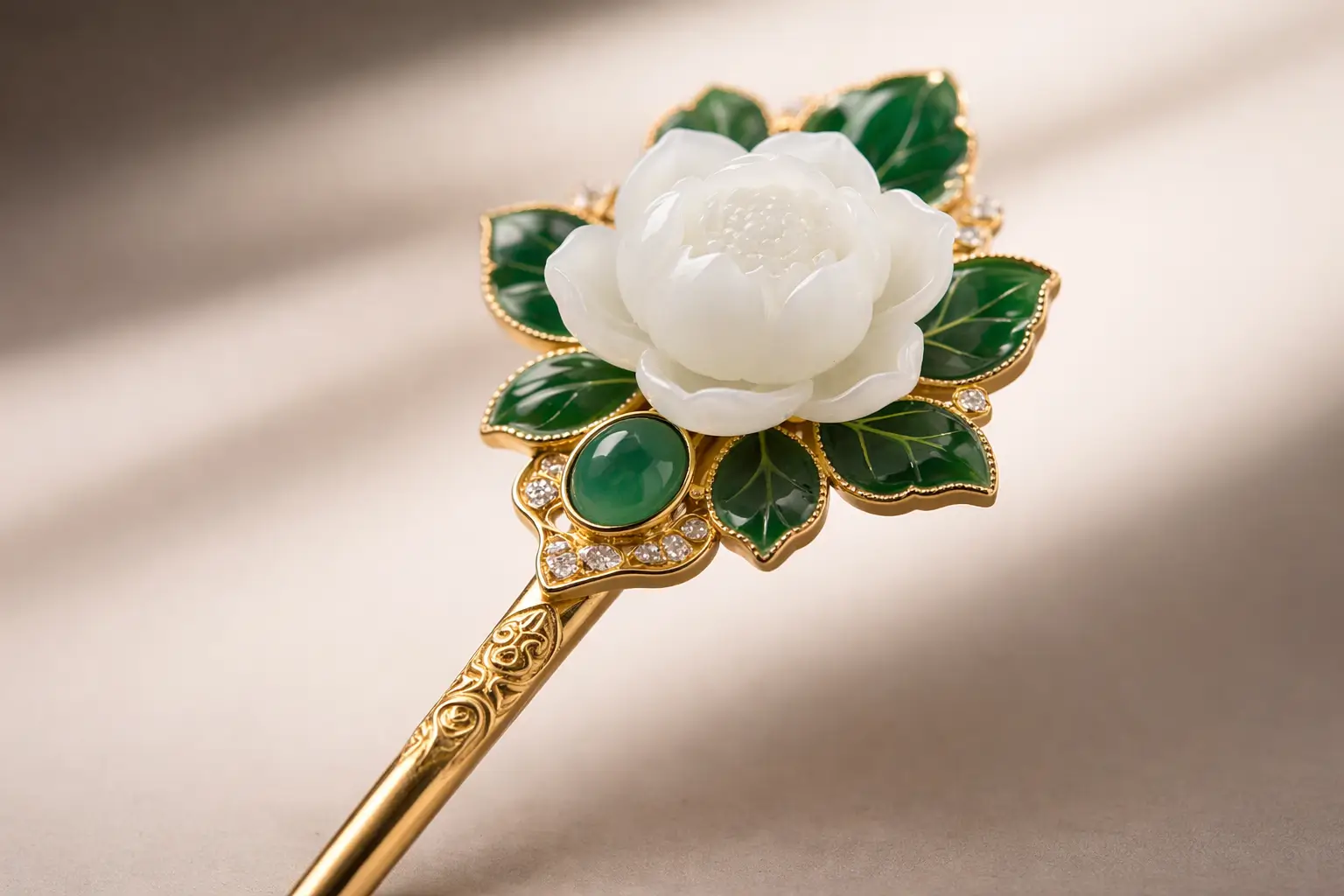
In the dazzling world of gemstones, the term “White Jade” almost instantly conjures images of the legendary, ultra-rare Mutton-Fat Nephrite from Hetian. However, another contender frequently enters the conversation: Jingbai Jade.
With its snow-white hue and remarkably fine texture, Jingbai Jade often leaves beginners questioning whether they’ve stumbled upon a hidden treasure or a clever imitation. Today, we’re peeling back the layers to answer the burning questions: What exactly is Jingbai Jade? And more importantly, how does it fundamentally differ from the prestigious Hetian Jade?
What Is Jingbai Jade, and Is It “True” Jade?
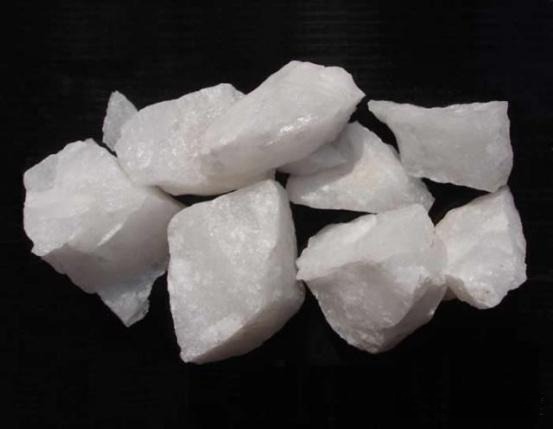
The name Jingbai Jade carries a deep regional resonance within China. Miners first discovered this stone in the western suburbs of Beijing, and its name perfectly captures its identity: “Jing” for its Beijing roots and “Bai” for its signature snowy-white luster.
From a mineralogical perspective, however, we must draw a sharp line: Jingbai Jade falls under the category of quartzite jade. It shares no biological or structural connection with traditional “true jades” like Nephrite or Jadeite.
To understand its true nature, let’s look at the hard facts:
- Mineral Composition: Silicon Dioxide (SiO2) makes up over 95% of the stone. In essence, you are looking at a high-purity quartz aggregate.
- Geographic Presence: Despite its “Beijing” branding, this mineral is far from rare. It is found extensively throughout China, including provinces like Hunan and Henan. In reality, it is a high-yield, widely distributed variety of common quartz. Curious about how many other forms this versatile mineral can take? Explore the vast world of quartz in our guide: 50 Quartz Varieties: Can You Name Them All?
The Aesthetic Appeal of Jingbai Jade
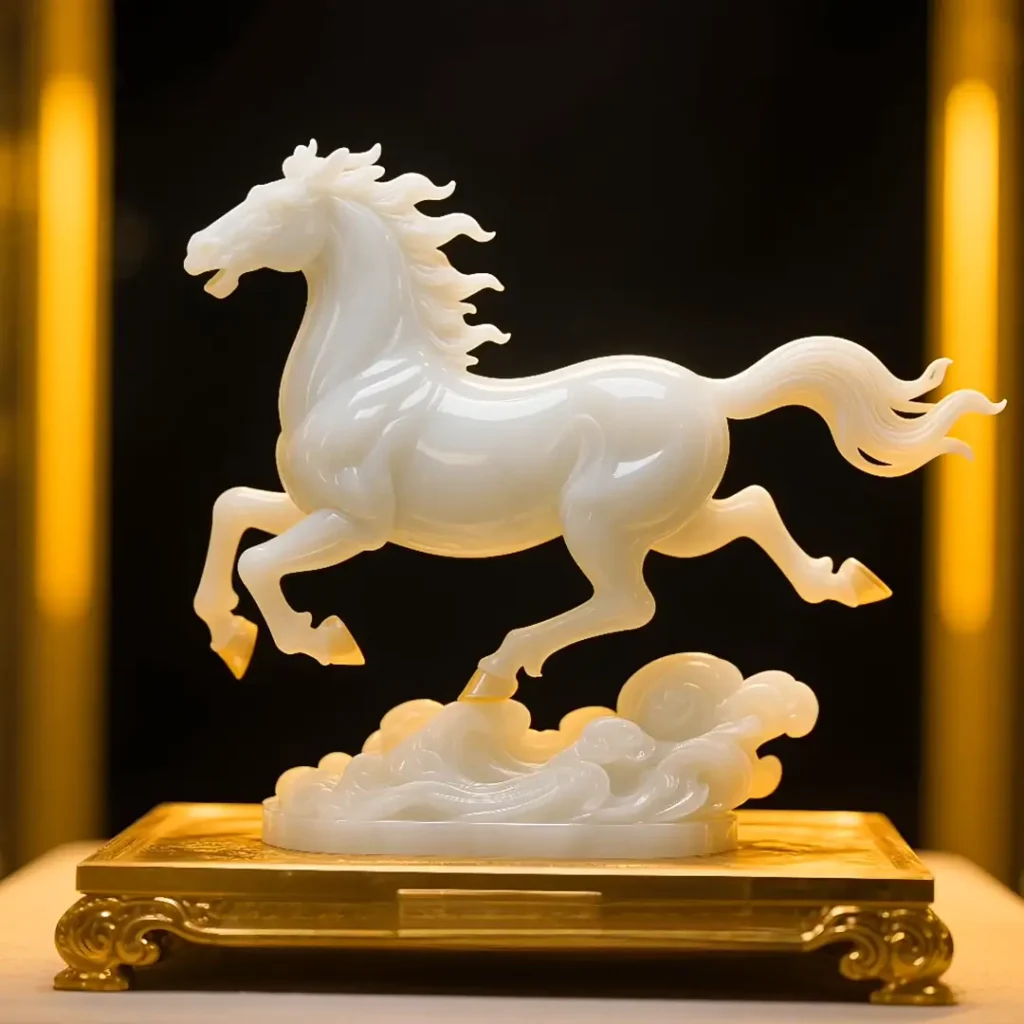
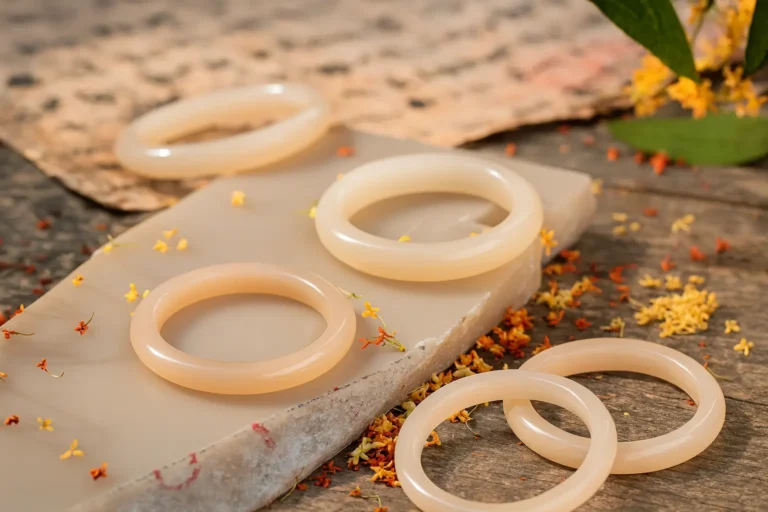
While it may not command the same market prestige as high-end Nephrite, Jingbai Jade possesses a unique visual charm that has earned it a permanent place in the world of decorative arts. Its beauty lies in several distinct characteristics:
- Uniformity of Color: Most specimens showcase a striking, pure white hue. While occasional hints of blue, green, or gray may surface, the stone rarely displays the distracting inclusions often found in other quartzites.
- Exceptionally Fine Texture: Under a lens, you’ll find that the quartz grains are incredibly small—typically measuring less than 0.2 mm. This tight-knit structure creates a smooth, cohesive appearance that mimics the density of more expensive stones.
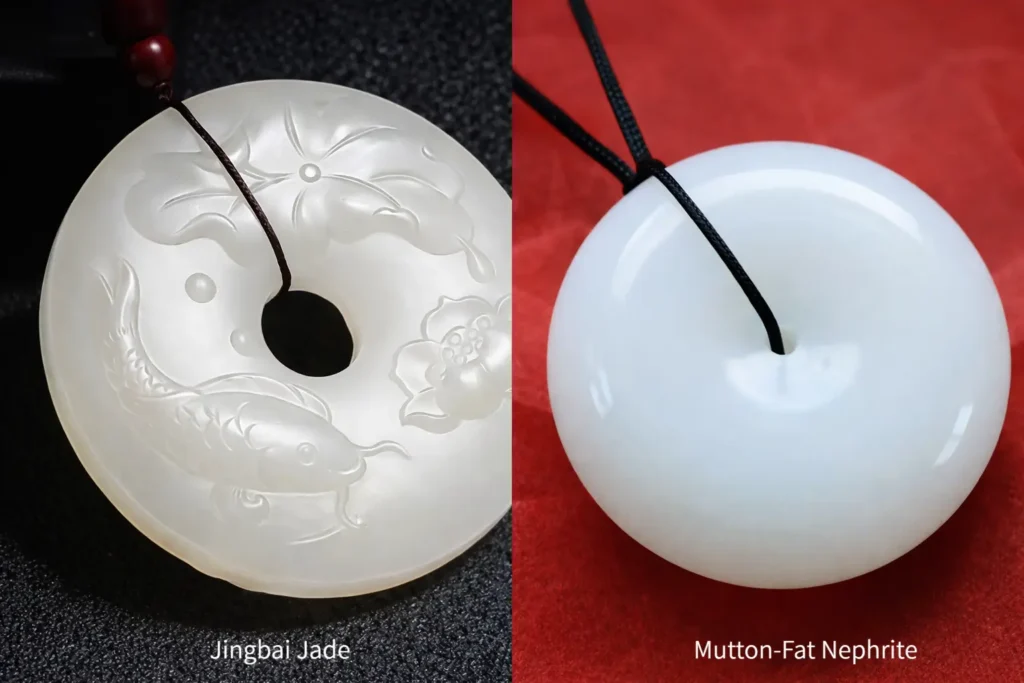
- Vibrant Vitreous Luster: Unlike the subdued “mutton-fat” glow of nephrite, Jingbai Jade projects a bright, glass-like (vitreous) luster. After professional polishing, the surface achieves a brilliant, crystalline translucency.
- A Crisp, Cool Touch: When you handle the stone, you immediately notice its cool, sleek temperature and slippery smoothness. It offers a refreshing, tactile sharpness that stands in sharp contrast to the warm, waxy “oiliness” of traditional soft jade.
Identification Guide: Jingbai Jade vs. Hetian Jade
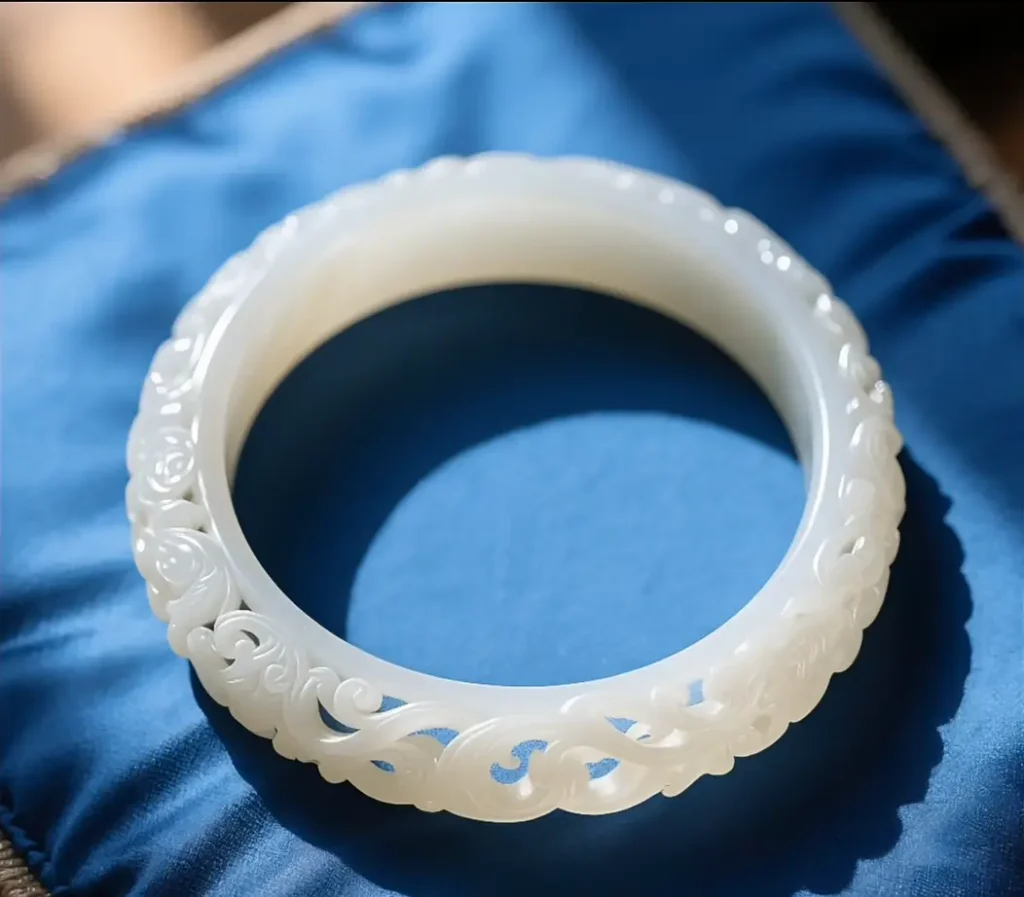
In the gemstone trade, unscrupulous sellers often exploit the pristine whiteness of Jingbai Jade to mimic prestigious Hetian Mutton-Fat Jade. To avoid falling into this common trap, you must learn to identify the stone through these professional diagnostic lenses:
Technical Comparison at a Glance
| Feature | Jingbai Jade (Quartzite) | Hetian Jade (Nephrite) |
| Mineral Species | High-purity Quartzite Aggregate | Tremolite-Actinolite Nephrite |
| Chemical Composition | Silicon Dioxide SiO2 | Calcium Magnesium Silicate |
| Luster Profile | Sharp, Vitreous (Glass-like) luster | Subdued, Greasy (Oil-like) luster |
| Internal Structure | Granular texture; shows distinct quartzite glints under light | Interlocking fibrous (Felted) structure; extremely dense |
| Tenacity & Fracture | Brittle; exhibits sharp, conchoidal fractures | Exceptional tenacity; displays a waxy, splintery break |
| Tactile Sensation | Cool, sleek, and highly vitreous | Warm, “oily,” and velvety |
| Mohs Hardness | ~6.0 (Resists common steel blades) | 6.0 – 6.5 |
The Telltale Sign: The Flash Test
The most reliable way to spot the difference lies in how the stones interact with light. When you shine a strong torch (flashlight) against the edges of a raw stone or a finished carving:
- Jingbai Jade reveals distinct, tiny quartzite glints (sparkling flecks). These glints resemble the micro-reflections you see in high-quality sand.
- Hetian Jade displays a unique “felted” structure. Instead of sparkling flecks, you see a dense, interwoven texture that looks like compressed wool fibers.
This internal composition is the hallmark of true nephrite. For a deeper dive into these microscopic differences, check out our professional identification roadmap: The Nephrite Deception: Your Expert Guide to Authentic Hetian Jade and Its Natural Imposters
White Quartzite Jade value: Is Jingbai Jade Worth the Investment?
1. Market Reality & Pricing
Let’s be honest: Jingbai Jade does not carry the same raw-material prestige as high-end Nephrite. Because of its massive natural reserves, the market remains accessible. You will typically find standard Jingbai Jade bracelets priced well under $100—a stark contrast to the thousands of dollars commanded by authentic Hetian White Jade.
2. Artistic Merit vs. Gemological Rarity
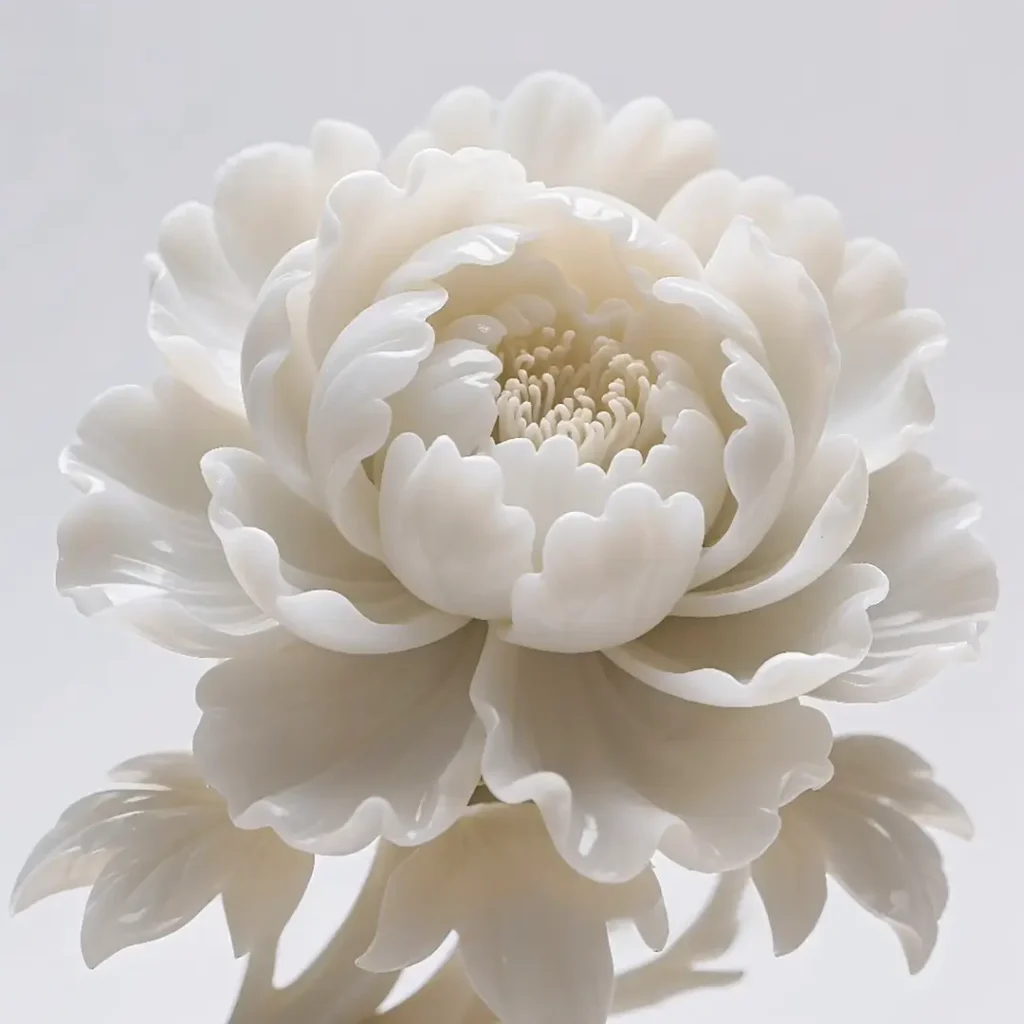
Despite its lower price point, artisans prize Jingbai Jade for its pure white hue and high translucency. It serves as an excellent medium for ornamental carvings, ranging from delicate vases to intricate seals. In the modern market, its value stems from aesthetic appeal and craftsmanship rather than gemological rarity, making it a popular choice for high-quality handicrafts and fashion jewelry.
3. Investment Potential & Collector’s Risk
Under official standards, experts classify Jingbai Jade as Quartzite Jade, placing it in the same high-yield family as Jinsi Jade and Huanglong Jade.
Because the market is saturated with mid-to-low-grade material, mass-produced pieces offer very little in terms of long-term investment potential. The primary risk for collectors involves deceptive trade practices: unscrupulous sellers frequently pass off common Jingbai Jade as expensive Nephrite. While exceptional, master-carved specimens still hold artistic value, you must prioritize proper identification to avoid overpaying for common material.
How to Select High-Quality Jingbai Jade
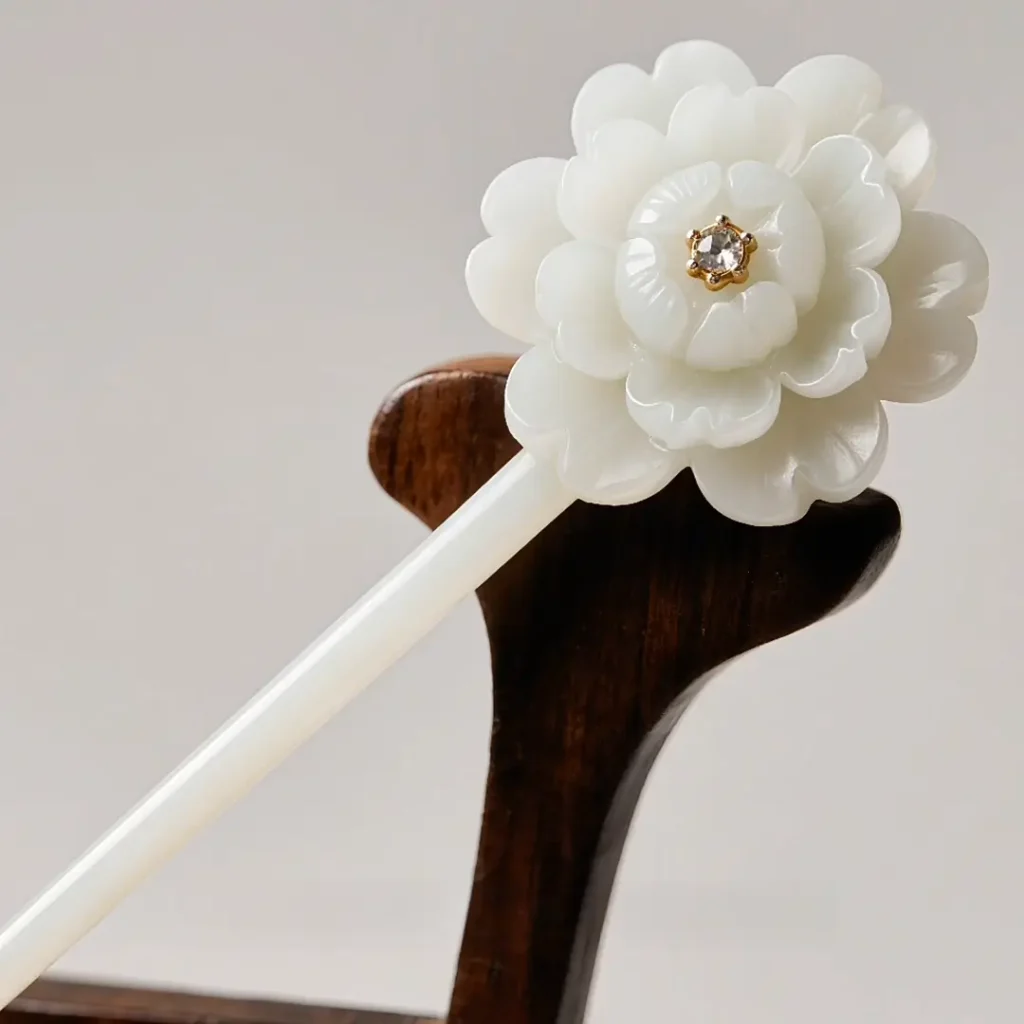
If you are looking to purchase Jingbai Jade for its decorative beauty, follow these two tips:
- Check for “Zongyan” (Pits or Pores): In the trade, “Zongyan” refers to tiny surface pits caused by loose crystal structures or softer mineral inclusions. The finest specimens display a flawless, oily surface without these visible pores. A texture that mimics the “fatty” look of premium white suet is considered top-grade.
- Evaluate the Craftsmanship: Since the raw stone is affordable, the real value lies in the human touch. A piece hand-carved by a master artisan possesses genuine artistic merit and collectibility. In contrast, machine-molded pieces should only be valued as everyday accessories.
Final Thoughts from Jewea
While Jingbai Jade may not fit the traditional definition of “mutton-fat” nephrite, it undoubtedly holds its own in the world of modern gemstone artistry. Its flawless, snow-white aesthetic and remarkable affordability offer a unique opportunity for enthusiasts to enjoy the pristine beauty of white jade without the steep investment.
At Jewea, we believe that the true value of a gemstone lies in its harmony with your personal style. If you prioritize visual purity and refined craftsmanship over speculative investment, Jingbai Jade serves as a stunning entry-point into the world of white minerals.