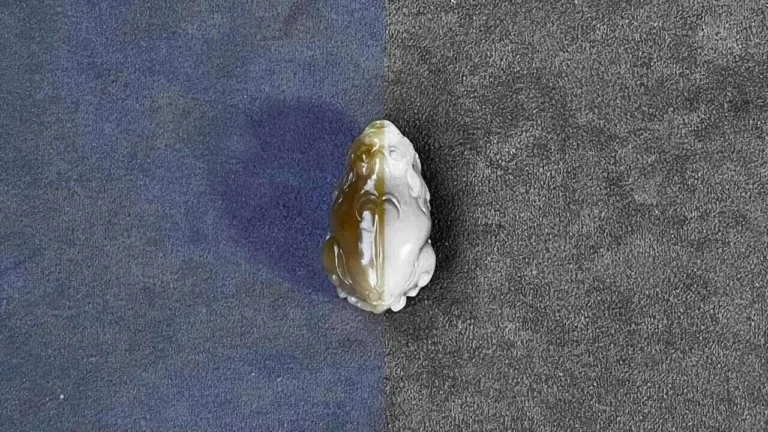
Real vs. Imitation: 7 Common Nanhong Agate Look-Alikes—Have You Encountered These?
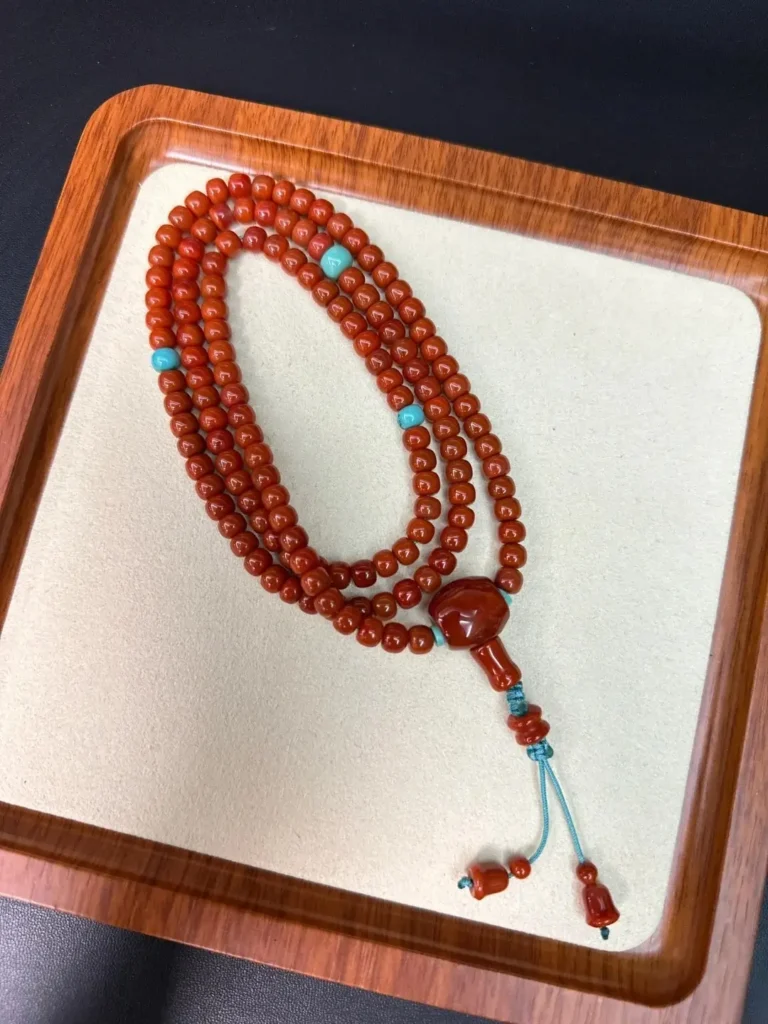
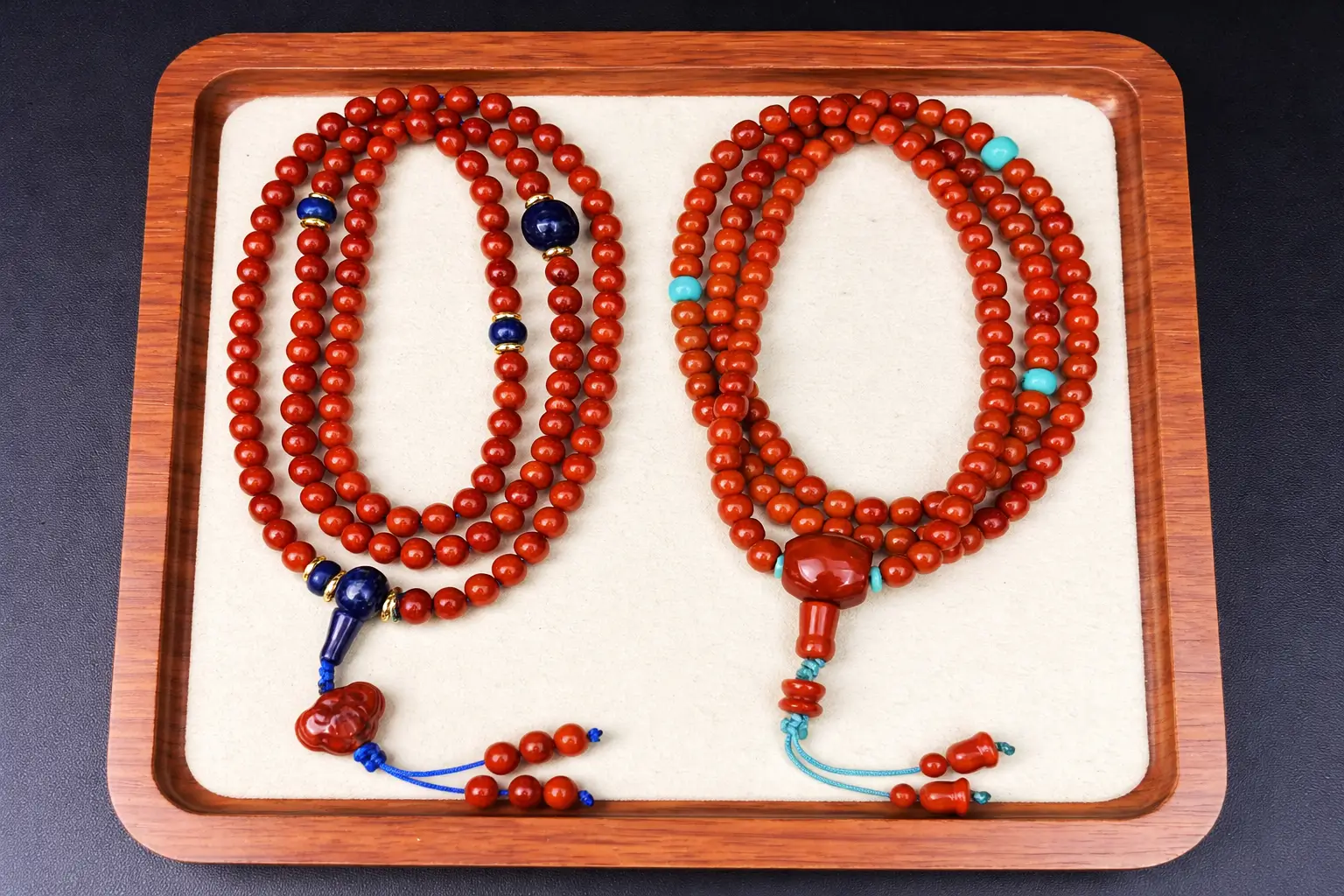
With its vivid crimson hues and deep cultural heritage, Nanhong Agate is widely popular within the Chinese jewelry market. However, significant demand—coupled with the natural scarcity of high-quality raw material—has led to a market containing various types of Imitation Nanhong Agate.
For any collector, distinguishing between authentic Nanhong and these various imitations is essential. Whether dealing with a natural stone of similar appearance or a laboratory-treated material, understanding their specific physical properties will help you make more informed decisions.
In today’s guide, I’m pulling back the curtain on these deceptive imitations. Let’s take a deep dive into the most common Nanhong “fakes” and learn how to spot the flaws before they ever reach your collection.
What Exactly is Nanhong Agate?
Before we dive into the world of imitations, we need to establish exactly what constitutes the “real deal.” In the world of gemstone collecting, you can’t spot a look-alike if you aren’t intimately familiar with the original.
The Modern Benchmark: The 2023 National Standard
The most authoritative definition comes from China’s recently updated National Standard for Nanhong Identification (GB/T 42437-2023). This regulation provides a clear, scientific baseline: true Nanhong is a naturally occurring, cryptocrystalline aggregate composed primarily of alpha-quartz.
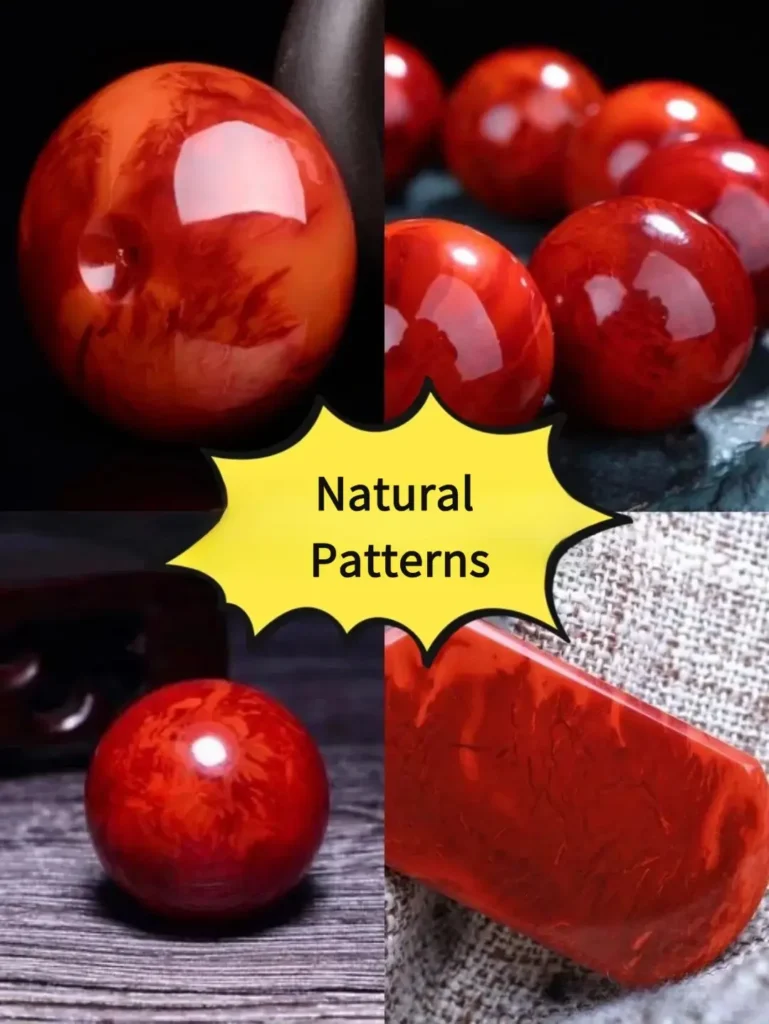
According to the standard, Nanhong’s signature red palette is a structural feature, not a surface treatment. The stone is colored by internal hematite inclusions, creating a visual profile that ranges from translucent to semi-translucent. While the primary chemical component is SiO2, the material often carries trace elements like Iron (Fe), Aluminum (Al), Titanium (Ti), and Calcium (Ca). Beyond its quartz and hematite core, you may also find minor mineral traces of moganite, goethite, or calcite.
The Traditionalist View: The Yunnan Standard
An earlier, more localized standard from Yunnan Province (DB53/T 537-2013) offers an even stricter, more traditionalist lens. This “Old School” definition focuses on material sourced specifically from Baoshan, Yunnan.
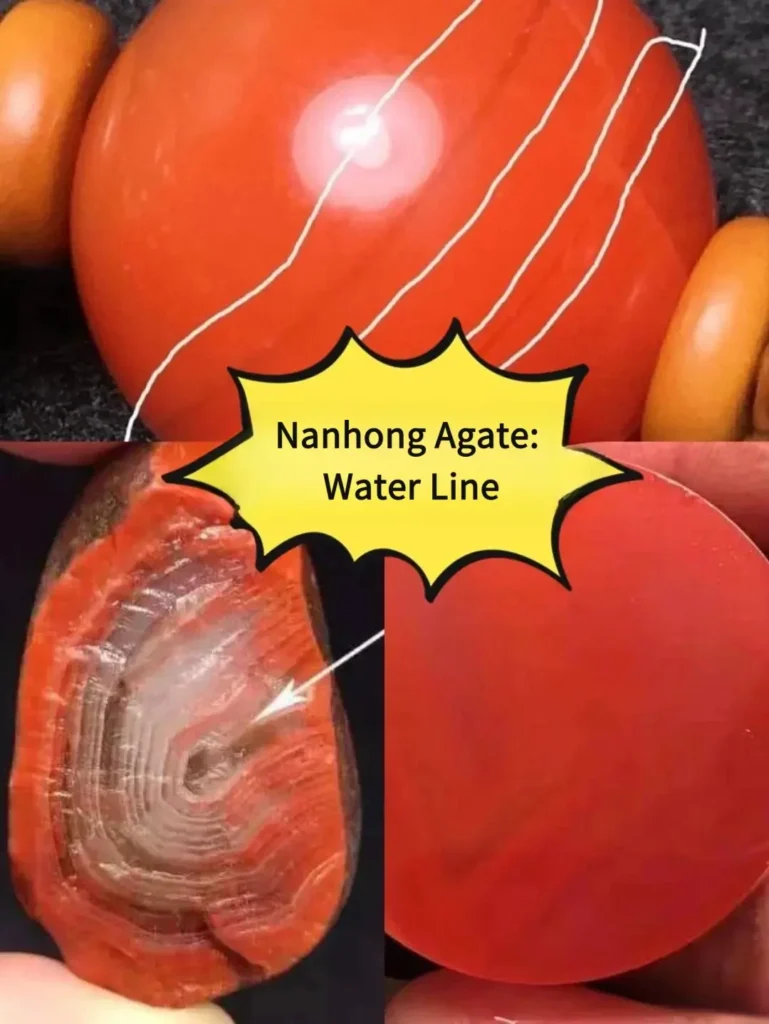
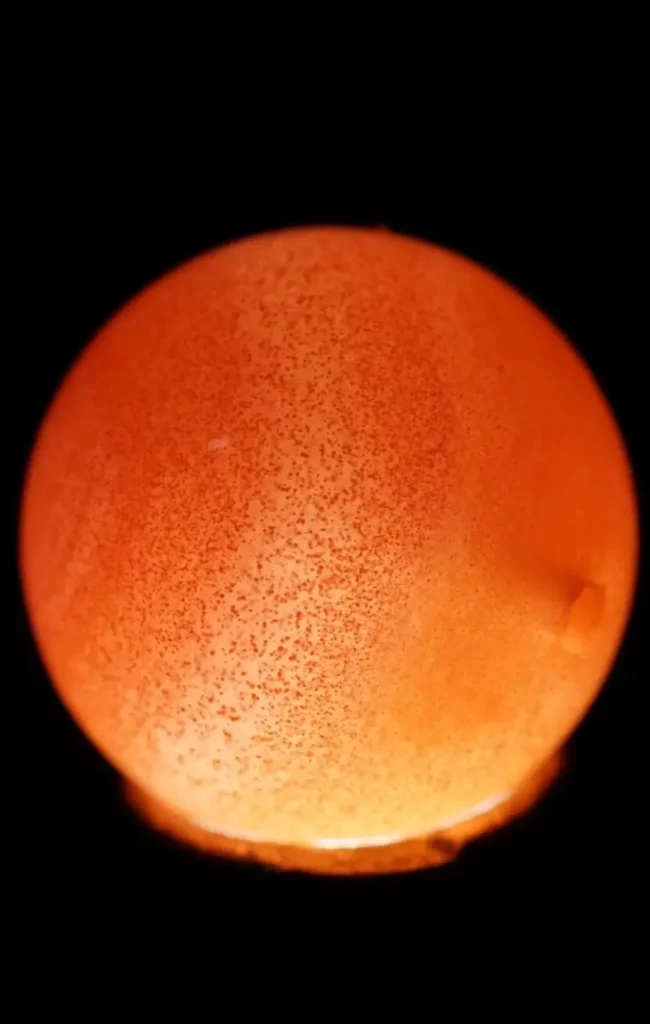
Under these criteria, Nanhong must exhibit a refractive index of 1.535 to 1.539 and a Mohs hardness of 6.5 to 7. More importantly, it highlights the visual soul of the stone: the “red microspheres” (often referred to as cinnabar dots) and characteristic white bands or spots. It even specifies the absorption peaks in the infrared spectrum (typically at 760 cm⁻¹) to separate the wheat from the chaff.
The Expert’s Takeaway
When we synthesize these standards with geological reality, we can define Authentic Nanhong Agate as a natural red chalcedony sourced from three specific regions: Baoshan (Yunnan), Liangshan (Sichuan), and Diebu (Gansu). Its identity is defined by its origin and its unique “cinnabar dot” inclusions—the microscopic hematite particles that give the stone its legendary depth and vitality.
For a deeper exploration of these three regions, our featured article, [Southern Red Agate: The Complete Guide to Colors, Quality, and Authenticity], provides an exhaustive breakdown of the specific traits unique to these legendary locations.
Red Jasper: The Natural Look-Alike for Nanhong Agate
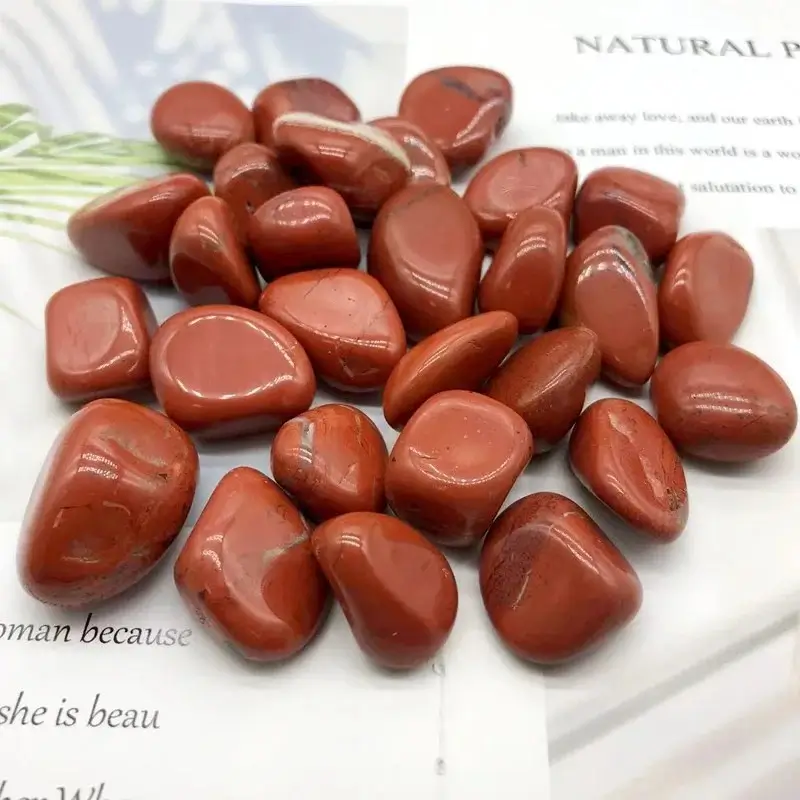
The most convincing Imitation Nanhong Agate isn’t made in a lab. Nature creates it. Red Jasper is the ultimate “master of disguise.” It shares a similar organic look with Nanhong but costs much less. Unscrupulous sellers often exploit this price gap to turn a massive profit.
What Exactly is “Jasper”?
In our previous guide, [Jasper vs. Nephrite Jade: The Confusing World of Red “Jade” Explained], we explored this confusing world. “Jasper” is a variety of chalcedony packed with impurities. These are mainly iron oxide and clay minerals. High-quality Nanhong is prized for its “gelatinous” translucency. In contrast, Jasper’s 20% impurity level makes it completely opaque.
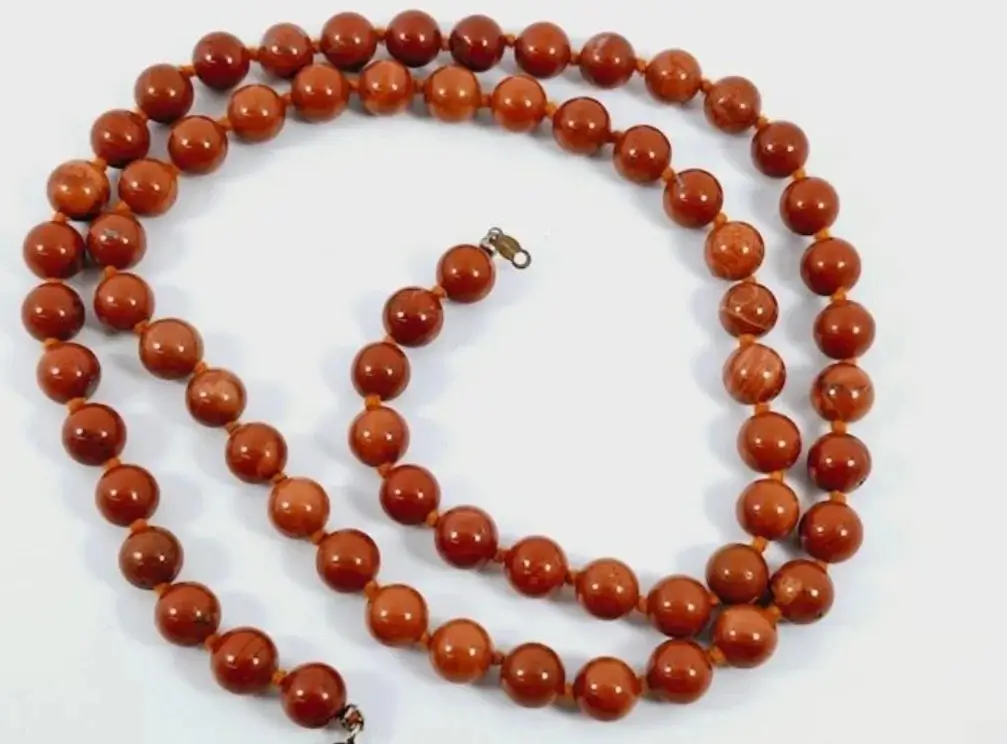
The specific Red Jasper that mimics Nanhong usually shows brownish-red or deep maroon tones. High levels of hematite and goethite give it a dense, earthy appearance. To an untrained eye, a polished Jasper bead looks like “Full-Fleshed” Nanhong.
How to Tell the Difference: Red Jasper vs. Nanhong Agate
While they may look like twins on the surface, a closer inspection reveals their true identities. Here is how you can separate a natural Jasper from authentic Nanhong:
- The Light Test (Transparency): This is the “smoking gun.” When you hold a flashlight to Nanhong, you will see a delicate translucency and the characteristic “cinnabar dots.” Red Jasper, however, is stone-cold opaque. Light will not penetrate the body of the stone.
- Color Vitality: Nanhong red is vibrant and “alive.” In contrast, Red Jasper often looks “muted” or “muddy.” Its red is a dull, flat tone that lacks the inner glow of genuine agate.
- Texture and Patterns: Red Jasper feels more “stony” than “gem-like.” It often features black mineral streaks or “iron lines”—a trait common in Jasper but virtually non-existent in high-quality Nanhong Agate.
African Agate: A Common Natural Nanhong Agate Imitation
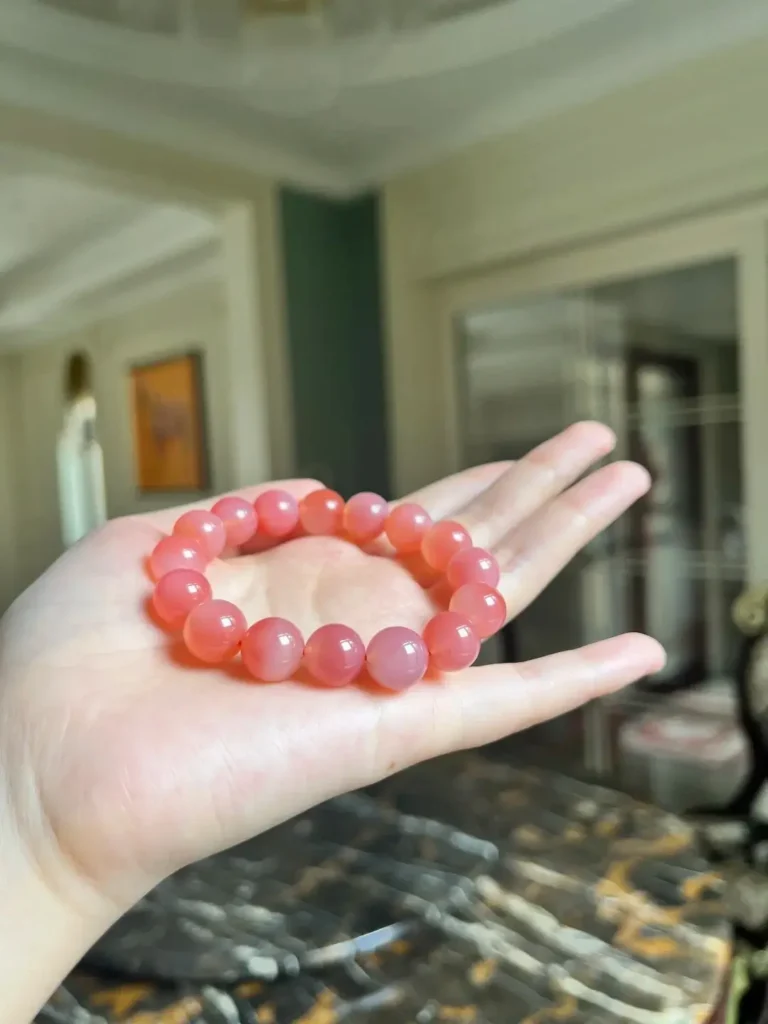
Beyond Red Jasper, African Agate (often called “Fei Hong” in the trade) is the most frequent natural look-alike for Nanhong. It is a genuine red agate sourced from Africa. Because it is abundant and affordable, it often appears in the market as a budget-friendly alternative. However, once polished into finished beads, beginners often find it difficult to distinguish from authentic Nanhong.
How to Tell the Difference: African Agate vs. Nanhong Agate
Though both belong to the agate family, their physical properties and internal structures vary significantly. Use these four expert checks to identify them:
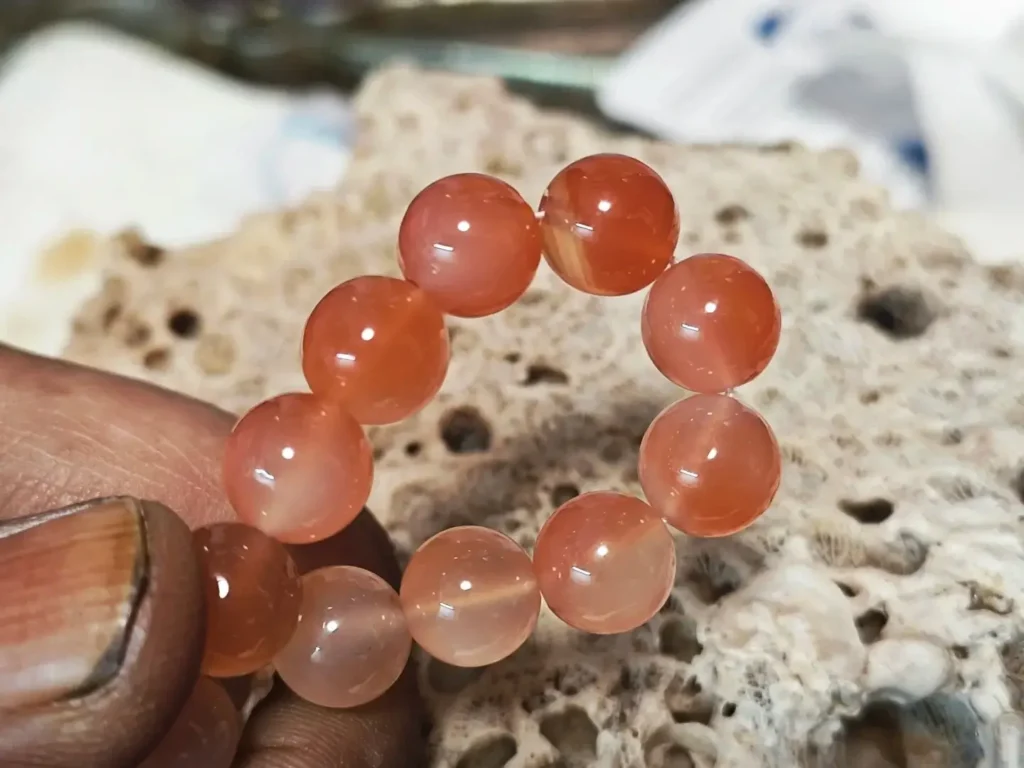
- Color Saturation and Tone: African Agate generally appears lighter and more “watery” than Nanhong. It often carries a “dusty” rose or purplish undertone. In contrast, authentic Nanhong displays a deeper, more vivid red with high saturation and a “pure” color profile.
- The Raw “Skin” (Matrix): If you are looking at raw stones, the difference is obvious. Nanhong typically has a rough, stony exterior (weathered skin). African Agate features a translucent, glassy outer layer, often described as having a “crystal skin.”
- Internal Distribution (The “Candy-Heart” Effect): The color structure of these two stones is almost opposite. African Agate often looks like a “candy-heart”—it has a translucent, jelly-like exterior with the red “meat” concentrated in the center. Nanhong does the reverse: the rich red color sits on the outside, while any translucent “jelly” parts are tucked away in the core.
- The “Cinnabar Dot” Test: This remains the gold standard. Under magnification, authentic Nanhong reveals dense, characteristic cinnabar dots (hematite inclusions). African Agate usually lacks these distinct microscopic dots entirely.
Zhanguo Red: A Prestigious Natural Nanhong Agate Imitation
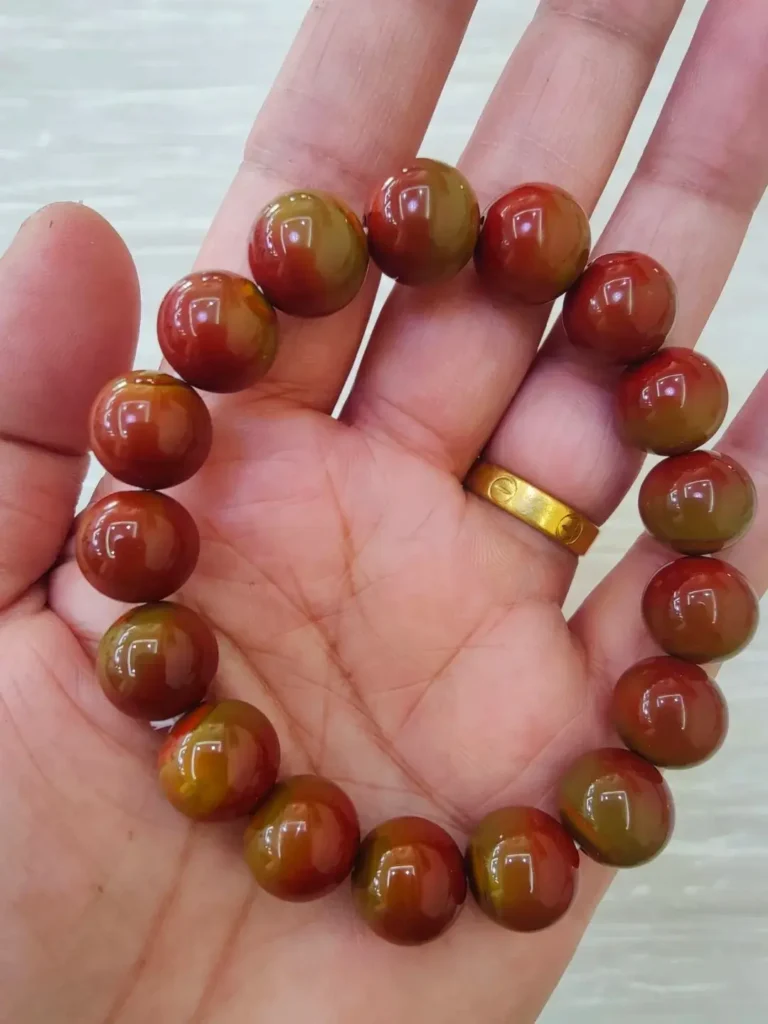
During the peak of the gemstone collecting boom, Zhanguo Red Agate stood shoulder-to-shoulder with Nanhong in both prestige and price. While its name emphasizes “Red,” premium Zhanguo Red is rarely a monochrome stone. Its signature look actually relies on a vibrant interplay between red and yellow. This dual-color profile is the most immediate way to distinguish it from Nanhong.
How to Tell the Difference: Zhanguo Red vs. Nanhong Agate
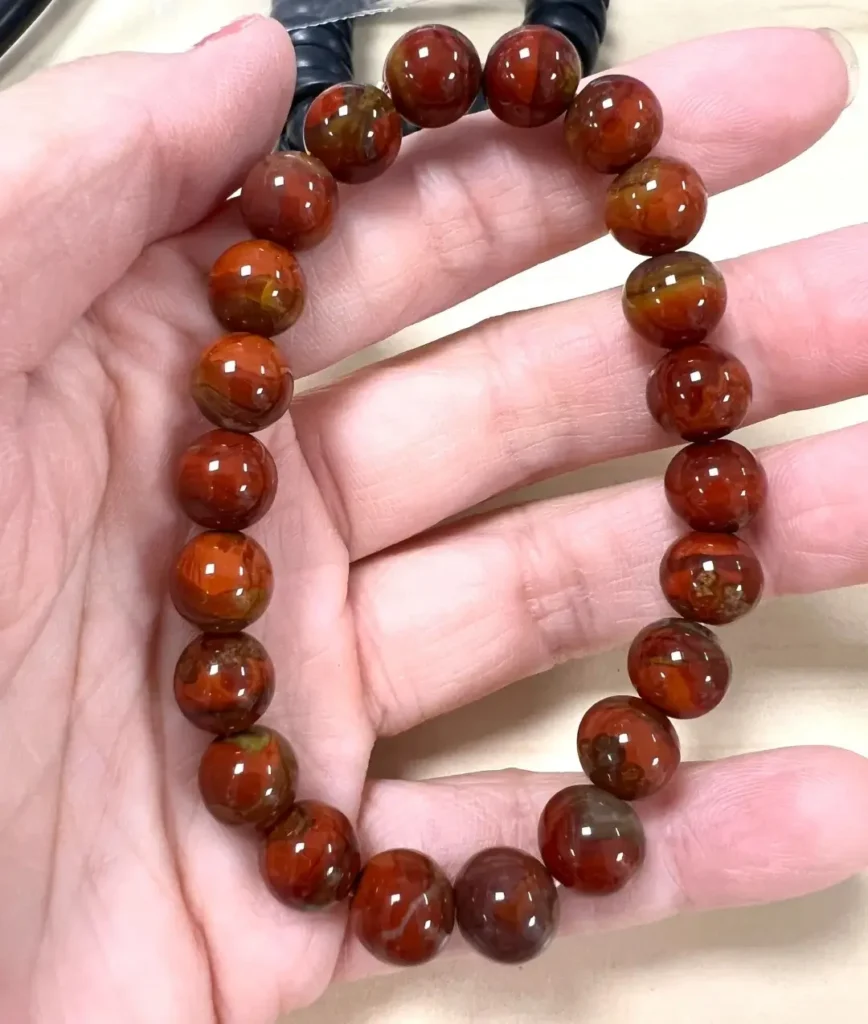
For most collectors, the confusion arises with “Full-Red” Zhanguo specimens. When the stone lacks its characteristic yellow bands, it looks remarkably similar to high-quality Nanhong. To an untrained eye, these saturated red pieces are easy to misidentify.
Differentiating these two requires a keen eye for detail. Use these three expert observations:
- The Color Palette: The red in Zhanguo Red often leans toward a deeper, more “regal” crimson (similar to Jin Hong). If you spot yellow “moss” patterns or brownish-yellow bands, you are almost certainly looking at Zhanguo Red. Nanhong rarely displays these sharp, variegated yellow transitions.
- The “Red and White” Variation: Both stones produce varieties mixed with white quartz. At first glance, a “Red and White” Zhanguo bead looks nearly identical to Nanhong. However, the boundary between the colors in Zhanguo Red is usually sharper and more rhythmic.
- The Ultimate Proof (Cinnabar Dots): This is the definitive test. Authentic Nanhong Agate contains dense, microscopic cinnabar dots (hematite inclusions). Zhanguo Red Agate does not have these inclusions. If the “red meat” of the stone lacks these tiny, suspended particles under a loupe, it is not Nanhong.
Common Red Agate: A Distinguishable Nanhong Agate Imitation
When Common Red Agate enters the conversation, it usually mimics Nanhong in two ways: through low-grade natural stones or through artificial heat treatment. Fortunately, both are relatively easy for an informed collector to identify. By focusing on color density and internal structure, you can quickly separate these common imitations from authentic Nanhong.
How to Tell the Difference: Red Agate vs. Nanhong Agate
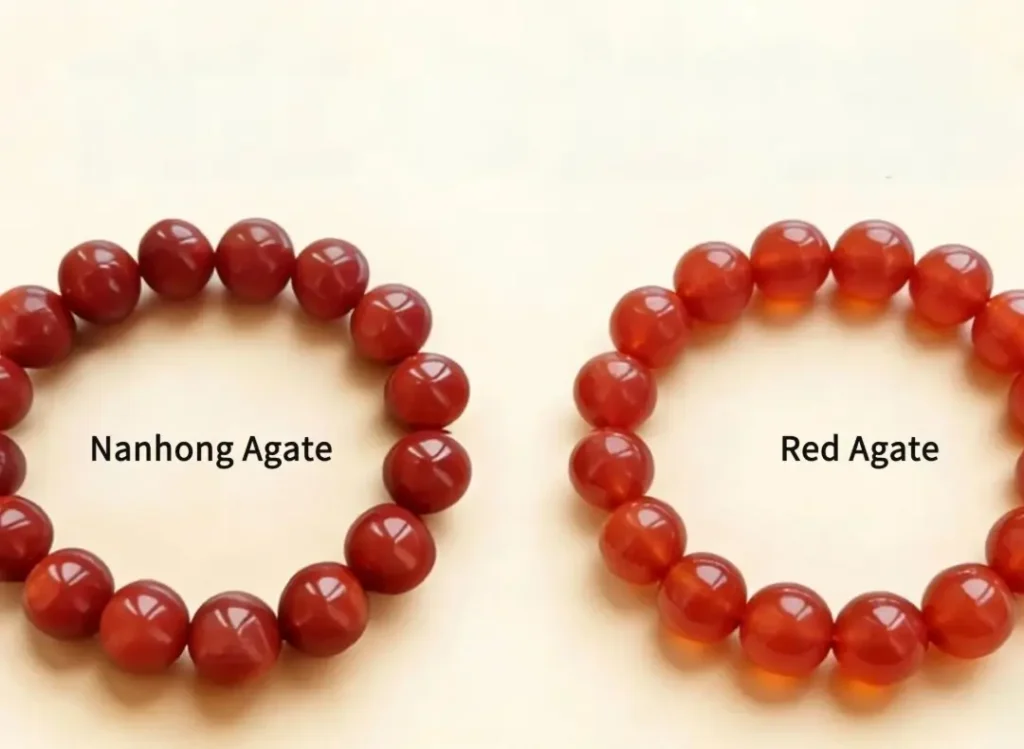
Use these three key indicators to verify your stone:
- Saturation and “Meat” Density: Natural red agate rarely matches the intense saturation of Nanhong. It lacks the “full-fleshed” (man rou) opacity that collectors crave. Instead, common agate often appears translucent or “watery,” whereas Nanhong feels dense, rich, and substantial.
- The “Flat” Red of Heat Treatment: Heat-treated (calcined) agate is a major player in the market. While it achieves a bright red hue, the color often looks “flat” or “lifeless.” It lacks the sophisticated nuances of Nanhong’s signature palettes, such as Persimmon Red (Shi Hong) or Regal Crimson (Jin Hong). If the red looks unnaturally uniform and “shouting” at you, it is likely heat-treated.
- The Microscopic Inclusions: This is your definitive proof. The vibrant red in Nanhong comes from hematite inclusions, visible under a loupe as dense, suspended “cinnabar dots.” Common red agate—whether natural or heat-treated—simply does not have this internal structure. If the “meat” of the stone is a solid, featureless red under magnification, it isn’t Nanhong.
Dyed Quartzite: The Deceptive Synthetic Nanhong Agate Imitation
If you have followed the Nanhong market for a while, you likely know about the “Leibo vs. Baoshan” controversy. Years ago, the discovery of a new mine in Leibo County, Sichuan, shook the industry. These “Leibo” stones closely mimic the prized texture of “Baoshan” material. Because of the massive price gap between the two origins, many enthusiasts “paid their tuition” by buying mislabeled stones.
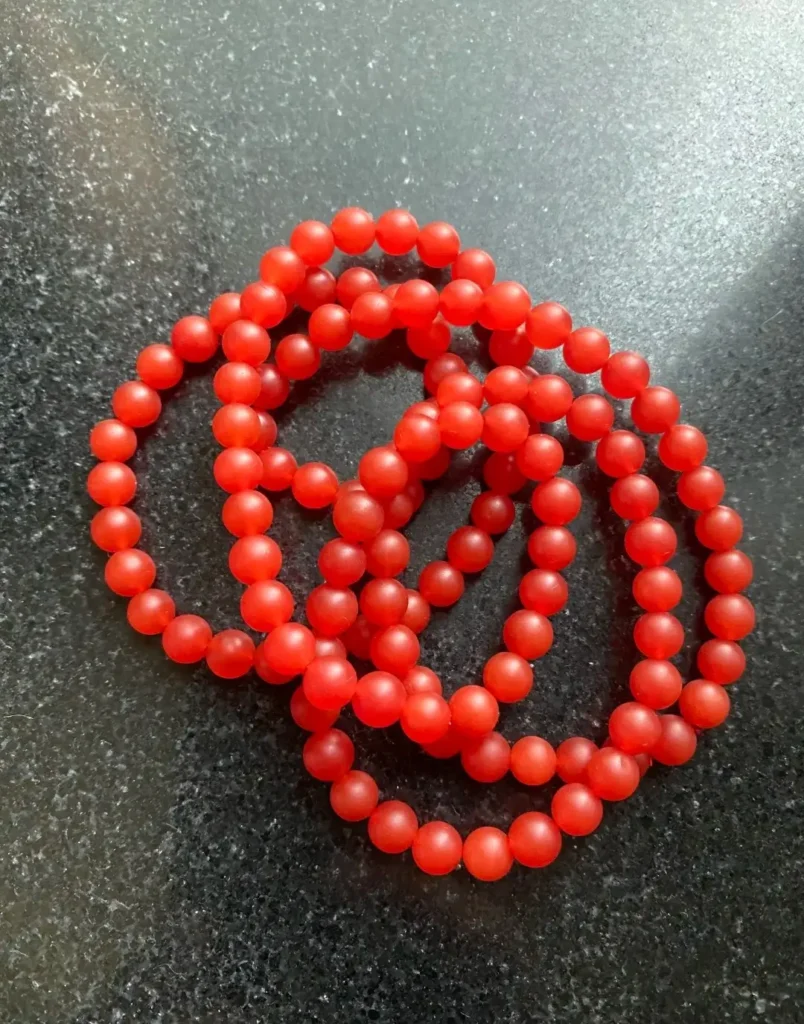
But that was just the beginning. Today, unscrupulous sellers have taken the deception a step further by passing off Dyed Quartzite as high-end Leibo or Baoshan Nanhong. Because it looks remarkably similar and carries a very “tempting” price tag, this imitation flooded low-end jewelry markets. For beginners, this is perhaps the hardest “fake” to spot without professional help.
How to Spot Dyed Quartzite
Quartzite is a natural mineral, but its vibrant red color in these pieces is entirely artificial. Use these three methods to protect your investment:
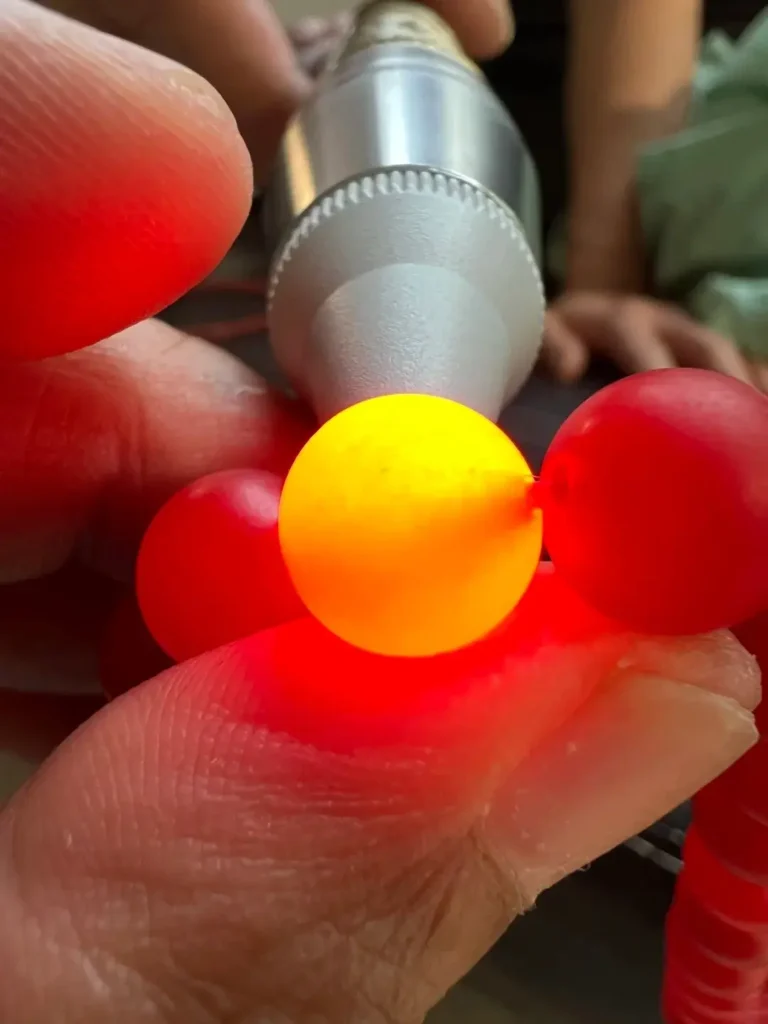
- The Light and Magnification Test: This is your most reliable field test. Under a flashlight or loupe, dyed quartzite reveals a “web-like” or “honeycomb” color distribution. This happens because the dye settles into the microscopic cracks between quartz grains. True Nanhong, however, displays its signature internal structure of dense cinnabar dots.
- Color Consistency and “Soul”: A strand of dyed quartzite often looks suspiciously perfect. The color is usually too uniform and “flat.” When compared to authentic Baoshan Nanhong, which has natural variations and a subtle “inner glow,” dyed quartzite feels stiff and lifeless.
- Laboratory Verification: When in doubt, send it to a pro. A certified gemological lab can use Infrared (IR) Spectroscopy to instantly distinguish the molecular structure of quartzite from true agate.
Pro Tip: Most quartzite imitations feature a matte or frosted finish to mimic the oily, “mutton-fat” texture of Baoshan Nanhong. Unless you have a highly trained eye, be wary of “too-good-to-be-true” deals on matte-finished beads. If a deal feels like a “steal,” it’s often your wallet that is getting robbed.
Dyed Red Agate: The Entry-Level Nanhong Agate Imitation

If you frequent jewelry live streams or discount marketplaces, you’ve likely seen this Imitation Nanhong Agate. Sellers often market these as “budget-friendly” Nanhong in the form of large beaded bracelets, statement earrings, or thick bangles. To sweeten the deal, they often include a generic “Agate Certificate.” While technically true—the base material is agate—these certificates conveniently omit the fact that the vibrant red color is entirely artificial.
How to Spot the “Fake” Glow
For a beginner, these dyed pieces can look incredibly tempting on a smartphone screen. The chemical dyes create a dense, “heavy” red that mimics the saturation of high-grade Nanhong. Without a side-by-side comparison, it is easy to mistake this over-saturated look for the real thing.
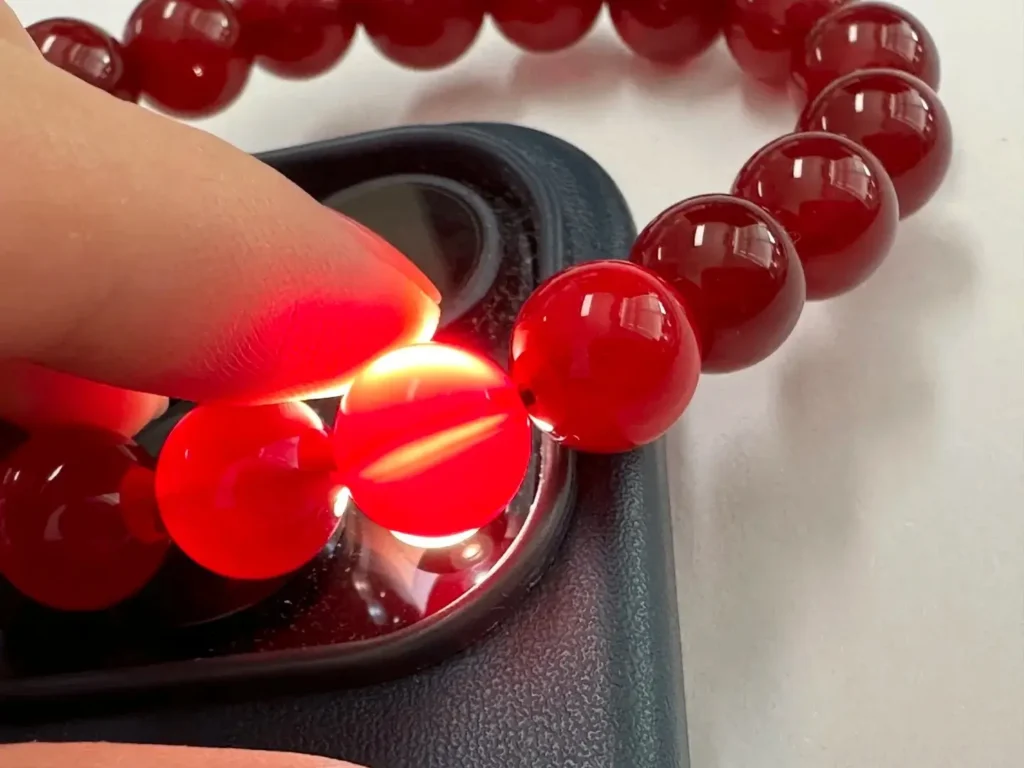
While they look convincing on camera, dyed red agates usually fail the “in-person” test. Here is how you can tell the difference once the piece is in your hands:
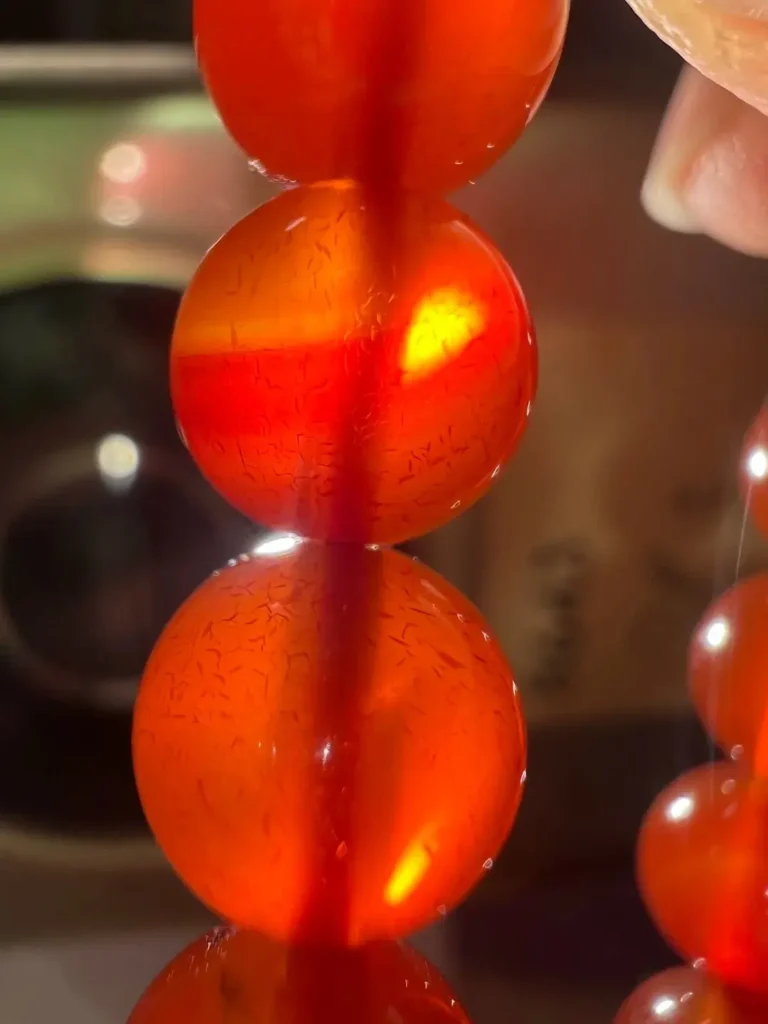
- Unnatural Color Vibrancy: Dyed agate often looks “too perfect” or “neon.” The red is “flat” and lacks the organic depth and subtle tonal shifts found in natural Nanhong. It often feels like the color is sitting on the stone rather than being part of it.
- The “Weight” of the Hue: Real Nanhong has a sophisticated, “mutton-fat” or gelatinous luster. Dyed common agate, by contrast, feels “glassy” and sterile.
- The Tactile Test: Once you hold a piece of authentic Nanhong, you will notice its unique “waxy” or “oily” texture. Dyed agate lacks this tactile soul, feeling more like common, mass-produced stone.
A Word of Caution: If a deal on a large-bead Nanhong bracelet seems too good to be true, it almost certainly is. Authentic, high-quality Nanhong of that size is a rare luxury—not a live stream “bargain.”
Peking Glass: The Synthetic “Nanhong” Trap
If you have read our previous deep dive, [Glass Imitation Gemstones: How to Spot Fake Gem Glass Before You Buy], the name “Peking Glass” (or Liaoqi) will ring a bell. In the world of jewelry imitations, this emulsified glass is the ultimate “chameleon”—it can mimic almost any gemstone.
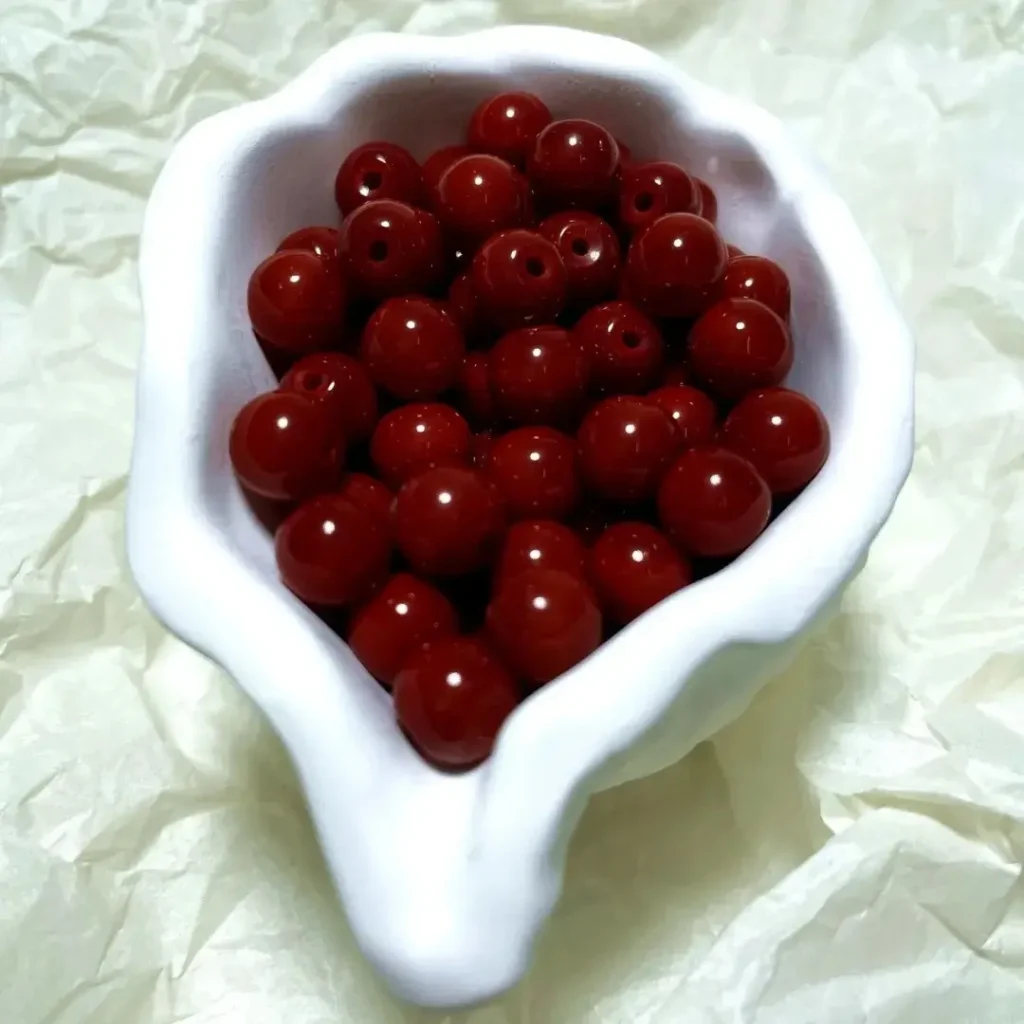
In the Nanhong market, these glass fakes are often marketed as high-end “Full-Fleshed Persimmon Red.” They are designed to catch the eye with their intense, uniform saturation and high luster. However, once you know what to look for, their “synthetic soul” is easy to expose.
How to Spot the “Glass” Identity
While high-quality glass can look remarkably similar to premium Nanhong, it lacks the geological complexity of natural agate. Use these three checks to identify a glass imitation:
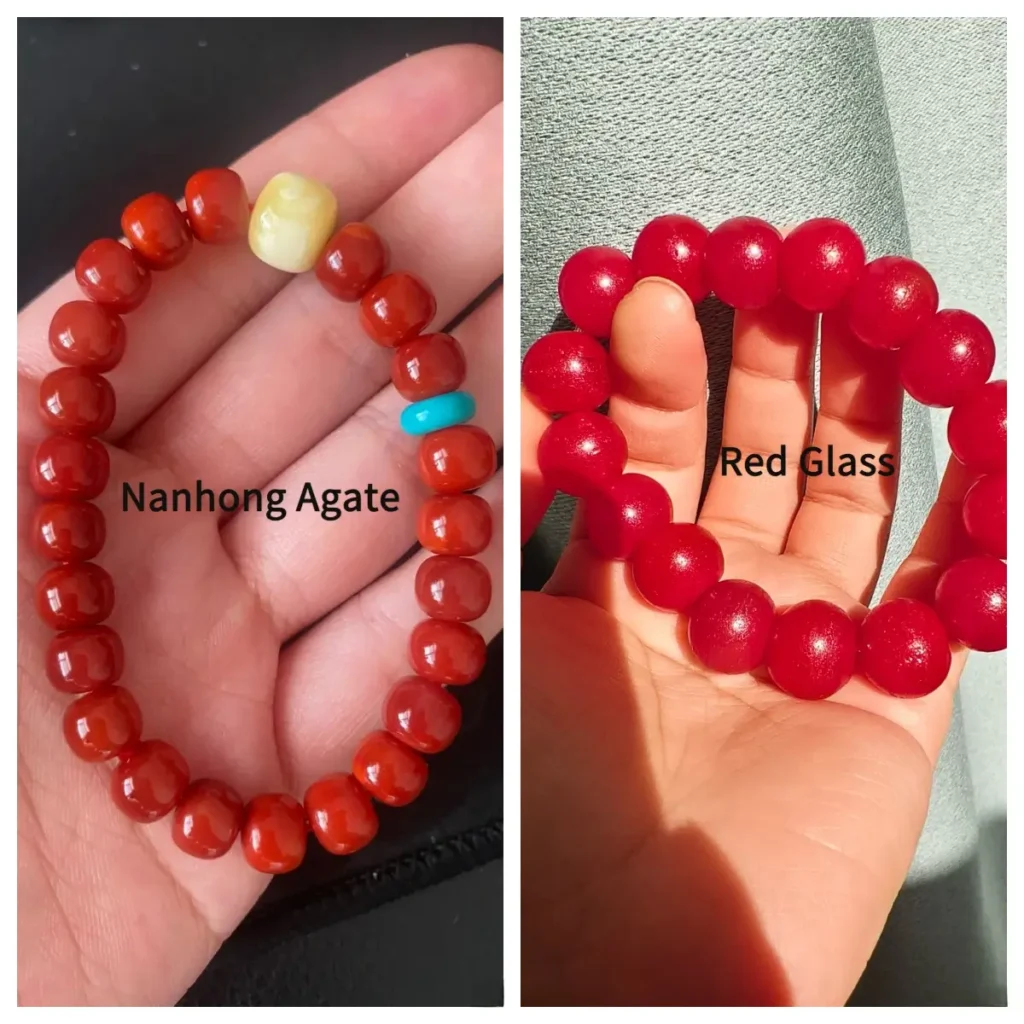
- The Transparency Trap: Most glass imitations are too translucent. While they mimic the “Full-Fleshed” color, they often lack the dense, internal “meat” of authentic Nanhong. True “Full-Fleshed” Nanhong should feel substantial and have a low, gelatinous transparency—not a glassy, see-through clarity.
- The “Smoking Gun”: Gas Bubbles: This is the most definitive field test. Under a loupe or a strong flashlight, glass imitations almost always reveal microscopic gas bubbles. These are a byproduct of the manufacturing process. Natural Nanhong, formed over millions of years, contains mineral inclusions (cinnabar dots) but never spherical air bubbles.
- Temperature and Luster: Glass feels “warmer” to the touch and heats up quickly in your hand. Authentic Nanhong maintains a signature “cool-to-the-touch” feel for longer. Furthermore, glass has a sharp, vitreous luster, while Nanhong displays a softer, “waxy” or “oily” glow.
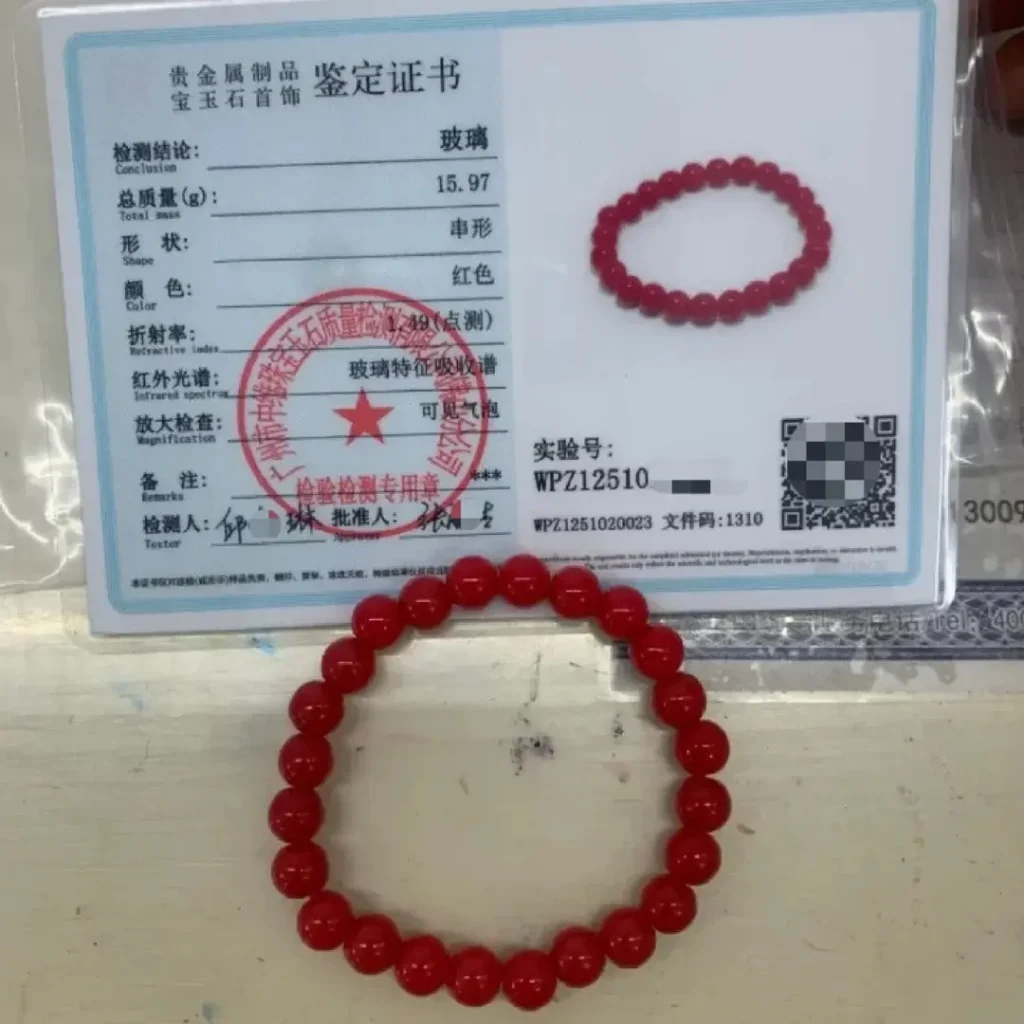
The Expert’s Rule: If the stone looks too perfect, is exceptionally clear for its color saturation, and shows tiny bubbles under magnification, you are looking at glass. Genuine Nanhong is a masterpiece of nature, and nature rarely leaves behind air bubbles.
The Jewea Philosophy: Quality Over Volume
At Jewea, our mantra is simple: Buy for quality, not for quantity. Whether you are navigating natural imitations or synthetic fakes, the “unbelievable bargain” is almost always a myth. In the gemstone world, you get exactly what you pay for.
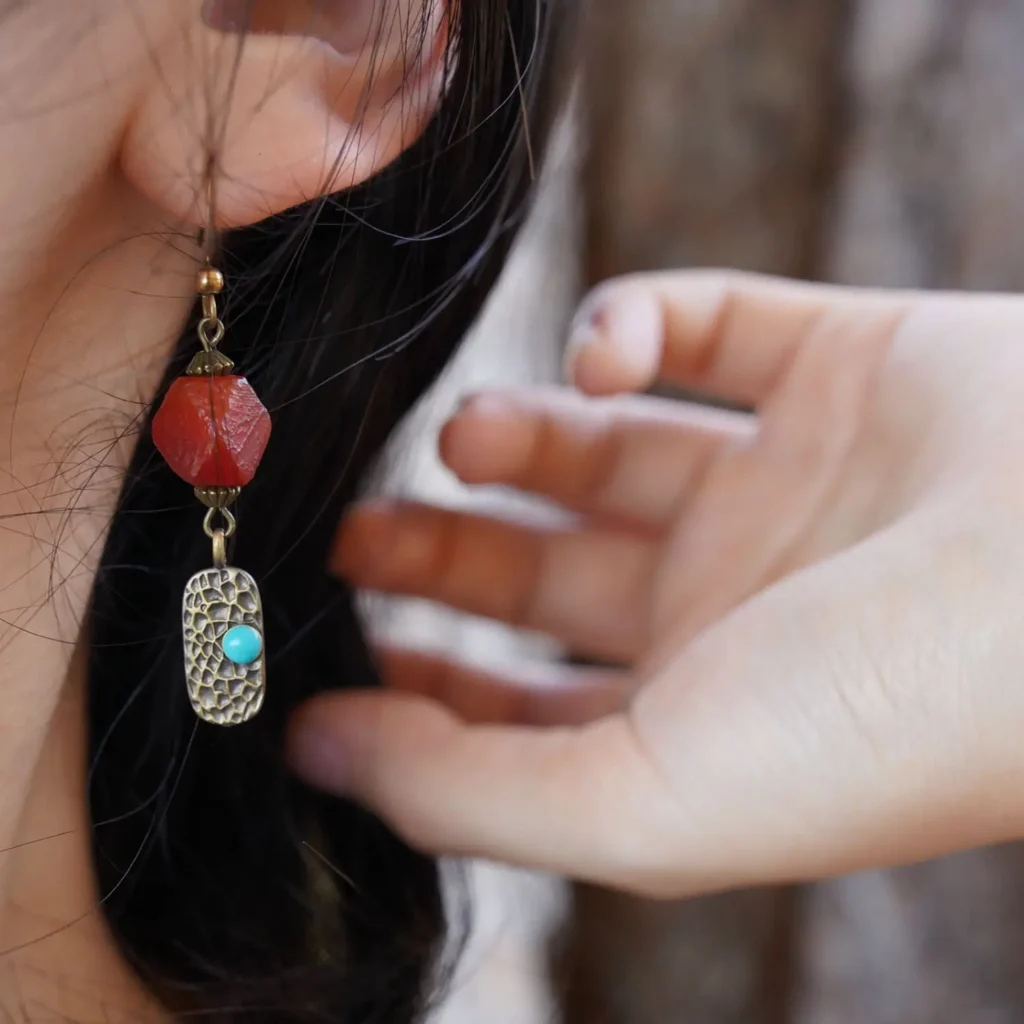
However, a high price tag isn’t a guaranteed safety net. We always advocate for a “look more, buy less” approach. Build your foundational knowledge first. Develop a discerning eye, and always partner with a trusted, ethical expert you can rely on. A principle we honor in every piece we curate, such as our Vintage Faceted Agate Earrings, where precision and heritage meet.