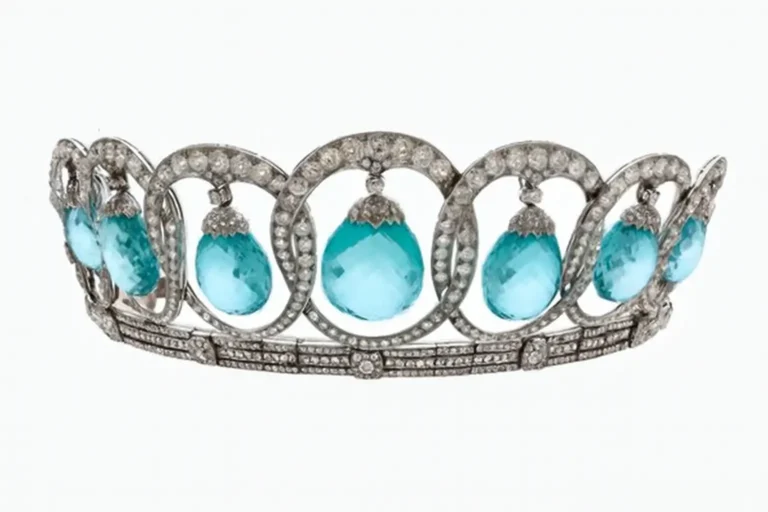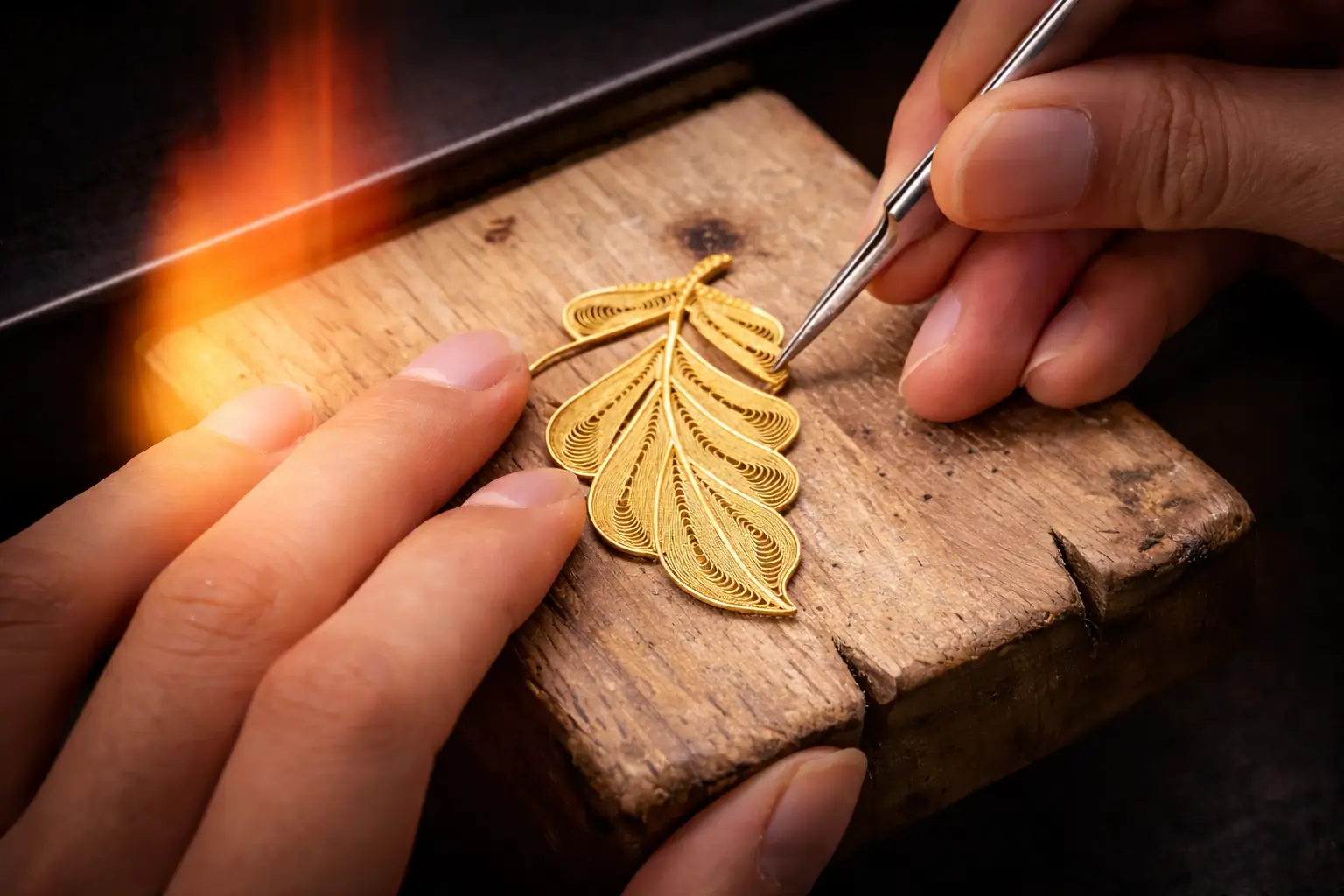
Chinese Filigree & Inlay Jewelry: 3,000-Year Legacy of Royal Haute Couture
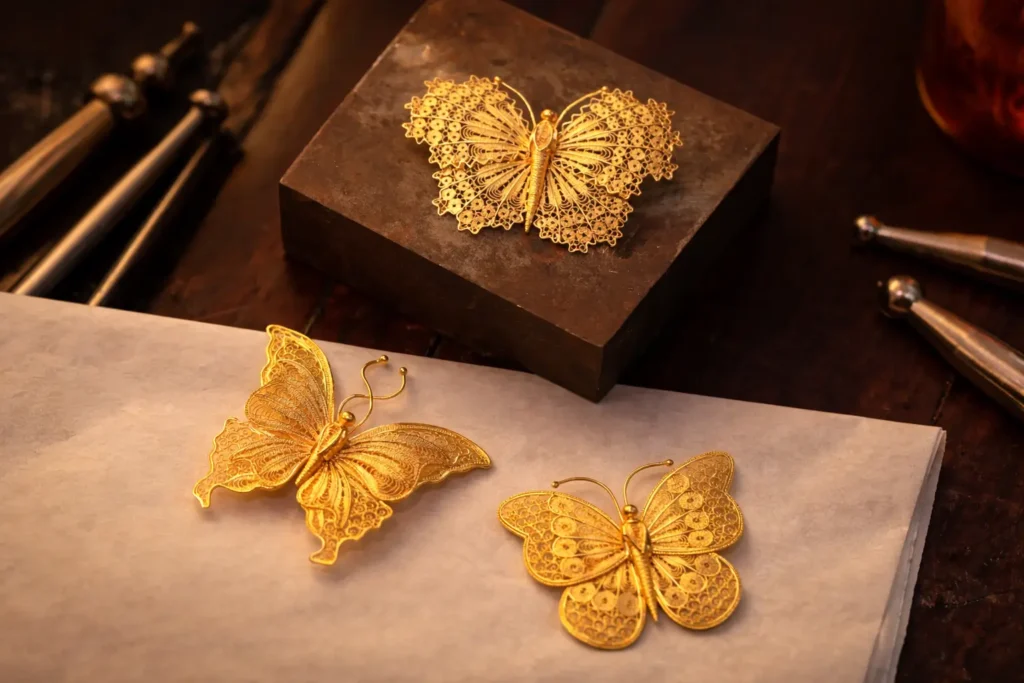
Mastering the art of turning raw gold into gossamer threads and weaving them into celestial forms, Chinese Filigree & Inlay Jewelry (Huasi Xiangqian) represents the absolute pinnacle of precious metal craftsmanship. Once a guarded secret reserved exclusively for the imperial court, this “Royal Haute Couture” has finally stepped out from behind the palace gates. Today, its breathtaking complexity continues to captivate jewelry connoisseurs and collectors worldwide.
In our previous post, we explored [Granulation (Zha Zhu): The Mastery of Ancient Chinese Gold Jewelry Craft]. Today, we dive deeper into the heritage and evolution of its sister craft: the legendary Filigree and Inlay.
Table of Contents: Chinese Filigree & Inlay Jewelry
- What Is Chinese Filigree & Inlay Jewelry?
- Chinese Filigree & Inlay Jewelry – A 3,000-Year Legacy
- Filigree & Inlay: A Legacy of Chinese Cultural Heritage
- Filigree & Inlay Craft: The Fingertip Miracle of Turning Gold into Threads
- Filigree & Inlay: Classical Motifs and Their Symbolism
- Chinese Filigree & Inlay Jewelry: Value Beyond Materials
- Chinese Filigree & Inlay Jewelry: From Imperial Tradition to Modern Masterpieces
- Chinese Filigree & Inlay Jewelry: Modern Paths of Living Heritage
1. What Is Chinese Filigree & Inlay Jewelry?
Known historically as the “Fine Gold Craft,” this technique is the most celebrated of the “Eight Great Crafts of Yenching” (the traditional arts of Beijing). The name itself describes a two-fold mastery:
- Filigree (Huasi): The intricate art of weaving, stacking, and soldering hair-thin gold and silver wires.
- Inlay (Xiangqian): The precision task of setting precious gemstones and pearls into these woven structures.
Imagine using gold and silver threads as your “brush” and the metal surface as your “canvas.” By braiding and layering these wires, artisans create three-dimensional masterpieces so delicate they are often called “Embroidery in Metal.” Historically, this labor-intensive art was the primary method for creating imperial crowns, ceremonial vessels, and the most opulent jewelry for the Forbidden City.
2. Chinese Filigree & Inlay Jewelry – A 3,000-Year Legacy
The evolution of Filigree Inlay is a testament to the pursuit of the impossible. What began during the Spring and Autumn period as simple gold and silver inlay (Jinyin Cuo) had, by the Han Dynasty, blossomed into a sophisticated art form that graced the innermost circles of the elite.
Tang to Yuan Dynasties: Opulence and Maturity
The Tang Dynasty marked a seismic shift toward opulence. As China became the beating heart of global commerce, its craftsmen embraced a vibrant influx of cross-cultural aesthetics. In an era where women were icons of confidence and fashion, jewelry became more than an accessory—it was a bold statement of status. By the time of the Song and Yuan Dynasties, the craft reached a level of maturity and poise that continues to stun modern designers.
Ming Dynasty: The Zenith of Precision
Artistic ambition reached its absolute peak during the Ming Dynasty. Master smiths ceased to see filigree, carving, and inlay as separate acts; instead, they fused them into a single, seamless discipline.
The legendary “Pavilion Hairpin” remains the ultimate example of this mastery. Within a space no larger than a palm, an artisan would conjure entire miniature estates—complete with sweeping eaves, structural pillars, and celestial figures caught in mid-dance. It was priceless real estate reimagined as a portable masterpiece, a miniature world resting upon a lady’s head.
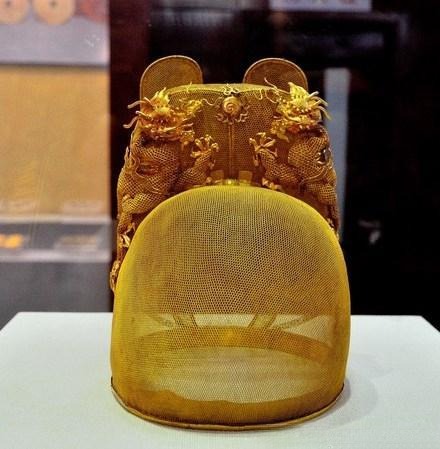
The definitive symbol of this era, however, is Emperor Wanli’s “Gold Wing Crown.” Woven from 0.2mm gold wire with the precision of a spider’s web, the 826-gram crown reveals no visible joints. It remains the “seamless” ideal—the holy grail of Chinese metalwork.
Qing Dynasty: The Age of Specialization
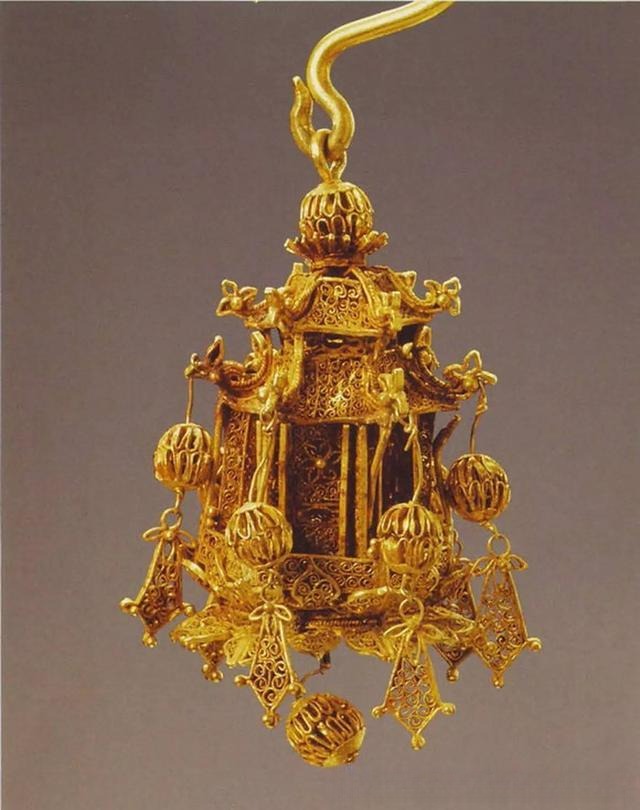
As the craft entered the Qing Dynasty, it transitioned into a world of rigorous discipline. The imperial workshops operated with surgical precision, dividing labor into eleven specialized guilds. From the raw pull of the wire to the vibrant infusion of Kingfisher feathers (Dian Cui) and Enamel (Shao Lan), this structure ensured that every imperial commission was, without exception, a flawless object of desire.
Modern Preservation and Living Heritage
Filigree and Inlay is not merely a decorative method; rather, it is a technical discipline defined by the masterful manipulation of metal. Historically, the craft excels in two specific areas: weaving and stacking (Dui Lei). By braiding microscopic wires and layering them into complex tiers, artisans create a sense of depth that few other jewelry forms can achieve.
As the centuries passed, the aesthetic focus of the craft shifted alongside the availability of resources. During the Ming Dynasty, for instance, masters perfected the art of gemstone setting. This period marked a significant departure from tradition, as the focus moved from purely intricate metal patterns to highlighting the brilliance of the stones themselves.
However, a shortage of traditional gemstones during the Qing Dynasty forced a creative pivot. To maintain a sense of imperial opulence, jewelers began utilizing Kingfisher feather inlay (Dian Cui) and vibrant enameling (Shao Lan). Consequently, they achieved a breathtaking, multicolored “gold and blue” aesthetic that became the hallmark of the era.
Today, this ancient tradition survives primarily in two cultural hubs: Beijing and Chengdu. The Beijing style, in particular, remains the quintessential representative of China’s imperial palace aesthetic. Recognizing its immense cultural value, the Chinese government officially added Beijing Filigree and Inlay to the National List of Intangible Cultural Heritage in 2008. Thus, this 3,000-year-old “Fine Gold Craft” continues to thrive in the modern luxury landscape.
3. Filigree & Inlay: A Legacy of Chinese Cultural Heritage
Beyond the glittering gold and precious stones, Filigree and Inlay serves as a cultural mirror. It reflects the aesthetic consciousness and the ceremonial grandeur of a civilization. It is not merely a collection of objects; rather, it is a testament to the enduring spirit of Chinese artistry.
From Imperial Seclusion to a Global Signature
Historically, this craft remained the exclusive domain of the Emperor. However, the landscape shifted dramatically following the 1911 Revolution. As the imperial workshops disbanded, master artisans brought their secrets to the streets. Consequently, high-end gold and silver shops flourished, allowing these royal techniques to take root among the people.
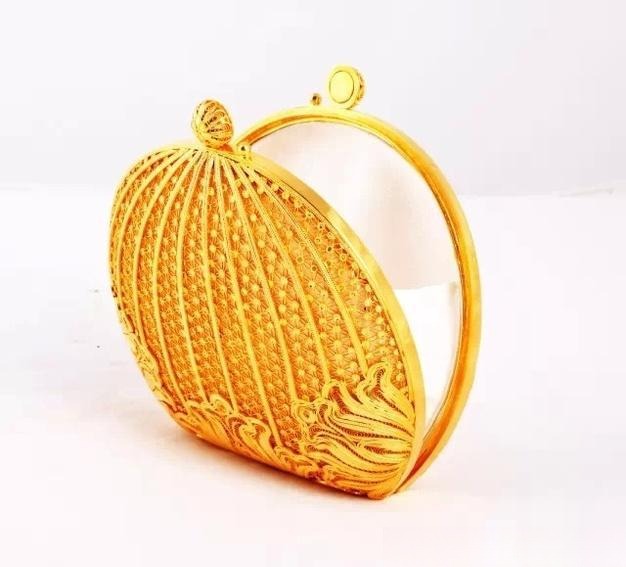
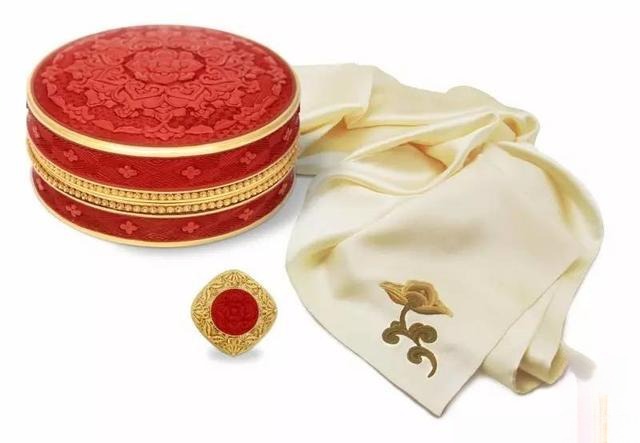
In the modern era, Filigree and Inlay has transitioned into a prestigious “national calling card.” For example, the Chinese government frequently selects these works as diplomatic gifts for heads of state. Notable instances include the “Prosperity” handbag from the 2014 APEC summit and the “Harmony” presentation box set from the Belt and Road Forum. Through these gifts, the craft continues to showcase the opulence and cultural charisma of China to the world.
Aesthetic Value and Historical Status
As a cornerstone of fine jewelry, the craft’s hallmark traits—precision, complexity, and elegance—capture the social psychology of different eras. While Tang Dynasty pieces radiate confidence and grandeur, Ming Dynasty works emphasize ingenious structural detail. Therefore, scholars view this art as a “living fossil” of palace aesthetics. It holds immense value not just for its beauty, but also for its historical, cultural, and scientific significance.
Protection and Rebirth in the Modern Age
Despite its glorious past, the craft recently faced a period of struggle. Market stagnation, outdated designs, and a shortage of young apprentices threatened its survival. Furthermore, the influx of cheap, mass-produced imitations put immense pressure on traditional workshops.
Fortunately, a renaissance is underway. Thanks to national heritage protection policies and high-profile international debuts, Filigree and Inlay has returned to the spotlight. Today’s designers are striking a delicate balance between ancient tradition and contemporary style. By doing so, they ensure that this 3,000-year-old art form shines with new life in our modern world.
4. Filigree & Inlay Craft: The Fingertip Miracle of Turning Gold into Threads
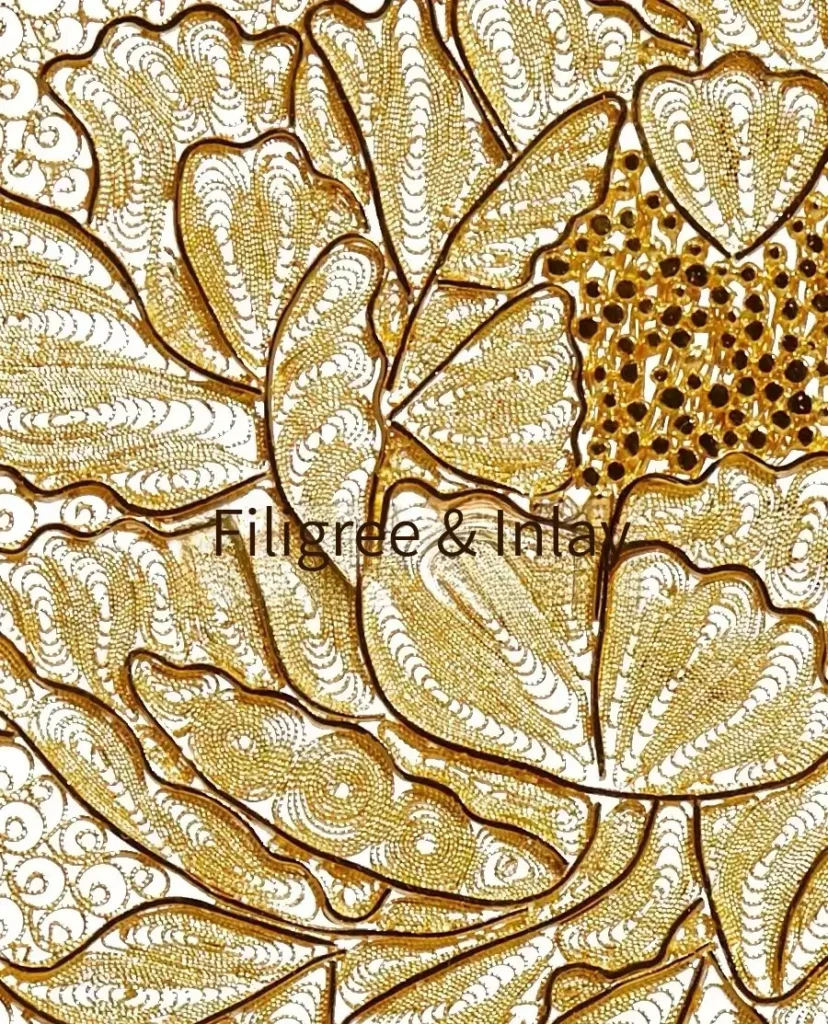
The creation of Filigree and Inlay is a grueling yet meditative process. Artisans divide the workflow into two distinct stages: the intricate construction of the Filigree (Huasi) and the precision of the Inlay (Xiangqian). Each step demands absolute focus, as even a minor tremor of the hand can ruin weeks of labor.
The Art of Filigree: Core Techniques and Wire Mastery
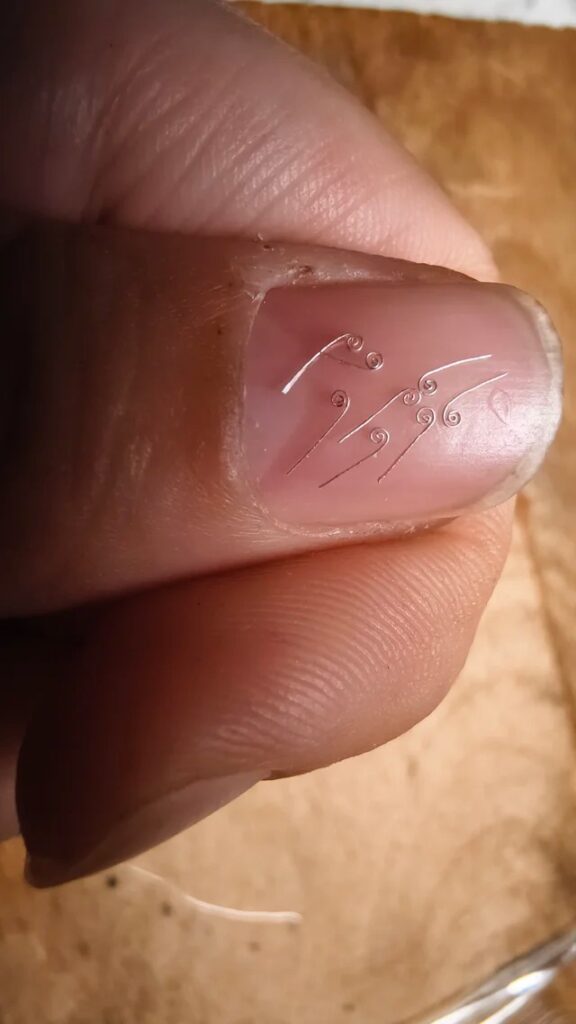
Before the artistry begins, a master must prepare the “thread.” This involves pulling gold or silver bars through a series of specialized drawplates until they become hair-thin wires—reaching diameters as fine as 0.1mm. Once prepared, the artisan employs the eight foundational techniques:
Nipping (Qia)
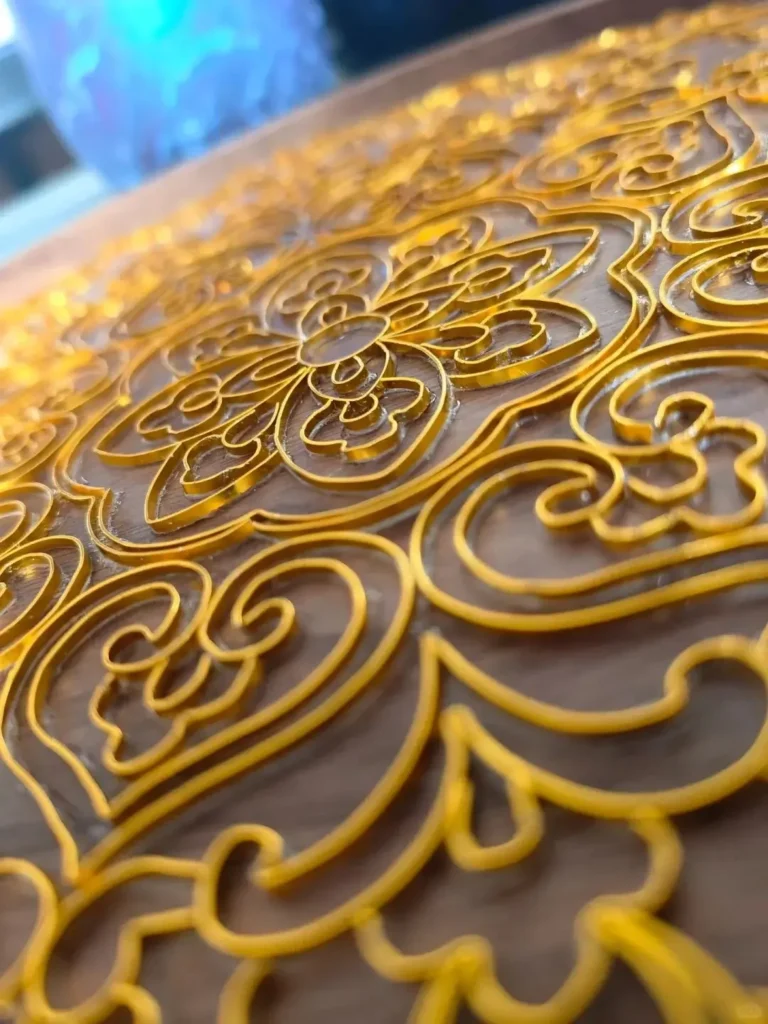
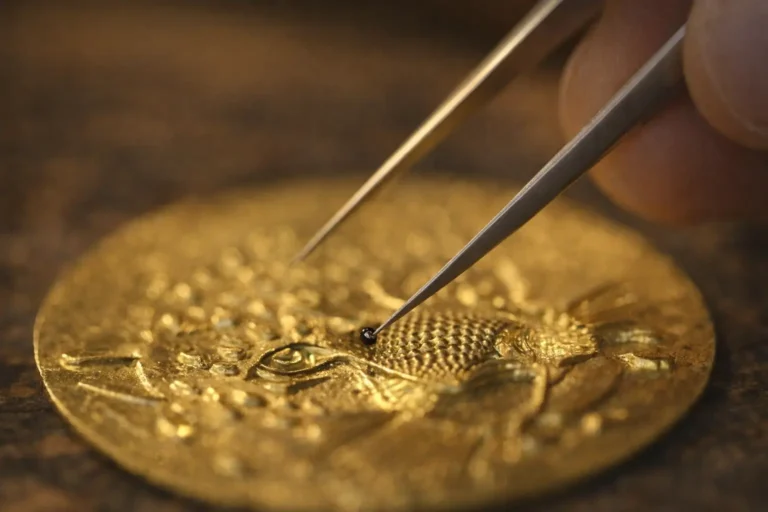
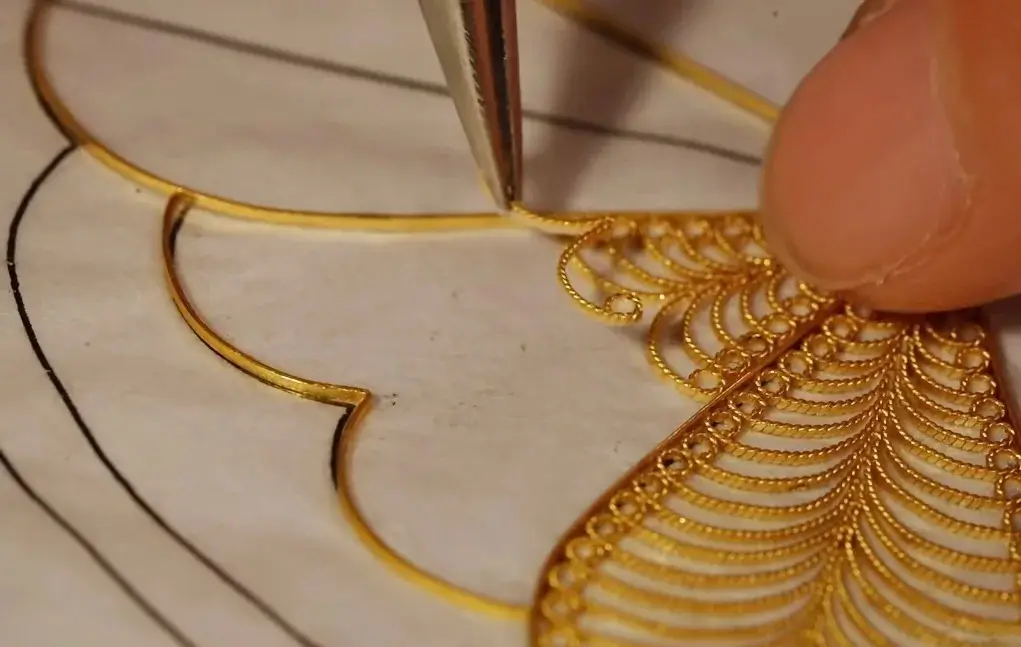
This serves as the foundation of every design. Using precision tweezers, the artisan bends and pinches the wire to form the outer silhouettes of patterns. For added texture, they may first “twist” multiple wires into a rope-like strand before nipping the shape.
Filling (Tian)
If nipping creates the “skeleton,” filling provides the “flesh.” Artisans pack the interior of the pinched outlines with various pre-shaped decorative wires, creating either a smooth surface or a rich, tactile relief.
Assembling (Zuan)
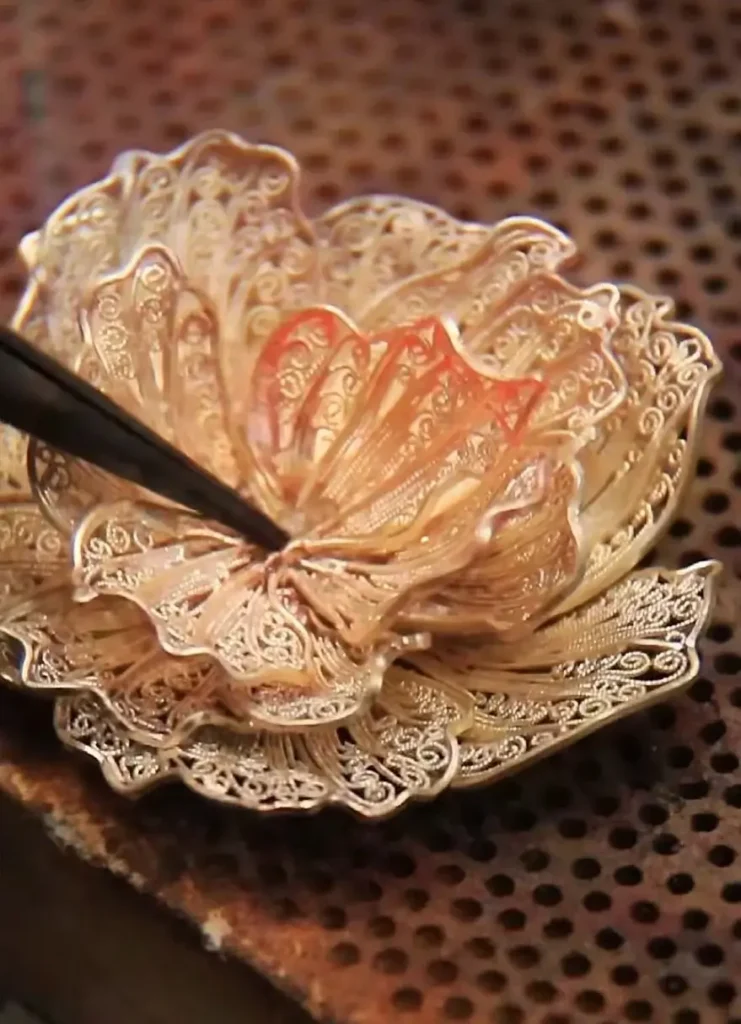
Complexity arises from cooperation. In this stage, the artisan gathers numerous small, individual filigree components and arranges them into a cohesive 2D or 3D composition.
Soldering (Han)
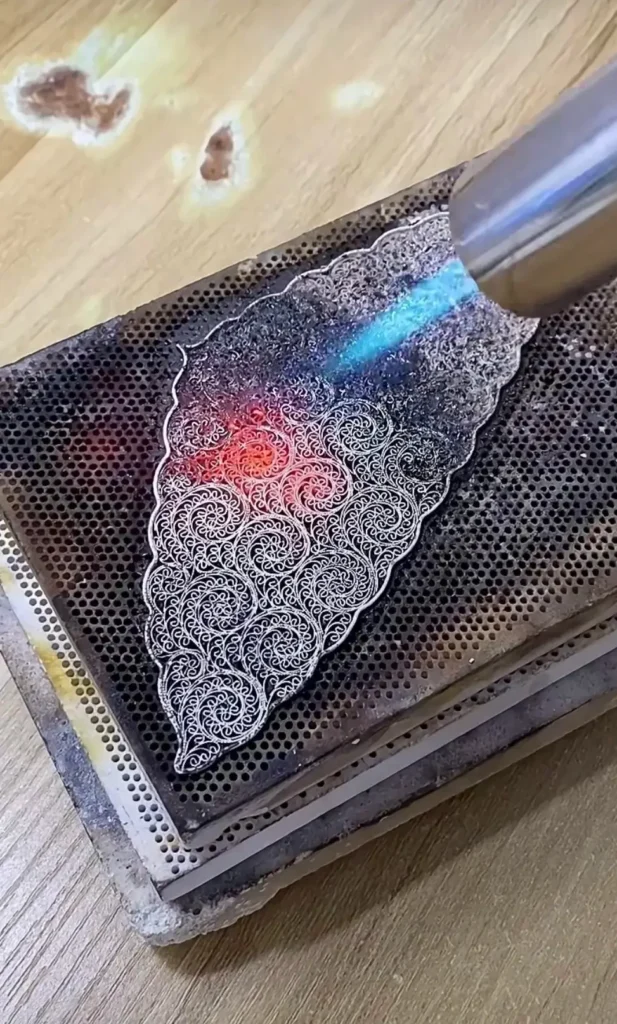
This is the invisible bond that holds the masterpiece together. Using microscopic solder and a blowtorch, the artisan fuses thousands of joints. Precision is vital; excessive heat melts the delicate wires, while insufficient heat causes the structure to collapse.
Braiding (Bian)
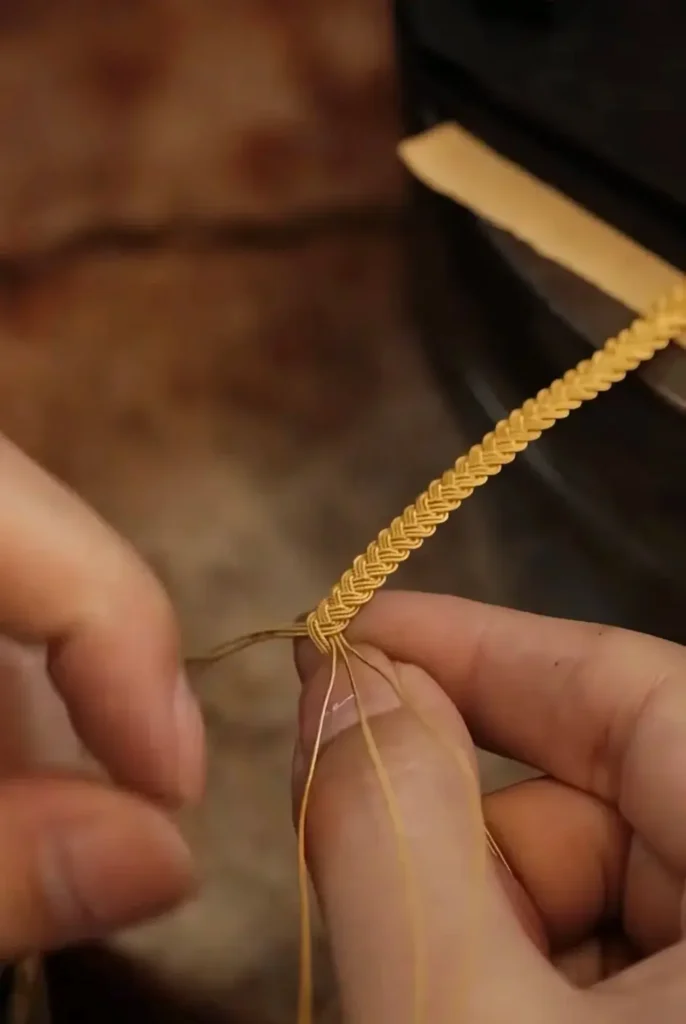
Artisans weave multiple strands together, much like braiding hair, to create thick, decorative “cords” (Taozi) used for borders or structural accents.
Weaving (Zhi)
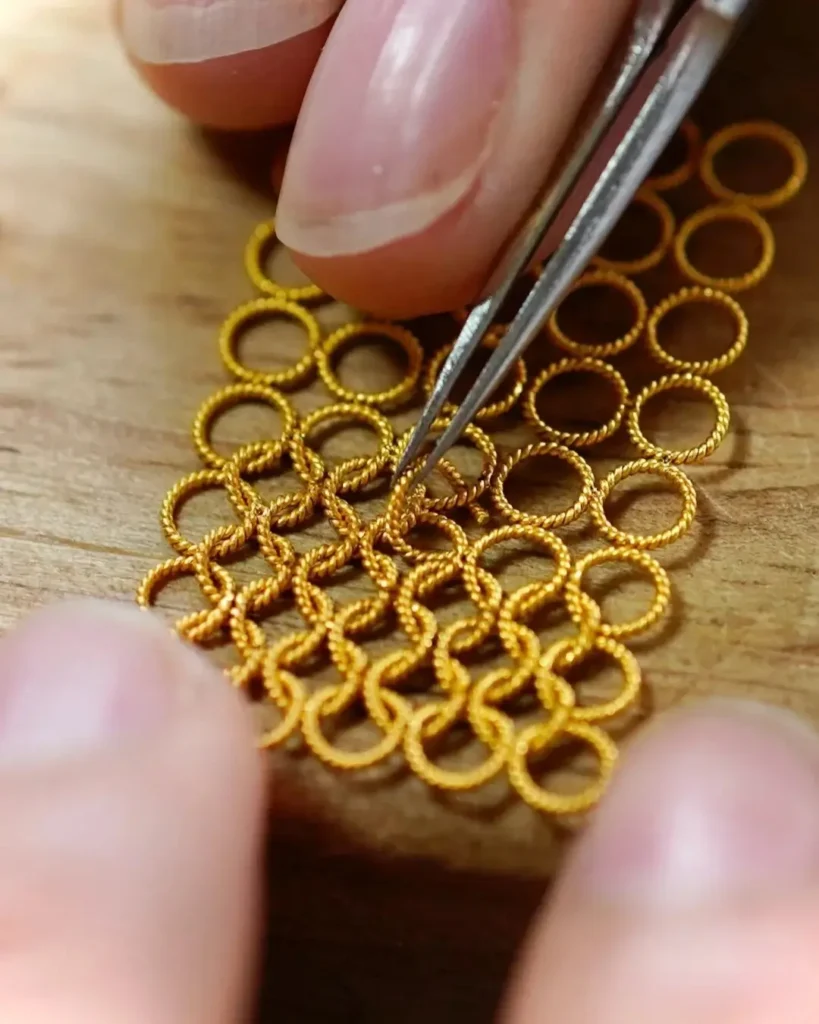
This technique involves interlacing single wires to form a mesh-like base. It creates a gossamer, net-like texture that gives the piece an airy, ethereal quality.
Piling (Dui)
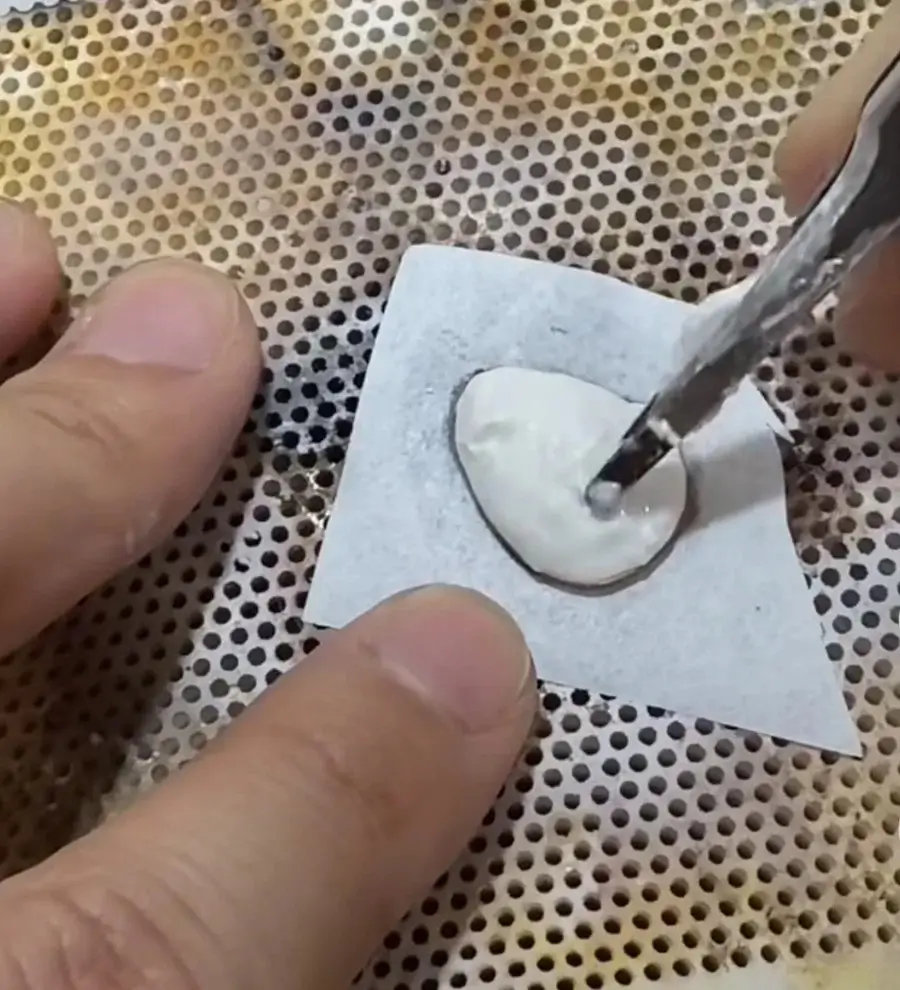
As the precursor to complex layering, piling involves using a clay or plaster “inner mold” to build a foundation. This provides the necessary support for building high-relief, three-dimensional shapes.
Layering (Lei)
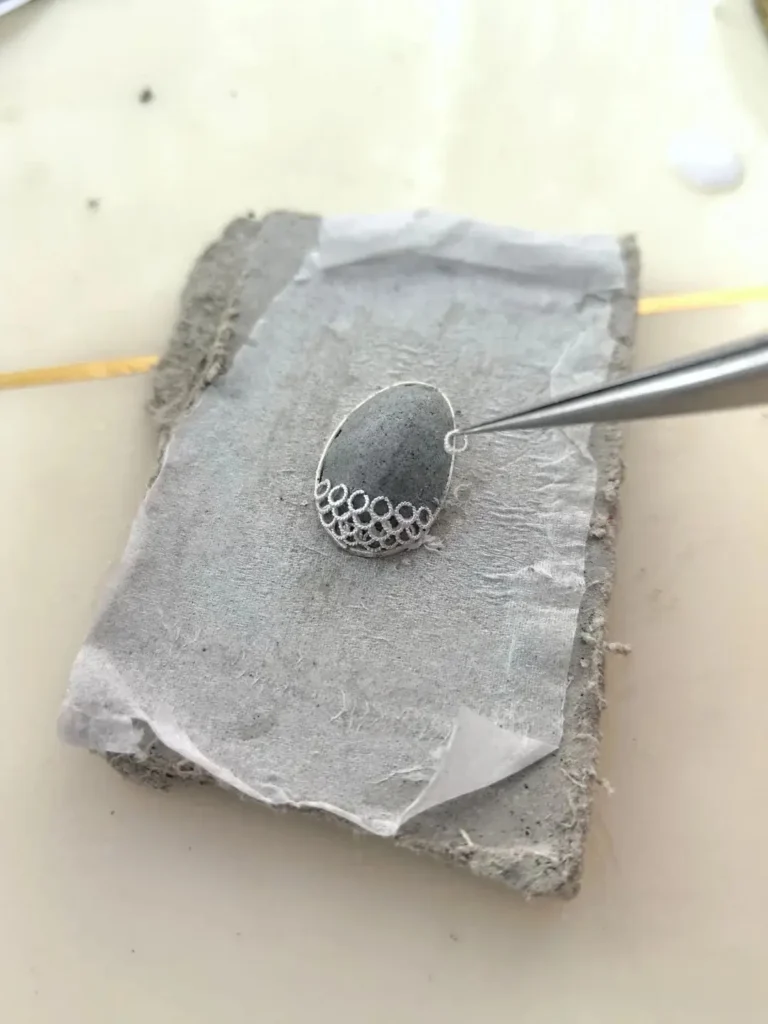
Often called Leisi, this is the pinnacle of the craft. Artisans stack two or more layers of filigree patterns through bonding or soldering. Once the three-dimensional structure is secure, they remove the internal clay base, leaving behind a hollow, impossibly light gold cage.
The Art of Inlay: Gemstone Setting and Color Innovation
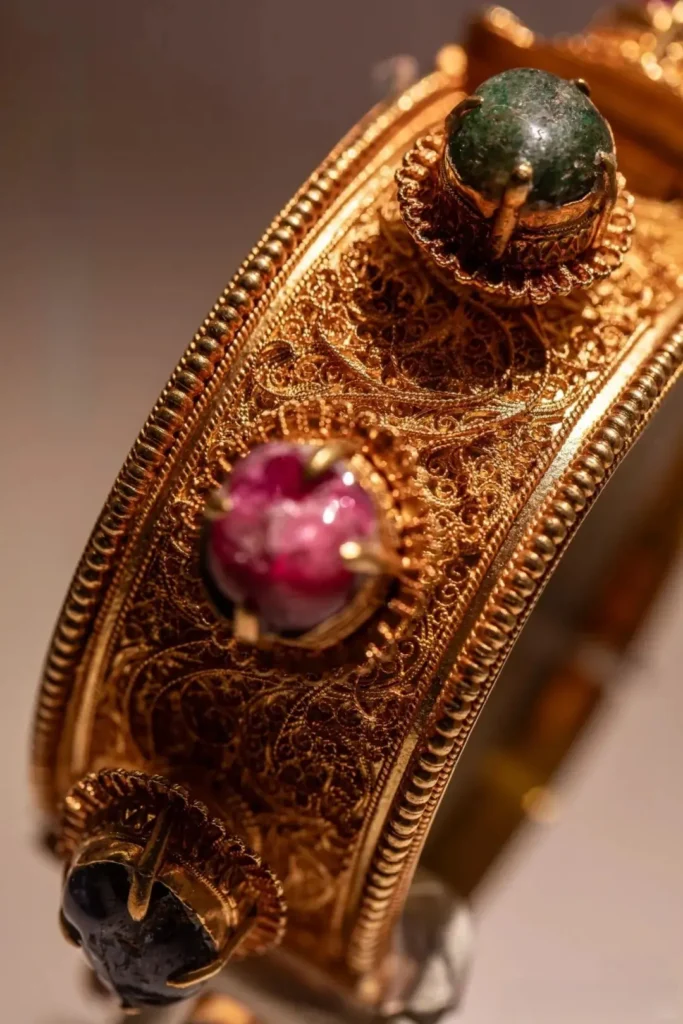
Once the ethereal filigree structure is complete, the artisan begins the second phase: Inlay (Xiangqian). This stage breathes life into the golden skeleton, transforming a monochromatic wire work into a vibrant, multi-dimensional masterpiece.
The inlay process follows a rigorous sequence of precision steps:
Piercing and Chasing (Sou)
Before any stone can be set, the artisan must carve out the “seat” or mounting channel. Using specialized chisels and engraving tools, they sculpt the metal base to create a perfectly fitted bed for each specific gemstone.
Gem Setting (Xiangshi)
This is the moment of truth. Using traditional techniques such as prong setting, bezel setting, or pavé setting (Ding Xiang), the master secures precious rubies, sapphires, emeralds, and lustrous pearls. Every movement must be calculated; one slip of the tool could mar the delicate filigree or crack a rare stone.
Kingfisher Inlay and Enameling (Dian Cui / Shao Lan)
To achieve that signature imperial vibrance, artisans often incorporate additional layers of color. Historically, they utilized the iridescent blue of Kingfisher feathers (Dian Cui). Alternatively, they apply Shao Lan—a sophisticated enameling technique—to add glass-like depth and a regal color palette to the metalwork.
Polishing (Paoguang)
The final transformation occurs during the meticulous polishing phase. By finely buffing the metal, the artisan ensures the gold and silver glow with a mirror-like finish. This creates a brilliant interplay of light between the warm luster of the metal and the deep fire of the gemstones.
5. Filigree & Inlay: Classical Motifs and Their Symbolism
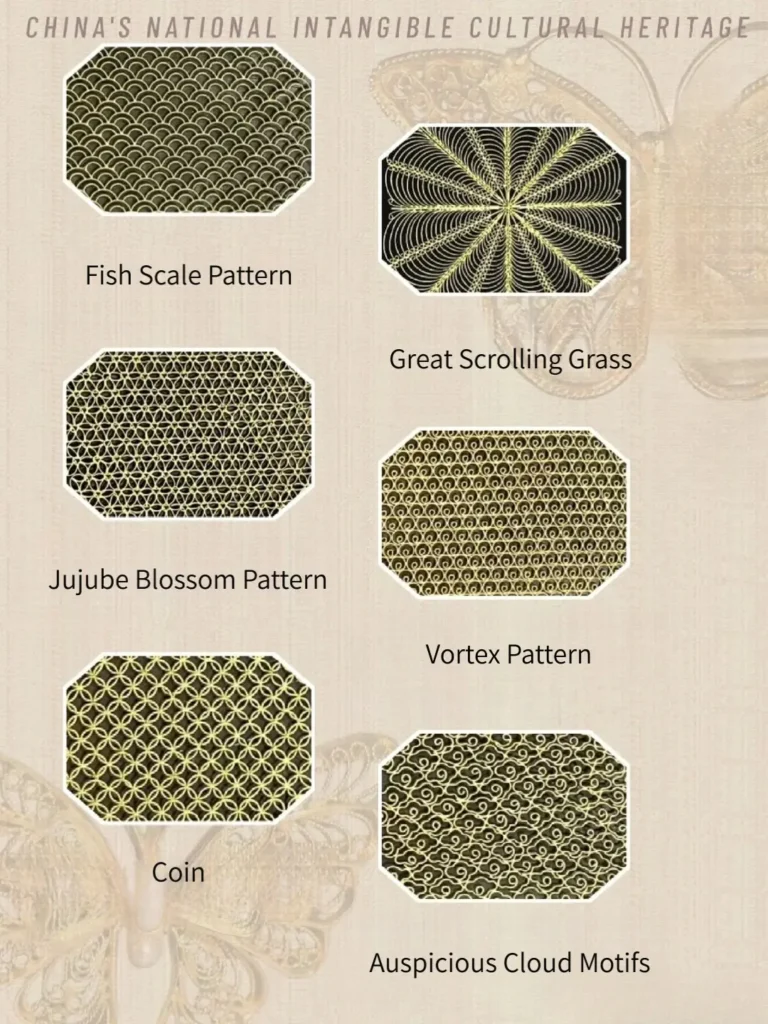
Filigree and Inlay is far more than a mere stacking of precious materials. Instead, it serves as a visual shorthand for Chinese aesthetics and imperial etiquette. Each pattern woven into the gold carries a specific blessing, transforming a piece of jewelry into a powerful talisman of cultural values.
To the untrained eye, these patterns appear as purely decorative textures. However, for the connoisseur, they reveal a rich narrative through several signature motifs:
Fish Scale Pattern (Yu Lin Wen)
Characterized by its tight, rhythmic repetition, this motif mirrors the shimmering scales of a carp. Beyond its visual depth, it represents abundance, prosperity, and the quiet strength of perseverance.
Great Scrolling Grass (Da Juan Cao Wen)
This pattern utilizes elegant, flowing “S” curves to mimic the vitality of sprawling vines. By weaving these continuous lines, artisans symbolize the unyielding force of life and the flourishing of nature.
Jujube Blossom Pattern (Zao Hua Jin Wen)
Created using flattened wires shaped into seed-like “kernels,” this intricate geometry offers a sophisticated sense of rhythm. It captures the delicate beauty of blooming jujube flowers, symbolizing fertility and the sweetness of life.
Vortex Pattern (Xuan Lun Wen)
These overlapping, turbine-like circles create a mesmerizing sense of motion. In Chinese philosophy, this motif represents the concept of samsara—the endless, cyclical nature of the universe and the continuity of life.
Coin and Auspicious Cloud Motifs (Tong Qian / Xiang Yun)
These are perhaps the most recognizable symbols in the craft. The interlocking circles of the Coin motif invite wealth and wholeness, while the ethereal drifts of Auspicious Clouds represent a life of grace, harmony, and “good luck from above.”
6. Chinese Filigree & Inlay Jewelry: Value Beyond Materials
In the world of high jewelry, the value of Filigree and Inlay transcends the mere market price of gold and gemstones. Instead, its true worth lies in the staggering “added value” of the craftsmanship itself. When you acquire a piece of filigree, you are not just buying metal; you are investing in thousands of hours of human mastery.
Why Craftsmanship Matters More Than Gold
Within the industry, masters often remark that “the labor costs far outweigh the gold.” Unlike mass-produced jewelry, where the material weight dictates the price, filigree is valued by the artisan’s skill. Furthermore, because master craftsmen are becoming increasingly rare, these labor costs appreciate by 10% to 20% annually. This makes every authentic piece a robust asset in any fine jewelry collection.
Complexity Beyond Compare
The sheer variety of the craft is mind-boggling. A single artisan must master dozens of specialized wire types, including:
- Twisted “Doughnut” Wire (Mahua Si)
- Bamboo Joint Wire (Zhujie Si)
- Phoenix Eye Wire (Fengyan Si)
With over a dozen distinct wire textures and dozens of sequential steps required for a single motif, the technical barrier to entry is immense. This complexity ensures that true filigree cannot be replicated by modern industrial machinery.
The Anatomy of an Investment
The final value of a Filigree and Inlay masterpiece rests on three pillars:
- Raw Materials: High-purity gold, silver, and investment-grade gemstones.
- Visionary Design: The artistic soul and structural ingenuity of the piece.
- The Artisan’s “Workmanship”: The most expensive and significant component.
Because each piece is painstakingly handcrafted, many works remain “one-of-a-kind” editions. These are not products; they are (Jueshi Gupin)—peerless, singular masterpieces that are as rare as they are beautiful. For the serious collector, they represent an opportunity that is truly “once in a lifetime.”
7. Chinese Filigree & Inlay Jewelry: From Imperial Tradition to Modern Masterpieces
Filigree and Inlay has never been a “mass market” craft. Since its inception, the sheer rarity of the materials—pure gold, silver, and precious gems—combined with its staggering technical complexity has ensured its status as an elite art form. Historically, it served the Emperor alone; today, it stands as the absolute zenith of artistic luxury.
Core Values of Chinese Filigree & Inlay Jewelry: The Artisan Spirit
At the heart of this craft lies the Artisan Spirit. Unlike the rapid-fire output of modern assembly lines, filigree demands a state of absolute stillness and singular focus. This “slow art” approach creates a stark contrast to our industrialized world. Consequently, the meticulous, hand-wrought nature of these pieces makes them some of the most precious cultural assets of our time.
Contemporary Masterpieces of Chinese Filigree & Inlay Jewelry
To understand the heights this art can reach, one must look at the work of today’s grandmasters:
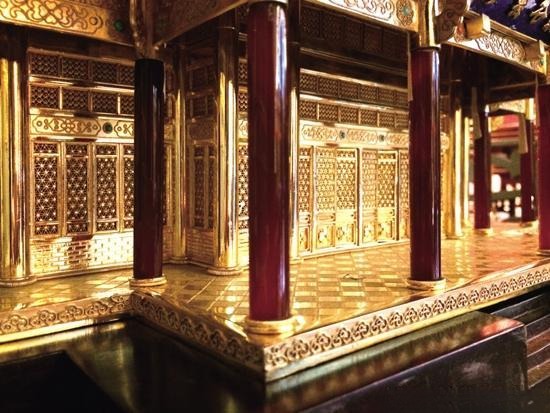
- Zhao Chunming’s Yellow Crane Tower: This monumental project took three and a half years to complete. At a 54:1 scale, the artist used 70 kilograms of pure silver. He hand-wove tens of thousands of silver wires—each only 0.27mm thick—to replicate the architectural marvel. The detail is so fine that individual roof tiles and window lattices are clearly visible.
- Bai Jingyi’s Empress’s Court Hat: A breathtaking recreation of a Qing Dynasty treasure, this piece required ten months of intensive labor. Crafted from 22K gold and set with 542 lustrous pearls and top-tier jadeite, it sits upon a cloisonné base. It serves as a stunning restoration of the Forbidden City’s original splendor.
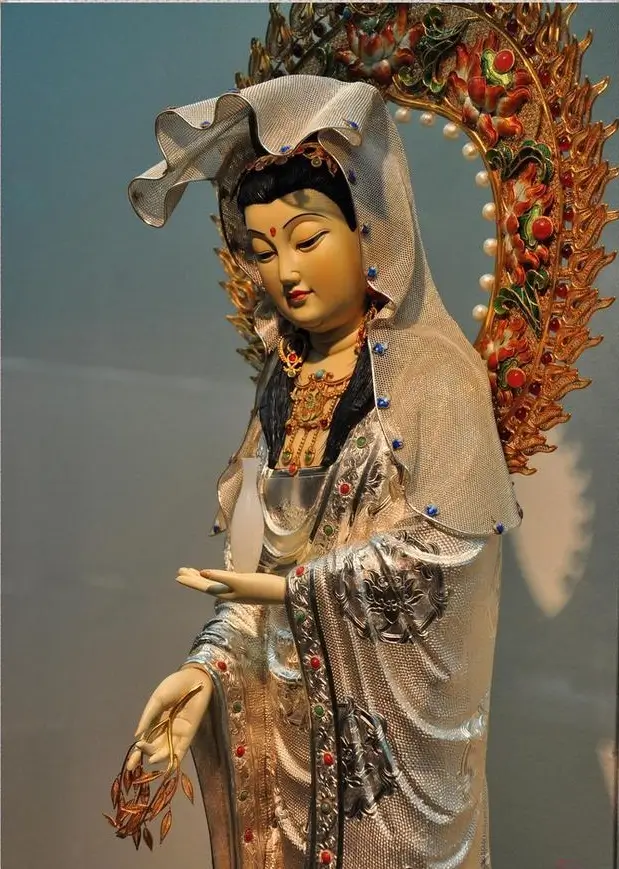
- Cheng Shumei’s Guanyin Statues: Often described as the “Art of Gold and Fire,” these sculptures achieve the impossible. By weaving ultra-fine gold threads into flowing robes that appear to catch the wind, the artist imbues rigid metal with a rare, feminine grace and fluid movement.
8. Chinese Filigree & Inlay Jewelry: Modern Paths of Living Heritage
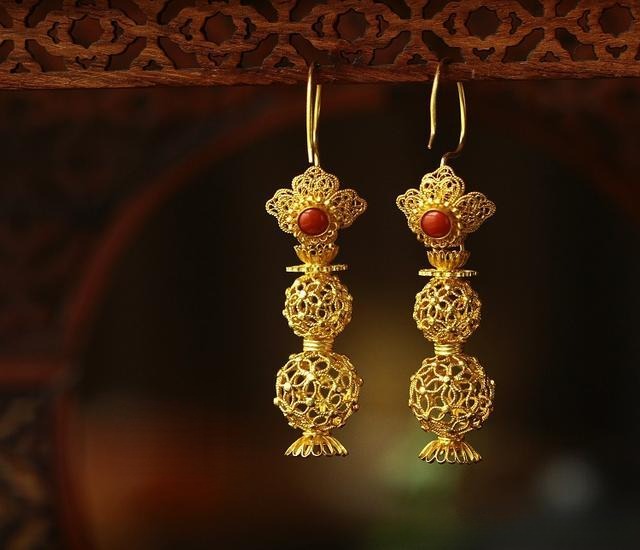
For centuries, Filigree and Inlay remained “on a pedestal”—so elite and costly that it was nearly inaccessible to the public. To break this cycle of isolation, modern practitioners are forging three innovative paths. These strategies ensure that this ancient craft does not just survive in museums, but thrives in the hands of a new generation.
A. Design Innovation and Material Accessibility
Historically, the “Fine Gold Craft” lived up to its name, using only high-purity gold. Today, designers are diversifying the materials. By utilizing sterling silver and copper as base metals, they have significantly lowered the barrier to entry. This shift brings the price point into a more accessible range—often around a few hundred dollars—allowing everyday enthusiasts to own a piece of imperial history without the royal price tag.
B. From Palace Art to Contemporary Jewelry
To keep the craft relevant, artisans are infusing traditional techniques with contemporary aesthetics. They are moving away from purely “museum-style” replicas and toward sleek, wearable art. By simplifying complex patterns and adopting modern silhouettes, they have transformed filigree into a fashion statement. Consequently, these pieces now complement a modern wardrobe, breathing fresh life and “edge” into 3,000-year-old motifs.
C. Creative Adaptation: The Industrial Extension
While nothing replaces the soul of a hand-woven piece, designers are also exploring precision casting to simulate filigree textures. Although this is not “hand-weaving” in the traditional sense, high-fidelity molds can replicate the intricate, rhythmic lines of filigree with stunning clarity.
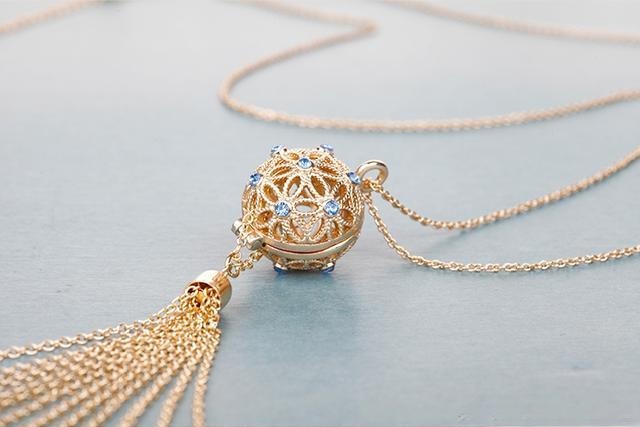
- Case in Point: The Palace Museum recently launched a series of “Emperor Yongzheng Style” fragrance sachets and mirrors. By using these clever manufacturing adaptations, they have turned imperial memories into popular “cultural creative” lifestyle products, bringing the spirit of the Forbidden City into the daily lives of millions.
The Future of Chinese Filigree & Inlay Jewelry
Filigree and Inlay was once a quiet memory tucked away in the deepest corners of the Forbidden City. Although the era of emperors has passed, the soul of this craft has found a new home among the people, where it continues to evolve. In an age dominated by soulless industrial mass-production, this 3,000-year-old intangible heritage faces a critical turning point. It calls for a new generation of visionaries to step forward. By blending bold, innovative design with an unwavering commitment to traditional mastery, we can finally bridge the gap—transforming these treasures from “museum relics” into vibrant essentials of modern life.
At Jewea, we do not just sell jewelry; we curate a legacy. We believe that the staggering beauty of Filigree and Inlay belongs to the world, not just the history books. Our mission is to “re-broadcast” this ancient Chinese excellence to a global audience, ensuring that the “Metal Embroidery” of the ancients finds its place in the contemporary wardrobe.