Indicolite, Indigo, or Lagoon? A Guide to Blue Tourmaline Beyond Paraiba
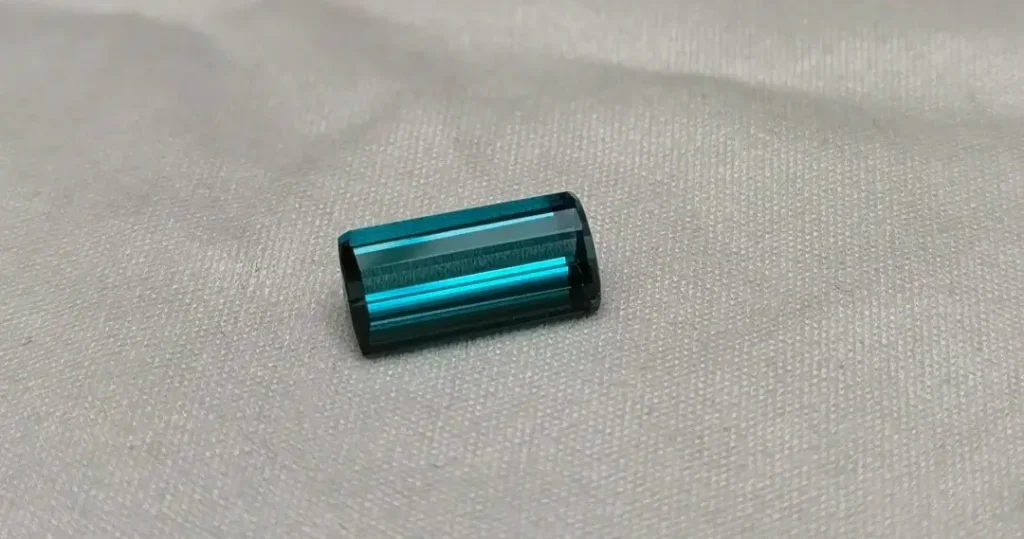
Just the other day, a long-time client brought in a blue tourmaline she purchased years ago. She had one question: “Is this a Lagoon or an Indigo?”
Interestingly, her AIGS report only listed the stone as “Blue/Indicolite.” There was no mention of Lagoon or Indigo. When she asked the lab why, they were blunt: They simply do not grade for those specific trade names.
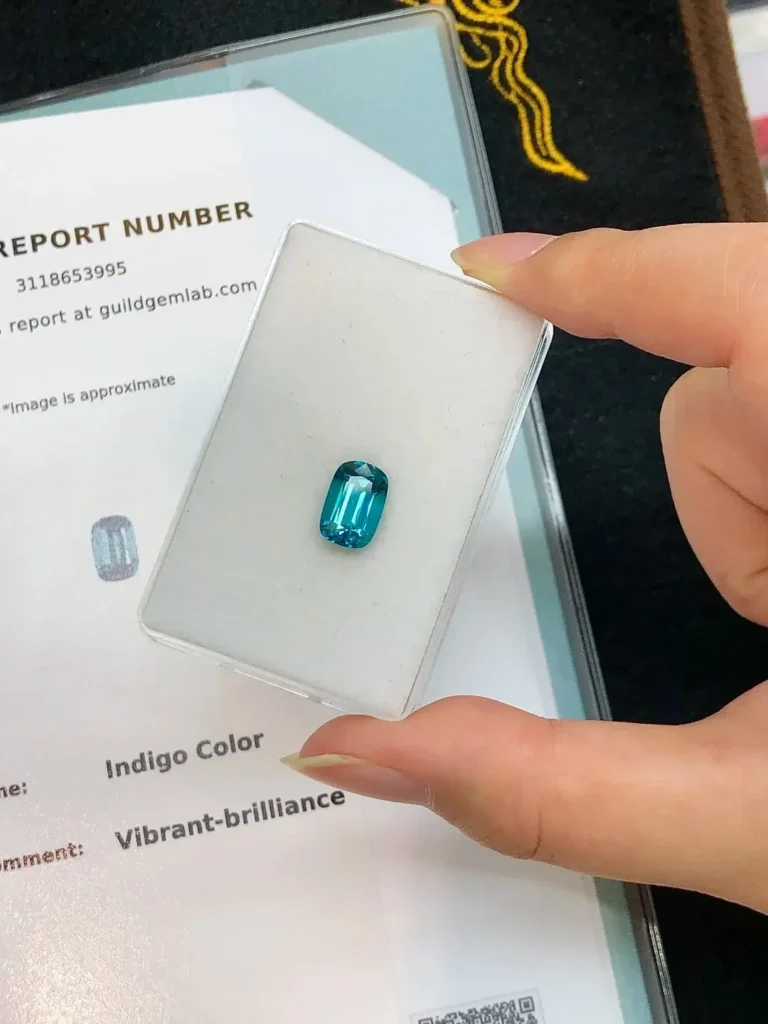
Here is the reality: GUILD is currently the most visible laboratory systematizing and popularizing these trade terms. To the “old guard” like GIA and AIGS, Lagoon and Indigo are strictly trade names—marketing labels, not mineralogical facts.
My take? Unless you are chasing the kind of investment premium reserved for top-tier Paraiba, don’t obsess over a label. The color that captivates you is far more important than a name on a piece of paper.
However, since these categories dictate so much of the market value today, let’s break down what they actually mean.
The Three “Identities” of Blue Tourmaline: From Mineralogy to Trade Names
In the world of tourmaline, Paraiba occupies a category of its own due to its unique copper-manganese chemistry (see: Paraiba Tourmaline: Why It Is Called the “King of Tourmalines”). However, for the vast majority of blue gemstones, the market relies on a more nuanced vocabulary. This system bridges the gap between Indicolite—the official mineralogical designation—and elite trade names like Indigo and Lagoon, which serve as commercial benchmarks for exceptional saturation and specific color directions
1. Indicolite: The Mineralogical “Legal Name”
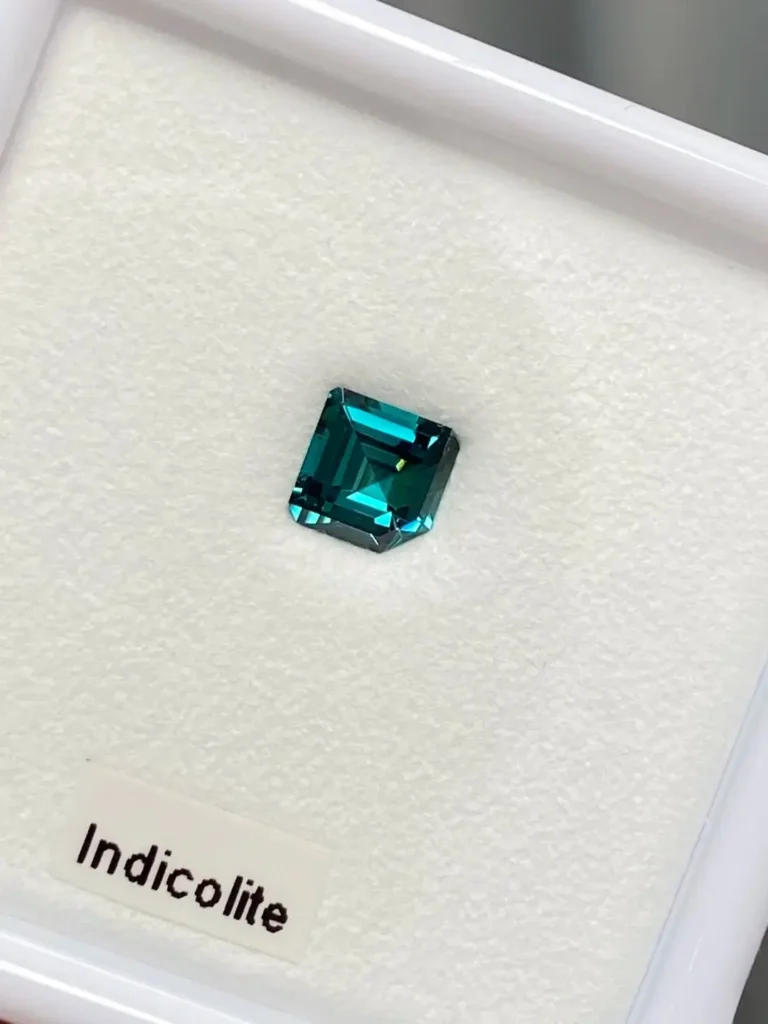
If you are looking at a report from a top-tier lab, this is the name you will see. Derived from the Latin word indicum (meaning indigo), Indicolite is the official gemological umbrella for the entire blue tourmaline family.
- The Palette: The color range here is incredibly vast. We’re talking about everything from soft, pale denim to deep, midnight navy. It’s rare to find a stone that is “pure” blue; most Indicolites naturally carry subtle gray or green modifiers that give them their unique character.
- The Industry Standard: In a laboratory setting, if blue is the dominant hue, the stone is classified as Indicolite—period. It is the classic, foundational identity of every blue tourmaline and remains the most respected term in scientific gemology.
2. Indigo: The Moody “First-Born Son”
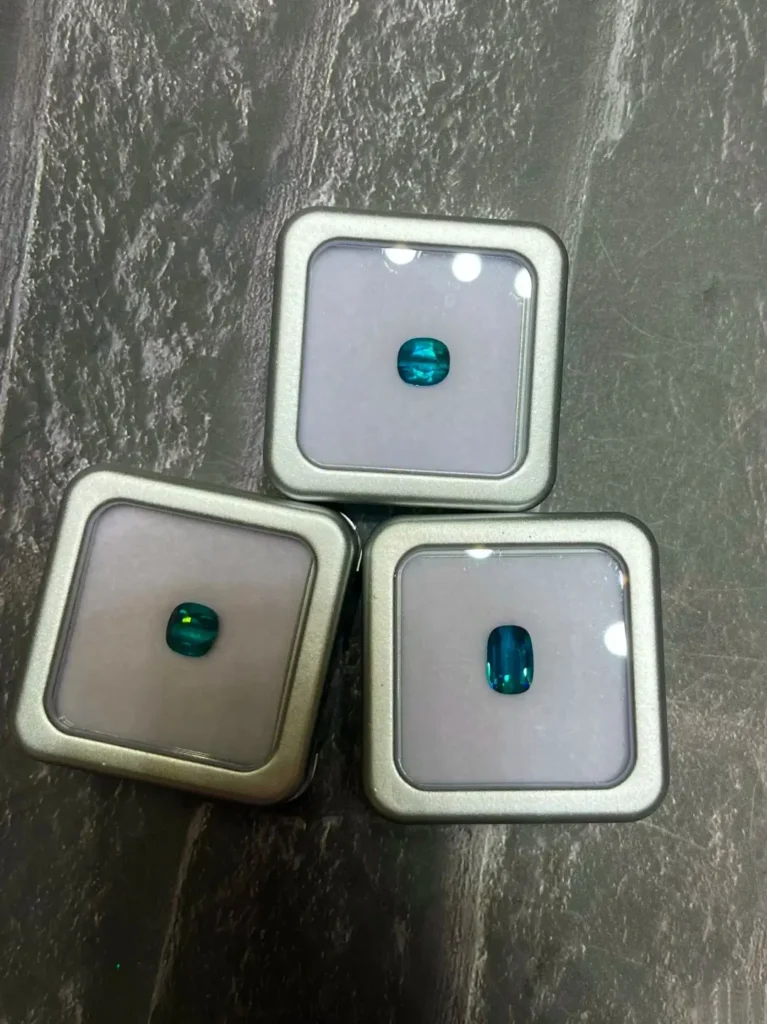
Think of Indicolite as the patriarch—the family name that carries the legacy. Indigo is like his most refined son: he shares the same DNA but possesses a deeper, more brooding character that makes him stand out in a room.
- The Hue: Imagine the color of the sky at midnight or a pair of well-worn vintage denim. Indigo tourmaline strives for a pure, concentrated blue with almost zero green influence. It is significantly richer and more saturated than your average blue tourmaline.
- The Character: This depth comes with a challenge—Indigo often carries heavy “dark tones.” If the cutter fails to master the crystal’s orientation, the stone can easily “close up” and look flat or black. However, under a master’s touch, it reveals a sophisticated, quiet, and serene fire. It possesses what I call a “gentleman’s elegance”—it doesn’t need to shout to be noticed.
3. Lagoon: The High-Profile “Global Super-star”
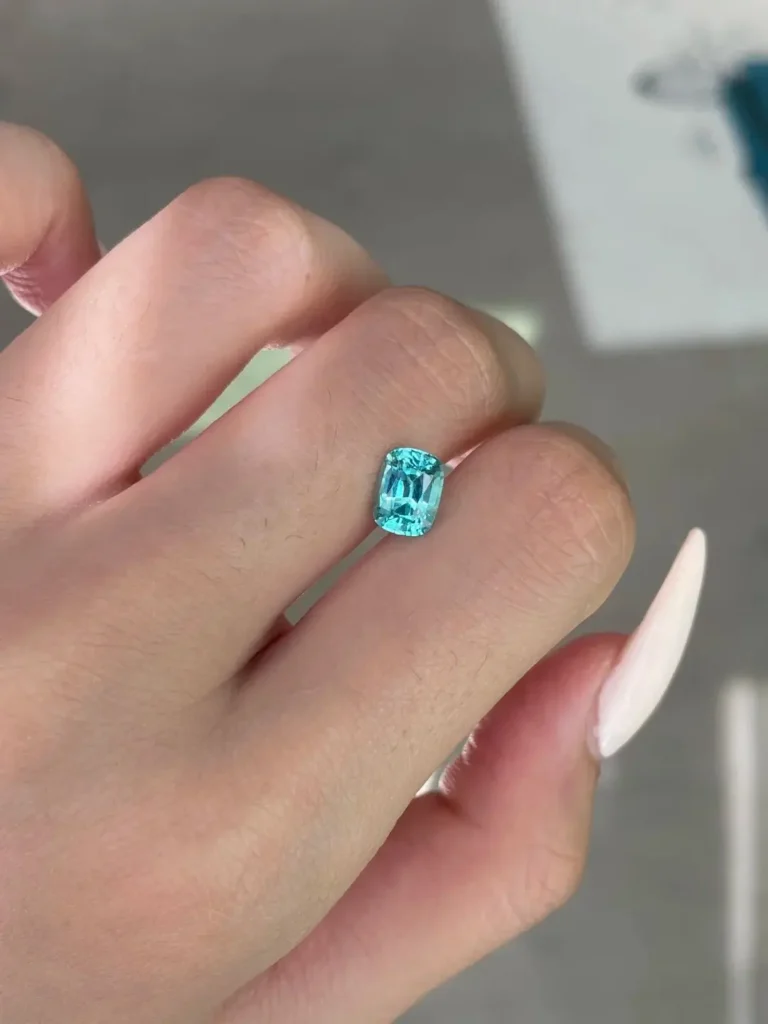
If Indigo is the serious son, then Lagoon is the charismatic sibling who left the family estate to chase the limelight—and succeeded brilliantly. While its “legal name” remains Indicolite, “Lagoon” is the high-profile trade name that has taken the jewelry world by storm.
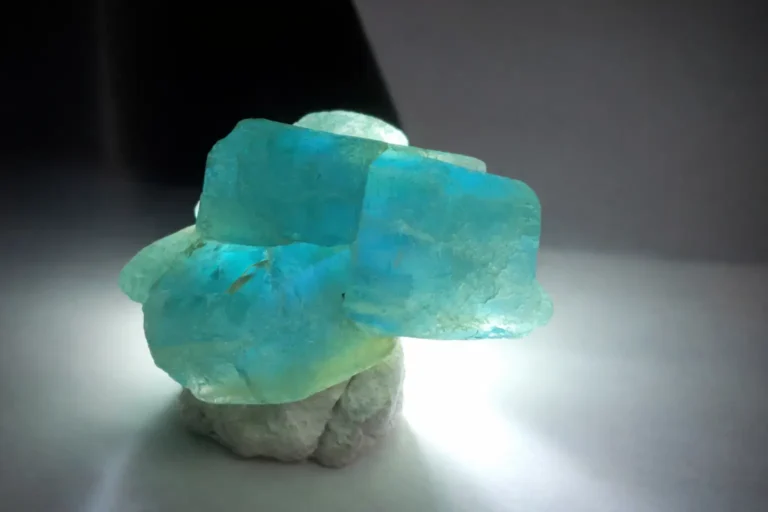
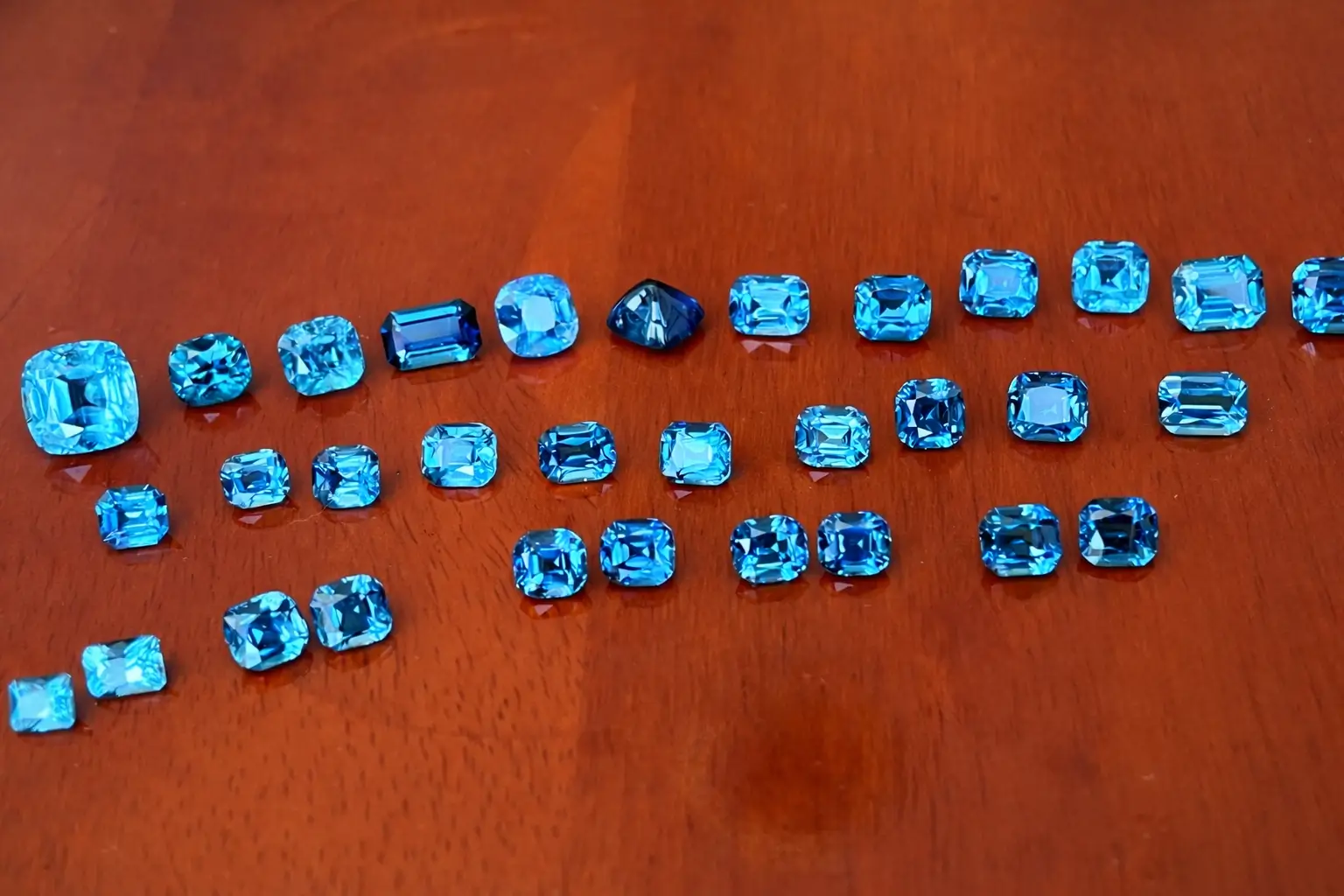
- The Hue: Think of the crystal-clear waters of a Maldivian lagoon. This is a high-saturation, vibrant blue-green. It strikes a balanced blue-green appearance, without a dominant secondary modifier—or sometimes leaning just slightly more toward a sea-foam blue.
- The Core Difference: Unlike the moody depth of Indigo, Lagoon is all about brightness. Typically sourced from Afghanistan or Namibia, these stones boast incredible clarity and almost zero “dark tones.” They don’t just sit there; they feel alive, refreshing, and incredibly luminous.
- The Market Value: Right now, this is the most sought-after color in the blue-green spectrum. Aside from the legendary Paraiba, Lagoon commands the highest price premiums and is currently the “darling” of serious collectors worldwide.
At a Glance: The Blue Tourmaline Identity Map
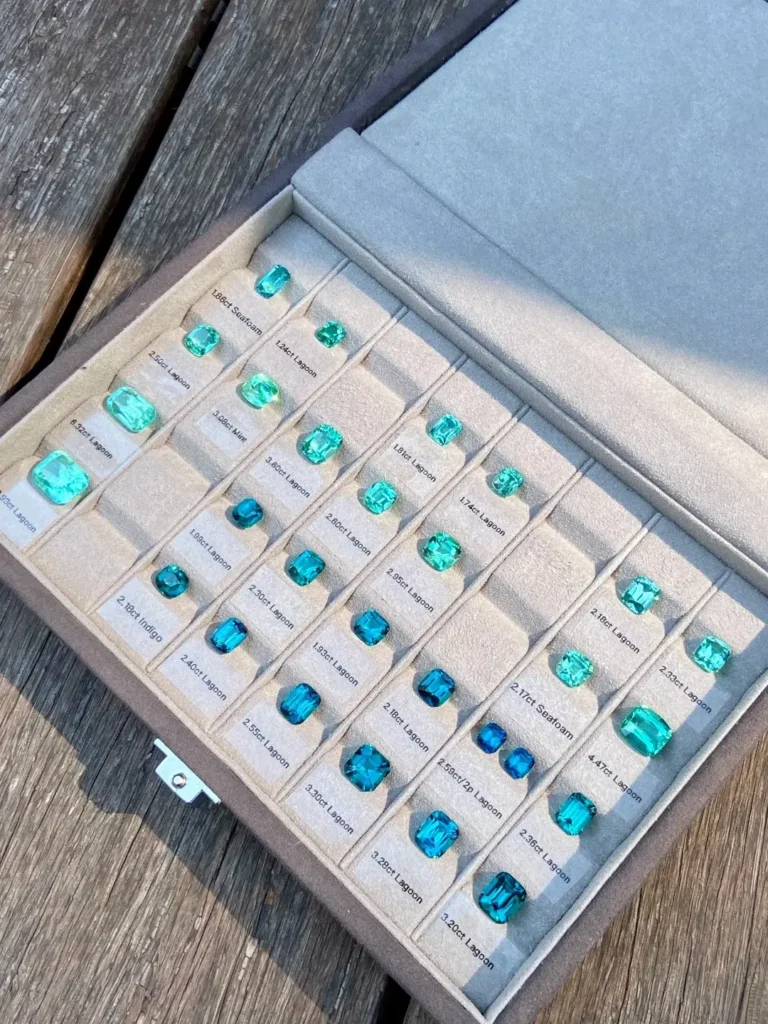
To help you navigate these terms, I’ve put together a quick comparison table. This is the same logic I use when evaluating stones for our custom collections.
| Feature | Indicolite (The Patriarch) | Indigo (The Refined Son) | Lagoon (The Global Star) |
| The Hue | Broad spectrum of blue (often with gray or green undertones). | Deep, concentrated blue (rich, nocturnal, and intense). | Vibrant blue-green (high-saturation, tropical waters). |
| Visual Vibe | Steady & Classic: The timeless foundation of blue tourmaline. | Moody & Profound: A quiet, brooding elegance for connoisseurs. | Lively & Radiant: Refreshing, energetic, and luminous. |
| The “Dark Tone” Factor | Generally present; varies based on the specific crystal. | Heavy: Requires a master cut to prevent the stone from “closing up.” | Minimal: Emphasizes clarity and “open” color. |
| Market Identity | The essential gemological classification. | An elite aesthetic branch; highly selective. | The trending, high-premium commercial favorite. |
A Deep Dive: Why Does Your Blue Tourmaline “Change Color”?
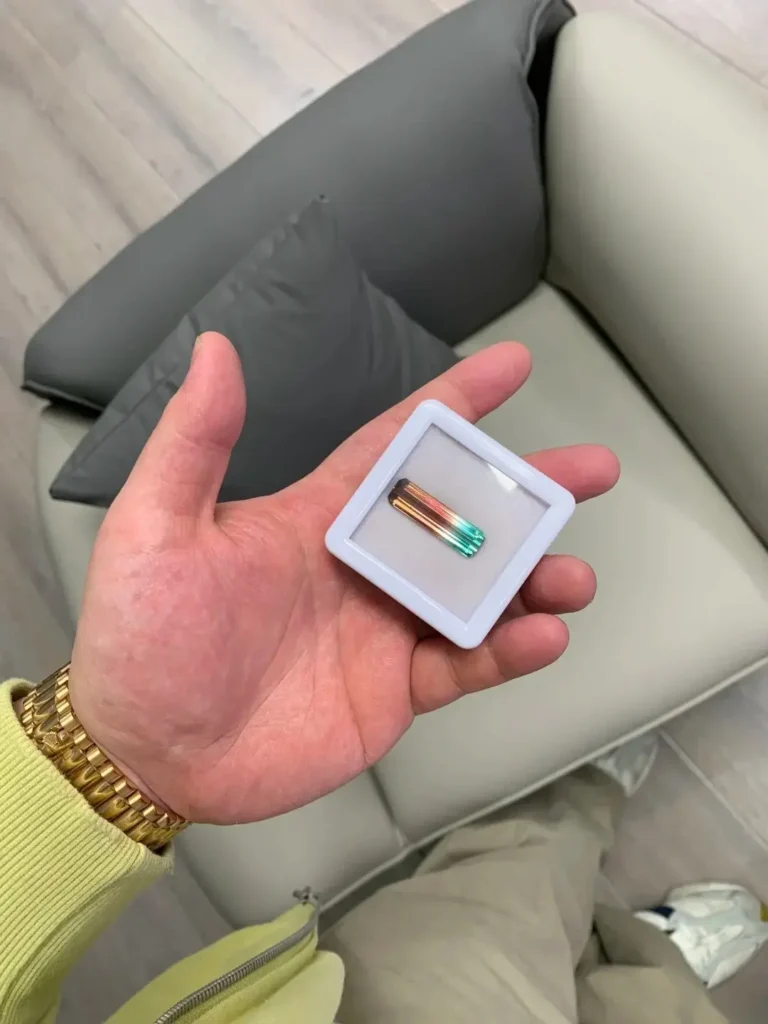
I need to let you in on a bit of professional “secret sauce” here: a phenomenon called Pleochroism.
Tourmaline is a doubly refractive gemstone. In plain English, this means the stone shows different colors depending on which angle you look at it from. I’ve seen countless stones that look like a deep, brooding Indigo (or even completely black) when viewed along the long axis—what we call the C-axis. But the moment you turn that same stone on its side, it reveals a bright, vibrant Lagoon blue-green.
This is exactly why the “identity” of a stone can seem to shift depending on the light or the angle. One person sees an Indigo; another sees a Lagoon.
My advice? Don’t get hung up on a single name or a static photo. What matters is the “face-up” appearance—how the stone behaves in natural light at the angles you’ll actually see it while wearing it. A label on a report is fixed, but the beauty of a tourmaline is fluid. Choose the stone that performs for you, not the one that fits a specific word.
My Personal Advice on Buying Blue Tourmaline
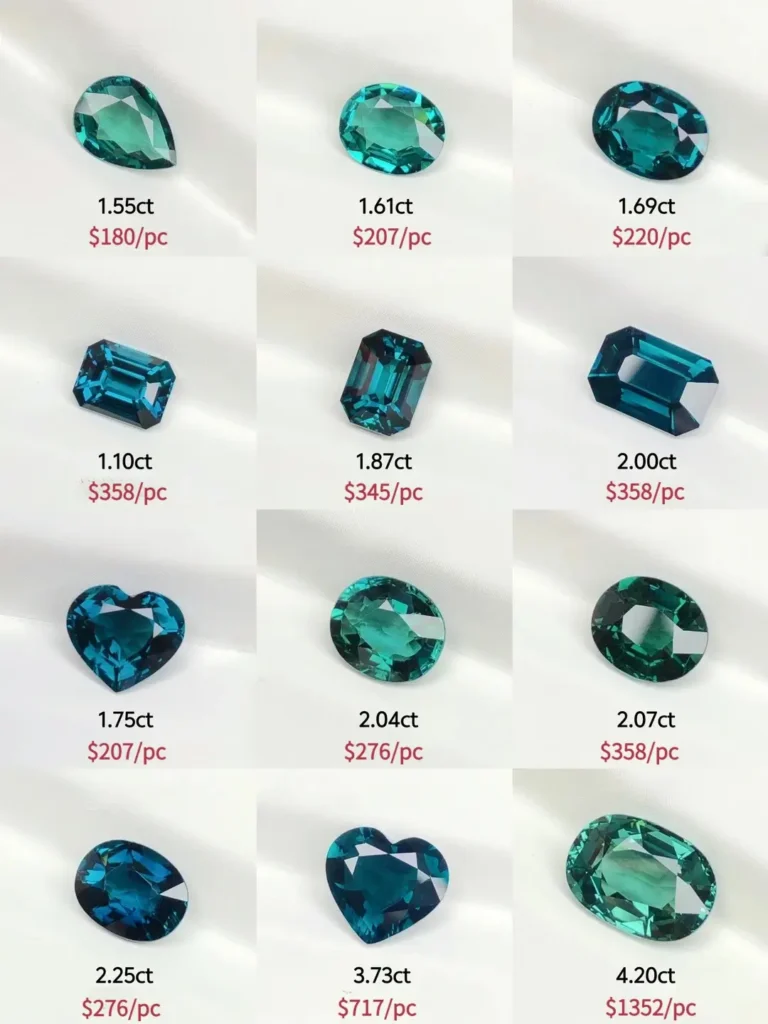
After years of sourcing and setting these stones, I’ve learned that the most beautiful gems aren’t always the ones with the flashiest labels. Here is how I navigate the market, and how you should too:
- Trust the Color, Not the Name: It’s a common trick in the trade to slap the “Indigo” label on a muddy, grayish-blue stone just to hike up the price. Don’t fall for it. Remember: true Indigo should be deep and profound, never “dead” or inky-black. Likewise, a genuine Lagoon must be vivid and luminous, not pale or washed out.
- Light is the Ultimate Magician: Tourmalines are light-sensitive. Many Lagoon stones will lean heavily into green under warm indoor lighting, only revealing their electric blue “soul” when they step into natural daylight. My tip? Always ask for videos taken in multiple lighting environments before you commit. You need to see how the stone “wakes up” in the sun.
- Origin is a Bonus, Not a Dealbreaker: While it’s true that many Lagoons hail from Afghanistan and many Indigos come from Brazil, don’t get hung up on the geography. A world-class color is valuable regardless of where it was mined. Buy the beauty, not the map.
To sum it up: If you find yourself craving the refreshing, cool energy of a summer ocean, go for a Lagoon. But if you prefer the quiet, serene mystery of a midnight sky, Indigo is your stone.
A Final Word from Jewea
Whenever a new “buzzword” hits the gemstone market, it’s always a mixed bag. Because standards vary, the market often gets flooded with mediocre stones trying to ride the coattails of a trending name.
As I’ve emphasized throughout this guide: The soul of a colored gemstone is always the color itself. When you’re ready to buy, look past the label. Evaluate the stone based on its saturation, clarity, and the precision of its cut.
Does it matter if the certificate includes a specific trade name? Honestly, not as much as you’d think. If the stone is breathtaking, it is already a “top-tier” gem in its own right. My best advice is to observe more and buy less until you’ve built a “color ruler” in your mind. This internal compass will protect you from overpaying for a name that doesn’t live up to the beauty of the stone.
Save this guide or share it with a friend—it might just be the “reality check” you need for your next purchase!
The Jewea Aesthetic: Beyond the Label
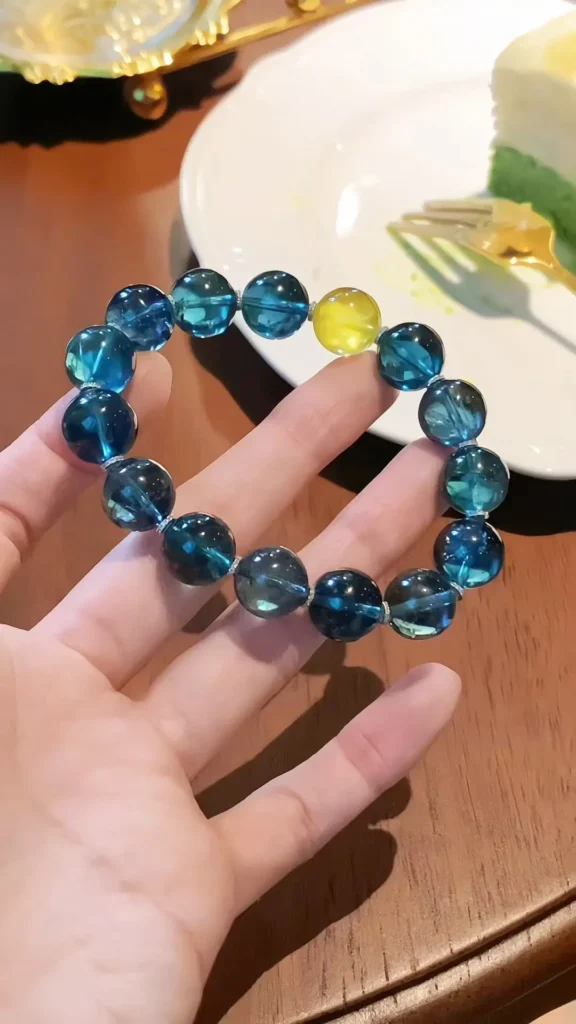
If you find yourself drawn to these deep blue-green hues but feel overwhelmed by the terminology, I invite you to step outside the box. At Jewea, we don’t design around words on a certificate; we design to awaken the life within the material itself.
- Capturing Light & Emotion: Our Handcrafted Vintage Collection seeks to bottle the luminous energy of a Lagoon and the quiet serenity of an Indigo. We translate these natural moods into wearable art through our signature brushed gold textures and intricate metalwork.
- Redefining Beauty: We don’t follow mainstream trends. Instead, we pursue a sense of “temporal depth.” By refining every line by hand, we give each piece a character that doesn’t need a trade name to define its beauty.
Bespoke Services: Every blue tourmaline is a one-of-a-kind creation, and our designs reflect that same individual warmth. If you have a cherished gemstone or a specific vision in mind, we are here to help. Let’s collaborate using Jewea’s vintage aesthetic to craft a “one-of-one” heirloom that belongs entirely to you.